JOURNAL HIGHLIGHTS BY STEVE RANGER
The sugarcane industry could be the source of new feedstock opportunities for the sustainable production of chemicals.
Sugarcane biomass, such as molasses and bagasse, has been transformed into bioproducts like bioethanol, furfural and lactic acid in integrated biorefineries, and A-molasses, the syrup obtained from the first of three crystallisation stages, stands out as a promising feedstock for high-value biochemicals thanks to its higher fermentable sugar content and fewer non-sugar impurities. And as a first-generation feedstock, it requires less extensive processing before fermentation, which can significantly offset operating costs.
Now researchers from the Department of Chemical Engineering, Stellenbosch University, South Africa have looked at the outlook for investing in biotechnological enhancements involving the direct microbial conversion of sugars into the five bioproducts including 3-hydroxypropanoic acid (3-HP), 2,3-butanediol, adipic acid (ADA), acrylic acid (AA) and 1,2-propanediol.
Given the complexity of optimising biotechnological systems, it is vital to prioritise the production of the bioproducts with the greatest economic and environmental benefit, they note.
Bioproducts in a biorefinery are produced via biochemical conversion with the aid of a microbial host, but developing high-performance strains requires multiple rounds of genetic modifications and bioprocess development – and this can take many years and cost tens of millions of dollars.
The paper ranks five value-added bioproducts for process development consideration across three development timeframes: short-term (current best reported performance), medium-term (minimum bioconversion performance to achieve cost-competitiveness with fossil-based product) and long-term (theoretically best-achievable bioconversion efficiency).
The researchers said the five products they selected to focus on were chosen based on the strong commercial demand, significant market share, and broad versatility including as precursors in the synthesis of high-value biochemicals.
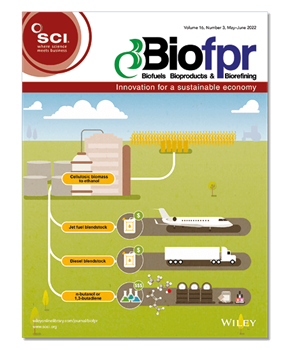
This study, published in the journal Biofuels, Bioproducts and Biorefining presented an assessment of eight biorefinery scenarios for the five biochemicals, in order to identify which should be prioritised for strain engineering and bioprocess development to guide R&D – and to support the diversification and commercialisation of sugarcane biorefineries.
While sugarcane is one of the world’s largest cash crops it is also facing declining profitability due to low sugar export prices, rising production costs, and climate-driven production fluctuations.
According to the researchers, biobased 3-HP emerged as the most viable short-term candidate, offering the highest internal rate of return, strong fermentation efficiency, and 66% lower greenhouse gas emissions compared with its fossil-based counterpart.
In the medium term, the researchers said, ADA stands out due to the minimal process upgrades needed for commercial implementation.
The researchers said that their long-term projections highlight AA as the most promising product under optimal fermentation performance, but noted this pathway relies on significant biotechnological breakthroughs requiring substantial R&D investment.
However, the researchers noted: ‘Technically achievable performances for all five products indicated potential to meet financial targets for supplanting their fossil-based equivalents, at a significantly lower carbon footprint, justifying ongoing investment in strain and bioprocess development.’
Process development priorities for scaling up direct microbial conversion of sugars into value-added biochemicals
Manasseh K. Sikazwe, Jeanne Louw, Johann F. Görgens
Biofuels, Bioproducts and Biorefining
doi.org/10.1002/bbb.70095
 Visit Blog