2026 marks the 145th year of SCI.
The world is a very different place now than it was in 1881, thanks in part to the scientists, inventors and entrepreneurs whose work has propelled society forwards over the past 145 years- many of whom have been part of the SCI community.
The challenges may have changed, but SCI’s commitment to finding solutions through connecting scientific innovation with industrial leaders remains.
Throughout the course of the year we will be revisiting the contribution that SCI has made in solving major global challenges in agrifood, life sciences, and climate over the years, and celebrating the members at the heart of it all.
We will also look to the future, showcasing how SCI and its global network of members continues to be at the forefront of driving societal progress.
SCI's Agrifood Impact:
Food safety and scarcity has been at the top of the SCI agenda since its inception.
Sir William Crookes – one of the society’s early presidents – gave an address in 1889 entitled The Wheat Problem. The text warned of a looming scarcity of wheat caused by the exhaustion of available arable land and wasteful farming practices. Crookes advocates for the application of scientific innovation to boost agricultural yields and highlights the need for domestic food security and more efficient cultivation techniques.
It’s remarkable how the themes raised in The Wheat Problem are still so relevant to the work of SCI in 2026. The national resilience report, our agrifood journals,and SCI Sustainability can all trace their roots to the challenges raised by Crookes.
1932 saw the formation of SCI’s Food Group, bringing together scientists, researchers, industry leaders, and policy-makers to address the pressing food industry challenges outlined by Crookes. The group continues to be active to this day, hosting events like Innovations in crop protection at SCI HQ.
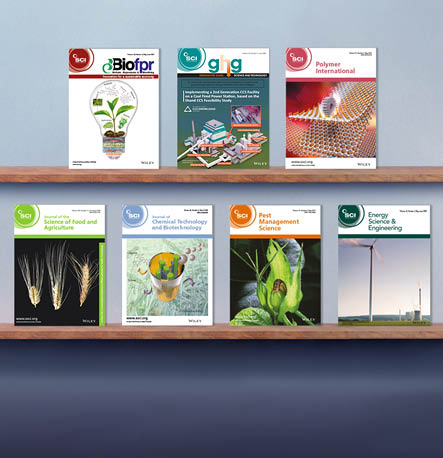
In 1950 SCI launched The Journal of the Science of Food & Agriculture, signalling another significant step in our commitment to accelerating scientific innovation as a solution to food scarcity. The early papers published in the journal show the biggest issues and innovations in the food industry at the time.
Some of the first JSFA articles covered:
- Recent advances in bacteriology of pasteurized milk (1950) (with commercial pasteurisation of milk only becoming a widespread practice around 20 years prior)
- Early research on food preservation at commercial scale (1954)
- The nitrogen cycle in grassland soils (1956) (Sir William Crookes highlighted the importance of the use of nitrogenous fertilisers to boost agricultural yields in The Wheat Problem)
- The treatment of meats with ionising radiations (1959) – Investigating how meat can be preserved using radiation and the effect this had on taste
SCI’s agriscience offering of journals expended in 1970 with the introduction of Pest Management Science, again with the goal to accelerate solutions to global food scarcity, security, and sustainability. Early papers published in Pest Management Science focused heavily on chemical pesticides as the solution to crop yield problems. However research was still being published on the sustainability and safety of these strategies.
Examples of these early papers not only cover topics highlighted in Crookes’s call to arms but also those that continue to be researched today: Pesticide residues in the total diet in England and Wales (1970), and Increase in wheat grain yield induced by chlormequat chloride (1970).
These journals are still at the forefront of driving solutions to food scarcity and security, and we have since launched JSFA Reports to capture and progress food and agriculture research which was previously outside of the scope of JSFA and PEST.
JSFA Reports is helping to contribute to the food security and sustainability discussion in innovative ways, notably in a recent research article on increasing yield and health-promoting qualities of tea plants.
Another way in which SCI continues to accelerate solutions to global food problems, that links back to the formative years of the society, is through our corporate partner network. Current corporate partners include Syngenta, Cargill, and Unilever – Who’s co-founder William Hulme Lever was SCI president between 1936 and 1938. Facilitating discussion and collaboration between these major players across the agrifood supply chain allows for thorough impact in driving the future of sustainable food supply.
These industry leaders are at the heart of an agrifood hub that continues to be driven by our journals, which these days publish cutting-edge research that will solve the global food problem such as AI-based pollen classification and the use of edible insects as a protein-rich and sustainable food source.
Click here to explore SCI membership options here to be a part of the global community accelerating science for societal benefit for 145 years and counting.