Agrifood
2026 marks the 145th year of SCI.
The world is a very different place now than it was in 1881, thanks in part to the scientists, inventors and entrepreneurs whose work has propelled society forwards over the past 145 years- many of whom have been part of the SCI community.
The challenges may have changed, but SCI’s commitment to finding solutions through connecting scientific innovation with industrial leaders remains.
Throughout the course of the year we will be revisiting the contribution that SCI has made in solving major global challenges in agrifood, life sciences, and climate over the years, and celebrating the members at the heart of it all.
We will also look to the future, showcasing how SCI and its global network of members continues to be at the forefront of driving societal progress.
SCI's Agrifood Impact:
Food safety and scarcity has been at the top of the SCI agenda since its inception.
Sir William Crookes – one of the society’s early presidents – gave an address in 1889 entitled The Wheat Problem. The text warned of a looming scarcity of wheat caused by the exhaustion of available arable land and wasteful farming practices. Crookes advocates for the application of scientific innovation to boost agricultural yields and highlights the need for domestic food security and more efficient cultivation techniques.
It’s remarkable how the themes raised in The Wheat Problem are still so relevant to the work of SCI in 2026. The national resilience report, our agrifood journals,and SCI Sustainability can all trace their roots to the challenges raised by Crookes.
1932 saw the formation of SCI’s Food Group, bringing together scientists, researchers, industry leaders, and policy-makers to address the pressing food industry challenges outlined by Crookes. The group continues to be active to this day, hosting events like Innovations in crop protection at SCI HQ.
In 1950 SCI launched The Journal of the Science of Food & Agriculture, signalling another significant step in our commitment to accelerating scientific innovation as a solution to food scarcity. The early papers published in the journal show the biggest issues and innovations in the food industry at the time.
Some of the first JSFA articles covered:
- Recent advances in bacteriology of pasteurized milk (1950) (with commercial pasteurisation of milk only becoming a widespread practice around 20 years prior)
- Early research on food preservation at commercial scale (1954)
- The nitrogen cycle in grassland soils (1956) (Sir William Crookes highlighted the importance of the use of nitrogenous fertilisers to boost agricultural yields in The Wheat Problem)
- The treatment of meats with ionising radiations (1959) – Investigating how meat can be preserved using radiation and the effect this had on taste
SCI’s agriscience offering of journals expended in 1970 with the introduction of Pest Management Science, again with the goal to accelerate solutions to global food scarcity, security, and sustainability. Early papers published in Pest Management Science focused heavily on chemical pesticides as the solution to crop yield problems. However research was still being published on the sustainability and safety of these strategies.
Examples of these early papers not only cover topics highlighted in Crookes’s call to arms but also those that continue to be researched today: Pesticide residues in the total diet in England and Wales (1970), and Increase in wheat grain yield induced by chlormequat chloride (1970).
These journals are still at the forefront of driving solutions to food scarcity and security, and we have since launched JSFA Reports to capture and progress food and agriculture research which was previously outside of the scope of JSFA and PEST.
JSFA Reports is helping to contribute to the food security and sustainability discussion in innovative ways, notably in a recent research article on increasing yield and health-promoting qualities of tea plants.
Another way in which SCI continues to accelerate solutions to global food problems, that links back to the formative years of the society, is through our corporate partner network. Current corporate partners include Syngenta, Cargill, and Unilever – Who’s co-founder William Hulme Lever was SCI president between 1936 and 1938. Facilitating discussion and collaboration between these major players across the agrifood supply chain allows for thorough impact in driving the future of sustainable food supply.
These industry leaders are at the heart of an agrifood hub that continues to be driven by our journals, which these days publish cutting-edge research that will solve the global food problem such as AI-based pollen classification and the use of edible insects as a protein-rich and sustainable food source.
Click here to explore SCI membership options here to be a part of the global community accelerating science for societal benefit for 145 years and counting.
07 May 2026 |
|


 |
|

Science & Innovation
Six teams have made it to the exciting final of this year’s Bright SCIdea Challenge.
The Bright SCIdea Challenge sees university students develop an innovative science-based idea into a business plan - and then to compete for a £5,000 prize.
SCI supports entrants during the competition by delivering free, exclusive training, and the teams with the strongest business plan are invited to deliver their pitch to an expert panel of experienced, successful senior business people and innovators.
The first Bright SCIdea challenge took place in March 2018 and since then the competition has seen winners go on to launch companies, raise significant funding and take their products to market.
This year’s final - the seventh instalment of SCI’s annual entrepreneurship competition - takes place at SCI’s headquarters on March 17.
Here are the 2026 Bright SCIdea Challenge finalists:
Ascenx

Sophie Siu, William Wang, Justin Wong and Gwen Rico
Where are they from?
University College London
Why did they enter the Bright SCIdea Challenge 2026?
“As second year chemistry students we were keen to apply our theoretical knowledge to a viable business idea under the guidance of industry experts in a fun and dynamic setting. Our entry was catalysed by reading a paper by Kaifeng Wang and Case M. van Genuchten which discussed a novel process of retrieving arsenic from wastewater sludge. We were fascinated by the chemistry and its dual potential of ensuring clean drinking water whilst supplying a sustainable arsenic source. The opportunity to contribute to a meaningful global impact strongly aligned with our humanitarian values and motivated us to participate.”
AvennaX

Josh Das, Peilin Chen and Tara Hudson-Ballard
Where are they from?
Imperial College London
Why did they enter the Bright SCIdea Challenge 2026?
“We entered the BrightSCIdea challenge to accelerate the commercial scaling of AlphaSuite, build a network of other scientific innovators, and gain mentorship from experts. This competiton offers the opportunity to develop our roadmap for market entry, ensuring our innovation is positioned for long term growth. Winning would provide the foundational funding for us to scale our technical infrastructure and secure our IP, and the insights gained from this experience will help us turn our innovation into a successful venture truly valuable to the global research and healthcare community.”
CheGo

Cheyenne Gracias, Chayanit Panjak, Hita Dunukunala and Yunseo Lee
Where are they from?
Kings College London
Why did they enter the Bright SCIdea Challenge 2026?
“Having previously won a hackathon, our team believes real impact comes from bringing solutions to industry which is why BrightSCIdea felt like the right next step. Our inspiration came from a teammate's mother, an experienced ICU nurse, who described how suctioning can cause bleeding and stress for patients and nurses. This sparked our add-on sensor system that transforms standard closed suction catheters into precision-guided medical devices, reducing complications in intensive care. Beyond technical skills, we recognised the need for commercialisation expertise. This competition offers industry feedback, workshops, and funding to develop our prototype into a real product.”
MediKeto

Nano Kojima, Yuri Fujikura and Eleina Hames
Where are they from?
Institute of Science Tokyo
Why did they enter the Bright SCIdea Challenge 2026?
“The ketogenic diet is a highly evidence-based treatment for drug-resistant epilepsy, yet it remains underutilised because of the daily management burden. We built MediKeto to change that.
"As an early-stage team bridging medicine and engineering, the Bright SCIdea Challenge offers something distinct: international validation, critical feedback and support from industry experts, and funding that would directly accelerate our pathway from healthcare app to SaMD. We are determined to refine our concept and empower patients and families who need it most, ultimately boosting treatment adherence and unlocking a better quality of life.”
Napré

Nwachukwu Christiana Okonkwo, Kosisochukwu Judith Offojebe, Ikwuezuma Elochukwu Reynolds and Ekeomodi Chikodi Christabel
Where are they from?
Newcastle University, McGill University, Nnamdi Azikiwe University and Stellenbosch University
Why did they enter the Bright SCIdea Challenge 2026?
“Our participation in Bright SCIdea challenge was driven by our identification of a critical gap in the manufacturing industry: while billions are spent producing drug and food products, the adverse effects of the preservatives used in these products have been largely neglected. We saw an opportunity to change the status quo and create a paradigm shift to safer preservatives while protecting the environment - through the valorisation of agricultural waste. Bright SCIdea offers us an opportunity to connect with visionary partners who share our goal: to disrupt a dysfunctional market with innovative solutions that promote well-being without sacrificing commercial value.”
QROOT — Quantum Reactive Optical Observation of Terrain

Gergo Meszaros, Hassan Raza Khan and Kaden Ethan Tan
Where are they from?
University of Toronto and Brown University
Why did they enter the Bright SCIdea Challenge 2026?
“Uncertainty. Corporations cannot always predict crop yields or the best interventions. Farmers cannot know whether fields will suffer from disease or deplete prior to the first harvest—yet they plant, nurture, and persevere anyway. If they can act despite uncertainty, why shouldn't we? The practicality of scaling a business, of turning innovation into impact, and reaching those who need it most was unknown to us—but because they try, we must too. With BrightSCIdea we have our expertise, the guidance of industry experts, and the network to bring QROOT to life, that is why we are here.”
16 March 2026 |
|
|
Sustainability & Environment
In ‘The Flowers that Bloom in the Spring’ from The Mikado, Gilbert and Sullivan were interpreting the seasons according to their 19th Century climate – but do these flowers still, indeed, bloom in spring? The Meteorological Office’s traditional definitions of the seasons in the UK are:
- Summer from June to August
- Autumn from September to November
- Winter from December to February
- Spring from March to May
Increasingly, climate change is blurring these distinctions, and gardeners are seeing autumn stretching well towards January. Winters in maritime Great Britain are now most severe in February and March, and summer extends into September. The effects of prolonged warm autumns include accelerated growth emergence and flowering of plants which have been thought of as the harbingers of spring.
Phenological studies in the late 20th and early 21st Centuries established that the then-termed ‘early-spring flowering plants’ had accelerated blossoming by as much as four weeks. Now, in the second decade of the 21st Century, it seems this is an underestimate.
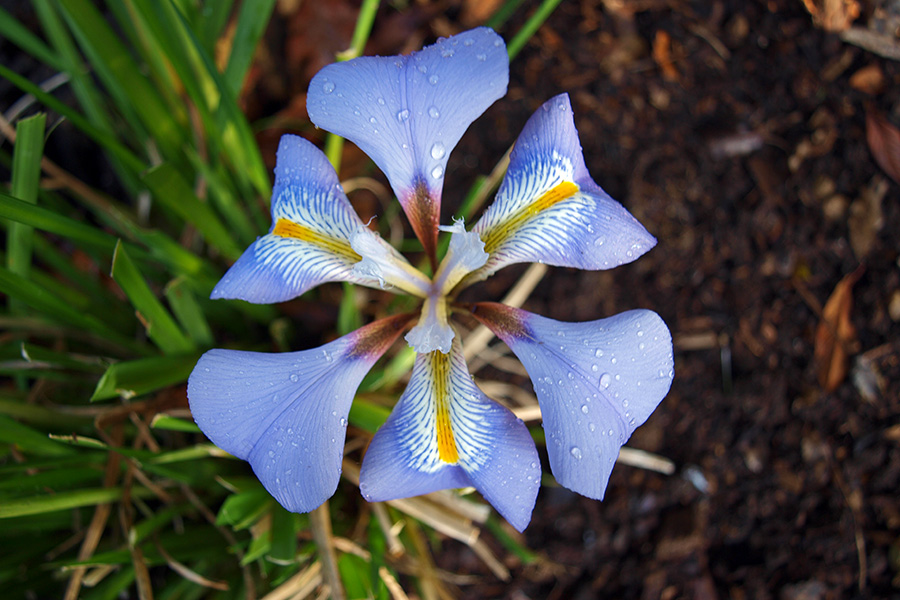
Pictured above: Iris unguicularis (styllosa); the Algerian iris
Iris unguicularis (styllosa), the Algerian iris, is renowned as an early flower of spring. It now comes into bloom in late November and very early December, making it an autumn and winter flowering plant. It originates from Algeria, Greece, Turkey, Western Syria, and Tunisia and requires freely draining, light soils with minimal nutrient value. Planted in a south facing border, Iris unguicularis is an undemanding and very colourful addition to the garden. Many early-flowering plants have highly coloured flowers which attract the widest spectrum of insect pollinators.
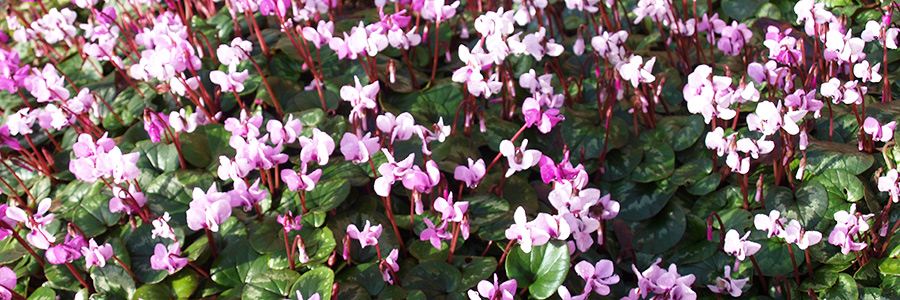
Pictured above: Cyclamen hederifolium
Similarly, Cyclamen hederifolium (hera meaning “ivy”, folium meaning “leaf”), now flowers vigorously from mid-December, providing colour in the garden in those darkest days prior to the winter solstice. It originates from woodland, shrubland, and rocky areas in the Mediterranean region from southern France to western Turkey and on Mediterranean islands. Once the corms are established it naturalises freely, spreading by self-seeding from explosive seed capsules which cast progeny widely in borders of light, sandy nutrient-free soil.
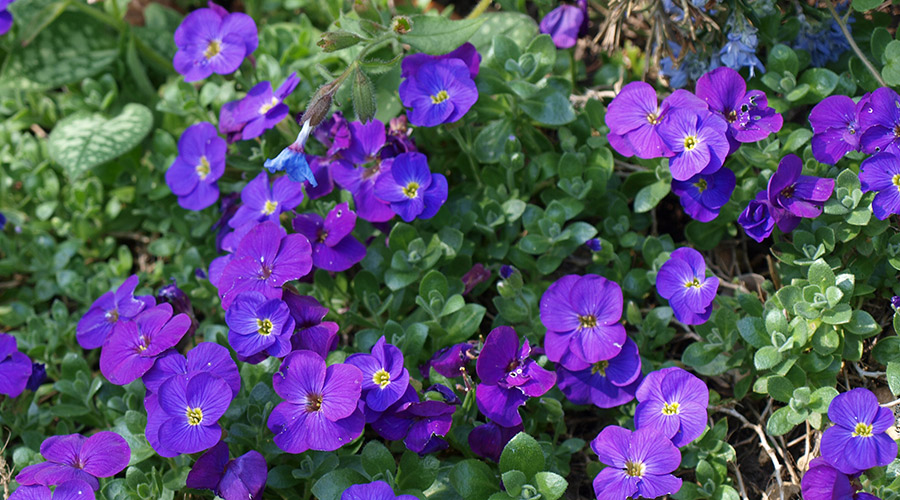
Pictured above: alyssum (A. saxatile)
The common rockery plant alyssum (A. saxatile), is a perennial herbaceous plant, which rapidly colonises borders and will spread down onto walls providing colour from early January. It is one of the ornamental members of the cabbage family (Brassicaceae) with bright cruciform flowers.
Each of these plants is responding to climatic warming, indicating the loss of traditional seasonality. This impairs relationships between flowering plants and animal pollinators that have carefully evolved for mutual benefit over millennia. The full consequences of these losses will be apparent in years and decades to come.
Professor Geoff Dixon is author of Garden practices and their science, published by Routledge 2019.
30 January 2023 |
|
|
Agrifood
Composts are artificial mixtures in which seeds germinate, cuttings root and whole plants grow. Their key feature is reliability of composition. The first such composts were formulated by the John Innes Centre in the 1900s. Researchers needed preparations which allowed reliable growth of plants for experiments. The main ingredients were loamy soil, sand and lime plus nutrients. John Innes composts subsequently became the mainstay of horticulturists and gardeners.

Colourful flowering in artificial composts.
Variability in the loam and its weight were major disadvantages. Scientists at the University of California solved these problems by preparing mixtures of peat, sand and nutrients. Air fill porosity characteristics of ‘UC mixes’, as they became known, allow healthy seed germination, root production, growth and flowering. Lighter weight is of major significance, allowing the easy movement of plants. Arguably, simplified transport also resulted in the advent of garden centres and freer international plant trading. As a result, the garden centre industry has become a regular social feature.

A peat extraction site.
Peat, while of major importance, is now seen as the ‘achilles heel’ of these composts. Peat bogs are very significant reservoirs for carbon dioxide and major participants in the drive for reducing the impact of climate change. The compost industry strips peat from the bogs and then mixes it into specialised formulations for seed germination or plant growth. The bogs can be reclaimed and will restart the processes of CO2 absorption, but there is still a significant environmental penalty. Social and political pressures are driving peat reduction and its elimination from garden and commercially used composts. Peat substitutes must have the key properties of adequate air fill porosity, light weight and minimal or net zero carbon demand.
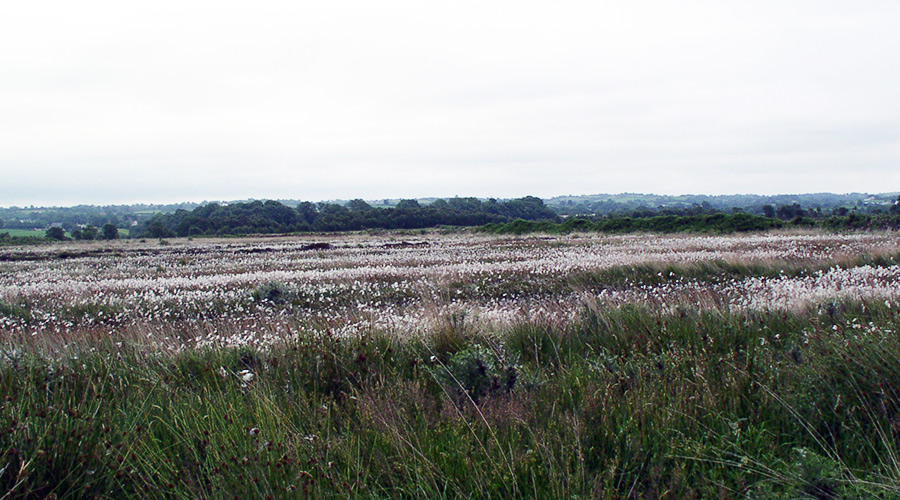
A renovated peat extraction site.
One suggestion is using coir – waste arising from coconut harvesting. Like peat, this is a natural, biodegradable product. When shredded it forms a useful peat substitute, an alternative is well composted bark and fine wood chippings, which are mixed with sand. Both are valuable composts for growing ornamental plants and germinating their seedlings. Some manufacturers are also adding loamy soil into these formulae. Problems continue, however, with finding peat-free formulae for use in commercial transplant propagation. Germinating vegetable seedlings for large scale crops requires absolute regularity and reliability. Uniform, vigorous seedlings result in mature high-quality crops suitable for once over harvesting and scheduling which meets supermarkets’ specifications.
Written by Professor Geoff Dixon, author of Garden practices and their science, published by Routledge 2019.
28 November 2022 |
|
|
Agrifood
As we speak, apples and pears are ripening on the trees. But how do you grow apple and pear trees from scratch and keep them alive? Our resident gardening expert, Professor Geoff Dixon, investigates.
Autumn is the ‘season of mists and mellow fruitfulness’, as John Keats said in his Ode to Autumn. It is a time for harvesting temperate tree fruits, especially apples and pears in gardens and orchards.
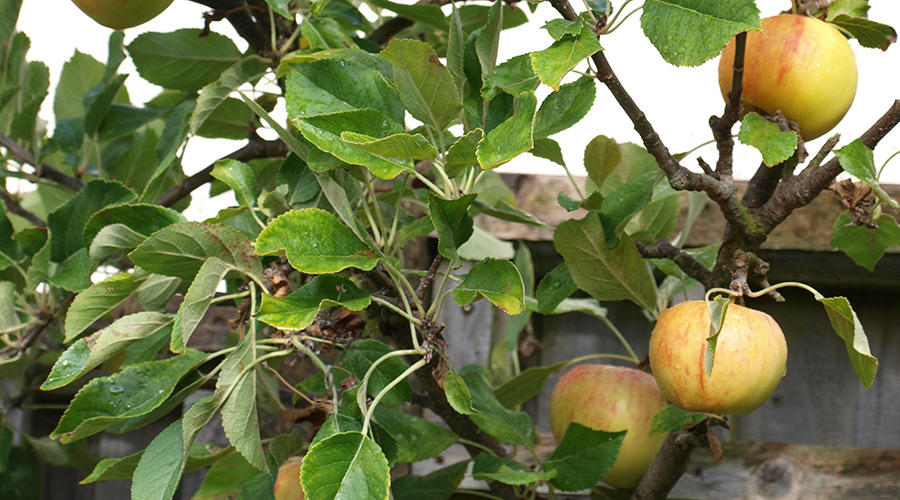
This fruit is distinctive and delicious. The ‘Sunset’ apple cultivar, derived from the Cox’s Orange Pippin, produces red and gold striped fruit and sweet tasting flesh, while the French pear cultivar doyenne du comice has the most superb taste if caught at peak ripeness.
 <
<
The sunset apple.
Both apples and pears ripen after harvesting, emitting ethylene and passing through a climacteric, or critical biological stage. When respiration reaches a peak, the fruits’ flavour is most satisfying.
Both apples and pears are best planted in late autumn or during winter when the trees are dormant, either as container-grown or preferably bare root trees. Place each tree in a hole that is large enough for the entire root system, ensuring that the graft union sits well above the soil level.
Each tree consists of two parts: the rootstock, selected originally from wild species, and the scion, which is the fruiting cultivar. Apple cultivars mostly dwarf Malling no. 9, and pear scions are grafted onto quince rootstocks. A stake should be driven into the hole before putting the tree in place.
Pour ample water into the hole, keeping the roots wet. Do so again once soil is replaced and firmed round the tree. As the tree establishes and produces leaves and flowers, water well and regularly, especially during dry periods.
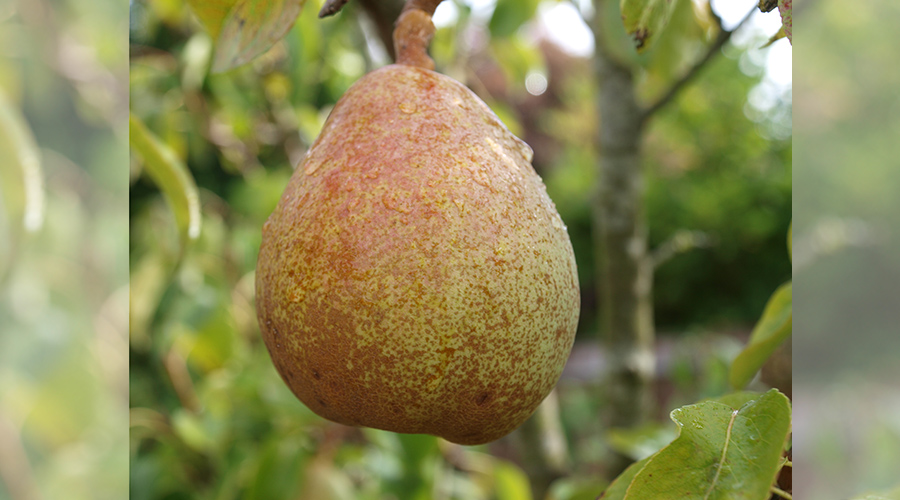
French pear cultivar doyenne du comice
Feed with fertilisers that contain large amounts of potash and phosphate but minimal nitrogen. This encourages vigorous root growth. Sprinkling compost or farmyard manure around the tree helps retain soil moisture.
Climate change is having significant deleterious impacts on all members of the Rosaceae family, including apples and pears. Australian studies indicate that temperatures are reaching higher than the evolutionary maximum for these species.
This stresses the plants. It adversely affects their health and performance and reduces their ability to store carbon and produce fruit crops.

The pear scab Venturia pirina
Levels of pest and disease infections are increasing. In particular, sap-sucking woolly aphids (Eriosoma lanigerum) have increased from minor to major apple pests in the last decade. Pear scab Venturia pirina has become a major cause of defoliation.
Chemical control options for both are limited, but regular drenching sprays with seaweed extracts may reduce their impact. Seaweed extracts additionally provide some foliar absorbed nutrients and increase the visual quality of fruit.
Professor Geoff Dixon is author of Garden practices and their science, published by Routledge 2019.
05 October 2022 |
|
|
Agrifood
Which species can you plant to increase the nutrients in your soil and boost biodiversity, and which pathogen tackles some of those pesky weeds? Our resident gardening expert, Professor Geoff Dixon, tells us more.
The term ‘sustainability’ for gardening means replacing what you take out of the soil and supporting localised biodiversity. Harvested crops, for example, take out nutrients and water from the soil. Replacements should be supplied that aid biodiversity and have minimal impact, or zero impact, on climate change.
Seaweed (Ascophyllum) has been recognised as a valuable fertiliser source in British coastal areas for centuries. Now, proprietary seaweed extracts are gaining popularity either when applied directly as liquid feeds or sprays, or when added into composts.
Classed as biostimulants, seaweed extracts contain several micro-nutrients and a range of valuable plant stimulatory growth regulators. They encourage pest and disease tolerance, increase frost tolerance, stimulate germination, increase robust growth, and add polish to fruit such as apples and pears.
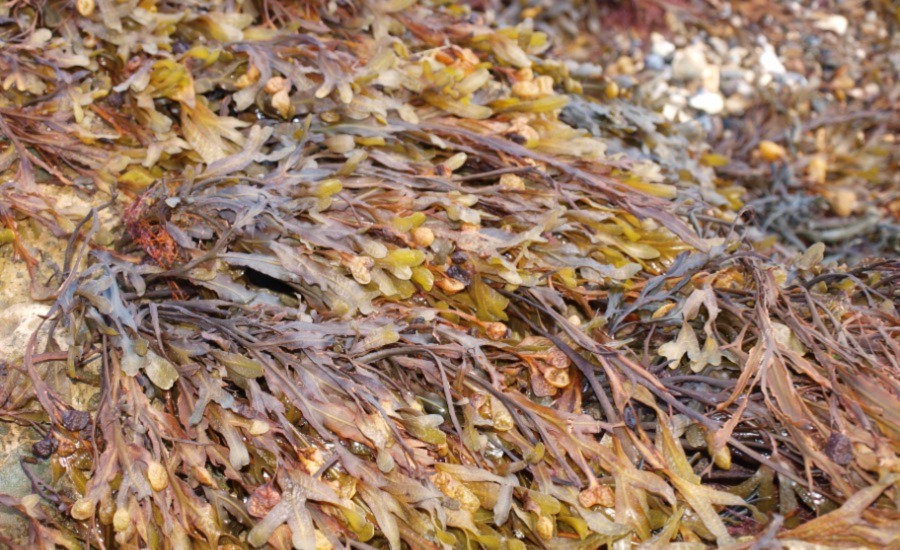
Seaweed bolsters some of the nutrients lost through gardening. Image from Geoff Dixon.
Benefits of borage
Some plants are very effective supporters of biodiversity. Borage (Borago officinalis), known also as starflower or bugloss, is a robust annual plant of Mediterranean origin with pollinator-attractive blue flowers.
It is very drought resistant and suitable for dry gardens. Although an annual, it is self-seeding and could spread widely. It is very attractive to bees as it produces copious light – and delicately flavoured honey.
Its flowers and foliage are edible with a cucumber-like flavour, making it suitable in salads and as garnishes, while in Germany it is served as grűne soße (green sauce). When used as a companion plant for crops such as legumes or brassicas, it will also help to suppress weeds.
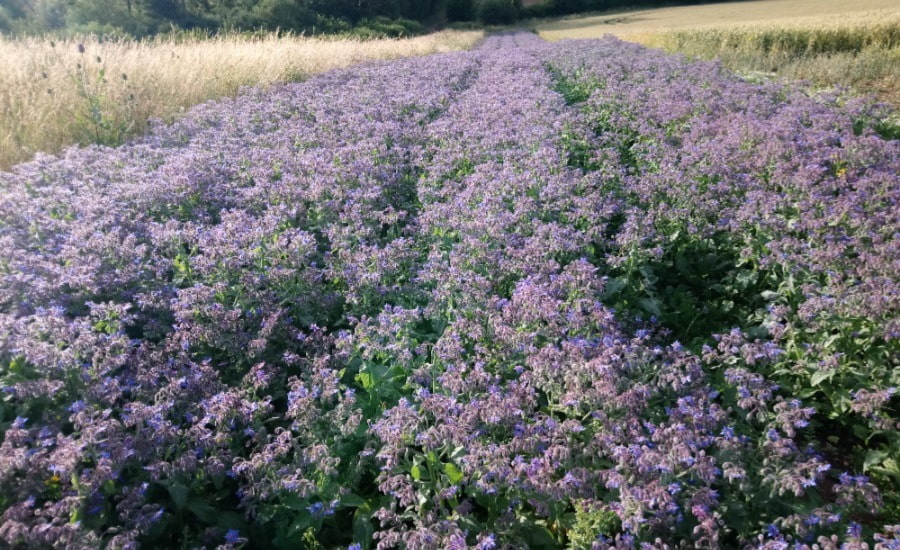
Borage is good for bee and belly. Image from Geoff Dixon.
Weeding out the problem
Weeds are a continuous problem for gardeners and their prevalence varies with the seasons. Groundsel (Senecio vulgaris), also known as ‘old man in the spring’, persists whatever the weather.
It is ephemeral but can seed and regrow several times per year. As a result, once established, it is difficult to control without very diligent hand weeding and hoeing out young seedlings before the flowers form.
There is, however, a form of biological control that can aid the gardener. Groundsel is susceptible to the fungal rust pathogen (Puccinia lagenophorae). This pathogen arrived in Great Britain from Australia in the early 1960s. Since then, it has become well established and outbreaks on groundsel start to become obvious in mid- to late-summer, especially in warm dry periods.
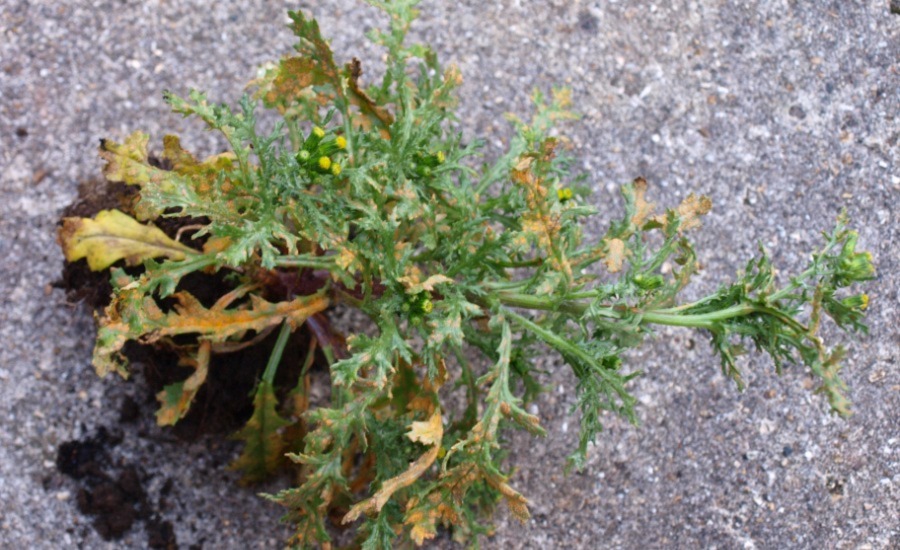
A fungal pathogen can kill groundsel, a weed that comes through several times a year. Image from Geoff Dixon.
Severe infections weaken, and eventually kill, groundsel plants. Gardeners should take advantage of the infection and remove the diseased weeds before any seeds are produced.
>> How else has climate change changed the way our gardens grow, and what can be done to alleviate its effects? Geoff Dixon investigates.
Professor Geoff Dixon is author of Garden practices and their science, published by Routledge 2019.
Written by Professor Geoff Dixon. You can find more of his work here.
15 August 2022 |
|
|
Science & Innovation
The Commonwealth Games has landed in Birmingham. Before the Games began, viewers were treated to an extraordinary opening ceremony (featuring a giant mechanical bull) and its artistic director, Iqbal Khan, was lauded for his ingenuity.
But such ingenuity shouldn’t surprise any of us, for Birmingham has long been a place of outsized invention. For more than 300 years, the inhabitants of this industrial powerhouse have churned out invention after invention; and its great pragmatists have turned patents into products.
Chemistry, too, owes a debt to the UK’s second city. Whether it’s the first synthesis of vitamin C, the invention of human-made plastic, adventures in mass spectrometry, or electroplated gold and silver trinkets, Birmingham has left a lasting legacy.
Here are five chemists whose innovations may have made an appearance in your life.
Alexander Parkes – man of plastic

Plaque commemorating Alexander Parkes in Birmingham, England. Image by Oosoom
Look around you. Look at the computer screen, the mouse button you click, and the wire casings everywhere. Someone started it all. That man was Alexander Parkes, inventor of the first human-made plastic.
The son of a brass lock manufacturer from Suffolk Street, Birmingham, Parkes created 66 patents in his lifetime including a process for electroplating delicate works of art. However, none were as influential as the 1856 patent for Parkesine – the world’s first thermoplastic.
Parkes’ celluloid was based on nitrocellulose that had been treated by different solvents. In 1866, he set up the Parkesine Company at Hackney Wick, London, but it floundered due to high cost and quality issues. The spoils of his genius would be enjoyed by the rest of us instead.
Sir Norman Haworth – the vitamin seer

Sir Norman Haworth
Sir Norman Haworth may have been born in Chorley, Lancashire, but his finest work arguably came after he became Director of the Department of Chemistry in the University of Birmingham in 1925. Haworth is famous for his groundbreaking carbohydrate investigations and for being the first to synthesise vitamin C.
By 1928, Haworth had confirmed the structures of maltose, cellobiose, lactose, and the glucoside ring structure of normal sugars, among other structures. Apparently, his method for determining the chain length in methylated polysaccharides also helped confirm the basic features of starch, cellulose, and glycogen molecules.
However, Haworth is most famous for determining the structure of vitamin C and for becoming the first to synthesise it in 1932. The synthesis of what he called ascorbic acid made the commercial production of vitamin C far cheaper – the benefits of which have been felt by millions of us.
For his achievements in carbohydrates and vitamin C, Haworth received the Nobel Prize for Chemistry in 1937 (shared with Paul Karrer). He was the first British organic chemist from the UK to receive this honour. Haworth even had a link to SCI, having been a pupil of William Henry Perkin Junior in the University of Manchester’s Chemistry Department.
Francis William Aston – adventures in mass spectrometry

Blue plaque for Francis William Aston. Image from Tony Hisgett
Another Nobel Prize-winning chemist from Birmingham is Francis William Aston. The Harborne native won the 1922 prize for discovering isotopes in many non-radioactive elements (using his mass spectrograph) and for enunciating the whole number rule.
For a time, academia almost lost Aston, as he spent three years working as a chemist for a brewery. Thankfully, he returned to academic life and obtained concrete evidence for the existence of two isotopes of the inert gas neon before the first World War.
After working for the Royal Aircraft Establishment during the Great War (1914-18), he resumed his studies. The invention of the mass spectrograph proved pivotal to his discoveries thereafter. Using this apparatus, he identified 212 naturally occurring isotopes.
George Elkington and John Wright – all that glitters

George Elkington patented the electroplating process developed by John Wright. Image from Spudgun67
It isn’t surprising that George Elkington should become an SCI favourite, as he blended both scientific ingenuity with business. The son of a spectacle manufacturer patented the first commercial electroplating process invented by Brummie surgeon John Wright in 1840.
Wright discovered that a solution of silver in potassium cyanide was useful for electroplating metals. Elkington and his cousin Henry purchased and patented Wright’s process before using it to improve gold and silver plating.
The Elkingtons opened an electroplating works in the city’s now famous Jewellery Quarter where they electroplated cutlery and jewellery. And they didn’t do too badly out of it. By 1880, the company employed 1,000 people in seven factories.
Alfred Bird – winging it

1906 advertisement for Birds Custard powder. Image from janwillemsen
In 1837, Alfred Bird was in a pickle. He wanted to serve his dinner party guests custard, but his wife was allergic to eggs and yeast, and egg was the main thickening agent of this delicious gloop.
Instead of serving something else, the chemist shop owner invented his own egg-free custard by substituting cornflour for eggs. His guests found it delicious and Bird’s Custard was born.
Not content with this innovation, Bird is also credited with being the father of modern baking powder. Once again, his wife’s allergies were said to be the inspiration, as he wanted to create a yeast-free bread for her. In bread and custard, true love always finds a way.
05 August 2022 |
|
|
Sustainability & Environment
In his winning essay in SCI Scotland’s Postgraduate Researcher competition, Angus McLuskie, Postgraduate Researcher at the University of St Andrews, explains his work in replacing non-renewable and toxic feedstocks with novel sustainable catalytic processes to produce useful chemicals.
Each year, SCI’s Scotland Regional Group runs the Scotland Postgraduate Researcher Competition to celebrate the work of research students working in scientific research in Scottish universities.
This year, four students produced outstanding essays in which they describe their research projects and the need for them. In the first of this year’s winning essays, Angus McLuskie outlines his work in improving the production of urea derivatives and polyureas.
Would you risk your life for plastics and agrochemicals? You might not have to…
Urea derivatives hold a substantial global market, which is dominated by their use as fertilisers in the agrochemical sector, in addition to smaller-scale technical applications as glues, resin precursors, dyes and pharmaceutical drugs. Furthermore, polyureas are important protective coatings, with a global market exceeding £800 million a year.
Currently, urea derivatives and polyureas are produced on an industrial scale using highly toxic chemicals such as phosgene, (di)isocyanates and carbon monoxide. These reagents are detrimental to human health, as evidenced by the release of methyl isocyanate gas from the Bhopal Union Carbide factory in 1984, which led to thousands of deaths and a global outcry.
Phosgene was itself used as a battlefield chemical weapon in World War I, and is sourced from fossil-fuel-derived carbon monoxide. The result is a process with significant health and environmental impacts.
As part of a global drive to tackle climate change and move towards a circular economy, the objective of our research is to replace non-renewable and toxic feedstocks with novel sustainable catalytic processes to produce useful chemicals and materials.
>> More information about the Scottish Postgraduate Researcher competition.
In pursuit of greener methods, we have recently discovered synthetic methodologies, using a catalyst of manganese, to couple dehydrogenatively (1) methanol and (di)amines and (2) formamides and amines to make symmetrical (poly)ureas and unsymmetrical urea derivatives respectively (ACS Catal., DOI:10.1021/acscatal.2c00850).

Angus with his poster on Mn-Catalysed Dehydrogenative Synthesis of Urea Derivatives and Polyureas.
The only process byproduct, molecular hydrogen, is valuable in itself, and the non-toxic reagents of methanol or formamide can be sourced from renewable feedstocks. For example, Carbon Recycling International, an Iceland-based company, has developed methods to generate methanol industrially through the direct hydrogenation of CO2 (ATZextra Worldw., DOI:10.1007/S40111-015-0517-0). Formamides can be made from formic acid, which may be produced from biomass or CO2.
Synthesis approach
The synthesis of urea derivatives using this approach has been reported previously using iron and ruthenium catalysts, but these present individual limitations. Iron catalysts result in poor yields and substrate scope, while ruthenium catalysts are expensive and raise sustainability concerns due to ruthenium’s low abundance in Earth’s crust (Chem. Sci. J., doi.org/10.1039/C8SC00775F and Org. Lett., doi.org/10.1021/acs.orglett.5b03328).
The synthesis of polyureas via this approach has only been achieved before using a ruthenium catalyst. With a manganese-based pincer catalyst, we succeeded in making a broad variety of symmetrical and unsymmetrical urea derivatives as well as polyureas at high yields and under a low catalytic loading of 0.5-1 mol%. As the third most abundant transition metal in Earth’s crust, manganese is much cheaper than ruthenium, which improves the economic viability of the process for industrial applications.
Breaking new ground?
This is the first example of the synthesis of polyureas from diamines and methanol using a catalyst of an Earth-abundant metal. We have demonstrated for the first time the synthesis of a potentially 100% renewable polyurea from methanol and a renewable diamine Priamine, which is commercialised by Croda. This could be of interest to emerging businesses for making bio/renewable plastics.
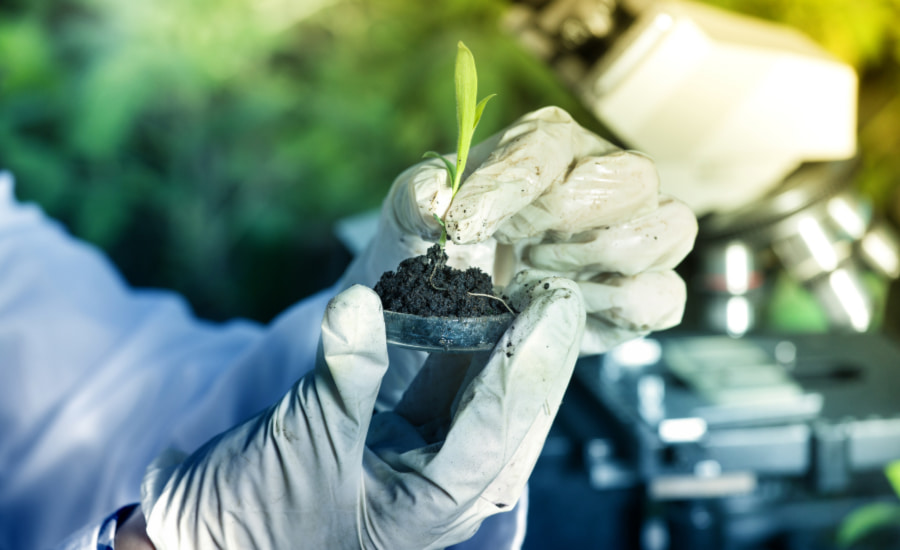
Angus hopes his research will help us develop urea-functionalised agrochemicals and pharmaceutical drugs in a more efficient, greener way.
This initial proof of concept is exciting, but there are challenges to overcome for commercialisation. Evidently, the cost is important, and since the catalyst is much more expensive than reactants, such as amines and methanol, the cost is directly linked to the catalyst’s activity; a homogeneous catalyst that is non-recyclable and offers a turnover number of 100-200 makes the process expensive.
We are now focusing our efforts on enhancing the efficiency of the catalyst to increase cost-effectiveness, which will also allow us to make commercially important urea-functionalised pharmaceutical drugs and agrochemicals with greater efficiency and reduced impact on the environment, human health, and economy.
19 July 2022 |
|
|
Sustainability & Environment
The wild weather fluctuations wrought by climate change are stressing out our plants. Our resident gardening expert, Professor Geoff Dixon, explains how.
Pests and diseases are familiar causes of plant damage and loss. Less familiar, but becoming more frequent, are stresses resulting from environmental causes.
These are termed abiotic stresses because no living organism is involved. This means there are no visible signs of pests or pathogens. Diagnosis and treatment are, therefore, less straightforward. These causes are a result of interactions between the plant genotype and the prevailing or changing environment.
Damage may only become apparent after harvesting and at the point of consumer use. A typical example of this is internal browning or breakdown of Brussels sprouts. Larger sprouts are more susceptible to stress, with dense leaf packing in the bud, particularly in early and midseason cultivars.
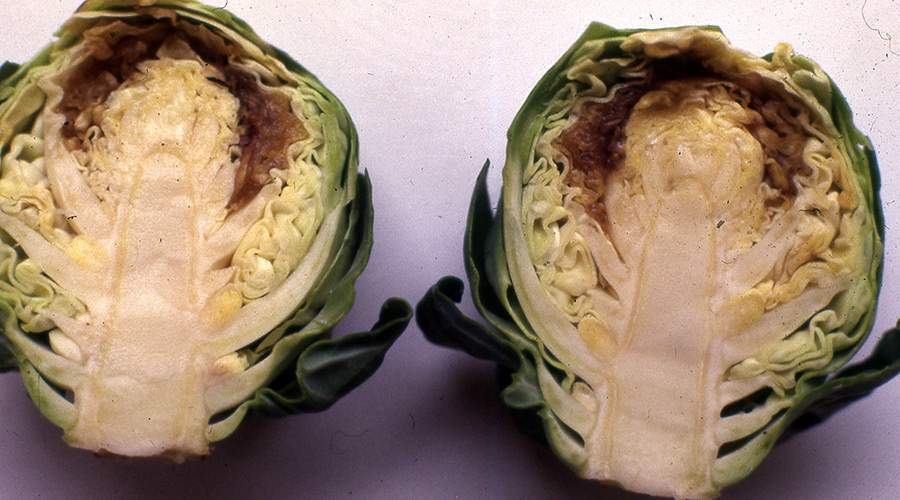
The internal browning of Brussels sprouts is a consequence of plant stress.
A suggested cause is water condensing within the bud, which restricts calcium transport and leads to marginal leaf necrosis (death). This resembles the exudation, or perspiration, of water from leaf edges when growing plants absorb excessive water, flooding the vascular systems following very heavy rainfall and hot weather.
Moisture damage
Oedema is another moisture-induced disorder. Symptoms include unattractive wart-like swellings coalescing on leaves and stems, particularly on Brussels sprouts, cabbages, and cauliflowers. These may rupture, becoming corky with a yellowish or brownish appearance.

Moisture-induced damage to cabbage leaves.
These symptoms result from high soil moisture content and high relative humidity associated with hot days and cool nights. Both internal browning and oedema can be minimised by improving soil structure, encouraging rapid drainage by deep cultivation or growing plants on raised beds.
Improving soil structure is becoming an important way to control salt accumulation. Soil structure can be badly damaged by flooding that brings in polluted water. In subsequent vegetable and fruit crops, plant water uptake, nutrient use efficiency, and photosynthesis are all impaired. The effects are seen in poor germination, burnt leaf margin, stunting, and wilting. This damage will be particularly severe with highly organic soils.
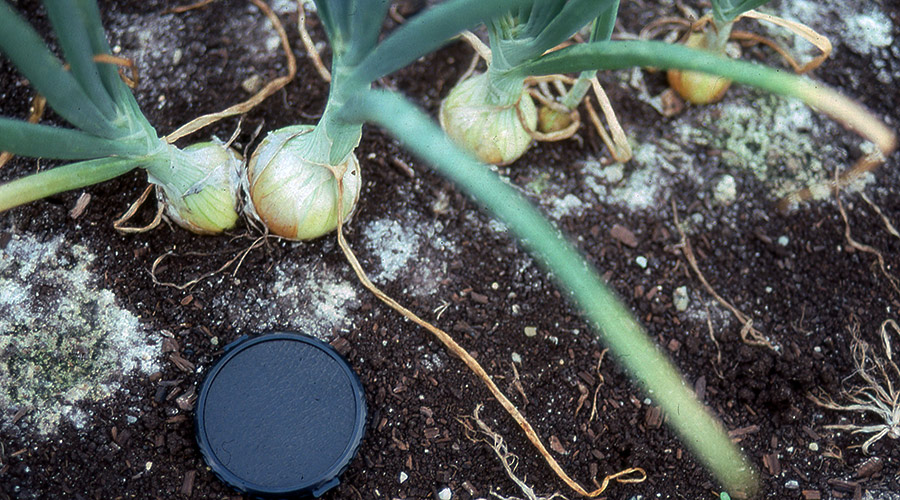
Salt accumulation in onion crops. Improving soil structure is one way of addressing this problem.
Abiotic disorders are becoming more common in commercial crops and this is likely to be reflected in gardens and allotments. That is an effect of climatic change, with generally hotter and wetter conditions interspersed by droughts and freezing events.
As a result, plant growth is erratic and exhibits abiotic disorders. Plant breeders, especially in Asia, are actively seeking genetic solutions that will create crops capable of withstanding erratic environments. In parallel,the agro-chemical industry is producing environmentally sustainable compounds and biostimulants to help combat these problems.
>> How else has climate change changed the way our gardens grow, and what can be done to alleviate its effects? Geoff Dixon explored this issue further.
Professor Geoff Dixon is author of Garden practices and their science, published by Routledge 2019.
24 June 2022 |
|
|
Agrifood
What is so special about rainbow chard pigments, and what does this tasty plant have in common with cacti? The SCI Horticulture Group explains all, ahead of their appearance at BBC Gardeners’ World Live in Birmingham from 16-19 June.
The origins of chard
Chard (Beta vulgaris, subspecies vulgaris) is a member of the beetroot family and is grown for its edible leaf blades and leaf stems. Chard, sugar beet, spinach and beetroot have all been domesticated from the same wild ancestor species – sea beet (Beta vulgaris, subspecies maritima). Another food crop from the same botanical family is quinoa.
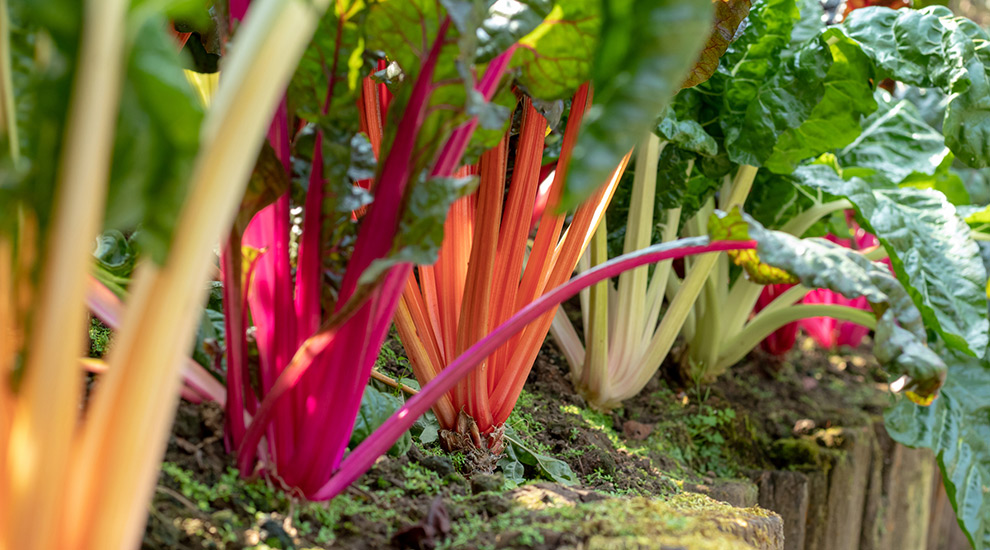
The term chard comes from the 14th century French word carde, which means artichoke thistle.
Nutritional properties
Chard's leaves are a valuable source of mineral nutrients, with a normal serving of 100g containing: 24% of our daily magnesium needs, 17% of iron, 16% of manganese, and 12% of both potassium and sodium. The same portion can provide 22% of our daily vitamin C needs, 13% of vitamin E, and 100% of our vitamin K.
>> What gives chillis their heat? The SCI Horticulture group has explored the weird and wonderful world of chillis.
The edible petioles (leaf stems) of Swiss chard are typically white, yellow, or red. Lucullus and fordhook giant are cultivars with white petioles. Canary yellow has yellow petioles and red-ribbed forms include ruby chard and rhubarb chard. Rainbow chard is a mix of coloured varieties, often mistaken for a variety unto itself.
The pigments that produce these colours belong to a special group – known as the betalains. These pigments are found only in species of one small section of the plant kingdom called caryophyllales. The pigments in the rest of the plant kingdom have different chemical structures, made up of only carbon, hydrogen and oxygen, whereas the betalain chemical structures also contain nitrogen.
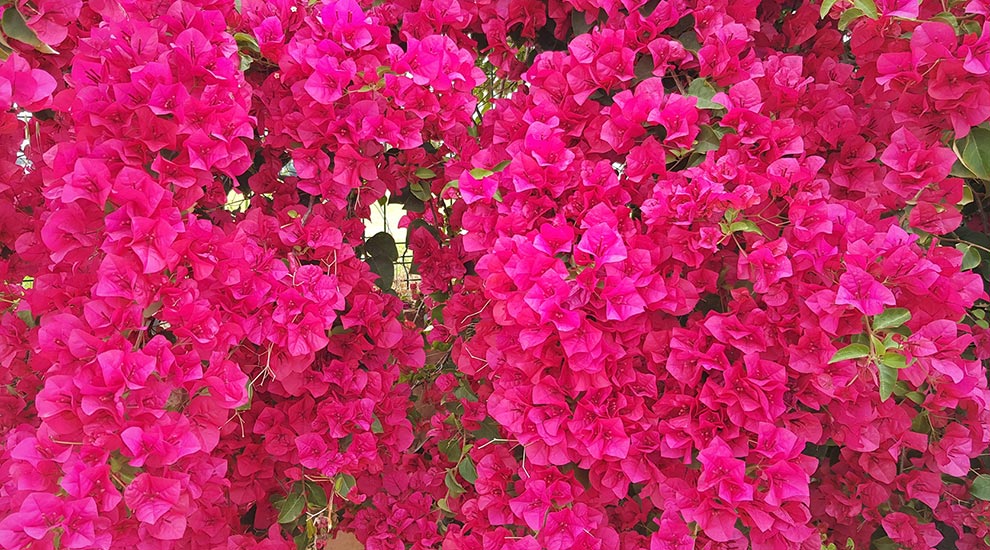
Rainbow chard contains betalains, as do cacti, pokeweed, and (above) bougainvillea.
The many uses of chard pigments
The colourful pigments in plants not only contribute to the beauty of our gardens – they advertise the presence of flowers to pollinators or fruits to dispersal agents. Others deter herbivores by tasting bitter or act as a sunscreen to protect from strong ultraviolet light.
The vivid pigments found in chard are particularly useful. Betanin is the best-known pigment from this group and gives rise to the striking colour of beetroot. It is used commercially as a natural food dye, can help preserve food, and contains antioxidant properties.
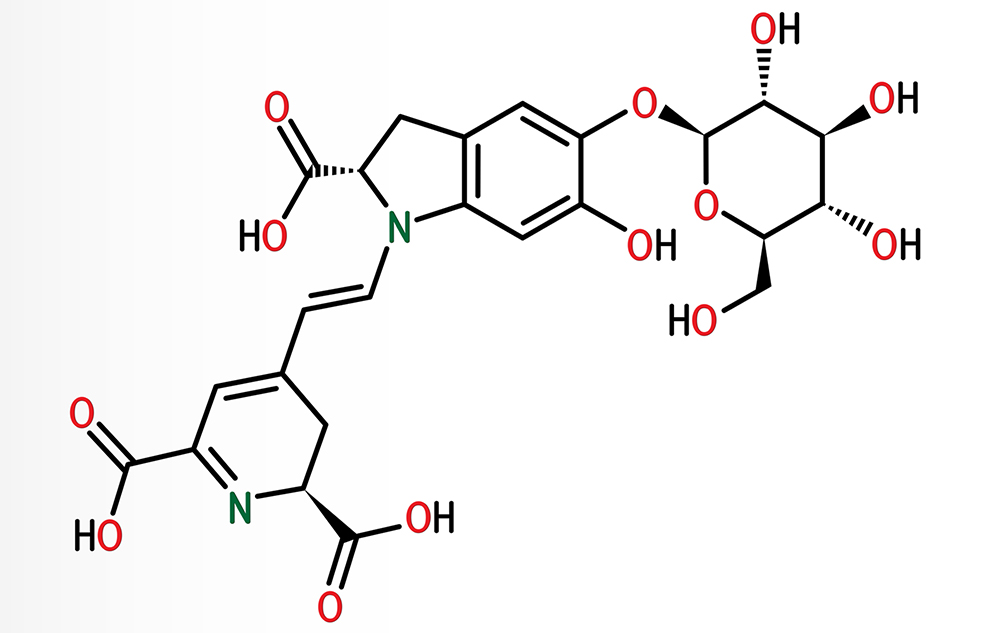
Betanin, the pigment that makes beetroot (and poop) red.
Some people are unable to metabolise betanin, which gives rise to a phenomenon known as beeturia – where human waste is coloured red by the betanin.
Cooking with chard
When cooking with chard, it can be treated as two separate vegetables – the leafy part and the crunchy petiole. Blitva is a traditional Croatian dish made from the leafy part, often cooked along with potatoes and served with fish.
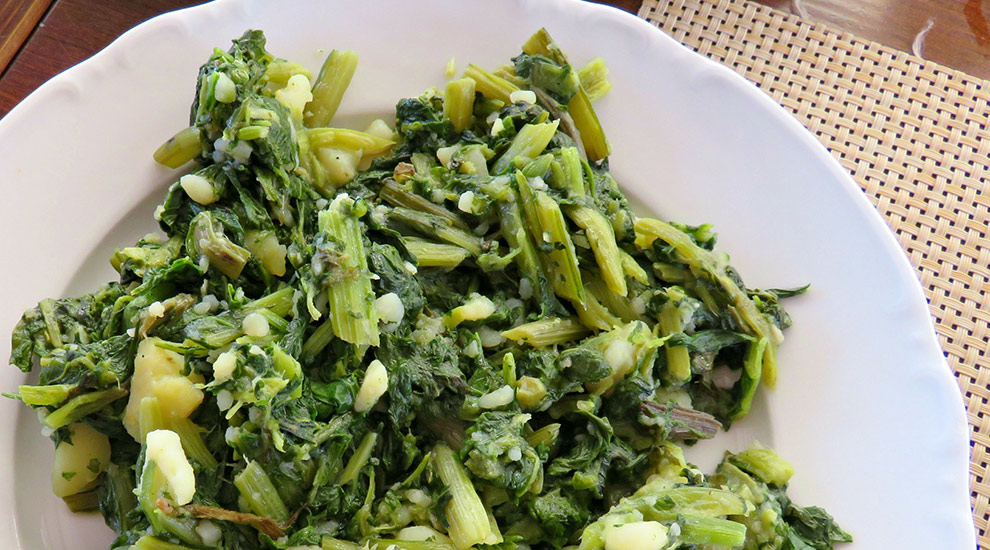
Blitva is made with chard, potato, olive oil, and garlic.
Chard stalks sautéed with lemon and garlic forms another popular side-dish, while lovers of Italian cuisine can turn rainbow chard into a pesto with pine nuts, parmesan and basil.
Find us at BBC Gardeners’ World Live
From 16-19 June, the SCI Horticulture Group will tell the public all about the hidden chemistry behind their favourite fruit and vegetable plants at the National Exhibition Centre in Birmingham for BBC Gardeners’ World Live. If you’re curious to learn all about rainbow chard, chillis, and strawberries, pop by and say hello!.
>> Written by the SCI Horticulture Group and edited by Eoin Redahan. Special thanks to Neal Price from Chillibobs, Martin Peacock of ZimmerPeacock, Hydroveg, and The University of Reading Soft Fruit Technology Group for supporting the work of the SCI Horticulture Committee at BBC Gardeners’ World Live.
>> The SCI Horticulture Group brings together those working on the wonderful world of plants.
15 June 2022 |
|
|
Agrifood
Which molecules give strawberries their distinctive smell, how are experts using different types of light to grow them all year round, and just how many of them do we eat? The SCI Horticulture Group told us all about this beloved fruit ahead of their appearance at BBC Gardeners’ World Live in Birmingham from 16-19 June.
Where did strawberries originate?
The woodland strawberry (Fragaria vesca) was first cultivated in the 17th century, but the strawberry you know and love today (Fragaria x ananassa) is actually a hybrid species. It was first bred in Brittany, France, in the 1750s by cross-breeding the North American Fragaria virginiana with the Chilean Fragaria chiloensis.
The strawberry is a member of the rose family, as are many other popular edible fruits such as apples, pears, peaches, and plums. It is the most commonly consumed berry crop worldwide.

People in the UK consume an average 3kg of strawberries every year. Perhaps a certain sporting event has something to do with it…
How many do we eat?
A staggering 9 million tonnes of strawberries are produced globally each year, and their popularity certainly extends to UK shores, and not just during Wimbledon. In the UK alone, the average per capita consumption of strawberries is about 3kg a year!
Domestic strawberry production provides almost all the required fruit for the UK market from March to November; and in 2020, 123,000 tonnes of strawberries were produced within the UK.
This stands in stark contrast to the 50,000 tonnes produced in 1985, when UK strawberries were only produced during June and July. Researchers are currently trying to extend the UK growing season to all year round.

She certainly likes the smell of strawberries, but what gives them that distinctive aroma?
What about the chemistry of their distinctive smell?
The characteristic strawberry aroma consists of many different volatile organic chemicals – more than 360 have been observed in fresh strawberries. Which molecules are present, and in what concentrations, depends on the particular cultivar and how mature or ripe it is.
The most common kinds of chemical are furanones and esters. Esters (such as methyl butanoate) account for more than one third of the observed molecules and 25–90% of the volatiles from any one cultivar.
These molecules are responsible for the fruity and floral notes of the aroma. The most characteristic furanone that gives rise to the characteristic strawberry odour is DMHF.

Pictures like this only increase demand for strawberries out of season.
How to produce strawberries all year...
To optimise strawberry growing conditions, researchers are investigating the influence of temperature, photo-period (response to daily, seasonal, or yearly changes in light and darkness), growth hormones, night-break lighting and CO2 enrichment on flowering and fruiting timing, yield, and quality.
Optimal chilling models are also being developed for both June-bearers and ever-bearers. Critically, a careful and detailed evaluation of the environmental and economic costs of producing winter UK strawberries compared to imports is being undertaken.
Extending the growing season in the UK would have a number of benefits, such as; meeting the increasing demand for out-of-season strawberries while increasing food security, reducing food miles, contributing to public health, providing continued employment, and supporting sustainable farming.
>> Are you a keen gardener? Our resident gardening expert, Geoff Dixon, provides plenty of gardening tips for you on the SCIBlog.
Improving the fruit's nutrient profile
The nutrient content of strawberries is dependent in part on the plant’s growing conditions. The interaction between light intensity and root-zone water deficit stress is being examined to improve berry nutrient content. Researchers are also investigating how to apply this to commercial strawberry production in total environment-controlled agriculture systems.
See how a college in Finland is harnessing LEDs to power a vertical strawberry farm!
LED light colour and strawberry growth
Light emitting diode (LED) lighting increases yields in out-of-season strawberry production. LEDs have a higher energy efficiency than traditional horticultural lighting and come in a range of single colours with varying efficiencies and effects on plant growth.
Red LEDs convert energy into light (and drive photosynthesis) most efficiently, followed by blue, green, and far-red, respectively. However, red light alone is not sufficient for optimum plant growth. Blue light controls flowering, promotes stomatal opening (pores found in various parts of the plant), inhibits stem elongation, and increases secondary metabolites (organic compounds produced by the plant), thereby improving flavour.
Additional green LEDs, which appear white, improve visibility for workers. These lights can also penetrate deeper into the plant canopy, improving photosynthesis. Far-red light produces shade avoidance responses such as canopy expansion and earlier flowering, which can be beneficial for increased light capture and earlier fruiting.
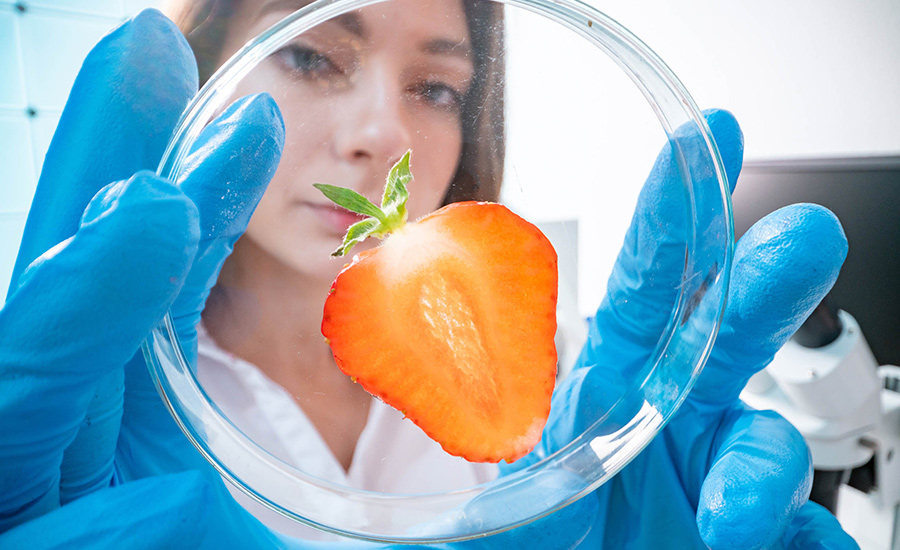 >
>Confirmed strawberry.
Who is carrying out strawberry research in the UK?
The Soft Fruit Technology Group at the University of Reading is just one of the institutions providing research to support the UK strawberry industry. The main areas of research are plant propagation, crop management, and production systems.
Find us at BBC Gardeners’ World Live
From 16-19 June, the SCI Horticulture Group will tell the public all about the hidden chemistry behind their favourite fruit and vegetable plants at the National Exhibition Centre in Birmingham for BBC Gardeners’ World Live. If you’re curious to learn all about strawberries, chillis, and chard, pop by and say hello!
>> Written by The SCI Horticulture Group. Special thanks to Neal Price from Chillibobs, Martin Peacock of ZimmerPeacock, Hydroveg, and The University of Reading Soft Fruit Technology Group for supporting the work of the SCI Horticulture Committee at BBC Gardeners’ World Live.
10 June 2022 |
|
|
Agrifood
What makes chilli peppers so spicy and how do they help with pain relief? The SCI Horticulture Group explained all ahead of their appearance at BBC Gardeners’ World Live in Birmingham from 16-19 June.
This June, the SCI Horticulture Group will tell the public all about the hidden chemistry behind their favourite fruit and vegetable plants. One of the main plants they will feature at the National Exhibition Centre is the humble chilli pepper – and these famous fruit-berries conceal more secrets than you might think…
Where does the chilli originate?
The chilli pepper (Capsicum spp.) is a member of the Solanaceae, the plant family that includes edibles such as potatoes, tomatoes, aubergines, but also poisonous plants such as tobacco, mandrake, and deadly nightshade.
Who brought the chilli pepper to these shores?
The chilli was brought to Europe in the 15th century by Christopher Columbus and his crew. They became acquainted with it on their travels in South and Central America and, shortly thereafter, to India via the Portuguese spice trade.
How varied is the genus?
Of the 42 species in the capsicum genus, five have been domesticated for culinary use. Capsicum annuum includes many common varieties such as bell (sweet) peppers, cayenne and jalapenos. Capsicum frutescens includes tabasco. Capsicum chinense includes the hottest peppers such as Scotch bonnet. Capsicum pubescens includes the South American rocoto peppers, and capsicum baccatum includes the South American aji peppers.
From the five domesticated species, humans have bred more than 3,000 different cultivars with much variation in colour and taste. The chilli and bell peppers that we eat are the fruit – technically berries – that result from self-pollination of the flowers.
>> The SCI Horticulture Group brings together those working on the wonderful world of plants.
And we eat a lot of them?
Today, chilli peppers are a global commodity. In 2019, 38 million tonnes of green chilli peppers were produced worldwide, with China producing half of the total. Spain is the largest commercial grower of chillies in Europe.

Capsaicin helps give chilli peppers their heat
What makes chillies hot?
Capsaicin is the main substance in chilli peppers that provides the spicy heat. It binds to receptors that detect and regulate heat (as well as being involved in the transmission and modulation of pain), hence the burning sensation that it causes in the mouth.
In humans, these receptors are present in the gut as well as the mouth (in fact, throughout the peripheral and central nervous systems) – hence the after-effects of eating too much chilli. Capsaicin, however, is not equally distributed in all parts of pepper fruit. Its concentration is higher in the area surrounding the seeds.
>> Get tickets for Gardeners’ World Live 2022 and pop by our stand to say hello!
How do you measure chilli heat?
The Scoville Heat Unit Scale is used to classify the strength of chilli peppers. Scoville heat units (SHU) were named after American pharmacist Wilbur Scoville who devised a method for rating chilli heat in 1912.
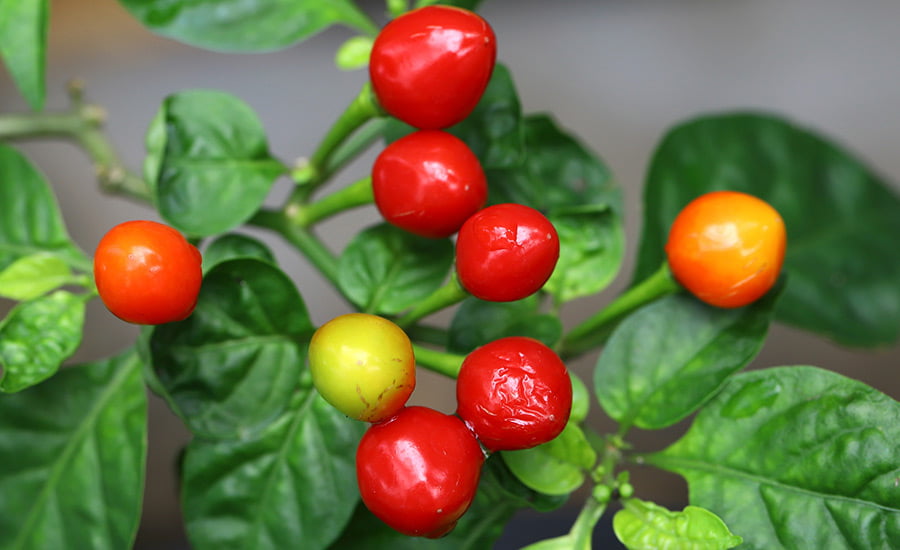
The ludicrously hot Dragon’s Breath chilli
This method relied on a panel of tasters who diluted chilli extract with increasing amounts of sugar syrup until the heat became undetectable. The greater the dilution to render the sample’s heat undetectable, the higher the SHU rating. Pure capsaicin measures 16,000,000 SHU.
The capsaicin content of chilli peppers varies wildly, as is reflected in the SHUs of the peppers below:
- Bell (Sweet peppers) = 0 SHU
- Jalapeno = 5,000 SHU
- Scotch Bonnet = 100,000 SHU
- Naga Jolokia = 1,040,000 SHU
- Carolina Reaper = 1,641,183 SHU
- Dragon’s Breath = 2,480,000 SHU
Dispersal vs. protection – why do chillies contain capsaicin?
The seeds of chillies are dispersed in the wild by birds who do not have the same receptors as mammals and, therefore, are unaffected by capsaicin. Perhaps chillies have evolved to prevent mammals from dispersing their seeds?
Capsaicin has also been shown to protect the plant against fungal attack, thus helping the fruit to reach maturity and the seeds to be dispersed before succumbing to rot. This antifungal property can also be put to good use in helping to preserve foods for human consumption.
How did chilli help win a Nobel Prize?
Capsaicin was pivotal in the research that led to the award of the 2021 Nobel Prize in physiology and medicine to David Julius and Ardem Patapoutian for their discoveries of receptors for temperature and touch.
The two US-based scientists received the accolade for describing the mechanics of how humans perceive hot, cold, touch, and pressure through nerve impulses. The research explained at a molecular level how these stimuli are converted into nerve signals, but the starting point for the study was work with capsaicin from the humble chilli pepper.
Capsaicin in medicine
Capsaicin is used as an analgesic (a pain reliever) in topical ointments, nasal sprays, and patches to relieve chronic and neuropathic pain. Clinical trials continue to investigate the potential of capsaicin for a wide range of additional pain indications and as both an anti-cancer and anti-infective agent.
>> Special thanks to Neal Price from Chillibobs, Martin Peacock of ZimmerPeacock, Hydroveg, and The University of Reading Soft Fruit Technology Group for supporting the work of the SCI Horticulture Committee at BBC Gardeners’ World Live.
>> Our resident gardening expert, Geoff Dixon, provides plenty of gardening tips on the SCIBlog.
31 May 2022 |
|
|