Sustainability & Environment
The Organisation for Economic Cooperation and Development (OECD) defines the Blue Economy as ‘all economic sectors that have a direct or indirect link to the oceans, such as marine energy, coastal tourism and marine biotechnology.’ Other organisations have their own definitions, but they all stress the economic and environmental importance of seas and oceans.
Header image: Our oceans are of economic and environmental importance
To this end there are a growing number of initiatives focused on not only protecting the world’s seas but promoting economic growth. At the start of 2021 the Asian Development Bank (ADB) and the European Investment Bank (EIB) joined forces to support clean and sustainable ocean initiatives in the Asia-Pacific region, and ultimately contribute to achieving Sustainable Development Goals and the climate goals of the Paris Agreement.
Both institutions will finance activities aimed at promoting cleaner oceans ‘through the reduction of land-based plastics and other pollutants discharged into the ocean,’ as well as projects which improve the sustainability of all socioeconomic activities that take place in oceans, or that use ocean-based resources.
ADB Vice-President for Knowledge Management and Sustainable Development, Bambang Susantono, said ‘Healthy oceans are critical to life across Asia and the Pacific, providing food security and climate resilience for hundreds of millions of people. This Memorandum of Understanding between the ADB and EIB will launch a framework for cooperation on clean and sustainable oceans, helping us expand our pipeline of ocean projects in the region and widen their impacts’.
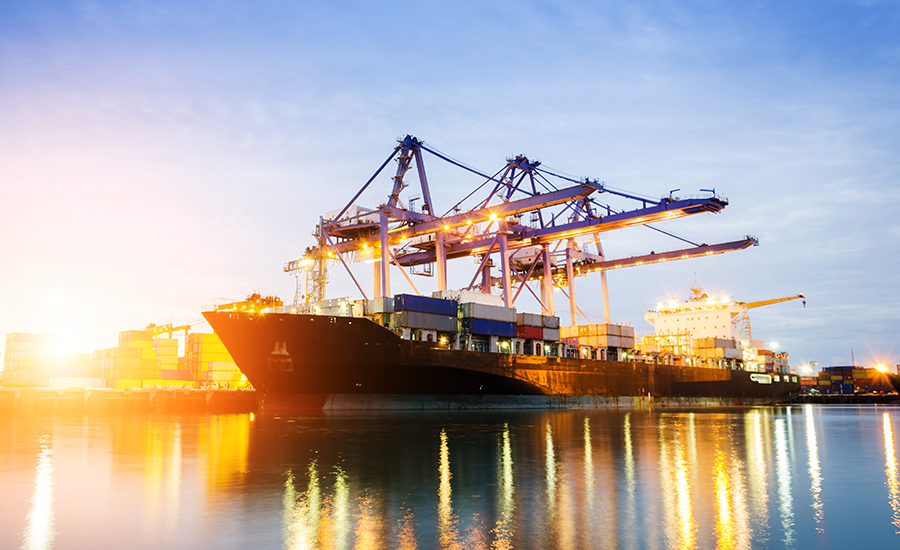
The blue economy is linked to green recovery
In the European Union the blue economy is strongly linked to the bloc’s green recovery initiatives. The EU Blue Economy Report, released during June 2020, indicated that the ‘EU blue economy is in good health.’ With five million people working in the blue economy sector during 2018, an increase of 11.6% on the previous year, ‘the blue economy as a whole presents a huge potential in terms of its contribution to a green recovery,’ the EU noted. As the report was launched, Mariya Gabriel, Commissioner for Innovation, Research, Culture, Education and Youth, responsible for the Joint Research Committee said; ‘We will make sure that research, innovation and education contribute to the transition towards a European Blue Economy.’
The impact of plastics in oceans is well known and many global initiatives are actively tackling the problem. At the end of 2020 the World Economic Forum and Vietnam announced a partnership to tackle plastic pollution and marine plastic debris. The initiative aims to help Vietnam ‘dramatically reduce its flow of plastic waste into the ocean and eliminate single-use plastics from coastal tourist destinations and protected areas.’ Meanwhile young people from across Africa were congratulated for taking leadership roles in their communities as part of the Tide Turners Plastic Challenge. Participants in the challenge have raised awareness of the impact of plastic pollution in general.
But it isn’t just the health of our oceans that governments and scientists are looking at. There is growing interest in the minerals and ore that could potentially be extracted via sea-bed mining. The European Commission says that the quantity of minerals occupying the ocean floor is potentially large, and while the sector is small, the activity has been identified as having the potential to generate sustainable growth and jobs for future generations. But adding a note of caution, the Commission says, ‘Our lack of knowledge of the deep-sea environment necessitates a careful approach.’ Work aimed at shedding light on the benefits, drawbacks and knowledge gaps associated with this type of mining is being undertaken.
With the push for cleaner energy and the use of batteries, demand for cobalt will rise, and the sea-bed looks to have a ready supply of the element. But, the World Economic Forum points out that the ethical dimensions of deep-sea cobalt have the potential to become contentious and pose legal and reputational risks for mining companies and those using cobalt sourced from the sea-bed.
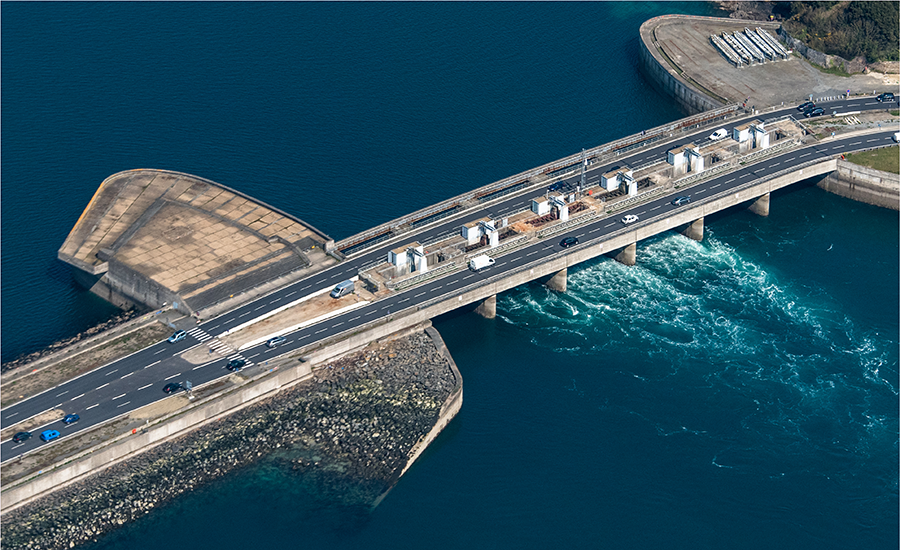
Energy will continue to be harnessed from the sea.
But apart from its minerals, the ocean’s ability to supply energy will continue to be harnessed through avenues such as tidal and wind energy. During the final quarter of 2020, the UK Hydrographic Office launched an Admiralty Marine Innovation Programme. Led by the UK Hydrographic Office, the programme gives innovators and start-ups a chance to develop new solutions that solve some of the world’s most pressing challenges as related to our oceans.
The UK’s Blue Economy is estimated to be worth £3.2 trillion by the year 2030. Marine geospatial data will be important in supporting this growth by enabling the identification of new areas for tidal and wind energy generation, supporting safe navigation for larger autonomous ships, which will play a vital role in mitigating climate change, and more.
23 February 2021 |
|


 |
|

Sustainability & Environment
The world’s biggest ever survey of public opinion on climate change was published on 27th January, covering 50 countries with over half of the world’s population, by the United Nations Development Programme (UNDP) and the University of Oxford. Of the respondents, 64% believe climate change is a global emergency, despite the ongoing Covid-19 pandemic, and sought broader action to combat it. Earlier in the month, US President Joe Biden reaffirmed the country's commitment to the Paris Agreement on Climate Change.
It is possible that the momentum, combined with the difficulties many countries currently face, may make many look again to geoengineering as an approach. Is it likely that large scale engineering techniques could mitigate the damage of carbon emissions? And is it safe to do so or could we be exacerbating the problem?
The term has long been controversial, as have many of the suggested techniques. But it would seem that some approaches are gaining more mainstream interest, particularly Carbon Dioxide Removal (CDR) and Solar Radiation Modification (SRM), which the 2018 Intergovernmental Panel on Climate Change (IPCC) report for the UN suggested were worth further investigation (significantly, it did not use the term "geoengineering" and distinguished these two methods from others).
One of the most covered CDR techniques is Carbon Capture and Storage (CCS) or Carbon Capture, Utilisation, and Storage (CCUS), the process of capturing waste carbon dioxide, usually from carbon intensive industries, and storing (or first re-using) it so it will not enter the atmosphere. Since 2017, after a period of declining investment, more than 30 new integrated CCUS facilities have been announced. However, there is concern among many that it will encourage further carbon emissions when the goal should be to reduce and use CCS to buy time to do so.
CDR techniques that utilise existing natural processes of natural repair, such as reforestation, agricultural practices that absorb carbon in soils, and ocean fertilisation are areas that many feel could and should be pursued on a large scale and would come with ecological and biodiversity benefits, as well as fostering a different, more beneficial relationship with local environments.
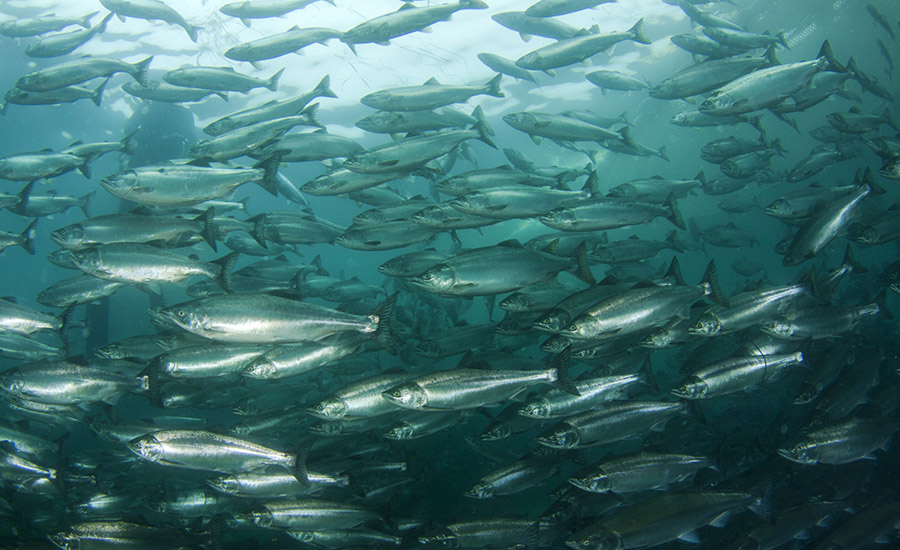
A controversial iron compound deposition approach has been trialled to boost salmon numbers and biodiversity in the Pacific Ocean.
The ocean is a mostly untapped area with huge potential and iron fertilisation is one very promising area. The controversial Haida Salmon Corporation trial in 2012 is perhaps the most well-known example and brings together a lot of the pros and cons frequently discussed in geoengineering — in many ways, we can see it as a microcosm of the bigger issue.
The trial deposited 120 tonnes of iron compound in the migration routes of pink and sockeye salmon in the Pacific Ocean 300k west of Haida Gwaii over a period of 30 days, which resulted in a 35,000km2, several month long phytoplankton bloom that was confirmed by NASA satellite imagery. That phytoplankton bloom fed the local salmon population, revitalising it — the following year, the number of salmon caught in the northeast Pacific went from 50 million to 226 million. The local economy benefited, as did the biodiversity of the area, and the increased iron in the sea captured carbon (as did the biomass of fish, for their lifetimes).

Small but mighty, phytoplankton are the laborers of the ocean. They serve as the base of the food web.
But Environment Canada believes the corporation violated national environmental laws by depositing iron without a permit. Much of the fear around geoengineering is how much might be possible by rogue states or even rogue individuals, taking large scale action with global consequences without global consent.
The conversation around SRM has many similarities — who decides that the pros are worth the cons, when the people most likely to suffer the negative effects, with or without action, are already the most vulnerable? This is a concern of some of the leading experts in the field. Professor David Keith, an expert in the field, has publicly spoken about his concern around climate change and inequality, adding after the latest study that, "the poorest people tend to suffer most from climate change because they’re the most vulnerable. Reducing extreme weather benefits the most vulnerable the most. The only reason I’m interested in this is because of that."
But he doesn't believe anywhere near sufficient research has been done into the viability of the approach or the possible consequences and cautions that there is a need for "an adequate governance system in place".
There is no doubt that the research in this field is exciting but there are serious ethical and governance problems to be dealt with before it can be considered a serious component of an emissions reduction strategy.
15 February 2021 |
|
|
Policy
The theme of the 2021 World Economic Forum’s Davos Agenda was ‘The Great Reset’ and how the world might recover from the effects of Covid-19. Because of the current circumstances, the forum was split into two parts, with a virtual meeting held January 25-29 and an in-person gathering planned for May 13-16, in Singapore.
Each day of the January summit was dedicated to discussing a key area for recovery. On Monday, January 25, the focus was on designing cohesive, sustainable and resilient economic systems. On Tuesday, delegates discussed how to drive responsible industry transformation and growth, while on Wednesday they spoke about enhancing the stewardship of our global commons. Thursday's talks centred on harnessing the technologies of the Fourth Industrial Revolution, and on Friday attendees discussed ways to advance global and regional cooperation.
With the International Labor Organization jobs report, published at the start of the week, stating that at least 225 million jobs vanished worldwide over the past year (four times more than the 2008 global financial crisis) and concerns that vaccine nationalism will see the pandemic continue to ravage many less wealthy nations, much of the talk was around equality and unity.
Christine Lagarde, President of the European Central Bank, spoke in Monday's meeting. ‘Once we’re through to the "second phase" of the 2021 Covid-19 recovery,’ Lagarde said, ‘it is most likely going to be a new economy, which will be associated with positive developments and also with challenges.’ Many advanced economies, she noted, particularly in Europe, have jumped forward in terms of digitalisation, some by up to seven years.
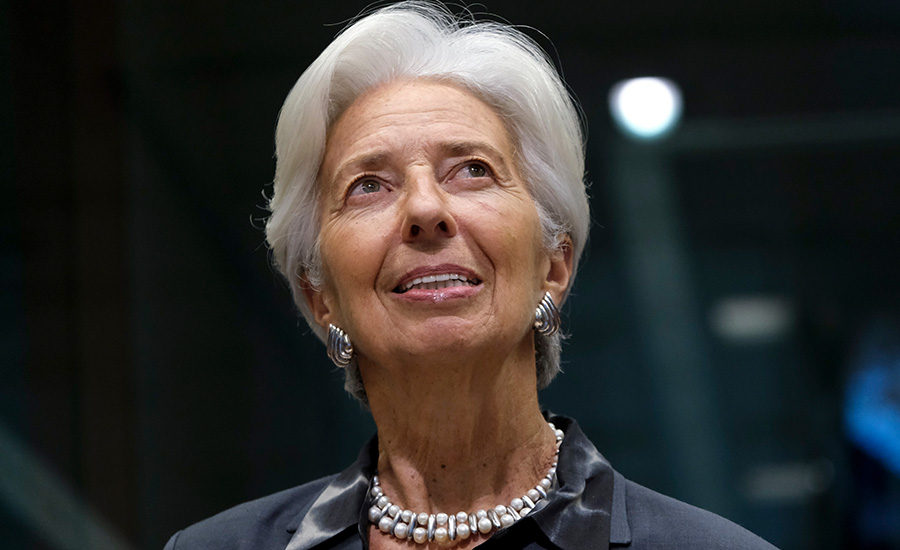
Christine Lagarde, President of the European Central Bank, has called for continued support for the digital-centred, post-pandemic economy. | Credit: Alexandros Michailidis / Shutterstock.com
She added that it is likely that there will be a 20% increase in the amount of people working from home post-pandemic, which will have an impact on many economies, and claimed that technological changes are already having positive effects. She said that it is critical to continue ‘favouring and supporting investment into this new economy’ and that on the fiscal and monetary policy front, authorities will have to stay the course and continue to support. At the same time, investment will have to be focused on laying the ground for a new economy.
Ursula von der Leyen, President of the European Commission (EC), agreed about the increase in digitalisation, and reported that the EU hopes ‘the 2020s can finally be Europe’s Digital Decade’, highlighting a number of investments to boost this process, including the startup scenes in cities such as Sofia and Lisbon.
However, she warned that there is a ‘darker side of the digital world,’ noting the assault on Capitol Hill in the US and making clear that ‘The immense power of the big digital companies must be contained. She spoke of the EC's plans ‘to make internet companies take responsibility for content, from dissemination to promotion and removal, and highlighted the Commission’s new rulebooks, the Digital Services Act and the Digital Markets Act.
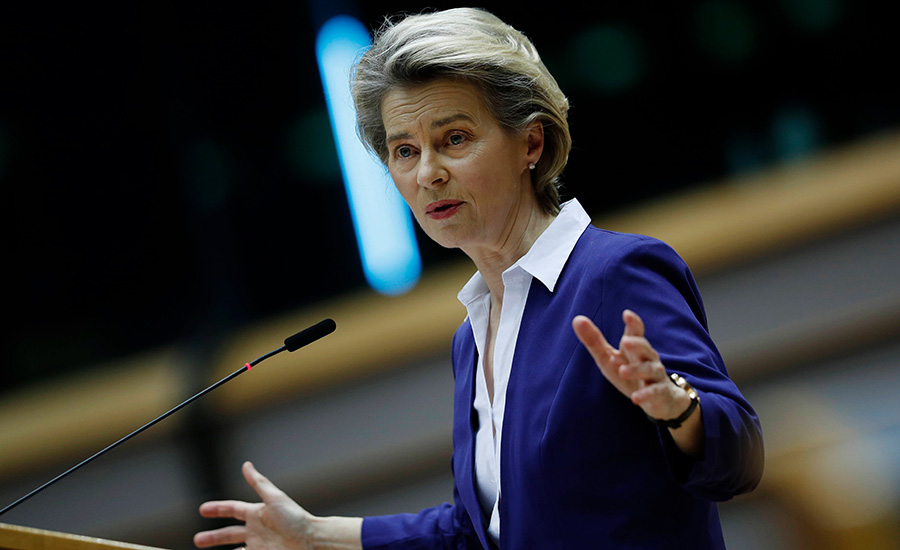
Ursula von der Leyen, President of the European Commission, believes the 2020s can be Europe’s ‘Digital Decade’. | Credit: John Smith Williams / Shutterstock.com
She invited the US to work together to: ‘Create a digital economy rulebook that is valid worldwide: it goes from data protection and privacy to the security of critical infrastructure. A body of rules based on our values: Human rights and pluralism, inclusion and the protection of privacy.’
Marc Benioff, Salesforce CEO, made a noteworthy intervention in his panel discussion, claiming, ‘There has been a mantra for too long that the business of business is business, but today the business of business is improving the state of the world.’ He added that, while there were many CEOs who had been ‘bad actors,’ others had used their considerable resources to help fight the pandemic.
Many speakers noted a shift towards sustainability in investments, with others demanding more change and faster. Of the latter, Mark Carney, Special Envoy for Climate Action and Finance to the UN, said bluntly, ‘if you are part of the private financial sector and you are not part of the solution […] you will have made the conscious decision not to be aligned to net zero […] if you’re not in, you’re out because you chose to be out.’
It could be concluded that there was a great deal to feel positive about, but the circumstances are difficult. Now we will see whether the attendees of the World Economic Forum can deliver on their inspiring rhetoric.
09 February 2021 |
|
|