
Sustainability & Environment
The Organisation for Economic Cooperation and Development (OECD) defines the Blue Economy as ‘all economic sectors that have a direct or indirect link to the oceans, such as marine energy, coastal tourism and marine biotechnology.’ Other organisations have their own definitions, but they all stress the economic and environmental importance of seas and oceans.
Header image: Our oceans are of economic and environmental importance
To this end there are a growing number of initiatives focused on not only protecting the world’s seas but promoting economic growth. At the start of 2021 the Asian Development Bank (ADB) and the European Investment Bank (EIB) joined forces to support clean and sustainable ocean initiatives in the Asia-Pacific region, and ultimately contribute to achieving Sustainable Development Goals and the climate goals of the Paris Agreement.
Both institutions will finance activities aimed at promoting cleaner oceans ‘through the reduction of land-based plastics and other pollutants discharged into the ocean,’ as well as projects which improve the sustainability of all socioeconomic activities that take place in oceans, or that use ocean-based resources.
ADB Vice-President for Knowledge Management and Sustainable Development, Bambang Susantono, said ‘Healthy oceans are critical to life across Asia and the Pacific, providing food security and climate resilience for hundreds of millions of people. This Memorandum of Understanding between the ADB and EIB will launch a framework for cooperation on clean and sustainable oceans, helping us expand our pipeline of ocean projects in the region and widen their impacts’.
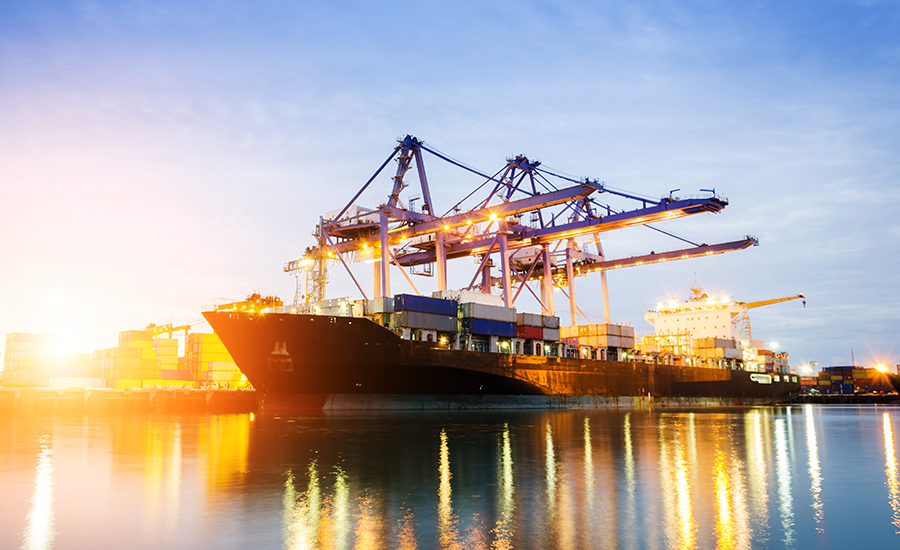
The blue economy is linked to green recovery
In the European Union the blue economy is strongly linked to the bloc’s green recovery initiatives. The EU Blue Economy Report, released during June 2020, indicated that the ‘EU blue economy is in good health.’ With five million people working in the blue economy sector during 2018, an increase of 11.6% on the previous year, ‘the blue economy as a whole presents a huge potential in terms of its contribution to a green recovery,’ the EU noted. As the report was launched, Mariya Gabriel, Commissioner for Innovation, Research, Culture, Education and Youth, responsible for the Joint Research Committee said; ‘We will make sure that research, innovation and education contribute to the transition towards a European Blue Economy.’
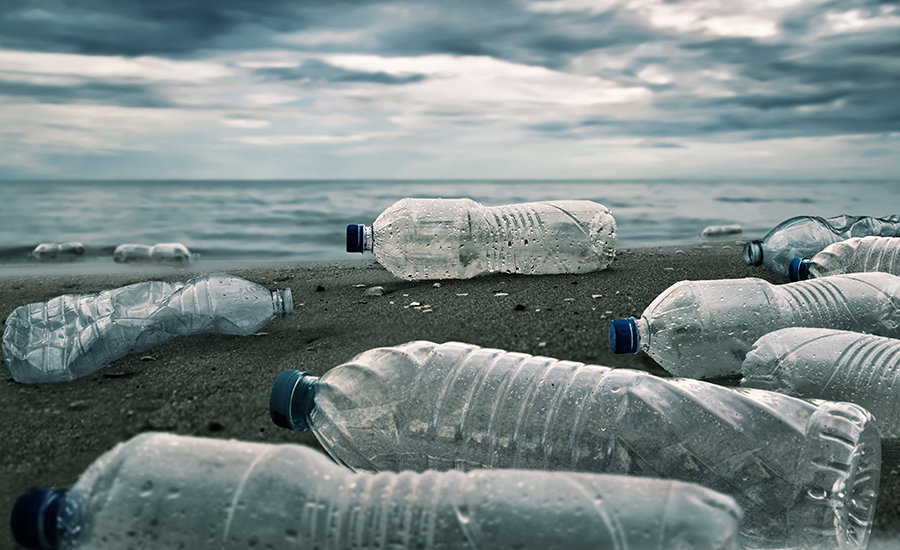
The impact of plastics in oceans is well known and many global initiatives are actively tackling the problem. At the end of 2020 the World Economic Forum and Vietnam announced a partnership to tackle plastic pollution and marine plastic debris. The initiative aims to help Vietnam ‘dramatically reduce its flow of plastic waste into the ocean and eliminate single-use plastics from coastal tourist destinations and protected areas.’ Meanwhile young people from across Africa were congratulated for taking leadership roles in their communities as part of the Tide Turners Plastic Challenge. Participants in the challenge have raised awareness of the impact of plastic pollution in general.
But it isn’t just the health of our oceans that governments and scientists are looking at. There is growing interest in the minerals and ore that could potentially be extracted via sea-bed mining. The European Commission says that the quantity of minerals occupying the ocean floor is potentially large, and while the sector is small, the activity has been identified as having the potential to generate sustainable growth and jobs for future generations. But adding a note of caution, the Commission says, ‘Our lack of knowledge of the deep-sea environment necessitates a careful approach.’ Work aimed at shedding light on the benefits, drawbacks and knowledge gaps associated with this type of mining is being undertaken.
With the push for cleaner energy and the use of batteries, demand for cobalt will rise, and the sea-bed looks to have a ready supply of the element. But, the World Economic Forum points out that the ethical dimensions of deep-sea cobalt have the potential to become contentious and pose legal and reputational risks for mining companies and those using cobalt sourced from the sea-bed.
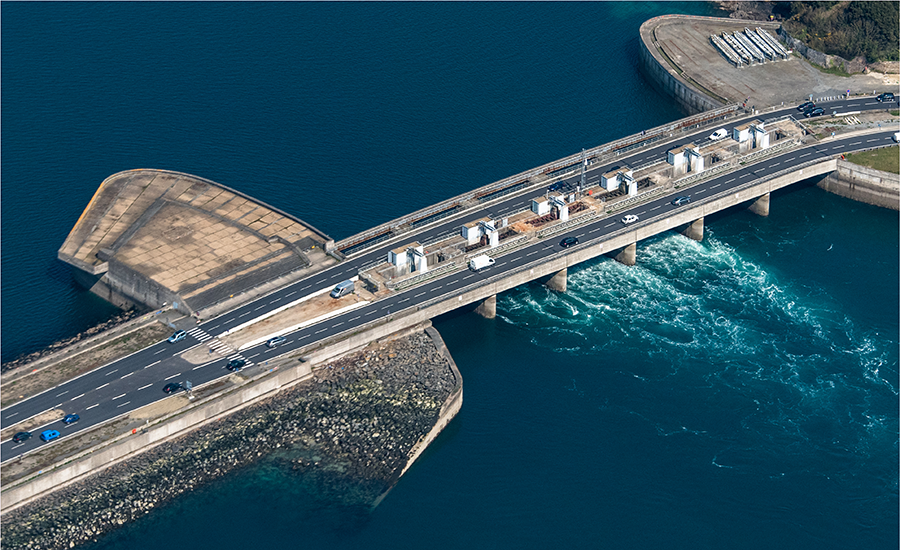
Energy will continue to be harnessed from the sea.
But apart from its minerals, the ocean’s ability to supply energy will continue to be harnessed through avenues such as tidal and wind energy. During the final quarter of 2020, the UK Hydrographic Office launched an Admiralty Marine Innovation Programme. Led by the UK Hydrographic Office, the programme gives innovators and start-ups a chance to develop new solutions that solve some of the world’s most pressing challenges as related to our oceans.
The UK’s Blue Economy is estimated to be worth £3.2 trillion by the year 2030. Marine geospatial data will be important in supporting this growth by enabling the identification of new areas for tidal and wind energy generation, supporting safe navigation for larger autonomous ships, which will play a vital role in mitigating climate change, and more.
23 February 2021 |
|


 |
|

Energy
Where once a country might have wanted to strike gold, now hitting upon a hydrocarbon find feels like a prize. But finding a hydrocarbon is only the beginning of the process and might not be worth it — as Lebanon is discovering.
First, a little background: for some time, Lebanon has been experiencing an energy crisis. Without resources of their own, the industry (which is government-owned) is reliant on foreign imports, which are expensive. Electricity in early 2020 was responsible for almost 50% of Lebanon's national debt. Major blackouts were common.
This contributed to a spiralling financial crisis, prompting public protests and riots as the middle class disappeared and even wealthier citizens struggled. Before Covid-19 and the devastating August 2020 blast in Beirut, Lebanon was in crisis.
The idea that the country might be able to switch from foreign oil to local gas was understandably appealing, especially when a major find was literally right there on the Lebanese shore. In 2019, a consortium of Israeli and US firms discovered more than 8tcm of natural gas in several offshore fields in the Eastern Mediterranean, much of it in Lebanese waters.

A hydrocarbon find off the Beirut coast has failed to live up to its early promise.
But a find is only the beginning. With trust in Lebanese politicians low (the country ranks highly in most government corruption indexes) and a system that has repeatedly struggled to deliver a stable government, there are additional difficulties, not least a delay in the licensing rounds and a lack of trust — both internally, from citizens, and externally, from potential bidders. Meanwhile, Lebanon's neighbours race ahead to exploit their own finds, which ratchets up tensions.
Amid all that, a drilling exploration managed to go ahead last summer. But the joint venture between Total, ENI, and Novatek, which operated a well 30km offshore Beirut and drilled to approximately 1,500 metres, did not bring back the hoped-for results. The results confirmed the presence of a hydrocarbon system generally but did not encounter any reservoirs of the Tamar formation, which was the target.
Offshore exploration is a long process, with a lot of challenges and uncertainties and Ricardo Darré, Managing Director of Total E&P Liban, said afterwards, "Despite the negative result, this well has provided valuable data and learnings that will be integrated into our evaluation of the area". But the faith national politicians have long put in the hydrocarbon find, selling it as an answer to all Lebanon's problems, seems to have only worsened the domestic situation since.
And domestic politics is just the start of the problems…
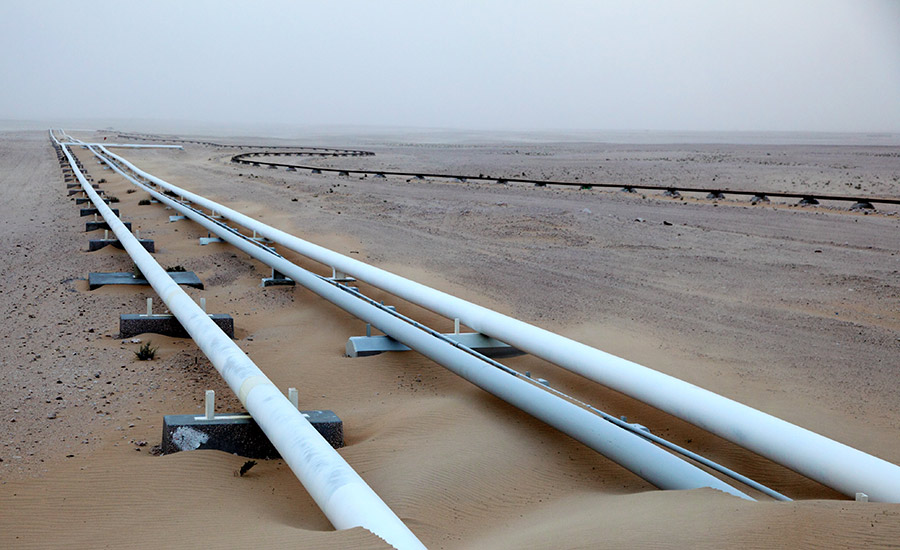
Unlike other countries in the Middle East, Lebanon has no pipeline infrastructure of its own.
Israel, Egypt, and Jordan already have pipelines, which go to Italy. Turkey is working with Libya on a pipeline. Lebanon has no pipeline infrastructure of its own yet, although Russia has storage facilities and pipelines in the country and an eye on possible competition in the gas market.
None of that is an issue if the supply is intended for domestic use but that might not be profitable enough for investors and the Lebanese government would struggle to underwrite production on its own. Cyprus has encountered similar issues exploiting its share of the find.
Lebanon has also set an ambitious goal of having 30% of domestic energy mix sourced from renewable energy by 2030. The hoped-for gas was intended to support the renewable energy mix but, with the clock ticking, it might be that priorities shift to focusing on renewables. The Covid-19 pandemic will significantly impact the budgets of drilling companies and the push for renewable energy, both from governments and investors, seems to be growing as a way to boost economic recovery.
It may be that, after all the excitement around the hydrocarbon find, Lebanon starts to look elsewhere for its energy provision.
22 February 2021 |
|
|
Energy
We are increasingly conscious of the need to recycle waste products, but it is never quite so easy as rinsing and sorting your waste into the appropriate bins, especially when it comes to plastic.
Despite our best intentions, only around 16% of plastic is recycled into new products — and, worse, plastics tend to be recycled into low quality materials because transformation into high-value chemicals requires substantial amounts of energy, meaning the choices are either downcycling or prohibitively difficult. The majority of single-use plastics end up in landfills or abandoned in the environment.
This is a particular problem when it comes to polyolefins such as polyethylene (PE) and polypropylene (PP), which use cheap and readily available raw materials. Approximately 380 million tonnes of plastics are generated annually around the world and it is estimated that, by 2050, that figure will be 1.1 billion tonnes. Currently, 57% of this total are polyolefins.
Why are polyolefins an issue? The strong sp3 carbon–carbon bonds (essentially long, straight chains of carbon and hydrogen atoms) that make them useful as a material also make them particularly difficult to degrade and reuse without intensive, high energy procedures or strong chemicals. More than most plastics, downcycling or landfill disposal tend to be the main end-of-life options for polyolefins.
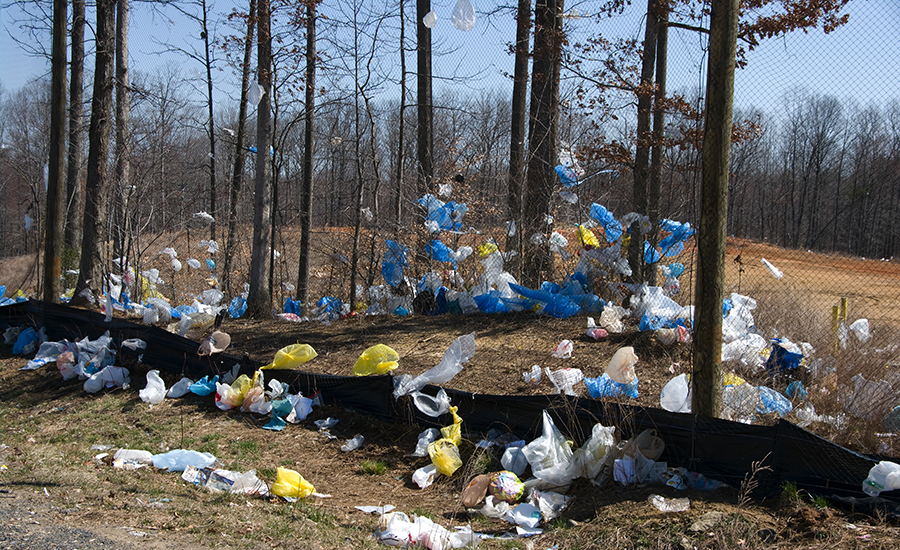
Polyethylene is used to make plastic bags and packaging.
Now, however, a team of scientists from MIT, led by Yuriy Román-Leshkov, believe they may have made a significant step towards solving this problem.
Previous research has demonstrated that noble metals, such as zirconium, platinum, and ruthenium can help split apart short, simple hydrocarbon chains as well as more complicated, but plant-based lignin molecules, in processes with much lower temperatures and energy.
So the team looked at using the same approach for the long hydrocarbon chains in polyolefins, aiming to disintegrate the plastics into usable chemicals and natural gas. It worked.
First, they used ruthenium-carbon nanoparticles to convert more than 90% of the hydrocarbons into shorter compounds at 200 Celsius (previously, temperatures of 430–760 Celsius were required).
Next, they tested their new method on commercially available, more complex polyolefins without pre-treatment (an energy intensive requirement). Not only were the samples completely broken down into gaseous and liquid products, the end product could be selected by tuning the reaction, yielding either natural gas or a combination of natural gas and liquid alkanes (both highly desirable) as preferred.
Polypropylene is used in bottle caps, houseware, and other packaging and consumer products.
The researchers believe that an industrial scale use of their method could eventually help reduce the volume of post-consumer waste in landfills by recycling plastics to desirable, highly valuable alkanes — but, of course, it's not that simple. The team says that more research into the effects of moisture and contaminants in the process is required, as well as product removal strategies to decrease the formation of light alkanes which will be critical for the industrialisation of this reaction.
However, they believe the path they're on could lead to affordable upcycling technology that would better integrate polyolefins into the global economy and incentivise the removal of waste plastics from landfill and the environment.
More about the study can be read here:
https://pubs.acs.org/doi/full/10.1021/jacsau.0c00041
11 February 2021 |
|
|