Sustainability & Environment
A group of inspiring young scientists took centre stage at COP26 on 4 November to show how the next generation of chemists is finding tangible climate change solutions.
In a day dominated by what countries pledged to stop doing at COP26, such as pursuing coal power and financing fossil fuel projects overseas, it was refreshing to learn about low-carbon technologies and the young people driving their development. At the Next Gen forum, we heard from an array of young chemists, all associated with SCI, who are at the sharp edge of this change.
We heard from Brett Parkinson, Senior Engineer of Low Carbon Fuels and Energy Technologist at C-Zero, who is working on commercialising a way to decarbonise natural gas. The California-based company’s technology converts the natural gas into hydrogen and solid carbon to provide a clean energy source while sequestering the carbon; and the aim is to have this process up and running next year.
Natasha Boulding is building towards Net Zero a different way – with a greener concrete. The CEO and Co-founder of Sphera has developed a lightweight carbon negative additive using waste plastics that aren’t currently being recycled. She says the company’s blocks are the same strength and price as existing concrete blocks, but with 30% more thermal insulation. There is also the added benefit of reusing waste materials that would otherwise have gone to landfill or been incinerated.
Another solution discussed by Dominic Smith, Process Development Engineer at GSK, reduces energy consumption through green chemistry. He is trying to find greener ways to make medicines using enzymes. These enzymes, which can be found in plants and soil, replace chemical synthesis steps to cut energy consumption during processing and reduce hazardous waste.
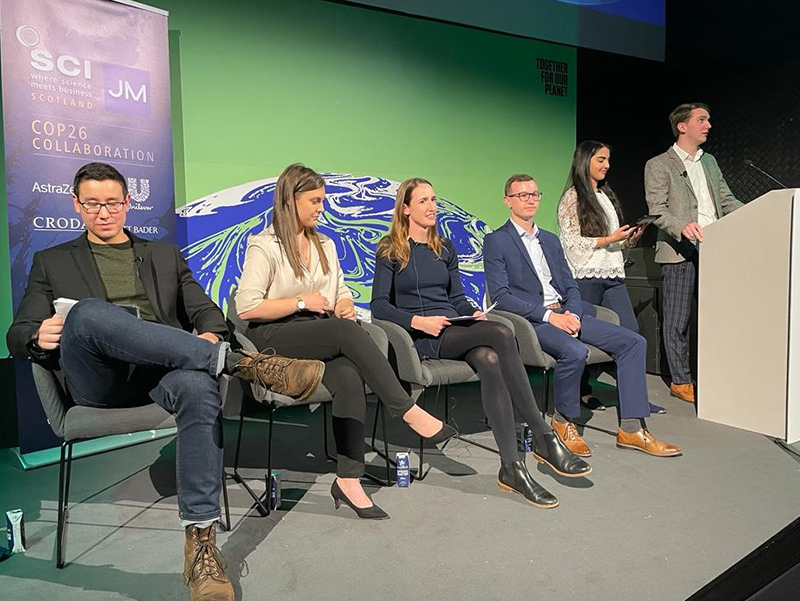
Panel (left to right): Dominic Smith, Natasha Boulding, Clare Rodseth, Jake Coole, Nikita Patel, and Oliver Ring (Brett Parkinson spoke via video link).
It was apparent from the discussion that many solutions will be needed for us to reach our climate change targets. On the one hand, Jake Coole, Senior Chemist in Johnson Matthey’s Fuel Cells team, is working on membrane electrode assembly for hydrogen fuel cells to help us transition to hydrogen-powered buses and trucks.
At the same time, Clare Rodseth, an Environmental Sustainability Scientist at Unilever, has been using lifecycle assessments to reduce the environmental impact of some of the 400 Unilever brands people use all over the world every day. For example, this work has helped the company move away from petrochemical ingredients in its home care products. ‘Even small changes,’ she said, ‘have the potential to bring about large-scale change.’
Incremental change
However, for each of the technologies discussed, barriers remain. For Coole and co., having a readily available supply of hydrogen and charging infrastructure will be key. And for Dominic Smith and his colleagues, the use of enzymes in green chemistry is still in its infancy; and getting enzymes that are fast enough, stable enough, and produce the right yield is difficult. Nevertheless, he noted that manufacturers are now using enzymes to produce the drug amoxicillin, reducing the carbon footprint by about 25%
And some things will take time to change. Natasha Boulding noted that concrete is the second most used material in the world after drinking water, and we simply can’t create many green technologies, such as wind turbines, without concrete foundations.
She said the construction industry is quite traditional but also pointed to perceptible change, with the green concrete market growing and companies becoming increasingly aware of their carbon footprints.
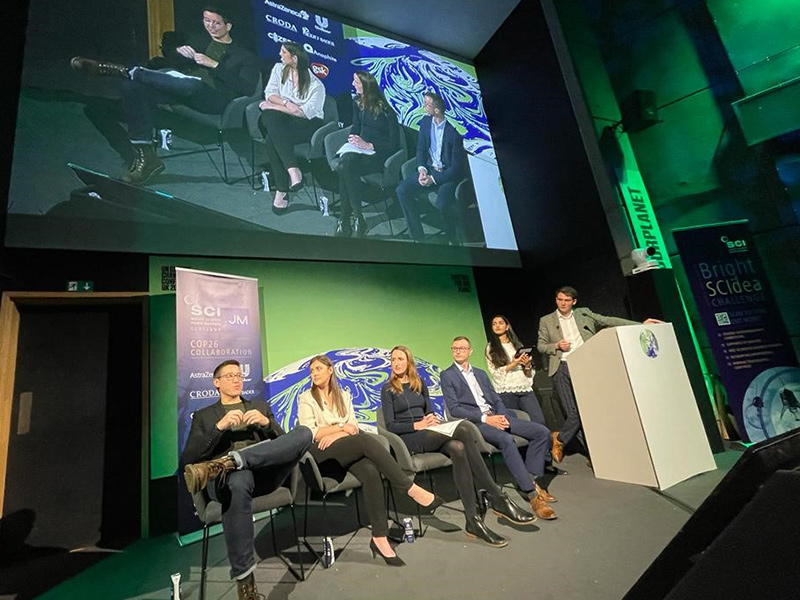
Collaboration was seen as crucial in producing climate change solutions.
The reality is that global action on climate change is recent. As Brett Parkinson said: ‘the main reason we’re talking about it now is that there’s a driver to do it. Until the last decade, the world hadn’t cared about CO2 emissions. They just talked about caring about it.’
How pivotal is science in all of this?
So, what could be done to make climate action more effective? For Parkinson, effective policy is key. He argued that if the market isn’t led by policies that encourage low-carbon innovations, then it won’t work as needed. ‘It all starts with effective decarbonisation policy,’ he said. ‘Legacy industries are very resistant to change. If you don’t have strong and consistent policies… then they’re not going to adapt.’
Another key to our low-carbon evolution is collaboration, and the SCI provides a confluence point for those in industry and academia to work together to produce innovative, low-carbon products. As Clare Rodseth said: ‘Collaboration is really important – linking up people who can actually come together and address these problems.’
As the discussion came to a close, you had the impression that the debate could have gone on for much longer. ‘Hopefully, we’ve demonstrated that there is action, and it’s being driven by young people like our panellists today,’ summarised Oliver Ring, the event’s co-Chair, before asking for the result of the audience poll.
The question: How many of those watching believed that science is pivotal in providing climate change solutions?
The answer: Just the 100%.
>> Thank you to Johnson Matthey for sponsoring the event, to the speakers for sharing their time and expertise, and to co-chairs Nikita Patel and Oliver Ring for doing such an excellent job.
05 November 2021 |
|


 |
|

Sustainability & Environment
This Thursday at COP26, an inspiring panel of young scientists will discuss innovations that will help us mitigate climate change. So, what can we expect?
Millions of young people are frustrated by climate change inaction. Indeed, according to a University of Bath study, 60% of the next generation feel overwhelmed by climate anxiety. Often, the proposed solutions seem vague and intangible – well-intentioned ideas that drift away when the political winds shift.
And yet, when you see the ingenuity of young scientists, business people, and activists, it’s hard not to be excited. Undoubtedly, politics and our legal system will play a huge role in the drive to reach Net Zero, but arguably science will play the biggest role in transforming the way we live. Just think of the falling cost of generating solar power, improvements in battery chemistry for electric vehicles, the development of sustainable construction materials, and the rapid rollout of Covid-19 vaccines.
Tangible solutions
This Thursday at COP26, SCI will host the Next Gen youth forum event where the panellists discuss the climate change solutions they are working on right now and how they are being applied by industry. In the Countdown to Planet Zero roundtable, these scientists – drawn from within SCI’s innovation community – will explain their work to a global audience and the impact it will have on climate change.
They will discuss innovation in three key areas: topics of fuels of the future, turning waste into gold, and engineering nature.
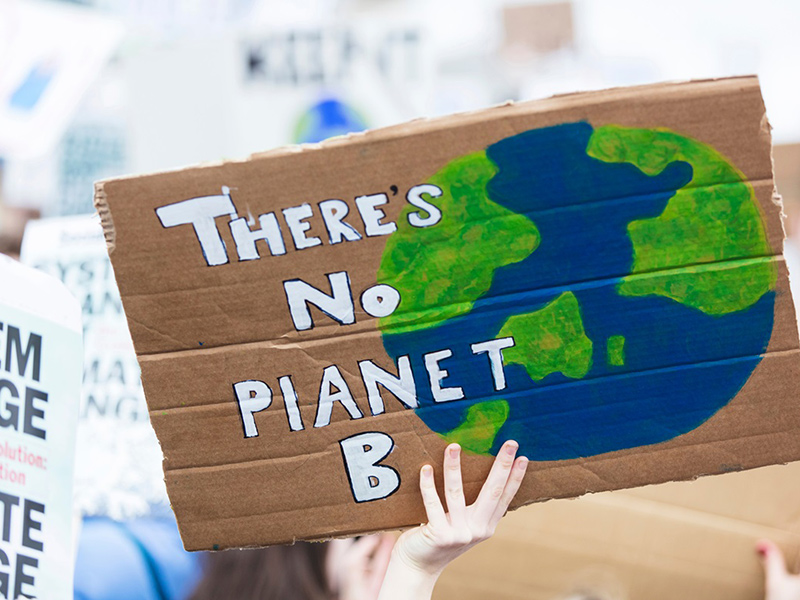
The next generation has mobilised and is creating solutions to help avoid climate change disaster.
The panel will be chaired by two very capable young scientists. Oliver Ring is Senior Scientist at AstraZeneca’s large-scale synthesis team and Chair of SCI’s Young Chemists’ Panel, and passionate climate advocate Nikita Patel is a PhD student at Queen Mary University of London’s Centre of Translational Medicine and Therapeutics and STEM Ambassador for schools.
The other panel members include Clare Rodseth, of Unilever’s Environmental Sustainability Science team, who brings lifecycle analysis to product innovation to make products more sustainable.
Jake Coole, Senior Chemist in Johnson Matthey’s Fuel Cells team, is involved in the scale-up of new processes and next generation manufacturing, and Dominic Smith, Process Development Engineer at GSK, who is interested in engineering biology to create sustainable manufacturing processes.
Also present will be Dr Brett Parkinson, Senior Engineer of Low Carbon Fuels and Energy Technologist at C-Zero – a California-based startup that works on the decarbonisation of natural gas. In 2019, Brett was awarded an SCI scholarship for his research.
The lineup also includes Dr Natasha Boulding, CEO and Co-founder of Sphera Limited, a speciality materials company that has created carbon negative concrete blocks made from aggregate including waste plastic. According to Natasha, whose company also won SCI’s Bright SCIdea challenge in 2019: “In terms of combating climate change, interdisciplinary collaboration is the key. No one discipline has the answer to solve our biggest challenges – but together diverse minds can.’
>> Would you like to take part in BrightSCIdea and be in with the chance of winning £5,000? Be part of it.
Watch the event online
SCI is proud to be associated with these enterprising young scientists and the imaginative solutions they are developing to mitigate the effects of climate change.
‘As a global innovation hub, SCI wants to show how the next generation of scientists is actively developing solutions,’ said Sharon Todd, SCI CEO.

Sharon Todd, SCI CEO
‘Our COP26 youth forum debate will profile the work of young scientists and entrepreneurs addressing climate change in their work. This next generation of innovators has the power to change our world’s tomorrow.’
If you’d like to see the climate change solutions of tomorrow, register to watch the virtual event here.
02 November 2021 |
|
|
Careers
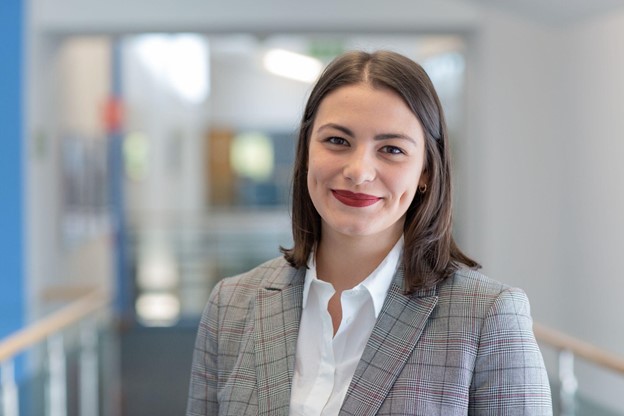
Sarah Davidson has made impressive strides in a short space of time. She has risen to Group Sustainability Coordinator for global Research and Technology at speciality chemicals firm Croda and won the Young Ambassador Award at this year’s Chemical Industry Awards.
In the first blog in our Women in Chemistry series, we caught up with Sarah for a chat on embedding sustainability in the workplace, the need for more diversity in senior roles, and the best bit of advice she received.
Tell us about your career to date.
I loved chemistry at school, so I started off by doing a Master’s in Chemistry at the University of Sheffield. During the course I did a placement year, which was my first taste of working in industry. Once I finished my degree, I was torn between staying in academia and doing a PhD or going into industry. I chose to go into industry because I had enjoyed my placement year so much and saw where I could make an impact.
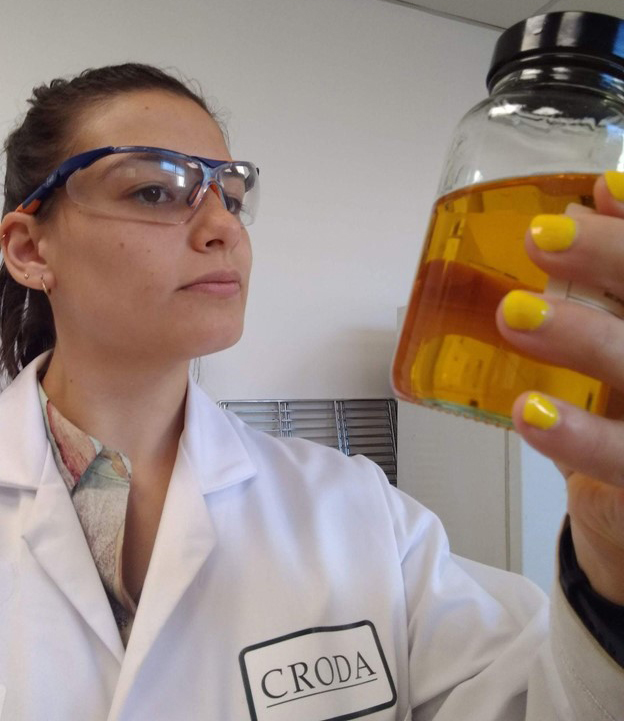
I was accepted onto Croda’s Graduate Development programme, where I had three placements around the business. Croda is a speciality chemicals company, so my placements included working as an applications scientist and synthetic chemist. However, it was my placement working with the Sustainability team that I loved the most.
After the Grad Scheme I became Group Sustainability Coordinator for Global R&D. This combined my experience in R&D and sustainability in a brand role that didn’t exist in Croda before. This role allows me to use my technical knowledge and understanding of the way the global team works to enable those responsible for Croda’s new product innovations to include sustainability as an integral pillar in new product development.
What does your day-to-day role involve?
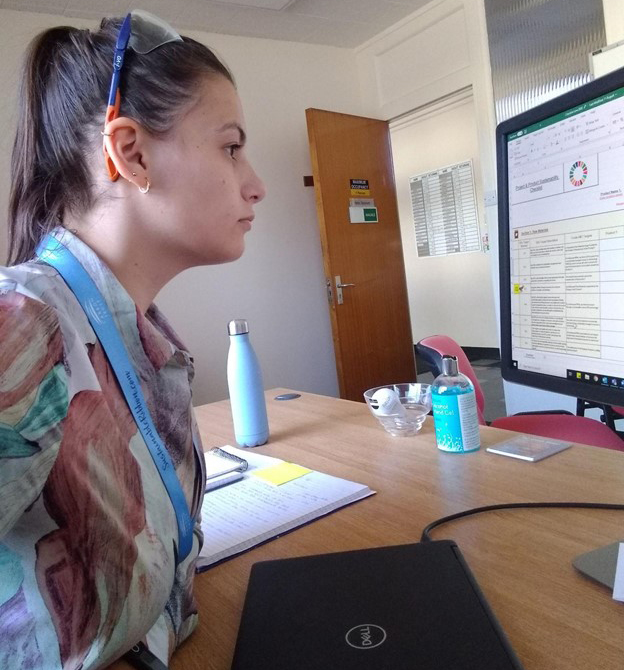
In my role, my main focus is on getting our scientists to think about sustainability during product and process development. At a fundamental level this requires me to change their mindsets around sustainability, getting them to see it is important to what we do and understand what it means.
To do this, I have developed a number of tools including checklists, clearly defined procedures and training documents. I have been working to get these new procedures adopted over the global R&D team by fitting them into existing protocols. Another part of my role is to support our corporate targets and I am part of a number of working groups to do this.
One working group looks at how we define a consistent methodology for Life Cycle Assessments or LCA. In this group I have been doing research to understand the current methods around LCA, and what our customers want in terms of sustainability data. I also help gather data to show where we are up to with these goals, so we understand what actions we need to take to move forward. On a day-to-day basis I will have meetings to discuss the projects I am involved in, conduct research and reach out to other teams and functions to see what they are working on too.
Which aspects of your job motivate you most?
For me sustainability is the future, not only for the chemical industry but for the world. Knowing that I am having a positive impact on sustainability in my role is what motivates me the most. I try to live a sustainable life, and what I do at work is just an extension of that.
What personal challenges have you faced and how have you overcome them?
To embed sustainability into our ways of working, I need to change people’s mindsets, and subsequently their behaviour. Seeing this change in people is incredibly rewarding. However, it is also one of the biggest challenges. Some of our teams have been working in the same roles for decades without any change. So, it is my job to make these changes easier for them to adopt and persuade them of the benefits in doing so. To overcome this challenge, I have had to work on my influencing skills and know what will work with the audience I am speaking to.
What is the greatest future challenge for people in your industry and how could this be addressed.
Sustainability, and addressing the issues we face as a result of climate change, are some of the biggest challenges we will face as an industry. We are in a lucky position that we can achieve a competitive advantage with sustainability, but our main goal is to protect our planet. This gives us a big opportunity for collaboration where we may not have had one before. I think we can only solve this challenge by collaborating across the supply chain, across country borders, and between industry and academia.
>> Not everyone takes the standard career path into chemistry. Take a read of Claudio Laurenco’s unusual, inspiring story.
Which mentors have helped you along the way and how did they make a difference?
I feel like I have a long list of mentors and am very lucky to be able to call on so many people for advice. The best thing I have learnt from them is to pursue what I enjoy most, as people will be able to see my passion. This will help me move forward in my career. Having mentors who have confidence in me and my ability has helped me build my own confidence, something which I can lack from time to time. My mentors are great sounding boards for ideas, whether that is to do with things I want to try in my job or on the direction of my career.
What is the current state of play within your sector with respect to equality, diversity, and inclusion – and is enough being done to attract and retain diverse talent?
I don’t think so. We need to do more to attract and retain diverse talent. We seem to be relatively diverse and inclusive at an academic level, which disappears in industry. There must be a reason for this. There may be bias within recruitment processes, or within job descriptions for senior roles, which means there is less diversity as you move up in organisations. We need to make sure that there are equal opportunities within industry for everyone and make sure everyone has a path to progression that works for them.
Is there any advice you would give to young professionals starting out in your area, especially young women?
Understand where you are different and use that as your advantage. Everyone has a unique lived experience that they bring with them into all situations. As women we have a different perspective to men. This doesn’t mean it is less valuable, it is just different. When you feel like you are in a minority as a woman, or are not being listened to, it is important to remember that our opinions are equal regardless of our background, gender or ethnicity. You have the same right to share your views, as the majority do theirs.
>> We’re always keen to hear from women who are making a real difference in chemistry. If you know someone who you think we should cover, please get in touch with us at: eoin.redahan@soci.org.
27 August 2021 |
|
|