
Agrifood
More people are looking at their nutritional intake, not only to improve wellbeing but also reduce their environmental impact. With this, comes a move to include foods that are not traditionally cultivated or consumed in Europe.
Assessing whether this growing volume of so called ‘novel foods’ are safe for human consumption is the task of the European Food Safety Authority. The EFSA points out, ‘The notion of novel food is not new. Throughout history new types of food and food ingredients have found their way to Europe from all corners of the globe. Bananas, tomatoes, tropical fruit, maize, rice, a wide range of spices – all originally came to Europe as novel foods. Among the most recent arrivals are chia seeds, algae-based foods, baobab fruit and physalis.’
Under EU regulations any food not consumed ‘significantly’ prior to May 1997 is considered to be a ‘novel food’. The category covers new foods, food from new sources, new substances used in food as well as new ways and technologies for producing food. Examples include oils rich in omega-3 fatty acids from krill as a new source of food, phytosterols as a new substance, or nanotechnology as a new way of producing food.
Providing a final assessment on safety and efficacy of a novel food is a time consuming process. At the start of 2021 the EFSA gave its first completed assessment of a proposed insect-derived food product. The panel on Nutrition, Novel Foods and Food Allergens concluded that the novel food dried yellow meal worm (Tenebrio molitor larva) is safe for human consumption.

Dried yellow meal worm (Tenebrio molitor larva) is safe for human consumption, according to the EFSA.
Commenting in a press statement, as the opinion on insect novel food was released, Ermolaos Ververis, a chemist and food scientist at EFSA who coordinated the assessment said that evaluating the safety of insects for human consumption has its challenges. ‘Insects are complex organisms which makes characterising the composition of insect-derived products a challenge. Understanding their microbiology is paramount, considering also that the entire insect is consumed,’
Ververis added, ‘Formulations from insects may be high in protein, although the true protein levels can be overestimated when the substance chitin, a major component of insects’ exoskeleton, is present. Critically, many food allergies are linked to proteins so we assess whether the consumption of insects could trigger any allergic reactions. These can be caused by an individual’s sensitivity to insect proteins, cross-reactivity with other allergens or residual allergens from insect feed, e.g. gluten.’

EFSA research could lead to increased choice for consumers | Editorial credit: Raf Quintero / Shutterstock.com
The EFSA has an extensive list of novel foods to assess. These include dried crickets (Gryllodes sigillatus), olive leaf extract, and vitamin D2 mushroom powder. With the increasing desire to find alternatives to the many foods that we consume on a regular basis, particularly meat, it is likely that the EFSA will be busy for some time to come.
28 January 2021 |
|


 |
|

Health & Wellbeing
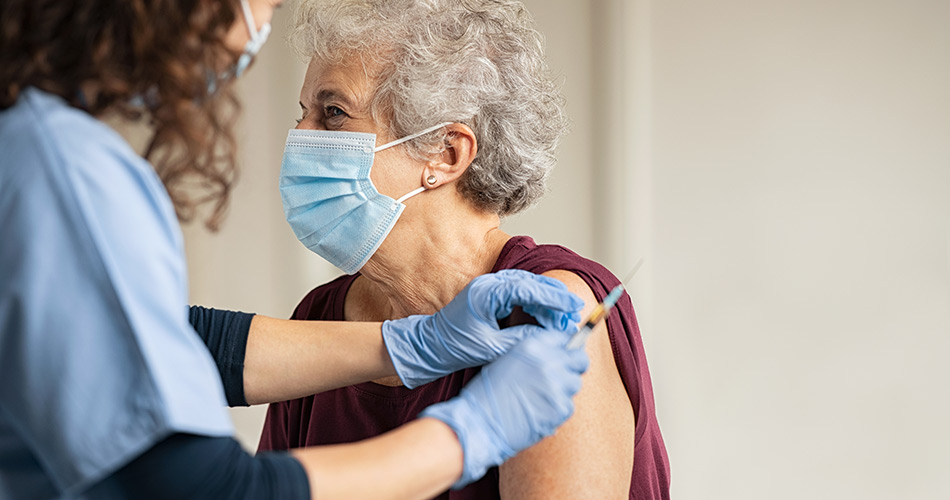
A year after the world was put on alert about the rapidly spreading covid-19 virus, mass vaccination programmes are providing a welcome light at the end of the tunnel.
However, for many people vaccination remains a concern. A World Economic Forum – Ipsos survey: Global Attitudes on a Covid-19 Vaccine, indicates that while an increasing number of people in the US and UK plan to get vaccinated, the intent has dropped in South Africa, France, Japan and South Korea. The survey was conducted in December 2020, following the first vaccinations in the US and the UK.
This study shows that overall vaccination intent is below 50% in France and Russia. ‘Strong intent’ is below 15% in Japan, France and Russia.

Many cities are still in lockdown
Between 57% and 80% of those surveyed cited concerns over side effects as a reason for not getting a covid-19 vaccination. Doubts over the effectiveness of a vaccine was the second most common reason cited in many countries, while opposition to vaccines in general was mentioned by around 25% those who will refuse a vaccination.
The survey was conducted among 13,542 adults aged 18–74 in Canada, South Africa, and the US, while those surveyed in Australia, Brazil, China, France, Germany, Italy, Japan, Mexico, Russia, South Korea, Spain and the UK were aged 16–74.
A previous survey, Global Attitudes on a Covid-19 Vaccine carried out in July and August 2020, indicated that 74% of those surveyed intended to get vaccinated. At that time the World Economic Forum said that this majority could still fall short of the number required to ‘beat covid-19.’
Commenting on the newest data Arnaud Bernaert, Head of Health and Healthcare at the World Economic Forum said; ‘As vaccinations roll out, it is encouraging to see confidence improve most in countries where vaccines are already made available. It is critical that governments and the private sector come together to build confidence and ensure that manufacturing capacity meets the global demand.’
World Economic Forum-Ipsos Survey indicates a rise in number of people in US and UK intending to get vaccinated.
With the imperative now to move towards some sort of ‘normality’, as well as getting economies moving, fears over vaccination need to be allayed. However, what also needs to be considered is what underlies those fears. Misinformation, no doubt, has a part to play. This highlights a lack of trust in governments and a sector that has worked tirelessly to develop vaccines in record time.
As different companies bring their vaccines to the market, care now needs to be taken to reassure people around the world that whichever manufacturer’s vaccine they are given, they are in safe hands. As any adverse reactions occur – an inevitability with any vaccine rollout – these ought to be made known to the wider public by companies and governments as soon as it is feasible, preventing space for the spread of rumour and misinformation, which could undo the hard work of the scientists, businesses and governments bringing vaccines to the public.

Researchers have worked tirelessly to bring vaccines to the market
19 January 2021 |
|
|