
Jasper Singh was awarded a Richardson Travel Bursary and a Rideal Travel Bursary to undertake a research placement at the Massachusetts Institute of Technology (MIT), USA. Here he tells us about his highlights from the placement.
"My research explores water-based electrolytes for Li-ion batteries, aiming to retain the intrinsic safety of aqueous systems while overcoming their narrow electrochemical stability window (ESW). These systems can also lower manufacturing costs by removing the requirement for stringent drying and solvent-handling controls that are central to organic electrolyte processing, while their non-flammability is particularly advantageous for large-format, grid-scale energy storage. However, water’s intrinsic electrochemical reactivity limits its operating voltage and ultimately caps the achievable energy density. My work focuses on determining how changes in solvation structure and surface chemistry can help expand this ESW. In recent years, highly concentrated electrolyte strategies—such as “Water-in-Salt Electrolytes” (WiSE) and ternary eutectic mixtures—have opened exciting possibilities for higher-voltage aqueous Li-ion batteries.1,2 However, the field still faces key mechanistic questions: What structural changes in solvation suppress water reactivity? How does the electrode/electrolyte interface differ from the bulk? Which parameters, such as water activity, coordination environment, ion pairing, and interphase chemistry, are truly predictive of stability and cycling performance?
"At Oxford, my early DPhil work combined experimental spectroscopy (NMR, Raman, infrared, and X-ray absorption) with computational atomistic molecular dynamics (MD) to probe how increasing salt concentration reshapes solvation structure and interfacial chemistry in binary aqueous electrolytes, and to quantify coordination changes and their link to solvent activity. I subsequently extended this approach to ternary eutectic mixtures and diluents such as urea and methylurea.2,3 By integrating these insights with Raman and XPS measurements of electrode interphases (SEI/CEI), the results suggested that the electrical double layer (EDL) is strongly potential-dependent and can deviate substantially from the bulk—an effect that likely contributes to the apparent ESW expansion reported in WiSEs.4 This motivated me to focus on interfacial MD and MD-parameterised continuum modelling to connect electrolyte formulation to the bias-dependent near-surface environment.
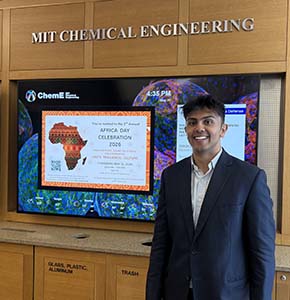
"As a result, I undertook a visiting research placement in the Bazant Group within MIT’s Department of Chemical Engineering. The group’s expertise in combining interfacial molecular simulation with continuum theory was invaluable, as it allowed me to benchmark model predictions directly against my experimental spectroscopy and interphase measurements.4 This reinforced that ESW trends in aqueous Li-ion electrolytes cannot be interpreted through reduced water activity alone: stability-relevant processes are governed by the bias-dependent near-electrode environment rather than bulk thermodynamics in isolation. Using interfacial MD alongside MD-parameterised continuum modelling, I developed a practical framework linking electrolyte formulation to near-surface composition across voltage and composition. This provides a natural route to extend my work from binary water-in-salt systems to ternary eutectic electrolytes, where the same interfacial framework can be used to guide and validate next-stage electrolyte design.
"Overall, the SCI Travel Bursary enabled a step-change in both my research direction and my professional development. Scientifically, the placement strengthened my ability to connect molecular-level descriptions of solvation and interfacial structure to the practical stability limits that govern aqueous Li-ion battery performance. This work will directly inform future research in the field and provide valuable insight into how bias-dependent EDL structure in ternary eutectic mixtures can contribute to ESW expansion in aqueous Li-ion batteries."
Jasper Singh
PhD student
University of Oxford

References
1. L. Suo, O. Borodin, T. Gao, M. Olguin, J. Ho, X. Fan, C. Luo, C. Wang and K. Xu, “Water-in-salt” electrolyte enables high-voltage aqueous lithium-ion chemistries, Science, 2015, 350, 938–943.
2. J. Xie, Z. Liang and Y.-C. Lu, Molecular crowding electrolytes for high-voltage aqueous batteries, Nat. Mater., 2020, 19, 1006–1011.
3. R. Lin, C. Ke, J. Chen, S. Liu and J. Wang, Asymmetric donor-acceptor molecule-regulated core-shell-solvation electrolyte for high-voltage aqueous batteries, Joule, 2022, 6, 399–417.
4. M. McEldrew, Z. A. H. Goodwin, A. A. Kornyshev and M. Z. Bazant, Theory of the Double Layer in Water-in-Salt Electrolytes, J. Phys. Chem. Lett., 2018, 9, 5840–5846.
 Visit Blog