
For forty years, SCI has supported and recognised the excellence of early career scientists, by aiding their studies in the form of an SCI Scholarship.
Since 1985 more than 80 scholarships have been awarded which have not only given the recipients financial assistance, but have enabled them to broaden their network, and strengthen their skills and knowledge. SCI Scholars receive access to publishing and mentoring opportunities and are given a platform to present their work amongst esteemed scientists and industrialists, raising their profile within the scientific community.
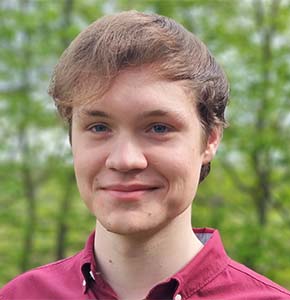
Alex Rogers was awarded an SCI Scholarship in 2024. At the end of their scholarship, SCI Scholars present a report to SCI. Read on to find out what he has done in his final year as an SCI Scholar.
The first tool targets material discovery, for which we have developed chemical foundation models that enable optimisation of molecular structures to satisfy industrially relevant property specifications, allowing promising candidates to be prioritised for synthesis and testing. The second tool targets process design and scale-up. To accelerate the development of the processes required to synthesise or formulate these novel products, we have developed an interpretable, physics-informed framework for strategic experimentation. This framework minimises experimental waste by guiding experiments that both uncover mechanistic process knowledge and optimise process performance.
The SCI Scholarship has enabled me to present our results at several major international conferences, including ESCAPE35 in Ghent, ADCHEM24 in Toronto, and ECCE15 & ECAB8 in Lisbon, spanning computer-aided process systems engineering, process control, and industrial chemical and bioprocess engineering. I also presented the work to the process control and formulation communities through CPACT and IChemE special interest groups. Later this year, I will present at ESCAPE36 in Sheffield, further disseminating our research. Given the broader potential impact of the research, these events have provided invaluable opportunities to forge new collaborations with academic and industrial groups. This year, I was especially proud to first-author two papers, with the support of our collaborators: ‘Interpretable‐AI‐Based Model Structural Transfer Learning to Accelerate Bioprocess Model Construction’ (https://doi.org/10.1002/bit.70026) and ‘Improving Fidelity and Diversity in Chemical Language Transformers for Inverse Molecular Design’ (https://doi.org/10.1021/acs.jcim.5c03062). I also have my fifth first-author paper from my PhD under review, titled ‘Graph-to-Graph Inverse Design of Surfactants Under Multi-Objective and Structural Constraints’.
As my SCI Scholarship comes to an end and I enter the final six months of my PhD, the project is now moving into the deployment phase with Unilever, following successful pilot-plant trials using our physics-informed design-of-experiments framework. Next, I hope to pursue a fellowship focused on advancing the inverse molecular design of complex new materials and formulations. Across the Scholarship period, SCI has supported conference attendance, travel, site visits, equipment purchases, College of Scholars Days, annual general meetings, networking events, and collaboration building. These opportunities have helped me communicate interdisciplinary AI research to academic and industrial audiences, while deepening my understanding of industrial R&D needs. I would therefore like to express my sincere gratitude to SCI and look forward to remaining connected with the society in the future."
Alex Rogers
PhD Student
University of Manchester
 Visit Blog