Agrifood
More people are looking at their nutritional intake, not only to improve wellbeing but also reduce their environmental impact. With this, comes a move to include foods that are not traditionally cultivated or consumed in Europe.
Assessing whether this growing volume of so called ‘novel foods’ are safe for human consumption is the task of the European Food Safety Authority. The EFSA points out, ‘The notion of novel food is not new. Throughout history new types of food and food ingredients have found their way to Europe from all corners of the globe. Bananas, tomatoes, tropical fruit, maize, rice, a wide range of spices – all originally came to Europe as novel foods. Among the most recent arrivals are chia seeds, algae-based foods, baobab fruit and physalis.’
Under EU regulations any food not consumed ‘significantly’ prior to May 1997 is considered to be a ‘novel food’. The category covers new foods, food from new sources, new substances used in food as well as new ways and technologies for producing food. Examples include oils rich in omega-3 fatty acids from krill as a new source of food, phytosterols as a new substance, or nanotechnology as a new way of producing food.
Providing a final assessment on safety and efficacy of a novel food is a time consuming process. At the start of 2021 the EFSA gave its first completed assessment of a proposed insect-derived food product. The panel on Nutrition, Novel Foods and Food Allergens concluded that the novel food dried yellow meal worm (Tenebrio molitor larva) is safe for human consumption.
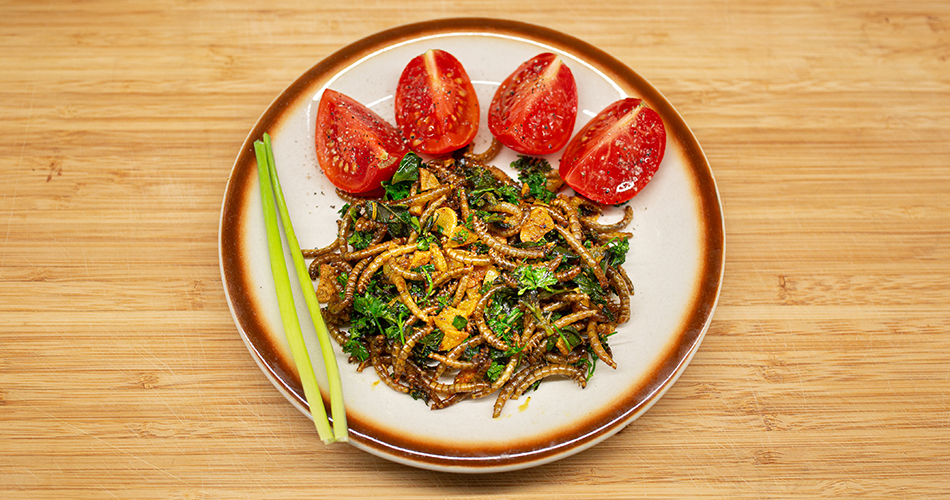
Dried yellow meal worm (Tenebrio molitor larva) is safe for human consumption, according to the EFSA.
Commenting in a press statement, as the opinion on insect novel food was released, Ermolaos Ververis, a chemist and food scientist at EFSA who coordinated the assessment said that evaluating the safety of insects for human consumption has its challenges. ‘Insects are complex organisms which makes characterising the composition of insect-derived products a challenge. Understanding their microbiology is paramount, considering also that the entire insect is consumed,’
Ververis added, ‘Formulations from insects may be high in protein, although the true protein levels can be overestimated when the substance chitin, a major component of insects’ exoskeleton, is present. Critically, many food allergies are linked to proteins so we assess whether the consumption of insects could trigger any allergic reactions. These can be caused by an individual’s sensitivity to insect proteins, cross-reactivity with other allergens or residual allergens from insect feed, e.g. gluten.’
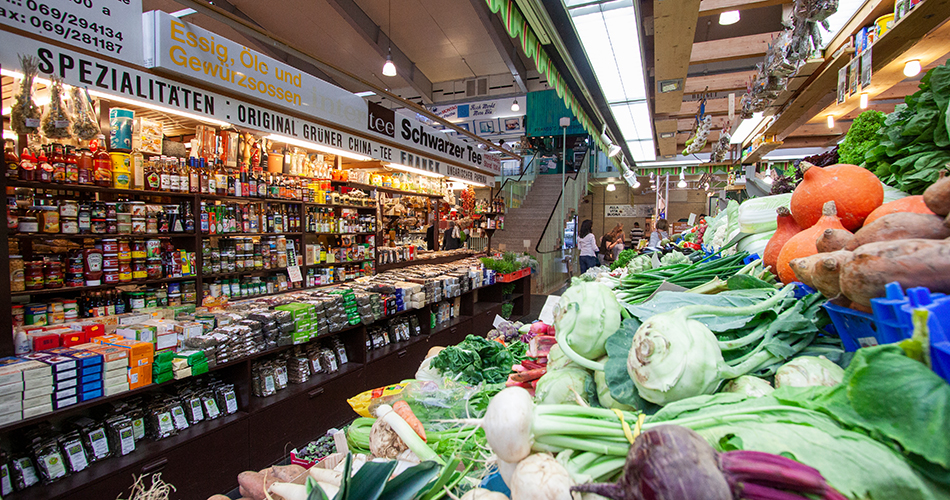
EFSA research could lead to increased choice for consumers | Editorial credit: Raf Quintero / Shutterstock.com
The EFSA has an extensive list of novel foods to assess. These include dried crickets (Gryllodes sigillatus), olive leaf extract, and vitamin D2 mushroom powder. With the increasing desire to find alternatives to the many foods that we consume on a regular basis, particularly meat, it is likely that the EFSA will be busy for some time to come.
28 January 2021 |
|


 |

Sustainability & Environment
Gardens and parks provide visual evidence of climate change. Regular observation shows us that our flowering bulbous plants are emerging, growing and flowering. Great Britain is particularly rich in long term recordings of dates of budbreak, growth and flowering of trees, shrubs and perennial herbaceous plants. Until recently, this was dismissed as ‘stamp collecting by Victorian ladies and clerics’.
The science of phenology now provides vital evidence that quantifies the scale and rapidity of climate change. Serious scientific evidence of the impact of climate change comes, for example, from an analysis of 29,500 phenological datasets. This research shows that plants and animals are responding consistently to temperature change with earlier blooming, leaf unfurling, flowering and migration. This scale of change has not been seen on Earth for the past three quarters of a million years. And this time it is happening with increased rapidity and is caused by the activities of a single species – US – humans!

Iris unguicularis (stylosa).
Changing seasonal cycles seriously affects our gardens. Fruit trees bloom earlier than previously and are potentially out of synchrony with pollinators. That results in irregular, poor fruit set and low yields. Climate change is causing increased variability in weather events. This is particularly damaging when short, very sharp periods of freezing weather coincide with precious bud bursts and shoot growth. Many early flowering trees and shrubs are incapable of replacing damaged buds, as a result a whole season’s worth of growth is lost. Damaged buds and shoots are more easily invaded by fungi which cause diseases such as dieback and rotting. Eventually valuable feature plants fail, damaging the garden’s benefits for enjoyment and relaxation.
Plant diseases caused by fungi and bacteria benefit from our increasingly milder, damper winters. Previously, cooling temperatures in the autumn and winter frosts prevented these microbes from over-wintering. Now they are surviving and thriving in the warmer conditions. This is especially the case with soil borne microbes such as those which cause clubroot of brassicas and white rot, which affects a wide range of garden crops.
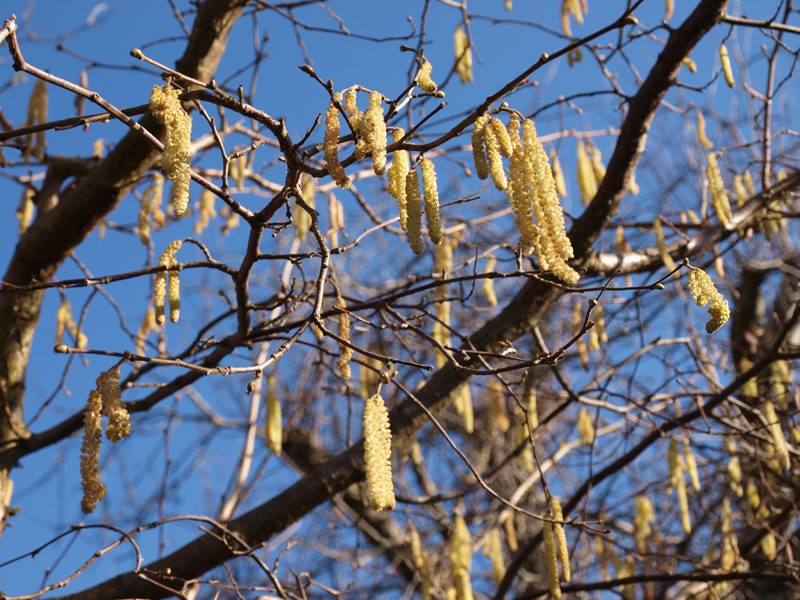
Hazel (Coryllus spp.) typical wind-pollinated yellow male catkins, which produce pollen.
Can gardeners help mitigate climate change? Of course! Grow flowering plants which are bee friendly; minimise using chemical controls; ban bonfires – which are excellent sources of CO2; establish wildlife-friendly areas filled with native plants and pieces of rotting wood, and it is amazing how quickly beneficial insects, slow worms and voles will populate your garden.
—
Professor Geoff Dixon is the author of Garden Practices and their Science, published by Routledge 2019.
26 January 2021 |
|
|