
For forty years, SCI has supported and recognised the excellence of early career scientists, by aiding their studies in the form of an SCI Scholarship.
Since 1985 more than 80 scholarships have been awarded which have not only given the recipients financial assistance, but have enabled them to broaden their network, and strengthen their skills and knowledge. SCI Scholars receive access to publishing and mentoring opportunities and are given a platform to present their work amongst esteemed scientists and industrialists, raising their profile within the scientific community.
We are delighted to announce that Maggie So, from the University of Strathclyde, has been awarded an SCI Scholarship of £5,000 over two years to support her PhD project.
In addition to the scholarship, Maggie will benefit from publishing opportunities, access to a high-calibre network to help launch her career, and opportunities to present her work and raise her profile within the scientific community.
SCI Scholarships are prestigious and well respected by the industry. The SCI Scholars Fund was established in 1920 by the requests of Rudolph Messel and John Gray, both former presidents and founding members of SCI. SCI believes in nurturing the scientists of the future. Each year, SCI provides scholarships and bursaries to early career scientists including opportunities to attend or present at an international conference.
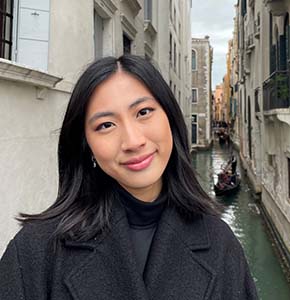
"Originally from Hong Kong, I received the Hong Kong Scholarship for Excellence which enabled me to pursue a MSci degree in Chemistry at University College London (UCL). As part of my undergraduate studies, I undertook a master’s research project with Professor Vijay Chudasama developing methods for the site-selective modification of cysteine for the synthesis of antibody-drug conjugates. I graduated from UCL with a First Class Honours and was included on the Dean’s List. In 2025, I began my PhD studies on the GSK and University of Strathclyde collaborative programme under the supervision of Professor Nicholas Tomkinson (Strathclyde) and Dr Sam Rowe (GSK).
"In recent decades, covalent drugs have emerged as an exciting approach to address challenging disease targets that remain intractable to conventional drug discovery. These drugs are equipped with an electrophile that irreversibly forms a covalent bond to the disease-relevant protein. This strategy has allowed proteins once thought to be “undruggable” to be targeted, providing opportunities for the delivery of new medicines to patients with unmet medical need.
"Recent covalent drug approvals and clinical entrants are using an increasing range of different electrophiles, highlighting the therapeutic and commercial potential of expanding beyond those that have been traditionally employed. Despite this, only a small pool of well-established electrophiles is typically included in many covalent screening libraries. Different electrophiles can provide distinct reactivities and properties that can better suit different protein targets, so this limited diversity of electrophiles may be limiting the breadth of disease targets that we can pursue.
"My research aims to address this gap by synthesising and profiling a 6000-member library featuring 20 different electrophiles against a panel of proteins implicated in oncology and infectious disease, with the aim of identifying potential starting points for new medicines. Additionally, this data generated will provide insights into the reactivity and proclivity of different electrophiles for certain protein classes, helping to direct investment towards electrophiles with the greatest promise of delivering medicines in future covalent screening libraries."
Maggie So
PhD student
University of Strathclyde/GSK
 Visit Blog