
For forty years, SCI has supported and recognised the excellence of early career scientists, by aiding their studies in the form of an SCI Scholarship.
Since 1985 more than 80 scholarships have been awarded which have not only given the recipients financial assistance, but have enabled them to broaden their network, and strengthen their skills and knowledge. SCI Scholars receive access to publishing and mentoring opportunities and are given a platform to present their work amongst esteemed scientists and industrialists, raising their profile within the scientific community.
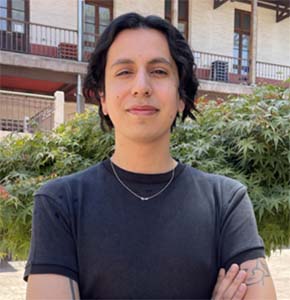
Jose Martinez was awarded an SCI Scholarship in 2025. At the end of their scholarship, SCI Scholars present a report to SCI. Read on to find out what he has done in his first year as an SCI Scholar.
"Declining ore grades and increasing demand for critical metals are driving the need for more efficient mineral processing. Copper, a key material for the clean energy transition, is primarily recovered using froth flotation, a process responsible for approximately 80% of global copper production.
"My PhD research aims to improve the understanding and prediction of froth flotation by integrating the hydrodynamic behaviour of the collection (pulp) zone with the stability of the froth zone, which have traditionally been studied separately.
"This project investigates how frother chemistry influences both regions, with a particular focus on air recovery (the fraction of air that enters the froth and leaves the flotation cell as unburst bubbles), which is closely linked to the performance of the process. For the first time, the effect of a range of frother chemistries on air recovery will be systematically evaluated along with measurements of gas concentration in the collection zone. By examining these interactions simultaneously, the research addresses an important gap in flotation science and provides new insights for improving flotation models.
"By understanding these fundamental mechanisms, I hope to help unlock the "black box" of the flotation process and contribute to more efficient and sustainable recovery of copper and other critical metals essential for clean energy technologies.
"During the past year, the SCI scholarship has supported significant progress in my PhD research on froth flotation. A key milestone was the design, construction and commissioning of a continuous bench-scale flotation system to investigate how frother chemistry influences froth stability and flotation performance under controlled operating conditions. This facility has enabled the first systematic study of the relationship between frother chemistry, air recovery and metallurgical performance.
"The first experimental campaign established a direct link between frother chemistry, froth physics and flotation performance. Results showed that air recovery increased with frother concentration before reaching a plateau at reagent dosages higher than those required for bubble coalescence suppression, challenging conventional frother dosing practice. While a strong positive relationship was observed between air recovery and pyrite recovery for all frother chemistries, flotation performance also depended on the type of frother used. These findings demonstrate that air recovery alone does not determine flotation performance and provide new insights for optimising flotation through reagent selection and operating conditions.
"The scholarship enabled me to present my research at different international conferences. I attended Flotation Conference 2025 in Cape Town, South Africa, where I was awarded the Best Oral Presentation prize. I also presented my work at Procemin 2026 in Santiago, Chile, and have recently been accepted to present at the International Mineral Processing Congress (IMPC 2026) in Cape Town, providing further opportunities to present my research and engage with the international mineral processing community."
Jose Martínez
Postgraduate Researcher
Earth Science and Engineering, Imperial College London
 Visit Blog