Agrifood
How has climate change changed the way our gardens grow and what can be done to alleviate its effects? Professor Geoff Dixon tells us more.
Climate has changed on Earth ever since it solidified and organic life first emerged. Indeed, the first photosynthesising microbes changed the atmosphere from carbon dioxide rich to oxygen rich over millions of years. What we now face is very rapid changes brought about by a single organism, mankind, through industrialisation.
The effects of change are very evident in gardens. Over a generation, leaf bud breaking and flowering by early spring bulbs, herbaceous plants, shrubs and trees has advanced by at least four weeks (see main image of Cyclamen hederifolium).
Latter spring displays have advanced by at least two weeks. This is caused by milder, wetter winter weather, encouraging growth. The danger lies in the increasing frequency of short sharp spells of severe frost and snow. These kill off precocious flowers and leaves which trees especially cannot replace.
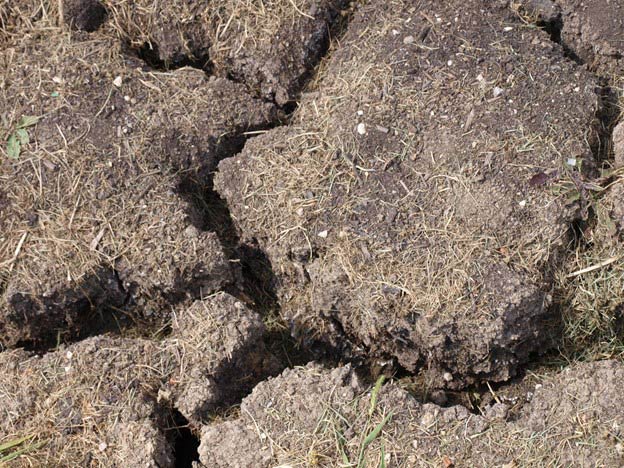
Desiccated, cracked soil.
Increasingly, the summer climate is becoming hotter and drier. Since the Millennium there has been a succession of hot droughts. These seriously limit scope for growing vegetables, fruit and ornamentals unless irrigation is regularly available. Drought also damages soil structure especially where there is a high clay content by causing cracking and the loss of plant cover (see image of desiccated, cracked soil above).
Cracking disrupts and destroys the root systems of trees and shrubs in particular. The effects of root damage may not become evident until these plants die in the following years.
Climate change is apparently advantageous for microbes. Detailed surveys show that fungal life cycles are speeding up, increasing the opportunities for diseases to cause damage. Even normally quite resilient crops such as quince are being invaded during milder, damper autumns (See image of brown rot on quince fruit below). Throughout gardens, the range and aggressiveness of pests and disease is increasing.
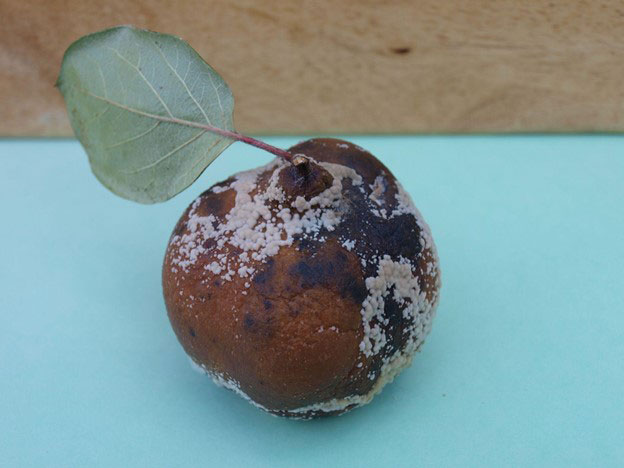
Brown rot (Monilia laxa) on quince fruit.
However, each individual garden or allotment, no matter its size, can contribute to reducing the rate of climate change. Simple actions include the removal of hard landscaping, and planting trees and shrubs reduces carbon emissions.
Using electric-powered tools and machinery in place of petrol or diesel has similar advantages. Tumbling down parts of a garden into native flora, and perhaps encouraging rarer plants such as wild orchids or fritillarias, mitigates climate change. Such areas may also form habitats for hedgehogs or slow worms, increase populations of bees, butterflies and moths and encourage bird life.
Written by Professor Geoff Dixon, author of Garden practices and their science, published by Routledge 2019.
All images from Professor Geoff Dixon.
15 November 2021 |
|


 |
|

Sustainability & Environment
If you’re a vegan, do you really want to eat a ruby-red slab of plant protein that looks like lamb? If you are a health obsessive, would you opt for an ultra-processed, plant-based product if you knew it didn’t contain many vitamins and micro-nutrients? And why, oh why, are we so obsessed with recreating the taste and appearance of the humble hamburger?
These questions and more were posed by Dr David Baines in the recent ‘No meat and two veg – the chemistry challenges facing the flavouring of vegan foods’ webinar organised by SCI’s Food Group. The flavourist, who owns his own food consultancy and is visiting Professor at the University of Reading, painted a vivid picture of our changing culinary landscape – one in which 79% of Millennials regularly eat meat alternatives.
And this shift in diet isn’t just the preserve of the young. According to Dr Baines, 54% of Americans and 39% of Chinese people have included more plant-based foods and less meat in their diets. Furthermore, 75% of Baby Boomers – those born between 1946 and 1964 – are open to trying cultivated meat.
There are many reasons for this gradual shift. The woman biting into Greggs’ famous vegan sausage roll and the woman who carefully crafts her bean burger may have different reasons for choosing meat alternatives. For some, it’s an ethical choice. For others, it’s environmental or health-related. And then there are those of us who are simply curious.
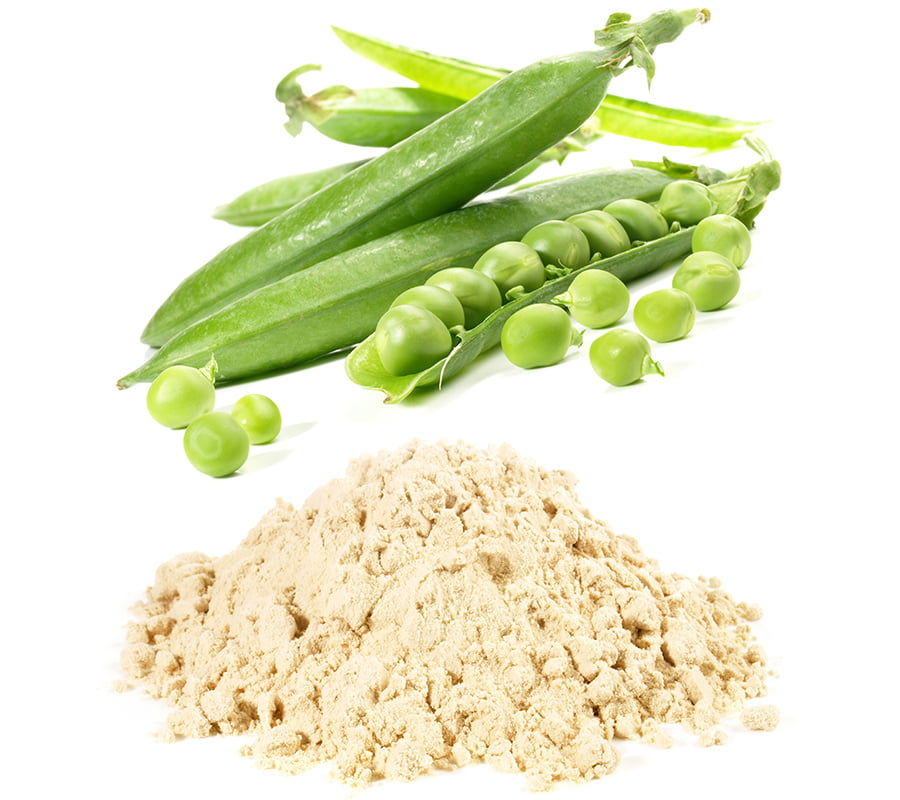
Pea protein powder is used in plant-based meat alternatives.
Either way it’s an industry that, if you’ll excuse the pun, is set to mushroom. According to Boston Consulting Group and Blue Horizon research, the global meat-free sector will be worth US$290 billion by 2035. They also claim Europe will reach peak meat consumption by 2025, and Unilever is aiming to sell US$1 billion-worth of plant-based meat and dairy alternatives by 2025-27.
In his entertaining talk, Dr Baines outlined the extrusion processes that turn wheat and pea proteins into large ropes of fibrous material and how soy isolates are spun into textured proteins using looms like those used in the cotton industry. He explained how calcium is used to imitate the chewable texture of chicken and how Impossible Foods is using the root nodules of bean plants to produce the red colour we recognise so readily in meat.
>> For more interesting SCI webinars on battery developments, medicinal chemistry and more, check out our events page.
So, how close are we to products with the appearance, taste and texture of, let’s say, beef? ‘I think that will come from cultured meat to start with,’ he said. ‘Where the protein is produced, it will still need to be flavoured, but the fibres will have formed and the texture is already present in some of those products.
‘It’s a big ask and it’s been asked for a long time. It’s going to be a long time before you put a piece of steak on one plate and a plant-based [product] on another and they will be visually, texturally and taste(-wise] identical.’
And what appetite do people even have for these plant-based facsimiles? ‘There are people who want plant proteins not to look like meat, and there are people who want them to look like meat,’ he added. ‘The driver at the moment is to make them look like meat, and the driver is to make it taste like meat too.’
Baines wondered aloud about the bizarre fixation some have with recreating and eating foods that look and taste like beef burgers. In contrast, he pointed to the examples of tofu and soy-based products that have been developed in South East Asia – distinct foods that do not serve as meat substitutes.
Plant-based proteins are undoubtedly part of our culinary future, but these products have other barriers to surmount beyond taste and texture. There is no getting around the fact that plant-based proteins are ultra-processed in a time when many are side-stepping processed foods. Baines also explained that these protein- and fibre-rich foods tend to have lower calorific content, but lack vitamins and micronutrients. ‘Will they be supplemented?’ Baines asked. ‘How much will the manufacturers of these new products start to improve the nutritional delivery of these products?’

We have now entered the age of the gluten-free, vegan sausage roll.
But it’s easy to forget that the leaps made in recent years have been extraordinary. Who would have predicted back in 1997 – when Linda McCartney was at the vanguard of the niche, plant-based meat alternative – that a vegan sausage roll would capture the imaginations of a meat-hungry nation? Who would have foreseen fast-food manufacturers falling over each other to launch plant-based burgers and invest in lab-grown meat?
As Dr Baines said: “This is a movement that is not going away.”
>> Our soils provide 97% of our food. Read more about how they are undervalued and overused here.
10 August 2021 |
|
|
Agrifood
Main image: Pea crop | Image credit: Geoff Dixon
Peas are a very rewarding garden crop. Husbandry is very straightforward, producing nutritious yields and encouraging soil health by building nitrogen reserves for future crops.
Rotations usually sequence cabbages and other nitrogen-demanding crops after peas. This is a sustainable way to use the organic nitrogen reserves left by pea roots resulting from their mutually beneficial association with benign bacteria. These microbes capture atmospheric nitrogen, producing ammonia, nitrites and nitrates in a sequence of natural steps.
Peas originated in the Mediterranean. They were cultivated continuously by ancient civilisations and through medieval times, and are now the seventh most popular vegetable.
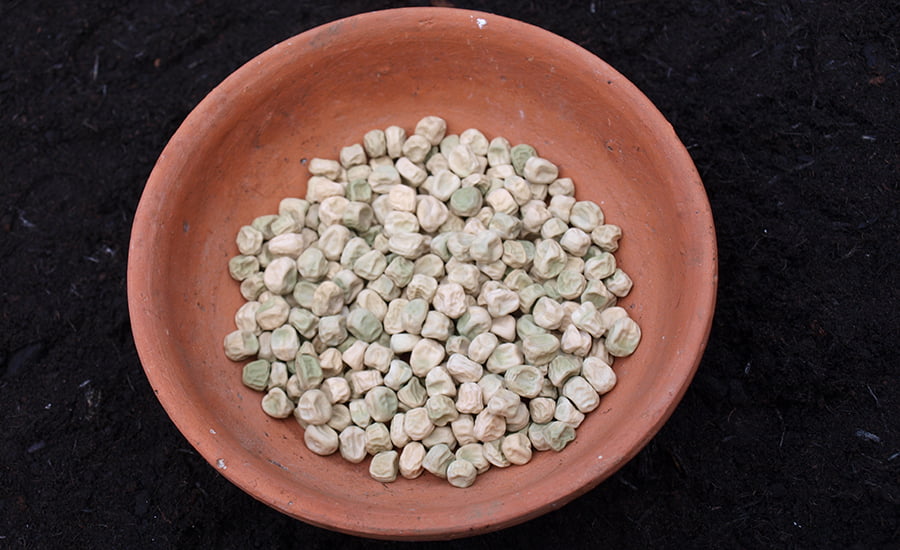
Illustration 1: Pea seeds | Image credit: Geoff Dixon
In bygone centuries, peas provided a protein source for the general population as cooked meals of pea soup and pease pudding helped keep famine at bay before the introduction of potatoes. In the 18th century, French gardeners working for the aristocracy produced fresh peas using raised and protected beds of fermenting animal manure. The composting processes produced heat and released carbon dioxide, stimulating rapid growth.
Generally, however, eating fresh peas only gained popularity in the 20th century as canned and then quick-frozen foods were invented, and large-scale technological development enabled mechanised and automated commercial precision cropping. In recent times, retail market demand has returned for unshelled podded peas – a manually picked crop known colloquially as ‘pulling peas’.
How to grow peas
Seeds can be sown directly (illustration 1) or transplants (illustration 2) can be raised under protection, giving an early boost for growth and maturity. Peas are cool season crops. They grow best at 13-18°C and mature about 60 days after sowing.
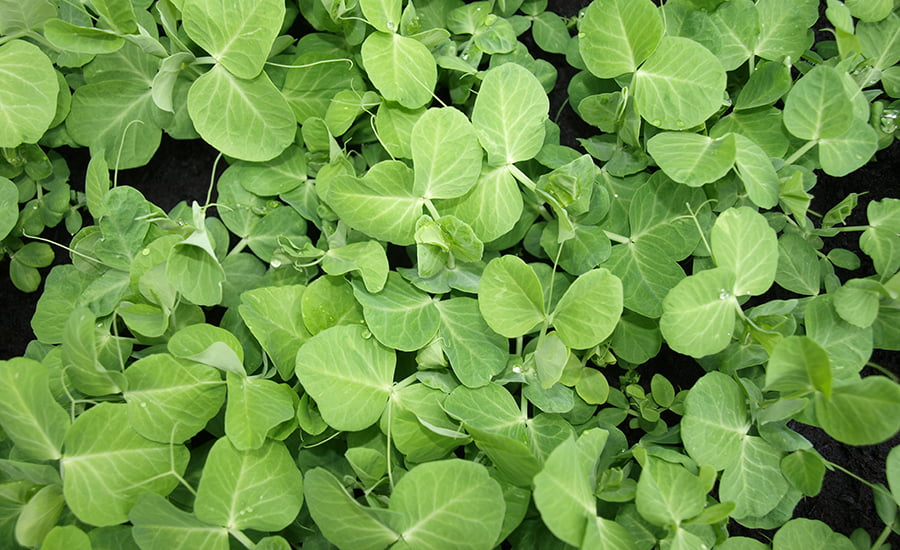
Illustration 2: Pea seedlings | Image credit: Geoff Dixon
Some cultivars such as Meteor can be grown over winter, preferably protected with cloches for very early cropping. The spring sown The Sutton cultivar group (CV) gives rapid but modest returns, and main crop CVs, such as Hurst Green Shaft, deliver the heaviest returns (illustration 2). This cultivar forms several long, well-filled pods at the fruiting nodes.
Sugar peas or mange tout – where the entire immature pod is eaten – is a popular fresh crop, while quick-growing pea shoots that mature in 20 days from sowing are excellent additions for salads or as garnishes for warm cuisine.
Human health benefits significantly by including peas in the diet. As well as being an excellent protein source, they produce a range of vitamins and nutrient elements. Their coumestrol content aids the control of blood sugar levels, helping combat diabetes, heart diseases and arthritis.
So, it’s certainly worth finding a spot for this versatile vegetable in your garden.
Written by Professor Geoff Dixon, author of Garden practices and their science.
26 July 2021 |
|
|