
Health & Wellbeing
Rising anxiety about air pollution, physical, and mental health, exacerbated by Covid-19 and concerns about public transport, has seen an increase in the popularity of cycling around Europe, leading many cities to transform their infrastructure correspondingly.
These days, Amsterdam is synonymous with cycling culture. Images of thousands of bikes piled up in tailor-made parking facilities continue to amaze and it is routinely held up as an example of greener, cleaner, healthier cities. Because The Netherlands is so flat, people often believe it has always been this way. But, in the 1970s, Amsterdam was a gridlocked city dominated by cars. The shift to cycling primacy took work and great public pressure.
For some cities, however, the pandemic has provided an unexpected opportunity on the roads. Milan's Deputy Mayor for Urban Planning, Green Areas and Agriculture, Pierfrancesco Maran, has explained that, "We tried to build bike lanes before, but car drivers protested". Now, however, numbers have increased from 1,000 to 7,000 on the main shopping street. "Most people who are cycling used public transport before”, he said. “But now they need an alternative”.
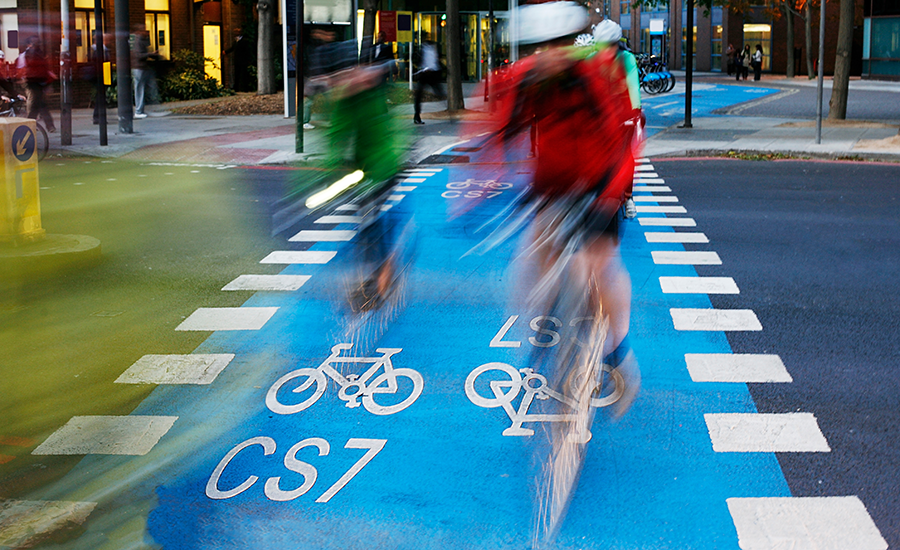
Creating joined up cycling networks is a major challenge for urban planners.
In Paris, the Deputy Mayor David Belliard does not seem concerned that the city’s investment since the start of the pandemic will go to waste. “It's like a revolution," he said. “Some sections of this road are now completely car-free. The more you give space for bicycles, the more they will use it.” They are committed to creating a cycle culture, providing free cycling lessons and subsidising the cost of bike repairs. The city intends to create more than 650km of cycle lanes in the near future.
The success in these two cities has been supported by local government but it has also been fuelled by an understandable (and encouraged) avoidance of public transport and fewer cars on the road generally. Going forward, however, it seems likely that those last two factors won’t be present. So how do you create a cycling culture in your city in the long run?
The answer is both simple and difficult: cyclists (and pedestrians) need to have priority over cars. In Brussels, where 40km of cycle track have been put down in the last year, specific zones have been implemented where this is the case, and speed limits have been reintroduced across the city.
In Copenhagen, in the late 1970s, the Danish Cyclists’ Federation arranged demonstrations demanding more cycle tracks and a return to the first half of the century, when cyclists had dominated the roads. Eventually, public pressure paid off — although there is still high demand for more cycle lanes. A range of measures, including changes made to intersections, make cyclists feel safer and local studies show that, as cyclist numbers increase, safety also increases. In many parts of the city, it is noticeable how little of the wide roads are actually available to cars: bikes, joggers, and pedestrians are all accommodated.
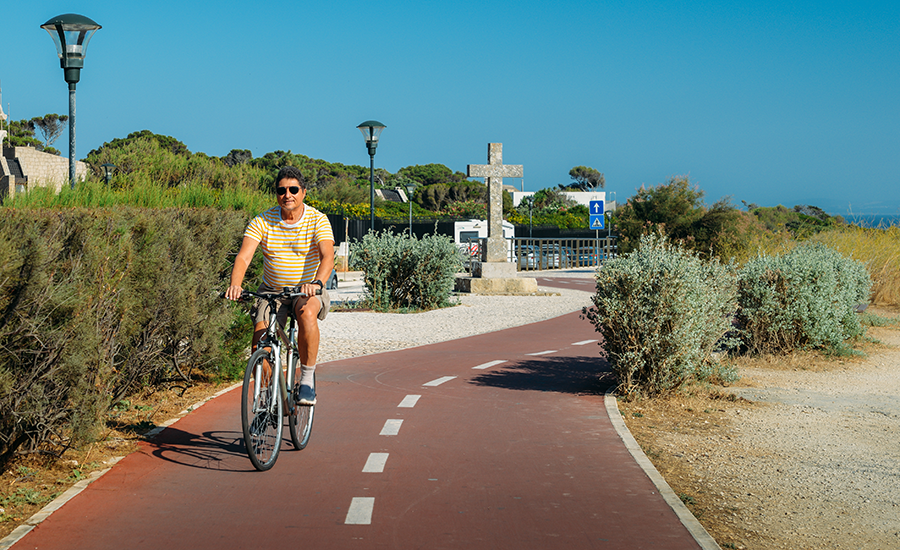
Segregated cycleways, like this one in Cascais, Portugal, make people more likely to cycle.
But, if you were starting from scratch, you might not simply add cycle lanes to existing roads and encourage behavioural changes on the road. Segregated, protected bike lanes like those introduced in Paris are the next level up and the results suggest they work — separated from the roads, more people are inclined to try cycling.
Dutch experts suggest, where possible, going even further. Frans Jan van Rossem, a civil servant specialising in cycling policy in Utrecht, believes the best option is to create solitary paths, separated from the road by grass, trees, or elevated concrete. Consistency is also important. Cities need networks of cycle tracks, not just a few highways. Again, prioritising cyclists is key to the Dutch approach. Many cities have roads where cars are treated as guests, restricted by a speed limit of 30km/hour and not permitted to pass. Signage is also key.
In London, Mayor Sadiq Khan’s target is for 80% of journeys to be made by walking, cycling, and/or public transport by 2041. Since 2018, the city has been using artificial intelligence to better understand road use in the city and plan new cycle routes in the capital. However, the experience of other European capitals suggests that, "if you build it, they will come" might be a better approach than working off current usage.
15 March 2021 |
|


 |
|

Energy
A completely clean, renewable energy system that can be produced locally and that can easily power heat, energy storage and transportation, and travel — that's the future that promoters of a hydrogen economy envisage.
If it sounds a bit like rocket science, that's because it is. Hydrogen is what's used to fuel rockets — that’s how powerful it is. In fact, it’s three times more powerful as a fuel than gas or other fossil-based sources. And, after use, it’s frequently converted to drinking water for astronauts.
US President Joe Biden has highlighted the potential of hydrogen in his ambitious plans for economic and climate recovery and a number of recent reports have been encouraging about hydrogen’s breakthrough moment, including McKinsey and Company (Road Map to a US Hydrogen Economy, 2020) and the International Energy Agency.
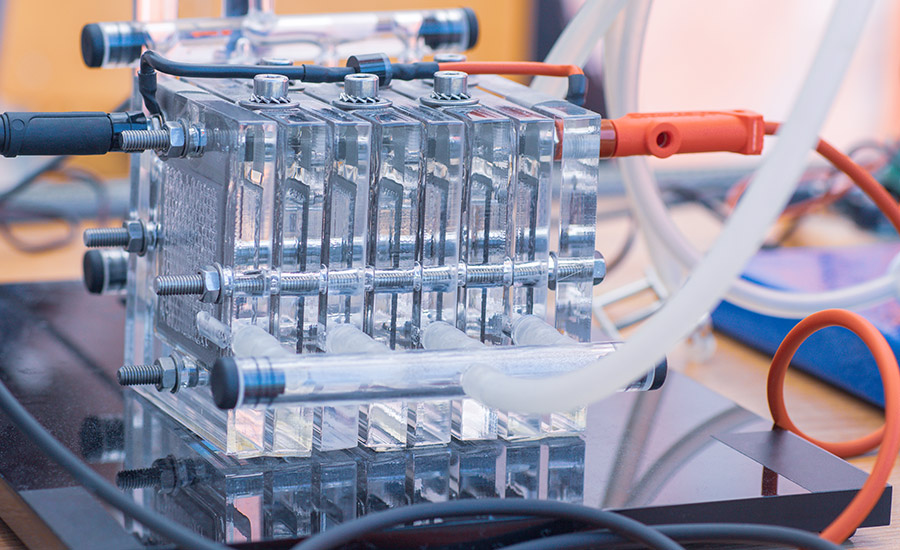
Hydrogen fuel cells provide a tantalising glimpse into our low-carbon future
The McKinsey report claims that, by 2030, the hydrogen sector could generate 700,000 jobs and $140bn in revenue, growing to 3.4 million jobs and $750bn by 2050. It also believes it could account for a 16% reduction in CO2 emissions, a 36% reduction in NOx emissions, and supply 14% of US energy demand.
So how does it work?
Simply put, hydrogen fuel cells combine hydrogen and oxygen atoms to produce electricity. The hydrogen reacts with oxygen across an electrochemical cell and produces electricity, water, and heat.
This is what gets supporters so excited. In theory, hydrogen is a limitless, incredibly powerful fuel source with no direct emissions of pollutants or greenhouse gases.
So what's the problem?
Right now, there are actually a few problems. The process relies on electrolysis and steam reforming, which are extremely expensive. The IEA estimates that to produce all of today’s dedicated hydrogen output from electricity would require 3,600TWh, more than the total annual electricity generation of the European Union.
Moreover, almost 95% of hydrogen currently is produced using fossil fuels such as methane, natural gas, or coal (this is called "grey hydrogen"). Its production is responsible for annual CO2 emissions equivalent to those of Indonesia and the United Kingdom combined. In addition, its low density makes it difficult to store and transport — it must be under high pressure at all times. It’s also well-known for being highly flammable — its use as a fuel has come a long way since the Hindenburg Disaster but the association still makes many people nervous.
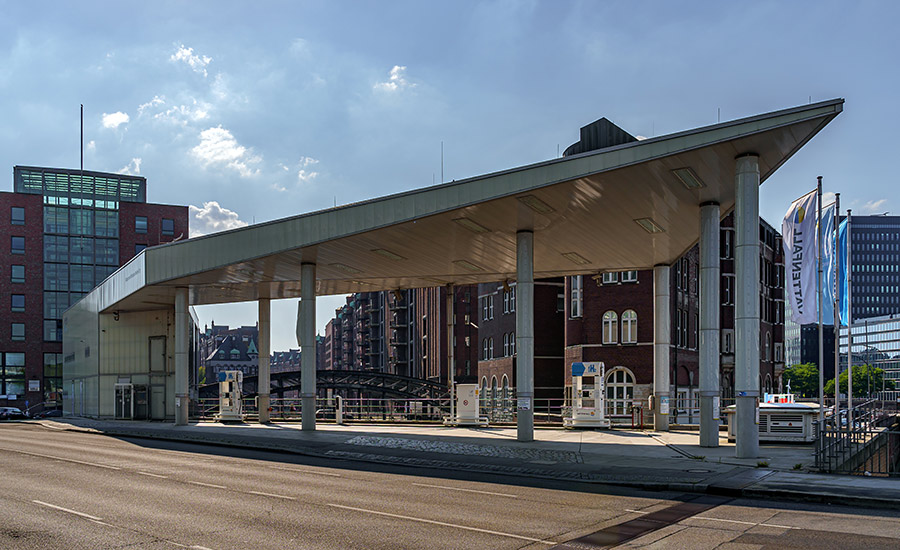
A Hydrogen refuelling station Hafencity in Hamburg, Germany. Infrastructure issues must be addressed if we are to see more hydrogen-fuelled vehicles on our roads. | Image credit: fritschk / Shutterstock.com
So there are quite a few problems. What’s the good news?
In the last few years, we've seen how rapidly investment, innovation, and infrastructure policy can completely transform individual renewable energy industries. For example, the IEA analysis believes the declining costs of renewables and the scaling up of hydrogen production could reduce the cost of producing hydrogen from renewable electricity 30% by 2030.
Some of the issues around expense could be resolved by mass manufacture of fuel cells, refuelling equipment, and electrolysers (which produce hydrogen from electricity and water), made more likely by the increased interest and urgency. Those same driving forces could improve infrastructural issues such as refuelling stations for private and commercial vehicles, although this is likely to require coordination between various stakeholders, including national and local governments, industry, and investors.
The significant gains in renewable energy mean that “green” hydrogen, where renewable electricity powers the electrolysis process, is within sight.
The IEA report makes clear that international co-operation is “vital” to progress quickly and successfully with hydrogen energy. R&D requires support, as do first movers in mitigating risks. Standards need to be harmonised, good practice shared, and existing international infrastructure built on (especially existing gas infrastructure).
If hydrogen can be as efficient and powerful a contributor to a green global energy mix as its proponents believe, then it's better to invest sooner rather than later. If that investment can help power a post-Covid economic recovery, even better.
11 March 2021 |
|
|
Agrifood
Broad beans are an undemanding and valuable crop for all gardens. Probably originating in the Eastern Mediterranean and grown domestically since about 6,000BC, this plant was brought to Great Britain by the Romans.
Header image: a rich harvest of succulent broad beans for the table
Capable of tolerating most soil types and temperatures they provide successional fresh pickings from June to September. Early crops are grown from over-wintered sowings of cv Aquadulce. They are traditionally sown on All Souls Day on 2 November but milder autumns now cause too rapid germination and extension growth. Sowing is best now delayed until well into December. Juicy young broad bean seedlings offer pigeons a tasty winter snack, consequently protection with cloches or netting is vital insurance.
From late February onwards dwarf cultivars such as The Sutton or the more vigorous longer podded Meteor Vroma are used. Early cropping is promoted by growing the first batches of seedlings under protection in a glasshouse. Germinate the seed in propagating compost and grow the resultant seedlings until they have formed three to four prominent leaflets. Plant out into fertile, well-cultivated soil and protect with string or netting frameworks supported with bamboo canes to discourage bird damage.
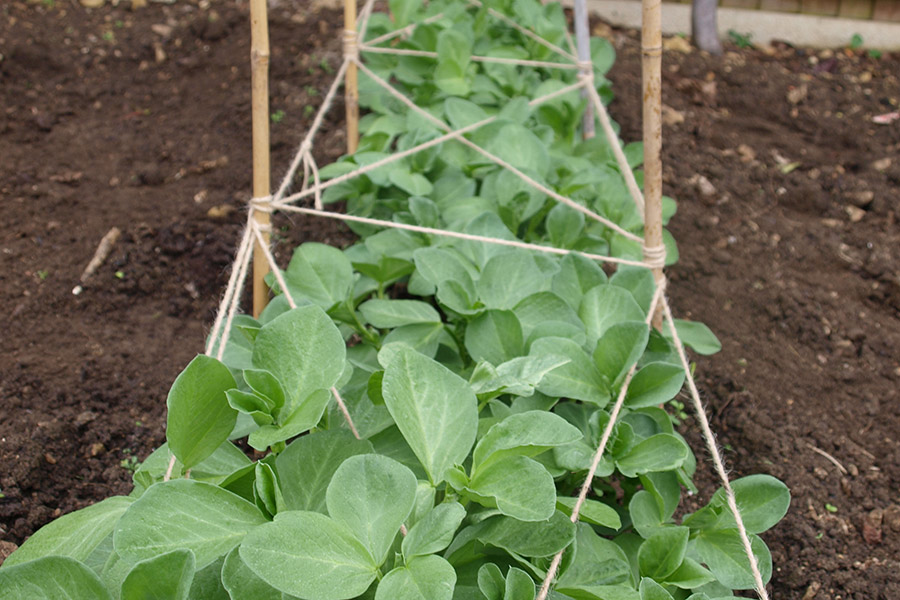
Young broad bean plants supported by string and bamboo canes
More supporting layers will be required as the plants grow and mature. Later sowings are made directly into the vegetable garden. As the plants begin flowering remove the apical buds and about two to three leaves. This deters invasions by the black bean aphid (Aphis fabae). Winged aphids detect the lighter green of upper foliage of broad beans and navigate towards them!
Allow the pods ample time for swelling and the development of bean seeds of up to 2cm diameter before picking. Beware, however, of over-mature beans since these are flavourless and lack succulence. Broad beans have multiple benefits in the garden and for our diets. They are legumes and hence the roots enter mutually beneficial relationships with nitrogen fixing bacteria. These bacteria are naturally present in most soils. They capture atmospheric nitrogen, converting it into nitrates which the plant utilises for growth. In return, the bacteria gain sources of carbohydrates from photosynthesis.
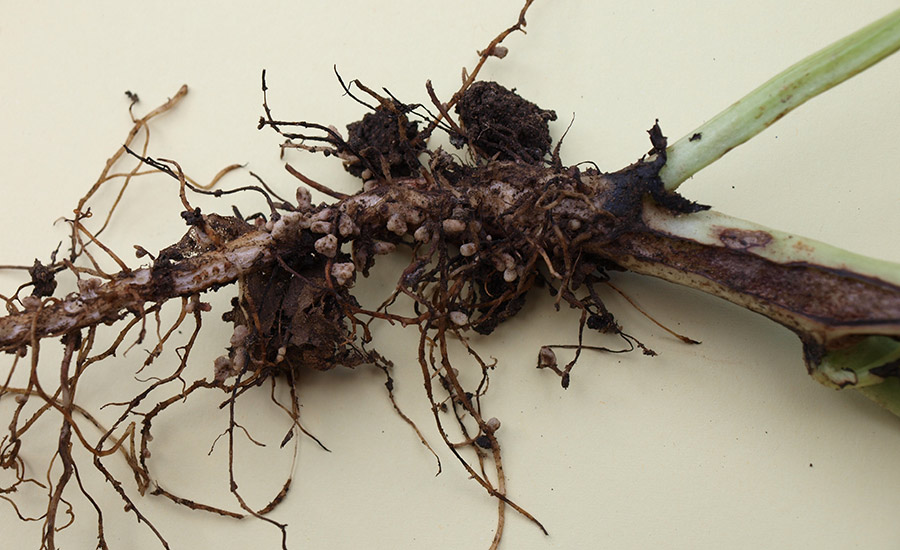
Broad bean root carrying nodules formed around colonies of nitrogen fixing bacteria
Broad beans are pollinated by bees and other beneficial insects. They are good sources of pollen and nectar, encouraging biodiversity in the garden. Nutritionally, beans are high in protein, fibre, folate, Vitamin B and minerals such as manganese, phosphorus, magnesium and iron, therefore cultivating healthy living. Finally, they form extensive roots, improving soil structure, drainage and reserves of organic nitrogen. Truly gardeners’ friends!
Professor Geoff Dixon, author of Garden practices and their science (ISBN 978-1-138-20906-0) published by Routledge 2019.
08 March 2021 |
|
|
Sustainability & Environment
The Organisation for Economic Cooperation and Development (OECD) defines the Blue Economy as ‘all economic sectors that have a direct or indirect link to the oceans, such as marine energy, coastal tourism and marine biotechnology.’ Other organisations have their own definitions, but they all stress the economic and environmental importance of seas and oceans.
Header image: Our oceans are of economic and environmental importance
To this end there are a growing number of initiatives focused on not only protecting the world’s seas but promoting economic growth. At the start of 2021 the Asian Development Bank (ADB) and the European Investment Bank (EIB) joined forces to support clean and sustainable ocean initiatives in the Asia-Pacific region, and ultimately contribute to achieving Sustainable Development Goals and the climate goals of the Paris Agreement.
Both institutions will finance activities aimed at promoting cleaner oceans ‘through the reduction of land-based plastics and other pollutants discharged into the ocean,’ as well as projects which improve the sustainability of all socioeconomic activities that take place in oceans, or that use ocean-based resources.
ADB Vice-President for Knowledge Management and Sustainable Development, Bambang Susantono, said ‘Healthy oceans are critical to life across Asia and the Pacific, providing food security and climate resilience for hundreds of millions of people. This Memorandum of Understanding between the ADB and EIB will launch a framework for cooperation on clean and sustainable oceans, helping us expand our pipeline of ocean projects in the region and widen their impacts’.

The blue economy is linked to green recovery
In the European Union the blue economy is strongly linked to the bloc’s green recovery initiatives. The EU Blue Economy Report, released during June 2020, indicated that the ‘EU blue economy is in good health.’ With five million people working in the blue economy sector during 2018, an increase of 11.6% on the previous year, ‘the blue economy as a whole presents a huge potential in terms of its contribution to a green recovery,’ the EU noted. As the report was launched, Mariya Gabriel, Commissioner for Innovation, Research, Culture, Education and Youth, responsible for the Joint Research Committee said; ‘We will make sure that research, innovation and education contribute to the transition towards a European Blue Economy.’
The impact of plastics in oceans is well known and many global initiatives are actively tackling the problem. At the end of 2020 the World Economic Forum and Vietnam announced a partnership to tackle plastic pollution and marine plastic debris. The initiative aims to help Vietnam ‘dramatically reduce its flow of plastic waste into the ocean and eliminate single-use plastics from coastal tourist destinations and protected areas.’ Meanwhile young people from across Africa were congratulated for taking leadership roles in their communities as part of the Tide Turners Plastic Challenge. Participants in the challenge have raised awareness of the impact of plastic pollution in general.
But it isn’t just the health of our oceans that governments and scientists are looking at. There is growing interest in the minerals and ore that could potentially be extracted via sea-bed mining. The European Commission says that the quantity of minerals occupying the ocean floor is potentially large, and while the sector is small, the activity has been identified as having the potential to generate sustainable growth and jobs for future generations. But adding a note of caution, the Commission says, ‘Our lack of knowledge of the deep-sea environment necessitates a careful approach.’ Work aimed at shedding light on the benefits, drawbacks and knowledge gaps associated with this type of mining is being undertaken.
With the push for cleaner energy and the use of batteries, demand for cobalt will rise, and the sea-bed looks to have a ready supply of the element. But, the World Economic Forum points out that the ethical dimensions of deep-sea cobalt have the potential to become contentious and pose legal and reputational risks for mining companies and those using cobalt sourced from the sea-bed.
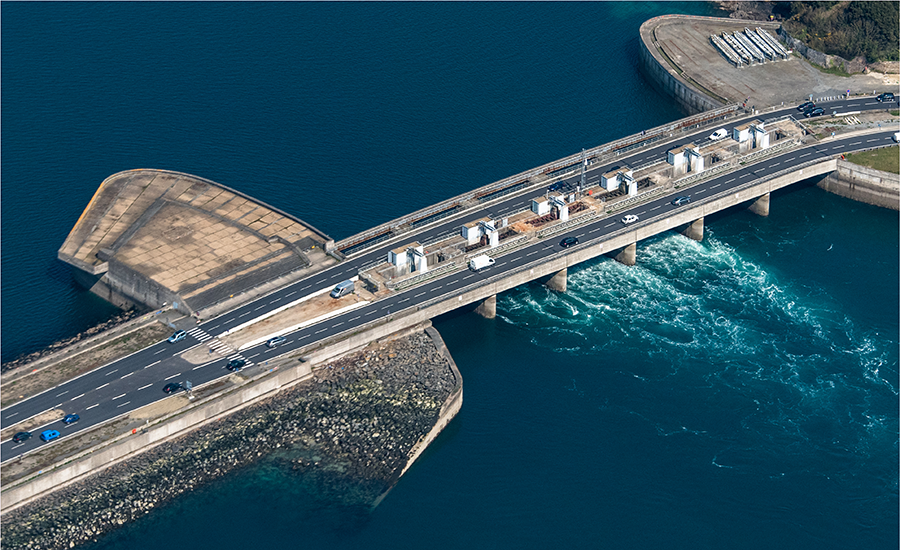
Energy will continue to be harnessed from the sea.
But apart from its minerals, the ocean’s ability to supply energy will continue to be harnessed through avenues such as tidal and wind energy. During the final quarter of 2020, the UK Hydrographic Office launched an Admiralty Marine Innovation Programme. Led by the UK Hydrographic Office, the programme gives innovators and start-ups a chance to develop new solutions that solve some of the world’s most pressing challenges as related to our oceans.
The UK’s Blue Economy is estimated to be worth £3.2 trillion by the year 2030. Marine geospatial data will be important in supporting this growth by enabling the identification of new areas for tidal and wind energy generation, supporting safe navigation for larger autonomous ships, which will play a vital role in mitigating climate change, and more.
23 February 2021 |
|
|
Energy
Where once a country might have wanted to strike gold, now hitting upon a hydrocarbon find feels like a prize. But finding a hydrocarbon is only the beginning of the process and might not be worth it — as Lebanon is discovering.
First, a little background: for some time, Lebanon has been experiencing an energy crisis. Without resources of their own, the industry (which is government-owned) is reliant on foreign imports, which are expensive. Electricity in early 2020 was responsible for almost 50% of Lebanon's national debt. Major blackouts were common.
This contributed to a spiralling financial crisis, prompting public protests and riots as the middle class disappeared and even wealthier citizens struggled. Before Covid-19 and the devastating August 2020 blast in Beirut, Lebanon was in crisis.
The idea that the country might be able to switch from foreign oil to local gas was understandably appealing, especially when a major find was literally right there on the Lebanese shore. In 2019, a consortium of Israeli and US firms discovered more than 8tcm of natural gas in several offshore fields in the Eastern Mediterranean, much of it in Lebanese waters.

A hydrocarbon find off the Beirut coast has failed to live up to its early promise.
But a find is only the beginning. With trust in Lebanese politicians low (the country ranks highly in most government corruption indexes) and a system that has repeatedly struggled to deliver a stable government, there are additional difficulties, not least a delay in the licensing rounds and a lack of trust — both internally, from citizens, and externally, from potential bidders. Meanwhile, Lebanon's neighbours race ahead to exploit their own finds, which ratchets up tensions.
Amid all that, a drilling exploration managed to go ahead last summer. But the joint venture between Total, ENI, and Novatek, which operated a well 30km offshore Beirut and drilled to approximately 1,500 metres, did not bring back the hoped-for results. The results confirmed the presence of a hydrocarbon system generally but did not encounter any reservoirs of the Tamar formation, which was the target.
Offshore exploration is a long process, with a lot of challenges and uncertainties and Ricardo Darré, Managing Director of Total E&P Liban, said afterwards, "Despite the negative result, this well has provided valuable data and learnings that will be integrated into our evaluation of the area". But the faith national politicians have long put in the hydrocarbon find, selling it as an answer to all Lebanon's problems, seems to have only worsened the domestic situation since.
And domestic politics is just the start of the problems…
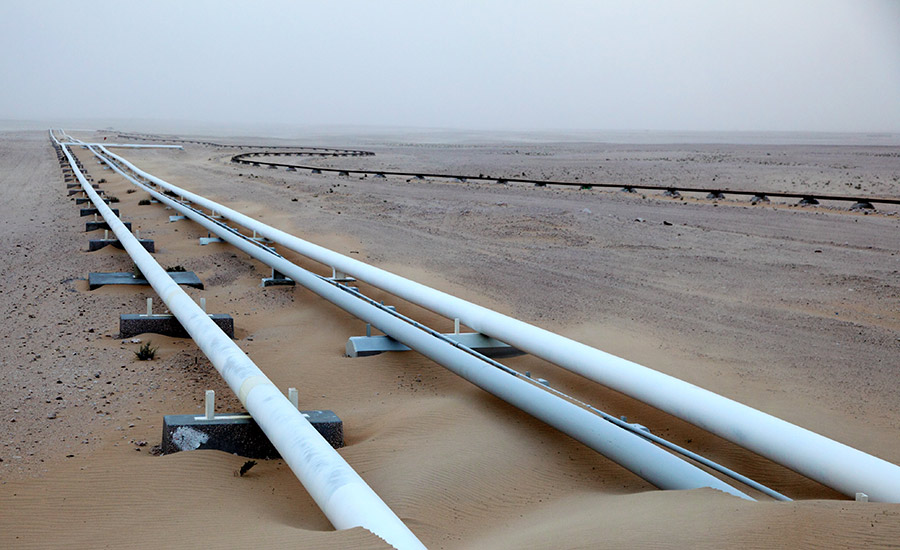
Unlike other countries in the Middle East, Lebanon has no pipeline infrastructure of its own.
Israel, Egypt, and Jordan already have pipelines, which go to Italy. Turkey is working with Libya on a pipeline. Lebanon has no pipeline infrastructure of its own yet, although Russia has storage facilities and pipelines in the country and an eye on possible competition in the gas market.
None of that is an issue if the supply is intended for domestic use but that might not be profitable enough for investors and the Lebanese government would struggle to underwrite production on its own. Cyprus has encountered similar issues exploiting its share of the find.
Lebanon has also set an ambitious goal of having 30% of domestic energy mix sourced from renewable energy by 2030. The hoped-for gas was intended to support the renewable energy mix but, with the clock ticking, it might be that priorities shift to focusing on renewables. The Covid-19 pandemic will significantly impact the budgets of drilling companies and the push for renewable energy, both from governments and investors, seems to be growing as a way to boost economic recovery.
It may be that, after all the excitement around the hydrocarbon find, Lebanon starts to look elsewhere for its energy provision.
22 February 2021 |
|
|
Sustainability & Environment
The world’s biggest ever survey of public opinion on climate change was published on 27th January, covering 50 countries with over half of the world’s population, by the United Nations Development Programme (UNDP) and the University of Oxford. Of the respondents, 64% believe climate change is a global emergency, despite the ongoing Covid-19 pandemic, and sought broader action to combat it. Earlier in the month, US President Joe Biden reaffirmed the country's commitment to the Paris Agreement on Climate Change.
It is possible that the momentum, combined with the difficulties many countries currently face, may make many look again to geoengineering as an approach. Is it likely that large scale engineering techniques could mitigate the damage of carbon emissions? And is it safe to do so or could we be exacerbating the problem?
The term has long been controversial, as have many of the suggested techniques. But it would seem that some approaches are gaining more mainstream interest, particularly Carbon Dioxide Removal (CDR) and Solar Radiation Modification (SRM), which the 2018 Intergovernmental Panel on Climate Change (IPCC) report for the UN suggested were worth further investigation (significantly, it did not use the term "geoengineering" and distinguished these two methods from others).
One of the most covered CDR techniques is Carbon Capture and Storage (CCS) or Carbon Capture, Utilisation, and Storage (CCUS), the process of capturing waste carbon dioxide, usually from carbon intensive industries, and storing (or first re-using) it so it will not enter the atmosphere. Since 2017, after a period of declining investment, more than 30 new integrated CCUS facilities have been announced. However, there is concern among many that it will encourage further carbon emissions when the goal should be to reduce and use CCS to buy time to do so.
CDR techniques that utilise existing natural processes of natural repair, such as reforestation, agricultural practices that absorb carbon in soils, and ocean fertilisation are areas that many feel could and should be pursued on a large scale and would come with ecological and biodiversity benefits, as well as fostering a different, more beneficial relationship with local environments.
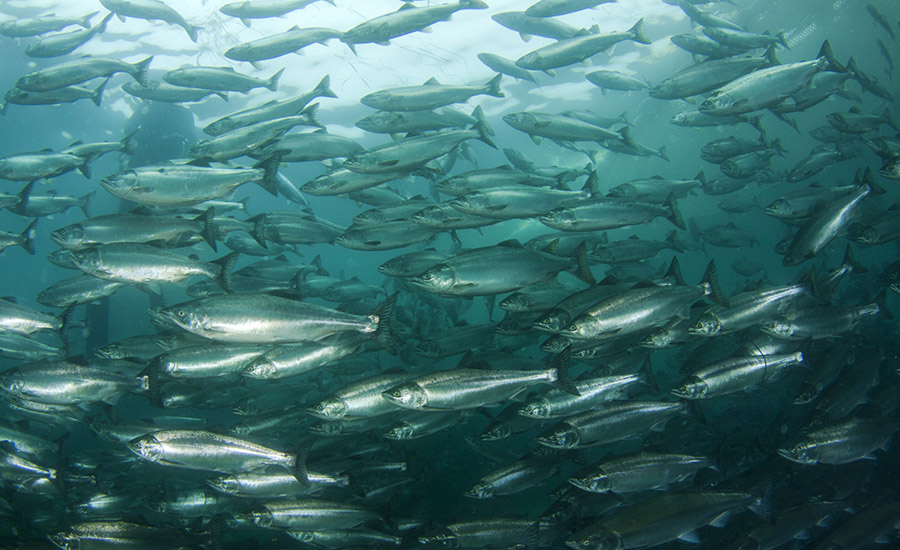
A controversial iron compound deposition approach has been trialled to boost salmon numbers and biodiversity in the Pacific Ocean.
The ocean is a mostly untapped area with huge potential and iron fertilisation is one very promising area. The controversial Haida Salmon Corporation trial in 2012 is perhaps the most well-known example and brings together a lot of the pros and cons frequently discussed in geoengineering — in many ways, we can see it as a microcosm of the bigger issue.
The trial deposited 120 tonnes of iron compound in the migration routes of pink and sockeye salmon in the Pacific Ocean 300k west of Haida Gwaii over a period of 30 days, which resulted in a 35,000km2, several month long phytoplankton bloom that was confirmed by NASA satellite imagery. That phytoplankton bloom fed the local salmon population, revitalising it — the following year, the number of salmon caught in the northeast Pacific went from 50 million to 226 million. The local economy benefited, as did the biodiversity of the area, and the increased iron in the sea captured carbon (as did the biomass of fish, for their lifetimes).
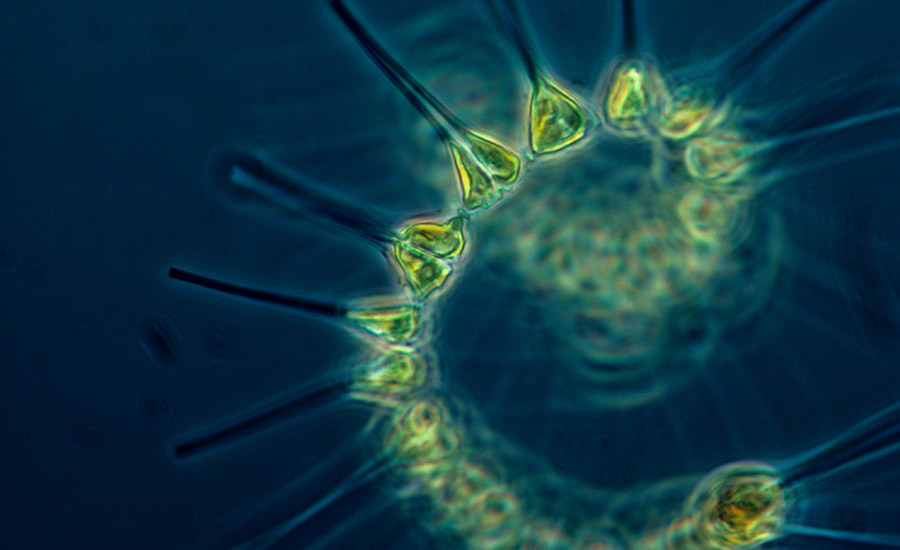
Small but mighty, phytoplankton are the laborers of the ocean. They serve as the base of the food web.
But Environment Canada believes the corporation violated national environmental laws by depositing iron without a permit. Much of the fear around geoengineering is how much might be possible by rogue states or even rogue individuals, taking large scale action with global consequences without global consent.
The conversation around SRM has many similarities — who decides that the pros are worth the cons, when the people most likely to suffer the negative effects, with or without action, are already the most vulnerable? This is a concern of some of the leading experts in the field. Professor David Keith, an expert in the field, has publicly spoken about his concern around climate change and inequality, adding after the latest study that, "the poorest people tend to suffer most from climate change because they’re the most vulnerable. Reducing extreme weather benefits the most vulnerable the most. The only reason I’m interested in this is because of that."
But he doesn't believe anywhere near sufficient research has been done into the viability of the approach or the possible consequences and cautions that there is a need for "an adequate governance system in place".
There is no doubt that the research in this field is exciting but there are serious ethical and governance problems to be dealt with before it can be considered a serious component of an emissions reduction strategy.
15 February 2021 |
|
|
Energy
We are increasingly conscious of the need to recycle waste products, but it is never quite so easy as rinsing and sorting your waste into the appropriate bins, especially when it comes to plastic.
Despite our best intentions, only around 16% of plastic is recycled into new products — and, worse, plastics tend to be recycled into low quality materials because transformation into high-value chemicals requires substantial amounts of energy, meaning the choices are either downcycling or prohibitively difficult. The majority of single-use plastics end up in landfills or abandoned in the environment.
This is a particular problem when it comes to polyolefins such as polyethylene (PE) and polypropylene (PP), which use cheap and readily available raw materials. Approximately 380 million tonnes of plastics are generated annually around the world and it is estimated that, by 2050, that figure will be 1.1 billion tonnes. Currently, 57% of this total are polyolefins.
Why are polyolefins an issue? The strong sp3 carbon–carbon bonds (essentially long, straight chains of carbon and hydrogen atoms) that make them useful as a material also make them particularly difficult to degrade and reuse without intensive, high energy procedures or strong chemicals. More than most plastics, downcycling or landfill disposal tend to be the main end-of-life options for polyolefins.
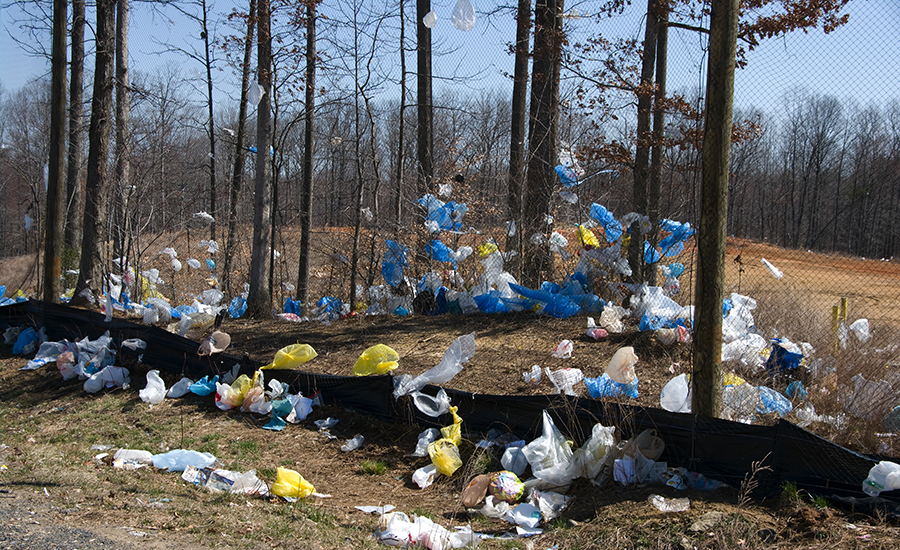
Polyethylene is used to make plastic bags and packaging.
Now, however, a team of scientists from MIT, led by Yuriy Román-Leshkov, believe they may have made a significant step towards solving this problem.
Previous research has demonstrated that noble metals, such as zirconium, platinum, and ruthenium can help split apart short, simple hydrocarbon chains as well as more complicated, but plant-based lignin molecules, in processes with much lower temperatures and energy.
So the team looked at using the same approach for the long hydrocarbon chains in polyolefins, aiming to disintegrate the plastics into usable chemicals and natural gas. It worked.
First, they used ruthenium-carbon nanoparticles to convert more than 90% of the hydrocarbons into shorter compounds at 200 Celsius (previously, temperatures of 430–760 Celsius were required).
Next, they tested their new method on commercially available, more complex polyolefins without pre-treatment (an energy intensive requirement). Not only were the samples completely broken down into gaseous and liquid products, the end product could be selected by tuning the reaction, yielding either natural gas or a combination of natural gas and liquid alkanes (both highly desirable) as preferred.
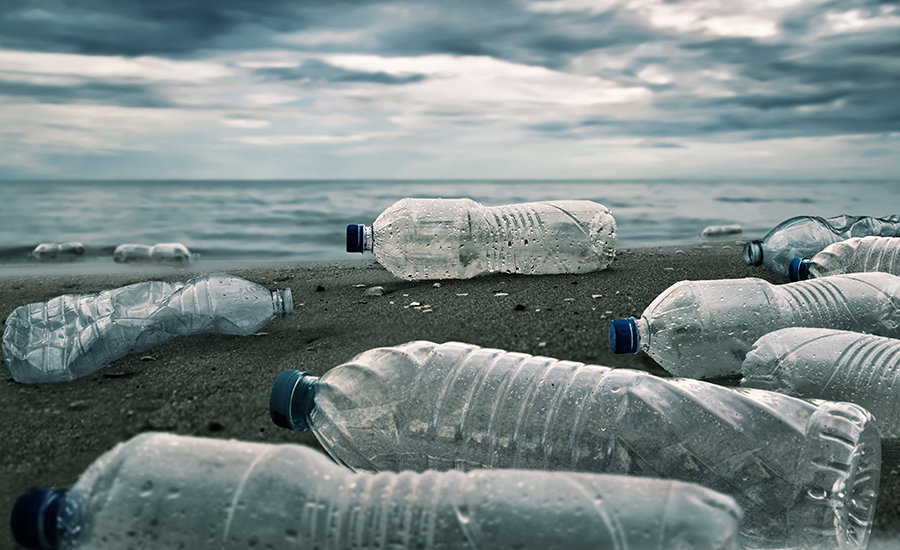
Polypropylene is used in bottle caps, houseware, and other packaging and consumer products.
The researchers believe that an industrial scale use of their method could eventually help reduce the volume of post-consumer waste in landfills by recycling plastics to desirable, highly valuable alkanes — but, of course, it's not that simple. The team says that more research into the effects of moisture and contaminants in the process is required, as well as product removal strategies to decrease the formation of light alkanes which will be critical for the industrialisation of this reaction.
However, they believe the path they're on could lead to affordable upcycling technology that would better integrate polyolefins into the global economy and incentivise the removal of waste plastics from landfill and the environment.
More about the study can be read here:
https://pubs.acs.org/doi/full/10.1021/jacsau.0c00041
11 February 2021 |
|
|
Policy
The theme of the 2021 World Economic Forum’s Davos Agenda was ‘The Great Reset’ and how the world might recover from the effects of Covid-19. Because of the current circumstances, the forum was split into two parts, with a virtual meeting held January 25-29 and an in-person gathering planned for May 13-16, in Singapore.
Each day of the January summit was dedicated to discussing a key area for recovery. On Monday, January 25, the focus was on designing cohesive, sustainable and resilient economic systems. On Tuesday, delegates discussed how to drive responsible industry transformation and growth, while on Wednesday they spoke about enhancing the stewardship of our global commons. Thursday's talks centred on harnessing the technologies of the Fourth Industrial Revolution, and on Friday attendees discussed ways to advance global and regional cooperation.
With the International Labor Organization jobs report, published at the start of the week, stating that at least 225 million jobs vanished worldwide over the past year (four times more than the 2008 global financial crisis) and concerns that vaccine nationalism will see the pandemic continue to ravage many less wealthy nations, much of the talk was around equality and unity.
Christine Lagarde, President of the European Central Bank, spoke in Monday's meeting. ‘Once we’re through to the "second phase" of the 2021 Covid-19 recovery,’ Lagarde said, ‘it is most likely going to be a new economy, which will be associated with positive developments and also with challenges.’ Many advanced economies, she noted, particularly in Europe, have jumped forward in terms of digitalisation, some by up to seven years.
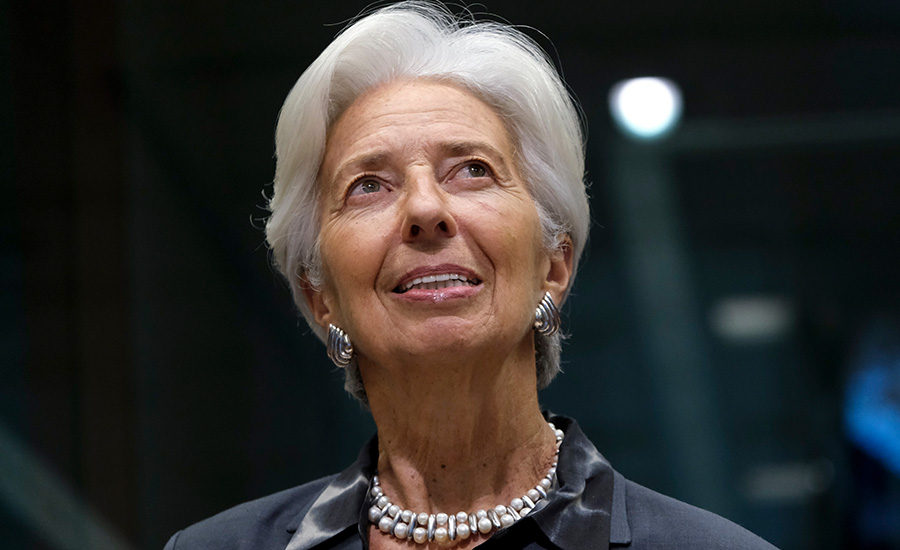
Christine Lagarde, President of the European Central Bank, has called for continued support for the digital-centred, post-pandemic economy. | Credit: Alexandros Michailidis / Shutterstock.com
She added that it is likely that there will be a 20% increase in the amount of people working from home post-pandemic, which will have an impact on many economies, and claimed that technological changes are already having positive effects. She said that it is critical to continue ‘favouring and supporting investment into this new economy’ and that on the fiscal and monetary policy front, authorities will have to stay the course and continue to support. At the same time, investment will have to be focused on laying the ground for a new economy.
Ursula von der Leyen, President of the European Commission (EC), agreed about the increase in digitalisation, and reported that the EU hopes ‘the 2020s can finally be Europe’s Digital Decade’, highlighting a number of investments to boost this process, including the startup scenes in cities such as Sofia and Lisbon.
However, she warned that there is a ‘darker side of the digital world,’ noting the assault on Capitol Hill in the US and making clear that ‘The immense power of the big digital companies must be contained. She spoke of the EC's plans ‘to make internet companies take responsibility for content, from dissemination to promotion and removal, and highlighted the Commission’s new rulebooks, the Digital Services Act and the Digital Markets Act.
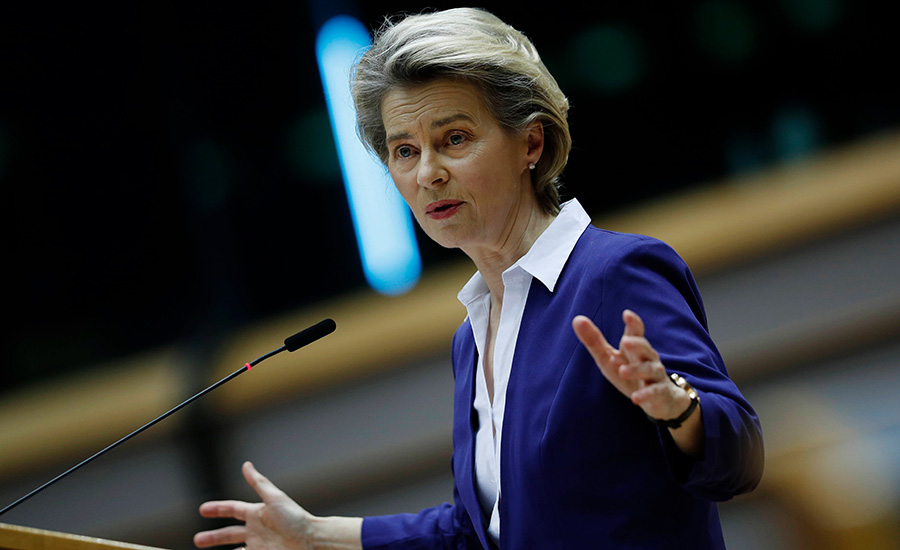
Ursula von der Leyen, President of the European Commission, believes the 2020s can be Europe’s ‘Digital Decade’. | Credit: John Smith Williams / Shutterstock.com
She invited the US to work together to: ‘Create a digital economy rulebook that is valid worldwide: it goes from data protection and privacy to the security of critical infrastructure. A body of rules based on our values: Human rights and pluralism, inclusion and the protection of privacy.’
Marc Benioff, Salesforce CEO, made a noteworthy intervention in his panel discussion, claiming, ‘There has been a mantra for too long that the business of business is business, but today the business of business is improving the state of the world.’ He added that, while there were many CEOs who had been ‘bad actors,’ others had used their considerable resources to help fight the pandemic.
Many speakers noted a shift towards sustainability in investments, with others demanding more change and faster. Of the latter, Mark Carney, Special Envoy for Climate Action and Finance to the UN, said bluntly, ‘if you are part of the private financial sector and you are not part of the solution […] you will have made the conscious decision not to be aligned to net zero […] if you’re not in, you’re out because you chose to be out.’
It could be concluded that there was a great deal to feel positive about, but the circumstances are difficult. Now we will see whether the attendees of the World Economic Forum can deliver on their inspiring rhetoric.
09 February 2021 |
|
|
Agrifood
More people are looking at their nutritional intake, not only to improve wellbeing but also reduce their environmental impact. With this, comes a move to include foods that are not traditionally cultivated or consumed in Europe.
Assessing whether this growing volume of so called ‘novel foods’ are safe for human consumption is the task of the European Food Safety Authority. The EFSA points out, ‘The notion of novel food is not new. Throughout history new types of food and food ingredients have found their way to Europe from all corners of the globe. Bananas, tomatoes, tropical fruit, maize, rice, a wide range of spices – all originally came to Europe as novel foods. Among the most recent arrivals are chia seeds, algae-based foods, baobab fruit and physalis.’
Under EU regulations any food not consumed ‘significantly’ prior to May 1997 is considered to be a ‘novel food’. The category covers new foods, food from new sources, new substances used in food as well as new ways and technologies for producing food. Examples include oils rich in omega-3 fatty acids from krill as a new source of food, phytosterols as a new substance, or nanotechnology as a new way of producing food.
Providing a final assessment on safety and efficacy of a novel food is a time consuming process. At the start of 2021 the EFSA gave its first completed assessment of a proposed insect-derived food product. The panel on Nutrition, Novel Foods and Food Allergens concluded that the novel food dried yellow meal worm (Tenebrio molitor larva) is safe for human consumption.

Dried yellow meal worm (Tenebrio molitor larva) is safe for human consumption, according to the EFSA.
Commenting in a press statement, as the opinion on insect novel food was released, Ermolaos Ververis, a chemist and food scientist at EFSA who coordinated the assessment said that evaluating the safety of insects for human consumption has its challenges. ‘Insects are complex organisms which makes characterising the composition of insect-derived products a challenge. Understanding their microbiology is paramount, considering also that the entire insect is consumed,’
Ververis added, ‘Formulations from insects may be high in protein, although the true protein levels can be overestimated when the substance chitin, a major component of insects’ exoskeleton, is present. Critically, many food allergies are linked to proteins so we assess whether the consumption of insects could trigger any allergic reactions. These can be caused by an individual’s sensitivity to insect proteins, cross-reactivity with other allergens or residual allergens from insect feed, e.g. gluten.’
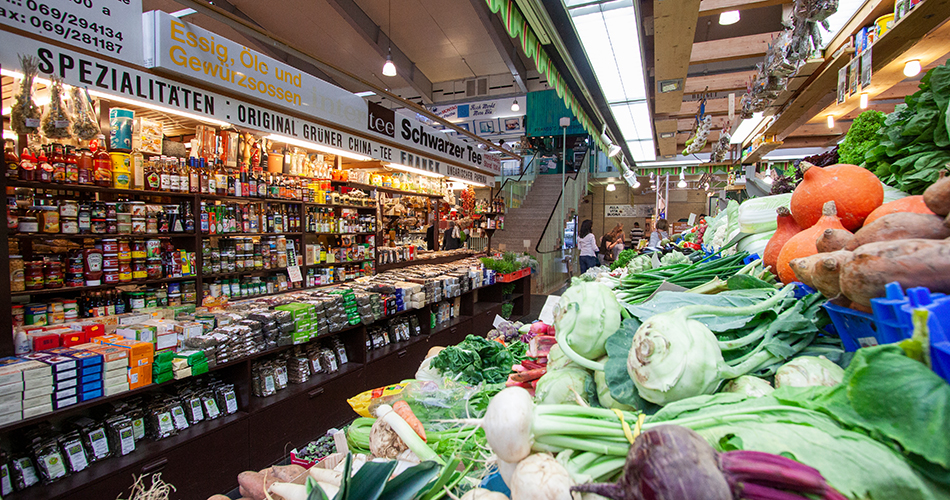
EFSA research could lead to increased choice for consumers | Editorial credit: Raf Quintero / Shutterstock.com
The EFSA has an extensive list of novel foods to assess. These include dried crickets (Gryllodes sigillatus), olive leaf extract, and vitamin D2 mushroom powder. With the increasing desire to find alternatives to the many foods that we consume on a regular basis, particularly meat, it is likely that the EFSA will be busy for some time to come.
28 January 2021 |
|
|
Sustainability & Environment
Gardens and parks provide visual evidence of climate change. Regular observation shows us that our flowering bulbous plants are emerging, growing and flowering. Great Britain is particularly rich in long term recordings of dates of budbreak, growth and flowering of trees, shrubs and perennial herbaceous plants. Until recently, this was dismissed as ‘stamp collecting by Victorian ladies and clerics’.
The science of phenology now provides vital evidence that quantifies the scale and rapidity of climate change. Serious scientific evidence of the impact of climate change comes, for example, from an analysis of 29,500 phenological datasets. This research shows that plants and animals are responding consistently to temperature change with earlier blooming, leaf unfurling, flowering and migration. This scale of change has not been seen on Earth for the past three quarters of a million years. And this time it is happening with increased rapidity and is caused by the activities of a single species – US – humans!

Iris unguicularis (stylosa).
Changing seasonal cycles seriously affects our gardens. Fruit trees bloom earlier than previously and are potentially out of synchrony with pollinators. That results in irregular, poor fruit set and low yields. Climate change is causing increased variability in weather events. This is particularly damaging when short, very sharp periods of freezing weather coincide with precious bud bursts and shoot growth. Many early flowering trees and shrubs are incapable of replacing damaged buds, as a result a whole season’s worth of growth is lost. Damaged buds and shoots are more easily invaded by fungi which cause diseases such as dieback and rotting. Eventually valuable feature plants fail, damaging the garden’s benefits for enjoyment and relaxation.
Plant diseases caused by fungi and bacteria benefit from our increasingly milder, damper winters. Previously, cooling temperatures in the autumn and winter frosts prevented these microbes from over-wintering. Now they are surviving and thriving in the warmer conditions. This is especially the case with soil borne microbes such as those which cause clubroot of brassicas and white rot, which affects a wide range of garden crops.

Hazel (Coryllus spp.) typical wind-pollinated yellow male catkins, which produce pollen.
Can gardeners help mitigate climate change? Of course! Grow flowering plants which are bee friendly; minimise using chemical controls; ban bonfires – which are excellent sources of CO2; establish wildlife-friendly areas filled with native plants and pieces of rotting wood, and it is amazing how quickly beneficial insects, slow worms and voles will populate your garden.
—
Professor Geoff Dixon is the author of Garden Practices and their Science, published by Routledge 2019.
26 January 2021 |
|
|