The most recent UN COP climate science meeting in Belem, Brazil, was seen by many as something of a damp squib, with the usual lengthy process to arrive at a final statement that was acceptable to all attendees long after the final events ended.
The process was not helped by the absence of any real participation by either the US or China. And while the Brazilian presidency branded COP30 as the “COP of implementation” much of the attention was focused on the COP as a missed opportunity to move forward with plans to transition away from the use of fossil fuels for energy.
While there may be (almost) consensus that change is needed, there are plenty of difficult issues still to be resolved – and none of them have particularly easy answers. And the gap between climate ambition and actual emissions reductions remains too big.
One of the many challenges is the issue of financing. One of the key agreements at COP29 in 2024 in Baku, Azerbaijan, set a target for climate finance, which was to triple to $300bn/year. This was the amount of capital that rich countries were to make available to low- and middle-income countries to support emissions reduction and climate change adaptation. So far the finance committed is still only just over $100bn/year.
Trade policy is becoming central in decarbonisation efforts, according to analysts Wood MacKenzie. ‘In the past, international trade has been largely excluded from the UN Framework Convention on Climate Change meetings. But a quarter of global emissions now come from internationally traded products and materials,’ it points out.
Resolving this will require common methods to measure and track the emissions embodied in the production process. If there is no standard way of measuring and tracking emissions created by making products it is harder for more sustainable and lower emissions products to compete with (usually) cheaper but more polluting options.
Already this is problem for the chemical industry, particularly in Europe, which is leading to de-industrialisation, while the emissions-intensive products are simply imported from elsewhere instead. The EU Carbon Border Adjustment Mechanism aims to regulate embodied carbon through a price on imported emissions, but countries including China, India and Japan have described it as ‘unilateral and arbitrary’. The final COP30 agreement avoided promoting such action.
In addition, the UN Environment Programme reported on the status of efforts made under the COP26’s Global Methane Pledge. It pointed out that methane emissions are still increasing, and very few of the 159 pledge signatories have made progress towards its goal of a 30% cut in methane emissions by 2030.
Part of the bigger problem is that change to industries that have used the same materials and processes for many decades is going to be hard, especially when they are part of vast and complex supply chains.
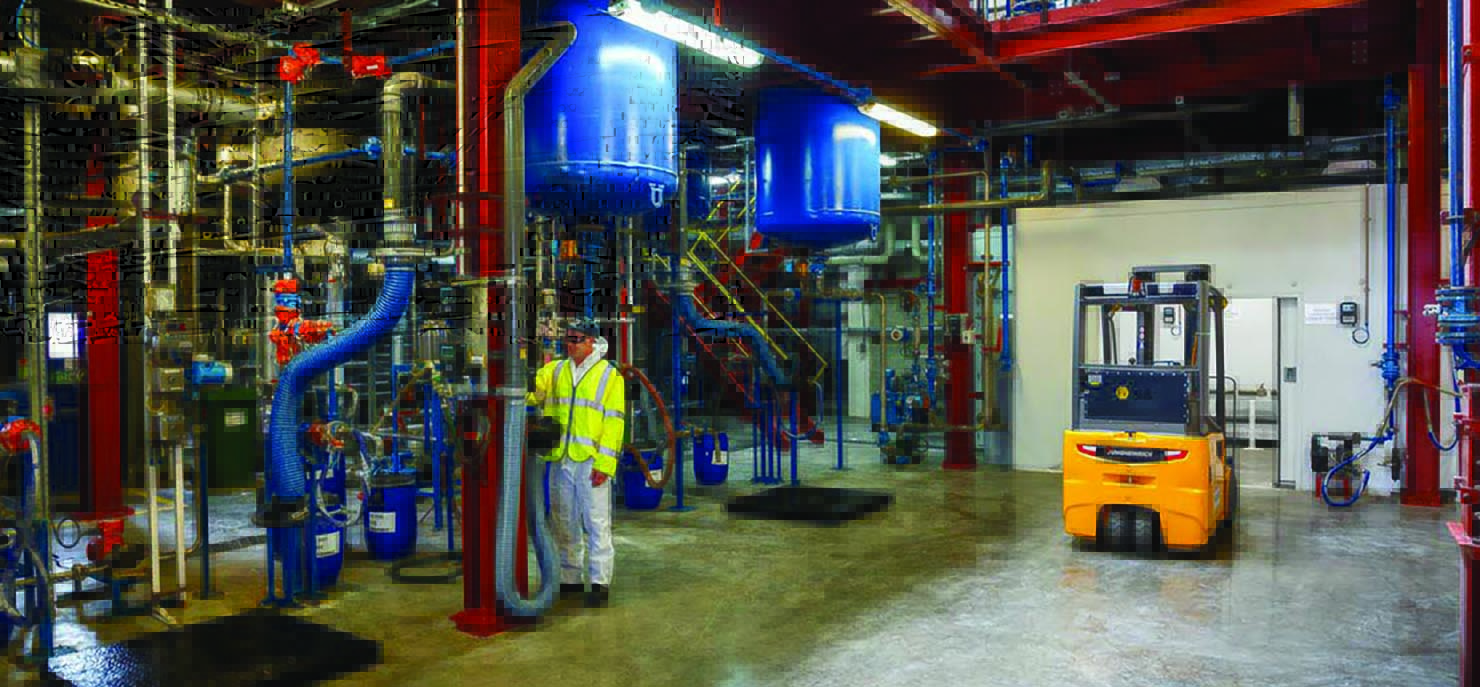
The Flue2Chem project in which SCI was involved is a great example of what can be done to make products more sustainable – and also the complexity involved. The project, which sought to use industrial flue gases as an alternative to fossil-based feedstocks, took hard work by 17 organisations to achieve its goal. So, it was fitting that Flue2Chem was honoured as the national winner for the UK in the category of outstanding projects at the 2025 Net-Zero Industries Awards – announced at COP.
On the same theme of tackling complexity, SCI’s Where Science Meets Business event this year had a timely focus on the concept of systems thinking, bringing together academics and business decision makers to look at the complicated set of factors that will influence choices.
And innovation is a theme elsewhere in this issue as you’ll also find a focus on the potential of artificial intelligence across everything from drug discovery to agriculture.
Perhaps one of the most telling messages of COP30 was that global emissions are still yet to peak, and the world is on a pathway to 2.6°C global warming – and no major economy is on track to meet 2030 emissions reduction targets. ‘Announced goals for 2035 lack the ambition required to keep warming below 2°C,’ says Wood Mackenzie.
‘Global emissions in 2035 are projected to be around 12% below 2019 levels.’ The consultant’s base case outlook suggests only an approximately 2% decline in emissions by 2035, compared with 2019 levels: insufficient to reach a global warming level well below 2°C. If country pledges are considered, however, a 15% decline is possible.
Certainly there is still plenty to be done, but it’s wise not to forget that real progress has been made; without the original Paris Agreement, global emissions were expected to reach 20–48% above 2019 levels by 2035. That should not create complacency; the world is still far from where it ought to be. But it should at least create some hope.
 Visit Blog