The European Investment Bank has agreed €250m in financing for Australian lithium and renewable energy producer Vulcan Energy’s Phase One Lionheart Project in Germany’s Upper Rhine Valley. The €2bn project will build an integrated, battery-quality lithium supply chain based on geothermal brines, helping to reduce Europe’s reliance on imported raw materials and support the decarbonisation of transport and industry.
US life science and clinical research company Thermo Fisher Scientific has announced a strategic collaboration with US integrated circuit technology company NVIDIA to power AI-based solutions and laboratory automation at scale. The effort will leverage NVIDIA’s Artificial Intelligence (AI) platform and Thermo Fisher Scientific’s laboratory solutions to progressively increase the automation, accuracy and speed of laboratories. The companies are working together to evolve the digital foundation that powers scientific instruments, laboratory infrastructure and data – connecting them to powerful AI, helping scientists reduce manual steps and accelerate scientific advances.
Swiss pharma Novartis has revealed plans to build its fourth US radioligand therapy (RLT) manufacturing facility in Winter Park, Florida. The facility represents another stage in the company’s $23bn US investment announced in April 2025, further expanding manufacturing capabilities to meet growing demand for these cancer treatments.
RNAi therapeutics company Alnylam Pharmaceuticals is expanding its manufacturing facility in Norton, Massachusetts. The company will invest $250m into a fully dedicated, proprietary, siRNA enzymatic-ligation manufacturing facility.
FairJourney Biologics, a Portuguese provider of antibody discovery and development services, is expanding its portfolio with the launch of cryo-electron microscopy (cryo-EM) services, supported through the company’s advanced laboratories in San Diego, California.
US CDMO Cellares has secured a site and signed a long-term lease for a new Integrated Development and Manufacturing Organisation (IDMO) smart factory at the Leiden Bio Science Park in the Netherlands. The facility will serve as Cellares’ European headquarters and expand the company’s global manufacturing network with dedicated regional capacity.
US pharma AbbVie and West Pharmaceutical Services, a US manufacturer of packaging components and delivery systems for injectable drugs and healthcare products, have agreed for AbbVie to acquire a device manufacturing facility in Tempe, Arizona, US, and associated intellectual property from West. The acquisition of the manufacturing site will significantly expand AbbVie’s drug delivery device manufacturing capabilities and capacity.
Noetik, a US AI-native biotech pioneering self-supervised machine learning and high-throughput spatial data to develop next-generation cancer therapeutics, has announced a five-year strategic collaboration and AI model licensing agreement with UK biopharma GSK. The partnership provides GSK’s AI and therapeutics teams with a direct, non-exclusive license to access Noetik’s OCTO-VC virtual cell foundation models in non-small cell lung cancer and colorectal cancer. The collaboration combines GSK’s experience in AI and tumour immunology with Noetik’s virtual cell simulation technology to accelerate the development of novel medicines. Additionally, the companies will collaborate to generate bespoke human spatial datasets, applying human-first biological simulation to areas of strategic interest.
US pharma Eli Lilly has announced an agreement to acquire US clinical-stage biopharma Ventyx Biosciences for an aggregate equity value of $1.2bn. Ventyx is focused on developing innovative oral therapies for patients with inflammatory-mediated diseases. It is working on a pipeline of small molecule therapeutics, including NLRP3 inhibitors, designed to treat inflammation across a broad range of disease states with high unmet need. These include opportunities across cardiometabolic disorders, neurodegenerative diseases and inflammatory disorders. Its clinical-stage programs target key immune pathways with the goal of offering improved efficacy and safety, compared with existing treatments.
Aragen, an Indian company offering services for the discovery, characterisation, activity assessment and early development of biologics and small molecules, has launched CHOMax, a new cell line development and early manufacturing platform that supports an integrated path from DNA to IND-enabling clinical supply for suitable standard IgG monoclonal antibodies. The accelerated approach provides biotech and pharma customers with a structured development pathway, including both drug substance and drug product support.
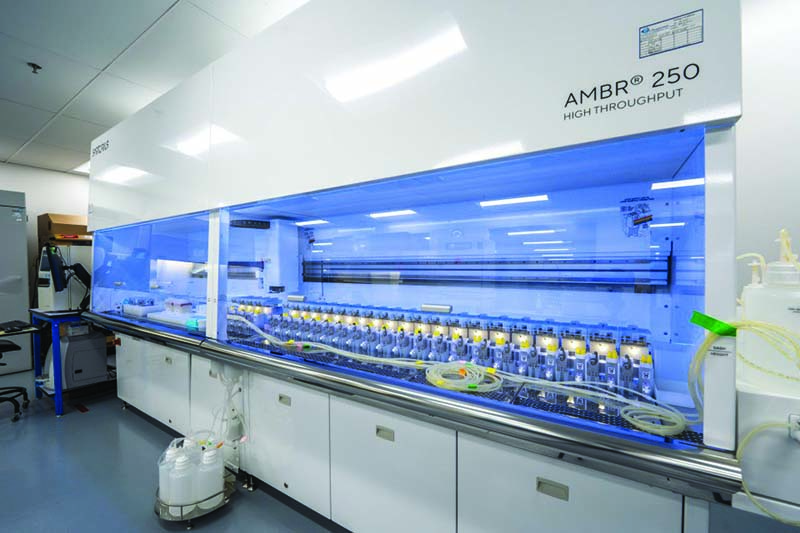
Aragen has launched its accelerated platform for DNA to IND-enabling clinical supply, CHOMax
Researchers from Imperial College London, UK, and its spinout company SOLVE Chemistry have unveiled a chemical dataset that could help accelerate the use of machine learning to solve solvent challenges in industrial chemistry. Industrial chemists use prior data to help predict reaction outcomes – such as how a certain solvent or temperature setting will perform in a manufacturing process – but existing datasets are patchy and may not be powerful enough to reliably predict the best way to produce a chemical. The new dataset contains comprehensive data on one industrially relevant reaction, catechol rearrangement, that could be used to effectively train machine learning algorithms to predict which solvents and conditions will give the best yields. It could also make it possible to train models that find the highest yielding options within a shortlist of more sustainable solvents or at the lowest feasible temperature.
Insilico Medicine, a US AI-driven drug discovery company, has formed a multi-year R&D collaboration with French pharma Servier. The strategic alliance is focused on identifying and developing novel therapeutics for challenging oncology targets by leveraging Insilico’s proprietary AI platform, Pharma.AI.
Caris Life Sciences, a US precision medicine AI techbio, has announced that its therapeutic research arm, Caris Discovery, has entered into a multi-year collaboration and license agreement with Genentech, a member of the Swiss pharma Roche Group. Under the collaboration, Caris will identify and validate novel oncology targets in solid tumour tissue.
$4.8bn
US biotech BioMarin Pharmaceutical has entered into a definitive agreement to acquire US biopharma Amicus Therapeutics for a total equity value of approximately $4.8bn. The therapeutic focus of Amicus is on rare and orphan diseases, particularly disorders collectively called lysosomal storage disorders. The company has focused on pharmacological chaperones and enzyme replacement therapy.
20,000t
Austrian plastics manufacturer Borealis has announced a strategic partnership with BlueAlp, a Dutch chemical recycling technology company. The partnership will see Borealis transfer its majority share in Renasci, a Belgian chemical recycling company to BlueAlp, while acquiring a 10% share in BlueAlp to support its future growth and scale-up. Renasci has licensed BlueAlp’s technology to create a 20,000t/year scale-up plant, which will be built by BlueAlp.
400t
Tens of thousands of cancer therapy doses are to be produced from reprocessed uranium, generated from historic processing of spent nuclear reactor fuel. In an agreement between UK biotech Bicycle Therapeutics, and the UK Nuclear Decommissioning Authority (UKNDA), Bicycle will use a process developed by UK National Nuclear Laboratory to harvest the medical isotope lead-212 from reprocessed uranium. A tiny amount of lead-212’s parent material – equivalent to a single drop of water in an Olympic-sized swimming pool – is extracted through a series of processes, and through radioactive decay. An even tinier amount of lead-212 is then used in radiopharmaceuticals. The UKNDA is set to provide Bicycle with access to up to 400t of reprocessed uranium over 15 years.
100
German chemical major BASF has commissioned the steam cracker at its newly built Verbund site in Zhanjiang in South China. This is the first cracker in the world using 100%-renewable energy to drive its main compressors. The cracker supplies chemicals such as ethylene and propylene to multiple plants on site. The ethylene capacity amounts to 1m t/year.
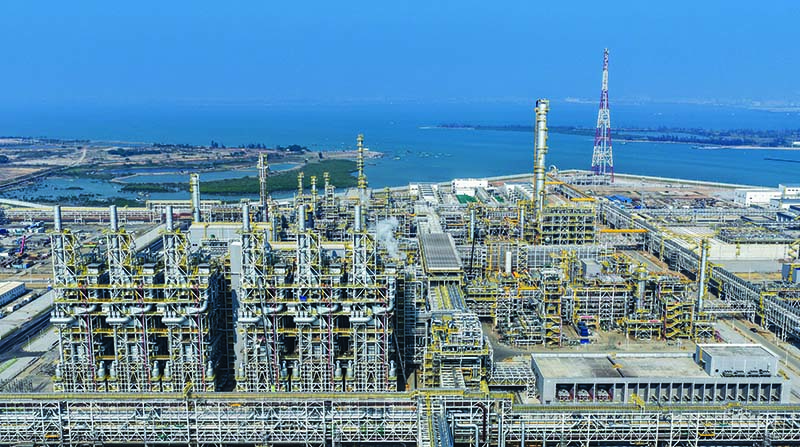
BASF’s newly commissioned steam cracker at its Verbund site in Zhanjiang, China
US agricultural company Corteva and UK oil and gas company bp have launched Etlas, their new 50:50 joint venture that will produce oil from crops – including canola, mustard and sunflower – for use in the production of biofuels like sustainable (or synthetic) aviation fuel (SAF) and renewable diesel (RD). Etlas will harness both Corteva’s century-long expertise in seed technology to develop crops ideally suited to produce SAF and RD, as well as bp’s expertise in refining and marketing fuel for the commercial transportation market. Etlas aims to produce 1m t/year of feedstock by the mid-2030s, which could produce over 800,000t of biofuel. Initial supply is scheduled to begin in 2027 for use in co-processing at refineries as well as at dedicated biofuels plants.
Munster Technological University in Ireland has launched a new pilot green biorefinery at its Kerry Campus, marking an important milestone in Ireland’s move towards sustainable agriculture and a circular bioeconomy. The facility will develop technologies that convert the country’s rich grasslands into a range of valuable products, including high-quality animal feeds, human-grade protein, high-value ingredients and bioenergy.
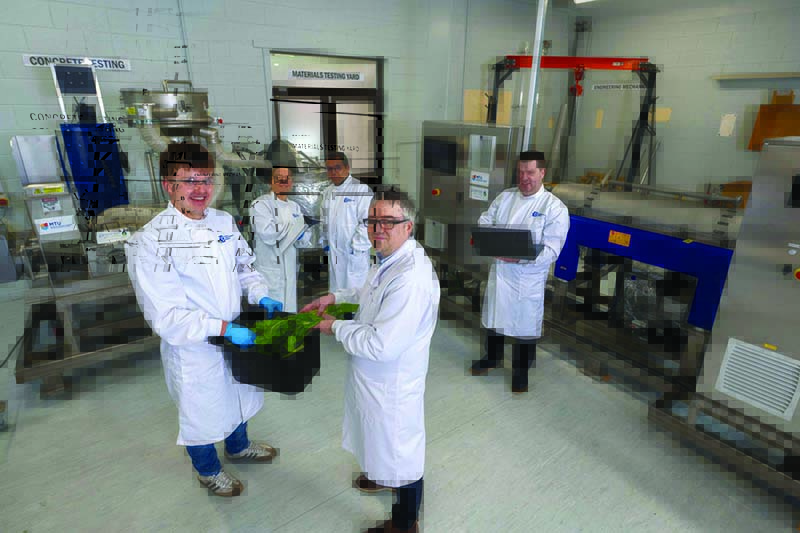
Munster Technological University in Ireland has launched a new pilot green biorefinery at its Kerry Campus
US biopharma Amgen has acquired Dark Blue Therapeutics, a UK privately held biotech advancing first-in-class, small molecule-targeted protein degraders for oncology, in a transaction valued at up to $840m.
Basilea Pharmaceutica, a Swiss commercial-stage biopharma developing products for patients with severe bacterial and fungal infections, has signed an agreement with Prokaryotics, a privately held US biopharma engaged in the discovery and development of novel anti-infective drugs. The collaboration aims to jointly develop a first-in-class broad-spectrum antifungal for the treatment of severe invasive infections. The collaboration is focused on a program of antifungal molecules with a novel mode of action, addressing the critical unmet need of patients with invasive infections caused by strains of Candida, Aspergillus, and rare moulds. The joint efforts aim to deliver a clinical candidate, which will then be further progressed through clinical development by Basilea.
UK engineered silicon materials company Nexeon, which is developing advanced materials for lithium-ion batteries, has announced that its production facility in Gunsan, Korea has successfully reached production-ready status. This milestone establishes the Gunsan plant as the first volume production facility globally for silicon-carbon materials dedicated to enhancing lithium-ion battery performance. The Gunsan location provides Nexeon with supply chain advantages through close supplier partnerships, ensuring a reliable pipeline of critical monosilane gas, a key precursor material, and thus enabling efficient and uninterrupted manufacturing.
Arkema is divesting some of its impact modifiers and processing aids business to the Indian speciality chemicals group Praana, including its production site at Vlissingen, the Netherlands. Closure of the deal is expected in Q1 2026.
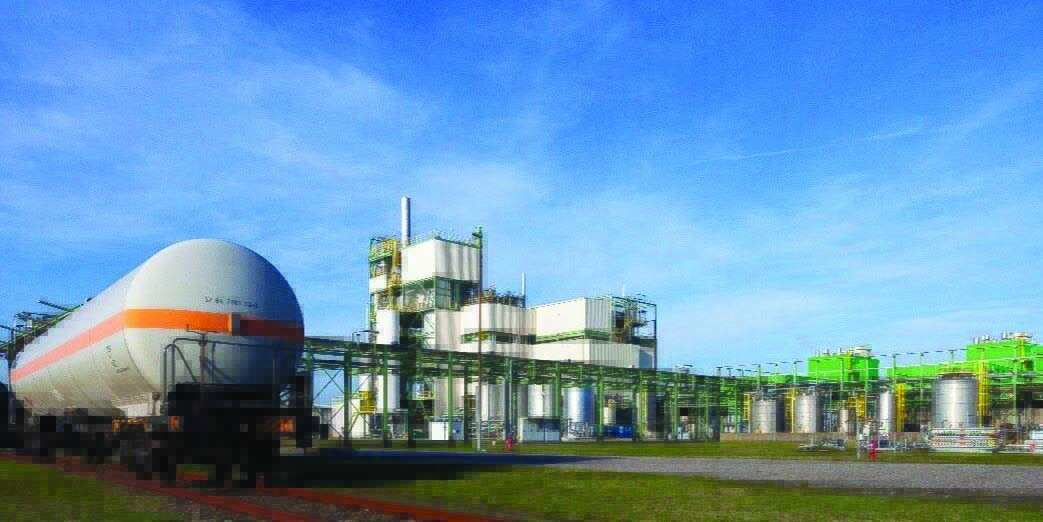
Arkema’s Vlissingen, Netherlands, site to be sold to India’s Praana group
Global CRDMO, Jubilant Biosys, a wholly owned subsidiary of Jubilant Pharmova, has opened a new discovery and preclinical facility at Noida, Delhi, India, doubling its overall chemistry capacity for discovery research and scale-up projects. The multimillion-dollar facility combines discovery and early-phase scale-up capabilities with R&D labs and two pilot plants. Designed to handle quantities from hundreds of grams up to 25 kg, the new small-molecule hub combines two pilot plant blocks with co-located discovery labs, a state-of-the-art R&D space as well as 15 reactors spanning a variety of sizes from 20L to 250L. The facility has been designed with a potential to be expanded to quadruple capacity.
German chemical company BASF and German specialty chemicals company Catexel have signed an agreement for the sale of BASF’s optical brightening agent business for an undisclosed amount. Optical brightening agents are ingredients in laundry detergent formulations. The business is currently part of BASF’s Care Chemicals division.
Chinese biopharma Harbour BioMed, which develops antibody therapeutics in immunology and oncology, has signed a collaboration and license agreement with US pharma Bristol Myers Squibb to discover and develop next-generation multi-specific antibodies.
University of California, US spinout Addition Therapeutics (AT) has launched its PRINT technology, which it hopes will fuel a new wave of genetic medicine. Its core technology is centred on its all-RNA, nonviral, lipid nanoparticle-based PRINT (Precise RNA Mediated Insertion of Transgenes) platform. It has raised $100m in financing to date. According to AT, the idea is to create ‘safer, durable, one-time therapies, overcoming limitations of current genetic medicine modalities’. AT has already spotlighted tackling HIV using a Gates Foundation grant, where it will use one of its PRINTed programs that aims, with a single dose, to allow endogenous production of antibodies to ‘provide lifetime protection against HIV’.
Italian electric cable company Prysmian and Italian chemical company Versalis, a subsidiary of Italian oil company Eni, have signed a strategic partnership to give new life to plastic cable scrap, through an innovative chemical recycling process, developing a dedicated supply chain. Prysmian will collect plastic scrap from its own production as well as from decommissioned cables, while Versalis will use its Hoop technology at its Mantua plant in Italy, to transform the scrap first into a pyrolysis oil, and then into new material for new plastic polymers. Prysmian will then use these polymers in the production of new high-performance cables. Energy cables can be insulated with cross-linked polyethylene (XLPE) and other polymeric layers, which are difficult to recycle mechanically. Using the Hoop technology, Prysmian expects that about 60% of the XLPE scrap will be repurposed into material for the production of new cables.
Ingenza, a UK engineering biology CRDMO has developed GenXpress Bacillus, a powerful orthogonal protein production system. With performance comparable to the best E. coli expression systems, the new technology is said to offer a highly productive alternative that is free from endotoxins and antibiotic resistance markers. GenXpress Bacillus has applications across industries ranging from pharmaceuticals to industrial processes, and can be used to produce virtually any protein, improving yields while reducing costs and regulatory hurdles.
The European Bank for Reconstruction & Development is providing $29m funding to Nika Pharm to expand domestic generic pharmaceutical production in Uzbekistan. Nika Pharm specialises in decongestants, gastroenterology, paediatric and urology therapies.
Sabic plans to further expand production of its speciality oligomers based on polyphenylene ether (PPE) technology, building on previous production increases in Asia. Completion is scheduled for H2 2026. PPE oligomers are used in the manufacture of printed circuit boards.
 Visit Blog