
UK biopharma AstraZeneca has opened its newest global strategic R&D centre in Cambridge, Massachusetts, US. The Kendall Square facility builds on AZ’s existing presence in Cambridge and neighbouring Boston. It will be home to nearly 2,000 researchers and scientists who will accelerate the company’s oncology, cell therapy, chronic disease and rare disease pipeline. The 53,000m2, 18-story site includes ten floors of interconnecting laboratories to allow ‘a flow of seamless science’ enabled by cutting-edge technologies that integrate robotics, continuous automation and agentic AI.

AstraZeneca’s new global strategic R&D centre
German chemical company BASF has launched Glythermin DC and PC coolants, which are used as heat transfer fluids for modern liquid-cooled data centres. The rapid growth of AI applications is significantly increasing power density within servers where AI workloads can generate heat exceeding 150kW per rack. Under these conditions, conventional air cooling is increasingly reaching its physical limits leading to the adoption of direct liquid cooling, where heat is removed directly at its source. Cold plates – small heat exchangers – are mounted on processors and GPUs to transfer heat to a circulating coolant. Compared with conventional air cooling, liquid cooling can transfer significantly higher heat loads and support the efficient operation of high-density data centre infrastructure.

BASF unveils Glythermin for data centre cooling
German chemicals company Evonik has broken ground on a new biotechnology expansion project at its Fermas site in Slovenská Ľupča, Slovakia. This marks the next major milestone in its €80m investment to expand the company’s biotechnology capabilities and strengthen its contract manufacturing services for its drug substance business. The investment will create 50 jobs and add downstream fermentation technology to the Slovenská Ľupča site, increasing capacity for the development and manufacture of complex pharmaceutical intermediates. The project is expected to be completed in early 2028.
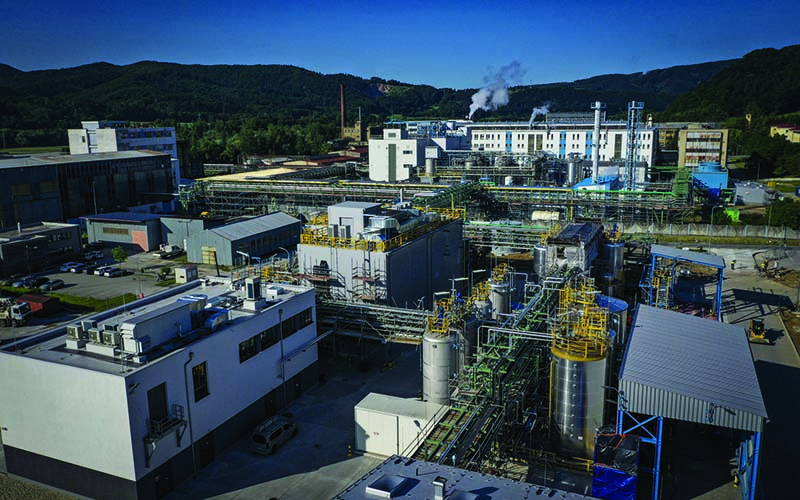
Evonik starts biotechnology expansion project
UK consumer goods company Reckitt has announced a $600m, multi-year transformation of its US operations across two sites to accelerate the long-term growth of its US business. Investments will include relocation and integration of its commercial and R&D capabilities into a campus in New Jersey and significantly expanded plans for its largest over-the-counter manufacturing facility in North Carolina.
German pharma and biotech Bayer has announced plans to invest $2.2bn in a new pharmaceutical manufacturing site in New Albany, Ohio, in the US. Building on more than $7bn in US pharma R&D and manufacturing spend over the past five years, the project is a central element of Bayer’s long-term growth strategy and commitment to innovation and patient access in the US – its largest pharmaceuticals market.
$1.3bn
German science and technology company Merck has agreed to acquire Silence Therapeutics, a UK clinical-stage biotech progressing the design and development of siRNA (short interfering RNA) therapies in areas of high unmet need, including polycythemia vera, a rare, slow-growing blood cancer; cardiovascular disease; and obesity. The deal represents an enterprise value of $1.1bn and an equity value of approximately $1.3bn.
30,000
Equinor-owned East Point Energy, which develops grid-scale energy storage projects, has completed construction and started operations at Citrus Flatts, a 100MW/200MWh energy storage facility in Harlingen, Texas in the US. It is its second operational project, following the start-up last year of its 10MW/20MWh Sunset Ridge facility, also in Texas. The two sites can supply enough electricity to power around 30,000 homes for up to two hours within Texas’ ERCOT power market.
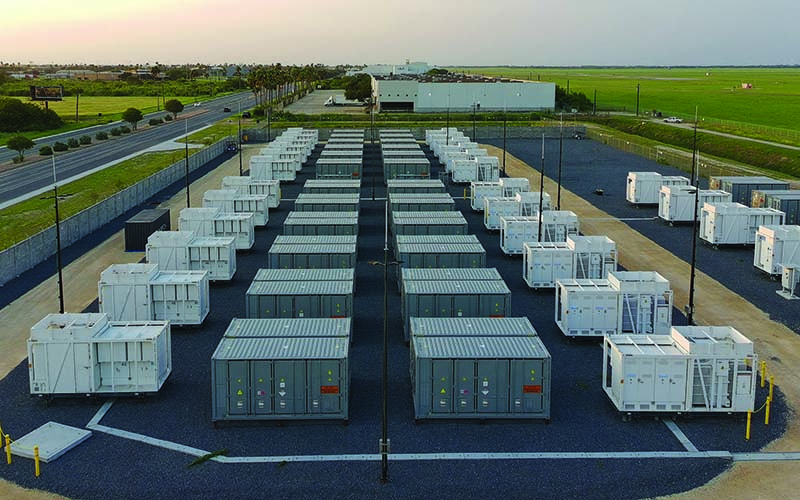
East Point Energy’s new energy storage facility
Swiss generic pharmaceuticals company Sandoz has opened a high-volume biosimilar drug production centre in Lendava, Slovenia. The opening marks an initial step towards realising Sandoz’s recently announced ‘Bio100’ ambition of having more than 100 biosimilars in their portfolio by 2040. The Lendava facility is the second major biosimilar facility completed in Slovenia this year, following the opening in June of the state-of-the-art Sandoz biosimilar development centre in Ljubljana.
70
Cazoolo, a circular packaging design lab part of Brazilian petchem company Braskem, has reduced typical packaging development cycles from four to two years as measured from initial briefing to product launch on store shelves. Cazoolo uses a model that brings together design, engineering, marketing, manufacturing and brand professionals from the project start. It has connected more than 1100 companies via innovation and training initiatives.
Dutch paints and performance coatings company AkzoNobel has agreed to sell its decorative paints business in Southeast Asia to Japanese chemicals, decorative paints, industrial finishing products and coatings company Nippon Paint, the largest paint producer in Asia and the fourth largest globally. The agreement encompasses AkzoNobel’s decorative paints business in Vietnam, Indonesia, Malaysia, Thailand, Singapore, Papua New Guinea and Australia. The transaction is based on a total enterprise value of approximately $1.35bn.
Chinese state-owned steel producer Shougang Group and British-Australian mining company Rio Tinto have successfully built and commissioned an industrial-scale carbon capture trial facility for blast furnace gas at Shougang’s operations in Jingtang, China. The facility is designed to capture CO2 contained in blast furnace gas produced during ironmaking. It can process up to 3,000m3 of blast furnace gas per hour and capture up to 10,000 tonnes of CO2 each year.
The UK’s Centre for Process Innovation, a British technology and innovation social enterprise covering the agricultural and food technology, energy storage, health technology, material, and pharmaceutical industry markets, and India’s Biotechnology Research and Innovation Council have signed a letter of intent to establish a strategic UK-India biomanufacturing partnership. This will strengthen collaboration with plans to accelerate biotechnology innovation, scale-up and commercialisation.
The Government of Canada has announced an investment of up to CA$1.98m to support Canadian agtech company Lucent BioSciences under Canada’s Agricultural Clean Technology programme to develop its sustainable fertiliser technology to protect soil, reduce greenhouse gas emissions and decrease microplastics in the environment. Most controlled-release nitrogen fertilisers used in agriculture have a microplastic coating. Lucent BioSciences will provide a more sustainable alternative by applying a biodegradable coating to these fertilisers made from surplus starch fertiliser, which can help plants use nitrogen more efficiently. Its coating technology is designed to release nitrogen closer to when plants need it most during their growth cycle. This could allow farmers to use less fertiliser, reducing both greenhouse gas emissions and fertiliser costs.
Beauty company L’Oréal has named its second cohort of 13 companies from eight countries to join its sustainable innovation programme, L’AcceleratOR. This programme endowed with €100m aims to identify, pilot and scale sustainable solutions to the most urgent challenges in climate, nature and circularity. The companies will enter an intensive acceleration phase led by the Cambridge Institute for Sustainability Leadership’s innovation team, focusing on pilot readiness. They will also have the opportunity to gain access to L’Oréal’s global resources to launch six- to nine-month pilot projects and potentially have their solutions scaled across the group’s international operations.
The European Commission has earmarked €65m under Horizon Europe to safeguard scientific data and knowledge resources that underpin the development of new medicines and AI tools for biotechnology. The funding will help ensure that researchers and innovators retain reliable access to essential information on genes, proteins and scientific discoveries. Many of these resources depend on fragmented and short-term funding, putting their long-term maintenance and service continuity under pressure.
University College Dublin (UCD) has launched Infection Research Ireland at UCD – formerly UCD Centre for Experimental Pathogen Host Research – with an expanded mission to deliver cutting-edge research to respond to current and future infectious disease health threats. Researchers from UCD Schools of Medicine, Veterinary Medicine, Biology and Environmental Sciences, and Politics and International Relations will work together to deliver a joined-up approach to research in infectious diseases across human, animal and environmental health.
 Visit Blog