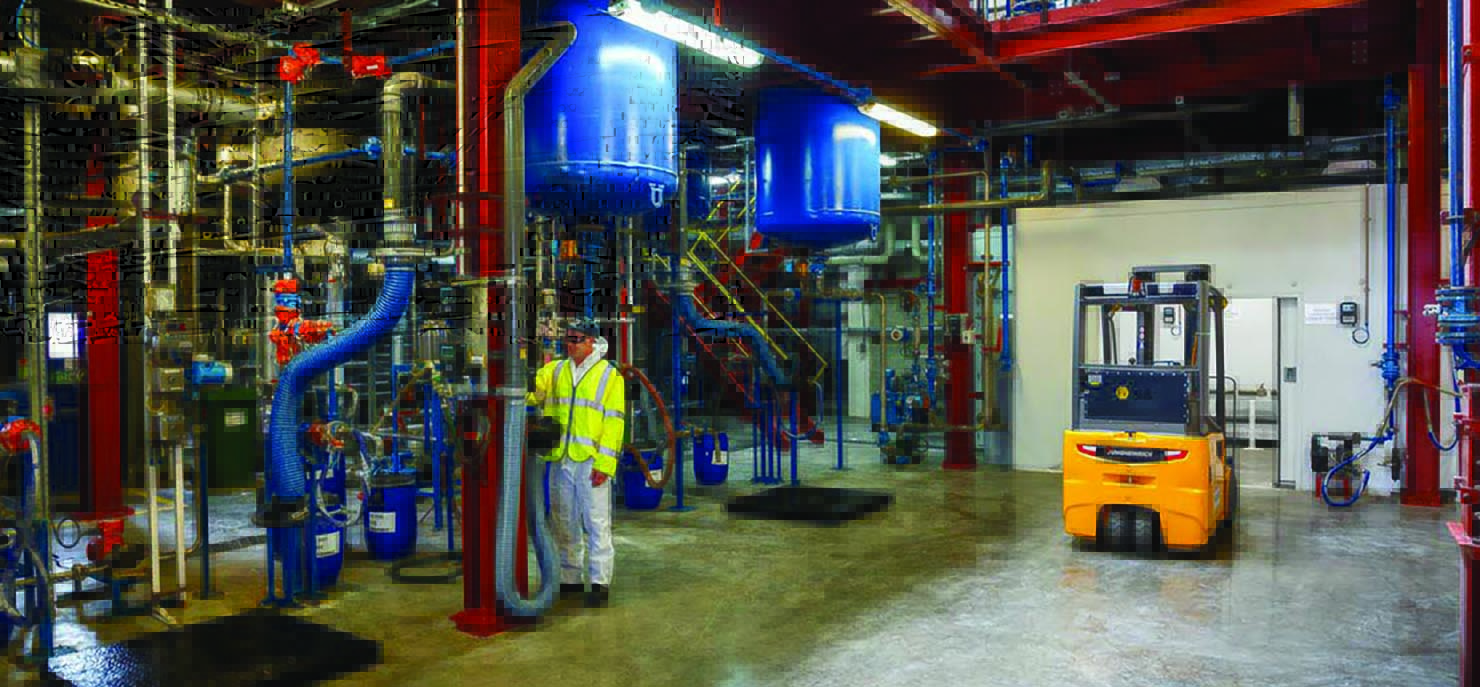

UK pharma and biotech GSK has entered a definitive agreement to acquire US clinical-stage biopharma RAPT Therapeutics, which is developing therapies for patients living with inflammatory and immunologic diseases. The acquisition includes ozureprubart, a long-acting anti-immunoglobulin E (IgE) monoclonal antibody, currently in phase IIb clinical development for prophylactic protection against food allergens. IgE is a clinically validated target and is the only approved systemic therapy shown to protect patients from a harmful allergic and inflammatory immune response. Around 94% of severe food allergies are caused by IgE-mediated reactions.
US pharma and biotech Moderna has signed a memorandum of understanding for a long-term strategic agreement with the Mexican government; Laboratorios de Biológicos y Reactivos de Mexico (BIRMEX), the Mexican state-owned company designated as the central, consolidated purchaser and distributor of pharmaceuticals, vaccines and medical supplies; and Mexican pharma Laboratorios Liomont, to enhance Mexico’s health sovereignty and mRNA manufacturing resilience. The five-year agreement will include the supply of Moderna’s respiratory vaccine portfolio, as well as technology transfer to Liomont to produce mRNA-1273, Moderna’s COVID-19 vaccine, and establish a reliable in-country supply of respiratory vaccines.
UK speciality chemicals and sustainable technologies company Johnson Matthey, South African mining and metals processing group Sibanye-Stillwater, and Valterra Platinum, a South African mining company, and the world’s largest primary producer of platinum, have launched a new programme to develop innovative technologies enabled by platinum group metals (PGMs). The programme aims to broaden the applications of PGMs far beyond their current use: around 60% of global PGM supply is used in catalytic converters that reduce harmful emissions from internal combustion engines. The collaboration will explore uses across clean hydrogen, enhanced emissions detection and reduction across stationary and mobile sources, new electronic materials, and high-performance alloys.
Memo Therapeutics (MTx), a Swiss late-stage biotech developing medicines to treat viral infections and cancer, has entered into a strategic collaboration and exclusive option-to-license agreement for MTx’s recombinant polyclonal IgG technology with CSL, an Australian biotech that develops medicines for rare and serious diseases. Under the agreement, MTx will develop recombinant polyclonal IgG products, leveraging its proprietary DROPZYLLA technology platform for cloning human antibody repertoires and polyclonal antibody expression, and CSL is being granted an option to exclusively license recombinant polyclonal IgG products from MTx.
Swiss-Dutch nutrition, health and beauty chemical company dsm-firmenich has announced the opening of Po ONE Lab, a creative space developed in partnership with luxury fragrance concept store Villa Po ONE in Riyadh, Saudi Arabia.
Vetter, a German pharmaceutical service provider and injectable drugs producer, has confirmed its plans to build a production facility in the Saarland region of southwest Germany. Construction is scheduled to begin in the second quarter of 2026: €480m has been allocated for the first construction phase of the new commercial production plant, with operations expected to commence in 2031.
Eppendorf, a German life science company that develops and manufactures laboratory instruments, consumables and services, is partnering with Dubai Police to advance the scientific capabilities of the city’s justice system. Under the agreement, Dubai Police will integrate Eppendorf’s automated laboratory platforms into forensics workflows, supporting faster crime detection and the delivery of conclusive evidence to judicial authorities. Eppendorf will provide automated liquid handling platforms, including the Eppendorf epMotion 5075t and 5073t NGS, and training programmes.
Danish pharma Novo Nordisk and Canadian biotech Aspect Biosystems have announced a new phase of their partnership to develop advanced cellular medicines for diabetes. Aspect has acquired rights to stem cell-derived islet cell and hypoimmune cell engineering technologies from Novo Nordisk and will lead development, manufacturing and commercialisation. Novo Nordisk will make an equity investment in Aspect and provide research funding to advance potentially curative therapies.
OXB, a UK cell and gene therapy CDMO, has expanded its strategic partnership with US pharma Bristol Myers Squibb (BMS) with a new commercial supply agreement for the manufacture and supply of lentiviral vectors for BMS’ CAR-T programmes. OXB is expected to commence commercial manufacturing in 2026, subject to regulatory approval of the relevant CAR-T products. Manufacturing will take place at OXB’s facilities in Oxford, UK, and Durham, North Carolina in the US.
Dutch coatings and surface treatments company Stahl, together with its shareholders French investment company Wendel (68.5%), German chemical company BASF (16.1%) and Swiss speciality chemical company Clariant (14.6%) have entered into an agreement for Stahl to be acquired by German chemical and consumer goods company Henkel for €2.1bn.
Henkel Singapore has relocated its operations to the Singapore Science Park. The move brings together Henkel’s Adhesives Technology Application Engineering Laboratory, the new Academy of Hair, Global Supply Chain Hub and Adhesive Operations Digital Lab under one roof.
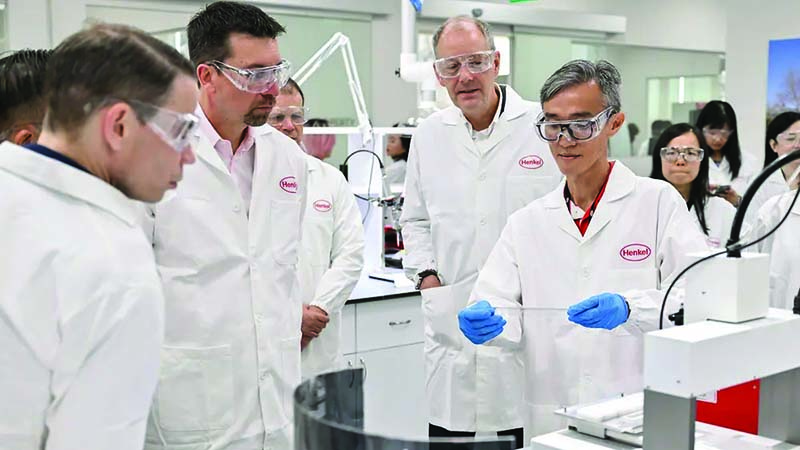
Henkel’s new Adhesives applications engineering laboratory, above, in its recently opened Singapore Science Park headquarters
$3.5bn
US pharma Eli Lilly plans to invest more than $3.5bn in a new manufacturing facility in Lehigh Valley, Pennsylvania, US. It will be Lilly’s newest injectable medicine and device manufacturing facility. Products will include weight-loss therapies. This is the fourth new US manufacturing site Lilly has announced since February 2025 as part of its strategy to bolster US domestic medicine production.
500,000 t/yr
Italian energy company Eni and Kuwaiti fuel, lubricants and petroleum products company Q8 have announced investment for the construction of a new biorefinery in Priolo, Sicily, Italy. The project will draw on Eni’s Ecofining technology, which enables the conversion of waste, residues and vegetable oils into biofuels that can also be used in 100% pure form. The Priolo biorefinery will have a capacity of 500,000 t/year for the production of hydrotreated vegetable oil (HVO) and sustainable aviation fuel (SAF-Biojet).
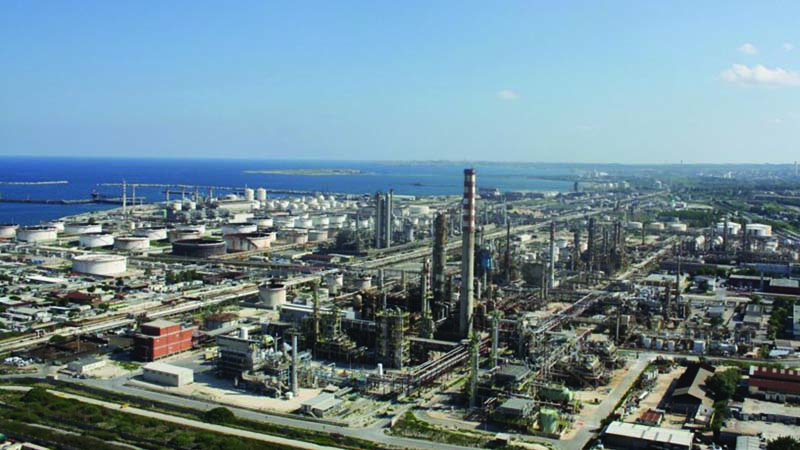
Eni & Q8 invest in a new biorefinery at Priolo, Sicily
43,300m2
Swiss pharma Novartis has broken ground on a new biomedical research centre in San Diego, California, US, designed to provide scientific infrastructure and drug-discovery capabilities. Once operational in 2029, the approximately 43,300m2 facility is expected to house about 1,000 employees and integrate with Novartis global research sites including Cambridge, Massachusetts, US, and Basel, Switzerland, enabling integrated discovery efforts across regions.
13
After reviewing nearly 1,000 applications from 101 countries, French personal care company L’Oréal has announced the first 13 startups and SMEs to join L’AcceleratOR, its flagship sustainable innovation programme. Endowed with €100m over five years and run in partnership with the University of Cambridge Institute for Sustainability Leadership, L’AcceleratOR aims to be a catalyst for scalable sustainable solutions for challenges in climate, nature and circularity.
US clinical-stage biotech SanegeneBio, a developer of RNAi therapeutics, has signed a licensing agreement with US biotech Genentech, a member of the Swiss healthcare Roche Group, to advance one of its RNAi programmes based on its proprietary RNAi platform. Under the agreement, SanegeneBio grants Genentech exclusive worldwide rights to develop and commercialise the programme. SanegeneBio will be responsible for early development activities and Genentech will subsequently lead all future clinical development and commercialisation activities.
Borealis, an Austrian provider of sustainable polyolefins, has announced a €49m investment to scale up production of Borstar Nextension polypropylene (PP) at its manufacturing site in Burghausen, Germany. This will expand commercial production of single-site polypropylene (ssPP) grades, supporting customers in packaging, healthcare, mobility and fibres.
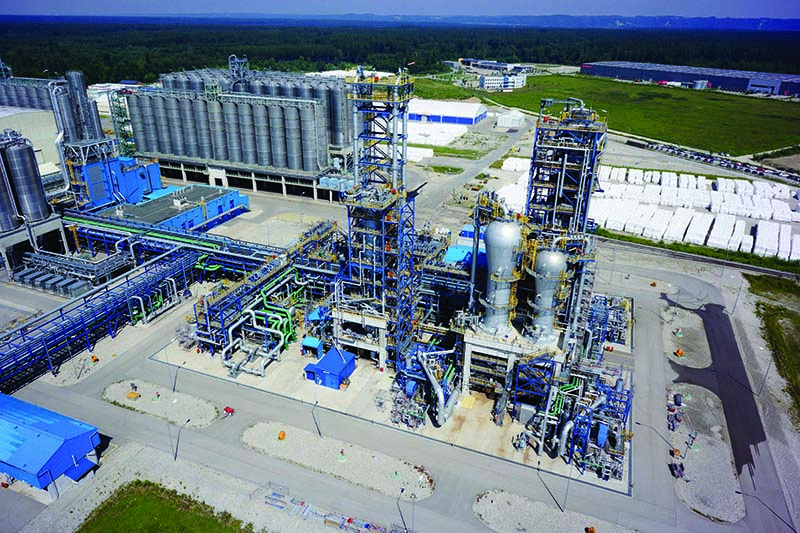
Borealis invests €49m in polypropylene at its Burghausen, Germany, facility
AstraZeneca has strengthened its weight-management portfolio through a new strategic collaboration agreement with CSPC Pharmaceuticals, a Chinese company that researches, develops and manufactures pharmaceuticals. The deal aims to advance the development of multiple next-generation therapies for obesity and type 2 diabetes across eight programmes. The companies will initially progress four programmes, which utilise CSPC’s advanced AI-driven peptide drug discovery platform and their proprietary LiquidGel once-monthly dosing platform technology.
French solid biomass-to-clean fuels developer Haffner Energy, US carbon-management company LanzaTech, which provides differentiated syngas-to-ethanol technology, and LanzaJet, an ethanol-to-jet technology company and fuels producer, have revealed they are working together to explore joint biomass-to-Sustainable Aviation Fuel (SAF) projects. These will cover the entire production value chain, including the development of commercial plants and joint technology licenses.
LanzaTech Global has also announced that Saltend Chemicals Park in Humberside, UK is the intended location for its DRAGON II project – a £600m investment to produce SAF and renewable diesel at scale. DRAGON II is expected to deliver around 80,000t of SAF, about 1% of UK jet fuel requirements, and 8,000t of renewable diesel annually, supporting around 300 skilled jobs during its construction and 150 in operation.
Diploid Genomics, Inc (DGI), a US AI-driven advanced genomics analytics company, has been launched in partnership with Healthier Capital, a US health-tech venture capital firm that is acting as co-founder and sole external investor. DGI is developing a discovery and diagnostics platform for complex and deadly diseases, aiming to make future health outcomes more predictable, measurable and actionable. DGI plans to employ advanced AI models, along with the latest genomic sequencing technology combined with advanced imaging and health data, to deliver diagnostic insights with higher precision.
Evonik, a German manufacturer of polyamide-based materials, is launching a transparent polymer made from recycled plastics. The product – TROGAMID R – is processed by Italian company Poliplastic, a polymer recycler that obtains scrap production shards through a circular-economy partnership with manufacturers of high-quality, optical, non-prescription sunglass lenses.
US CDMO Agno Pharma, which specialises in small-molecule active pharmaceutical ingredients (APIs) and critical GMP intermediates, has announced the acquisition of Actylis Eugene, based in Eugene, Oregon, US. The site brings a strong legacy in small-molecule API development and manufacturing, anchored by a 1,500m2 R&D lab facility as well as a newly constructed 3,000m2 manufacturing facility.
Indian performance chemicals and material science CDMO Novopor Advanced Science Private Limited, a portfolio company of US private investment firm Bain Capital, has announced its acquisition of FAR Chemical, a US-based provider of custom and complex specialty chemical manufacturing focused on electronics, aerospace/defence, coatings and adhesives, from its US parent CPS Performance Materials Group.
US pharma Bristol Myers Squibb has announced an agreement with US technology company Microsoft, which has developed AI-powered radiology and clinical workflow technologies, to accelerate early detection of lung cancer. Through this digital health collaboration, US FDA-cleared radiology AI algorithms will be deployed via Microsoft’s Precision Imaging Network, part of Microsoft for Healthcare radiology solutions. AI capabilities available through Precision Imaging Network can automatically analyse X-ray and CT images to help identify lung disease. AI algorithms can help surface hard-to-detect lung nodules, potentially identify patients at earlier stages of lung cancer, and help triage them for appropriate care. Lung cancer remains the leading cause of cancer-related deaths in the US, with approximately 125,000 deaths and 227,000 new cases reported annually.
The Henry Royce Institute, the UK’s national institute for advanced materials research and innovation, has published its Interim National Framework for Materials 4.0, setting out a shared way of thinking about how digital technologies can transform the UK materials landscape. The Interim National Framework responds to a growing need for coherence in a rapidly evolving landscape. While digital tools such as data platforms, modelling, artificial intelligence and automation are already being applied in materials research and industry, activity has often been fragmented. The framework aims to provide a shared reference point to support coordination, investment and collaboration across academia, industry and government.
Lummus Technology, a US developer of process technologies for the petrochemical, refining, gas processing and renewable energy industries, and Japanese chemical company Sumitomo Chemical have announced the commercial availability of their polymethyl methacrylate chemical recycling (PMMA-CR) technology. The technology recycles end of life PMMA back into high-purity methyl methacrylate (MMA) monomer. Its depolymerisation system, developed by Japan Steel Works and Sumitomo Chemical, produces recycled MMA that matches the quality of fossil-derived material. The process is also expected to cut life-cycle greenhouse gas emissions by approximately 50%, reducing plastic waste and reliance on fossil-based feedstocks.
Vioneo, part of the A. P. Moller Group, is planning a fossil-free plastics production plant in China near a green methanol supply, as its first commercial-scale facility. The company had announced in September 2025 its first facility would be built in Antwerp, Belgium, using ECI Group’s proprietary autoclave technology to produce 110,000t/year of LDPE from certified green methanol.
Halozyme Therapeutics has acquired Surf Bio, a biopharma with an innovative, biologic hyperconcentration technology, for an upfront payment of $300m and up to $100m in milestone payments contingent on product development and regulatory approval. Surf Bio’s technology is being developed to enable high concentrations of up to 500mg/mL across a wide range of therapeutics, including monoclonal antibodies and small molecules, for delivery in a single auto-injector shot. These concentrations are achieved using Surf Bio’s proprietary, protective excipient and spray dry approach.
Tronox, the world’s leading integrated manufacturer of titanium dioxide pigment, is to permanently close its 46,000t/year TiO2 plant in Fuzhou, China. The closure reflects ongoing weak Chinese domestic demand and increasing costs, particularly for sulfur, a key raw material.
At the medical device and diagnostic show (MD&M West 2026), held in Anaheim Convention Center, California, in February, Syensco launched stock shapes in machin-able Eviva PSU polysulpne suitable for the development of implantable medical devices.
Also at the MD&M show, Sabic unveiled a new family of polycarbonate copolymers certified under UL746G, and new biocompatible SILTEM HU resins, which can potentially replace fluoropolymers in medical tubing.
Kemvera, formerly called New Iridium, a US sustainable chemical company, which uses a proprietary catalytic platform to convert bio-based and CO₂-derived feedstocks into affordable, drop-in chemicals, has completed the process design package for its planned 50,000t/year commercial-scale plant to produce bio-based acetic acid and ethyl acetate from domestically sourced corn ethanol, into drop-in chemicals. To support the scale-up for this commercial facility, Kemvera has completed the design of a 500t/year pre-commercial demonstration reactor and recently commissioned a 20t/year pilot reactor.
 Visit Blog