
JOURNAL HIGHLIGHTS BY STEVE RANGER
Apple pomace, the waste in the form of peel, stem, seeds and stalks which can make up 25 to 30% of the processed fruit, is often discarded into landfill despite its high carbohydrate content and potential for bioconversion. Because apple pomace is rich in cellulose, pectin and hemicellulose, it can be enzymatically converted into sugar monomers and then into alcohol.
A new study looks at the use of apple pomace for bioethanol production and animal feed formulation. Researchers in Brazil used these apple leftovers to create bioethanol, which was produced by separate hydrolysis and fermentation (SHF) and simultaneous saccharification and fermentation (SSF). Brazil is among the world’s largest producers of bioethanol.
The team noted that although apple pomace has been previously explored as a substrate for ethanol production, most studies evaluate SHF and SSF processes separately, and limited attention has been given to wet apple pomace. This is the material’s most common industrial form but also poses ‘substantial operational challenges’ as a result of its high moisture, viscosity and instability.
Apple pomace is similar to woody plants in terms of composition and contains a complex structure that requires pretreatment to break down and make enzymatic hydrolysis and fermentation possible.
For the SHF, the enzymatic hydrolysis was conducted using a combination of pectinase, cellulase and hemicellulase at 50 °C for 6 hours, followed by fermentation with Saccharomyces cerevisiae CAT-1 at 30 °C for 24 hours.
The SSF process lasted 60 hours, with a two-hour pre-hydrolysis at 50 °C, followed by fermentation with a combination of S. cerevisiae CAT-1 and Papiliotrema laurentii CHAP-158 to enhance xylose fermentation.
SHF achieved a hydrolysis efficiency of 60.70% and a fermentation efficiency of 33.42% in 24 h. In the SSF process, there was a significant increase in ethanol production, reaching 51.70% in 24 hours, according to the paper published in the journal Biofuels, Bioproducts and Biorefining. The researchers found the residues from SHF showed higher fibre – in contrast the SSF residues had lower fibre levels, which could make them more useful for animals needing more digestible diets, such as high-producing ruminants or poultry.
The paper says the use of fruit residues, such as apple pomace, as raw material for bioethanol and animal feed production can contribute to environmental sustainability and help address food deficiencies in developing countries, while simultaneously reducing waste.
‘This study demonstrates the feasibility of using apple pomace for bioethanol production through SSF and the utilisation of its by-products in animal feed,’ it said.
Luciane M. Colla, a professor at the University of Passo Fundo, Brazil, involved with the project told C&I that the researchers were interested in the development of technologies for the reduction of agro-industrial waste and its valorisation to support the circular bioeconomy. ‘We develop alternatives as scientists so that industries have the option of thinking about how to use all fractions of their materials,’ she said.
‘The main issue is that each of the processes, with each raw material, needs to be optimised in minute detail. From these studies, by combining residual raw materials, it is possible to meet the demands necessary for the installation of biorefineries,’ she said. In terms of further research, the researchers are continuing the process of optimising bioethanol production from food waste, and are now focusing on consolidated bioprocesses, ‘seeking the production of the enzymes needed for hydrolysis,’ she said.
Valorization of apple pomace agro-industrial residue for the production of bioethanol and animal feed ingredients
Lúcia G. Cavalet, Jéssica Mulinari, Christian O. Reinehr, Anderson Giehl, Angela A. dos Santos, Sérgio L. Alves Júnior, Luciane M. Colla
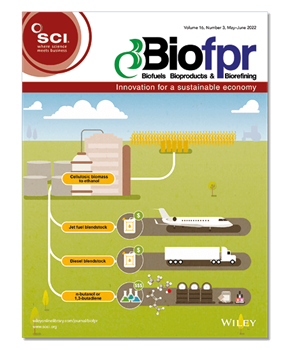
Biofuels, Bioproducts and Biorefining
doi.org/10.1002/bbb.70137
 Visit Blog