UK biopharma GSK has agreed to acquire 35Pharma, a Canadian, private, clinical-stage biopharma specialising in the development of protein-based therapeutics. The acquisition includes HS235, a potential investigational medicine that has completed phase I healthy volunteer clinical trials, with studies to start imminently in pulmonary arterial hypertension (PAH) and pulmonary hypertension due to heart failure with preserved ejection fraction (PH-HFpEF).
Indian CDMO Neuland Laboratories will open a new commercial peptide facility in the summer of 2026 at its Bonthapally manufacturing campus, with further capacity expansions planned as client demand increases.
Belgian chemicals and materials company Syensqo has been awarded a contract by US aerospace company Boeing to continue providing advanced material for Boeing’s commercial and defence programmes. The agreement covers a range of applications including primary and secondary structures, interiors and surfacing. Aerospace is Syensqo’s largest end market, representing approximately 20% of net sales, and a key driver of its innovation, growth and long-term value creation.
Tenaya Therapeutics, a US clinical-stage biotech developing therapies that address the underlying causes of heart disease, has signed a research collaboration agreement with Alnylam Pharmaceuticals, a US RNAi therapeutics company. The aim is to discover novel human genetic targets for the potential development of disease-modifying treatments for cardiovascular diseases.
CO2Volt, a spin-out company from the University of Liverpool created in partnership with UK venture builder and investor Zinc VC, has raised £1m to commercialise an innovative CO2 electrolyser designed to cut emissions and convert waste CO2 into chemical feedstocks. CO2Volt’s patented electrolyser technology uses renewable electricity to convert waste CO2 and water into carbon monoxide and hydrogen – key building blocks used by the chemicals industry for manufacturing a wide range of products, from everyday household materials to sustainable synthetic fuels. The company is now advancing a working prototype and is focused on scaling the system towards a pilot-scale demonstrator.
US CRDMO BioDuro has established a joint venture with Cenra API Solutions (also known as Chunghwa Chemical Synthesis & Biotech), a Taiwanese pharmaceutical chemical manufacturer, to add significant commercial-scale active pharmaceutical ingredient (API) manufacturing capacity at Cenra’s campus in Taipei, Taiwan.
Swiss pharma Novartis has announced plans to establish a new radioligand therapy (RLT) manufacturing site in Denton, Texas, US. This purpose-built RLT site will be the company’s fifth in the US and its first manufacturing facility in Texas, and marks further progress in the company’s $23bn US investment programme.
US biopharma Gilead Sciences has entered into a definitive agreement to acquire US biotech Arcellx for $7.8bn. Arcellx is focused on innovative immunotherapies by developing cell therapy treatments for multiple myeloma, acute myeloid leukaemia, myelodysplastic syndrome, solid tumours and other incurable diseases.
Scottish green chemicals producer Celtic Renewables has secured £10m in funding towards the planning and construction of a new £120m industrial-scale biorefinery at the former Grangemouth oil refinery site. Celtic Renewables uses ABE (acetone-butanol-ethanol) fermentation to transform locally sourced by-products and waste from the food, drink and agricultural industries, including rejected potatoes and whisky pot ale, into low-carbon green chemicals bio-acetone, bio-butanol and bio-ethanol. These chemicals have similar properties as their fossil fuel-based equivalents and are sustainable alternatives that can be used to manufacture a range of consumer products, including cosmetics, pharmaceuticals, plastics and other household goods.
1.4TWh
Norwegian energy storage scale-up company Photoncycle has raised €15m to accelerate the commercial rollout of its solid-state hydrogen-based energy storage system in Denmark and the Netherlands. The system is seasonal, designed to enable domestic solar PV users to store excess summer solar power for use in the winter, when heating demand peaks and electricity prices are typically higher.
€13.4m
Swedish manufacturer Inter IKEA Group has backed a €13.4m Series A funding for Swiss biomaterials company Seprify, which is scaling a cellulose-based alternative to titanium dioxide (TiO2) used across cosmetics, food and coatings. The investment comes as manufacturers accelerate reformulation following regulatory pressure on materials such as TiO2 and synthetic microplastics, increasing demand for scalable bio-based substitutes.
2000t
MorGen Energy, a subsidiary of Singaporean commodities company Trafigura, has approved construction of a 20MW green hydrogen production facility in Milford Haven, UK. Construction of the West Wales Hydrogen plant is expected to begin in 2026, with commissioning by early 2028, when the plant set to produce approximately 2,000t/year of low-carbon hydrogen, compliant with the UK’s Low Carbon Hydrogen Standard. The hydrogen will be used for port decarbonisation, industrial heating, manufacturing and chemical feedstock.
35%
Belgian-French chemical company Solvay has inaugurated its new bio-circular silica facility at its plant in Livorno, Italy. The new unit produces highly dispersible silica using bio-based sodium silicate derived from rice husk ash, an agricultural byproduct. This process reduces CO2 emissions by 35%/t of silica, compared with traditional methods.
CSIRO, Australia’s national science agency, has launched a AU$3m upgrade of its Renewable Energy Integration Facility at its Energy Centre in Newcastle, Australia. This will significantly expand Australia’s capability to test, validate and commercialise technologies needed for a more sustainable, reliable and secure electricity system. The expanded facility includes a suite of advanced capabilities, including the ability to simulate microgrids and grid faults, test inverter performance under real-world conditions and run large-scale experiments combining solar, batteries and electric vehicles. One of its standout demonstrations is vehicle-to-grid technology, which uses electric vehicles as flexible batteries to store excess solar energy and return power to the grid during peak periods.
Innovation Investment Capital and the Development Bank of Wales have announced a joint equity investment in Antiverse, the Cardiff-based AI-driven techbio, as part of its $9.3m Series A funding round. Antiverse applies advanced generative AI and machine learning to predict, design and optimise antibody-based drugs. Its platform supports programmes across oncology, immunology and infectious diseases.
Clariant, a Swiss speciality chemical company, has announced a strategic collaboration with US biofuel producer Vertimass to accelerate the development and commercialisation of advanced zeolite catalysts for the catalytic conversion of biobased alcohols via Vertimass’ Consolidated Alcohols Deoxygenation and Oligomerisation (CADO) process. Clariant will provide technical support to scale Vertimass’ technology to commercial production. This will include zeolite catalyst development expertise, industrial scale-up guidance, catalyst sample provision for development and testing and detailed characterisation services to evaluate catalyst properties and performance.
Danish pharma Novo Nordisk plans to invest €432m at its site in Monksland, Athlone, Ireland. A new tabletting facility will provide significant additional manufacturing capacity for current and future Novo Nordisk GLP-1 treatments for type 2 diabetes and obesity.
Saudi conglomerate Alujain and Belgian textile manufacturing company Beaulieu International Group have signed a memorandum of understanding for a joint venture in Saudi Arabia. The partnership will bring together Alujain’s polymer manufacturing platform with Beaulieu’s expertise in synthetic fibres and non-wovens.
Dioxycle, a French company developing sustainable chemical manufacturing technologies, has formed a multi-year partnership with French personal care company L’Oréal to transform captured carbon emissions into high-performance, sustainable packaging materials. Using carbon electrolysis, Dioxycle converts captured CO or CO2 emissions into ethylene, the building block of polyethylene, one of the most widely used packaging materials, mostly produced from fossil fuels.
German drug development and bioanalytical services company Coriolis Pharma has opened its new US headquarters and laboratory, marking the start of operations at the Alexandria Center for Advanced Technologies in North Carolina’s Research Triangle Park. This expansion enables Coriolis to provide North American clients with direct access to specialised expertise in formulation and drug development, as well as analytical characterisation of biopharmaceutical products.
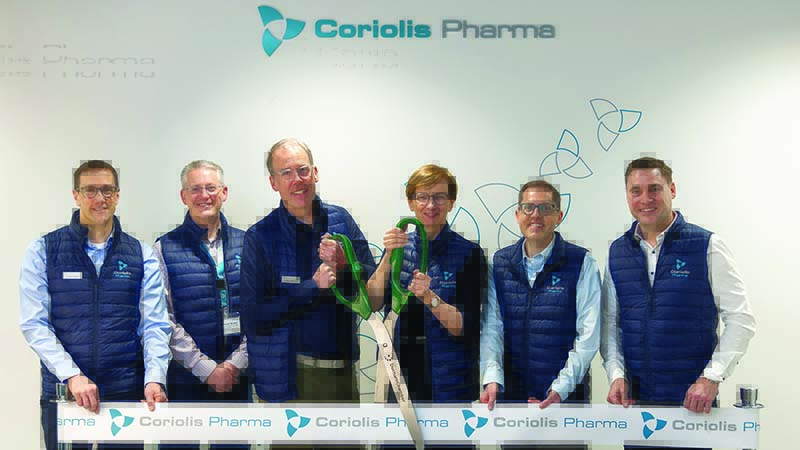
Coriolis Pharma has opened its new US headquarters and laboratory at the Alexandria Center for Advanced Technologies in North Carolina’s Research Triangle Park
Unnatural Products (UNP), a US biotech developing orally delivered macrocyclic peptides to address previously undruggable targets, has signed a research collaboration and licensing agreement with Swiss pharma Novartis. The collaboration brings together UNP’s AI-enhanced macrocycle platform and Novartis’ global development and commercialisation capabilities to generate therapeutics with potential applications for cardiovascular disease.
US biopharma AbbVie has announced a $380m investment to build two new API manufacturing facilities at its current North Chicago, Illinois, campus. The new facilities will integrate advanced manufacturing technologies with AI to support the production of AbbVie’s next-generation neuroscience and obesity medications. Construction will begin in spring 2026, with both new facilities expected to be fully operational in 2029.

AbbVie is investing $380m in two new API manufacturing facilities in North Chicago, Illinois, US
UK mining company Anglo American has entered into an investment agreement with Japanese engineering conglomerate Mitsubishi to support the development of the Woodsmith polyhalite mine in North Yorkshire. Polyhalite is a natural mineral fertiliser containing low-chloride potassium, sulphur, magnesium and calcium, four of the six essential nutrients plants need for healthy growth. Polyhalite agronomic trials conducted globally over the past decade have demonstrated superior crop performance including yield improvement and soil enhancement.
Gyre Therapeutics, a US commercial-stage biopharma developing fibrosis-first therapies across organ systems affected by chronic diseases, has acquired Cullgen, a privately held, US clinical-stage biopharma, for $300m. Cullgen is focused on targeted protein degrader and degrader antibody conjugate therapies.
US venture capital firm Portal Innovations continues to scale Powered by Portal, its managed services platform, with the launch of a new science incubator at Woodbine Labs in Salt Lake City, Utah, US. Set to open in Q2 2027, this marks the fourth Powered by Portal lab announced in the past two years.
US pharma and biotech CSL has broken ground for the expansion of its manufacturing facility in Kankakee, Illinois, US. The expansion is expected to be operational by 2031 and will substantially increase the company’s ability to produce plasma-derived therapies.
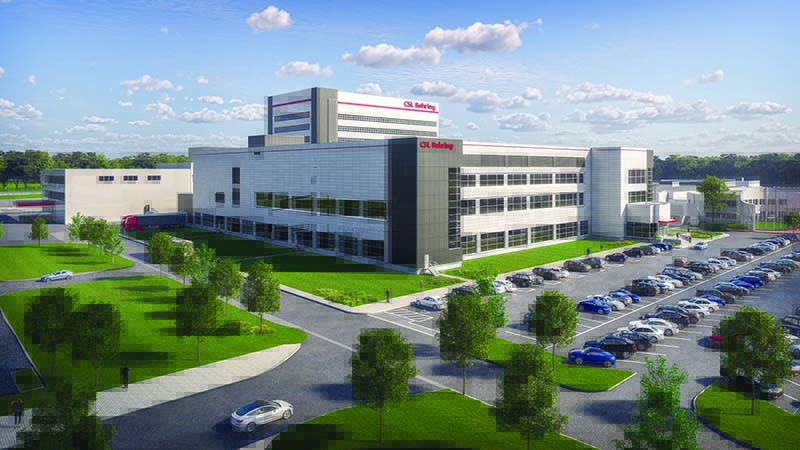
CSL has broken ground for the expansion of its manufacturing facility in Kankakee, Illinois, US
To help reduce marine microplastic contamination, researchers at the RIKEN Center for Emergent Matter Science, a national research institute in Japan, have developed a new plastic made from plant cellulose. The plastic is strong, flexible and capable of rapid decomposition in natural environments. It uses two polymers held together by reversible interactions called ‘salt bridges’. One of the two polymers is a commercially available, FDA-approved, biodegradable wood-pulp derivative called carboxymethyl cellulose. The second is made from positively charged polyethylene-imine guanidinium ions. When these are mixed in water, the negatively and positively charged molecules attract each other and form the cross-linked network that makes the plastic strong. To overcome brittleness, organic salt choline chloride is added as a plasticiser. The salt bridges holding the network together break in salt (sea) water, causing the plastic to degrade within several hours, eliminating microplastic residue.
The Intermediates division of German chemical major BASF has introduced new product variants with a reduced product carbon footprint of at least 10% for butanediol (BDO), tetrahydrofuran (THF), polytetrahydrofuran (PolyTHF), and N-methylpyrrolidone (NMP) produced at its Verbund site in Ludwigshafen, Germany. The reduced product carbon footprint is achieved through low-emission feedstocks and utilities at Ludwigshafen.
US healthcare major Johnson & Johnson is investing a more than $1bn in a next generation cell therapy manufacturing facility in Montgomery County, Pennsylvania, to support its pipeline of transformational medicines for cancer, immune-mediated and neurological diseases.
Flavours and fragrance specialist Givaudan is investing CHF55m in the construction of Campus 52, a new centre of excellence for its House of Naturals natural ingredients in Grasse, France.

Givaudan is investing CHF55m in the construction of Campus 52, a new centre of excellence for its House of Naturals natural ingredients in Grasse, France
 Visit Blog