Belgian biopharma UCB, which is focused on advancing regenerative cell therapies for epilepsies and other disorders of the nervous system, has entered into a definitive agreement to acquire US clinical-stage biotech Neurona Therapeutics. The deal includes Neurona’s lead asset NRTX-1001, adding to UCB’s epilepsy portfolio. The transaction has a total value of up to $1.15bn, consisting of a $650m upfront payment plus up to $500m in potential future milestone payments.
Hamburg’s Authority for Environment, Climate, Energy and Agriculture (BUKEA) has granted German energy storage and distribution company MB Energy a permit to build and operate a new ammonia import terminal on the site of the Blumensand tank terminal in the Port of Hamburg. This is expected to be Germany’s first large-scale ammonia import hub and is intended to play a central role in supporting future energy supply and the transformation of the economy. Ammonia is not only a storage medium for hydrogen but also serves as an industrial raw material and an alternative fuel in shipping.
A new framework developed by Australia’s national science agency CSIRO, veterinarians and partners has established a structured approach to enhance antimicrobial stewardship across animal industries, mitigating antimicrobial resistance risks. Co-designed with industry experts across sectors including pig, poultry, feedlot beef, salmon and dairy industries, the framework serves as a practical, scalable tool for benchmarking, target-setting, and tracking improvements in daily animal health practices.
ProImmune, a UK provider of clinical immunological reagents and related services, has announced a collaboration with The University of Texas Medical Branch, Galveston National Laboratory, a high-containment, infectious disease research facility, to develop innovative tools for studying high-consequence emerging and endemic infectious diseases. Under the agreement, ProImmune’s Ankyrons will be evaluated as molecular tools to enable precise detection, localisation and functional interrogation of viral proteins across complex experimental systems compatible with high-containment research.
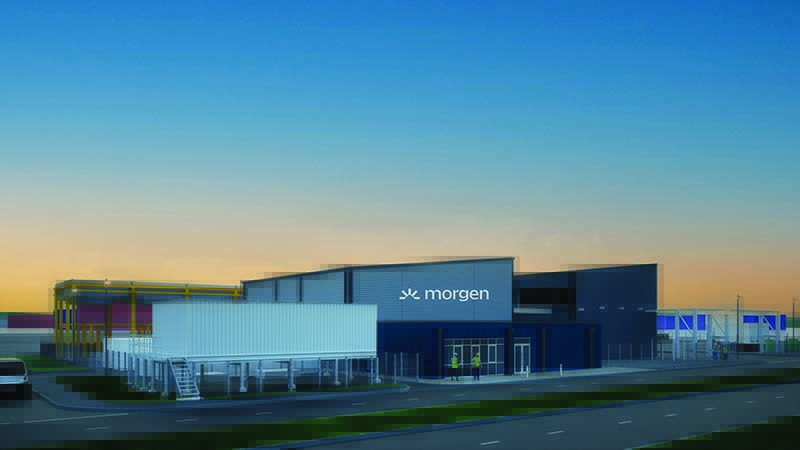
Morgen Energy’s new UK green hydrogen plant
Beeline Medicines, a US clinical-stage biotech spinout from US pharma Bristol Myers Squibb (BMS) has announced its official debut with the mission of developing and delivering therapies for people with autoimmune and inflammatory diseases. Originally formed in July 2025, the company’s initial portfolio comprises five programmes in-licensed from BMS, each of which is a therapeutic candidate with the potential to improve the long-term health and outlook for patients living with a broad array of immune-mediated conditions. Beeline is backed by $300m of Series A financing led by US private investment firm Bain Capital.
Kazia Therapeutics, an Australian clinical-stage oncology company advancing therapies to reprogram cancer biology and overcome treatment resistance, has announced the in-licensing of a first-in-class SETDB1-targeted epigenetic drug development platform from QIMR Berghofer, an Australian medical research institute and statutory authority. The platform includes use of an AI-integrated epigenetic drug discovery engine, enabling rapid, precise, and scalable candidate generation. By targeting SETDB1, the program is intended to restore immune signalling in tumours that have become resistant to immunotherapy, including checkpoint inhibitors.
Galera Therapeutics, a US clinical-stage biopharma focused on advancing a pan-NOS inhibitor through clinical development for patients with the hardest-to-treat forms of advanced breast cancer, and Obsidian Therapeutics, a US privately held clinical-stage biopharma company harnessing novel protein-regulation technology to develop engineered tumour infiltrating lymphocyte cell therapies, have entered into a definitive merger agreement to combine in an all-stock transaction. Private placement financing of $350m is expected to fund the combined company into the second half of 2028.
CrossBridge Bio, a US pre-clinical biotech pioneering the development of dual-payload antibody-drug conjugates, has announced a definitive agreement under which it will be acquired by US pharma Eli Lilly for up to $300m in cash, inclusive of an upfront payment and a subsequent payment upon achieving a specified development milestone.
Atelerix, a UK biotech developing cell preservation and biological transport with its hydrogel encapsulation technology, has announced a strategic partnership with JH Health, a Saudi Arabian company focused on medical and health-related technology. The partnership grants JH Health exclusive rights to use and distribute Atelerix’s hydrogel-based cell and tissue preservation solutions in the Middle East, bolstering Atelerix’s global commercial footprint with new regional manufacturing and distribution channels.
Australian biopharma Telix and US biotech Regeneron Pharmaceuticals are jointly developing and commercialising radiopharmaceutical therapies. The collaboration combines Telix’s radiopharmaceutical development platform, manufacturing capabilities and supply chain infrastructure with Regeneron’s biologics expertise. The collaboration will include multiple solid tumour targets from Regeneron’s portfolio of antibodies, generated from VelocImmune mice (genetically engineered mice that possess a hybrid immune system, replacing mouse immunoglobulin variable regions with human counterparts). The parties also plan to develop radio-diagnostics to support patient selection and treatment response assessment.
Shionogi Inc, a US subsidiary of Japanese pharma Shionogi, has been awarded a contract through the US Biomedical Advanced Research and Development Authority’s Project BioShield related to antibiotic Fetroja (cefiderocol) as a critical countermeasure against difficult-to-treat Gram-negative bacterial infections and pathogens that present a high-priority biothreat to national health security, including Burkholderia pseudomallei (melioidosis) and Yersinia pestis (plague). The contract is initially funded at $119m with multiyear options for a total of up to $482m.
$2bn
Swiss pharma Novartis has entered into an agreement to acquire Excellergy, a US biotech developing next-generation anti-IgE (Immunoglobulin E) therapies for IgE-driven diseases, major examples of which include allergic rhinitis, allergic asthma, atopic dermatitis (eczema), food allergies and chronic urticaria (hives). The proposed acquisition includes Exl-111, a half-life extended, high-affinity anti-IgE antibody in Phase 1. Under the terms of the agreement, Novartis will pay up to $2bn in upfront and milestone payments.
30-40m
The European Investment Bank Group, the European Commission and the International Finance Corporation are partnering to support South African biopharma Biovac’s development of Africa’s first end-to-end multi-vaccine manufacturing facility. The facility, expected to be completed by 2028, will initially produce the oral cholera vaccine and later expand to include vaccines for polio, pneumonia and meningitis. Once operational, it will have the capacity to manufacture up to 30-40m doses/year.
60,000t
Solenis, a US provider of water and hygiene technologies, has announced the groundbreaking of its new 60,000t/year production facility in Beihai, Guangxi Province, China. The $35m plant is expected to begin operations in Q2 2027 and will produce a portfolio of critical materials for papermaking, including polymers, defoamers, silica and functional and process chemistries to meet growing demand in the region.
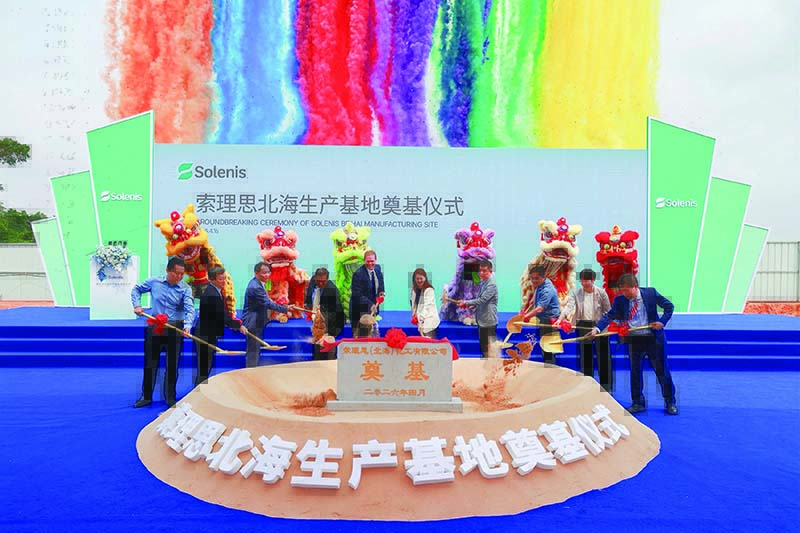
Solenis breaks ground for its new Chinese facility
The vegetable seeds business of German chemical company BASF’s Agricultural Solutions section is investing €40m in the modernisation and expansion of its seed processing facilities at its headquarters in Nunhem, The Netherlands. This facility offers 1,200 seed varieties across 20 different crops, including tomatoes, onions and carrots, developed to help growers address key challenges from drought and heatwaves to labour shortage and disease pressure.
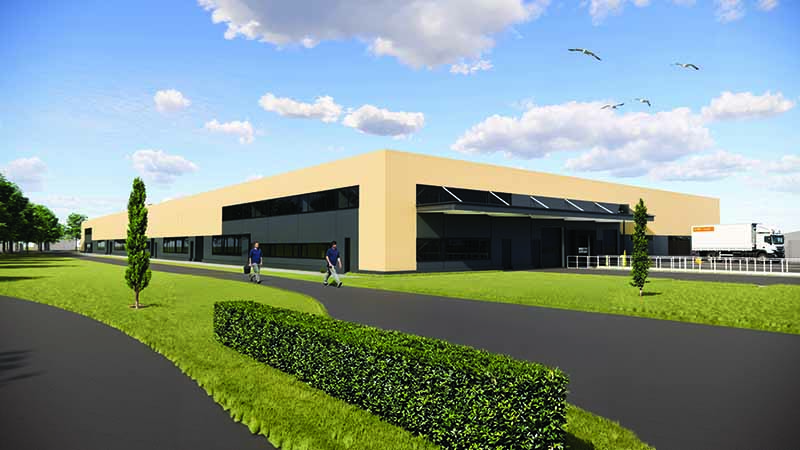
BASF Agricultural Solutions’ expanded NunHem, Netherlands, HQ
US biotech Halozyme Therapeutics has entered an exclusive collaboration and license agreement with US biopharma Vertex Pharmaceuticals. Under the collaboration, Vertex has licensed Halozyme’s Hypercon technology for use in up to three drug targets. Hypercon is a microparticle technology that allows for hyperconcentration of drugs and biologics, thus reducing injection volume for the same dosage and enabling convenient, at-home administration.
US biopharma Gilead Sciences has entered into a definitive agreement to acquire Tubulis, a German, clinical-stage biotech developing next-generation antibody-drug conjugates (ADCs). The acquisition adds TUB-040, an NaPi2b targeting ADC for ovarian cancer and other solid tumours to Gilead’s pipeline. Gilead will acquire all outstanding Tubulis equity for $3.15bn in upfront cash and pay up to $1.85bn in contingent milestone fees.
US biotech Biogen and US pharma Apellis Pharmaceuticals have entered into a definitive agreement under which Biogen has agreed to acquire all outstanding shares of Apellis for $5.6bn.
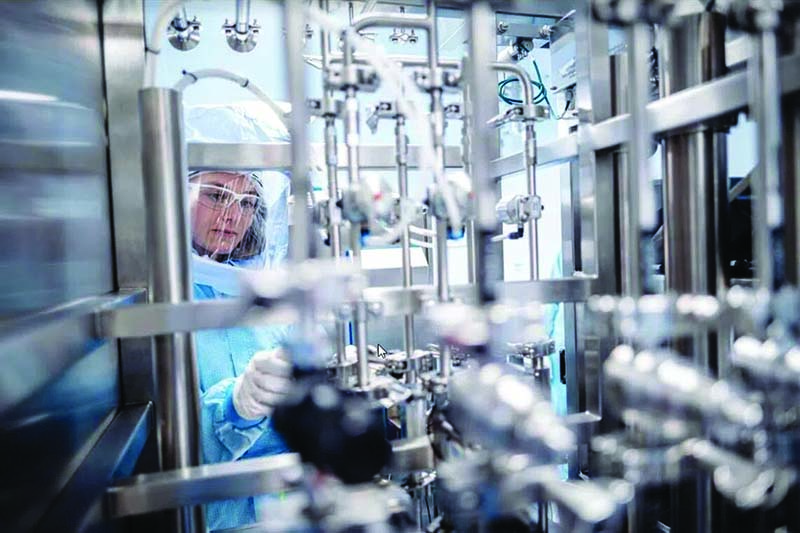
Biogen’s Singapore vaccines plant scheduled for closure
Canadian graphene technology company Black Swan Graphene has acquired Falpaco Rubber and Plastics, a Canadian manufacturer specialising in the custom moulding of plastic and rubber components, for C$12.6m. By combining its proprietary graphene materials and formulation expertise with Falpaco’s injection moulding know-how, Black Swan believes vertical integration will shorten development cycles and enable it to transition more rapidly from product validation to commercial adoption.
Belgian chemicals and materials company Syensqo and Dutch petrochemical products company Shell Chemicals Europe (a subsidiary of UK energy company Shell) have joined forces to supply mass-balanced, low-carbon ethylene oxide (EO) for the agricultural and industrial markets, enabling reduced product carbon footprint (PCF) without compromising performance. Syensqo’s EO-based solutions made with Shell Chemicals’ lower-carbon feedstocks will deliver up to 51% lower carbon footprint versus conventional EO. The whole process is enabled using carbon capture utilisation credits via a mass-balance approach.
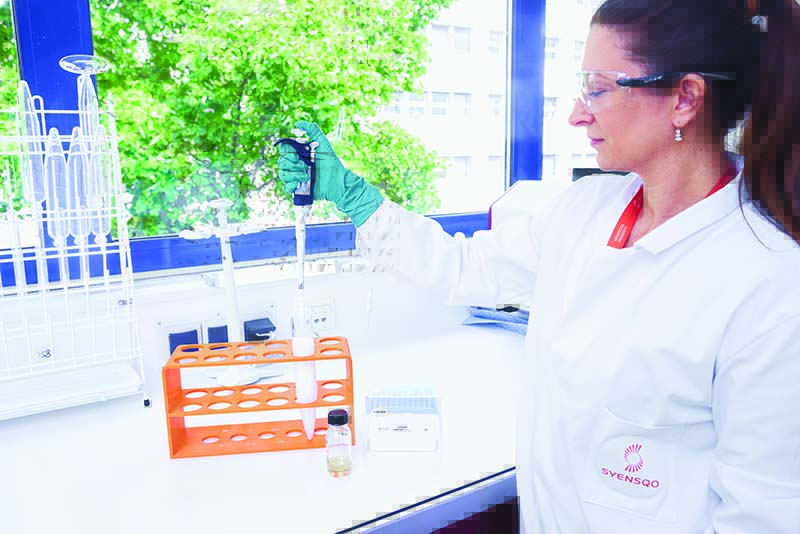
Syenqo and Shell Chemicals Europe collaborate on EO
US biopharma Neurocrine Biosciences and US biopharma Soleno Therapeutics have announced that Neurocrine has entered into a definitive agreement to acquire Soleno for a total transaction equity value of $2.9bn. The acquisition includes VYKAT XR (diazoxide choline), a first-in-class therapy to treat hyperphagia, the defining feature of Prader-Willi syndrome. This will expand Neurocrine’s portfolio of innovative medicines and strengthen its position in endocrinology and rare disease.
BSM Biotech Holding, a newly launched German biotech venture builder, has formally commenced operations and is emerging from stealth mode. BSM aims to translate cutting-edge scientific discoveries into high-value therapeutic assets by founding and building new biotechnology companies around innovations primarily sourced from leading academic institutions. BSM’s strategy focuses on identifying promising molecular targets and therapeutic approaches with the potential to address major unmet medical needs, particularly in oncology and other severe diseases. It integrates AI-supported molecular target identification and validation approaches, enabling the company to identify promising new drug targets and prioritise development opportunities with the greatest potential for medical and commercial impact.
German science and technology company Merck has launched its first bio-based solvent portfolio specifically for high-performance liquid chromatography (HPLC). Manufactured using renewable feedstocks, these new patent-pending solvents deliver on average 25.9% lower CO2 equivalents, compared with conventional fossil-fuel-based HPLC-grade solvents, while preserving the performance required for demanding analytical workflows. This launch expands Merck’s range of greener alternatives designed to help customers reduce environmental impact while preserving laboratory precision and reliability.
Danish healthcare company Novo Nordisk has announced a strategic partnership with US AI company OpenAI. The partnership aims to place Novo Nordisk at the forefront of AI transformation in healthcare and help the company bring new and better treatment options to patients faster. The partnership will apply advanced AI capabilities to analyse complex datasets, identify promising drug candidates, and reduce the time required to move from research to patient. It has been structured with strict data protection, governance and human oversight to ensure ethical and compliant use.
Dutch startup Zeefier is developing textile dyes from seaweed to help support a cleaner fashion industry. The company currently offers a growing palette of natural colours, including browns, greens, reds and greys, all of which are 100% biodegradable. Zeefier participated in the BlueInvest Investment Readiness Assistance programme, the EU’s innovation and investment platform for the blue economy, offering business coaching, fundraising support and networking opportunities for ocean technology companies.

CDMO Vetter expands US clinical production facilities
Agribusiness Syngenta is partnering with QuantumBasel, Switzerland’s first commercial quantum computing hub, to apply quantum technologies to agricultural R&D. Initial projects will aim to deepen understanding of molecular behaviour with insights that could unlock new approaches to discovery and crop science.
GSK has completed its acquisition of 35Pharma, a Canadian private, clinical-stage biopharma specialising in the development of novel protein-based therapeutics.
GI Chemical Solutions, a specialist UK-based supplier of industrial chemicals, has partnered with Spanish chemicals and energy logistics organisation Exolum to commission an 11,500t caustic soda storage tank at the Port of Immingham (Humber estuary). It is the largest seaborne caustic soda tank in the region and will support growing industry demand across the UK and strengthen supply resilience for key manufacturing sectors.
German chemicals company Evonik has introduced Ancamine 2873, an ultra-low-emission epoxy curing agent engineered to deliver fast winter cure and excellent corrosion protection for protective and marine coatings. Its low viscosity enables easier spray application, clean film formation and rapid property development under cold and humid conditions down to 5°C. These features help applicators achieve consistent coating quality during cold weather which can otherwise slow or interrupt essential maintenance work.
 Visit Blog