BASF Agricultural Solutions, a division of German chemical company BASF, has commissioned its BioHub, a new fermentation plant for biological and biotechnology-based crop protection products, at the company’s Ludwigshafen site in Germany. The products manufactured at the plant include biological fungicides and seed treatments, giving farmers access to innovative solutions that support sustainable, integrated crop protection programs. The BioHub uses microorganism fermentation to convert renewable raw materials such as glucose into the desired products. The production of key biological active ingredients began in 2026, including the bacterium Bacillus amyloliquefaciens, which forms the basis of the biological fungicide Serifel.
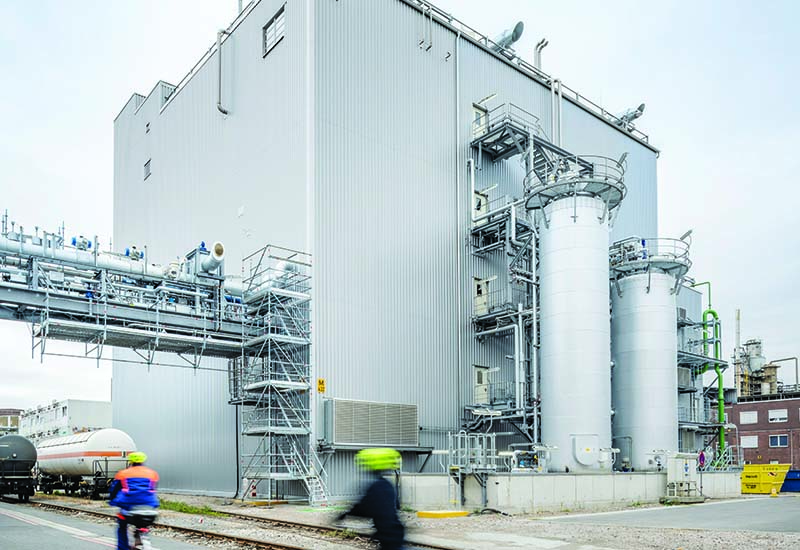
BASF Agricultural Solutions new BioHub in Ludwigshafen, Germany
AOP Health, an Austrian pharma focused on integrated therapies for rare diseases and critical care, has formed a strategic partnership with VRG Therapeutics, a Hungarian AI-driven miniproteins developer. The collaboration aims to advance a novel Kv1.3 potassium channel inhibitor, a key regulator of immune cell activity, for use in inflammation and immunology indications. The partners will focus on a next-generation miniprotein candidate discovered using VRG Therapeutics’ AI-MPRO platform, which combines AI-driven protein design with experimental validation to generate selective, target-specific miniproteins.
Daiichi Sankyo, a Japanese pharma, has revealed a five-year business plan (FY2026-30) that outlines how the company plans to deliver more than Y2.3tn ($14.5bn) in oncology revenue by 2030 and become a global top-five oncology company by 2035. To achieve these targets, Daiichi Sankyo will maximise the value of its DXd antibody drug conjugate portfolio and additional oncology pipeline through rapid market penetration of more than 20 new indications across five medicines by 2030, reaching more than 700,000 new patients annually by 2035.
Shilpa Medicare, an Indian integrated pharmaceutical and CDMO company, has signed a development and commercial manufacturing agreement with NXI Therapeutics, a Swiss developer of immunosuppressive drugs for autoimmune diseases and organ transplantation. Under the terms of agreement, Shilpa will provide comprehensive CMC (chemistry, manufacturing and controls) development, process scale-up, GMP clinical supply and commercial manufacturing support. The collaboration spans from early development through to commercialisation, positioning Shilpa as a lifecycle partner for the program.
UK clean energy company Compact Syngas Solutions has completed a £4m government-funded demonstration waste-to-energy project. The MicroHub plant, developed as part of the UK government’s Department for Energy Security and Net Zero’s Hydrogen BECCS Innovation Programme, produces hydrogen and electricity from biogenic waste while capturing carbon emissions using water scrubbing. During trial runs, the plant captured over 90% of CO2 from the syngas – exceeding the 75% target. Across more than 1,000 operating hours – including multiple 100-hour continuous runs – the system demonstrated stable, scalable performance.
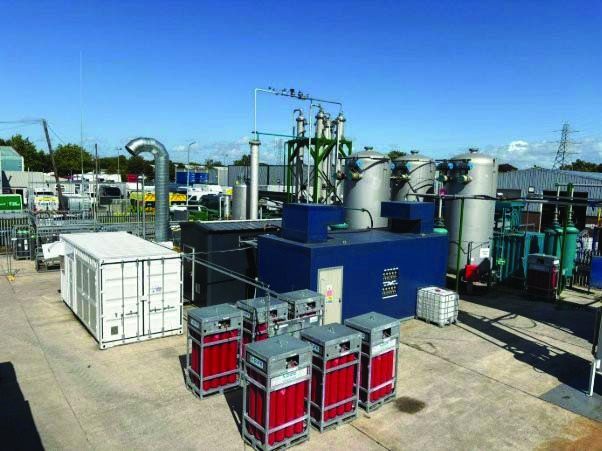
Compact Syngas Solutions completed a £4m government-funded demonstration Microhub waste-to-energy project
Arvinas, a US biotech creating a new class of drugs based on targeted protein degradation, and US pharma and biotech Pfizer have entered into a license agreement with Rigel Pharmaceuticals, a US commercial stage biotech focused on haematologic disorders and cancer, for the exclusive global development, manufacturing and commercialisation rights for VEPPANU (vepdegestrant). VEPPANU is the first US Food and Drug Administration (FDA) approved PROteolysis TArgeting Chimera (PROTAC), a type of heterobifunctional protein degrader. It is approved in the US for the treatment of adults with oestrogen receptor-positive (ER+)/human epidermal growth factor receptor 2-negative (HER2-), oestrogen receptor 1 (ESR1)-mutated advanced or metastatic breast cancer.
Chinese pharma Hengrui Pharma, a manufacturer/distributer of drug packaging materials, cancer-treating antineoplastics, cardiovascular medication, painkillers, antibiotics and related products, and US pharma Bristol Myers Squibb (BMS) have entered into global strategic collaboration and licence agreements to advance a portfolio of 13 early stage programmes in oncology, haematology and immunology, with the goal of accelerating discovery and development of innovative medicines for the benefit of patients worldwide. The agreements include four oncology/haematology assets from Hengrui, four immunology assets from BMS, and five innovative assets to be jointly discovered and developed by both companies, leveraging Hengrui’s discovery engine and platform technologies across several innovative modalities.
Isomorphic Labs, a UK AI-first drug design and development company, has raised $2.1bn in Series B funding to accelerate its evolution from pioneering novel AI models to applying them at scale. The new capital will be used for the continued development and deployment of Isomorphic Labs’ AI drug design engine (IsoDDE), accelerating and expanding its pipeline of therapeutic programs.
German pharma Boehringer Ingelheim and US clinical-stage precision immunotherapy company Immunitas Therapeutics have signed a global licensing agreement for a preclinical antibody programme being developed for chronic inflammatory and autoimmune diseases. The programme is designed to selectively target cells that play a central role in driving chronic inflammation, with the goal of achieving sustained disease control for patients who do not respond adequately to current therapies.
German CDMO Vetter has commenced construction of a new manufacturing facility to produce injectable drugs in Saarlouis in the state of Saarland in western Germany. Vetter will invest almost half a billion euros in the 38-hectare site, due to be commissioned in 2031.
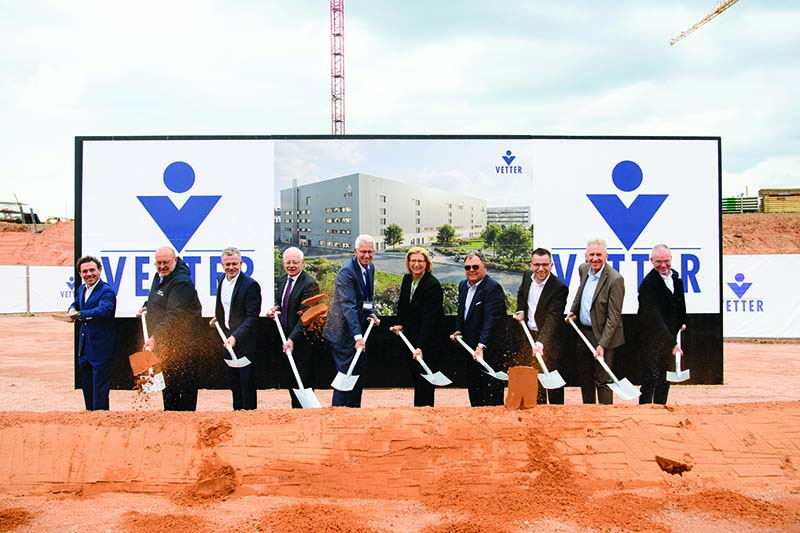
Vetter has commenced construction of a new manufacturing facility to produce injectable drugs in Saarlouis, Saarland, Germany
£2.5m
SugaROx, a UK crop biotech venture originating from UK agricultural research institution Rothamsted Research and the University of Oxford, has secured £2.5m in strategic investment from US chemical manufacturer The Mosaic Company. The investment will be used to accelerate the development of a new class of precision crop biostimulants by supporting expanded international field trials, regulatory activities and commercial scale-up of the company’s product platform, and flagship biostimulant based on trehalose-6-phosphate (T6P).
100,000t/y
Abu Dhabi-based petrochemicals company Borouge, a joint venture of the Abu Dhabi National Oil Company and Austrian polyolefin manufacturer Borealis is set to deliver the first batch of cross-linkable polyethylene (XLPE) materials from its Borouge 4 expansion project. XLPE is used in high-voltage underground and underwater power cables that support grid expansion and the global energy transition. The new plant adds 100,000t/y capacity, doubling Borouge 4’s XLPE output.
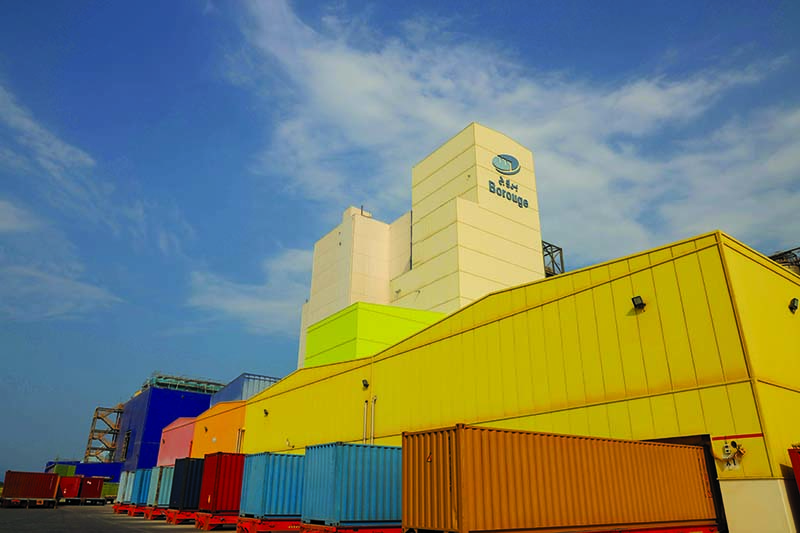
Borouge to deliver the first batch of cross-linkable polyethylene (XLPE) materials from its Borouge 4 expansion project
4,250m2
Swiss pharma Novartis has broken ground on its new 4,300m2 radioligand therapy manufacturing site in Denton, Texas in the US. The new facility will help boost provision for earlier stages of treatment and a broader range of cancers. The site is expected to become operational in 2028.
0.01%
Ames National Laboratory (a US Department of Energy Office of Science National Laboratory operated by Iowa State University) and Indium Corporation (a US refiner, smelter and manufacturer for the semiconductor industry) have partnered to expand US production of gallium – an indispensable material for semiconductors. Gallium is a byproduct of the first step of the high-volume method of producing aluminium – the Bayer process – in which gallium is typically present in the waste from the refining process in very low concentrations (about 100ppm). While the concentrations are low, Ames and Indium see an opportunity to innovate a process that efficiently separates and extract this gallium.
Owkin, a French-American agentic AI company developing biological artificial superintelligence for drug discovery and development, has agreed with Swedish-UK pharma and biotech AstraZeneca to build biopharma agents as part of their three-year licensing of K Pro – Owkin’s AI scientist for biopharma decision making. Under the three-year licensing agreement, Owkin will lead the end-to-end development of AI agents to run on K Pro, integrated within AstraZeneca’s IT infrastructure and decision workflows.
US chemical producer Dow Chemical Company has earned six Edison Awards, recognising materials science innovations across healthcare, packaging, manufacturing and software. Dow received one gold, three silver, and two bronze awards, marking the company’s thirteenth consecutive year of Edison Award recognition. Their gold award was for non-PVC, non-phthalate medical films in the Health, Medical & Biotech category.
Taiwanese CDMO Bora Pharmaceuticals has acquired the GMP manufacturing operations, including the CDMO business, of US biopharma MacroGenics for $122.5m. The transaction includes a biologics drug substance manufacturing facility located in Rockville, Maryland in the US and an associated warehousing centre in Frederick, Maryland.
US biotech Regeneron Pharmaceuticals has announced a strategic research collaboration with US clinical-stage biopharma Parabilis Medicines to discover and develop multiple therapeutic candidates based on Parabilis’ Helicon peptide platform, with a particular focus on Antibody-Helicon Conjugates (AHCs), a novel class of therapeutics designed to target challenging and historically ‘undruggable’ targets.
Evonik Fuhua New Materials, a joint venture between German specialty chemicals company Evonik and China’s Fuhua Tongda Chemicals, located in Leshan, Sichuan Province, China, has completed construction of a hydrogen peroxide facility. The joint venture will purify industrial-grade H2O2 into specialty grades to serve high-growth markets in the region. Based on technology licensed from Evonik’s Active Oxygens business line, the facility uses industrial-grade H2O2 produced by Fuhua as a feedstock. The resulting specialty grades will meet growing regional demand for high-end applications such as solar cell production, semiconductor manufacturing, food packaging, cosmetics and pharmaceuticals. The plant is designed with a production capacity of 20,000t/year.
US pharmaceutical and biomedical company Merck & Co (known as MSD outside of the North America) and Terns Pharmaceuticals, a US clinical-stage oncology company, have entered into a definitive agreement under which Merck, through a subsidiary, will acquire Terns for an approximate equity value of $6.7bn.
Insilico Medicine, a US AI-driven drug discovery biotech, has formed a drug discovery collaboration with US pharma Eli Lilly that uses Insilico’s AI engine to accelerate the discovery and development of novel therapeutics across multiple therapeutic areas. The agreement grants Lilly an exclusive worldwide licence for the development, manufacturing, and commercialisation of novel oral therapeutics in preclinical development for certain indications. In addition, Insilico and Lilly will collaborate on multiple R&D programmes focused on targets selected by Lilly, by combining Insilico’s Pharma.AI platforms with Lilly’s development capabilities and deep disease-area expertise.
TA’ZIZ, an industrial chemicals and transition fuels hub in the Ruwais Industrial Complex in Abu Dhabi, UAE (a joint venture between Abu Dhabi National Oil Company and ADQ, an Abu Dhabi-based investment and holding company) has announced that the TA’ZIZ Methanol Company, a joint venture between TA’ZIZ and Swiss energy company Proman, has closed $2bn of financing for the UAE’s first world-scale methanol plant in Al Ruwais Industrial City.
German chemical company BASF has launched a new yellow-light technology for industries using photolithography-driven and related manufacturing applications, including semiconductors, printed circuit boards, display manufacturing, LED production and solar energy. BASF’s new material uses an absorption-conversion mechanism that not only blocks harmful wavelengths – cutting off light source wavelengths below 530nm for high-end semiconductor applications – but also converts them into useful yellow light, maximising energy use and system performance, thereby offering higher energy efficiency, lower power consumption and a reduction in carbon footprint.
Vaccine supplier BioNTech plans to close its manufacturing operations at its sites in Idar-Oberstein and Marburg, Germany, following the previously announced closure of its Singapore site as well as the recently acquired CureVac’s sites. The closures in Idar-Oberstein, Marburg, and Tübingen are planned by the end of 2027, while the Singapore operation is expected to close in Q1 2027. For each site, BioNTech is exploring divestment options, including a partial or total sale.
BASF has opened a new, state-of-the-art R&D centre for refinery catalysts. It is co-located at its largest refinery catalyst production site globally, in Attapulgus, Georgia, US.
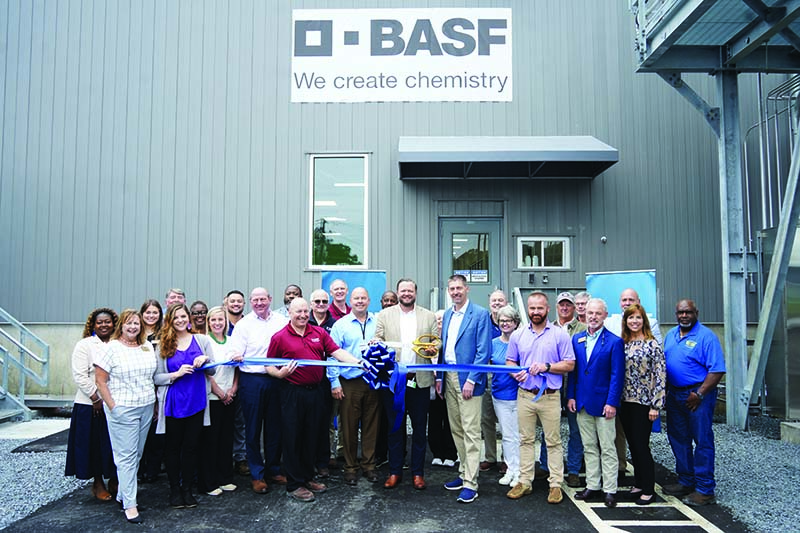
Ribbon-cutting ceremony at BASF’s new r&d centre for refinery catalysts at its largest refinery catalyst production site in Attapulgus, Georgia, US.
US life science and clinical research company Thermo Fisher Scientific has launched a next-generation, integrated cell line development platform that enables biologics developers to accelerate time to clinic while maintaining regulatory confidence and commercial scalability. The Gibco CHOvantage GS Cell Line Development (CLD) kit offers researchers the ability to generate CHO cell lines, achieving protein titres of ≥7g/L in fed-batch cultures, establishing stable pools in as little as four weeks, and supporting selection of stable clones within 14 weeks, helping to streamline progression from early development to commercial manufacturing.
The UK’s Ineos Oxford Institute for antimicrobial research (IOI) has established a new antifungal drug discovery programme to address the growing global threat of fungal infections and antifungal resistance. Fungi can cause serious infections in the lungs, brain, bloodstream and skin, affecting billions of people worldwide. Despite this health threat, treatment options remain limited, with only four major classes of antifungal drugs currently in clinical use. IOI’s new antifungal drug programme aims to uncover new antifungal agents and develop next-generation antifungal therapies that are more resilient to resistance. It will focus on identifying previously unrecognised vulnerabilities in fungal cells, uncovering new antifungal molecules, targeting key fungal systems, improving existing drug candidates, and developing new approaches to understand and overcome resistance.
Brazilian producer of bleached eucalyptus kraft pulp (BEKP), Suzano, has received EU approval for the purchase of Kimberly-Clark IFP, the producer of paper tissue and wipes headquartered in The Netherlands.
 Visit Blog