BY STEVE RANGER
The chemicals industry is in the middle of a once-in-a-generation realignment. That realignment is creating challenges for many, but will also be the source of unexpected innovation. Three recent reports together map out the challenges, the impact – and the future opportunity.
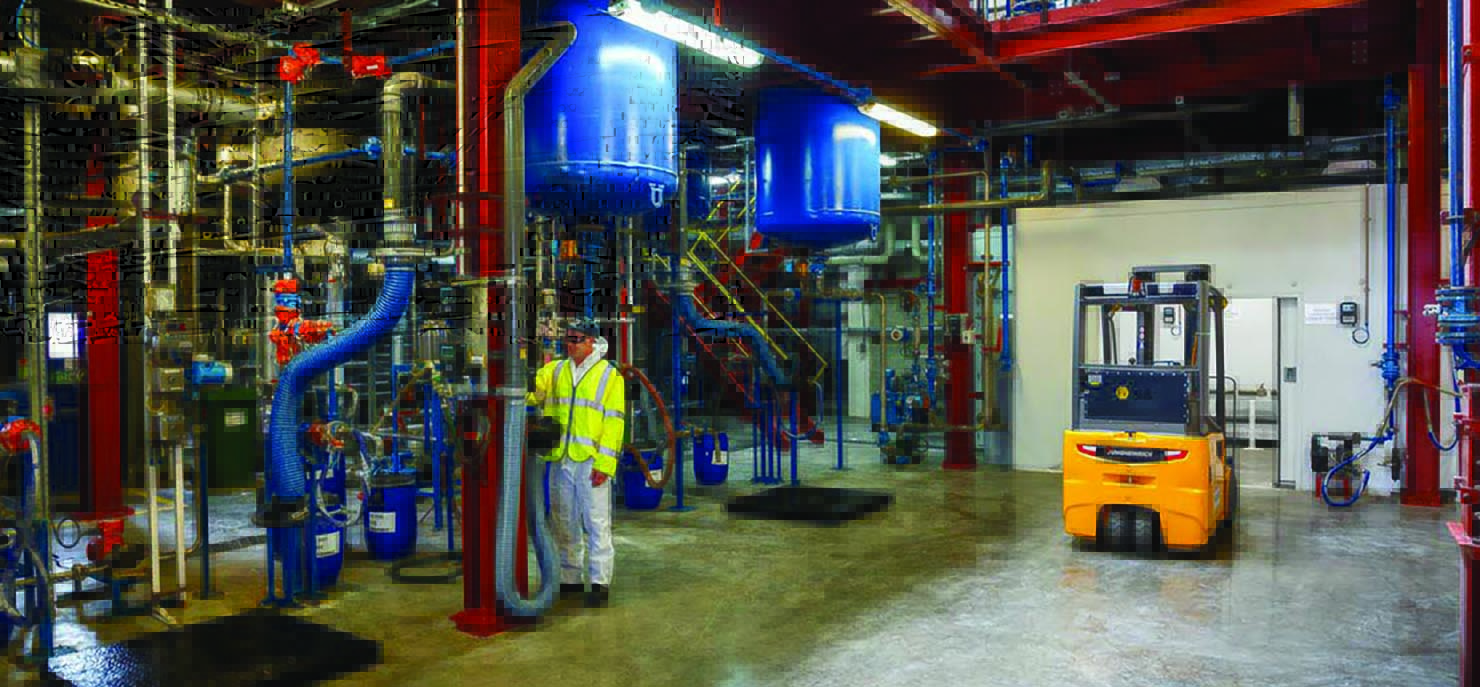
A giant restructuring of the industry has been under way for some time, in the form of rapid expansion of production in three key regions.
In the Middle East, this has seen petrochemicals production expanding through cheap feedstocks, while China has seen huge growth in chemicals production, even as the US has built on its advan-tage of shale gas as a feedstock. Even more new capacity is coming online in the next year or two.
All of this is putting pressure on companies running older, smaller-scale plants that find themselves struggling against new competition, according to industry consultants Deloitte.
These shifts in the industry, along with high energy and feedstock costs, have not been good news for Europe’s chemical industry. Indeed, another new report – from European industry group Cefic – highlights the continuing structural and competitiveness challenges.
Despite some modest improvement in early 2026, the issues of weak demand, declining production and the growth of international rivals remain.
‘Europe’s chemical industry is operating in a very challenging market environment. Weak demand, high production and energy costs, and declining investment are putting sustained pressure on competitiveness and making it increasingly difficult to maintain production in Europe.
hese pressures are being compounded by geopolitical instability, which is disrupting trade flows and adding uncertainty around energy supply and access to critical raw materials,’ Cefic told C&I.
Europe’s chemical capacity utilisation remains at historically low levels, around 74%, well below its long-term average and consistently below overall EU manufacturing. Cefic notes that this confirms the structurally weaker position of chemicals within the European industrial base.
‘For Cefic, if Europe wants a sustainable, resilient and climate‑neutral chemical industry, competitiveness and transformation must advance together,’ it says.
A key constraint is the energy cost disadvantage faced by European chemical producers, with gas prices in Europe 3.3 times higher than US levels. In the first quarter of 2026, chemical production declined by 3.2% year on year.
The downturn is particularly pronounced in organic basic chemicals and polymers, while only selected specialty and consumer-oriented segments are showing resilience.
This finds an echo in Deloitte’s research, which suggests that mega-scale complexes that compete on cost and integration and built on local feedstocks, and specialty platforms that compete on performance, formulation and customer relationships, are likely to be the modes of success for the future.
But beyond the big trends there are still opportunities. Geography plays an important role, but it is not necessarily destiny. Many countries are concerned about availability of resources such as critical minerals and have realised that without foundational industries their economies are much more vulnerable to outside shocks. Supporting local supply chains for critical materials to create resilience is back in fashion.
Chemistry is a global industry but being a strong regional player, which understands its customers, is also an excellent option. In times of change, there is always opportunity for those willing to seize it.
A third report – this time from Germany’s chemical industry association, VCI – has mapped out a series of future scenarios for its chemicals, pharmaceuticals and biotech industries. These range from sticking with the status quo (not recommended) all the way through to an ambitious vision of an industry re-imagined two decades from now. The choice it presents is between living in an ‘industrial museum’ or remaking these industries so they can champion new ideas and drive societal benefit.
The report calls on the industry to take more risks and put innovation ahead of simply preserving what it already has. Supporting the development of a circular economy, new financing models and stronger collaboration between science and industry, along with reducing bureaucracy, are also on the list.
All of these are important, along with the innovation needed to support the development of new feedstocks that take chemistry away from fossil fuels and towards more sustainable footings – something that will help support resilience too. Embracing digital technologies, including quantum and AI, will play a role too, increasing efficiency, bringing down costs and making product development faster (see p6 for how digital technology is being used in drug discovery).
There are many strategic questions ahead, but it will always be the combination of scientific exploration with industrial ambition that will drive the industry forward.
 Visit Blog