Production has begun at the new hydrogen peroxide (H₂O₂) facility operated by Chinese chemicals producer Fuhua and licensed by German chemicals company Evonik in Leshan, Sichuan Province, China. With an annual capacity of 200,000t, the facility is one of the largest in the region for industrial-grade hydrogen peroxide. The plant is now ready to serve the regional Chinese market as well as the partners’ joint venture – Evonik Fuhua New Materials – for further purification into specialty grades.
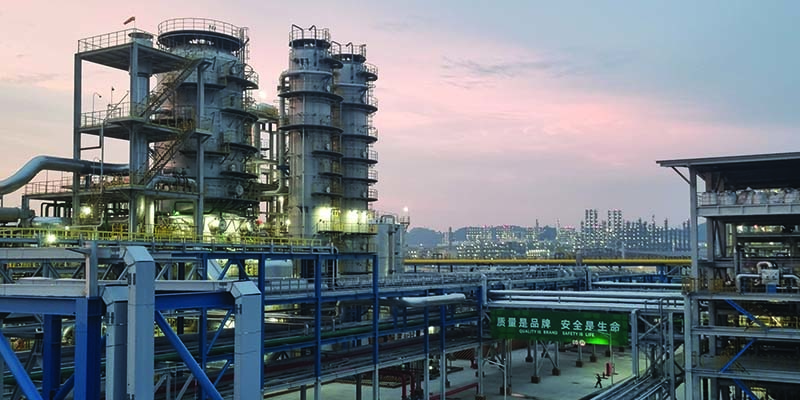
New hydrogen peroxide facility operated by Fuhua and licensed by Evonik in Leshan, Sichuan Province, China
German pharma and biotech Bayer has secured €3bn from US asset management firm Apollo to improve the capital structure of an entity holding Bayer’s long-acting reversible contraceptives business. Bayer will retain a majority stake in, and full operational control over, the business and there will be no changes to strategy or business activities because of the investment. Improving the capital structure means finding the ideal mix of debt and equity to lower the overall cost of funding, reduce financial risk and increase the value of a business.
DEScycle, a UK company building next-generation metals processing infrastructure, has opened a Teesside demonstration plant designed to recover copper, gold, silver and palladium from complex electronic waste. The facility is the first operational deployment of DEScycle’s distributed, modular platform, designed to process critical metals closer to where materials are generated rather than relying solely on centralised smelting or overseas processing. The launch comes as the UK looks to strengthen domestic critical minerals capacity, with UK industry minister Chris McDonald recently announcing £50m to support domestic production as part of the Critical Minerals Strategy. Demand for these metals is rising across AI infrastructure, advanced manufacturing, electrification and national security. The plant is supported by partnerships with US IT conglomerate Cisco and Japanese trading company Mitsubishi Corporation.
Franco-Belgian chemical company Solvay has signed a letter of intent with Australian resource exploration and development company Viridis Mining and Minerals to secure a strategic supply of rare earth materials by 2028. Viridis will supply rare earth feedstocks from Brazil to Solvay’s La Rochelle plant in France, and Solvay will provide rare earth separation expertise and processing technology. This collaboration aims to refine rare earth raw materials into the individual high-purity oxide elements essential for electric vehicle motors, renewable energy, advanced electronics and defence systems. The feedstock includes key rare earths for permanent magnets, notably neodymium (Nd), praseodymium (Pr), dysprosium (Dy) and terbium (Tb), supporting increasing global demand. It also contains an important distribution of additional heavy rare earths, such as samarium (Sm), gadolinium (Gd) and yttrium (Y), used in critical advanced technology sectors such as automotive, electronics, medical and aerospace applications.
Italian energy company Eni has signed an agreement to acquire a 25% stake in US lithium extraction company EnergyX’s Chilean subsidiary Black Giant, which is developing a lithium project located in northern Chile, near the Salar de Punta Negra. Eni’s total phased investment amounts to $225m. The project targets production of 52,500t/year of lithium carbonate equivalent at full capacity and will be executed in two phases. The first phase includes a capacity of 7,500t/year with start-up expected in 2028, while the second phase will have an additional capacity of 45,000t/year with start-up expected in 2030.
UK pharma and biotech GSK has announced completion of its $10.6bn acquisition of US clinical-stage biopharma Nuvalent, which is focused on creating precisely targeted oncology therapies. The acquisition adds three lung cancer assets to GSK’s oncology portfolio. Zidesamtinib (NVL-520) and neladalkib (NVL-655) are considered potential best-in-class assets, based on clinical data, and are under FDA review. The acquisition also includes NVL-330, which is in phase I development.
German science and technology company Merck KGaA has opened a new €25m BioReliance testing facility at its global headquarters in Darmstadt, Germany. The 2000m2 facility expands access to commercial drug substance and drug product release testing as well as stability testing for biopharmaceutical companies developing and commercialising therapies in Europe.
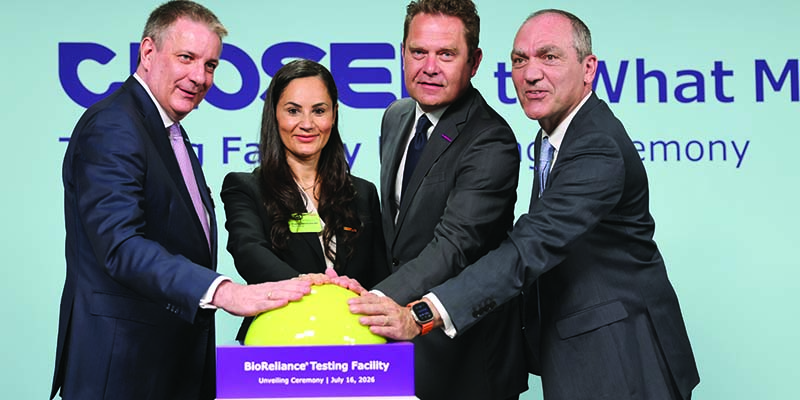
Merck KGaA BioReliance facility is opened in Darmstadt, Germany
United Therapeutics, a US biotech that develops pharmaceuticals and technologies related to organ transplantation, including xenotransplantation, has acquired Thymmune Therapeutics, a US privately held, preclinical-stage biotech developing scalable, regenerative thymic cell therapies for the potential treatment of post-transplant organ tolerance, immunodeficiencies and autoimmune diseases. Under the terms of the agreement, United Therapeutics acquired Thymmune for $140m in cash.
Swiss CDMO Lonza, and Engitix, a UK biotech developing extracellular matrix-based drug discovery and development, have announced a licensing agreement to advance the development of antibody-drug conjugates (ADCs) and deliver therapies for patients with chronic diseases. Under the agreement, Engitix will access Lonza’s ADC technology platform through a single-target license, including the use of SYNtecan E linker-payload and complementary GlycoConnect and HydraSpace. These technologies will support Engitix’s goal to develop and commercialise therapies.
Indian pharma Lupin has announced the strategic spin-out of two oncology programs – LNP7457 (PRMT5) and LNP8701 (SOS1) – through its wholly owned subsidiary, Lupin Inc, into Kaveri Therapeutics, a US-based clinical-stage oncology company. Kaveri will advance these programs through global clinical trials and operate as an independent entity, but Lupin Inc will retain a significant equity stake in Kaveri, provide seed funding, and grant exclusive rights to the programs.
$750m
Resilience, a US CDMO, has announced the expansion of its strategic partnership with US pharma Eli Lilly to increase US production of medicines. The $750m investment by Resilience and Lilly in pharmaceutical production will expand Resilience’s advanced manufacturing operations in the Cincinnati, Ohio region, which will now include Lilly’s KwikPen injectable device for innovative medicines treating diabetes and obesity.
33,000t
UK chemical company INEOS and Norwegian recycler Recuro have signed a memorandum of understanding to develop an advanced recycling facility at INEOS’ Bamble site in Norway that will process up to 33,000t/year of end-of-life plastic waste. Powered by renewable energy and using advanced pyrolysis technology, the project will maximise the recovery and reuse of oil and gas fractions.
1000 UK pharma and biotech GSK has announced plans to establish a major new global R&D centre in Cambridge, UK, as part of the company’s plan to accelerate its R&D pipeline. The new 2.75-hectare site, on the Cambridge Biomedical Campus in the heart of the UK’s life sciences ‘Golden Triangle,’ will be home to GSK’s R&D operations in the UK and house more than 1000 scientists. The site’s labs will support research in the company’s focus areas of oncology, respiratory, hepatology, vaccines and HIV.
30% Lhyfe, a French producer of green and renewable hydrogen for the decarbonisation of industry and mobility has announced the signing of a major commercial, industrial and financial partnership with Messer, a German privately-owned specialist in industrial, medical, electronic and specialty gases. Messer is taking a 30% stake in four hydrogen production sites in France and Germany, and the partners have agreed a 10-year contract on the supply of renewable hydrogen.
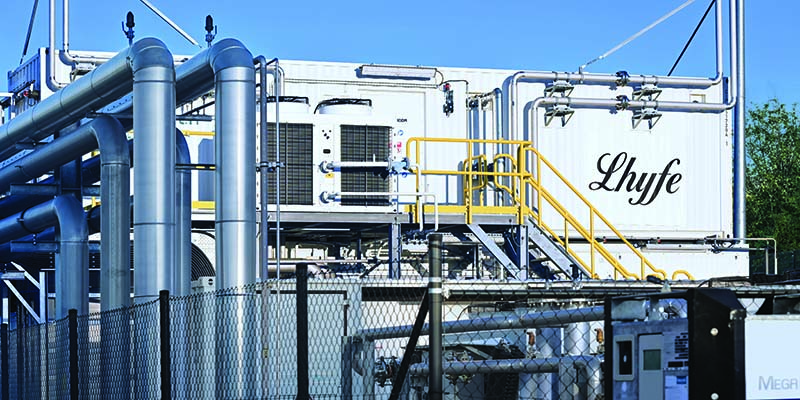
Lhyfe green hydrogen plant
Swiss CDMO Celonic and German biotech Leukocare, a provider of drug product development services, are collaborating to support biopharmaceutical companies developing increasingly complex biologics. The collaboration brings together Celonic’s expertise in cell line development, drug substance process development, intensified bioprocessing and GMP manufacturing with Leukocare’s data science-driven approach to drug product development. The companies will support selected client programs involving complex biologics, including bispecific antibodies, multispecific antibodies, fusion proteins and high-concentration formulations.
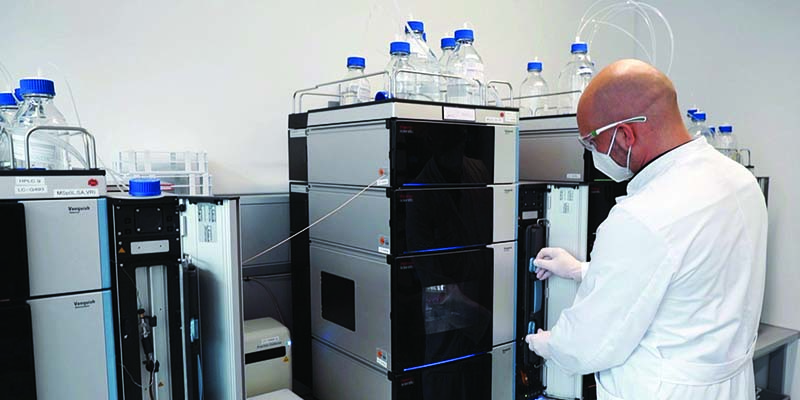
Swiss CDMO Celonic and Leukocare, a provider of drug product development services, collaborate to support biologics companies
Dutch commercial-stage biopharmaceutical and immunology company argenx and clinical-stage biopharma Forte Biosciences, have entered into a definitive agreement under which argenx will acquire Forte Biosciences for $77/share in cash, representing a total equity value of approximately $2.2bn. FB102, Forte Biosciences’ lead program, expands argenx’s portfolio of differentiated immunology medicines, adding a first-in-class anti-CD122 antibody with clinical proof-of-concept in vitiligo and celiac disease and the potential to address multiple autoimmune diseases.
Curium, a US nuclear medicine company that develops, makes and supplies radiopharmaceuticals for diagnosing and treating cancer and other diseases, and Lantheus Holdings, a US radiopharmaceutical-focused company that develops diagnostic and therapeutic products for oncology, cardiology and neurology, have entered into a definitive agreement under which Lantheus will merge with a wholly owned subsidiary of Curium for a total transaction value of around $8bn.
Topsoe, a Danish provider of technology and solutions for energy transition, and Sasol, a South African chemicals and energy company, have signed a licensing agreement with Australian clean energy company Allied Biofuels to provide technologies for its sustainable aviation fuel (SAF) and bio-based electro-SAF (eSAF) production facility located in the Khorezm region of Uzbekistan. The facility will combine Topsoe’s advanced SynCOR technology with Sasol’s Fischer-Tropsch technology to produce high-quality SAF from a variety of feedstocks – including biomass, green hydrogen and carbon dioxide – creating a highly flexible and integrated production pathway. The project comes at a time of growing demand for SAF, alongside expanding regulation and incentives for its production and deployment. The EU’s ReFuelEU Aviation regulation requires fuel suppliers to deliver 1.2% share of eSAF in all EU airports by 2030, rising to 35% by 2050.
US life science and clinical research company Thermo Fisher Scientific has completed the Olink Explore HT proteomic analysis of approximately 5,500 research samples from The Michael J. Fox Foundation’s study, the Parkinson’s Precision Medicine Initiative (PPMI). The resulting data are now in PPMI’s data repository, where they are available to the global research community. The project creates a large-scale proteomics resource designed to help researchers study Parkinson’s disease at the protein level and investigate biological signals associated with disease progression, patient heterogeneity and potential biomarker development.
Harbour BioMed, a US company developing antibody therapeutics in immunology, oncology and other areas, has entered a strategic collaboration with China National Pharmaceutical Group (Sinopharm). The two parties will establish the Sinopharm – Harbour BioMed Innovation Consortium to research and develop innovative biologics. Harbour BioMed will leverage its Harbour Mice fully human antibody technology platform and AI-enabled drug discovery capabilities to drive the discovery and optimisation of antibody candidates. Sinopharm will contribute expertise in clinical development, large-scale manufacturing and commercialisation.
New Zealand clean technology startup NILO is developing processes to turn discarded plastic waste into high-performance industrial adhesives, offering a solution to a global pollution crisis while taking aim at a multi-billion-dollar manufacturing market. At the heart of NILO’s proprietary technology is the ability to functionalise plastic waste, altering its molecular properties to create a highly effective binding agent. The team is focusing this breakthrough on the global manufactured wood panel industry, targeting the production of particle board, MDF (medium-density fibreboard), and OSB (oriented strand board).
US biotech Insilico Medicine, a clinical-stage generative artificial intelligence (AI)-driven drug discovery company, has announced the Discovery and Development (DDD) Benchmarks as a Service (BaaS). It is a standardised evaluation framework for measuring how frontier AI and foundation models built on other architectures perform on real-world tasks across medicinal chemistry, chemical synthesis, disease biology, clinical development and longevity research. Insilico’s BaaS is available to any organisation developing frontier AI for drug discovery or leveraging foundation models in their research, while their DDD Benchmark provides the independent, real-world measure of how a model performs.
Australian researchers and students will gain access to advanced quantum computing technology under a memorandum of understanding between Japanese information and communication technology equipment and services corporation Fujitsu, Australia’s Monash University, and Australia’s national science agency, CSIRO. The collaboration aims to accelerate the development of practical quantum applications, strengthen Australia’s quantum capability and help build a skilled workforce ready for the emerging quantum economy. It also supports the newly inked memorandum of cooperation between Australia and Japan on quantum science, technology and innovation, reflecting the growing strategic importance of quantum technologies to both countries.
Korean biopharma Samsung Bioepis has entered into a license agreement with Korean biotech Proteina to collaborate on a Korean government-supported national R&D initiative aimed at developing novel AI-based antibody therapeutics.
 Visit Blog