
SCI’s Bright SCIdea challenge is an annual entrepreneurial competition which allows university students the opportunity to develop and showcase their business skills.
The students are asked to develop a plausible scientific concept that could be commercialised for the benefit of society, and shortlisted teams are invited to pitch their idea at the final, which is taking place in at SCI headquarters in March.
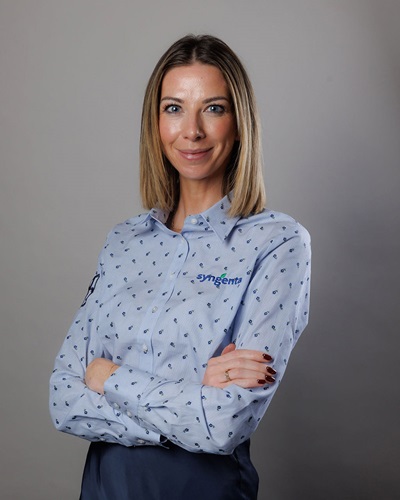
C&I spoke to Sarah Iveson, Commercial Unit Head North West Europe and UK Managing Director at Syngenta, who is one of the members of the Bright SCIdea judging panel this year, to find out more.
C&I: Why did you decide to take part as a judge in BrightSCIdea 2026?
Sarah Iveson: Taking part as a judge in the Bright SCIdea competition is a great opportunity to support the next generation of scientists and innovators as they think up ideas which translate promising research into real-world solutions. It’s inspiring to see early-stage ideas tackling major societal challenges and to help teams think about how their science could create tangible impact beyond the lab.
For me, it’s also a chance to share perspectives and help teams understand how strong science can be combined with a clear value proposition and route to market. Engaging with such diverse and creative ideas is always energising and reinforces the importance of collaboration between science and industry.
What will you be looking for when judging this year’s competition?
As a judge in the Bright SCIdea competition, I’ll be looking for ideas that combine strong scientific foundations with clear commercial potential. The most compelling proposals will demonstrate not only innovative and credible science, but also a realistic pathway to real-world application, including a clear problem being solved and an understanding of the potential market and impact.
Having trained as a biochemist before moving from R&D roles into commercial roles in a large R&D-driven company, I’m particularly interested in teams that can bridge the gap between great science and practical implementation.
While there are many societal challenges that science can help address, what are the challenges that are of most interest to you and what developments have you seen in these areas that are holding the most promise?
The societal challenges that interest me most are those at the intersection of human health, food security, and sustainability, particularly where advances in genomics, immunology, and agricultural science can have a transformative impact.
In genomics, the rapid progress in precision gene editing and AI-enabled genetic analysis is opening the door to truly personalised and potentially curative therapies.
In immunology, the success of mRNA and other programmable immune technologies is accelerating vaccine development and enabling new approaches such as personalised cancer vaccines.
Meanwhile in agriculture, gene-edited and climate-resilient crops, along with a better understanding of plant–microbe interactions, are showing real promise in helping build more sustainable and productive food systems for a growing global population.
One team will win £5000. What advice would you give that team on how to invest their winnings to grow their idea?
The best advice I’d give the winning team is to invest the money in reducing the biggest uncertainty in their idea. That usually means generating the key data or proof-of-concept that demonstrates the science works and that there is a clear path to real-world application.
At an early stage, evidence and validation are far more valuable than trying to scale too quickly. I would also encourage them to use the funding strategically to engage with potential users, partners, or customers, so they can refine both the science and the commercial case. The strongest innovations are those that develop the technology and the market understanding in parallel.
For over 100 years Chemistry & Industry (C&I) magazine has reported on the scientific advances being harnessed to tackle society's biggest challenges. C&I covers advances in agrifood, energy, health and wellbeing, materials, sustainability and environment, as well as science careers, policy and broader innovation issues. C&I’s readers are scientific researchers, business leaders, policy makers and entrepreneurs who harness science to spark innovation.
Get the latest science and innovation news every month with a subscription to Chemistry & Industry magazine. You can subscribe to C&I here.
 Visit Blog