
Many ingredients are required to take a science-based idea from the lab bench and turn it into a commercial idea – and from there into a successful business. SCI’s first SME Showcase event aimed to celebrate the creativity and impact of science-based SMEs, showcasing their essential role in delivering innovation and novel thinking.
The day featured talks from pioneering SMEs, scale-up success stories, and interactive sessions on innovation, investment, and collaboration. The aim was to spark meaningful connections across the innovation ecosystem by giving attendees the chance to network, share ideas, and build relationships that could help accelerate their businesses and unlock new opportunities.
The SCI SME Showcase 2026 also marked the relaunch of the SCI Science and Enterprise Group - a community of innovators, entrepreneurs, and experts dedicated to championing science-based SMEs across the chemical, materials, health, energy, agrifood, and sustainability sectors. Sessions at the event covered the current outlook for science-based SMEs, the outlook for scaling deep-tech businesses and how to turn ideas into impact.
Jason Camp, Chair of SCI’s Science and Enterprise Group, said “The challenges faced by SMEs are significant, and it is with events like the SME Showcase that we can truly understand how to tackle these challenges, and create an environment where SMEs can flourish and thrive, to the betterment of wider society”.
Coming up with innovative science is often difficult enough, but one of the first steps after that can often be the search for finance to help turn interesting science into a standalone business, which was the topic of one of the day’s sessions.
Beginning with the UK SME Business landscape, a panel session shared insights highlighting, amongst other things, the various avenues for funding. One option is to connect with venture capital which can help take a small business to the next level.
“Venture capital will be looking for strong growth and a good return on investment over a five-to-ten-year period,” explained Victor Christou, managing partner at Hotdog Capital. One immediate challenge for smaller businesses is the investment outlook: as a result of global shocks of recent years, some venture capital investors are tightening their criteria for investment. “There is less capital for fund managers to deploy, and where it is deployed it is being driven towards AI. Venture capital is seeing huge opportunities for growth in AI,” said Christou.
So, could approaching an established business and developing a partnership be a viable route for the growth? “If you are providing a solution to a problem that they have,” said Steve Smith, an independent consultant speaking on the same panel, “then ensuring that you understand how you can fit in and benefit a business that might partner with you is crucial. What are the issues that they are dealing with and how might your idea bring a solution? Alignment is important,” he said.
Many large organisations are looking to harness the new ideas that start-ups and small businesses can generate and creating platforms where they can engage with a wider community. Shoots by Syngenta, is just one such example. It sets out science-based innovation challenges and brings together academics, research institutes, start-ups and cross-industry sectors to collaborate with Syngenta’s global network of more than 5000 scientists. Other speakers looked at some of the broader challenges that SMEs in the science sector face.
Having navigated the path from laboratory to field testing its technology, co-founder and CTO of SugaRox, Dr Cara Griffiths, shared insights on the company’s journey. The company’s innovation is a precision bio stimulant that targets a plant's metabolism, boosting the productivity, resilience, sustainability, and profitability of farming.
Griffiths highlighting the so-called “Valley of Death” – the difficult period between setting up a business based on research and arrival of revenue from customers to keep it going. “Going from discovery to product means navigating the translation gap, which in itself is a scientific discipline,” she said. “Translation is not a linear process, it is an engineering challenge,” Griffith added.
Challenges that SugaRox negotiated included formulation, farmer economics and regulation. “From the outset you need to be considering all the practicalities related to your innovation,” she said. The UK has long been seen as source of innovation with many university spinouts going on to become successful businesses.
Flavia Popescu Richardson, governing board member at the European Institute for Technology, cautioned that good ideas were not in themselves going to be enough. “It is businesses that make money, financially: ideas are worth zero. Is your proposition investable? Not all investors are the same, they will position themselves according to the risk that they are prepared to take. So, you need to go in with as much data and information as possible. And be prepared to have your ideas challenged from all angles. No one person in your team will have all the answers,” she said.
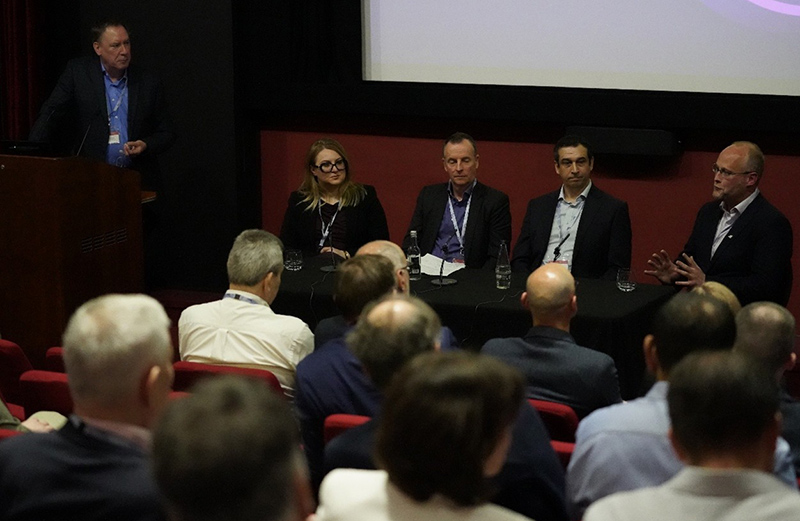
Building a team that has the range of skills needed to answer potential investor questions and grow a new business was among the key points made by Fiona Marston, CEO and chair of engineering biology company ErebaGen.
Sharing her experiences as a serial entrepreneur Marston warned of the many ups and downs. “Spinning out from academia is complex. And once you do spinout, you must know how to pivot your business. This is where a strong team with the correct skill set is needed,” said Marston.
She warned budding entrepreneurs not to over-promise. “There is a lot of pressure on entrepreneurs to say yes to challenging growth targets. But if you over-promise you are very likely to under-deliver. Be open to the thoughts of everyone on your team, and don’t turn down opportunities for mentorship. What might be seen as negative feedback could perhaps save you time and money in the future and contribute to your growth.” The appetite for new ideas has never been greater, and networks to support the growth of these ideas are plentiful.
More on SMEs and innovation
- 25 deep tech innovations that could shape the future
- The global biopharma race is getting serious
- Bright SCIdea final 2026: The power of science and entrepreneurship
- Why quantum computing matters to chemical companies
Chemistry & Industry (C&I) magazine reports on the people, the scientific advances and the industrial innovations being harnessed to tackle society's biggest challenges. C&I covers advances in agrifood, energy, health and wellbeing, materials, sustainability and environment, as well as science careers, policy and broader innovation issues. C&I’s readers are scientific researchers, business leaders, policy makers and entrepreneurs who harness science to spark innovation.
Get the latest science and innovation news every month with a subscription to Chemistry & Industry magazine. You can subscribe to C&I here.
 Visit Blog