JOURNAL HIGHLIGHTS BY STEVE RANGER
Microgreens are young, edible seedlings harvested during early developmental stages, typically between 6 and 21 days after germination. These crops can offer nutrient concentrations up to 40 times higher than those of their mature counterparts.
Recently, the market for microgreens has seen significant growth, both due to their novelty and nutritional value, but also because of the rise of vertical farming systems - particularly in urban environments.
The controlled environment of a vertical farm allows precise regulation of growing conditions, particularly when it comes to artificial lighting. This is important because light, both across visible and non-visible wavelengths, is a key factor influencing plant physiology and metabolism.
Members of the Brassicaceae family – such as radish (Raphanus sativus) – are particularly valued as microgreens thanks to their high levels of nutrients and bioactive compounds, including carotenoids, phylloquinones, tocopherols, omega-3 fatty acids, glucosinolates (GLS), and sulforaphane. And now a team of researchers has investigated the effects of light spectrum and intensity on growth and other characteristics of green and purple radish microgreens.
The experiment was conducted in a vertical farming system located at the CEBAS-CSIC research facility in Santomera, Murcia, Spain.
After germination, microgreens were transferred to the shelves of a three-tier rack within the vertical farming system. Each shelf was illuminated by dedicated LED fixtures.
‘The core motivation was the paradox of vertical farming: it offers total environmental control, yet we are still using ‘standard’ light recipes that don’t exploit the full genetic potential of the plants,’ explains Alejandro Martínez-Moreno, one of the researchers involved.
‘We wanted to move beyond just “growing” plants to “programming” them. By manipulating the light spectrum – specifically the balance of red, blue, and far-red – we realised we could treat light not just as energy for photosynthesis, but as a high-precision tool to trigger the synthesis of specific health-promoting compounds.’
Blue and red light combinations are particularly effective in driving photosynthesis and optimising plant morphology. Blue light enhances chlorophyll biosynthesis and promotes compact growth, while red light stimulates biomass accumulation and leaf expansion. Light intensity is another critical determinant of microgreen growth and metabolic activity.
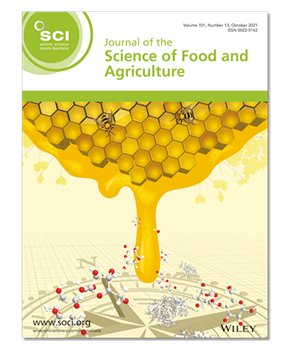
This study, published in SCI’s Journal of the Science of Food and Agriculture, evaluated the effects of three LED lamp options with different red-to-blue (R:B) ratios (NS12 (R:B = 1.9), Ph2.1 (R:B = 2.1), and AP673L (R:B = 5.5) at three intensity levels (100, 200, and 300μmolm−2s−1) on growth parameters, as well as photosynthetic pigments, sugars, organic acids, and GLS accumulation in the green and purple radish microgreens.
Martínez-Moreno says research like this is important because the next frontier of agriculture isn’t just yield; it’s nutritional density and energy efficiency.
‘Our study proves that we can significantly enhance the accumulation of glucosinolates – bioactive compounds with well-known antioxidant and potential anticancer properties – simply by adjusting LED parameters,’ he says.
‘The findings provide critical insights into optimising lighting strategies for enhanced nutritional quality and yield in vertical farming systems, contributing to the development of more sustainable and resource-efficient agricultural practices,’ the researchers say in the paper.
They found that the AP673L lamp, which had the highest R:B ratio (5.5), rich in red and far-red wavelengths, was particularly effective at 300μmolm−2s−1 to maximise yield and dry matter accumulation.
In contrast, the most effective option for promoting the accumulation of primary metabolites, such as sugars and organic acids, was the NS12 lamp, specifically at 300μmolm−2s−1, which was distinguished by having a low R:B ratio (1.9), including UV-A and an intermediate amount of far red.
The paper notes: ‘These findings underscore the potential of spectrum–intensity manipulation as a strategic tool to optimise both productivity and nutritional quality in microgreen production, offering practical applications for vertical farm systems.’
Martínez-Moreno says the most striking finding was the high degree of cultivar-specific response. ‘Even between two types of the same species (green and purple radish), the “optimal” light recipe for nutrients like sugars and organic acids was completely different.’
The researchers say that while spectral quality remains a determining factor in yield, optimising light intensity is also essential for minimising production costs and energy consumption. Martínez-Moreno says the next step is to integrate these light ‘recipes’ into automated, AI-driven production units.
Optimization of light spectrum and intensity to enhance growth and metabolite profiles in green and purple radish microgreens cultivated in a vertical farming system
Cristian Hernández-Adasme, Vicente Martínez, Mónica Flores, Teresa Mestre, Antonio Frutos-Tortosa, Ulises Navarro-Zapata, Alejandro Martínez-Moreno
Journal of the Science of Food and Agriculture
doi.org/10.1002/jsfa.70447
 Visit Blog