
JOURNAL HIGHLIGHTS BY STEVE RANGER
Wool can do much more than keep sheep cosy. Scientists have looked at whether adding wool from Welsh mountain sheep to soil can also help to keep plants growing in times of drought.
Climate change is expected to increase the severity and incidence of droughts. This could have significant effects on the productivity of agricultural land, and finding ways to support the plants eaten by grazing animals is a high priority.
The coarse wool typically associated with mountain sheep breeds contains medullated fibres known as kemp. These are brittle and cannot absorb dye, which means they are of limited use in the textile industry.
Wool has already been used as a fertiliser for plant growth, thanks to the nitrogen and sulfur that becomes available to plants as it decomposes. When added to soil, sheep wool can also increase soil moisture retention and increase microbial biomass.
Sheep wool has a hydrophobic cuticle, formed of scales, which provides the water-proofing properties needed to keep sheep cosy. But it is also a hydrophilic protein fibre with a hygroscopic core able to absorb up to 30% of its weight in water vapour.
Now researchers at the Institute of Biological, Environmental and Rural Sciences, Aberystwyth University, Gogerddan, UK, have looked at whether the wool could retain more moisture than compost alone, and whether this water would be chemically available to plants.
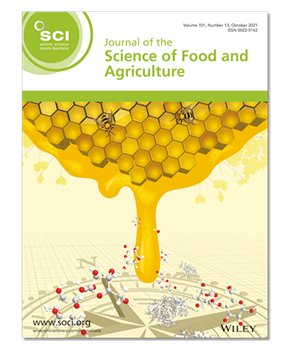
They also tested whether the addition of wool reduced the effects of drought on red clover and lucerne – both used for feeding grazing animals – and looked more broadly at whether that wool could enhance plant growth. Their paper was published in SCI’s Journal of the Science of Food and Agriculture.
The paper reported that wool increased the amount of water held in potting mixtures, and confirmed this water was chemically available, even after a period of drought. However, plant-related indicators of the whether the wool could mitigate drought - such as root architecture, relative water content, plant yield and water use efficiency - varied between the forage legume species.
The study showed that adding wool to compost delayed the development of a low moisture environment in the potting mixture under drought conditions. They found that the relative water content of red clover was improved by addition of 14% wool, but further benefits of adding wool to the potting media to mitigate plant water status were less clear, indicating that there may be additional factors affecting water uptake by plants.
Dr Siân MacKintosh, corresponding author of the study said that previous experiments by the GrOw Wales Green project, which aims to develop a sustainable circular economy for grassland-based agriculture, had shown that using wool as a soil amendment altered the moisture status in the growing medium.
‘I realised that there was potential to use a technique developed for the food industry, to assess the water activity, to gain further insight into whether the water held by the wool would be available to share with the plants,’ she said.
MacKintosh said the work is important for two main reasons.
‘Firstly, unfortunately the effects of climate change are already evident. For the UK, climate change is predicted to result in wetter, milder winters and hotter, drier summers. Developing strategies that can aid the resilience of grassland agriculture to the effects of climate change will be critical for future food security,’ she said.
Secondly, the wool produced by upland and mountain sheep, such as that from Welsh mountain sheep, is of a lower grade due to its unsuitability for the textile industry, and it is difficult for farmers to recover the cost of shearing from these animals she said.
“However, this wool still has many useful properties, and developing added-value wool products will strengthen the wool price, giving economic resilience to farmers whilst maximising the use of a natural resource,” she said.
For MacKintosh the most surprising finding was the different response by the two plant species – particularly in terms of root architecture. ‘My work on wool has so far indicated that the form, amount of wool applied and timing of application determines the effect of wool on plant growth,’ she told C&I.
The team is currently working on another project developing added value wool products.
‘Wool is an incredible natural fibre with diverse properties,’ MacKintosh said. ‘We hope to develop a strong science-backed evidence base for added-value wool products that can be applied on-farm.’
Grassland forage legumes and drought mitigation – sheep wool application improved soil water availability and enhanced drought–stress responses
Siân Bethan MacKintosh, Rhyn Fychan, John Walter Davies, Huw Gareth Powell, Mark Boileau Scott, Christina Louise Marley
Journal of the Science of Food and Agriculture
doi.org/10.1002/jsfa.70841
 Visit Blog