Sustainability & Environment
Johnson Matthey has launched a technology to help create a green hydrogen-based aviation fuel, while the European Commission has approved a €900 million scheme (£750 million approximately) to support renewable hydrogen investments.
SCI Corporate Partner Johnson Matthey has developed HyCOgen to convert CO2 and green hydrogen into a scalable and sustainable aviation fuel (SAF). The speciality chemicals company says it has combined this Reverse Water Gas Shift technology with FT CANS Fischer Tropsch technology through a catalysed process. With this approach, the green hydrogen and CO2 are converted into carbon monoxide, which is combined with additional hydrogen to form syngas.
Integration with the FT CANS technology is used to turn 95% of the CO2 into a high quality synthetic crude oil. This synthetic crude oil can then be upgraded into sustainable, drop-in fuel products for aviation transport – a sector responsible for 12% of transport-related CO2 emissions, according to the Air Transport Action Group.

Green hydrogen fuel, produced using renewable energy, could help decarbonise the aviation industry.
Jane Toogood, Sector Chief Executive at Johnson Matthey, said: “Given the challenges associated with new propulsion technologies and airport infrastructure, plus the long asset life of aircraft, there are significant hurdles in moving from hydrocarbon-based aviation fuel to alternatives such as battery electric or hydrogen.
“By combining HyCOgen with FT CANS, we can now deliver customers a cost-efficient, reliable and scalable technology to help increase SAF production, backed by our track record of successful technology development and commercialisation.”
>> Concerned about climate change? Find out what you can do in this free webinar: https://www.soci.org/events/hq-events/2022/why-we-ignore-climate-change-and-what-we-can-do-about-it
€900 million fund for non-EU countries
In other hydrogen-related news, the global hydrogen industry has received a boost with the European Commission approving a €900 million German scheme to support investments in renewable hydrogen production in non-EU countries.
The aim of the H2Global project is to meet the growing EU demand for renewable hydrogen production, which is expected to increase significantly as EU countries reduce their reliance on fossil fuels. Even though the initiative will benefit EU countries, UK-based organisations concerned with hydrogen power could benefit from this investment.
>> Young chemists are getting creative in the fight against climate change. Read more in our COP26 review blog.
Margrethe Vestager, the European Commissioner for Competition who is in charge of competition policy, said: “This €900 million German scheme will support projects leading to substantial reductions in greenhouse emissions, in line with the EU’s environmental and climate objectives set out in the Green Deal.
“It will contribute to addressing the increasing demand for renewable hydrogen in the Union, by supporting the development of this important energy source in areas of the world where it is currently not exploited with a view to importing it and selling it in the EU. The design of the scheme will enable only the most cost effective projects to be supported, reducing costs for taxpayers and minimising possible distortions of competition.”
11 January 2022 |
|


 |
|

Agrifood
Greenhouse gas emissions statistics can be misleading. At a recent SCI webinar on the Future of Agriculture, the Agrisciences Committee put its finger on some glaring gaps in the figures.
If all of the cows in the world came together to form a country, that nation state would be the second highest emitter of greenhouse gas emissions in the world.
McKinsey Sustainability’s statistic was certainly startling. However, Agrisciences Group Chair Jeraime Griffith mentioned other equally striking figures in his wrapup of the social media discussion generated at COP26.
In his talk as part of the Agrisciences Committee’s COP26 – What does it mean for the future of agriculture? webinar on 7 December, Griffith also noted that:
- farming accounts for more than 70% of the freshwater used worldwide, according to the Organisation for Economic Co-operation and Development (OECD)
- and 31% of human-caused greenhouse gas emissions come from agrifood systems, according to the Food and Agriculture Organisation.
On the face of it, these figures are sobering; yet, like many agriculture-related figures, they don’t tell the full story.
Insane in the methane
Kathryn Knight felt that agriculture received negative press at COP26 in relation to greenhouse gas emissions. ‘It doesn't seem to take into account carbon sequestration (capturing and storing atmospheric carbon dioxide),’ said the Research & Technology Manager of Crop Care at Croda. ‘Why isn’t that being brought into the equation when we’re talking about carbon and agriculture?’
Martin Collison expanded on this point. He emphasised the need to separate carbon emissions by system – such as extensively grazed livestock animals and those fed on grain – and to account for systems that sequester carbon in the soil. The co-founder of agricultural consultancy Collison & Associates also pointed out the problem with bundling all our greenhouse gases as one.
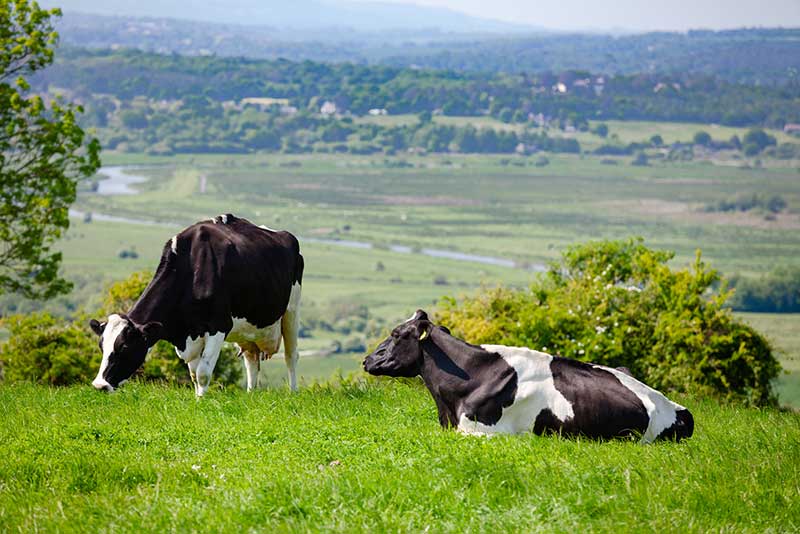
Greenhouse gas emissions are sometimes unhelpfully bundled together, instead of being separated by gas and agricultural system.
‘We count methane in the same way we emit carbon,’ he said. ‘When we emit carbon, it’s in the atmosphere for 1,000 years, but with methane it’s 12 years. The methane cycle is a lot, lot shorter.’
And the difficulties with the statistics don’t end there. For example, countries often announce impressive emission reductions without taking trade into account. This, of course, gives the figures a greener gloss.
‘To me, there's a need to be more up front with a lot of the data because agriculture and food are traded around the world,’ he added. ‘A lot of the emissions data ignore what we trade.
‘In the UK, we make big claims about how fast we’ve progressed with carbon emissions, but if you look at what we consume, the progress is much much slower. The things we produce less of, we import.’
>> SCI was at COP26 too! Read about the role of chemistry in creating a greener future.
Full of hot air?
Emissions trading also serves to blur the picture. For Jeraime Griffith it is an unsatisfactory solution. ‘In terms of carbon trading, we have cases where the higher emitters continue producing in the way they’ve always been producing,’ he said.
‘It doesn't bring in any restrictions on the amount of carbon they emit; it just shifts the problem somewhere else. I don't know how carbon trading benefits us getting to Net Zero. It just seems to be kicking the ball farther down the road.’

Is emissions trading part of the solution or part of the problem?
So, when you take into account 1. emissions trading, 2. the absence of food imports in data sets, 3. the bundling together of different greenhouse gases in emissions figures, and 4. the failure to take carbon sequestration into account, it’s clear that many of the statistics we receive are incomplete.
‘There’s lots of complexity behind the numbers and we tend to lump all of it together,’ Collison said. ‘There’s a need to go much much further.’
>> SCI’s Agrisciences Group is a unique multidisciplinary network covering the production, protection and utilisation of crops for food and non-food products. It has 250 members including academic and industry leaders, researchers, consultants, students, and retired members. If you’re interested in joining the group, go to: www.soci.org/interest-groups/agrisciences
22 December 2021 |
|
|
Agrifood
Gardens in December should, provided the weather allows, be hives of activity and interest. Many trees and shrubs, especially Roseaceous types, offer food supplies especially for migrating birds.
Cotoneaster (see image below) provides copious fruit for migrating redwings and waxwings as well as resident blackbirds. This is a widely spread genus, coming from Asia, Europe and northern Africa.
Cultivated as a hedge, it forms thick, dense, semi-evergreen growth that soaks up air pollution. In late spring, its white flowers are nectar plants for brimstone and red admiral butterflies and larval food for moths. Children and pets, however, should be guided away from the attractive red berries.

Cotonester franchetti | Image credit: Professor Geoff Dixon.
Medlars (Mespilus germanica) offer the last fruit harvest of the season (see image below). These small trees produce hard, round, brownish fruit that require frosting to encourage softening (bletting).
Its soft fruit can be scooped out and eaten raw and the taste is not dissimilar to dates. Alternatively, medlar fruit can be baked or roasted and, when turned into jams and jellies, they are delicious, especially spread on warm scones.
Like most rosaceous fruit, medlars are nutritionally very rich in amino acids, tannins, carotene, vitamins C and B and several beneficial minerals. As rich sources of antioxidants medlars also help reduce the risks of atherosclerosis and diabetes.

Medlar fruit (Mespilus germanica) can be turned into jams and jellies | Image credit: Professor Geoff Dixon.
Garden work continues through December. It is a time for removing dead leaves and stems from herbaceous perennials, lightly forking through the top soil and adding granular fertilisers with high potassium and phosphate content.
Top fruit trees gain from winter pruning, which opens out their structure, allowing air circulation when fully laden with leaves, flowers and fruit. Fertiliser will feed and encourage fresh root formation as spring progresses.
The vegetable garden is best served by digging and incorporating farm yard manure or well-rotted compost, which adds fertility and encourages worm populations. The process of digging is also a highly beneficial exercise for the gardener (see illustration no 3).
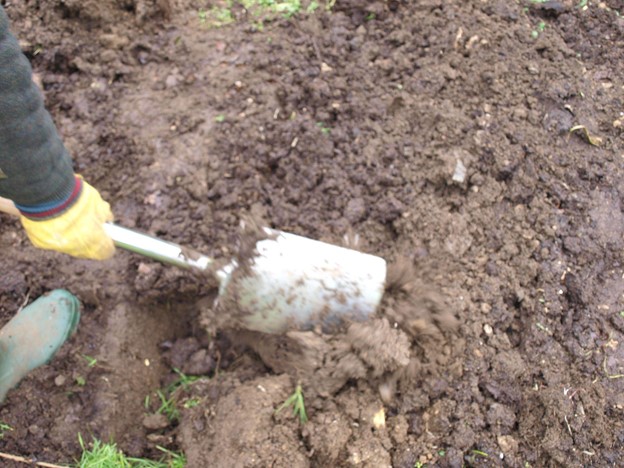
Turning the soil isn’t only good for your garden - it boosts your wellbeing | Image credit: Professor Geoff Dixon.
Developing a rhythm with this task supports healthy blood circulation and, psychologically, provides huge mental satisfaction in seeing a weedy plot transformed into rows of well-turned bare earth.
When the weather turns wet, windy and wintery it provides opportunities for cleaning, oiling and sharpening tools, inspecting stored fruit and the roots of dahlias kept in frost-proof conditions.
Finally, there is always the very relaxing and pleasant task of reading through seed and plant catalogues and planning what may be grown in the coming seasons.
Written by Professor Geoff Dixon, author of Garden practices and their science, published by Routledge 2019.
07 December 2021 |
|
|
Sustainability & Environment
At COP26, Nikita Patel co-hosted the Next-Gen debate, where an inspiring group of young people discussed how chemistry is tackling climate change. The PhD student at Queen Mary University of London shares her experience.
While the United Nations Climate Change Conference (COP26) may be over, there is still plenty to be done in the fight against climate change. We’ve seen what can be achieved when we work together and no doubt science will play a key role.
On Thursday 4 November, I had the privilege of co-hosting the Countdown to Planet Zero Next-Gen debate organised by SCI to showcase the work being carried out by our young and innovative scientists to tackle climate change. It was a real pleasure to share the stage and hear from some great scientists, exploring the themes Fuels of the Future, Turning Waste into Gold and Engineering Nature. The event gave the audience the opportunity to question and challenge the panel members on their climate change solutions.
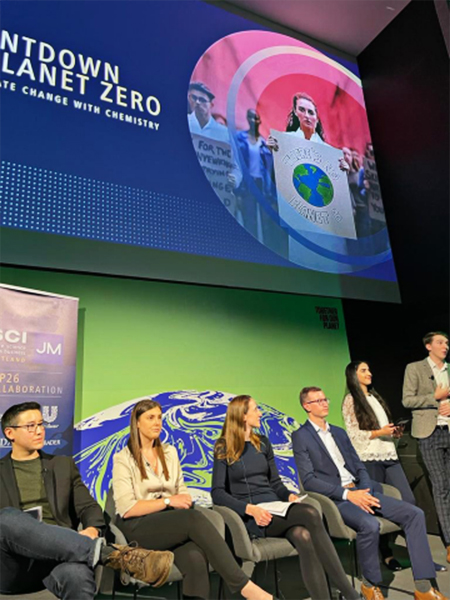
Panel L-R: Dominic Smith, Natasha Boulding, Clare Rodseth, Jake Coole, Nikita Patel, Oliver Ring (Brett Parkinson joined virtually).
While I was feeling nervous about my hosting duties, I was very excited at the same time as I knew how important it was to educate the audience, whether they were members of the public or aspiring scientists, on how science is crucial in battling the climate emergency.
An important part of my role as a host was to ensure the incoming questions and comments were understood by all, given the mixed audience attending. This highlighted how essential good science communication is to prevent misunderstandings and the spread of misinformation.
It was brilliant to see how engaged the audience were from the flurry of questions that came in during the session, so much so that we didn’t manage to get through all of them! There were a wide variety of questions aimed at particular panellists but also towards the panel as a whole. It was thought-provoking to hear how scientists from different backgrounds offered their own perspectives on the same topic.
4 November was also Energy Day at COP26 and the atmosphere was buzzing! I learnt a lot from attending the Green Zone, not only from our panellists but from all the exhibitors present too. I appreciate the small, individual actions we can each take that will make a difference but also the need to work together to achieve the common goal of fighting climate change. It was clear to see how science and business go hand in hand to provide solutions to society and how interdisciplinary collaboration is key.
The result of our poll question: ‘Do you think that science is pivotal in providing climate change solutions?’ spoke for itself, with a resounding yes from 100% of the audience participants! This was a very positive outcome and showed that it is not all doom and gloom when it comes to discussing the climate crisis.
On a personal level, I'm going to continue implementing some simple changes like using public transport more, eating more vegan food and flying less and aim to keep the discussion going with my peers as the climate emergency is far from over.
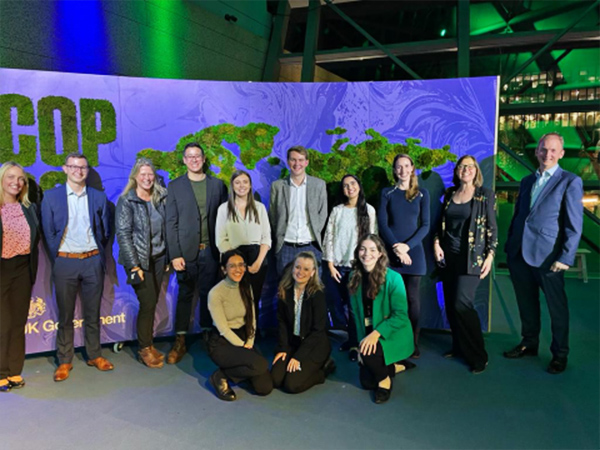
SCI team, panellists and hosts.
I hope the youth panel event has inspired the next generation of scientists and showcased some of the exciting work that is going on behind the scenes which people may not realise and ultimately, that there is hope in science.
>> To rewatch the event, the recording is available on the COP26 YouTube channel: Countdown to Planet Zero Combating climate change with chemistry | #COP26, and on our Climate Change Solutions hub.
>> Want to read more about the technologies discussed by our panel? Read our event review: https://www.soci.org/blog/2021/11/2021-11-05-cop26-review.
02 December 2021 |
|
|
Sustainability & Environment
‘This is a fragile win. We have kept 1.5 alive. That was our overarching objective when we set off on this journey two years ago, taking the role of the COP presidency-designate. But I would say the pulse of 1.5 is weak’ – Alok Sharma, President for COP26.
If scientists, politicians and activists were hoping that COP26, delayed by one year because of the pandemic, would yield concrete plans for progress on climate change, perhaps the overall conclusion might be ‘at least we haven’t gone backwards’.
The Glasgow Climate Pact, signed by 197 countries, required an extra day of negotiations. In his summing up, the UN Secretary General António Guterres said: ‘The approved texts are a compromise. They reflect the interests, the contradictions, and the state of political will in the world today.’
In his video statement Guterres said that the agreement ‘takes important steps but unfortunately the collective political will was not enough to overcome some deep contradictions. We must accelerate action to keep the 1.5 (degrees °C) goal alive…it’s time to go into emergency mode or our chance of reaching net-zero will indeed be zero.’
Guterres added that it was his conviction that it was time to phase out coal, end fossil fuel subsidies and build resilience in vulnerable communities. He also addressed the many young people and indigenous communities, saying: ‘I know you are disappointed. But the path to progress is not always a straight line…but I know we will get there. We are in the fight of our lives, and this fight must be won.’
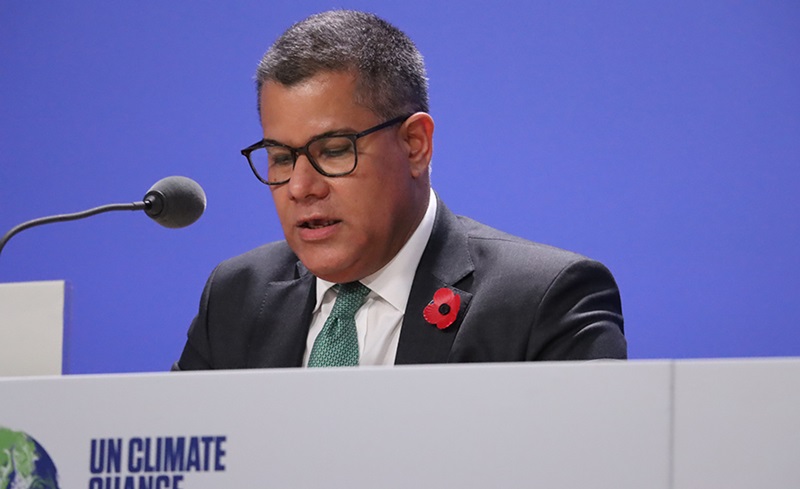
COP26 President Alok Sharma believes that the measures agreed at COP26 are a ‘fragile win’ in the fight against catastrophic climate change. | Editorial credit: Paul Adepoju / Shutterstock.com
The Glasgow Climate Pact calls on signatories to report their progress towards more climate ambition in time for COP27, which will be hosted by Egypt. Welcoming the agreement, Alok Sharma, COP26 President, said: ‘This is a fragile win. We have kept 1.5 alive. That was our overarching objective when we set off on this journey two years ago, taking the role of the COP presidency-designate. But I would say the pulse of 1.5 is weak.’
European Commission President Ursula von der Leyen said: ‘We have made progress on three of the objectives we set at the start of COP26. First, to get commitments to cut emissions to keep within reach the global warming limit of 1.5 degrees. Second, to reach the target of $100 billion per year of climate finance to developing and vulnerable countries. And third, to get agreement on the Paris rulebook. This gives us confidence that we can provide a safe and prosperous space for humanity on this planet.’
The NGO Greenpeace said in a statement: ‘While the COP26 deal doesn’t put the 1.5C goal completely out of reach, the governments and companies that obstructed bold action on climate change are knowingly endangering whole communities and cultures for their own short-term profits or political convenience. History won’t judge them kindly for this.’
While the final Pact has not reflected the hopes of many, it can be said that COP26 wasn’t short of a desire to see change. Perhaps the surprise package of the two-week event was the declaration between China and US which states that the countries ‘…recognise the seriousness and urgency of the climate crisis. They are committed to tackling it through their respective accelerated actions in the critical decade of the 2020s, as well as through cooperation in multilateral processes, including the UNFCCC process to avoid catastrophic impacts.’ The declaration from the two countries was widely welcomed.
Methane emissions and ocean protection
Other notable developments from COP26 included: The formal launch of the Global Methane Pledge led by the US and the European Union. The Pledge, which seeks to reduce overall methane emissions by 30% below 2020 levels by 2030, saw 100 countries, representing 70% of the global economy and nearly half the global methane emissions, sign up.
In agriculture, the Agriculture Innovation Mission for Climate (AIM4Climate) was launched. Initiated by the US and United Arab Emirates, with endorsement from the COP26 Presidency, the goal of the initiative is to increase and accelerate global innovative research and development on agriculture and food systems in support of climate action.
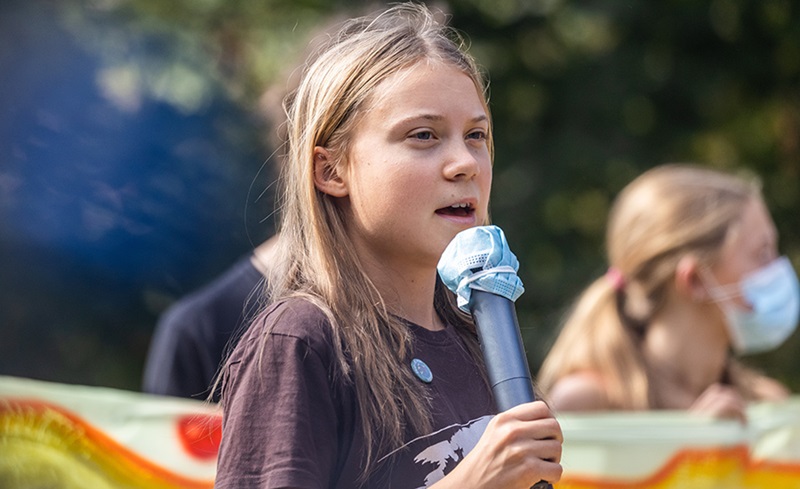
For some, including environmental activist Greta Thunberg, the resolutions agreed by governments at COP26 are insufficient. | Editorial credit: Mauro Ujetto / Shutterstock.com
The initiative has the backing of 32 countries. In addition, ocean protection received a boost with the UK Government using the COP26 Ocean Action Day to announce a wave of investment including at least £20 million in commitments made at the Ocean Risk and Resilience Action Roundtable to drive the health and resilience of the oceans and climate vulnerable communities.
The Science and Innovation day at COP26 saw the launch of four initiatives, backed by global coalitions of nations, businesses and scientists. In what was said to be a global first, the Adaptation and Research Alliance was launched. The network of more than 90 organisations will collaborate to increase the resilience of vulnerable communities most impacted by climate change.
In further developments the UK, along with several countries including Canada and India, will collaborate to develop new markets for low carbon steel and concrete. The work is being carried out under the Industrial Deep Decarbonisation Initiative.
The need for innovation
Commenting on this, George Freeman, the UK Minister for Science, Research and Innovation, said: ‘Real change to combat climate change cannot happen without new scientific ideas, innovation and research, and it is clear no country or company acting in isolation can deliver the change that is needed at the pace that is needed.’
While the final COP26 Glasgow Climate Pact has disappointed many, there is no doubt that there is a will to make positive change, keep global temperatures in check and see humanity reap benefits.
25 November 2021 |
|
|
Agrifood
How has climate change changed the way our gardens grow and what can be done to alleviate its effects? Professor Geoff Dixon tells us more.
Climate has changed on Earth ever since it solidified and organic life first emerged. Indeed, the first photosynthesising microbes changed the atmosphere from carbon dioxide rich to oxygen rich over millions of years. What we now face is very rapid changes brought about by a single organism, mankind, through industrialisation.
The effects of change are very evident in gardens. Over a generation, leaf bud breaking and flowering by early spring bulbs, herbaceous plants, shrubs and trees has advanced by at least four weeks (see main image of Cyclamen hederifolium).
Latter spring displays have advanced by at least two weeks. This is caused by milder, wetter winter weather, encouraging growth. The danger lies in the increasing frequency of short sharp spells of severe frost and snow. These kill off precocious flowers and leaves which trees especially cannot replace.
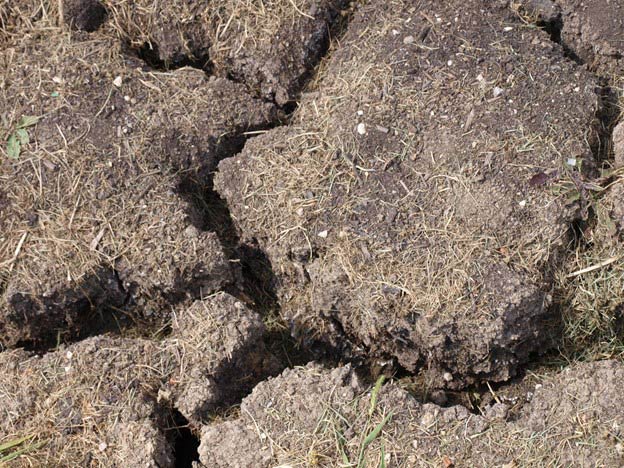
Desiccated, cracked soil.
Increasingly, the summer climate is becoming hotter and drier. Since the Millennium there has been a succession of hot droughts. These seriously limit scope for growing vegetables, fruit and ornamentals unless irrigation is regularly available. Drought also damages soil structure especially where there is a high clay content by causing cracking and the loss of plant cover (see image of desiccated, cracked soil above).
Cracking disrupts and destroys the root systems of trees and shrubs in particular. The effects of root damage may not become evident until these plants die in the following years.
Climate change is apparently advantageous for microbes. Detailed surveys show that fungal life cycles are speeding up, increasing the opportunities for diseases to cause damage. Even normally quite resilient crops such as quince are being invaded during milder, damper autumns (See image of brown rot on quince fruit below). Throughout gardens, the range and aggressiveness of pests and disease is increasing.
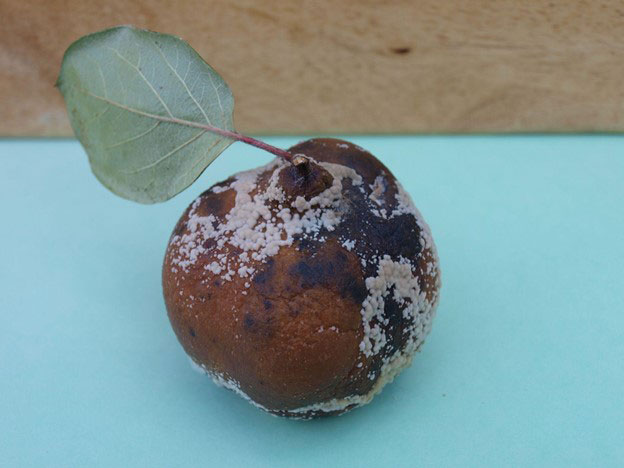
Brown rot (Monilia laxa) on quince fruit.
However, each individual garden or allotment, no matter its size, can contribute to reducing the rate of climate change. Simple actions include the removal of hard landscaping, and planting trees and shrubs reduces carbon emissions.
Using electric-powered tools and machinery in place of petrol or diesel has similar advantages. Tumbling down parts of a garden into native flora, and perhaps encouraging rarer plants such as wild orchids or fritillarias, mitigates climate change. Such areas may also form habitats for hedgehogs or slow worms, increase populations of bees, butterflies and moths and encourage bird life.
Written by Professor Geoff Dixon, author of Garden practices and their science, published by Routledge 2019.
All images from Professor Geoff Dixon.
15 November 2021 |
|
|
Sustainability & Environment
A group of inspiring young scientists took centre stage at COP26 on 4 November to show how the next generation of chemists is finding tangible climate change solutions.
In a day dominated by what countries pledged to stop doing at COP26, such as pursuing coal power and financing fossil fuel projects overseas, it was refreshing to learn about low-carbon technologies and the young people driving their development. At the Next Gen forum, we heard from an array of young chemists, all associated with SCI, who are at the sharp edge of this change.
We heard from Brett Parkinson, Senior Engineer of Low Carbon Fuels and Energy Technologist at C-Zero, who is working on commercialising a way to decarbonise natural gas. The California-based company’s technology converts the natural gas into hydrogen and solid carbon to provide a clean energy source while sequestering the carbon; and the aim is to have this process up and running next year.
Natasha Boulding is building towards Net Zero a different way – with a greener concrete. The CEO and Co-founder of Sphera has developed a lightweight carbon negative additive using waste plastics that aren’t currently being recycled. She says the company’s blocks are the same strength and price as existing concrete blocks, but with 30% more thermal insulation. There is also the added benefit of reusing waste materials that would otherwise have gone to landfill or been incinerated.
Another solution discussed by Dominic Smith, Process Development Engineer at GSK, reduces energy consumption through green chemistry. He is trying to find greener ways to make medicines using enzymes. These enzymes, which can be found in plants and soil, replace chemical synthesis steps to cut energy consumption during processing and reduce hazardous waste.
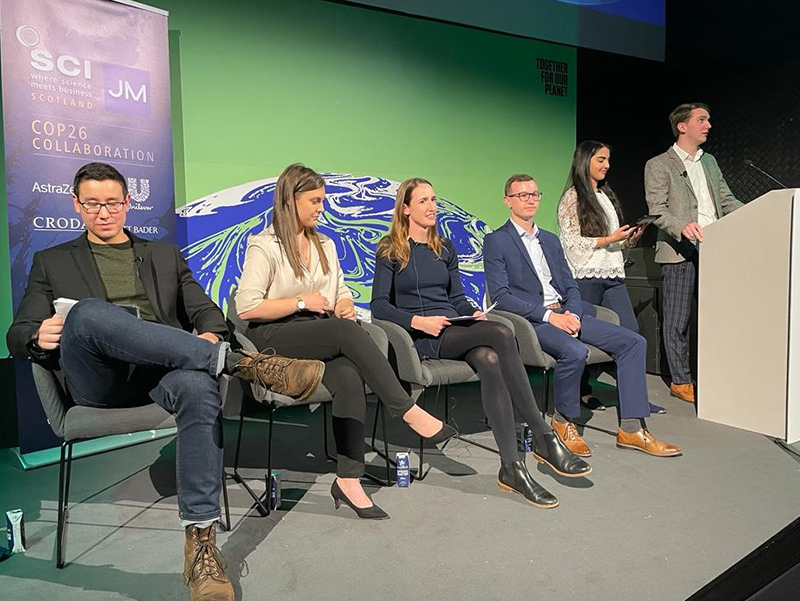
Panel (left to right): Dominic Smith, Natasha Boulding, Clare Rodseth, Jake Coole, Nikita Patel, and Oliver Ring (Brett Parkinson spoke via video link).
It was apparent from the discussion that many solutions will be needed for us to reach our climate change targets. On the one hand, Jake Coole, Senior Chemist in Johnson Matthey’s Fuel Cells team, is working on membrane electrode assembly for hydrogen fuel cells to help us transition to hydrogen-powered buses and trucks.
At the same time, Clare Rodseth, an Environmental Sustainability Scientist at Unilever, has been using lifecycle assessments to reduce the environmental impact of some of the 400 Unilever brands people use all over the world every day. For example, this work has helped the company move away from petrochemical ingredients in its home care products. ‘Even small changes,’ she said, ‘have the potential to bring about large-scale change.’
Incremental change
However, for each of the technologies discussed, barriers remain. For Coole and co., having a readily available supply of hydrogen and charging infrastructure will be key. And for Dominic Smith and his colleagues, the use of enzymes in green chemistry is still in its infancy; and getting enzymes that are fast enough, stable enough, and produce the right yield is difficult. Nevertheless, he noted that manufacturers are now using enzymes to produce the drug amoxicillin, reducing the carbon footprint by about 25%
And some things will take time to change. Natasha Boulding noted that concrete is the second most used material in the world after drinking water, and we simply can’t create many green technologies, such as wind turbines, without concrete foundations.
She said the construction industry is quite traditional but also pointed to perceptible change, with the green concrete market growing and companies becoming increasingly aware of their carbon footprints.
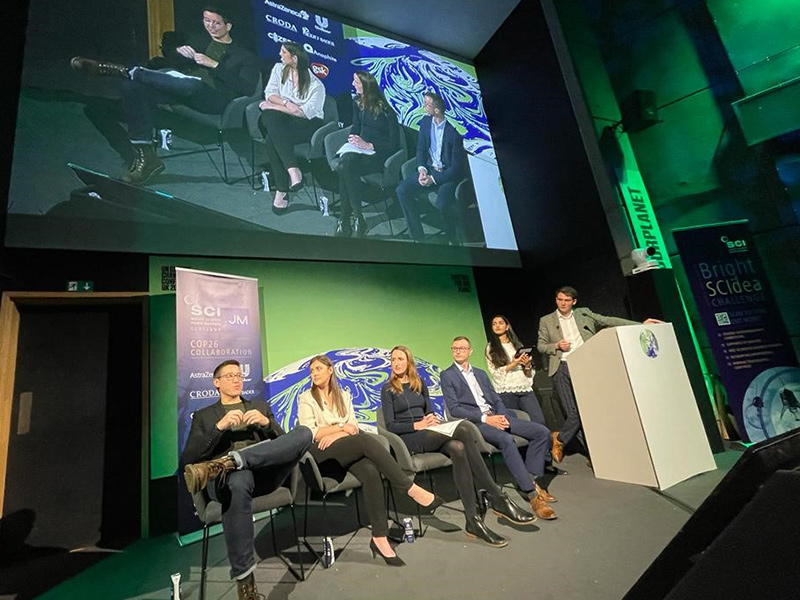
Collaboration was seen as crucial in producing climate change solutions.
The reality is that global action on climate change is recent. As Brett Parkinson said: ‘the main reason we’re talking about it now is that there’s a driver to do it. Until the last decade, the world hadn’t cared about CO2 emissions. They just talked about caring about it.’
How pivotal is science in all of this?
So, what could be done to make climate action more effective? For Parkinson, effective policy is key. He argued that if the market isn’t led by policies that encourage low-carbon innovations, then it won’t work as needed. ‘It all starts with effective decarbonisation policy,’ he said. ‘Legacy industries are very resistant to change. If you don’t have strong and consistent policies… then they’re not going to adapt.’
Another key to our low-carbon evolution is collaboration, and the SCI provides a confluence point for those in industry and academia to work together to produce innovative, low-carbon products. As Clare Rodseth said: ‘Collaboration is really important – linking up people who can actually come together and address these problems.’
As the discussion came to a close, you had the impression that the debate could have gone on for much longer. ‘Hopefully, we’ve demonstrated that there is action, and it’s being driven by young people like our panellists today,’ summarised Oliver Ring, the event’s co-Chair, before asking for the result of the audience poll.
The question: How many of those watching believed that science is pivotal in providing climate change solutions?
The answer: Just the 100%.
>> Thank you to Johnson Matthey for sponsoring the event, to the speakers for sharing their time and expertise, and to co-chairs Nikita Patel and Oliver Ring for doing such an excellent job.
05 November 2021 |
|
|
Sustainability & Environment
This Thursday at COP26, an inspiring panel of young scientists will discuss innovations that will help us mitigate climate change. So, what can we expect?
Millions of young people are frustrated by climate change inaction. Indeed, according to a University of Bath study, 60% of the next generation feel overwhelmed by climate anxiety. Often, the proposed solutions seem vague and intangible – well-intentioned ideas that drift away when the political winds shift.
And yet, when you see the ingenuity of young scientists, business people, and activists, it’s hard not to be excited. Undoubtedly, politics and our legal system will play a huge role in the drive to reach Net Zero, but arguably science will play the biggest role in transforming the way we live. Just think of the falling cost of generating solar power, improvements in battery chemistry for electric vehicles, the development of sustainable construction materials, and the rapid rollout of Covid-19 vaccines.
Tangible solutions
This Thursday at COP26, SCI will host the Next Gen youth forum event where the panellists discuss the climate change solutions they are working on right now and how they are being applied by industry. In the Countdown to Planet Zero roundtable, these scientists – drawn from within SCI’s innovation community – will explain their work to a global audience and the impact it will have on climate change.
They will discuss innovation in three key areas: topics of fuels of the future, turning waste into gold, and engineering nature.
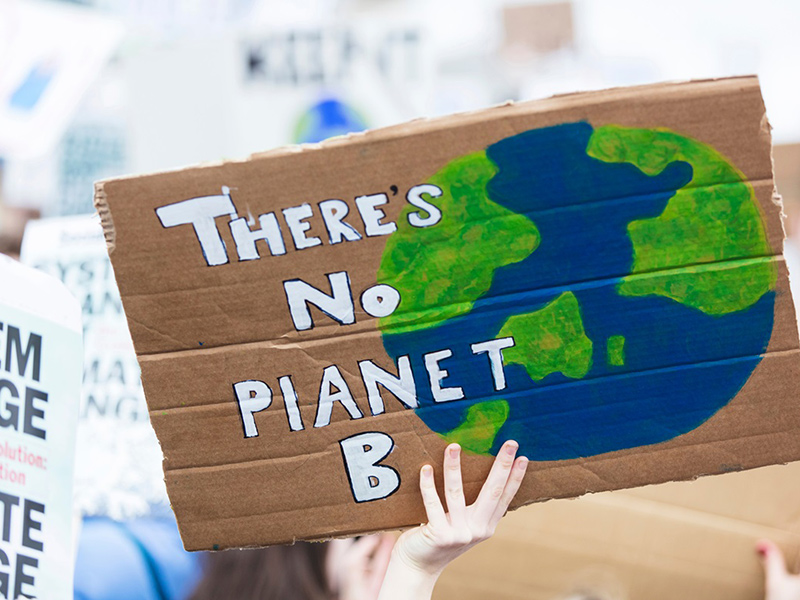
The next generation has mobilised and is creating solutions to help avoid climate change disaster.
The panel will be chaired by two very capable young scientists. Oliver Ring is Senior Scientist at AstraZeneca’s large-scale synthesis team and Chair of SCI’s Young Chemists’ Panel, and passionate climate advocate Nikita Patel is a PhD student at Queen Mary University of London’s Centre of Translational Medicine and Therapeutics and STEM Ambassador for schools.
The other panel members include Clare Rodseth, of Unilever’s Environmental Sustainability Science team, who brings lifecycle analysis to product innovation to make products more sustainable.
Jake Coole, Senior Chemist in Johnson Matthey’s Fuel Cells team, is involved in the scale-up of new processes and next generation manufacturing, and Dominic Smith, Process Development Engineer at GSK, who is interested in engineering biology to create sustainable manufacturing processes.
Also present will be Dr Brett Parkinson, Senior Engineer of Low Carbon Fuels and Energy Technologist at C-Zero – a California-based startup that works on the decarbonisation of natural gas. In 2019, Brett was awarded an SCI scholarship for his research.
The lineup also includes Dr Natasha Boulding, CEO and Co-founder of Sphera Limited, a speciality materials company that has created carbon negative concrete blocks made from aggregate including waste plastic. According to Natasha, whose company also won SCI’s Bright SCIdea challenge in 2019: “In terms of combating climate change, interdisciplinary collaboration is the key. No one discipline has the answer to solve our biggest challenges – but together diverse minds can.’
>> Would you like to take part in BrightSCIdea and be in with the chance of winning £5,000? Be part of it.
Watch the event online
SCI is proud to be associated with these enterprising young scientists and the imaginative solutions they are developing to mitigate the effects of climate change.
‘As a global innovation hub, SCI wants to show how the next generation of scientists is actively developing solutions,’ said Sharon Todd, SCI CEO.

Sharon Todd, SCI CEO
‘Our COP26 youth forum debate will profile the work of young scientists and entrepreneurs addressing climate change in their work. This next generation of innovators has the power to change our world’s tomorrow.’
If you’d like to see the climate change solutions of tomorrow, register to watch the virtual event here.
02 November 2021 |
|
|
Sustainability & Environment
The War on Plastic is a grand title. To most of us, it doesn’t seem like much of a war at all – more like a series of skirmishes. Nevertheless, if you look closely, you’ll see that a lot of companies are tackling the issue.
GSK Consumer Healthcare (GSKCH) is one such organisation. The healthcare brand that gave us Sensodyne and Advil has launched a carbon neutral toothbrush to reduce our reliance on fossil fuels (which create virgin plastic).
The composition of its Dr. Best tooth scrubber is interesting. The handle comprises a mixture of a cellulose derived from pine, spruce, and birch trees and tall oil, which comes from the wood pulping industry. The bristles are made from castor oil and the plastic-free packaging includes a cellulose window.
According to GSKCH, Dr. Best is Germany’s favourite toothbrush brand and there are plans to apply the technology to toothbrushes across its portfolio, including its Sensodyne brand. At the moment, GSK needs to apply carbon offsetting initiatives to make the toothbrush carbon neutral, but it says it is working on future solutions that do not require this approach.
Net zero shopping
GSK isn’t the only company that is actively reducing the use of plastics and minimising waste. Supermarket chain Morrisons has made aggressive moves in recent years to cut waste, and has just launched six ‘net zero waste’ stores in Edinburgh that will operate with zero waste by 2025.
Customers at these stores will be able to bring back hard-to-recycle plastics such as food wrappers, foils, yoghurt tubs, mixed material crisp tubes, coffee tubs, batteries, and plant pots. At the same time, all store waste will be collected by a range of specialist waste partners for recycling within the UK, and unsold food will be offered to customers at a cheaper price on the Too Good to Go app.
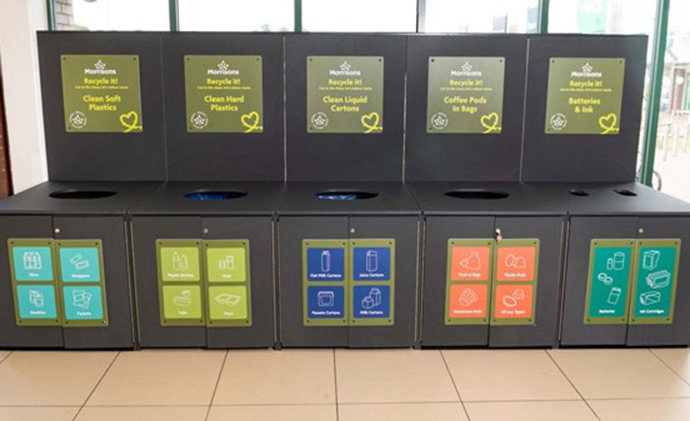
Morrisons’ proactive approach will help find a new life for hard-to-recycle packaging.
‘We’re not going to reach our ambitious targets through incremental improvements alone,’ said Jamie Winter, Sustainability Procurement Director at Morrisons. ‘Sometimes you need to take giant steps and we believe that waste is one of those areas. We believe that we can, at a stroke, enable these trial stores to move from recycling around 27% of their general waste to over 84% and with a clear line of sight to 100%.
‘We all need to see waste as a resource to be repurposed and reused. The technology, creativity and will exists – it’s a question of harnessing the right process for the right type of waste and executing it well.’
If this approach is successful, Morrisons plans to roll out the zero waste store format in all of its 498 stores across the UK next year.
>> Interested in reading more about sustainability and the environment? Check out our blog archive.
Stamping out single-use plastics
The government has also issued its latest battle cry in the war on plastics. Having defeated plastic straws, stirrers and cotton buds, it has turned its attention to other single-use plastics.
Single-use plastic plates, cutlery and polystyrene cups are among the items that could be banned in England following public consultation.

The humble cotton bud has now been retired from active service.
Somewhat surprisingly, it estimates that each person in England uses 18 single-use plastic plates and 37 single-use plastic items of cutlery each year; so, it has begun moves to cut out this waste stream.
Environment Secretary George Eustice said: “We have made progress to turn the tide on plastic, banning the supply of plastic straws, stirrers and cotton buds, while our carrier bag charge has cut sales by 95% in the main supermarkets. Now we are looking to go a step further as we build back greener.”
All in all, it’s encouraging to see that companies and the government are brushing up on their sustainable practices.
>> Curious to find out what the future looks like for lab-processed food and meat alternatives? Read what the experts say here.
16 September 2021 |
|
|
Materials
A little talked about element, with the atomic mass 140, plays a surprisingly important role in everyday life. It has not only lit many a path, but can be credited with improving and saving the lives of billions of people by enabling cleaner air.
In his talk '140Ce: White light & Clean Air' Andy Walker, Johnson Matthey’s Technical Marketing Director explained why the soft, ductile silvery-white metal Cerium, deserves more recognition.
Walker began by outlining the history of SCI, celebrating its 140th anniversary this year. As an employee of Johnson Matthey, Walker highlighted that George Matthey was among the pioneers of SCI. In addition Walker explained that his PhD research had involved looking at catalysts that included Cerium.
Cerium is a lanthanide and the 26th most abundant element on earth. Indeed it was the first lanthanide to be discovered, found as its ore cerium silicate, in 1803. Cerium makes up 66ppm of the earth’s crust, which is about 5 times as much as lead. It is the only one of the lanthanides able to take on the +4 oxidation state, making it very useful in some of its applications. It is mined in the US, Brazil, India, Sri Lanka, Australian and China, with annual global production of 24 000 tonnes.
However, this straightforward look at the history of Cerium conceals a much more interesting narrative about how this element shaped the life of a number of prominent chemists of the day. Indeed Cerium was found as early as 1751 at a mine in Vestmanland, Sweden by Axel Cronstedt, who also discovered Nickel. Believing it to be an ore of Tungsten, he sent it to Carl Wilhelm Scheele for analysis. However, Scheele was not able to identify it as a new element.
This turn of events for Scheele, perhaps unfairly, helped to seal his moniker as the ‘unlucky chemist’. Scheele, a prominent chemist and pharmacist, had a number of discoveries to his name. He isolated lactic acid, and discovered hydrogen fluoride and hydrogen sulphide.
But as Walker explained, his most notable discovery was oxygen, some three years before Joseph Priestley. Sadly for Scheele; it took him six years to publish his findings, by which time Priestley had already presented his data. Putting a contemporary slant on Scheele’s misfortune, Walker added that the cautionary tale here was that getting things out into the public domain as soon as possible can be important to ensure credit goes to the right people.
Further work by Scheele led to the discovery of a number of elements including barium and chlorine, but sadly he did not receive any recognition because he didn’t manage to isolate them and identify them correctly. The chemist Sir Humphrey Davy did so, some years later, getting the credit for their discovery and isolation.
So it was in 1803 that chemists Wilhelm Hisinger and Jons Jacob Bezelius proved that Cerium was indeed a new element, naming it Cerium after an asteroid/dwarf planet which had been called Ceres. The successful isolation of Cerium took place in 1875, carried out by American chemists William Hillebrand and Thomas Norton, by passing an electric current through molten cerium chloride.
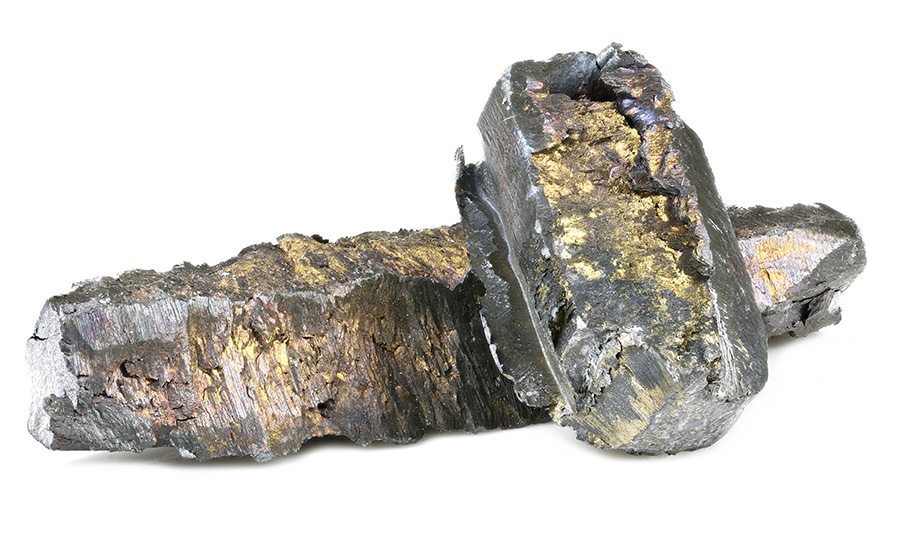
99.95% fine cerium isolated on white background
Once isolated, the earliest application of Cerium was in incandescent gas mantles. Developed by Carl Auer von Welsbach, in 1891, he perfected a mixture of 99% thorium oxide and 1% ceria, which gave a soft white light. Introducing his new mantle commercially in 1892, von Welsbach was able to monetise his development selling his product throughout Europe.
Gas mantles have been replaced, but Cerium’s importance in producing white light remains. As Walker explained, most white LEDs use a blue gallium nitride LED covered by a yellowish phosphor coating made of cerium-doped Yttrium Aluminium Garnet crystals.
In the medical arena, Cerium was used by Sir James Young Simpson, Professor of Medicine and Midwifery at Edinburgh who did a lot of work in the area of anaesthetics. Simpson found that cerium nitrate suppressed vomiting, particularly that associated with morning sickness, and well into the last century, medication containing Cerium could be bought over the counter. In addition Cerium has been the basis of treatments for burns.
Other applications for this versatile element are self cleaning ovens and mischmetal alloy, used in flints for cigarette lighters. Walker shared that the chemist and author Primo Levi, while imprisoned in Auschwitz, was able to steal cerium-iron rods from the laboratory he was forced to work in. Making them into cigarette lighter flints, he was able to barter for bread. Cerium is used to harden surfaces; it is a good polishing agent. Cerium sulphide has been used to replace the pigment cadmium red as a non-toxic alternative and Cerium is widely used across the chemical industry as a catalyst to produce a host of chemicals.
Catalysis is probably where Cerium has impacted most people as the element is the basis for the catalytic converters that have provided cleaner air for billions of people. Walker explained that the driver for the development came during the 1950s when photochemical smog was a problem in the Los Angeles Basin. Measurements at the time indicated that vehicles were responsible for the majority of the hydrocarbon and NOx emissions that led to the polluted air.
This turn of events led researchers to develop systems that could mitigate the emissions. Johnson Matthey was among those doing the early work on catalytic converters. Meanwhile, the automotive industry was pushing back on their introduction, concerned about the costs, durability and effectiveness. Working with Ricardo Engineering, Johnson Matthey carried out durability tests over 25 000 miles which also showed that the catalysts could pass US emissions tests.
The catalysts had to operate in three ways, at the same time, oxidising carbon monoxide (CO) and hydrocarbons (HC) while reducing NOx. Early catalysts, circa 1975, were based on Palladium and Platinum and focused on oxidising the CO and HC. Around 1978 a second catalyst was introduced to reduce NOx.
However, the introduction of Cerium then made it possible to develop a single catalyst that was able to carry out the functions that the researchers had wanted to achieve. Hence, 1981 saw the introduction of the three way catalytic converter with all three reactions enabled over a single catalyst. More recently ceria-zirconia oxide based catalysts have been developed with much higher oxygen storage capacity than ceria.
The impact of these developments has allowed the implementation of much more stringent air quality and emissions standards. Indeed Johnson Matthey estimates that its Cerium-based catalysts are responsible for removing around 40 tonnes of pollutants every minute of every day.
A single element has indeed impacted many lives.
09 September 2021 |
|
|
Careers
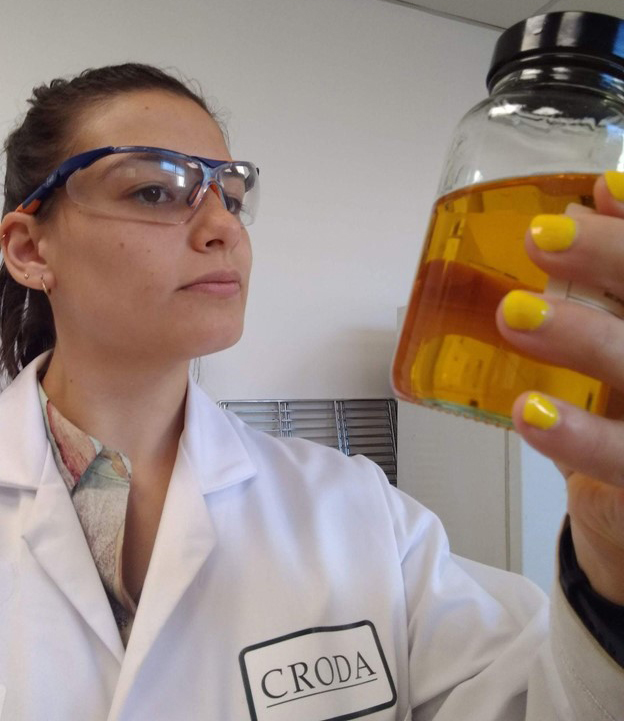
Sarah Davidson has made impressive strides in a short space of time. She has risen to Group Sustainability Coordinator for global Research and Technology at speciality chemicals firm Croda and won the Young Ambassador Award at this year’s Chemical Industry Awards.
In the first blog in our Women in Chemistry series, we caught up with Sarah for a chat on embedding sustainability in the workplace, the need for more diversity in senior roles, and the best bit of advice she received.

Tell us about your career to date.
I loved chemistry at school, so I started off by doing a Master’s in Chemistry at the University of Sheffield. During the course I did a placement year, which was my first taste of working in industry. Once I finished my degree, I was torn between staying in academia and doing a PhD or going into industry. I chose to go into industry because I had enjoyed my placement year so much and saw where I could make an impact.
I was accepted onto Croda’s Graduate Development programme, where I had three placements around the business. Croda is a speciality chemicals company, so my placements included working as an applications scientist and synthetic chemist. However, it was my placement working with the Sustainability team that I loved the most.
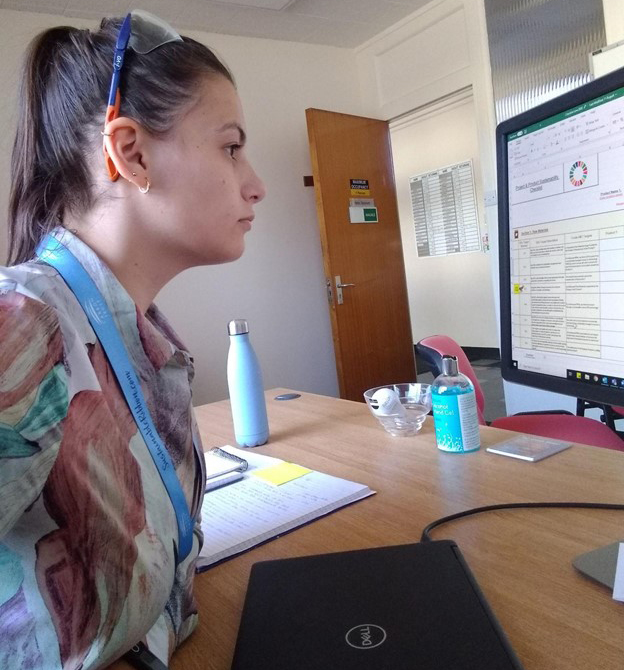
After the Grad Scheme I became Group Sustainability Coordinator for Global R&D. This combined my experience in R&D and sustainability in a brand role that didn’t exist in Croda before. This role allows me to use my technical knowledge and understanding of the way the global team works to enable those responsible for Croda’s new product innovations to include sustainability as an integral pillar in new product development.
What does your day-to-day role involve?
In my role, my main focus is on getting our scientists to think about sustainability during product and process development. At a fundamental level this requires me to change their mindsets around sustainability, getting them to see it is important to what we do and understand what it means.
To do this, I have developed a number of tools including checklists, clearly defined procedures and training documents. I have been working to get these new procedures adopted over the global R&D team by fitting them into existing protocols. Another part of my role is to support our corporate targets and I am part of a number of working groups to do this.
One working group looks at how we define a consistent methodology for Life Cycle Assessments or LCA. In this group I have been doing research to understand the current methods around LCA, and what our customers want in terms of sustainability data. I also help gather data to show where we are up to with these goals, so we understand what actions we need to take to move forward. On a day-to-day basis I will have meetings to discuss the projects I am involved in, conduct research and reach out to other teams and functions to see what they are working on too.
Which aspects of your job motivate you most?
For me sustainability is the future, not only for the chemical industry but for the world. Knowing that I am having a positive impact on sustainability in my role is what motivates me the most. I try to live a sustainable life, and what I do at work is just an extension of that.
What personal challenges have you faced and how have you overcome them?
To embed sustainability into our ways of working, I need to change people’s mindsets, and subsequently their behaviour. Seeing this change in people is incredibly rewarding. However, it is also one of the biggest challenges. Some of our teams have been working in the same roles for decades without any change. So, it is my job to make these changes easier for them to adopt and persuade them of the benefits in doing so. To overcome this challenge, I have had to work on my influencing skills and know what will work with the audience I am speaking to.
What is the greatest future challenge for people in your industry and how could this be addressed.
Sustainability, and addressing the issues we face as a result of climate change, are some of the biggest challenges we will face as an industry. We are in a lucky position that we can achieve a competitive advantage with sustainability, but our main goal is to protect our planet. This gives us a big opportunity for collaboration where we may not have had one before. I think we can only solve this challenge by collaborating across the supply chain, across country borders, and between industry and academia.
>> Not everyone takes the standard career path into chemistry. Take a read of Claudio Laurenco’s unusual, inspiring story.
Which mentors have helped you along the way and how did they make a difference?
I feel like I have a long list of mentors and am very lucky to be able to call on so many people for advice. The best thing I have learnt from them is to pursue what I enjoy most, as people will be able to see my passion. This will help me move forward in my career. Having mentors who have confidence in me and my ability has helped me build my own confidence, something which I can lack from time to time. My mentors are great sounding boards for ideas, whether that is to do with things I want to try in my job or on the direction of my career.
What is the current state of play within your sector with respect to equality, diversity, and inclusion – and is enough being done to attract and retain diverse talent?
I don’t think so. We need to do more to attract and retain diverse talent. We seem to be relatively diverse and inclusive at an academic level, which disappears in industry. There must be a reason for this. There may be bias within recruitment processes, or within job descriptions for senior roles, which means there is less diversity as you move up in organisations. We need to make sure that there are equal opportunities within industry for everyone and make sure everyone has a path to progression that works for them.
Is there any advice you would give to young professionals starting out in your area, especially young women?
Understand where you are different and use that as your advantage. Everyone has a unique lived experience that they bring with them into all situations. As women we have a different perspective to men. This doesn’t mean it is less valuable, it is just different. When you feel like you are in a minority as a woman, or are not being listened to, it is important to remember that our opinions are equal regardless of our background, gender or ethnicity. You have the same right to share your views, as the majority do theirs.
>> We’re always keen to hear from women who are making a real difference in chemistry. If you know someone who you think we should cover, please get in touch with us at: eoin.redahan@soci.org.
27 August 2021 |
|
|
Sustainability & Environment
If you’re a vegan, do you really want to eat a ruby-red slab of plant protein that looks like lamb? If you are a health obsessive, would you opt for an ultra-processed, plant-based product if you knew it didn’t contain many vitamins and micro-nutrients? And why, oh why, are we so obsessed with recreating the taste and appearance of the humble hamburger?
These questions and more were posed by Dr David Baines in the recent ‘No meat and two veg – the chemistry challenges facing the flavouring of vegan foods’ webinar organised by SCI’s Food Group. The flavourist, who owns his own food consultancy and is visiting Professor at the University of Reading, painted a vivid picture of our changing culinary landscape – one in which 79% of Millennials regularly eat meat alternatives.
And this shift in diet isn’t just the preserve of the young. According to Dr Baines, 54% of Americans and 39% of Chinese people have included more plant-based foods and less meat in their diets. Furthermore, 75% of Baby Boomers – those born between 1946 and 1964 – are open to trying cultivated meat.
There are many reasons for this gradual shift. The woman biting into Greggs’ famous vegan sausage roll and the woman who carefully crafts her bean burger may have different reasons for choosing meat alternatives. For some, it’s an ethical choice. For others, it’s environmental or health-related. And then there are those of us who are simply curious.

Pea protein powder is used in plant-based meat alternatives.
Either way it’s an industry that, if you’ll excuse the pun, is set to mushroom. According to Boston Consulting Group and Blue Horizon research, the global meat-free sector will be worth US$290 billion by 2035. They also claim Europe will reach peak meat consumption by 2025, and Unilever is aiming to sell US$1 billion-worth of plant-based meat and dairy alternatives by 2025-27.
In his entertaining talk, Dr Baines outlined the extrusion processes that turn wheat and pea proteins into large ropes of fibrous material and how soy isolates are spun into textured proteins using looms like those used in the cotton industry. He explained how calcium is used to imitate the chewable texture of chicken and how Impossible Foods is using the root nodules of bean plants to produce the red colour we recognise so readily in meat.
>> For more interesting SCI webinars on battery developments, medicinal chemistry and more, check out our events page.
So, how close are we to products with the appearance, taste and texture of, let’s say, beef? ‘I think that will come from cultured meat to start with,’ he said. ‘Where the protein is produced, it will still need to be flavoured, but the fibres will have formed and the texture is already present in some of those products.
‘It’s a big ask and it’s been asked for a long time. It’s going to be a long time before you put a piece of steak on one plate and a plant-based [product] on another and they will be visually, texturally and taste(-wise] identical.’
And what appetite do people even have for these plant-based facsimiles? ‘There are people who want plant proteins not to look like meat, and there are people who want them to look like meat,’ he added. ‘The driver at the moment is to make them look like meat, and the driver is to make it taste like meat too.’
Baines wondered aloud about the bizarre fixation some have with recreating and eating foods that look and taste like beef burgers. In contrast, he pointed to the examples of tofu and soy-based products that have been developed in South East Asia – distinct foods that do not serve as meat substitutes.
Plant-based proteins are undoubtedly part of our culinary future, but these products have other barriers to surmount beyond taste and texture. There is no getting around the fact that plant-based proteins are ultra-processed in a time when many are side-stepping processed foods. Baines also explained that these protein- and fibre-rich foods tend to have lower calorific content, but lack vitamins and micronutrients. ‘Will they be supplemented?’ Baines asked. ‘How much will the manufacturers of these new products start to improve the nutritional delivery of these products?’

We have now entered the age of the gluten-free, vegan sausage roll.
But it’s easy to forget that the leaps made in recent years have been extraordinary. Who would have predicted back in 1997 – when Linda McCartney was at the vanguard of the niche, plant-based meat alternative – that a vegan sausage roll would capture the imaginations of a meat-hungry nation? Who would have foreseen fast-food manufacturers falling over each other to launch plant-based burgers and invest in lab-grown meat?
As Dr Baines said: “This is a movement that is not going away.”
>> Our soils provide 97% of our food. Read more about how they are undervalued and overused here.
10 August 2021 |
|
|