Careers
Suze Kundu’s career has taken her from nanochemistry to science communication and even to presenting TV shows on the Discovery Channel. So, how did she go from academic to Head of Public Engagement at Digital Science, and what advice does she have for those looking to follow in her footsteps?
You’ve had a really varied career path. How did you get to where you are today?
Varied indeed! I categorise my career into two strands – doing science, and communicating science. And I’ve done both alongside one another for over a decade now. The former UK Chief Science Officer, Professor Sir Mark Wolport, once said that science isn’t finished until it is communicated. This is something that my alma mater, UCL (University College London) not only believes, but also supports.
Given that research is largely publicly funded, researchers owe it to the public to communicate progress and outputs. By creating opportunities for dialogue, this communication becomes a two-way process, which also benefits researchers who can conduct better-informed research that will help more of society.
As such, I was trained in being both a researcher as well as a public engagement practitioner during my undergraduate degree and during my PhD. I’ve been really lucky to have been able to keep both strands of my career running either concurrently or in combined roles. When I was an academic, I would do research, teaching and public engagement as part of my varied day job, and I also kept up with my science writing and TV presenting in my spare time. I now work at Digital Science, which is a research technology company that creates mostly software solutions for different aspects of the research cycle to help it be the best it can be.
At Digital Science, I headed up Engagement for three years, before recently moving on to a role that combines my engagement skills with my chemistry knowledge and my unashamed fangirling over our flagship platform, Dimensions, to support our newest addition to the family: Dimensions Life Science and Chemistry.
All of our software solutions are created with the research community in mind, and are often developed and refined in collaboration with actual users, so we know that our tools can help people overcome research challenges.
What personal challenges have you faced and how have you overcome them?
Thanks to my parents, my school and my university, I grew up fairly sheltered from a range of ‘-isms’ that may have resulted in my being put off a career in science. Being a woman, a woman of colour, and a woman who perhaps doesn’t conform to outdated stereotypes of what ‘scientists’ are like are all things I learnt can be hurdles to overcome in my career.
In many ways, I was glad that I had no idea that academia, for example, was such a challenging environment for underrepresented people, as I am not sure I would have pursued a career in it if I had known. Women in academia are often assigned teaching that covers the basics, and are frequently given tasks that require so-called ‘softer’ skills such as outreach, engagement and the admissions process. In a world where women have to work twice as hard to get half the recognition, this can often lead to burnout.
I did two things to overcome these challenges once I had identified them; firstly, I had some great allies that came to my aid. They helped me objectively highlight the inconsistencies in workload and expectations, and they were always on hand to offer advice to help me overcome hurdles. Secondly, I chose to leave academia for industry. I now work in an organisation where all the diverse facets that make up an individual are respected and welcomed.
My advice would be that, if you think a science career isn’t for you, you may not have found ‘your people’ yet. I assure you, though, that scientific careers are so much broader than just academia and traditional industry roles. Keep looking and use your networks to find your type of organisation, as I can guarantee that they’re out there somewhere.

Suze Kundu
You’re very skilled at communicating complicated topics to non-specialist audiences. How do you do it?
I was lucky enough to attend UCL for my undergraduate and PhD. UCL has a long history of engagement with a range of communities. It is thanks to opportunities I had during my degrees there that I started to really hone my communication skills.
Strangely enough, I think my acting, drama, dance and musical theatre skills have also played a part in building my skills, as there is always an element of performance in everything that we do. You need to know your audience, and know what motivates them, to really engage with them.
I do believe that everyone can learn and develop communication skills though. I’m not saying everyone needs to present evidence in a parliamentary inquest. There are so many different ways to communicate research, whether it is through writing, drawing, even music and dance.
It could even be as simple as just engaging with your PR team to find support in sharing your research more broadly. It’s a really collaborative space though, so if you want to give it a go or learn more, find some people whose communications style you like and get in touch. If they’ve got the capacity I’m sure they will either be able to help, or at least point you in the right direction.
Which mentors have helped you along the way?
Firstly, my parents, who made me believe that I could pursue anything I wanted to and they’ve been nothing but supportive. My husband is also totally wonderful, even though he wishes I worked more sensible hours. Secondly, I have a set of amazing friends that remind me that I can do things, even when I doubt myself.
Finally, there are some amazing heroes-turned-allies out there that have supported me along the way. My top four would be my ever-supportive PhD supervisor Professor Ivan Parkin at UCL, my old chemistry teacher Mr Brian McVicar, my science communication hero Professor Mark Miodownik at UCL, and my academic role model Professor Mary Ryan at Imperial College London. Our CEO at Digital Science, Dr Daniel Hook, is also an inspiration and an example of having both a career in enterprise and leadership, AND a career in academia.
>> Read about Dr Anita Shukla’s groundbreaking work in treating infection and developing drug delivery systems in our interview with Dr Shukla.
What is the current state of play within your sector with respect to equality, diversity, and inclusion – and is enough being done to attract and retain diverse talent?
In academia, my experiences have not been great. We spend a lot of time, money and effort recruiting a more diverse range of people into science degrees but very little time retaining those people in the profession.
Though things are improving, changing an entire culture is slow going, and I think academia is still fundamentally built on a framework that rewards and promotes cultures and behaviours that do not allow for inclusion.
We have a long way to go to breaking down those barriers to inclusion. We’ve worked with a range of actors in the research industry through the Research on Research Institution (RoRI), but culture change takes time. It requires buy-in at all levels and globally across the profession, as well as a lot of resource to build a better framework of recognition and reward to encourage inclusion and retention within the academic profession.
In industry, I think we are in a much better place in terms of equality, diversity, inclusion and accessibility, though there are of course still challenges that need to be overcome. Organisations have more control over how they nurture their employee communities, and I think it can therefore be easier to see changes in culture sooner than in academia.
There is still a long way to go to make things as inclusive as they can be, and to achieve real representation of society in industry, but by working with underrepresented communities we are able to co-create initiatives that will hopefully change things for the better.
Is there any advice you would give to young professionals looking to pursue a career path similar to yours, especially young women?
Do it! Science is such a rewarding profession, and so varied too. You’re able to combine your passion for science with your interest in a whole host of things. Do, however, be aware that you may not immediately find an environment that can support and nurture you in a way that works for you. They are out there though, so keep networking, keep looking, and be your truest self. You’ll find your people soon enough, and from there on in, it’s a great adventure.
Don’t be afraid to try things. You may well surprise yourself and start a career journey down a path you didn’t expect to find yourself on. And remember, no experience is wasted. Your skillset is always building up, and you’ll find yourself applying experiences and knowledge in ways you never expected you would.
Find a mentor or a range of mentors for different aspects of your career, and consider being a mentor for others too. You have a remarkable amount of knowledge and experience to share with others too.
>> In recent months, we’ve spoken to inspiring women who work in science. Read more about the stories of materials scientist Rhys Archer, EPSRC Doctoral Prize Fellow and founder of Women of Science, and Jessica Jones, Applications Team Leader at Croda.
Edited by Eoin Redahan. You can find more of his work here.
08 March 2022 |
|


 |
|

Health & Wellbeing
The clichés we use become so downtrodden that we often say them without thinking. How many times, for example, have you said you went with your gut on a certain decision?
As with many of these aphorisms, there appears to be genuine wisdom behind it. Scientists are learning all the time about the links between our guts and our brains, and recent findings from a California Institute of Technology-led (Caltech) study have added to our understanding of what’s going on behind our belly buttons.
This research contends that a particular molecule, produced by our gut bacteria, has contributed to anxious behaviour in mice. The Caltech researchers say that a small-molecule metabolite that lives in the mouse’s gut can travel up to the brain and alter the function of its cells. This adds further grist to the belief that there is a link between our microbiome, brain function, and mood.
The researchers behind the Nature paper say previous studies found that people with certain neurological conditions have different gut bacteria communities. Furthermore, studies in mice revealed that manipulating these communities can alter neurological states.
>> Curious about which herbs could boost your wellbeing and how they work in your body? Then read our recent blog on this topic.
Their study investigated the bacterial metabolite 4-ethylphenyl sulphate (4EPS) that is produced in the intestines of humans and mice and circulates throughout the body. In particular, they focused on the effect of 4EPS on mouse anxiety. For the sake of the study, mouse anxiety measured the creature’s behaviour in a new space - whether it hid in a new space as if from a predator or whether it was willing to sniff around and explore it.
The researchers compared two groups of lab mice: those colonised with pairs of bacteria that were genetically engineered to produce 4EPS, and a second group that was colonised with similar bacteria that couldn’t produce 4EPS. They then observed the rodents’ behaviour after being introduced to a new area.

Some mice become anxious when introduced to new spaces, and this is reflected both in the gut and the brain.
The results were very interesting indeed. The researchers observed that the group of mice with 4EPS spent far less time exploring this new place and more time hiding compared to the second group of non-4EPS mice. They also found that brain regions associated with fear and anxiety were more activated within this first group.
>> Interested in drug discovery? Why not attend our upcoming event at the Francis Crick Institute, London, UK.
When the mice were treated with a drug that could overpower the negative effects of 4EPS, their behaviour became less anxious. A similar study in Nature Medicine also found that mice were less anxious when treated with an oral drug that soaked up and removed 4EPS from their bodies.

The Caltech-led research could inform our understanding of anxiety and mood conditions.
‘It’s an exciting proof-of-concept finding that a specific microbial metabolite alters the activity of brain cells and complex behaviours in mice, but how this is happening remains unknown,’ says researcher Sarkis Mazmanian, in whose laboratory much of the research took place.
‘The basic framework for brain function includes integration of sensory and molecular cues from the periphery and even the environment. What we show here is similar in principle but with the discovery that the neuroactive molecule is of microbial origin. I believe this work has implications for human anxiety or other mood conditions.’
So, our predecessors were right: there’s a lot more to those gut feelings than you think.
>> Read the Nature paper on the Nature magazine website.
24 February 2022 |
|
|
Sustainability & Environment
How well equipped is the UK’s battery supply chain to meet the growing demand for electric vehicles? We took a closer look to mark National Battery Day.
Main image editorial credit: Phaustov/Shutterstock
For many of us, it’s exciting to see the growth of the electric vehicle industry. Our personal transport will be cleaner. Our roads will be quieter. Indeed, from 2030 the UK government will ban the sale of pure internal combustion engine cars, and the widening role of ultra-low emission zones will hit many motorists in the pocket. Whether we like it or not, change is coming.
That does not mean we are prepared for it. As demand for electric and hybrid vehicles accelerates, and more stringent trade rules put pressure on having a local battery supply chain (stricter Rules of Origin for trade will come into force by 2027), the UK must get its complete supply chain up to speed.
Battery supply chain challenges
For this to happen, chemists, suppliers, manufacturers, innovators, government representatives, and others need to make strides in several areas. Over the past year, a group of more than 50 participants at SCI’s Energising the UK Battery Supply Chain workshops have identified next generation technology, the scale-up of innovative technologies, the skills and knowledge base, and standards for materials testing as areas for improvement.

Brine pools for lithium mining. There is a global clamour for raw materials including lithium.
The UK also needs a consistent stream of key battery materials. It needs technologies that reduce the dependence on some of the current materials for hybrid and electric vehicles. It must integrate efficient battery recycling and manufacturing approaches to reduce its dependence on long-distance imports and much coveted raw materials such as lithium, nickel and cobalt.
It is a big challenge. As David Bott, SCI’s Head of Innovation (who helped run SCI’s five Energising the UK Battery Supply Chain workshops) said, there isn’t enough of a UK electric battery supply chain at the moment.
>> Find out what the experts thought about improving the UK battery supply chain in our Energising the UK Battery Supply Chain Part 5 video.
David did note that the UK Government (through UK Research and Innovation) has been investing in the scale-up of cell assembly through the Energy Innovation Centre at WMG (from 2012/3) and the UK Battery Industrialisation Centre (through UKRI and the Automotive Propulsion Centre). It will also support the construction of Britishvolt’s electric battery ‘gigafactory’ in Blyth, Northumberland.
However, he added that: ‘All of them, however, are talking about the assembly of the cells and 60% of the value is in the materials. We need a battery materials supply chain in the UK – not all the way back to mining, of course, but as much as we can.’

Recent developments in the UK have been heartening, but many more will be needed to create a viable battery supply chain.
Smoother collaboration is also required. ‘We need recognition that the UK needs more support for the chemistry part of the supply chain,’ he said. ‘We need a lot more collaboration – engineers need to understand that chemistry companies would engage more if they understood the size of the opportunity. The main thing we need at the moment is awareness of the opportunities.’
Promising developments
Despite the difficulties, green shoots have appeared recently. In late January, the government announced that it has backed Britishvolt’s aforementioned plans to build large volumes of electric vehicle batteries (through the Automotive Transformation Fund). According to the government, the factory will produce enough batteries for more than 300,000 vehicles a year and create 3,000 direct, highly-skilled skilled jobs. Britishvolt have also announced a partnership with Glencore to recycle battery materials.
>> Sign up for our next Energising the UK’s Battery Supply Chain workshop.
Oxford-based chemical products manufacturer Nexeon has secured US$80 million (about £59 million) in funding to scale up the production of its silicon anode materials. Finally, Sheffield-based sodium-ion battery technology company Faradion has been acquired by Indian conglomerate Reliance Industries for £100 million. A further £25 million will be invested as growth capital to accelerate the commercial rollout of its sodium-ion battery technology.
Faradion says that its sodium-ion technology provides ‘significant advantages compared to lithium-ion technology, including greater sustainability, a patented zero-volt safe transport and storage capability’.
So, there is some good news to celebrate as you gather around with your families to celebrate National Battery Day. The battery supply chain, unfortunately, must wait for another day.
What is the future of electric cars? Find out more in this Autotrader article.
17 February 2022 |
|
|
Science & Innovation
How do you create an investor-ready intellectual property (IP) approach to help you secure that all-important funding? We asked Charlotte Crowhurst, patent attorney at leading European IP firm, Potter Clarkson.
As businesses focus on growth in the post-pandemic world, innovation is vital. Being able to turn good ideas into a commercial success – at scale – can have a transformational impact on the wider economy. Scientists and engineers have been front and centre in providing solutions to the health crisis, but they will also play an essential role in the economic recovery.
Of course, even the most ground-breaking invention requires investment to become a viable market proposition. Yet, the road to securing funding is not always straightforward or clear, with various hurdles to overcome before winning the trust and backing of investors. Securing funding is fiercely competitive territory, as investors apply a forensic approach to identifying the risks and opportunities with each investment target.
Intellectual property alone will not likely secure funding, but a weak IP position could significantly impact on valuation – by as much as 70% – or even see an investor walk away altogether. What’s more, for return-hungry investors, new research shows that SMEs with intellectual property rights generate 68% higher revenues per employee than those who don’t.
For ambitious, high growth SMEs to put themselves in the strongest position to attract and secure funding, there are five key ingredients that make up an investor-ready IP approach:
- Clear ownership
This is the number one deal breaker. Make sure there are no grey areas on ownership of IP. Any grey areas surrounding who ‘owns’ IP will signal alarm bells for a potential investor.
- Effective innovation capture
Understanding what IP your business may have and what you might be able to protect is not always obvious. It is always worth seeking professional advice early on to determine which IP rights you might be able to secure.
Robust processes and procedures are also important. Create an IP register and keep it up to date monthly so that opportunities are not overlooked. Do not underestimate the importance of robust processes and procedures.

Understanding what IP you need to protect isn’t always obvious.
- Sound strategy
Put yourself in an investor’s shoes – they are focused on whether you can provide a return on their investment. They are looking for clarity in your approach – a strategically sound business plan, where it is easy to see how the IP rights will help to achieve the commercial objectives.
>> Need more information on filing a chemistry patent. Read our blog on chemistry patent filing.
- Market awareness
A growing business can be all-consuming, but a sound IP approach takes into consideration the wider marketplace in which your business is operating and any potential third-party rights.
- Good timing
Knowing when to act is critical to a sound IP approach. Knowing which steps to take and when to take them can have a critical impact on the strength of your IP position.
The end goal
Ultimately, the end goal with IP due diligence is to instil confidence and build trust with a potential investor. While investors are prepared to take on varying degrees of risk, SMEs will always need to show an IP approach that doesn’t signal alarm bells.
Put simply, those SMEs who are clear on these five areas will reduce the chances of IP being the reason an investor walks away.
>> To read more on ensuring your IP is investor-ready, visit the Potter Clarkson website here.
Edited by Eoin Redahan. You can find more of his work here.
01 February 2022 |
|
|
Health & Wellbeing
A sprig of thyme to fight that cold… Turmeric tea after exercising… An infusion of chamomile to ease the mind… As we move with fresh resolution through January, Dr Vivien Rolfe, of Pukka Herbs, explains how a few readily available herbs could boost your health and wellbeing.
The New Year is a time when many of us become more health conscious. Our bodies have been through so much over the last few years with Covid, and some of us may need help to combat the January blues. So, can herbs and spices give us added support and help us get the new year off to a flying start?

The oils in chamomile have nerve calming effects.
Chamomile and lavender
We may wish to ease ourselves into the year and look for herbs to help us relax. The flowers from these herbs contain aromatic essential oils such as linalool from lavender (Lavandula) and chamazulene from German chamomile (Matricaria recutita) that soothe us when we inhale them (López et al 2017). Chamomile also contains flavonoids that are helpful when ingested (McKay & Blumberg 2006).
If you have a spot to grow chamomile in your garden, you can collect and dry the flowers for winter use. Lavender is also a staple in every garden and the flowers can be dried and stored. Fresh or dry, these herbs can be steeped in hot water to make an infusion or tea and enjoyed. As López suggests, the oils exert nerve calming effects. Maybe combine a tea with some breathing exercises to relax yourselves before bed or during stressful moments in the day.

Thyme is a handy herbal remedy. Generally, the term herb refers to the stem, leaf and flower parts, and spice refers to roots and seeds.
>> The plant burgers are coming. Read here about the massive growth of meat alternatives.
Andrographis, green tea and thyme
Many people may experience seasonal colds throughout the winter months and there are different herbal approaches to fighting infection. Andrographis paniculata is used in Indian and traditional Chinese medicine and contains bitter-tasting andrographolides, and in a systematic review of products, the herb was shown to relieve cough and sore throats symptoms in upper respiratory tract infection (Hu et al 2017).
Gargling with herbal teas is another way to relieve a sore throat, and the benefits of green tea (Camellia sinensis) have been explored (Ide et al 2016). I’m an advocate of garden thyme (Thymus vulgaris) which contains the essential oil thymol and is used traditionally to loosen mucus alongside its other cold-fighting properties.
You could experiment by combining thyme with honey to make a winter brew. I usually take a herbal preparation at the sign of the very first sneeze that hopefully then stops the infection progressing.

Shatavari (pictured) is said to improve strength, and ashwagandha can help recovery.
Shatavari and ashwagandha
We may start the new year with more of a spring in our step and wishing to get a little fitter. As we get older, we may lose muscle tissue which weakens our bones and reduces our exercise capability. Human studies have found that daily supplementation with shatavari (Asparagus racemosus) can improve strength in older women, and ashwagandha (Withania somnifera) can enhance muscle strength and recovery in younger males (O’Leary et al 2021; Wankhede et al 2015).
These herbs are known as adaptogens and traditionally they are used in tonics or to support fertility. The research to fully understand their adaptogenic activity or effects on muscle function is at an early stage. Other herbs such as turmeric may help muscle recovery after exercise. I brew a turmeric tea and put it in my water bottle when I go to the gym.
>> How is climate change affecting your garden? Find out here.

Lemon balm is easy to grow but might want to take over your garden.
Easy on the body. Easing the mind
Depending on your resolutions, you could use herbs and spices to add lovely flavours to food to try and reduce your sugar and salt intake. Liquorice is a natural sweetener, and black pepper and other herbs and spices can replace salt.
You could also bring joy to January by growing herbs from seed on a windowsill or in a garden or community space. Mint, lemon balm, lavender, thyme, and sage are all easy to grow, although mint and balm may take over!
All make lovely teas or can be dried and stored for use, and research is also showing that connecting with nature – even plants in our homes – is good for us.
You can read more about medicinal and culinary properties of herbs at https://www.jekkas.com/.
If you wish to learn more about the practice of herbal medicine and the supporting science, go to https://www.herbalreality.com/.
>> Dr Viv Rolfe is head of herbal research at Pukka Herbs Ltd. You can find out more about Pukka’s research at https://www.pukkaherbs.com/us/en/wellbeing-articles/introducing-pukkas-herbal-research.html, and you can follow her and Pukka on Twitter @vivienrolfe, @PukkaHerbs.
Edited by Eoin Redahan. You can find more of his work here.
17 January 2022 |
|
|
Science & Innovation
Are you thinking of filing a chemical industry patent in 2022? Anthony Ball, Senior Associate at patent attorney Abel + Imray, gave us the lowdown about what you need to know about the process, cost, and filing your patents in different countries.
I’ve developed a novel technology. How do I patent it, how long does it take, and how much could it cost?
The first step in patenting a novel technology is to file a patent application. The patent application must contain a description of the technology that you have developed in enough detail for others to work the invention. It also needs to contain some claims that define the protection you think you are entitled to. Before the application is filed, it is also important to sort out who the inventors are and who owns the invention.
The application is then examined, during which the Patent Office and you come to an agreement regarding the extent of protection that you are entitled to. Once the extent of protection is agreed, the patent will proceed to grant.
The application will be published around 18 months from filing. This allows competitors to see what you intend to protect. It usually takes longer for the patent to be granted (and so be enforceable) - usually from four to 10 years. For a UK patent which protects a chemical invention, the total cost might be around £10,000.
A separate patent is required for each country that you are likely to want to stop competitors using your technology. Obtaining patents in the most important markets might cost in excess of £50,000 for a chemical invention. Although this might sound like a lot of money, not all of this needs to be paid at the start of the process. Instead, it is spread out over a few years, with the biggest investment usually coming three years into the process.
You mentioned that you can obtain a patent for a compound, a formulation, or a process for synthesising compounds. Does the patent process and cost vary according to the type of product or the branch of chemistry?
The overall process – filing a patent application, the patent application being examined and then the patent being granted – is the same for all technologies. However, there are some issues faced in certain branches of chemistry (such as pharmaceuticals) which can be quite difficult to overcome, and are not faced as commonly in other branches of chemistry. Because of this, it can sometimes take longer for patents in these fields to be granted than in other fields of chemistry, and the costs can be higher.
In which scientific areas has there been a recent rise in patent applications and are any fields relatively under-represented by comparison?
Focusing on European Patent Applications, the chemical industry has been fairly strong recently. Pharmaceutical and biotechnology in particular saw relatively large increases in the number of European patent applications filed in 2020, although the number of patents in the organic fine chemical field slightly decreased.
I want to file my patent in several countries. What do I do, and how much do the costs vary, depending on the country? For example, how would the cost of a patent in the UK compare to one in the US?
If you wish to have a patent in several countries, the start of the process is the same as the one described earlier; a patent application is filed in one country. Then, the most cost effective way to extend the protection to other countries is usually to file a “PCT application” within a year of filing the original application. After a further 18 months, you can turn this PCT application into applications for most countries around the world, including Europe, the US, China and India.
Costs do vary between different countries. To use the example above, it might cost 50-100% more to obtain a patent in the US than in the UK alone. It is worth noting that a patent for the same technology from the European Patent Office might cost around the same as a patent in the US, but the patent from the European Patent Office can then be converted into a patent in each country in the EU, plus some others (including the UK, Norway and Switzerland). Unfortunately, it is difficult to be precise about costs, because they depend very much on the number and type of objections raised by the patent office examiners.
One other consideration is translations. For long applications (which can be quite common in some branches of chemistry), these can be expensive, adding thousands of pounds to the cost for obtaining a patent. One country in particular where a translation might be required, and is of growing importance in the chemical area, is China.
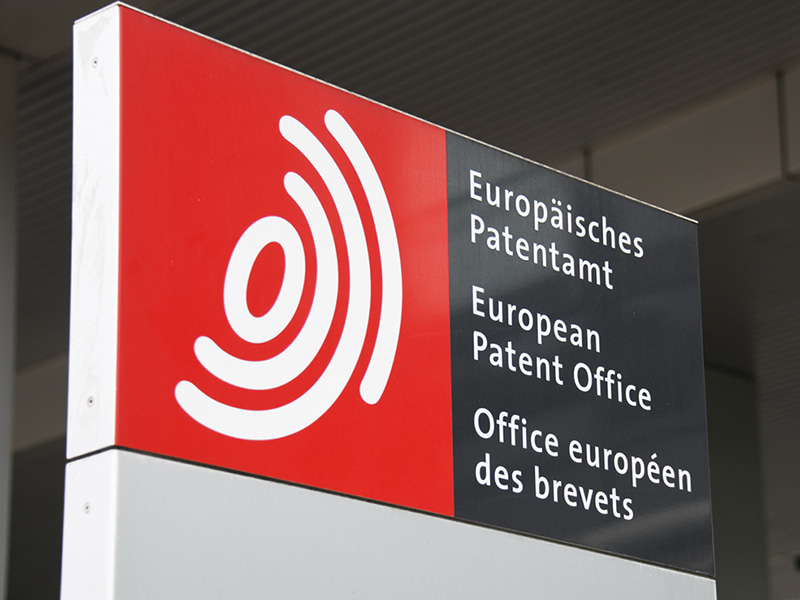
Patents from the European Patent Office are valid across the EU and in several other countries. | Editorial credit: nitpicker / Shutterstock.com
>> From patents to green chemistry and agrifood, we have some great events coming up. Find out more on our event page.
Is there anything chemists and chemistry industry professionals should be particularly mindful of when submitting patent applications in 2022?
Patent law is underpinned by a number of international agreements, which are hard to renegotiate. As a result, the law is actually very stable over time, and so the considerations in 2022 will broadly be the same as they have been in the past. Having said that, one important thing to bear in mind at the moment is the amount of data to include in the patent application.
There is a balance between filing as soon as possible (to prevent a competitor getting there first, and to minimise the chance of a disclosure of something that would make your technology unpatentable), and making sure that the application has enough data to show that the extent of protection that you are asking for is justified. In some cases, it is possible to present data to justify the scope of protection after the application has been filed, but recently many patent offices have made that more and more difficult.
As such, filing too early, and with only a small amount of data to support your claims, could result in a very narrow patent, which might potentially be easy to work around. It is very important to include enough evidence to show that at least the parts of your invention which have the most commercial interest (e.g. the most active compounds) show the technical effect which is mentioned in the patent application.
How much have the law and process around patents changed in recent years?
The law around patents and patent applications is always evolving, albeit slowly. The basics – that the technology must be new, not be obvious in view of publicly available knowledge, and have an industrial application – have remained the same for many years. Likewise, the basic process to obtain a patent, as described above, has not changed recently, but the minor details of that process are constantly being updated, for example to incorporate new technology (such as online filing of the application and supporting documents, and online publication of the application) and to improve cooperation between the patent systems of different countries.
An example of improved cooperation between countries is the Unified Patent Court (UPC), which is likely to begin hearing cases in 2022. Currently, patents have to be enforced in each EU country separately using the national court systems. The UPC will establish a common court system and allow a patent to be enforced in one court case, with the result being valid for the whole of the EU.
I have made a further development to my technology after filing my patent application. How can I protect my new development?
Once it has been filed, nothing can be added to a patent application. Because of this, if you want to protect a new development to the technology that is the subject of a patent application, then another patent application must be filed directed to the new development. The two applications will be treated separately, and so in order for a patent to be granted which protects the new development, the new development must satisfy all the criteria for patentability described above.
To read more from Abel + Imray on patents, visit: https://www.abelimray.com/
13 December 2021 |
|
|
Sustainability & Environment
At COP26, Nikita Patel co-hosted the Next-Gen debate, where an inspiring group of young people discussed how chemistry is tackling climate change. The PhD student at Queen Mary University of London shares her experience.
While the United Nations Climate Change Conference (COP26) may be over, there is still plenty to be done in the fight against climate change. We’ve seen what can be achieved when we work together and no doubt science will play a key role.
On Thursday 4 November, I had the privilege of co-hosting the Countdown to Planet Zero Next-Gen debate organised by SCI to showcase the work being carried out by our young and innovative scientists to tackle climate change. It was a real pleasure to share the stage and hear from some great scientists, exploring the themes Fuels of the Future, Turning Waste into Gold and Engineering Nature. The event gave the audience the opportunity to question and challenge the panel members on their climate change solutions.
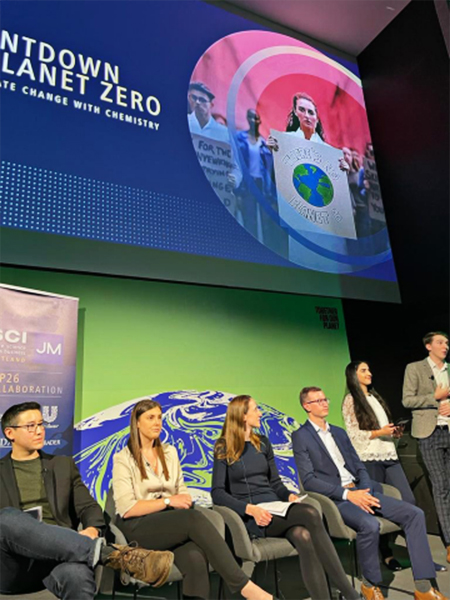
Panel L-R: Dominic Smith, Natasha Boulding, Clare Rodseth, Jake Coole, Nikita Patel, Oliver Ring (Brett Parkinson joined virtually).
While I was feeling nervous about my hosting duties, I was very excited at the same time as I knew how important it was to educate the audience, whether they were members of the public or aspiring scientists, on how science is crucial in battling the climate emergency.
An important part of my role as a host was to ensure the incoming questions and comments were understood by all, given the mixed audience attending. This highlighted how essential good science communication is to prevent misunderstandings and the spread of misinformation.
It was brilliant to see how engaged the audience were from the flurry of questions that came in during the session, so much so that we didn’t manage to get through all of them! There were a wide variety of questions aimed at particular panellists but also towards the panel as a whole. It was thought-provoking to hear how scientists from different backgrounds offered their own perspectives on the same topic.
4 November was also Energy Day at COP26 and the atmosphere was buzzing! I learnt a lot from attending the Green Zone, not only from our panellists but from all the exhibitors present too. I appreciate the small, individual actions we can each take that will make a difference but also the need to work together to achieve the common goal of fighting climate change. It was clear to see how science and business go hand in hand to provide solutions to society and how interdisciplinary collaboration is key.
The result of our poll question: ‘Do you think that science is pivotal in providing climate change solutions?’ spoke for itself, with a resounding yes from 100% of the audience participants! This was a very positive outcome and showed that it is not all doom and gloom when it comes to discussing the climate crisis.
On a personal level, I'm going to continue implementing some simple changes like using public transport more, eating more vegan food and flying less and aim to keep the discussion going with my peers as the climate emergency is far from over.
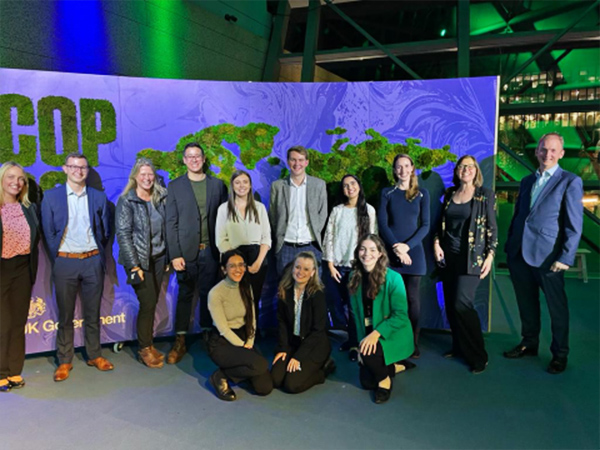
SCI team, panellists and hosts.
I hope the youth panel event has inspired the next generation of scientists and showcased some of the exciting work that is going on behind the scenes which people may not realise and ultimately, that there is hope in science.
>> To rewatch the event, the recording is available on the COP26 YouTube channel: Countdown to Planet Zero Combating climate change with chemistry | #COP26, and on our Climate Change Solutions hub.
>> Want to read more about the technologies discussed by our panel? Read our event review: https://www.soci.org/blog/2021/11/2021-11-05-cop26-review.
02 December 2021 |
|
|
Science & Innovation
Continuing our profiles of Black scientists, Dr Jeraime Griffith, Chair of SCI’s Agrisciences Group, shares how a simple classroom experiment set him on the journey that has led to him analysing complex data to safeguard UK food security.

I am a Data Scientist building tools that maintain, forecast and predict threats to the UK’s food security.
Right: Dr Jeraime Griffith
What was it that led you to study chemistry/science and ultimately develop a career in this field? Was this your first choice?
At about age 10, in primary school, I had a teacher who explained to us how the human digestive system and saliva break down starch into sugars. To demonstrate this, he got some bread from the school kitchen and asked us to chew it until we started noticing a slight sweet taste. I decided then to be a scientist. This wasn’t my first choice however. Prior to that moment, I wanted to be a pilot.
Was there any one person or group of people who you felt had a specific impact on your decision to pursue the career you are in?
My parents were super supportive. After announcing that I wanted to be a scientist, I got a science dictionary for my birthday. I also had great teachers, both at primary and secondary school. At 13, we were doing hands-on chemistry experiments and helping to tidy the lab at the end of the school year.
Could you outline the route that you took to get to where you are now, and how you were supported?
Following a BSc and a PhD, both in chemistry, I worked for ChemOvation, Argenta Discovery (now part of Charles River Laboratories) and briefly at Novartis. I then went off to New Zealand for a two-year postdoc at Massey University in early 2009 to work with my former PhD supervisor who had relocated there.
On returning to the UK, I worked at Imperial College London, first at the Centre for Synthetic Biology, then over in Chemistry with Professor Tom Welton. It was towards the end of my time with Professor Welton that I began learning the programming language Python, which led me to data science. I’m now a Data Scientist at Cognizant, working with the Food Standards Agency.
I was fully supported, both in industry and academia, but it was in academia that I was afforded the freedom to explore my interests – particularly to use 20% of my time to do whatever I wanted.

Jeraime helps safeguard UK food security and Chairs SCI’s Agrisciences groupConsidering your own career route, what message do you have for Black people who would like to follow in your footsteps?
Allow some flexibility in pursuing your career. When I was questioning myself and my goals, I came across ‘Obliquity’, a book by John Kay. Sometimes diversions are the best way to get to your goals.
Seek out mentors, and I would say regardless of race, who can help you get there. Don’t be afraid to email them and briefly talk about your interest in the work they’ve done, what you have done and are doing now. I’ve found people are genuinely interested in helping you. This is how I learned about the Agrisciences group at the Society for Chemical Industry, which I joined and now Chair.
As for getting into data science, I did a 13-week intensive bootcamp. These are not for everyone as they are expensive and have a high demand on your time. However, there are a lot of free courses available. With this availability, it can be hard to find the good ones. The knowledge of the crowd can help. I’ve found Twitter to be our modern day equivalent to Ask Jeeves.*
What do you think are the specific barriers that might be preventing young Black people from pursuing chemistry/science?
Lack of representation I think is the number one barrier. Impostor syndrome is bad at the best of times, but worse still if there’s no representation in the ivory tower.
What steps do you think can be taken by academia and businesses to increase the number of Black people studying and pursuing chemistry/science as a career?
Recruit people of colour with less experience to positions of responsibility. Trust us to perform and have the support in place when we falter.

The experience that most defined Jeraime’s career path… a great teacher
Science is at the centre of addressing many of the big global issues. Do you hope that this will lead to more young Black people wanting to get involved in science and develop solutions?
Yes. A low entry point is data science. Most of the tools we use are open source. Data for your area of interest are, for the most part, freely available and the data science community is helpful and engaging.
Could you share one experience which has helped to define your career path?
Where I am now began in that class in primary school when I first learned about the human digestive system. So, my defining experience would be having a great teacher.
*Note from the editor: Some youngsters may need to look up what Ask Jeeves is!
Edited by Muriel Cozier. You can read more of her work here.
18 November 2021 |
|
|
Careers
As we build up to the 3rd SCI-RSC symposium on antimicrobial drug discovery, we spoke to Dr Anita Shukla, Associate Professor of Engineering at Brown University, about designing drug delivery systems to treat infection, creating a positive atmosphere in her lab, the challenges facing professionals in her industry, and much more.

Anita Shukla, Associate Professor of Engineering at Brown University
Tell us a bit more about the work being done in your lab.
All of what my lab works on is very biomedically orientated. The major thing we focus on is treating bacterial and fungal infections. We have a lot of interest in designing drug delivery systems to treat all sorts of bacterial and fungal infections, from localised infections to more systemic infections. We design nanoparticles, polymeric nanoparticles, self-assembled structures, surface coatings and larger-scale materials such as hydrogels that can be used as bandages.
We work on the material design for delivering antimicrobial therapeutics – antibiotics, antifungals and other antimicrobial components – and we study a lot about the properties of these materials. What sets us apart is that we’re trying to make materials that are smart, that are in some way targeted or responsive to the presence of bacteria or fungi.
So, to give you an example, we are working on making hydrogel wound dressings. These wound dressings are smart and can respond to the presence of bacteria and fungus. They know when bacteria and fungi are present, based on the enzymes that are there in the localised local environment of the hydrogel. They actually degrade only in the presence of those enzymes and release encapsulated nanotherapeutics.
And that’s really important because of antimicrobial resistance. So, we are trying very hard to provide effective therapies but limit exposure to antimicrobial therapeutics only to times that they’re needed. That’s the kind of work we’ve been doing over the past five or six years.
You’ve done some really interesting work on pregnancy care too. Tell us more about that.
So, that work was inspired by a graduate student who was very interested in women’s health and prenatal health. What we noted was that a lot of pharmaceutical agents that you must use when you’re pregnant don’t have enough information associated with their potential toxic side effects on a growing fetus. A lot of that testing is very difficult to do, so we thought: ‘Can we come up with model systems that could be used for the testing of pharmaceutical agents, toxins, and toxicants?’
The placenta really is the interface between the fetus and the mother and a lot of the nutrient and waste exchange happens through this organ. We wanted to come up with a model system that represents a placenta that was cell free and didn’t involve using an animal. So, what we did was we first studied cells taken from a placenta and the lipid composition of these cells, and then we made lipid bilayers out of synthetic lipids that mimicked the composition of placental cells at different trimesters during the pregnancy. And then we looked at how different small molecules (some of them were actually antimicrobial therapeutics) interact with these synthetic lipid bilayer models.
We noted the differences between the different trimesters and compositions of the placental cells in terms of the lipid content and how these toxicants, small molecules and pharmaceutical agents interacted. It’s early stage work but that same technology could be adapted for the purpose of high throughput testing in a cell-free environment for a range of applications.
What you do in your lab has a real-world effect. How important is that?
We’re very real-world application driven. I think the science is great, and we do a lot of fundamental science in the lab too, but the purpose is to solve real-world problems. Right now, with the pandemic, the work we’re doing on antimicrobial drug delivery is very relevant. The data show that bacteria and fungal co-infections for patients that have Covid-19 are increasing greatly and that’s heavily problematic. The antimicrobial resistance issue is just going to be exacerbated because these patients can also receive antibiotics and antifungals at the same time.
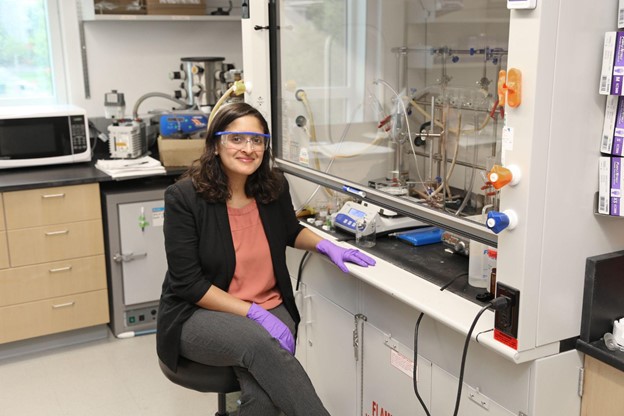
Finding solutions to real-life problems at the Shukla Lab. Image courtesy of Brown University School of Engineering
How did you get to this point in your career?
The one big factor in where I ended up is my family. My family has always supported me tremendously and I’ve had a very positive role model of an academic and researcher in my father. That definitely got me early exposure, which exemplifies and solidifies the fact that early exposure is really important, which can come from your family, friends, teachers, and other role models.
When I started my undergraduate studies at Carnegie Mellon University, I thought I wanted to go into medicine at first, but then when I got there. I really enjoyed designing solutions that physicians would use. As an undergrad, I didn’t really know what I wanted to do in terms of the exact field of research; so, every summer I did a different research experience. In the first summer, I worked at the University of Rhode Island in a Mechanical Engineering lab. For the second summer, I worked at MIT in a materials science lab. And for my third summer, I worked in Columbia University in applied physics and mathematics. I also did research at Carnegie Mellon University with a faculty member in chemical engineering and just tried to get mentors and different experiences under my belt so I could get better informed in what I wanted to do. I then went to MIT to study chemical engineering for my graduate degrees.
Did any specific people help you along the way?
I worked with a faculty member at MIT, Paula Hammond, who’s now the department Head in Chemical Engineering at MIT. She was really an amazing influence for me. I definitely had strong female role models as an undergrad, but my graduate supervisor at MIT happened to be a strong black female scientist and that was hugely influential to me – to see that you can be a minority in STEM, really successful, and do it all. At the same time, she was very open about challenges for women in chemical engineering and not afraid to talk about it at all. She did a great job in promoting us and making sure we had the right mentoring during the five years of my PhD. So, I’m very grateful to her.
I did my postdoc at Rice University in the bioengineering department, and I worked with another really strong female mentor there. My postdoctoral advisor, Jennifer West – who is now the Dean of Engineering at the University of Virginia – was really amazing. I learnt a whole new set of things from her. In all of this, I can pinpoint that I’ve had many mentors. I would highly advise that regardless of what you are interested in doing in life, find those people who are out there to support you.
How did you end up at Brown?
I ended up at Brown in the School of Engineering as a tenure track assistant professor in the summer of 2013. Since then, all the time has gone into setting up my lab and advancing our science. It’s pretty much flown by. I’ve been extremely lucky. I’ve had amazing students and postdocs in my lab. They really produce everything that comes out of it. I’m just the spokesperson.
I love working with them. We have a very inclusive environment. We talk about a lot of diversity, equity, and inclusion-related concerns. I think that’s really important. We try to self-educate and educate each other on these topics. We have a welcoming environment and genuinely care that everyone in the lab feels respected. Because you can only do good science and good work if you work in a place where you are happy and respected and can be yourself.
What does a given working day look like?
It varies. A given day is chaotic due to work and having two small kids. My husband is also a professor at Brown so we both have similar demands on our time but a lot of my time goes into research and proposal writing. We need to raise funds to run a lab so we definitely spend a lot of time on that. Paper writing to get out work out is also super important.
My favourite things are meeting with my grad students and postdocs about research. I love meeting with them and talking with them about their data and generating new ideas together. This semester I am also teaching a class about advances in biomedical engineering over the past couple of years. Preparing those classes and making sure I am devoting time to them is important to me.
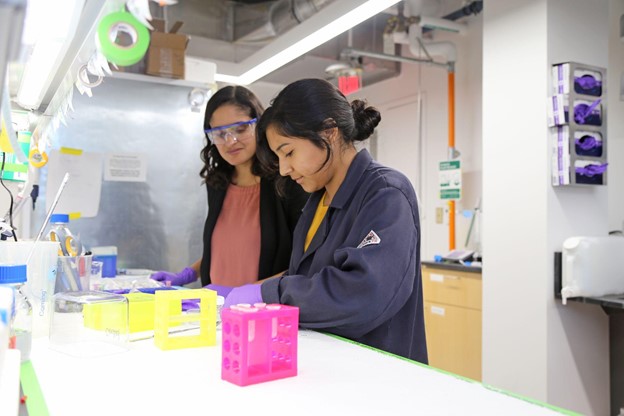
‘One thing I always tell students is don’t doubt yourself. Go ahead and try.’ Image courtesy of Brown University School of Engineering
What challenges have you had to overcome in your career?
I've been extremely lucky, but there has been the two-body situation. It’s essentially having a working spouse and trying to figure out how to make it work so that you both have the careers you want in the same location. That took me and my husband five years to figure out.
My husband was in Texas and I was in Rhode Island and I had two babies with me while doing this academic career on my own. That’s incredibly challenging, but it’s extremely common. In general, I think industry and academia need to work harder to make it easier for individuals to figure out this situation and smoothen the transition.
There are other little things that come up that are challenging. I do often feel that I have to prove myself to my older male colleagues at times when I shouldn't have to. If I get into an elevator with a male colleague who’s exactly the same age as me, a senior male colleague might ask that colleague about his research, and I might be asked about my kids. I often think it’s not intentional – and I try to give people the benefit of the doubt – but I think there’s a lot of education that still needs to be done.
>> Interested in the latest on antimicrobial drug discovery? Register to attend the 3rd SCI-RSC symposium on antimicrobial drug discovery on 15 and 16 November.
What’s the current state of play in your sector with respect to diversity, equality, and inclusion?
There's a lot to do but there’s a lot more awareness now. We’re far from where we need to be in terms of representation of all sorts of individuals in academia. Really, it’s ridiculously appalling if we look at numbers of black individuals, women in STEM academics, or the grant funding that goes to these individuals. But I have seen over the past two years or so that there’s just been more people talking about it. In biomedical engineering, a group of around 100 faculty or so academics around the US gets together periodically over Zoom to talk about these topics, and there’s more awareness and content in our scientific forums.
What’s the greatest challenge for people developing antimicrobial materials or in biomedical areas?
With therapeutics, it’s the FDA approval timeline. It’s years later by the time they’re used. A lot of the time people shy away from working in therapeutics because they know how hard it is going to be to commercialise something in that area.
On an academic level for me as an engineer, it’s critical to figure out what the important challenges and problems are. We’re very lucky at Brown that we have a great medical school so we can talk to clinicians, but cross-talk between disciplines is super important right now.
What advice would you give to young professionals in your area?
One thing I always tell students is don’t doubt yourself. Go ahead and try. You can’t win a game if you don’t play it. I constantly run into individuals who say: ‘I didn’t apply for that because I didn’t think I was qualified’. Basically, I just tell them to apply – you have nothing to lose.
What are you and your students working on that you’re most excited about at the moment?
I really love everything we are doing! I love the fact that we are designing materials that are smart, so they respond to the presence of microbes. I think that could be groundbreaking in terms of prolonging the lifetime of our existing antimicrobial drugs. We also have some really great work going on in treating biofilms, which are incredibly problematic in terms of infections. It’s very hard to answer. I’m proud of everything we do.
>> In recent months, we’ve spoken to inspiring women who work in science. Read more about the stories of materials scientist Rhys Archer and Jessica Jones, Applications Team Leader at Croda.
09 November 2021 |
|
|
Careers
Our careers often take us in unforeseen directions. Dr Jessica Jones, Applications Team Leader at Croda, chatted to us about moving from research into management, the benefit of developing softer skills, and her unexpected mentor.
Tell me about your career to date.
I came through university in what is probably seen as the ‘traditional’ way. I did a Master’s degree in chemistry at the University of Liverpool, with a year working in industry, which I really enjoyed. And then after I finished my Master’s, I did a PhD in Inorganic Chemistry at the University of Nottingham. I always wanted to work in industry, but I really enjoyed research, so I decided to do the PhD as I thought the skills would be useful for either career path.
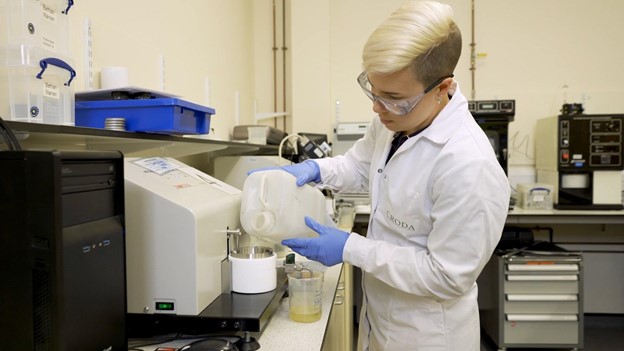
Jessica Jones in the lab
Were you tempted by a career in academia?
No, I never felt like I was the kind of person who had what it takes to succeed in academia. I never felt like I could ever come up with the nucleus of a new idea. I always felt like someone could give me the slimmest thread of a thought and I could turn it into something, but I could never have that thread myself. From my perspective, academia can be a lonely career and I enjoy and benefit from working in a team with other people.
So, after I finished my PhD, I joined Croda in 2013 as a Research Scientist in our synthesis division, in a synthetic chemistry R&D role. Over seven years, I progressed from Research Scientist to Lead Research Scientist and then Team Leader. During that time, I moved around a bit. I worked at different manufacturing sites, in different research areas and did lots of different projects across multiple sectors.
In February 2020, I was asked if I wanted to go on secondment, as a Team Leader, to one of our applications teams in Energy Technologies. Energy Technologies focuses on lubricants, oil and gas, and batteries. I really enjoyed the secondment and after it came to an end, I chose to take it on as a permanent position rather than return to my old role.
What does this role entail?
My role entails managing a team of application and lead application scientists who work on a range of projects, from designing new products to supporting customers with specific problems and working with universities on more theoretical, developmental ideas.
At the moment, we’re working on a lot of what we call EV (electric vehicle)-friendly fluids. When you move from traditional combustion engines to electric vehicles, there’s quite a change in the properties needed for the fluids within the engine. We make the speciality additives that go into the base oils that support functions such as reduced engine wear and improved fuel efficiency.
The EV market is very different to the traditional car market, which is dominated by big lubricant manufacturers. EVs are so new that Croda has been at conception discussions with world leading EV companies. The whole sector is very data driven and, coming from a research scientist background, that appeals to me very much. It’s very exciting to be at the cutting-edge of innovation with what we’re doing within electrification and renewable energy.
Which projects are you working on at the moment?
I’ve got two long-term new development projects that are both progressing to the final stages of manufacturing. These are products that I designed the chemistry for when working in the synthesis team. It can take four or five years to get a new project through the development process, and I’ve continued to manage them throughout their timeline, even though I have moved into different roles. They are both speciality additives for crude oil to reduce the temperature at which impurities develop, to allow the more difficult oil fractions to be brought out of the ground without it solidifying in pipes when they transport it.
What does a general working day involve?
There are eight people in our team, and I am responsible for managing six of them. There are two other senior technical specialists I work alongside. They have lots of experience in the industry and working with academia, and the three of us coordinate the projects across the team.
My role is to translate the pipeline and the strategy from our senior leaders into what we do in the lab every day. I have three projects that I'm running, which are new product launches. Alongside that, I coordinate the project pipeline and make sure everyone is able to manage their projects and progress them. I do a small amount of lab work, but I would say it makes up 5% of my time.
I always thought I would be a specialist when I joined Croda because of my PhD and lab experience. However, over the time I’ve worked here, I started to really enjoy working with other people; and I think I probably realised I had better skills at motivating other people, building up teams, and networking. So that became a lot more important, and I chose to move into the management side of things but still within a technical function.
Interpersonal skills are sometimes underrated in management. How do you approach this side of the job?
I think I am quite at ease around other people as I am very extroverted. I think that makes me different from a lot of people in my team. For example, my boss and I are the total opposite of each other, but it works really well because it means that we complement each other perfectly. He’s very strategic and he likes to take his time to make decisions. He likes to review all the data very methodically and is good at using detail to evaluate a project’s true value, whereas I’m much more about talking to people, bringing everyone together and acting quickly to get things done. But I think the balance of both works incredibly well for us as a team.
During lockdown we received a webinar on personal resilience, and the session was about your outward projection to other people. About 70% of how you are perceived by others is made up of how people see you and your ‘brand’. Your technical expertise and actual ability to do your job only makes up about 20% of how people view you and how successful you are. And I think as a scientist, you get a bit focused on delivering the project successfully, thinking that you need to be really amazing at delivering data, but people forget about the need to work on themselves to develop as well.
What part of your job motivates you most?
It’s a combination. The science we’re working on is very exciting, and I really enjoy getting all the projects together, making sure everything fits together and that everyone’s doing the right thing. But emotionally, it’s the team that gets me up in the morning – coming in, seeing what they do, how they have been. I’ve been really lucky over the past 12 months, being able to see some of my colleagues really develop. I’ve taken a lot of pride in realising the impact you can have on other people and allowing yourself to take credit for that.
>> What is life like as a materials scientist? Take a look at our thought-provoking conversation with Rhys Archer, founder of Women of Science.
Which mentors have helped you along the way?
There’s one person who stands out. I was asked to take on this extra role to become a European technical rep in one of our business areas. I’d never done anything like that before so the idea that I was going to be put out there, in front of customers, as the technical expert for the business was quite terrifying.
I was to work with the European Sales Manager of the business, and we ended up traveling a lot together. He was the opposite to me. He’s very experienced but had a reputation as a bit of a loud, burly Yorkshireman and I wasn’t sure how we would fit together, but we got on like an absolute house on fire. He was so helpful to me, not just in giving feedback on what I was doing in the role, but general conversations about career and life outside of work and personal support. Having that kind of professional relationship develop has made a massive difference. Just meeting someone like that and having a person to go to when I needed help, someone who I really trust to have my best interests at heart. It was very beneficial for the number of years that we worked together. Since then, we have moved on to different roles, but we still stay in touch, and it has taught me the value in reaching out to different people to help me to develop.
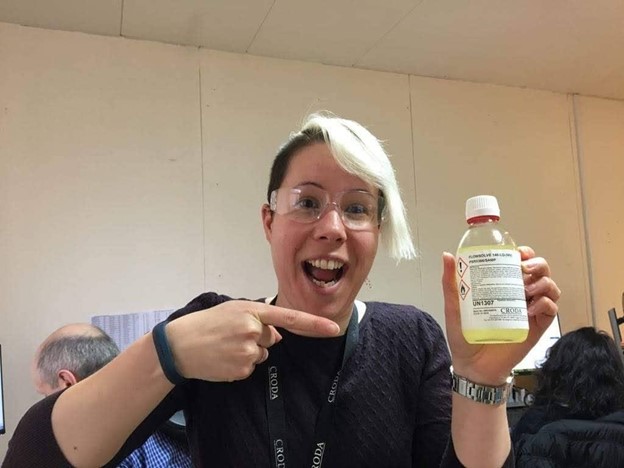
Jessica with the first product she developed at Croda.
In terms of equality and diversity, do you think enough is being done in your sector?
I think there is always more that can be done but I’ve never felt my gender has hindered me in my career and I’ve always felt very supported at Croda. Sometimes people are in a rush to see change immediately, especially when the senior management at Croda and many other STEM organisations is still made up of a majority of white males.
I like to think that the support myself and others have been given will mean that, as we progress, there will be more representation in senior positions. I would always want to achieve something on merit rather than to tick a box for equality. If that means it will take time for the generation I am in now to get to those positions, then I can wait. Importantly, I genuinely think everything that’s being put in place at Croda, and more broadly across the STEM sector, will pave the way for more diverse representation in senior roles in the future.
Do you have any advice you’d give to someone starting out?
Having a mentor is very important. I never thought I needed one until accidently developing that relationship. Since moving into different roles, I’ve set out to deliberately engage with people for that purpose. I would encourage people to seek out those who are different from themselves and engage with them.
I also think it’s important not to be afraid to ask for things you want. If you want to get a promotion or seek out further development, it’s often tempting to ask permission. If you can demonstrate to people that you are ready, it is more effective.
Generally, I think people, especially women, really underestimate the value of self-promotion as they worry it can be perceived as arrogance. A lot of people think that if you simply do a good job, then you’ll be recognised for that. That would be amazing if it were true, but people will judge you on how you’re perceived and how you present yourself, as well as what you do.
I think you need to put yourself out there. Whether it’s getting involved in something outside of your day job or taking the lead in a particular task, it’s a great way to get recognised. Sometimes it won’t work out and it can be hard to take the criticism when that happens, but you always learn from the outcome. I always prefer to have given something a go, even if I fail, than never to try.
Finally, I think people should always be themselves because everyone has unique skills to offer. I don’t think people would look at me and think that I look like the manager of a technical team, but I’m comfortable with my own style and that makes other people comfortable with it too.
>> We’re always interested in hearing about different people’s diverse career paths into chemistry. If you’d like to share yours, get in touch with us at: eoin.redahan@soci.org
08 November 2021 |
|
|
Sustainability & Environment
A group of inspiring young scientists took centre stage at COP26 on 4 November to show how the next generation of chemists is finding tangible climate change solutions.
In a day dominated by what countries pledged to stop doing at COP26, such as pursuing coal power and financing fossil fuel projects overseas, it was refreshing to learn about low-carbon technologies and the young people driving their development. At the Next Gen forum, we heard from an array of young chemists, all associated with SCI, who are at the sharp edge of this change.
We heard from Brett Parkinson, Senior Engineer of Low Carbon Fuels and Energy Technologist at C-Zero, who is working on commercialising a way to decarbonise natural gas. The California-based company’s technology converts the natural gas into hydrogen and solid carbon to provide a clean energy source while sequestering the carbon; and the aim is to have this process up and running next year.
Natasha Boulding is building towards Net Zero a different way – with a greener concrete. The CEO and Co-founder of Sphera has developed a lightweight carbon negative additive using waste plastics that aren’t currently being recycled. She says the company’s blocks are the same strength and price as existing concrete blocks, but with 30% more thermal insulation. There is also the added benefit of reusing waste materials that would otherwise have gone to landfill or been incinerated.
Another solution discussed by Dominic Smith, Process Development Engineer at GSK, reduces energy consumption through green chemistry. He is trying to find greener ways to make medicines using enzymes. These enzymes, which can be found in plants and soil, replace chemical synthesis steps to cut energy consumption during processing and reduce hazardous waste.
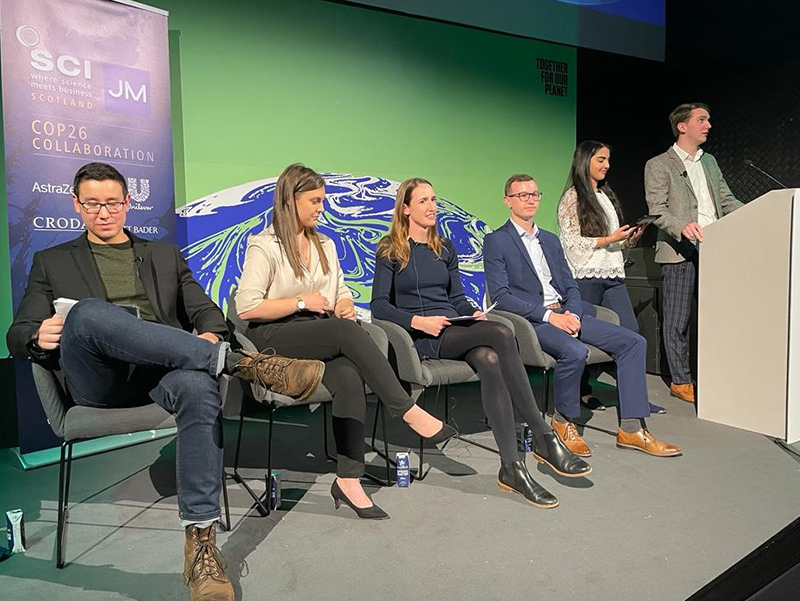
Panel (left to right): Dominic Smith, Natasha Boulding, Clare Rodseth, Jake Coole, Nikita Patel, and Oliver Ring (Brett Parkinson spoke via video link).
It was apparent from the discussion that many solutions will be needed for us to reach our climate change targets. On the one hand, Jake Coole, Senior Chemist in Johnson Matthey’s Fuel Cells team, is working on membrane electrode assembly for hydrogen fuel cells to help us transition to hydrogen-powered buses and trucks.
At the same time, Clare Rodseth, an Environmental Sustainability Scientist at Unilever, has been using lifecycle assessments to reduce the environmental impact of some of the 400 Unilever brands people use all over the world every day. For example, this work has helped the company move away from petrochemical ingredients in its home care products. ‘Even small changes,’ she said, ‘have the potential to bring about large-scale change.’
Incremental change
However, for each of the technologies discussed, barriers remain. For Coole and co., having a readily available supply of hydrogen and charging infrastructure will be key. And for Dominic Smith and his colleagues, the use of enzymes in green chemistry is still in its infancy; and getting enzymes that are fast enough, stable enough, and produce the right yield is difficult. Nevertheless, he noted that manufacturers are now using enzymes to produce the drug amoxicillin, reducing the carbon footprint by about 25%
And some things will take time to change. Natasha Boulding noted that concrete is the second most used material in the world after drinking water, and we simply can’t create many green technologies, such as wind turbines, without concrete foundations.
She said the construction industry is quite traditional but also pointed to perceptible change, with the green concrete market growing and companies becoming increasingly aware of their carbon footprints.
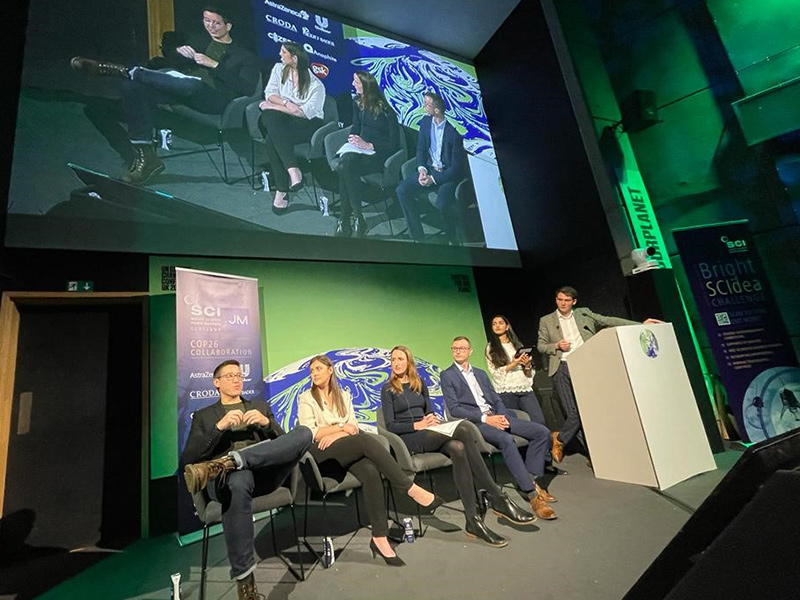
Collaboration was seen as crucial in producing climate change solutions.
The reality is that global action on climate change is recent. As Brett Parkinson said: ‘the main reason we’re talking about it now is that there’s a driver to do it. Until the last decade, the world hadn’t cared about CO2 emissions. They just talked about caring about it.’
How pivotal is science in all of this?
So, what could be done to make climate action more effective? For Parkinson, effective policy is key. He argued that if the market isn’t led by policies that encourage low-carbon innovations, then it won’t work as needed. ‘It all starts with effective decarbonisation policy,’ he said. ‘Legacy industries are very resistant to change. If you don’t have strong and consistent policies… then they’re not going to adapt.’
Another key to our low-carbon evolution is collaboration, and the SCI provides a confluence point for those in industry and academia to work together to produce innovative, low-carbon products. As Clare Rodseth said: ‘Collaboration is really important – linking up people who can actually come together and address these problems.’
As the discussion came to a close, you had the impression that the debate could have gone on for much longer. ‘Hopefully, we’ve demonstrated that there is action, and it’s being driven by young people like our panellists today,’ summarised Oliver Ring, the event’s co-Chair, before asking for the result of the audience poll.
The question: How many of those watching believed that science is pivotal in providing climate change solutions?
The answer: Just the 100%.
>> Thank you to Johnson Matthey for sponsoring the event, to the speakers for sharing their time and expertise, and to co-chairs Nikita Patel and Oliver Ring for doing such an excellent job.
05 November 2021 |
|
|
Sustainability & Environment
This Thursday at COP26, an inspiring panel of young scientists will discuss innovations that will help us mitigate climate change. So, what can we expect?
Millions of young people are frustrated by climate change inaction. Indeed, according to a University of Bath study, 60% of the next generation feel overwhelmed by climate anxiety. Often, the proposed solutions seem vague and intangible – well-intentioned ideas that drift away when the political winds shift.
And yet, when you see the ingenuity of young scientists, business people, and activists, it’s hard not to be excited. Undoubtedly, politics and our legal system will play a huge role in the drive to reach Net Zero, but arguably science will play the biggest role in transforming the way we live. Just think of the falling cost of generating solar power, improvements in battery chemistry for electric vehicles, the development of sustainable construction materials, and the rapid rollout of Covid-19 vaccines.
Tangible solutions
This Thursday at COP26, SCI will host the Next Gen youth forum event where the panellists discuss the climate change solutions they are working on right now and how they are being applied by industry. In the Countdown to Planet Zero roundtable, these scientists – drawn from within SCI’s innovation community – will explain their work to a global audience and the impact it will have on climate change.
They will discuss innovation in three key areas: topics of fuels of the future, turning waste into gold, and engineering nature.

The next generation has mobilised and is creating solutions to help avoid climate change disaster.
The panel will be chaired by two very capable young scientists. Oliver Ring is Senior Scientist at AstraZeneca’s large-scale synthesis team and Chair of SCI’s Young Chemists’ Panel, and passionate climate advocate Nikita Patel is a PhD student at Queen Mary University of London’s Centre of Translational Medicine and Therapeutics and STEM Ambassador for schools.
The other panel members include Clare Rodseth, of Unilever’s Environmental Sustainability Science team, who brings lifecycle analysis to product innovation to make products more sustainable.
Jake Coole, Senior Chemist in Johnson Matthey’s Fuel Cells team, is involved in the scale-up of new processes and next generation manufacturing, and Dominic Smith, Process Development Engineer at GSK, who is interested in engineering biology to create sustainable manufacturing processes.
Also present will be Dr Brett Parkinson, Senior Engineer of Low Carbon Fuels and Energy Technologist at C-Zero – a California-based startup that works on the decarbonisation of natural gas. In 2019, Brett was awarded an SCI scholarship for his research.
The lineup also includes Dr Natasha Boulding, CEO and Co-founder of Sphera Limited, a speciality materials company that has created carbon negative concrete blocks made from aggregate including waste plastic. According to Natasha, whose company also won SCI’s Bright SCIdea challenge in 2019: “In terms of combating climate change, interdisciplinary collaboration is the key. No one discipline has the answer to solve our biggest challenges – but together diverse minds can.’
>> Would you like to take part in BrightSCIdea and be in with the chance of winning £5,000? Be part of it.
Watch the event online
SCI is proud to be associated with these enterprising young scientists and the imaginative solutions they are developing to mitigate the effects of climate change.
‘As a global innovation hub, SCI wants to show how the next generation of scientists is actively developing solutions,’ said Sharon Todd, SCI CEO.

Sharon Todd, SCI CEO
‘Our COP26 youth forum debate will profile the work of young scientists and entrepreneurs addressing climate change in their work. This next generation of innovators has the power to change our world’s tomorrow.’
If you’d like to see the climate change solutions of tomorrow, register to watch the virtual event here.
02 November 2021 |
|
|