Careers
From genome mining and green synthesis, to tackling tuberculosis and computational methods to help cure malaria, the chemists of tomorrow have been busy showcasing their talents as part of the Society of Chemical Industry Young Chemists Panel’s National Undergraduate Online Poster Competition 2021.
A snapshot of these students’ talents is bottled below in their own words. So, which one of these 15 entries do you think contains the most potential?
1: Genome mining for myxobacterial natural products discovery
Emmanuelle Acs et al., University of Glasgow
Natural products have always had a privileged place in drug development programmes, but their discovery is long and tedious. Genome mining arises as a solution allowing the finding of compounds never seen before. Using an array of bioinformatic softwares, the myxobacterial genome was explored for new Ribosomally and Post-Translationally modified Peptides (RIPPs). Myxobacteria are soil-dwelling bacteria known for the number of secondary metabolites they produce, and they have proven to hide many more within their genome. Indeed, our analyses have led to the potential discovery of nine new myxobacterial natural products. The nature and class of these products is to be confirmed by biosynthesis in the laboratory.
2: De novo design of a lanthanide-binding peptide inspired by the methanol dehydrogenase enzyme active site
Olivia Baldwin et al., University of Birmingham
Lanthanides were thought to be biologically irrelevant until the discovery of bacteria containing the lanthanide-dependent methanol dehydrogenase (Ln-MDH) enzyme. There has been interest in exploiting the attractive properties of the lanthanides by the de novo design of artificial proteins, aiming to explore protein structures and functions not observed in biology. Here, a lanthanide-binding peptide, CS1-0, has been designed de novo and shown to bind to europium and pyrroloquinoline-quinone (PQQ), a key component of the Ln-MDH active site. This partial recreation of a biologically relevant lanthanide binding site is a step towards the ultimate goal of de novo design, to create functional artificial metalloproteins with simplified structures.
3: Template-directed synthesis of porphyrin nanorings: a computational and experimental study
Janko Hergenhahn et al., University of Oxford
Template-directed synthesis provides a route to achieve porphyrin nanorings by favouring ring-closure reaction over oligomerisation. A structurally new template with 12 binding sites has been proposed for the synthesis of novel porphyrin rings; however, initial unsuccessful reactions have raised questions about the binding efficiency of this template to the linear substrate. We have employed classical and quantum modelling together with experimental techniques to explore template-substrate binding in solution and shed light on this process. Titration experiments and modelling have enabled us to study the occupancy of different binding sites and quantify the influence of strain on binding, further guiding novel designs.
4: Transborylation enabled boron-catalysed hydrocyanation of enones
Kieran Benn et al., University of Edinburgh
Hydrocyanation offers an orthogonal route to synthetically ubiquitous amines. Current hydrocyanation methodologies are dominated by the use of acutely toxic hydrogen cyanide gas and transition metal catalysts. Here the application of main-group catalysis and transborylation is reported for the formal hydrocyanation of functionalised alkenes. The catalytic protocol was optimised and applied to a broad range of substrates (20 examples), including examples where chemoselectivity was demonstrated in the presence of reducible functionalities and Lewis basic groups. Mechanistic studies support a proposed catalytic cycle in which B–N/B–H transborylation was a key to catalyst turnover.

Students at the University of Glasgow have used computational analysis to help tackle malaria.
5: Investigation of the structure-property relationship between hydrophobicity and the antimicrobial activity of AMP-mimic copolymers
Xiyue Leng et al., University of Birmingham
Antimicrobial peptides are increasingly employed as new-generation antibiotics, with their amphiphilic nature (contain both hydrophobic and cationic components) mimicked by polymers to enable a more cost-effective approach. However, there is a lack of a quantitative pre-experiment indicator to provide a prospect on their potency. The overall hydrophobicity represented by LogP/SA was proposed to rapidly identify candidates in future designing to reduce synthetic efforts. We show a comparison study between two computational tools used to calculate LogP/SA: ChemBio3D and Materials Studio, in terms of the predictive power and sensitivity, followed by the synthesis of copolymers with a different cationic side chain based on the calculation results.
6: Modelling potential SARS-CoV-2 VIRTAC warheads
Mirjam-Kim Rääbis et al., University of Glasgow
Traditional small molecule therapeutics in medicinal chemistry often require high doses to inhibit the target protein, leading to issues with safety and drug resistance. Proteolysis targeting chimeras (PROTACs) are a new class of molecule that combat these issues, as they can use the body’s own protein degradation systems to degrade targets even at low drug doses. Virus-targeting chimeras (VIRTACs) can use a similar mechanism to target viral proteins. This project uses molecular docking studies to explore potential VIRTAC warheads that target the papain-like protease of SARS-CoV-2, in an attempt to find a potential treatment to COVID-19 that would, among other benefits, offer a lower risk of antiviral resistance.
7: Design, synthesis and biological evaluation of anti-tubercular small molecules
Miriam Turner et al., Newcastle University
Tuberculosis remains one of the top 10 causes of death worldwide, therefore there exists an unmet clinical need for new and improved therapeutics that tackle increasing bacterial resistance and affordability issues. Previous studies indicate N-substituted amino acid hydrazides exhibit good activity against several strains of Mtb. Ongoing structure-activity relationship studies utilising isoniazid, a variety of amino acids, and the active imidazo[1,2-a]pyridine-3-carboxy moiety of clinical candidate Q203 have also demonstrated excellent activities. Herein we report the results of our continued evaluation of this architecture, using a scaffold hopping approach to explore the potential of this pharmacophore as a new anti-tubercular drug.
8: Towards a cure for malaria: computational analysis and design of PfCLK3 inhibitors
Skye Brettell et al., University of Glasgow
Malaria continues to pose a significant challenge to humanity. Resistance to several frontline antimalarials represents a considerable threat, marking the need for new drugs with novel mechanisms of action. Kinase inhibitors represent a potential new class of antimalarials. TCMDC-135051 is a hit compound with activity against malarial kinase PfCLK3 as well as potency in liver, blood and sexual stage parasites. During this project, sequential analysis of the PfCLK3 catalytic domain identified key structural differences between the target and its human orthologs. Molecular docking studies of TCMDC-135051 analogues using GOLD then yielded potential lead compounds with predicted high affinity for the target kinase.
9: Mind the gap! Through-space electronic stabilisation of dynamic azaacene-extended helicene diimides
Matteo Albino et al., University of York
The strain-induced contortion of non-planar, chiroptically-active helicenes caused by fjord steric repulsive interactions is well known. Fjord-mediated planarisation, on the other hand, is far less common and has typically only been achieved via inherently strong covalent bond formation. Herein, I present the properties and density functional theory (DFT) analysis of electroactive aza[5]helicenes exhibiting unexpected through-space π-electronic stabilisation in the reduced states as a result of non-covalent fjord bonding effects. Computational modelling of optical spectra and aromatic-induced current densities reveal that lone pair-repulsive nitrogens in the fjord promote favourable ring currents and reversible helicene planarisation.
10: Mitochondria targeted metal-chelators as potential therapeutic agents against Parkinson’s Disease
Sam Andrew Young et al., Northumbria University
The synthesis of metal chelating molecules, specifically hydroxypyridones (HOPOs), have been identified as potential therapeutic agents for treating Parkinson’s Disease (PD) as bidentate ligands at the two oxygen donor atoms. These ligands are selective for ferric iron in the body, which is expected to stop the reduction of this iron accumulated in the brains of PD sufferers, hindering the Haber-Weiss mechanism from taking place in the mitochondria of the cell and preventing the associated degeneration of the cells. The lipophilicity of these HOPOs is vital to the process, allowing the molecule to transverse the blood-brain barrier, the addition of a triphenylphosphonium group on the HOPO is thought to increase therapeutic effect.

At Heriot Watt University, students have investigated the skin irritation potential of nanoclays using an IATA
11: Green synthesis of n-acetylcolchinol
Adelaide Lunga et al., Loughborough University
The aim of this project is to develop a short synthesis of N-acetylcolchinol using a greener and step-economical pathway. First, aldol condensation of 3-hydroxyacetophenone and 3,4,5-trimethoxybenzaldehye using ethanolic NaOH produced the respective chalcone. The product was reduced electrochemically in DMSO:MeOH (4:1) employing carbon electrodes and NEt4Cl to the saturated benzylic alcohol, which was converted to an acetamide via Ritter reaction using H2SO4 in MeCN. In the final step, the conditions were optimised to enable electrochemical oxidative coupling of the aromatic groups to give the desired N-acetylcolchinol. This novel four-steps reaction sequence avoids use of transition metal catalysts or toxic reagents.
12: Towards the synthesis of small-molecule probes to measure endosulfatase activity
Yi Xiao et al., University of Oxford
Human endosulfatases (SULFs) are enzymes on the cell surface and in the extracellular matrix that hydrolyse 6-O-sulfate on glucosamine units within heparan sulfate proteoglycans. SULFs are involved in growth and development, muscle regeneration and tumour growth via various signaling pathways, with untapped therapeutic and diagnostic potentials. However, profiling SULFs remains a challenge. Antibodies detect their presence, but do not indicate their activity state. The current activity assay is a global sulfatase assay and is not selective in a biological sample. We propose a novel small-molecule probe to profile SULF activity by exploiting the formation of 1,6-anhydrosugar, which can be potentially used in isolated proteins and in vitro.
13: Developing machine learning models to predict the Hansen solubility parameters
Alexander Pine et al., University of Greenwich
Solubility parameters are important for pharmaceutical formulations, paint formulations and new material development. There is a need to improve the accuracy of solubility calculations, and to be able to make rapid predictions of the solubility of new molecular structures. In this project, a range of Python plugins, and open-source codes have been used to develop a Lasso linear regression machine learning model to predict the Hansen solubility parameters (HSP) - δd, δp and δh, which represents dispersion forces, dipole-permanent dipole forces and hydrogen bonding respectively with the intention of making faster and more accurate prediction in solubility.
14: The cycloaddition between cyclononyne and mesyl azide
Alexander David Robertson et al., The University of Glasgow
This research considers computational modelling of a SPAAC reaction involving cyclononyne. DFT calculations were performed on the strain promoted reaction between cyclononyne and mesyl azide. Three low energy conformers of cyclononyne with Cs, C2 and C1 symmetry were found with similar energy. The transition structures for the corresponding cycloaddition with mesyl azide were found and the C2 conformer was the lowest in energy. Product structures were found leading to the identification of the thermodynamic product of the reaction. Distortion/interaction analysis showed that the cycloalkyne was already significantly pre-constrained to its reacting geometry.
15: The assessment of skin irritation potential of nanoclays using an IATA
Holly King et al., Heriot Watt university
Clays are natural nanomaterials consisting of mineral silicate layers. They have several functional uses in everyday life. An example of nanoclays that carry out a wide range of roles is smectites which include montmorillonite (MMT), bentonite and hectorite. These nanoclays can be used in cosmetics, altering their appearance and in pharmaceuticals as drug carriers and wound dressings. Integrated approach to testing and assessment (IATA) aim to collect all relevant data into one easy to understand format that can be used to group materials. Using an IATA dedicated to skin irritation/corrosion it was found that MMT was safe for use. However, hectorite was found to be toxic at high doses indicating that it is a possible irritant to the skin.
Many thanks to the sponsors of this year’s competition: GSK, AstraZeneca, TeledyneIsco. The event runs until 9 July, so let us know what you think of the entries on Twitter at #SCIPosterComp.
If you’d like to see these students’ full posters, go to: https://istry.co.uk/postercompetition/5/?date_example=2021-06-28
01 July 2021 |
|


 |
|

Science & Innovation
Which technologies will propel industry forward and give companies that competitive advantage? According to digital consultancy McKinsey Digital’s Tech Trends Index, several technologies will have a profound and disruptive impact on industries including the chemical sector. So, which ones will have the biggest effect on the way you work in the coming decade?
1: Automation
By 2025, more than 50 billion devices around the world will be connected to the Industrial Internet of Things (IIOT) and about 600,000 industrial robots a year will be in place from 2022. The combination of these, along with industrial processes such as 3D and 4D printing, will speed up processing and improve operational efficiency.
According to McKinsey, 50% of today’s work practices could be automated by 2022 as ever more intelligent robots (in physical and software form) increase production and reduce lead times. So, how does this change look in the real world?

According to the McKinsey Tech Trends Index, 10% of today’s manufacturing processes will be replaced by additive manufacturing by 2030.
According to the Tech Trends Index, one large manufacturer has used collaborative robots mounted on automatic guided vehicles to load pallets without human involvement, while an automotive manufacturer has used IIOT to connect 122 factories and 500 warehouses around the world to optimise manufacturing and logistics, consolidate real-time data, and boost machine learning throughput.
2: Next generation computing
An almost incredible 368,000 patents were granted in next generation computing in 2020. Advanced computing will speed up the processing of reams of data to optimise research and cut development times for those in the chemicals and pharmaceuticals industries, accelerate the use of autonomous vehicles, and reduce the barriers to industry for many eager entrants.
‘Next-generation computing enables further democratisation of AI-driven services, radically fast development cycles, and lower barriers of entry across industries,’ the index notes. ‘It promises to disrupt parts of the value chain and reshape the skills needed (such as automated trading replacing traders and chemical simulations, reducing the need for experiments).’
According to McKinsey, AI will also be applied to molecule-level simulation to reduce the empirical expertise and testing needed. This could disrupt the materials, chemicals, and pharmaceuticals industries and lead to highly personalised products, especially in medicine.
3: The Bio-revolution
It doesn’t take much investigation before you realise that the bio-revolution has already begun. Targeted drug delivery and smart watches that analyse your sweat are just two ways we’re seeing significant change.
The Tech Trends Index claims the confluence of biological science and the rapid development of AI and automation are giving rise to a revolution that will lead to significant change in agriculture, health, energy and other industries.
In the health industry, it seems we are entering the age of hyper-personalisation. The Index notes that: ‘New markets may emerge, such as genetics-based recommendations for nutrition, even as rapid innovation in DNA sequencing leads ever further into hyper personalised medicine.’ One example of this at work in the agri-food industry is Trace Genomics’ profiling of soil microbiomes to interpret health and disease-risk indicators in farming.
4: Advanced materials
It’s no secret that we will need to develop lighter materials for transport, and others that have a lighter footprint on our planet. According to McKinsey, next generation materials will enhance the performance of products in pharma, energy, transportation, health, and manufacturing.
For example, molybdenum disulfide nanoparticles are being used in flexible electronics, and graphene is driving the development of 2D semiconductors. Computational materials science is another area of extraordinary potential. McKinsey explains: ‘More new materials are on the way as computational-materials science combines computing power and associated machine-learning methods and applies them to materials-related problems and opportunities.’

5G networks will help take autonomous vehicles from tentative - to widespread use.
So, which sorts of advanced materials are we talking about? These include nanomaterials that enable more efficient energy storage, lighter materials for the aerospace industry, and biodegradable nanoparticles as drug carriers within the human body.
These are just four of the 10 areas explored in the fascinating McKinsey Digital’s Tech Trends report. To read more about the rest, visit: https://www.mckinsey.com/business-functions/mckinsey-digital/our-insights/the-top-trends-in-tech
22 June 2021 |
|
|
Agrifood
The iris family (Iridaceae) provides gardeners with a glorious array of colourful and frequently well scented flowers. Originating from both tropical and temperate regions, some such as freesias are best cultivated under protection. Others such as gladioli and crocus are reliable garden plants.
Iris, or fleur-de-lis, is one of the larger genera, offering colour and interest from the very earliest springtime through to May and June. The earliest and always most welcome is Iris unguicularis (previously Iris stylosa). Flowers (see illustration 1) emerge in the darkest days of December, encouraged by the warming effects of climate change.

Illustration 1: Iris unguicularis (syn Iris stylosa) / Image credit: Geoff Dixon
Originating from North Africa, it thrives in south facing dry borders, preferably under a wall where winter sunshine encourages proliferous flowering. Every few years, lift and divide the clump of small rhizomes after flowering has finished. Remove older growth and replant younger roots with a modest handful of compost and water well. Established clumps can be cut back, removing dead leaves during late spring.
By contrast Iris pseudacorus, the water flag, thrives in wet, boggy places or even when immersed in water. Found across Europe, it is a British native plant producing vivid yellow flowers that are rich sources of nectar. In parts of Scotland it forms large expanses of natural growth that are favoured by nesting corncrakes. It can be cultivated as part of water purification programmes since nitrogen and phosphorus are extracted by the vigorous root systems.

Illustration 2: Iris germanica / Image credit: Geoff Dixon
The prima donna is Iris germanica, the flag or bearded iris. These are stately plants, producing flower spikes up to one metre high and furnished with multicoloured flowers (illustration 2). Upright standard petals can contrast completely with the falls which bear a beard of yellow pollen bearing stamens. Fertiliser should be applied as the flower spikes appear. It should be applied again after flowering, stimulating root growth in anticipation of a colourful display in the next season.

Illustration 3: Rhizome ready for division / Image credit: Geoff Dixon
The rhizome is a large swollen ground-creeping stem from which side shoots develop with a terminal area of older tissue (illustration 3). Every four or five years, the rhizomes should be lifted and divided by removing the terminal tissue and splitting off side shoots with a sharp knife. These and the main rhizome should be replanted carefully, ensuring that they rest on the soil surface with their fibrous roots buried beneath them. Multiplication eventually provides a border filled with very colourful displays that can persist for a month since flowers frequently emerge along most of the spike.
Written by Professor Geoff Dixon, author of Garden practices and their science, published by Routledge 2019.
14 June 2021 |
|
|
Health & Wellbeing
Watching plants grow in a hydroponic contraption is an education. The plants sit in foam under UV light while their roots feed on water fortified by plant feed. There is no soil. No thirst. No room for death by lazy gardener. The results, as any hydroponic enthusiast will tell you, are startling.
So, what if we were to adopt this targeted, optimised approach to our own nutrition? What would happen if he were to ditch that delicious Sunday roast in favour of a shake that contains all the vitamins and minerals your body needs? Admittedly, it sounds terrible, but people do something similar already. Many gym obsessives take protein shakes religiously to feed their bodies’ impressive musculature, while others skip meals entirely in favour of such drinks and supplements.

An organic hydroponic vegetable cultivation farm
A recent study conducted by the Cherab Foundation, which featured in the Alternative Therapies journal, concludes that nutritional supplements may also help boost our brain function. After giving 77 people a vitamin and meal replacement product called IQed Smart Nutrition, the researchers from the non-profit organisation found that the supplement boosted brain function in a range of areas and could help people with autism, apraxia, and ADHD.
Almost 84% of participants reported deficits in speech and communication prior to taking the nutritional supplements. After taking the product, more than 85% said their expressive speech had improved while 67% of respondents reported improvements in other areas including focus, language understanding, oral motor skills, and physical and behavioural health.
Overall, 64% of participants reported positive changes within two weeks. According to the Cherab Foundation, the research aims “to guide future research into the dietary interventions and potential management of neurological conditions using natural food products, vitamin and mineral supplements”.
So, what ingredients are in the supplement-infused chocolate shake that will replace the wood-fired pizza you’re due to have next Friday evening? According to IQed, its powdered chocolate offering contains everything from brown rice, apple fibres, turmeric, and green tea, to copper gluconate, amalaki, cayenne pepper, and chia seeds.

Turmeric, cayenne pepper, and chia seeds have hopped onto the superfood bandwagon in recent years.
Some will dismiss these supplements as hocus-pocus, but the potential benefits of optimised nutrition are exciting nonetheless. If some wince-inducing elixir makes us healthier, stronger and live longer, perhaps it’s worth investigating further?
The Cherub Foundation works to improve the communication skills, education, and advocacy of children on the neurological spectrum. To read more about its study, visit: https://pubmed.ncbi.nlm.nih.gov/32088673/
08 June 2021 |
|
|
Agrifood
Farmers today are under pressure to produce more food with fewer resources and without damaging the environment around them. Faced with factors such as land pressures, soil fertility, pest management and agricultural policy, farming today is all about efficiency, time and energy saving technology, and the drive to make solutions as sustainable as possible.
This obviously poses the question: what can the agrochemical industry do to increase output on one hand and protect the environment and improve applicator safety on the other?
Formulation technology is becoming increasingly important in answering this question. By designing innovative formulations, agrochemical products can become more effective as well as safer. Without the right formulation, even the best active substance is worth nothing.
Most pesticidal active ingredients are not water soluble or water dispersible, yet the most common mode of delivery is via spray applications of aqueous dilutions. It is necessary to create a formulation of the active ingredient in a way that makes it easily dispersible in water and able to maintain stability over the application time period. Changing what goes into this formulation alongside the active ingredient is crucial in how effectively that material is delivered to where it needs to be.
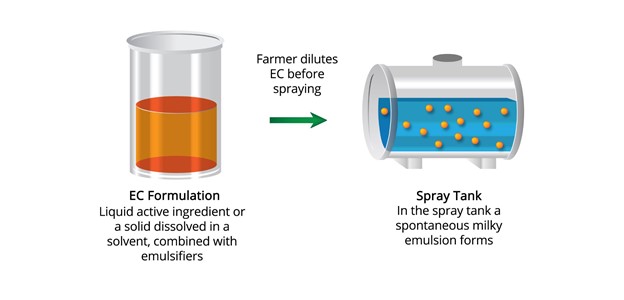
Demonstration of an EC formulation.
Two of the most common types of agricultural formulations that tackle this issue are emulsifiable concentrates (ECs) and suspension concentrates (SCs). EC formulations are suited to active ingredients that are oil soluble and have low melting points. As they are purely a solubilised active ingredient in an oil or solvent with the presence of emulsifiers, they are simple to manufacture and relatively easy to stabilise. The presence of an oil also enhances the biological activity of the application, making them more efficacious in the field.
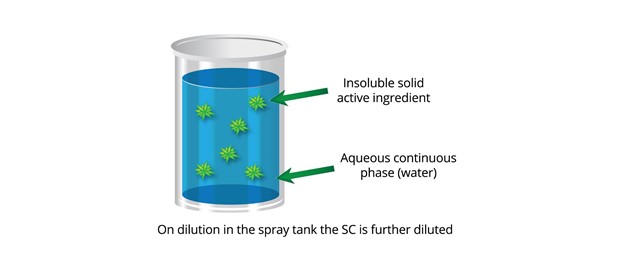
SC formulation, with an indication of what occurs upon dilution into the spray tank prior to application.
SC formulations, on the other hand, are suitable for insoluble active ingredients and those with higher melting points. Crucially, as water is the continuous phase, they are also typically safer and more convenient in use for the operator; there is an absence of dust, flammable liquids, and volatile organic compounds.
Built into each of these formulations alongside the active ingredient are formulation additives. Formulation additives, referred to as inert ingredients, are critical to provide the long-term stability to agrochemical products and their ability to mix effectively in the spray tank, making them suitable for [field spray] applications.
While the formulation type targeted is often dictated by the chemical characteristics of the active ingredient, the formulator has the ability to change every element of the spray quality characteristics and agrochemical delivery through selection of formulation additives. Changing both the formulation type and the additives within will habitually have a dramatic effect on the field efficacy of that application and subsequent yield and quality of the crop. Selecting the correct formulation additives is essential in creating a successful formulation, arguably making them as significant as the active ingredient itself.
How formulators learn to map the complex effects within formulations for improved crop protection is just one facet of today’s agriculture challenge.
Interested in learning more about how the formulation of agrochemicals plays its part in feeding the world? Visit: www.crodacropcare.com
01 June 2021 |
|
|
Sustainability & Environment
As silicon reaches its solar ceiling, perovskite has emerged as one of the main materials of choice in the next generation of solar panels. Indeed, Oxford PV’s much anticipated perovskite-silicon solar cell could take conversion efficiency well beyond what is currently achieved on the roofs of our homes.
The benefits of perovskite are well known at this stage. It could increase the energy we harvest from the sun and improve solar cell efficiency, and its printability could make fabrication cheaper. However, as with almost everything, there are drawbacks.
According to researchers at the SPECIFIC Innovation and Knowledge Centre at Swansea University, the solvents used to control the crystallisation of the perovskite during fabrication hinder the large-scale manufacture of printed carbon perovskite cells. This is due to the toxicity and potentially psychoactive effects of these materials.
The SPECIFIC team claims to have found a way around this after discovering a non-toxic biodegradable solvent called γ-Valerolactone. They say this replacement solvent could be used without affecting solar cell performance. Furthermore, they say it is non-toxic, sustainable, and suitable for large-scale manufacturing.
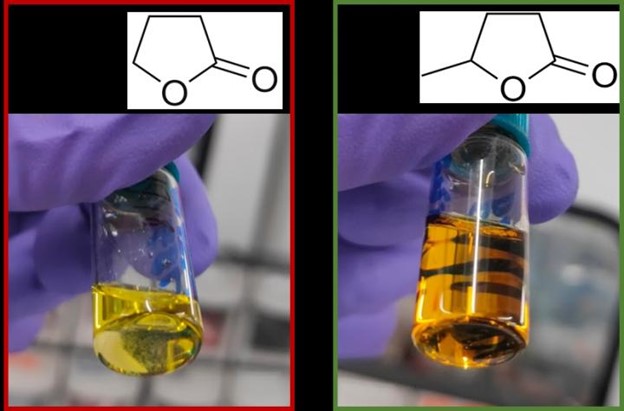
Left - solvent normally used to make solar cells, which is toxic.
Right - new green solvent developed by Swansea University researchers from the SPECIFIC project
| Image Credit: Swansea University
‘This solvent problem was a major barrier, not only restricting large-scale manufacture but holding back research in countries where the solvents are banned,’ said research group leader Professor Trystan Watson. ‘We hope our discovery will enable countries that have previously been unable to participate in this research to become part of the community and accelerate the development of cleaner, greener energy.’
As the conversion efficiency of solar panels improves, cost is also key. What if you could create the same solar panels in a more cost-efficient way? That was part of the thinking behind another recent innovation in Singapore, where Maxeon Solar Technologies has created frameless, lightweight rooftop solar panels. These solar panels can be adhered directly to a roof without racking or mounting systems and allegedly perform just as well as standard solar panels.

The new Maxeon Air technology platform from Maxeon Solar Technologies
‘For close to 50 years, the solar power industry has almost exclusively used glass superstrate panel construction,’ said Jeff Waters, CEO of Maxeon Solar Technologies. ‘As solar panels have increased in size, and the cost of solar cells has been dramatically reduced, the cost of transporting, installing and mounting large glass panels has become a relatively larger portion of total system cost. With Maxeon Air technology, we can now develop products that reduce these costs while opening up completely new market opportunities such as low-load commercial rooftops.’
The idea is to use these peel-and-stick designs on low-load roofs that cannot support the weight of conventional solar systems; and they will be rolled out in 2022. Time will tell whether the innovations in Swansea and Singapore have a bearing on companies’ solar systems, but they provide more evidence of the ingenuity that is making solar power cheaper and more efficient.
24 May 2021 |
|
|
Sustainability & Environment
We’re starting to see those silent cars everywhere. The electric vehicle evolution is gradually seeping onto our roads. Every month or two, we also seem to read about another wind power generation record in the UK, or some super solar cell. Pension funds and big corporations are coming under great pressure to divest from fossil fuels. The clean power revolution is well underway.
And yet the third biggest polluter of the planet - after power and transport - awaits the seismic shift that will shake it to its foundations. Indeed, cement production still accounts for roughly 8% of the world’s greenhouse gas emissions.
The problem is that creating cement is an energy-intense, polluting process with firing temperatures of 2,700 degrees Fahrenheit needed to create it, and plenty of CO2 released during processing.

Green cement and concrete are needed to reduce emissions in construction and other industries.
But there are signs that the processing could become cleaner. A recent report released by Market Research Future (MRFR) predicts that concrete (of which cement is a key ingredient) use could get appreciably greener over the next six years. It estimates that the global green concrete market size will grow at a 9.45% compound annual growth rate from 2020-27.
MRFR attributes this rise to several factors. First, there is a growing demand for green or recycled concrete (that incorporates waste components) within the construction industry. For builders, it enhances their environmental credentials and will increasingly become a business-savvy investment as governments seek to reduce carbon emissions.
Green building codes and the creation of energy-efficient infrastructure will also help propel this growth, and changing building regulations in massive markets including China, India, and the Middle East will result in many manufacturers looking to develop different material combinations. Increasingly, we’re seeing manufacturers turning to less energy-intensive manufacturing methods and investigating which waste materials could be used to create a greener cement or concrete that doesn’t compromise on performance.
Researchers at Chalmers University of Technology, in Sweden, have even been developing a rechargeable cement-based battery. If it ever comes to pass, this could be used to create buildings that store energy like giant batteries. Some manufacturers are also looking into the electrification of kilns, which isn’t feasible yet, and carbon capture and storage has long been mooted as a means to reduce industrial emissions.

Imagine an entire twenty storey concrete building that can store energy like a giant battery. This could be possible if Chalmers University’s cement-based rechargeable batteries come to fruition. | Image Credit: Yen Strandqvist/Chalmers University of Technology
The good news is that we don’t just have people all over the world working on low-carbon materials and manufacturing methods; experts in the UK are tackling the issue right now. On 2 June, speakers at the SCI’s free webinar, Ultra-low carbon concrete, a sustainable future, will examine some of the exciting initiatives underway.
These include an award winning, industry accepted ultra-low carbon alternative to traditional cement, which could result in CO2 savings of up to 78%, and the potential of using offsite manufacturing to provide commercial projects with a sustainable structural frame solution.
As with transport and power, cement is getting greener increment by increment. But with drastic climate change consequences dangling above us like the Sword of Damocles, now is the time for concrete action.
Register for Ultra-low carbon concrete, a sustainable future today at: https://bit.ly/33WfjkN.
18 May 2021 |
|
|
Agrifood
Perennial bush soft fruits are among the crown jewels of gardening. Gooseberries, red currants and blackcurrants when well established will annually reward with crops of very tasty ripe fruit which provide exceptional health benefits. These bushes will mature into quite sizeable plants so only relatively few, maybe one to five of each will be sufficient for most home gardeners or allotment owners.
Header image: Gooseberries | Image credit: Geoff Dixon
The art of successful establishment lies in initial care and planting. Buy good quality dormant plants from reputable nurseries or garden centres. Plunge the roots deeply in a bucket of water and plant as quickly as possible. These crops need rich fertile soil which is weed free and has recently been dug over with the incorporation of farmyard manure or well-rotted compost. Each bush requires ample growing space with at least a one metre distance within and between rows.
Take out a deep planting hole and soak with water. Place the new bush into the hole, spreading out the root system in all directions. Add mycorrhizal powder around and over the roots, which encourages growth promoting fungi. These colonise the roots, aiding nutrient uptake and protecting from soil borne pathogens. Carefully fold the soil back around the roots, shaking the plant. That settles soil in and around the roots and up to the collar which shows where the plant had grown in the nursery. Tread around the collar to firm the plant and add more water. Normally, planting is completed in late winter to early spring before growth commences.

Redcurrants | Image credit: Geoff Dixon
As buds open in spring, keep the plants well-watered. It is crucially important that the young bushes do not suffer drought stress, especially during the first summer. Supplement watering with occasional applications of liquid feed which contains large concentrations of potassium and phosphate plus micro nutrients. Remove all weeds and flowers in this first year. That concentrates all the products of photosynthesis into root, shoot and leaf formation for future seasons. Clean up around the plants in autumn, removing dead leaves that might harbour disease-causing pathogens.
These plants will flower and fruit from the first establishment year. Each bush will produce fruit which is a succulent and rewarding source of health-promoting vitamins and nutrients.

Blackcurrants | Image credit: Geoff Dixon
Blackcurrants are a fine source of vitamin C and have twice the antioxidant content of blueberries. Redcurrants are sources of flavonoids and vitamin B, while gooseberries are rich in dietary fibre, copper, manganese potassium and vitamins C, B5 and B6.
Blackbirds also like these fruits so netting or cages are needed! Continuing careful husbandry will yield a succession of expanding and rewarding crops.
Written by Professor Geoff Dixon, author of Garden practices and their science, published by Routledge 2019.
10 May 2021 |
|
|
Sustainability & Environment
Sometimes, when you try to solve one problem, you create another. A famous example is the introduction of the cane toad into Australia from Hawaii in 1935. The toads were introduced as a means of eliminating a beetle species that ravaged sugar cane crops; but now, almost a century later, Western Australia is inundated with these venomous, eco-system-meddling creatures.
In a similar spirit, disposable face masks could help tackle one urgent problem while creating another. According to researchers at Swansea University, nanoplastics and other potentially harmful pollutants have been found in many disposable face masks, including the ones some use to ward off Covid-19.
After submerging various types of common disposable face masks in water, the scientists observed the release of high levels of pollutants including lead, antimony, copper, and plastic fibres. Worryingly, they found significant levels of pollutants from all the masks tested.
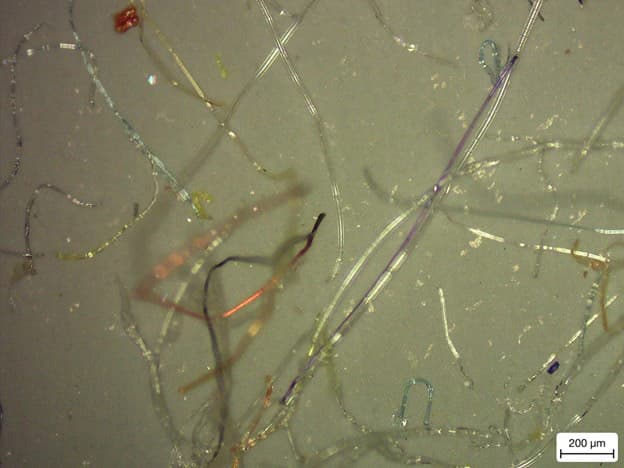
Microscope image of microfibres released from children's mask: the colourful fibres are from the cartoon patterns | Credit: Swansea University
Obviously, millions have been wearing single-use masks around the world to protect against the Covid-19 pandemic, but the release of potentially harmful substances into the natural environment and water supply could have far-reaching consequences for all of us.
‘The production of disposable plastic face masks (DPFs) in China alone has reached approximately 200 million a day in a global effort to tackle the spread of the new SARS-CoV-2 virus,’ says project lead Dr Sarper Sarp, whose team’s work has been published on Science Direct. ‘However, improper and unregulated disposal of these DPFs is a plastic pollution problem we are already facing and will only continue to intensify.

The presence of potentially toxic pollutants in some face masks could pose health and environmental risks.
‘There is a concerning amount of evidence that suggests that DPFs waste can potentially have a substantial environmental impact by releasing pollutants simply by exposing them to water. Many of the toxic pollutants found in our research have bio-accumulative properties when released into the environment and our findings show that DPFs could be one of the main sources of these environmental contaminants during and after the Covid-19 pandemic.’
The Swansea scientists say stricter regulations must be enforced during manufacturing and disposal of single-use masks, and more work must be done to understand the effect of particle leaching on public health and on the environment. Another area they believe warrants investigation is the amount of particles inhaled by those wearing these masks.
‘This is a significant concern,’ adds Sarp, ‘especially for health care professionals, key workers, and children who are required to wear masks for large proportions of the working or school day.’
07 May 2021 |
|
|
Careers
In the latest blog in our SCI Mid-Career group series, Dr Jessica Gould, Applications Team Leader of Energy Technologies at Croda International, speaks about finding time for career development and the importance of taking on responsibilities outside her normal job role.

Please tell us about yourself and your career journey.
I started off my chemistry career with a Master’s degree in Chemistry from the University of Liverpool, during which I spent a year working in the chemical industry at Cognis Ltd. Following my undergraduate degree, I began a PhD at the University of Nottingham that looked at developing novel coordination polymers for hydrogen storage as part of the Engineering and Physical Sciences Research Council’s Centre for Doctoral Training in Hydrogen, Fuels Cells and their Applications.
After completing my PhD, I started work at Croda in 2013. I have predominantly worked as a research scientist in the UK Synthesis team, specialising in acrylic polymerisation. However, in early 2020 I changed roles to work as the Team Leader of our Energy Technologies Applications team. This area focuses on developing additives for the renewable energy sector, looking at electric vehicles, EV fluids, wind turbines and battery additives.
What are your keys to managing your career at this stage?
Compared to early career development, where the focus is on learning the key skills required for your job, at a mid-career stage other skills such as networking become more important. I do this by attending events both inside and outside my workplace. I also use various online platforms such as Microsoft Teams and LinkedIn to maintain and foster relationships within my network.
I also think that taking on responsibilities from outside your normal job role is important in managing your career at the mid-stage level. This allows you to continue to learn new skills even if you feel you are well settled in your main role. My manager helps me identify these opportunities and manage them within my current job role. My organisation also provides training courses that allow me to further develop these skills.
What challenges are there around mid-career support?
From my perspective, the challenge around mid-career support is finding time within your existing schedule for career development. People can often feel like they’ve stagnated if it takes a long time to progress or if they see limited job opportunities above them. Training, courses, networks and other experiences can help them learn and feel challenged. These provide an excellent way to maintain development at a mid-career level.
What additional support could SCI give to mid-career professionals?
Mentoring is an excellent way for people to feel supported in their career development. Expanding and continuing our mentoring scheme would be a great way for SCI to support its members.
Related Links:
06 May 2021 |
|
|
Sustainability & Environment
Every tin can dropped into our recycling bins is a small act of faith. We hope each one is recycled, yet the figures take some of that fervour from our faith. According to UK government statistics from 2015-2018, only about 45% of our household waste is recycled. Similarly, the UN has noted that only 20% of the 50 million tonnes of electronics waste produced globally each year is formally recycled. So, it’s fair to say we could do better.
Thankfully, thousands of people around the globe are working on these problems and two recent developments give us grounds for optimism. The first involves upcycling metal waste into multi-purpose aerogels, and the second involves fully recyclable printed electronics that include a wood-derived ink.
Upcycling metal waste
Researchers at the National University of Singapore (NUS) claim to have turned one person’s trash into treasure with a low-energy way to convert aluminium and magnesium waste into high value aerogels for the construction industry.
To do this, they ground the metal waste into a powder and mixed it with chemical cross-linkers. They heated this mixture in an oven before freeze-drying it and turning it into an aerogel. The team says this simple process makes their aerogels 50% cheaper than commercially available silica aerogels.
Aerogels have many useful properties. They are absorbent, extremely light (hence the frozen smoke nickname), and have impressive thermal and sound insulation capabilities. This makes them useful as thermal insulation materials in buildings, in piping systems, or for cleaning up oil spills. However, the NUS team has loftier goals than that.

There is a great need for less energy intensive ways to recycle metals
“Our aluminium aerogel is 30 times lighter and insulates heat 21 times better than conventional concrete,” research team leader Associate Professor Duong Hai-Minh whose research has been published in the Journal of Material Cycles and Waste Management. “When optical fibres are added during the mixing stage, we can create translucent aluminium aerogels which, as building materials, can improve natural lighting, reduce energy consumption for lighting and illuminate dark or windowless areas. Translucent concrete can also be used to construct sidewalks and speed bumps that light up at night to improve safety for pedestrians and road traffic.”
The aerogels could even be used for cell cultivation. Professor Duong explains: “Microcarriers are micro-size beads for cells to anchor and grow. Our first trials were performed on stem cells, using a cell line commonly used for testing of drugs as well as cosmetics, and the results are very encouraging.”
Whatever about these speculative applications, this upcycling method will hopefully help us find new homes for all types of metal waste including metal chips and discarded electronics.
Recyclable printed electronics
A team at Duke University has also made interesting progress in reducing electronic waste. The researchers claim to have developed fully recyclable printed electronics that could be used and reused in a wide range of sensors.
The researchers’ transistor is made from three carbon-based inks that can be printed onto paper, and their use of a wood-derived insulating dielectric ink called nanocellulose helps make them recyclable. Carbon nanotubes and graphene inks are also used for the semiconductors and conductors, respectively.

A 3D rendering of the first fully recyclable, printed transistor. CREDIT: Duke University
“Nanocellulose is biodegradable and has been used in applications like packaging for years,” said Aaron Franklin, the Addy Professor of Electrical and Computer Engineering at Duke, whose research has been published in Nature Electronics. “And while people have long known about its potential applications as an insulator in electronics, nobody has figured out how to use it in a printable ink before. That’s one of the keys to making these fully recyclable devices functional.”
The team has developed a way to suspend these nanocellulose crystals (extracted from wood fibres) with a sprinkling of table salt to create an ink that performs well in its printed transistors. At the end of their working life, these devices can be submerged in baths with gently vibrating sound waves to recover the carbon nanotubes and graphene components. These materials can be reused and the nanocellulose can be recycled just like ordinary paper.
The team conceded that these devices won’t ruffle the trillion dollar silicon-based computer component market, but they do think these devices could be useful in simple environmental sensors to monitor building energy use or in biosensing patches to track medical conditions.
Read about the Duke University research here: https://www.nature.com/articles/s41928-021-00574-0
Take a look at the NUS study here: https://link.springer.com/article/10.1007/s10163-020-01169-1
29 April 2021 |
|
|
Careers
In this blog series, members of the SCI Mid-Career group offer advice on career management and how to overcome career challenges.

In our latest interview, we hear from Dan Smith, Head of Portfolio at CatSci Ltd.
Please tell us about yourself and your career journey.
I have more than six years’ experience at CatSci, an SME that specialises in process development for the drug development programmes of our partners. In my current role as Head of Portfolio, I oversee the delivery of our customer projects and support the technical qualification of new business and resourcing across our technical team. Previously, as Principal Scientist I led projects focused on route optimisation for Phase I-II and greatly enjoyed contributing to CatSci’s growth from four practical lab scientists to a current team of 24.
Prior to CatSci, I focused on both applied catalysis and fundamental research in both the UK and US as a postdoc for five years, including at the University of York and Texas A&M University. This provided an opportunity to explore and develop a range of skills such as computational modelling and basic programming that I have found useful since. In terms of earlier education, I have both PhD and Master’s degrees in Chemistry from Durham University.
What are your keys to managing your career at this stage?
As one begins to specialise or diversify at the mid-career stage, often there is a less well defined path. However, that comes with a multitude of possibilities. A lot of my current learning is focused on broadening my skillset across disciplines, such as finance, that help contextualise a wide range of business activities. Relative to early career development, there can be fewer individuals to draw on for their greater experience, especially in smaller departments or organisations. Instead, actively engaging those outside of one’s day-to-day environment for their views can be very helpful.
What challenges are there around mid-career support?
One of the biggest challenges is around time, and setting aside time to reflect on larger strategic objectives. Ring fencing time is often difficult. However, conferences can provide this free space to focus on opportunities and engage others for different perspectives.
What additional support could SCI give to mid-career professionals?
In the evolving shift to a more virtual world, change has accelerated due to the pandemic, and digital technology is of even greater importance to virtually all areas of work. SCI members may benefit from support in these areas, specifically in relation to new ways of working in the chemical industry.
Related Links:
22 April 2021 |
|
|