Materials
A little talked about element, with the atomic mass 140, plays a surprisingly important role in everyday life. It has not only lit many a path, but can be credited with improving and saving the lives of billions of people by enabling cleaner air.
In his talk '140Ce: White light & Clean Air' Andy Walker, Johnson Matthey’s Technical Marketing Director explained why the soft, ductile silvery-white metal Cerium, deserves more recognition.
Walker began by outlining the history of SCI, celebrating its 140th anniversary this year. As an employee of Johnson Matthey, Walker highlighted that George Matthey was among the pioneers of SCI. In addition Walker explained that his PhD research had involved looking at catalysts that included Cerium.
Cerium is a lanthanide and the 26th most abundant element on earth. Indeed it was the first lanthanide to be discovered, found as its ore cerium silicate, in 1803. Cerium makes up 66ppm of the earth’s crust, which is about 5 times as much as lead. It is the only one of the lanthanides able to take on the +4 oxidation state, making it very useful in some of its applications. It is mined in the US, Brazil, India, Sri Lanka, Australian and China, with annual global production of 24 000 tonnes.
However, this straightforward look at the history of Cerium conceals a much more interesting narrative about how this element shaped the life of a number of prominent chemists of the day. Indeed Cerium was found as early as 1751 at a mine in Vestmanland, Sweden by Axel Cronstedt, who also discovered Nickel. Believing it to be an ore of Tungsten, he sent it to Carl Wilhelm Scheele for analysis. However, Scheele was not able to identify it as a new element.
This turn of events for Scheele, perhaps unfairly, helped to seal his moniker as the ‘unlucky chemist’. Scheele, a prominent chemist and pharmacist, had a number of discoveries to his name. He isolated lactic acid, and discovered hydrogen fluoride and hydrogen sulphide.
But as Walker explained, his most notable discovery was oxygen, some three years before Joseph Priestley. Sadly for Scheele; it took him six years to publish his findings, by which time Priestley had already presented his data. Putting a contemporary slant on Scheele’s misfortune, Walker added that the cautionary tale here was that getting things out into the public domain as soon as possible can be important to ensure credit goes to the right people.
Further work by Scheele led to the discovery of a number of elements including barium and chlorine, but sadly he did not receive any recognition because he didn’t manage to isolate them and identify them correctly. The chemist Sir Humphrey Davy did so, some years later, getting the credit for their discovery and isolation.
So it was in 1803 that chemists Wilhelm Hisinger and Jons Jacob Bezelius proved that Cerium was indeed a new element, naming it Cerium after an asteroid/dwarf planet which had been called Ceres. The successful isolation of Cerium took place in 1875, carried out by American chemists William Hillebrand and Thomas Norton, by passing an electric current through molten cerium chloride.
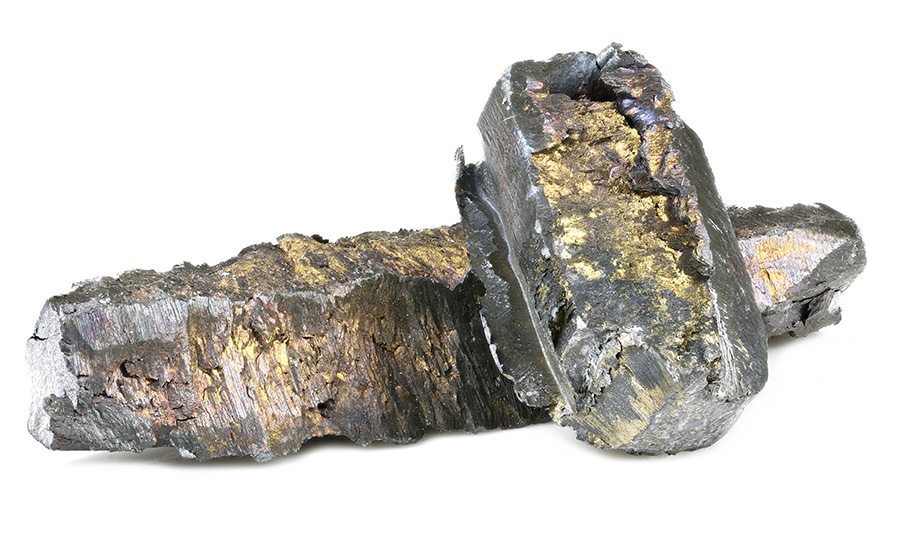
99.95% fine cerium isolated on white background
Once isolated, the earliest application of Cerium was in incandescent gas mantles. Developed by Carl Auer von Welsbach, in 1891, he perfected a mixture of 99% thorium oxide and 1% ceria, which gave a soft white light. Introducing his new mantle commercially in 1892, von Welsbach was able to monetise his development selling his product throughout Europe.
Gas mantles have been replaced, but Cerium’s importance in producing white light remains. As Walker explained, most white LEDs use a blue gallium nitride LED covered by a yellowish phosphor coating made of cerium-doped Yttrium Aluminium Garnet crystals.
In the medical arena, Cerium was used by Sir James Young Simpson, Professor of Medicine and Midwifery at Edinburgh who did a lot of work in the area of anaesthetics. Simpson found that cerium nitrate suppressed vomiting, particularly that associated with morning sickness, and well into the last century, medication containing Cerium could be bought over the counter. In addition Cerium has been the basis of treatments for burns.
Other applications for this versatile element are self cleaning ovens and mischmetal alloy, used in flints for cigarette lighters. Walker shared that the chemist and author Primo Levi, while imprisoned in Auschwitz, was able to steal cerium-iron rods from the laboratory he was forced to work in. Making them into cigarette lighter flints, he was able to barter for bread. Cerium is used to harden surfaces; it is a good polishing agent. Cerium sulphide has been used to replace the pigment cadmium red as a non-toxic alternative and Cerium is widely used across the chemical industry as a catalyst to produce a host of chemicals.
Catalysis is probably where Cerium has impacted most people as the element is the basis for the catalytic converters that have provided cleaner air for billions of people. Walker explained that the driver for the development came during the 1950s when photochemical smog was a problem in the Los Angeles Basin. Measurements at the time indicated that vehicles were responsible for the majority of the hydrocarbon and NOx emissions that led to the polluted air.
This turn of events led researchers to develop systems that could mitigate the emissions. Johnson Matthey was among those doing the early work on catalytic converters. Meanwhile, the automotive industry was pushing back on their introduction, concerned about the costs, durability and effectiveness. Working with Ricardo Engineering, Johnson Matthey carried out durability tests over 25 000 miles which also showed that the catalysts could pass US emissions tests.
The catalysts had to operate in three ways, at the same time, oxidising carbon monoxide (CO) and hydrocarbons (HC) while reducing NOx. Early catalysts, circa 1975, were based on Palladium and Platinum and focused on oxidising the CO and HC. Around 1978 a second catalyst was introduced to reduce NOx.
However, the introduction of Cerium then made it possible to develop a single catalyst that was able to carry out the functions that the researchers had wanted to achieve. Hence, 1981 saw the introduction of the three way catalytic converter with all three reactions enabled over a single catalyst. More recently ceria-zirconia oxide based catalysts have been developed with much higher oxygen storage capacity than ceria.
The impact of these developments has allowed the implementation of much more stringent air quality and emissions standards. Indeed Johnson Matthey estimates that its Cerium-based catalysts are responsible for removing around 40 tonnes of pollutants every minute of every day.
A single element has indeed impacted many lives.
09 September 2021 |
|


 |
|

Careers
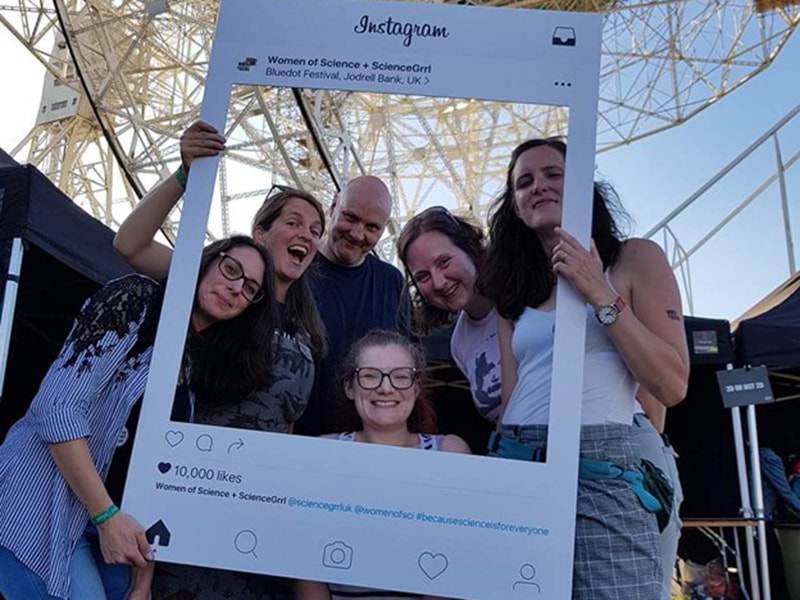
Life is busy for Rhys Archer. Outside of her work as EPSRC Doctoral Prize Fellow in Biomedical Materials at the University of Manchester, she founded Women of Science to share stories about real women working in science. She has championed STEM in schools in her spare time and received the Robert Perrin Medal from the Institute of Materials, Minerals, and Mining – all before her 30th birthday.
Rhys is also refreshingly forthright in her views. She took the time to speak to us about everything from attitudes towards disability in academia, the problem with STEM statistics, and finding that sense of belonging in science.

Would you mind telling me about your work at the University of Manchester and the research areas that interest you most?
My research interests have always been interdisciplinary – I am a bit of a magpie when it comes to research and I get excited by projects in different areas. Luckily, being a researcher in materials science means that I can apply my knowledge and skills in a wide array of areas and industries. I have recently finished my doctoral studies looking at how carbon fibre composites are damaged during impacts, and how to toughen them while keeping composites light weight, which is particularly useful in the aerospace industry. However, I have since moved over to research in biomedical materials, specifically within tissue engineering, where I am researching biocompatible composite scaffolds for tissue regeneration.
You set up Women of Science in 2016 to share stories about real people in science. How has this been?
When I set up Women of Science, I first looked at it as a personal project that could be of use in schools to young people. However, it became apparent fairly quickly that access to relatable role-models in STEM was needed, not just in schools but also for women across the STEM industry.
Since then, we have been fortunate to be awarded funding to grow the work we do and expand our audiences. One of the most important actions I have taken with Women of Science is to set up an advisory board (which includes a diverse range of women) to share ideas and to influence the direction and activities of Women of Science.
As well as the impact on others, Women of Science has had a huge impact on me personally. When I set up Women of Science I was going through a difficult period of feeling isolated, and found it difficult to feel a sense of belonging in science and in research. By reaching out and hearing other women’s stories – not just their achievements, but also their doubts, worries, and difficulties – I found that I did belong in STEM. I just had to search for it.
Would you mind sharing some of the successes and challenges you’ve experienced in your own career?
At 29, towards the end of my PhD, I was diagnosed as autistic. Looking back, I can see that the challenges I faced, particularly because of depression, anxiety, and isolation, were due to my needs not being considered or met. Being disabled in academia is an ongoing challenge. It is still a fight to gain equitable working arrangements, opportunities, and acceptance.
However, I can also see how the successes I have had, such as setting up Women of Science, and being a part of other projects are a result of ‘being different’. My strongest quality is a diversity of perspective and experience and an eagerness to be a part of a range of different projects.
>> We’re keen to hear diverse perspectives from people working in the chemical industry. Get in touch with us at: eoin.redahan@soci.org
You have championed inclusivity in STEM. Do you think academic institutions and other workplaces could be more inclusive?
Yes. I think there is a huge amount of awareness and conversation about inclusivity in academia and industry, but not nearly as much action and intervention. Often I see workplaces with inclusive policies, but with little consideration of monitoring, evaluating, or reconsidering those policies. We must move past equity, diversity, and inclusivity being a checkbox exercise. The issues faced by women in the workplace are intersectional and complex, and so require well considered, complex solutions.
According to WISE, women now make up 24% of the STEM workforce in the UK. It estimates that this number could rise to 29% by 2030. What do you think about these figures?
While the number of women in STEM is a common metric when considering equality, this does not accurately portray issues surrounding inclusion and belonging. How are women treated? Do they have the opportunity to advance? Are there equitable policies and measures in place? This is particularly true of women in STEM who identify with other protected characteristics around race, disability, sexual orientation, and class. Once you dig into the statistics (where available) further, it is clear that the numbers given are not sufficient to describe the current situation for all women in STEM.
Also, the ‘leaky pipeline’ model is often considered, that is, that the number of women in STEM fall as we follow the statistics from school, to university, and onto the workplace. However, what is not always considered is that, as with a leaky pipeline, when more women are added, rather than ‘fixing’ the pipeline, the cracks become more obvious. Eventually, we reach a point when the pipeline is fractured. We must focus on repairing these cracks, not just increasing a numerical metric.
Additionally, in this current climate, it is incredibly difficult to make predictions as to what the future holds for the number of women in the STEM workforce. A couple of years ago, we could not foresee the impact that a global pandemic would have on women. When we consider the possible effects of climate change over the next decade, can we predict the burden that will be placed on women, or how this will affect women’s choices?
What’s next for you? Are you involved in any exciting projects?
With Women of Science, we have three projects that will be launched towards the end of the year, including a new website, flashcard activities for young people, and a report on the impact of the pandemic on women in STEM. Further ahead, I would love to expand the reach of Women of Science further, working with podcasting and film, as well as reaching out to policy makers. Personally, I am excited to get my teeth stuck into a new research project and see where that leads, as well as doing more teaching, consulting, and any other opportunities that come my way!
>> Are you interested in getting involved in Women of Science? Visit: www.womenofsci.com
09 September 2021 |
|
|
Health & Wellbeing
Antimicrobial resistance (AMR), now referred to as the silent pandemic, is causing governments, regulatory and health bodies to make a lot of noise.
Issuing a statement in late August 2021, the Global Leaders Group on Antimicrobial Resistance called on countries to ‘significantly reduce the levels of antimicrobial drugs used in global food systems’. The Global Leaders Group on Antimicrobial Resistance includes heads of state, government ministers and leaders from the private sector and civil society. It was established during 2020 to accelerate global political momentum, leadership and action AMR.
Co-chaired by Mia Amor Mottley, Prime Minister of Barbados and Sheikh Hasina, Prime Minister of Bangladesh, the Group is calling for all countries to take action to tackle the issue. Steps include: Ending the use of antimicrobial drugs that are of critical importance to human medicine to promote growth in animals, eliminating or significantly reducing over-the-counter-sales of antimicrobial drugs that are important for medical of veterinary purposes, and reducing the overall need for antimicrobial drugs by improving infection prevention and control, hygiene, bio security and vaccination programmes in agriculture and aquaculture.

Leaders are calling for the reduction in the use of antimicrobial drugs.
Speaking at the second meeting of the Global Leaders Group on Antimicrobial Resistance, Inger Andersen, Under-Secretary-General of the United Nations and Executive Director the United Nations Environment Programme said: ‘Already 700 000 people die each year of resistant infections. There are also serious financial consequences: in the EU alone, AMR costs an estimated €1.5 billion per year in health care and productivity costs…’ But Andersen added that now was an opportune moment to make change. ‘With concern over zoonotic diseases at an all-time high, governments can take advantage of the synergies available from tackling emerging disease threats concurrently. The Global Leaders Group has strategic access to forums to promote AMR integration in post-covid-19 plans and financing…It’s time to for us to act on the science and respond rapidly to AMR,’ Andersen said.
The Communiqué from the G7 Health Ministers’ Meeting held in Oxford, UK during June also gave significant space the AMR issue and the link with the pandemic. ‘We reiterate the need for ongoing education and reinforced stewardship of the use of antimicrobials, including avoiding their use where there is no science-based evidence of effectiveness. The pandemic has also highlighted the importance of infection prevention and control measures to tackle AMR, targeting both health-care associated and community-associated infections.’ Adding a sense of urgency the Communiqué continued: ‘We must act strongly and across disciplines if we are to curb the silent pandemic of antimicrobial resistance.’
A letter from the BactiVac Bacterial Vaccinology Network reminded the G7 Health Ministers that the 2016 O’Neill Report estimated that by 2050, 10 million lives each year and a cumulative US$100 trillion of economic output will be at risk due to increasing AMR unless proactive solution are developed now. In its letter to the G7, the Network issued this warning. ‘The headlines on AMR may have less immediate impact, but the news is no less stark. Over the long-term, AMR bacteria will cause more prolonged suffering than covid-19, with a more insidious impact on all our lives.’ Signatories to the letter included Professor Calman MacLennan, Senior Clinical Fellow and Group Leader, Jenner Institute, University of Oxford, Professor of Vaccine Immunology, University of Birmingham.
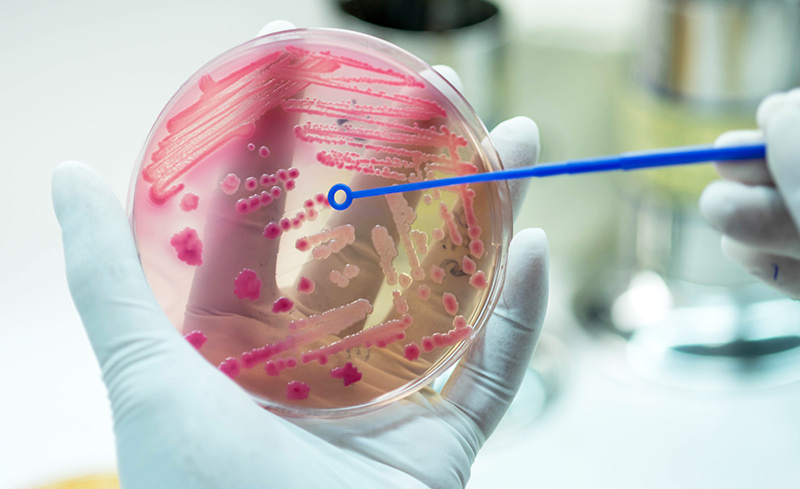
Researchers are collaborating to understand how AMR is impacted by a range of factors
The G7 also stressed the need for collaborative efforts for a better understanding of how AMR is impacted by a range of factors. Taking up this challenge; several initiatives has been put in place to study this. Most recently the United Nations Environment Programme and the Indian Council of Medical Research have launched a project looking at ‘Priorities for the Environmental Dimension of Antimicrobial Resistance in India.’ The project aims to strengthen the environmental aspects of national and state-level AMR strategies and action plans. In a similar development the European Food Safety Agency published an assessment of the role played by food production and its environment in the emergence and spread of antimicrobial resistance. Publishing the findings in the EFSA journal, the report indicated that fertilisers of faecal origin, irrigation and water are the most significant sources of AMR in plant-based food production and aquaculture.
Meanwhile, the first quarter of 2021 saw Ineos donate £100 million to the University of Oxford to establish a new antimicrobials research facility. The Ineos Oxford Institute for Antimicrobial Resistance aims to create collaborative and cross disciplinary links involving the university’s department of chemistry and department of zoology. The Institute also intends to partner with other global leaders in the field of AMR.
Partnering with India, the UK has committed £4 million to the AMR fight. With a total investment of £8 million, the partners have established five joint research projects which aim to develop a better understanding of how waste from antimicrobial manufacturing could be inadvertently fuelling AMR.
02 September 2021 |
|
|
Careers
Sarah Davidson has made impressive strides in a short space of time. She has risen to Group Sustainability Coordinator for global Research and Technology at speciality chemicals firm Croda and won the Young Ambassador Award at this year’s Chemical Industry Awards.
In the first blog in our Women in Chemistry series, we caught up with Sarah for a chat on embedding sustainability in the workplace, the need for more diversity in senior roles, and the best bit of advice she received.

Tell us about your career to date.
I loved chemistry at school, so I started off by doing a Master’s in Chemistry at the University of Sheffield. During the course I did a placement year, which was my first taste of working in industry. Once I finished my degree, I was torn between staying in academia and doing a PhD or going into industry. I chose to go into industry because I had enjoyed my placement year so much and saw where I could make an impact.
I was accepted onto Croda’s Graduate Development programme, where I had three placements around the business. Croda is a speciality chemicals company, so my placements included working as an applications scientist and synthetic chemist. However, it was my placement working with the Sustainability team that I loved the most.
After the Grad Scheme I became Group Sustainability Coordinator for Global R&D. This combined my experience in R&D and sustainability in a brand role that didn’t exist in Croda before. This role allows me to use my technical knowledge and understanding of the way the global team works to enable those responsible for Croda’s new product innovations to include sustainability as an integral pillar in new product development.
What does your day-to-day role involve?
In my role, my main focus is on getting our scientists to think about sustainability during product and process development. At a fundamental level this requires me to change their mindsets around sustainability, getting them to see it is important to what we do and understand what it means.
To do this, I have developed a number of tools including checklists, clearly defined procedures and training documents. I have been working to get these new procedures adopted over the global R&D team by fitting them into existing protocols. Another part of my role is to support our corporate targets and I am part of a number of working groups to do this.
One working group looks at how we define a consistent methodology for Life Cycle Assessments or LCA. In this group I have been doing research to understand the current methods around LCA, and what our customers want in terms of sustainability data. I also help gather data to show where we are up to with these goals, so we understand what actions we need to take to move forward. On a day-to-day basis I will have meetings to discuss the projects I am involved in, conduct research and reach out to other teams and functions to see what they are working on too.
Which aspects of your job motivate you most?
For me sustainability is the future, not only for the chemical industry but for the world. Knowing that I am having a positive impact on sustainability in my role is what motivates me the most. I try to live a sustainable life, and what I do at work is just an extension of that.
What personal challenges have you faced and how have you overcome them?
To embed sustainability into our ways of working, I need to change people’s mindsets, and subsequently their behaviour. Seeing this change in people is incredibly rewarding. However, it is also one of the biggest challenges. Some of our teams have been working in the same roles for decades without any change. So, it is my job to make these changes easier for them to adopt and persuade them of the benefits in doing so. To overcome this challenge, I have had to work on my influencing skills and know what will work with the audience I am speaking to.
What is the greatest future challenge for people in your industry and how could this be addressed.
Sustainability, and addressing the issues we face as a result of climate change, are some of the biggest challenges we will face as an industry. We are in a lucky position that we can achieve a competitive advantage with sustainability, but our main goal is to protect our planet. This gives us a big opportunity for collaboration where we may not have had one before. I think we can only solve this challenge by collaborating across the supply chain, across country borders, and between industry and academia.
>> Not everyone takes the standard career path into chemistry. Take a read of Claudio Laurenco’s unusual, inspiring story.
Which mentors have helped you along the way and how did they make a difference?
I feel like I have a long list of mentors and am very lucky to be able to call on so many people for advice. The best thing I have learnt from them is to pursue what I enjoy most, as people will be able to see my passion. This will help me move forward in my career. Having mentors who have confidence in me and my ability has helped me build my own confidence, something which I can lack from time to time. My mentors are great sounding boards for ideas, whether that is to do with things I want to try in my job or on the direction of my career.
What is the current state of play within your sector with respect to equality, diversity, and inclusion – and is enough being done to attract and retain diverse talent?
I don’t think so. We need to do more to attract and retain diverse talent. We seem to be relatively diverse and inclusive at an academic level, which disappears in industry. There must be a reason for this. There may be bias within recruitment processes, or within job descriptions for senior roles, which means there is less diversity as you move up in organisations. We need to make sure that there are equal opportunities within industry for everyone and make sure everyone has a path to progression that works for them.
Is there any advice you would give to young professionals starting out in your area, especially young women?
Understand where you are different and use that as your advantage. Everyone has a unique lived experience that they bring with them into all situations. As women we have a different perspective to men. This doesn’t mean it is less valuable, it is just different. When you feel like you are in a minority as a woman, or are not being listened to, it is important to remember that our opinions are equal regardless of our background, gender or ethnicity. You have the same right to share your views, as the majority do theirs.
>> We’re always keen to hear from women who are making a real difference in chemistry. If you know someone who you think we should cover, please get in touch with us at: eoin.redahan@soci.org.
27 August 2021 |
|
|
Careers
SCI was pleased to support #BlackInChem, working alongside our Corporate Partners and members to amplify the voices of our Black chemists.
We have heard stories from several Black chemists who highlighted the steps being taken by many companies to increase diversity. But we can also see that there are many more steps that can be taken to encourage the next generation of budding Black chemists and scientists.
#BlackInChem has had support from Scott Bader, an SCI Corporate Partner, with both Damilola Adebayo and Luyanda Mbongwa sharing their perspectives as employees of Scott Bader. Elsewhere, Cláudio Laurenço gave a compelling account of his journey to become a post-doctoral research associate at a leading consumer goods company.

Cláudio Laurenço worked for free and was overlooked before eventually securing his PhD and starting his career in chemistry.
These chemists are following in the footsteps of some pioneering Black scientists such as Percy Lavone Julian, who has been profiled on the SCI Blog.
Many organisations have expressed their support and shared thoughts on what steps they are taking to encourage and ensure diversity. Indeed, #BlackInChem is a global effort and companies such as GSK have shown their support as well as numerous Black chemists talking about their experiences and achievements over the last week.
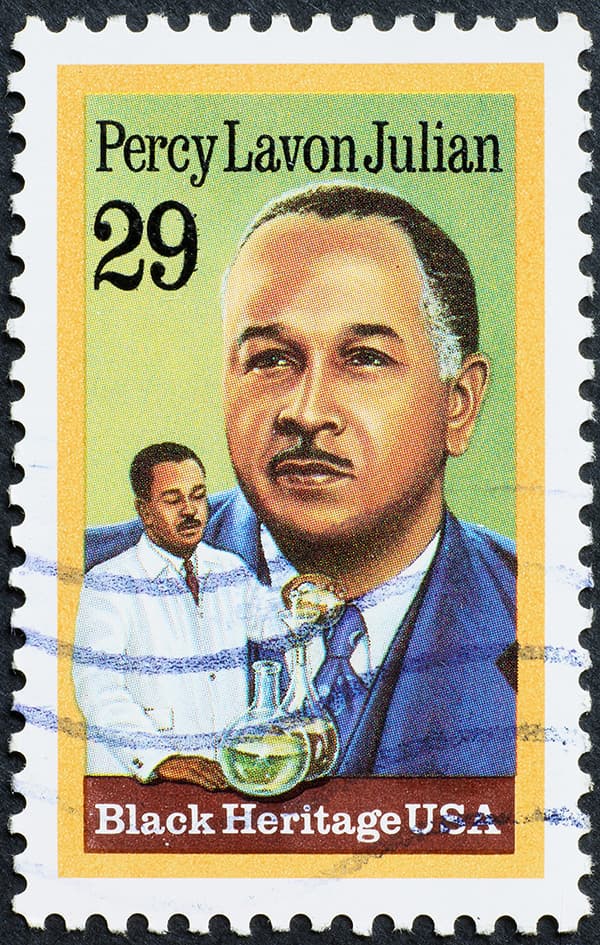
Percy Lavon Julian’s pioneering work enabled a step-change in the treatment of glaucoma | Editorial credit: spatuletail / Shutterstock.com
Over the coming months, we will be profiling other Black chemists, past and present, and continuing the dialogue around diversity.
>> We’re always keen to hear about diverse perspectives within chemistry. If you’d like to share your story, please contact: muriel.cozier@soci.org or eoin.redahan@soci.org.
17 August 2021 |
|
|
Careers
For Cláudio Lourenço, the path from student to multidisciplinary scientist has been far from smooth. The Postdoctoral Research Associate reflects on the institutional challenges that almost made him give up, the mentor whose support was so important, and the barriers that block the way for young Black chemists.
Please give a brief outline of your role.
I work for a leading consumer goods company. I am a multi-disciplinary scientist contributing to the development of novel formulations for household products.
Why are you supporting #BlackInChem?
I’m supporting #BlackInChem because I am a champion for diversity. I believe that what we see from our windows in the street is what we must have inside our workplaces. In an ideal world we should all have the same opportunities, but unfortunately this is somehow far from the truth. We need to motivate our young Black chemists to aim for a career in science by providing welcoming environments and real opportunities instead of just ticking boxes. We need to showcase our Black chemists to show to the younger generation that they can also be one of us.
What was it that led you to study chemistry and ultimately develop a career in this field? Was this your first choice?
I have always been passionate about research and science. My father had a pharmacy, so I was always close to chemistry and was a very curious child. Yes, it was my first choice but the lack of opportunities and trust from universities and scholarship providers made it a long run. My motivation faded and I nearly gave up.
Was there any one person or group of people who had a specific impact on your decision to pursue your career path?
Yes, but after my degree I nearly gave up. It took me nearly two years and changing cities to find something (a voluntary position). I was always keen on taking up mentors to show me how to progress in my career. There were a few people who helped me by training me and teaching me how to navigate the scientific world and pursue a career in science.
I only got my first job (which I worked for free) because of Peter Stambrook, an American scholar from the University of Cincinnati, who I met through a friend while polishing glasses in a restaurant. This man was open and keen to put a word in for me at a leading university in the UK. He taught me so much on how to be a scientist and humbly grow up and make a career in science. Eventually, all his advice kept me on the right path.
What impact would you like to see #BlackInChem have over the coming year?
More Black students in postgraduate courses and an increase in role models to motivate the younger generations to pursue careers in chemistry.
Could you outline the route that you took to get to where you are now, and how you were supported?
Personally, my career path was far from easy. I only managed to get my PhD at 38 years of age. I needed to first prove myself. Despite all my efforts and dozens of applications, I was never considered a good candidate. I needed to work for free for two years to land a proper job in my field of choice. During that time I took on many odd jobs to support myself. I worked for a top 10 university for free and they never saw my worth or gave me an opportunity. With that experience I landed a proper job at a leading pharmaceutical company. After one year with them, they funded my PhD studies and now here I am with a career in science.
Considering your own career route, what message do you have for people who would like to follow in your footsteps?
Never ever give up - it is possible. Look for the right mentors and be humble. You do not need to reinvent the wheel, but only to find someone who can lend you theirs. Learn to grow from the experiences of others and be ready to fail a couple of times - we all do. Be open to learn and never be afraid of following your dreams.
>> At SCI, we’re proud to support #BlackinChem. Reach out to us with your stories.
What do you think are the specific barriers that might be preventing young black people from pursuing chemistry/science?
I think one of the biggest barriers that prevent people from pursuing careers in science is the lack of role models. If we only show advertisements for chemistry degrees with White people, it’s not encouraging for Black students to pursue a career there. The same goes for when we visit universities; role models are needed. No one wants to be the only Black person in the department. Universities need to embrace diversity at all levels. I understand that tradition sometimes prevents this, but we need to change and ignore tradition for a bit.
What steps do you think can be taken by academia and businesses to increase the number of Black people studying and pursuing chemistry/science as a career?
Showcase Black chemists and inventors to motivate the younger generations and show society that Black people are not only artists and musicians. Target extracurricular activities in schools where children are from disadvantaged backgrounds. Train your staff to be open. Create cultural events that not only target Black people but also for other people to learn and see that in the end we are all equal. We all need to learn to embrace our differences and grow together.
>> As we celebrate #BlackinChem, we mark the achievements of some inspirational chemists. Read more about the amazing career of Percy Lavon Julian.
16 August 2021 |
|
|
Sustainability & Environment
If you’re a vegan, do you really want to eat a ruby-red slab of plant protein that looks like lamb? If you are a health obsessive, would you opt for an ultra-processed, plant-based product if you knew it didn’t contain many vitamins and micro-nutrients? And why, oh why, are we so obsessed with recreating the taste and appearance of the humble hamburger?
These questions and more were posed by Dr David Baines in the recent ‘No meat and two veg – the chemistry challenges facing the flavouring of vegan foods’ webinar organised by SCI’s Food Group. The flavourist, who owns his own food consultancy and is visiting Professor at the University of Reading, painted a vivid picture of our changing culinary landscape – one in which 79% of Millennials regularly eat meat alternatives.
And this shift in diet isn’t just the preserve of the young. According to Dr Baines, 54% of Americans and 39% of Chinese people have included more plant-based foods and less meat in their diets. Furthermore, 75% of Baby Boomers – those born between 1946 and 1964 – are open to trying cultivated meat.
There are many reasons for this gradual shift. The woman biting into Greggs’ famous vegan sausage roll and the woman who carefully crafts her bean burger may have different reasons for choosing meat alternatives. For some, it’s an ethical choice. For others, it’s environmental or health-related. And then there are those of us who are simply curious.
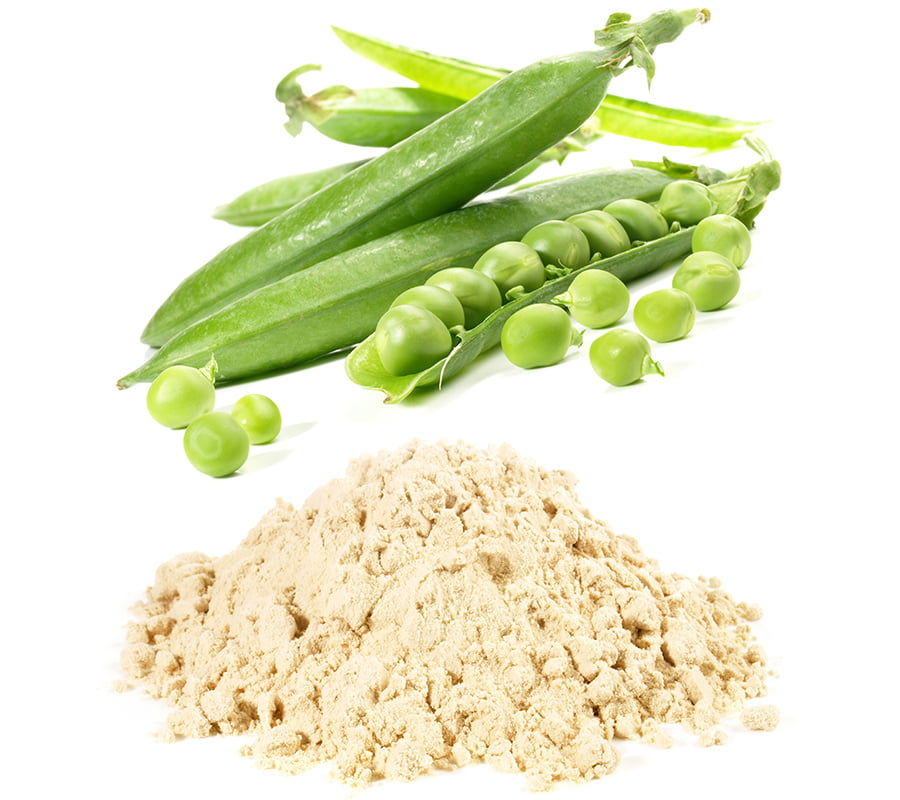
Pea protein powder is used in plant-based meat alternatives.
Either way it’s an industry that, if you’ll excuse the pun, is set to mushroom. According to Boston Consulting Group and Blue Horizon research, the global meat-free sector will be worth US$290 billion by 2035. They also claim Europe will reach peak meat consumption by 2025, and Unilever is aiming to sell US$1 billion-worth of plant-based meat and dairy alternatives by 2025-27.
In his entertaining talk, Dr Baines outlined the extrusion processes that turn wheat and pea proteins into large ropes of fibrous material and how soy isolates are spun into textured proteins using looms like those used in the cotton industry. He explained how calcium is used to imitate the chewable texture of chicken and how Impossible Foods is using the root nodules of bean plants to produce the red colour we recognise so readily in meat.
>> For more interesting SCI webinars on battery developments, medicinal chemistry and more, check out our events page.
So, how close are we to products with the appearance, taste and texture of, let’s say, beef? ‘I think that will come from cultured meat to start with,’ he said. ‘Where the protein is produced, it will still need to be flavoured, but the fibres will have formed and the texture is already present in some of those products.
‘It’s a big ask and it’s been asked for a long time. It’s going to be a long time before you put a piece of steak on one plate and a plant-based [product] on another and they will be visually, texturally and taste(-wise] identical.’
And what appetite do people even have for these plant-based facsimiles? ‘There are people who want plant proteins not to look like meat, and there are people who want them to look like meat,’ he added. ‘The driver at the moment is to make them look like meat, and the driver is to make it taste like meat too.’
Baines wondered aloud about the bizarre fixation some have with recreating and eating foods that look and taste like beef burgers. In contrast, he pointed to the examples of tofu and soy-based products that have been developed in South East Asia – distinct foods that do not serve as meat substitutes.
Plant-based proteins are undoubtedly part of our culinary future, but these products have other barriers to surmount beyond taste and texture. There is no getting around the fact that plant-based proteins are ultra-processed in a time when many are side-stepping processed foods. Baines also explained that these protein- and fibre-rich foods tend to have lower calorific content, but lack vitamins and micronutrients. ‘Will they be supplemented?’ Baines asked. ‘How much will the manufacturers of these new products start to improve the nutritional delivery of these products?’

We have now entered the age of the gluten-free, vegan sausage roll.
But it’s easy to forget that the leaps made in recent years have been extraordinary. Who would have predicted back in 1997 – when Linda McCartney was at the vanguard of the niche, plant-based meat alternative – that a vegan sausage roll would capture the imaginations of a meat-hungry nation? Who would have foreseen fast-food manufacturers falling over each other to launch plant-based burgers and invest in lab-grown meat?
As Dr Baines said: “This is a movement that is not going away.”
>> Our soils provide 97% of our food. Read more about how they are undervalued and overused here.
10 August 2021 |
|
|
Science & Innovation
This week SCI is joining with business and academia to mark #BlackInChem, an initiative to advance and promote a new generation of Black chemists.
Over the coming weeks, we shall be profiling past and present Black chemists, many of whom are unsung heroes, and whose work established the foundations on which some of our modern science is built. We start with the outstanding contribution made by Percy Lavon Julian (1899-1975).
Born on 11 April 1899 in Montgomery, Alabama, US, Percy L Julian was the son of a clerk at the United State Post Office and a teacher. He did well at school, and even though there were no public high schools for African Americans in Montgomery, he was accepted at DePauw University, Indiana, in 1916.
Due to segregation Julian had to live off campus, even struggling initially to find somewhere that would serve him food. As well as completing his studies, he worked to pay his college expenses. Excelling in his studies, he graduated with a BA in 1920.
Julian wanted to study chemistry, but with little encouragement to continue his education, based on the fact there were few job opportunities, he found a position as a chemistry instructor at Fisk University, Nashville, Tennessee.
In 1922 Julian won an Austin Fellowship to Harvard University and received his MA in 1923. With no job offers forthcoming, he served on the staff of predominantly Black colleges, first at West Virginia State College and in 1928 as head of the department of chemistry at Howard University.
In 1929 Julian received a Rockefeller Foundation grant and the chance to earn his doctorate in chemistry. He studied natural products chemistry with Ernst Späth, an Austrian chemist, at the University of Vienna and received his PhD in 1931. He returned to Howard University, but it is said that internal politics forced him to leave.
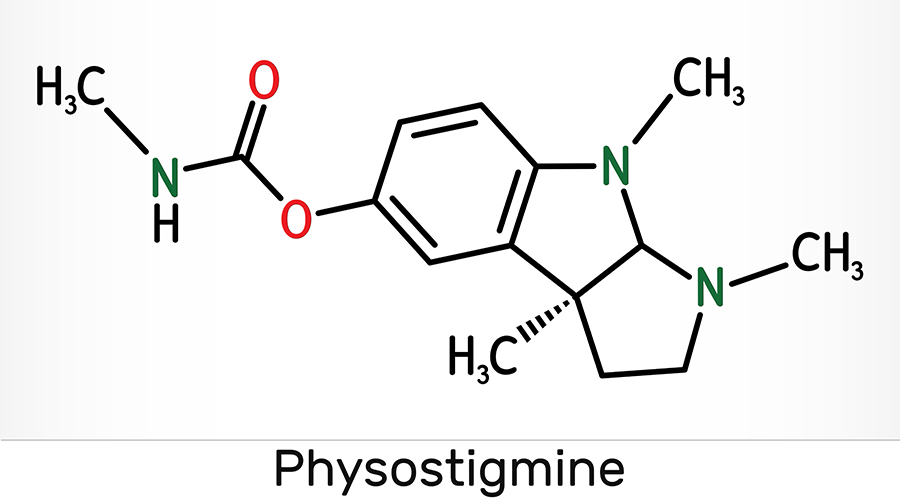
Physostigmine was synthesised by Julian
Julian returned to DePauw University as a research fellow during 1933. Collaborating with fellow chemist and friend Josef Pikl, he completed research, in 1935, that resulted in the synthesis of physostigmine. His work was published in the Journal of the American Chemical Society.
Physostigmine, an alkaloid, was only available from its natural source, the Calabar bean, the seed of a leguminous plant native to tropical Africa. Julian’s research and synthesis process made the chemical readily available for the treatment of glaucoma. It is said that this development was the most significant chemical research publication to come from DePauw.
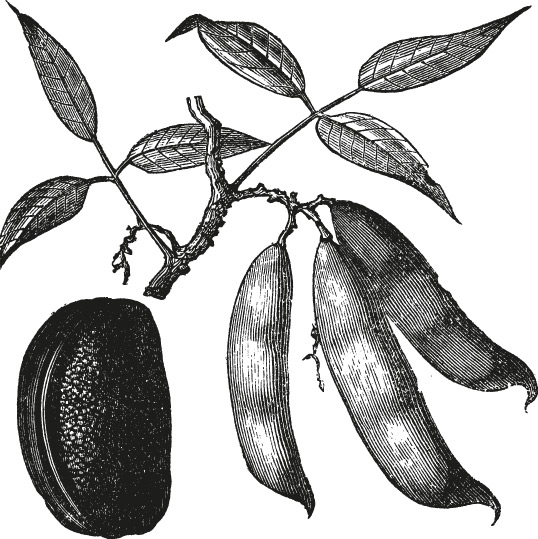
Calabar bean
Once the grant funding had expired, and despite efforts of those who championed his work, the Board of Trustees at DePauw would not allow Julian to be promoted to teaching staff. He left to pursue a distinguished career in industry. It is said that he was denied one particular position as a town law forbid ‘housing of a Negro overnight.’ Other companies are also said to have rejected him because of his race.
However, in 1936 he was offered a position as director of research for soya products at Glidden in Chicago. Over the next 18 years, the results of his soybean protein research produced numerous patents and successful products for Glidden. These included a paper coating and a fire-retardant foam used widely in World War II to extinguish gasoline fires. Julian’s biomedical research made it possible to produce large quantities of synthetic progesterone and hydrocortisone at low cost.
Percy Lavon Julian | Editorial credit: spatuletail / Shutterstock.com
By 1953 Julian Laboratories had been established, an enterprise that he went on to sell for more than $2 million in 1961. He then established the Julian Research Institute, a non-profit research organisation. In 1967 he was appointed to the DePauw University Board of Trustees, and in 1973 he was elected to the National Academy of Sciences, the second African American to receive the honour.
He was also widely recognised as a steadfast advocate of human rights. Julian continued his private research studies and served as a consultant to major pharmaceutical companies until his death on 19 April 1975. Percy Lavon Julian is commemorated at DePauw University with the Percy L Julian Science and Mathematics Center named in his honour. During 1993 the United States Postal Service commemorated Julian on a stamp in recognition of his extraordinary contribution to science and society.
09 August 2021 |
|
|
Agrifood
Main image: Pea crop | Image credit: Geoff Dixon
Peas are a very rewarding garden crop. Husbandry is very straightforward, producing nutritious yields and encouraging soil health by building nitrogen reserves for future crops.
Rotations usually sequence cabbages and other nitrogen-demanding crops after peas. This is a sustainable way to use the organic nitrogen reserves left by pea roots resulting from their mutually beneficial association with benign bacteria. These microbes capture atmospheric nitrogen, producing ammonia, nitrites and nitrates in a sequence of natural steps.
Peas originated in the Mediterranean. They were cultivated continuously by ancient civilisations and through medieval times, and are now the seventh most popular vegetable.
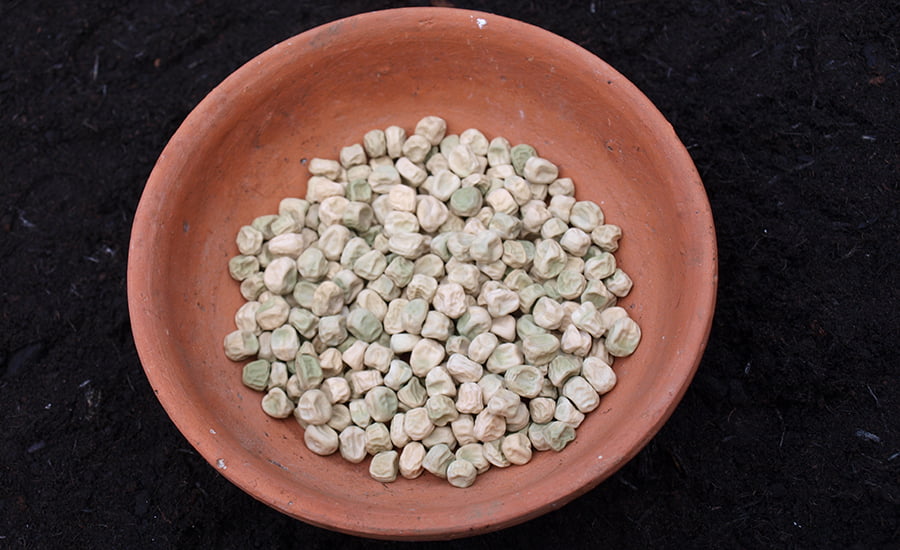
Illustration 1: Pea seeds | Image credit: Geoff Dixon
In bygone centuries, peas provided a protein source for the general population as cooked meals of pea soup and pease pudding helped keep famine at bay before the introduction of potatoes. In the 18th century, French gardeners working for the aristocracy produced fresh peas using raised and protected beds of fermenting animal manure. The composting processes produced heat and released carbon dioxide, stimulating rapid growth.
Generally, however, eating fresh peas only gained popularity in the 20th century as canned and then quick-frozen foods were invented, and large-scale technological development enabled mechanised and automated commercial precision cropping. In recent times, retail market demand has returned for unshelled podded peas – a manually picked crop known colloquially as ‘pulling peas’.
How to grow peas
Seeds can be sown directly (illustration 1) or transplants (illustration 2) can be raised under protection, giving an early boost for growth and maturity. Peas are cool season crops. They grow best at 13-18°C and mature about 60 days after sowing.

Illustration 2: Pea seedlings | Image credit: Geoff Dixon
Some cultivars such as Meteor can be grown over winter, preferably protected with cloches for very early cropping. The spring sown The Sutton cultivar group (CV) gives rapid but modest returns, and main crop CVs, such as Hurst Green Shaft, deliver the heaviest returns (illustration 2). This cultivar forms several long, well-filled pods at the fruiting nodes.
Sugar peas or mange tout – where the entire immature pod is eaten – is a popular fresh crop, while quick-growing pea shoots that mature in 20 days from sowing are excellent additions for salads or as garnishes for warm cuisine.
Human health benefits significantly by including peas in the diet. As well as being an excellent protein source, they produce a range of vitamins and nutrient elements. Their coumestrol content aids the control of blood sugar levels, helping combat diabetes, heart diseases and arthritis.
So, it’s certainly worth finding a spot for this versatile vegetable in your garden.
Written by Professor Geoff Dixon, author of Garden practices and their science.
26 July 2021 |
|
|
Careers
SCI has selected Harriet McNicholl from AstraZeneca as the 2021 National Undergraduate Placement Student of the Year.
The national undergraduate placement symposium brings together chemistry students undertaking industrial research placements each year. Students working in organic, biological, supramolecular, physical organic, medicinal chemistry and related fields are invited to submit posters. The finalists are then selected to present orally at the virtual symposium. This year’s applicants included students from organisations such as AstraZeneca, GlaxoSmithKline, UCB, Syngenta, Charles River and more.
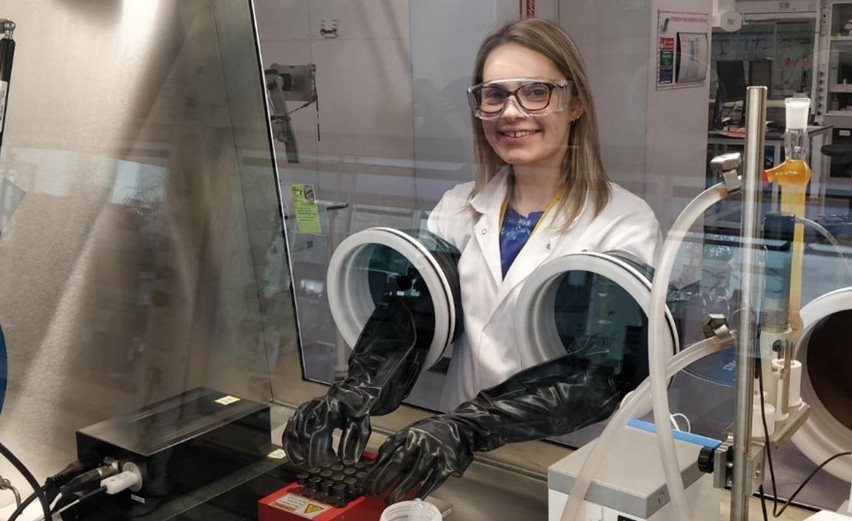
Harriet McNicholl’s chemistry will be used to manufacture drug products to support patients in phase-II clinical trials.
As part of this symposium, Harriet McNicholl from AstraZeneca was invited to present her research to develop a safe, inexpensive and commercially viable process towards AZD5991, a candidate therapeutic for the treatment of acute myeloid leukaemia.
Encapsulating AstraZeneca’s dynamic and data driven approach to turning molecules into medicines, Harriet highlighted how the SELECT criteria, automation and High Throughput Experimentation were used to design and optimise a process. Harriet’s work aimed to maximise efficiency and sustainability, and her chemistry will be used to manufacture drug products to support patients in phase-II clinical trials.
Harriet is in the third year of her chemistry integrated Master’s degree (MChem) at the University of Liverpool and is currently undertaking a synthetic chemistry industrial placement within Chemical Development (CD) at Macclesfield.
‘I have thoroughly enjoyed my placement year within Chemical Development at AstraZeneca,’ she said. ‘It has been incredibly rewarding knowing the science I’ve worked on has the potential to fundamentally transform oncology patients’ lives. This opportunity has enabled me to develop many of my technical and soft skills and motivated me to pursue a career within the pharmaceutical industry.’
Dave Ennis, Vice President of Chemical Development for AstraZeneca in Macclesfield, said: ‘Congratulations to Harriet who has made significant contributions to our development activities in Chemical Development. It is a reflection of the quality of students we attract to our sandwich student programme; I’m proud that we give our students a great insight to drug development by being active participants in our projects, and it is highly motivating for our scientists in helping to coach and develop others - a win-win for all involved.
‘Over the past 25 years, we have had a successful rolling programme of sandwich students from a variety of universities that has helped to attract the next generation of scientific talent to AstraZeneca and the wider industry. Looking forward to our next cohort in 2021, and I’m sure they will compete for the prize next year’.
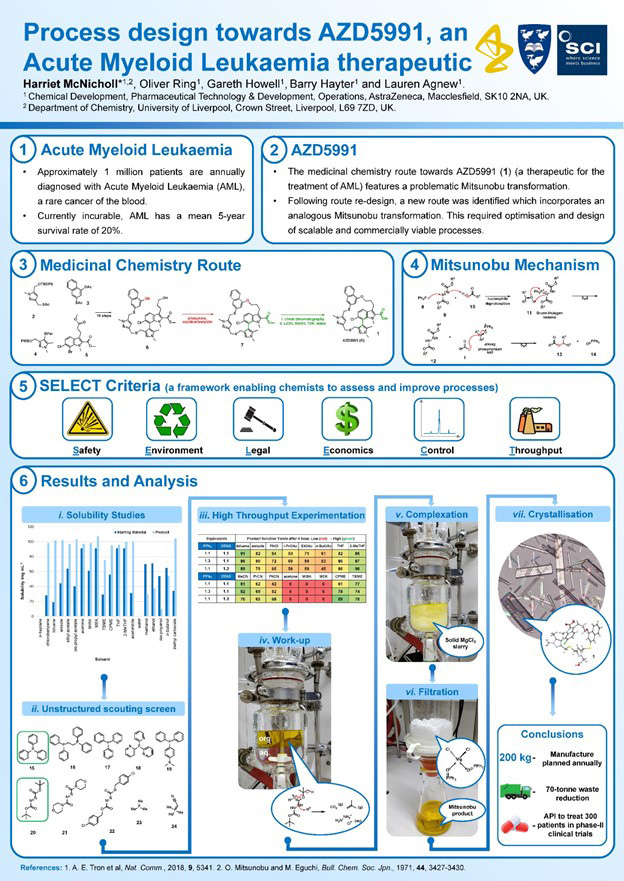
Harriet’s poster submission
Dr Andrew Carnell, Director of Year in Industry Courses at the Department of Chemistry in the University of Liverpool, added: ‘I am delighted that Harriet has been awarded this prestigious prize for her work during her placement at AstraZeneca. She is a credit to the department and to the university. Our Year in Industry students gain a huge amount from their placements, not only in terms of practical experience and technical knowledge but increased confidence and employability. Students return to us highly motivated for their final year and often go on to secure excellent and rewarding positions in today’s competitive job market.’
As part of this event, keynote speaker James Douglas (Manager of AstraZeneca’s Catalysis, High Throughput and Synthesis Technologies team) noted that his career journey started with a placement year at GlaxoSmithKline in Stevenage. James went on to describe the benefits of doing a placement year and how the skills he gained from his year in industry helped him to secure a Ph.D. at the University of St Andrews and a postdoctoral position with Eli Lilly in the United States.
This year’s competition featured many strong entries. Congratulations to runners up Daniella Hares (AstraZeneca, University of Southampton) for her presentation outlining computational techniques for drug discovery and poster prize winner Jake Odger (Sosei Heptares, University of York). The competition was hosted and organised by the Society of Chemical Industry Young Chemists’ Panel
For more on this year’s National Undergraduate Placement Student of the Year competition, visit: https://istry.co.uk/postercompetition/4/
22 July 2021 |
|
|
Materials
We always hear about athletes eking out that competitive edge through subtle changes in diet or equipment. Well, when it comes to making our buildings more energy-efficient, dozens of different technologies could make a difference. Every one may not be earth juddering on its own, but each could help decarbonise our homes by degrees.
Phase-changing materials (PCMs) may have a role to play in reducing our reliance on power-hungry cooling and heating systems in the home. At Texas A&M University, researchers have developed PCMs to passively regulate temperatures inside buildings.
They believe their 3D-printed phase-change materials - compounds that can change from a solid to liquid when absorbing heat, or from liquid to solid when releasing heat - could be incorporated into our homes in paint or other interior effects to regulate interior temperatures.

New phase-change material composites can regulate ambient temperatures inside buildings | Image credit: Texas A&M University College of Engineering
Their partial substitute to the heating, ventilation and air conditioning (HVAC) systems that predominate in many of our buildings is a light-sensitive liquid resin with a phase-changing paraffin wax powder.
According to the researchers, their 3D printable ink composite improves upon existing PCMs in that it doesn’t require a separate shell around each PCM particle. When the PCM is mixed with liquid resin, the resin acts as both the shell and building material, enabling thermal energy management without any leakage. They use an ultraviolet light to solidify their 3D printable paste and make it suitable for use in our buildings.
“The ability to integrate phase-change materials into building materials using a scalable method opens opportunities to produce more passive temperature regulation in both new builds and already existing structures,” said Dr. Emily Pentzer, associate professor in the Department of Materials Science and Engineering and the Department of Chemistry.
To date, the researchers have only tested their materials on a small scale in a house-shaped model. Nevertheless, after placing their 3D printed model inside an oven, the results were encouraging. The model’s temperature was 40% different to outside temperatures compared to models made using traditional materials.

From solar panels and insulation to heat pumps and phase change materials, much has been done to make our homes more energy-efficient
“We’re excited about the potential of our material to keep buildings comfortable while reducing energy consumption,” said Dr. Peiran Wei, research scientist in the Department of Materials Science and Engineering and the Soft Matter Facility. “We can combine multiple PCMs with different melting temperatures and precisely distribute them into various areas of a single printed object to function throughout all four seasons and across the globe.”
Perhaps we won’t see PCMs in widespread use in our buildings any time soon, but it’s always heartening to see the use of passive heating and cooling systems in our buildings. Anything that contributes to the decarbonisation mix is certainly worth investigating further.
13 July 2021 |
|
|
Agrifood
Think of Earth as an apple and the soil as the peel. Now, imagine that more than 70% of this apple’s surface is covered in water. That veneer of peel suddenly seems very small indeed.
Dig beneath the surface and you realise that the world’s soil resources aren’t as plentiful as you first thought. When you take into account all of the uninhabitable, non-arable land on our planet, including the snow-bound poles and deserts, you’re left with just 3% of total landmass to grow all the fruit and vegetables we eat.
After reminding her listeners of some stark facts at the Soil resources in the UK: overlooked and undervalued? webinar, Jane Rickson, Professor of Soil Erosion and Conservation at Cranfield University, reminded us that soil is a precious, finite resource. “We’re dealing with a very thin resource that has to deliver all of these goods and services.”
You just need to think of your breakfast, lunch, and dinner to realise just how important soil is. Of all the food we eat, 97% comes from terrestrial sources. However, in recent decades, the many benefits brought by soil have been taken lightly. Apart from providing food, animal fodder, and a surface for football, it plays a vital role in climate change mitigation.
‘Soil is excellent for climate change mitigation,’ said Professor Rickson, recipient of the prestigious Dr Sydney Andrew Medal for 2021. ‘We know that healthy soils can support vegetation and crops and plants in taking out atmospheric CO2.’

A cross section of soil layers. Unless you live on fish and seaweed, it’s likely that almost all of your food sources will come from terrestrial sources.
However, she and her colleagues at Cranfield University have unearthed some unsettling facts about the state of our soils. She mentioned that 12 million hectares of agricultural land worldwide is lost each year due to soil degradation. In the UK, soil erosion rates can be as high as 15 tonnes per hectare per year, with soil formation rates only compiling at a rate of 1 tonne per hectare per year; and, based on current rates of erosion, some soils could disappear completely by 2050.
So, what is being done to arrest this problem? The obvious mammoth in the room is climate change, with extreme weather events such as flash floods precipitating a huge amount of soil erosion. Obviously, climate change mitigation measures on a national scale would help, but adjustments to farming practices could also improve soil resilience on a more local level.
A lot of work is also being done to reduce the intensity of farming to improve soil health. The aim, according to Rickson, is to maintain a fertile seedbed while retaining maximum resistance to soil degradation. There are lots of different ways to do this.
One approach being taken is cover cropping, whereby a crop is grown for the protection and enrichment of the soil rather than for immediate sale. This enriches the soil and helps prevent soil erosion. Another approach is strip-tillage – a minimum tillage system that disturbs only the portion of the soil that contains the seed row, with the soil between rows left untilled. She also mentioned the benefits of soil improvement, with poultry manure and mushroom compost used to improve soil health by Benedict Unagwu among others.

Cover crops such as vetch and oats improve the structure and fertility of the soil.
It is difficult not to have sympathy for farmers at the moment. Climate change falls heavily upon their lands, and they must battle flooding and drought to keep their farms financially viable. Professor Rickson often speaks to the farming community about soil health, with the focus placed on realistic solutions. As one farmer told her: ‘It's hard to be green when you’re in the red.’
Perhaps soil doesn’t capture the imagination the same way as an oak forest or a field ablaze with wildflowers, but its mismanagement is costing us a fortune. She estimated that the combined annual economic cost of soil degradation in England, Scotland, and Wales is £1.5 billion.
According to Professor Rickson, the US is probably the home of soil conservation following the harsh ecological lessons learnt from the Dust Bowl disaster of the 1930s. However, she believes the UK has plenty of knowhow in the area.
‘The UK has an opportunity to be world-leading in this,’ she said. ‘I think we are as good as anyone. Our scientific community understands soil and is really pushing the boundaries in terms of soil science.’
06 July 2021 |
|
|