
Careers
Our careers often take us in unforeseen directions. Dr Jessica Jones, Applications Team Leader at Croda, chatted to us about moving from research into management, the benefit of developing softer skills, and her unexpected mentor.
Tell me about your career to date.
I came through university in what is probably seen as the ‘traditional’ way. I did a Master’s degree in chemistry at the University of Liverpool, with a year working in industry, which I really enjoyed. And then after I finished my Master’s, I did a PhD in Inorganic Chemistry at the University of Nottingham. I always wanted to work in industry, but I really enjoyed research, so I decided to do the PhD as I thought the skills would be useful for either career path.
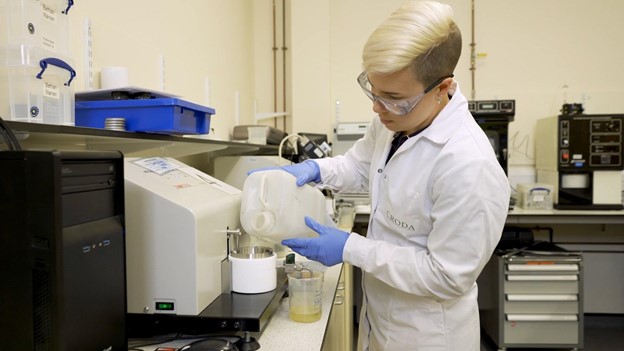
Jessica Jones in the lab
Were you tempted by a career in academia?
No, I never felt like I was the kind of person who had what it takes to succeed in academia. I never felt like I could ever come up with the nucleus of a new idea. I always felt like someone could give me the slimmest thread of a thought and I could turn it into something, but I could never have that thread myself. From my perspective, academia can be a lonely career and I enjoy and benefit from working in a team with other people.
So, after I finished my PhD, I joined Croda in 2013 as a Research Scientist in our synthesis division, in a synthetic chemistry R&D role. Over seven years, I progressed from Research Scientist to Lead Research Scientist and then Team Leader. During that time, I moved around a bit. I worked at different manufacturing sites, in different research areas and did lots of different projects across multiple sectors.
In February 2020, I was asked if I wanted to go on secondment, as a Team Leader, to one of our applications teams in Energy Technologies. Energy Technologies focuses on lubricants, oil and gas, and batteries. I really enjoyed the secondment and after it came to an end, I chose to take it on as a permanent position rather than return to my old role.
What does this role entail?
My role entails managing a team of application and lead application scientists who work on a range of projects, from designing new products to supporting customers with specific problems and working with universities on more theoretical, developmental ideas.
At the moment, we’re working on a lot of what we call EV (electric vehicle)-friendly fluids. When you move from traditional combustion engines to electric vehicles, there’s quite a change in the properties needed for the fluids within the engine. We make the speciality additives that go into the base oils that support functions such as reduced engine wear and improved fuel efficiency.
The EV market is very different to the traditional car market, which is dominated by big lubricant manufacturers. EVs are so new that Croda has been at conception discussions with world leading EV companies. The whole sector is very data driven and, coming from a research scientist background, that appeals to me very much. It’s very exciting to be at the cutting-edge of innovation with what we’re doing within electrification and renewable energy.
Which projects are you working on at the moment?
I’ve got two long-term new development projects that are both progressing to the final stages of manufacturing. These are products that I designed the chemistry for when working in the synthesis team. It can take four or five years to get a new project through the development process, and I’ve continued to manage them throughout their timeline, even though I have moved into different roles. They are both speciality additives for crude oil to reduce the temperature at which impurities develop, to allow the more difficult oil fractions to be brought out of the ground without it solidifying in pipes when they transport it.
What does a general working day involve?
There are eight people in our team, and I am responsible for managing six of them. There are two other senior technical specialists I work alongside. They have lots of experience in the industry and working with academia, and the three of us coordinate the projects across the team.
My role is to translate the pipeline and the strategy from our senior leaders into what we do in the lab every day. I have three projects that I'm running, which are new product launches. Alongside that, I coordinate the project pipeline and make sure everyone is able to manage their projects and progress them. I do a small amount of lab work, but I would say it makes up 5% of my time.
I always thought I would be a specialist when I joined Croda because of my PhD and lab experience. However, over the time I’ve worked here, I started to really enjoy working with other people; and I think I probably realised I had better skills at motivating other people, building up teams, and networking. So that became a lot more important, and I chose to move into the management side of things but still within a technical function.
Interpersonal skills are sometimes underrated in management. How do you approach this side of the job?
I think I am quite at ease around other people as I am very extroverted. I think that makes me different from a lot of people in my team. For example, my boss and I are the total opposite of each other, but it works really well because it means that we complement each other perfectly. He’s very strategic and he likes to take his time to make decisions. He likes to review all the data very methodically and is good at using detail to evaluate a project’s true value, whereas I’m much more about talking to people, bringing everyone together and acting quickly to get things done. But I think the balance of both works incredibly well for us as a team.
During lockdown we received a webinar on personal resilience, and the session was about your outward projection to other people. About 70% of how you are perceived by others is made up of how people see you and your ‘brand’. Your technical expertise and actual ability to do your job only makes up about 20% of how people view you and how successful you are. And I think as a scientist, you get a bit focused on delivering the project successfully, thinking that you need to be really amazing at delivering data, but people forget about the need to work on themselves to develop as well.
What part of your job motivates you most?
It’s a combination. The science we’re working on is very exciting, and I really enjoy getting all the projects together, making sure everything fits together and that everyone’s doing the right thing. But emotionally, it’s the team that gets me up in the morning – coming in, seeing what they do, how they have been. I’ve been really lucky over the past 12 months, being able to see some of my colleagues really develop. I’ve taken a lot of pride in realising the impact you can have on other people and allowing yourself to take credit for that.
>> What is life like as a materials scientist? Take a look at our thought-provoking conversation with Rhys Archer, founder of Women of Science.
Which mentors have helped you along the way?
There’s one person who stands out. I was asked to take on this extra role to become a European technical rep in one of our business areas. I’d never done anything like that before so the idea that I was going to be put out there, in front of customers, as the technical expert for the business was quite terrifying.
I was to work with the European Sales Manager of the business, and we ended up traveling a lot together. He was the opposite to me. He’s very experienced but had a reputation as a bit of a loud, burly Yorkshireman and I wasn’t sure how we would fit together, but we got on like an absolute house on fire. He was so helpful to me, not just in giving feedback on what I was doing in the role, but general conversations about career and life outside of work and personal support. Having that kind of professional relationship develop has made a massive difference. Just meeting someone like that and having a person to go to when I needed help, someone who I really trust to have my best interests at heart. It was very beneficial for the number of years that we worked together. Since then, we have moved on to different roles, but we still stay in touch, and it has taught me the value in reaching out to different people to help me to develop.
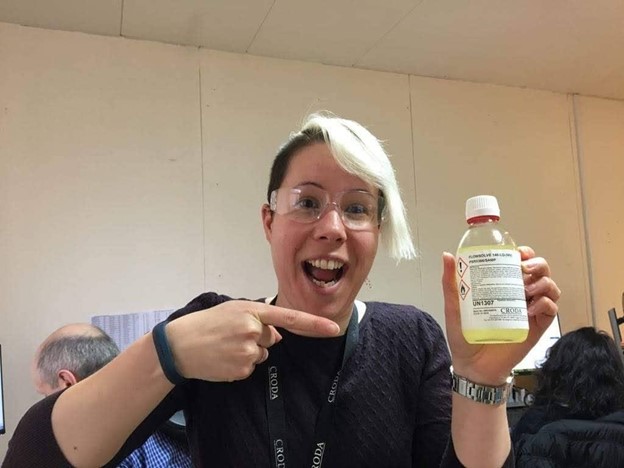
Jessica with the first product she developed at Croda.
In terms of equality and diversity, do you think enough is being done in your sector?
I think there is always more that can be done but I’ve never felt my gender has hindered me in my career and I’ve always felt very supported at Croda. Sometimes people are in a rush to see change immediately, especially when the senior management at Croda and many other STEM organisations is still made up of a majority of white males.
I like to think that the support myself and others have been given will mean that, as we progress, there will be more representation in senior positions. I would always want to achieve something on merit rather than to tick a box for equality. If that means it will take time for the generation I am in now to get to those positions, then I can wait. Importantly, I genuinely think everything that’s being put in place at Croda, and more broadly across the STEM sector, will pave the way for more diverse representation in senior roles in the future.
Do you have any advice you’d give to someone starting out?
Having a mentor is very important. I never thought I needed one until accidently developing that relationship. Since moving into different roles, I’ve set out to deliberately engage with people for that purpose. I would encourage people to seek out those who are different from themselves and engage with them.
I also think it’s important not to be afraid to ask for things you want. If you want to get a promotion or seek out further development, it’s often tempting to ask permission. If you can demonstrate to people that you are ready, it is more effective.
Generally, I think people, especially women, really underestimate the value of self-promotion as they worry it can be perceived as arrogance. A lot of people think that if you simply do a good job, then you’ll be recognised for that. That would be amazing if it were true, but people will judge you on how you’re perceived and how you present yourself, as well as what you do.
I think you need to put yourself out there. Whether it’s getting involved in something outside of your day job or taking the lead in a particular task, it’s a great way to get recognised. Sometimes it won’t work out and it can be hard to take the criticism when that happens, but you always learn from the outcome. I always prefer to have given something a go, even if I fail, than never to try.
Finally, I think people should always be themselves because everyone has unique skills to offer. I don’t think people would look at me and think that I look like the manager of a technical team, but I’m comfortable with my own style and that makes other people comfortable with it too.
>> We’re always interested in hearing about different people’s diverse career paths into chemistry. If you’d like to share yours, get in touch with us at: eoin.redahan@soci.org
08 November 2021 |
|


 |
|

Sustainability & Environment
A group of inspiring young scientists took centre stage at COP26 on 4 November to show how the next generation of chemists is finding tangible climate change solutions.
In a day dominated by what countries pledged to stop doing at COP26, such as pursuing coal power and financing fossil fuel projects overseas, it was refreshing to learn about low-carbon technologies and the young people driving their development. At the Next Gen forum, we heard from an array of young chemists, all associated with SCI, who are at the sharp edge of this change.
We heard from Brett Parkinson, Senior Engineer of Low Carbon Fuels and Energy Technologist at C-Zero, who is working on commercialising a way to decarbonise natural gas. The California-based company’s technology converts the natural gas into hydrogen and solid carbon to provide a clean energy source while sequestering the carbon; and the aim is to have this process up and running next year.
Natasha Boulding is building towards Net Zero a different way – with a greener concrete. The CEO and Co-founder of Sphera has developed a lightweight carbon negative additive using waste plastics that aren’t currently being recycled. She says the company’s blocks are the same strength and price as existing concrete blocks, but with 30% more thermal insulation. There is also the added benefit of reusing waste materials that would otherwise have gone to landfill or been incinerated.
Another solution discussed by Dominic Smith, Process Development Engineer at GSK, reduces energy consumption through green chemistry. He is trying to find greener ways to make medicines using enzymes. These enzymes, which can be found in plants and soil, replace chemical synthesis steps to cut energy consumption during processing and reduce hazardous waste.
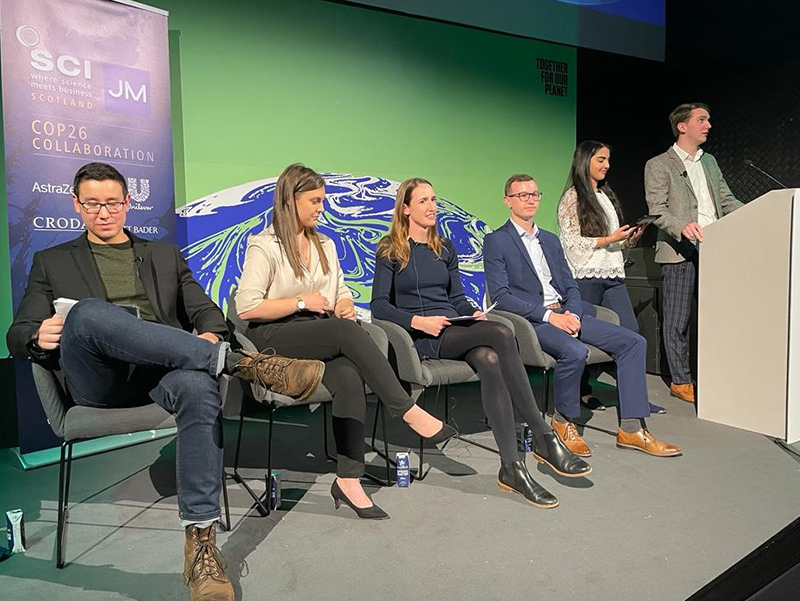
Panel (left to right): Dominic Smith, Natasha Boulding, Clare Rodseth, Jake Coole, Nikita Patel, and Oliver Ring (Brett Parkinson spoke via video link).
It was apparent from the discussion that many solutions will be needed for us to reach our climate change targets. On the one hand, Jake Coole, Senior Chemist in Johnson Matthey’s Fuel Cells team, is working on membrane electrode assembly for hydrogen fuel cells to help us transition to hydrogen-powered buses and trucks.
At the same time, Clare Rodseth, an Environmental Sustainability Scientist at Unilever, has been using lifecycle assessments to reduce the environmental impact of some of the 400 Unilever brands people use all over the world every day. For example, this work has helped the company move away from petrochemical ingredients in its home care products. ‘Even small changes,’ she said, ‘have the potential to bring about large-scale change.’
Incremental change
However, for each of the technologies discussed, barriers remain. For Coole and co., having a readily available supply of hydrogen and charging infrastructure will be key. And for Dominic Smith and his colleagues, the use of enzymes in green chemistry is still in its infancy; and getting enzymes that are fast enough, stable enough, and produce the right yield is difficult. Nevertheless, he noted that manufacturers are now using enzymes to produce the drug amoxicillin, reducing the carbon footprint by about 25%
And some things will take time to change. Natasha Boulding noted that concrete is the second most used material in the world after drinking water, and we simply can’t create many green technologies, such as wind turbines, without concrete foundations.
She said the construction industry is quite traditional but also pointed to perceptible change, with the green concrete market growing and companies becoming increasingly aware of their carbon footprints.
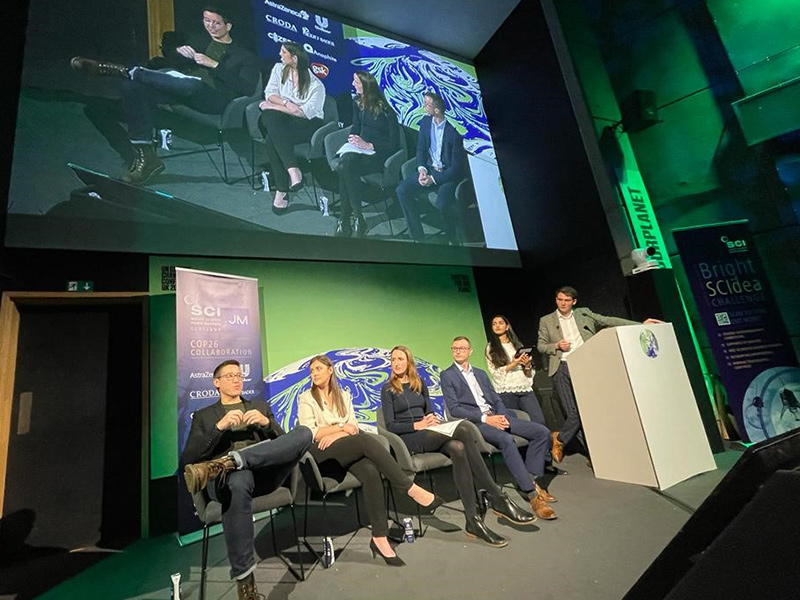
Collaboration was seen as crucial in producing climate change solutions.
The reality is that global action on climate change is recent. As Brett Parkinson said: ‘the main reason we’re talking about it now is that there’s a driver to do it. Until the last decade, the world hadn’t cared about CO2 emissions. They just talked about caring about it.’
How pivotal is science in all of this?
So, what could be done to make climate action more effective? For Parkinson, effective policy is key. He argued that if the market isn’t led by policies that encourage low-carbon innovations, then it won’t work as needed. ‘It all starts with effective decarbonisation policy,’ he said. ‘Legacy industries are very resistant to change. If you don’t have strong and consistent policies… then they’re not going to adapt.’
Another key to our low-carbon evolution is collaboration, and the SCI provides a confluence point for those in industry and academia to work together to produce innovative, low-carbon products. As Clare Rodseth said: ‘Collaboration is really important – linking up people who can actually come together and address these problems.’
As the discussion came to a close, you had the impression that the debate could have gone on for much longer. ‘Hopefully, we’ve demonstrated that there is action, and it’s being driven by young people like our panellists today,’ summarised Oliver Ring, the event’s co-Chair, before asking for the result of the audience poll.
The question: How many of those watching believed that science is pivotal in providing climate change solutions?
The answer: Just the 100%.
>> Thank you to Johnson Matthey for sponsoring the event, to the speakers for sharing their time and expertise, and to co-chairs Nikita Patel and Oliver Ring for doing such an excellent job.
05 November 2021 |
|
|
Sustainability & Environment
This Thursday at COP26, an inspiring panel of young scientists will discuss innovations that will help us mitigate climate change. So, what can we expect?
Millions of young people are frustrated by climate change inaction. Indeed, according to a University of Bath study, 60% of the next generation feel overwhelmed by climate anxiety. Often, the proposed solutions seem vague and intangible – well-intentioned ideas that drift away when the political winds shift.
And yet, when you see the ingenuity of young scientists, business people, and activists, it’s hard not to be excited. Undoubtedly, politics and our legal system will play a huge role in the drive to reach Net Zero, but arguably science will play the biggest role in transforming the way we live. Just think of the falling cost of generating solar power, improvements in battery chemistry for electric vehicles, the development of sustainable construction materials, and the rapid rollout of Covid-19 vaccines.
Tangible solutions
This Thursday at COP26, SCI will host the Next Gen youth forum event where the panellists discuss the climate change solutions they are working on right now and how they are being applied by industry. In the Countdown to Planet Zero roundtable, these scientists – drawn from within SCI’s innovation community – will explain their work to a global audience and the impact it will have on climate change.
They will discuss innovation in three key areas: topics of fuels of the future, turning waste into gold, and engineering nature.

The next generation has mobilised and is creating solutions to help avoid climate change disaster.
The panel will be chaired by two very capable young scientists. Oliver Ring is Senior Scientist at AstraZeneca’s large-scale synthesis team and Chair of SCI’s Young Chemists’ Panel, and passionate climate advocate Nikita Patel is a PhD student at Queen Mary University of London’s Centre of Translational Medicine and Therapeutics and STEM Ambassador for schools.
The other panel members include Clare Rodseth, of Unilever’s Environmental Sustainability Science team, who brings lifecycle analysis to product innovation to make products more sustainable.
Jake Coole, Senior Chemist in Johnson Matthey’s Fuel Cells team, is involved in the scale-up of new processes and next generation manufacturing, and Dominic Smith, Process Development Engineer at GSK, who is interested in engineering biology to create sustainable manufacturing processes.
Also present will be Dr Brett Parkinson, Senior Engineer of Low Carbon Fuels and Energy Technologist at C-Zero – a California-based startup that works on the decarbonisation of natural gas. In 2019, Brett was awarded an SCI scholarship for his research.
The lineup also includes Dr Natasha Boulding, CEO and Co-founder of Sphera Limited, a speciality materials company that has created carbon negative concrete blocks made from aggregate including waste plastic. According to Natasha, whose company also won SCI’s Bright SCIdea challenge in 2019: “In terms of combating climate change, interdisciplinary collaboration is the key. No one discipline has the answer to solve our biggest challenges – but together diverse minds can.’
>> Would you like to take part in BrightSCIdea and be in with the chance of winning £5,000? Be part of it.
Watch the event online
SCI is proud to be associated with these enterprising young scientists and the imaginative solutions they are developing to mitigate the effects of climate change.
‘As a global innovation hub, SCI wants to show how the next generation of scientists is actively developing solutions,’ said Sharon Todd, SCI CEO.

Sharon Todd, SCI CEO
‘Our COP26 youth forum debate will profile the work of young scientists and entrepreneurs addressing climate change in their work. This next generation of innovators has the power to change our world’s tomorrow.’
If you’d like to see the climate change solutions of tomorrow, register to watch the virtual event here.
02 November 2021 |
|
|
Science & Innovation
Continuing our series on Black pioneering scientists and inventors, we profile Garrett Augustus Morgan. His observations led him to upgrade the sewing machine, invent and upgrade life saving devices and develop personal care products for Black people, while championing civil rights and fighting for his own recognition.
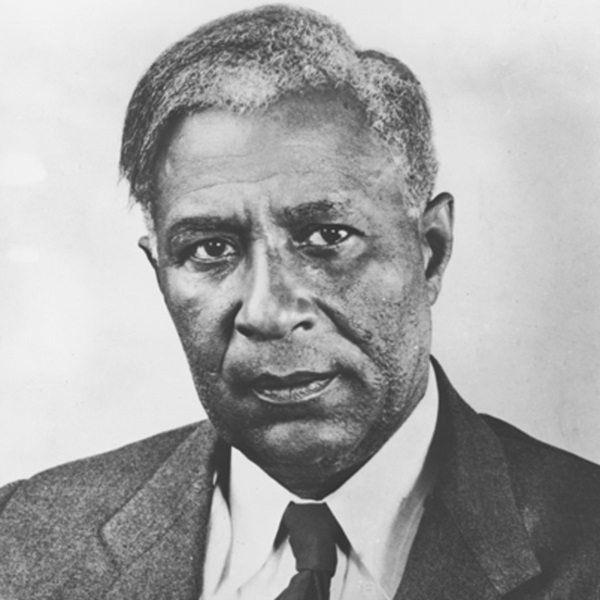
Garrett Augustus Morgan | Image credit: Public domain image courtesy of: https://www.dvidshub.net/image/1165661
Garrett Augustus Morgan was born in 1877, in Kentucky, US. Like many Black students he left school at a young age to find work. However, while working as a handyman in Cincinnati, he was able to hire a tutor and continue his studies.
During 1895, Morgan moved to Cleveland, Ohio, and it is said that Morgan’s interest in how things worked was sparked while repairing sewing machines for a clothing manufacturer. It was during this time that Morgan’s first inventions were developed: a belt fastener for sewing machines and the attachment used for creating zigzag stitching. By 1905, Morgan had opened a sewing machine shop and then a shop making clothes, ultimately providing employment for more than 30 people.
It was also during this time that Morgan became involved in the establishment of the Cleveland Association of Coloured Men. In addition to his interest in ‘gadgets’, Morgan also patented hair care products for Black people.
The life-saving Safety Hood
Morgan is credited with several inventions that have been responsible for saving many lives. In 1912 he filed a patent for the Safety Hood, which was developed after he had seen fire fighters struggling from the smoke encountered while tackling blazes. On the back of his invention, Morgan was able to establish the National Safety Device Company, in 1914, to market the product. While Morgan was able to sell his safety device across the US, it is said that on some occasions he hired a White actor to take credit for the device, rather than revealing himself as the inventor.
Morgan’s Safety Hood was soon in use in various settings including hospitals and ammonia factories. Indeed, the Safety Hood was used to save many lives and by the start of World War I, the breathing device had been refined to carry its own air supply. The Safety Hood was awarded a gold medal by the International Association of Fire Chiefs.
>> Read more about trailblazing Black scientists here.
Morgan’s device reached national prominence when it was used in the rescue of survivors and victims of a tunnel explosion under Lake Erie in 1916. The accounts tell of Morgan being woken early in the morning of 24 July 1916, after two rescuers lost their lives following the explosion.
Morgan is said to have arrived on the scene in his pyjamas, with his brother and a number of Safety Hoods. To allay the fears of the sceptics about his Safety Hood, Morgan went into the tunnel and retrieved two victims. Others joined and several people were rescued. Morgan is reported to have made four trips, but this heroism affected his health for years after as a result of the fumes he encountered.
Sadly, Morgan’s bravery and the impact of his Safety Hood were not initially recognised by the local press or city officials. It was some time later that Morgan’s role was acknowledged; and in 1917 a group of citizens presented him with the gold medal.
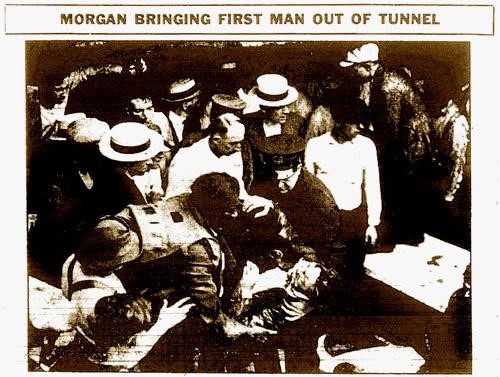
Garrett A. Morgan rescues a man at the 1917 Lake Erie Crib Disaster | Creative Commons CC BY-SA 3.0 Image in the Public Domain
While orders for Morgan’s device increased following the incident, it is said that when his picture appeared in the national press, crediting him as the Safety Hood inventor, officials in a number of southern cities cancelled their orders. Morgan is quoted as saying; ‘I had but a little schooling, but I am a graduate from the school of hard knocks and cruel treatment. I have personally saved nine lives.’
Safety seemed to be an important area for Morgan, as he became alarmed about the number of accidents that were occurring as cars became more prevalent in America. Along with the cars, bicycles, animal-drawn carts and people were sharing ever more crowded roads.
After witnessing an accident at a junction, Morgan filed a patent for a traffic light device which incorporated a third warning position. The idea for the ‘all hold’ position or what is now known as the amber light was patented in 1923. Morgan sold the idea to General Electric for $40,000 the same year. It should be noted, however, that a three signal system had been invented in 1920.
Morgan is credited with establishing a newspaper, building a country club open to Black people, and running for a seat on the Cleveland City Council, among many notable achievements. Morgan died in July 1963. He has been recognised in Cleveland Ohio, with the Garrett A. Morgan Cleveland School of Science, and the Garrett A. Morgan Water Treatment Plant being named in his honour. In addition, a number of elementary schools and streets carry his name.
29 October 2021 |
|
|
Science & Innovation

Sharon Todd, SCI CEO
It’s always great to meet new – and old – contacts at events. For so many months, crossing borders wasn’t possible, physically at least, due to the Covid-19 pandemic. Thankfully, the Chemical Innovation Conference (CIEX) provided a welcome change.
On 6 and 7 October, we came together in Frankfurt to discuss the challenges and opportunities in our sector. It was an honour for me to give the opening address – in the same year as SCI’s 140th anniversary.
Indeed, this year’s event included a well-paced mixture of talks and panel events that addressed post-pandemic difficulties, the challenges of climate change, the need to innovate and much more.
The chemical using industries face an array of challenges besides the practical fallout from the Covid-19 pandemic. Brexit, new regulations, supply chain issues, climate change, sustainability, and geo-political unrest pose significant problems
As an innovation hub, SCI connects industry, academia, patent lawyers, consultants, entrepreneurs and government, and other organisations. And I like to think of CIEX as an innovation hub too.
We have no choice but to innovate, but we must do so in a collaborative, sustainable way. The climate change emergency, for example, means society is looking to chemistry to help find long-term innovative solutions. That’s what made CIEX such an apt time for those in the industry to come together and navigate these challenges.
Innovating beyond barriers
The theme of this year’s event was ‘Game-Changing through Collaboration’. But I also thought of it as Crossing Borders – not just physical borders, but getting through the barriers that block innovation. These barriers hold back the translation of scientific solutions from the laboratory into business and, ultimately, into society.
Our sector is in the spotlight as never before and we can shape a better future. The debates at this year’s CIEX, and the exchange of ideas that took place, will help move us all forward. And what an exchange of ideas it proved to be.
We heard from an amazing line-up of speakers, addressing some of the industry’s most salient issues. BASF’s Christian Beil spoke about how best to leverage lean experimentation and rapid prototyping to improve customer centricity in product design, while Iris AI’s Anita Schjoll Brede described how we can reimagine the R&D work environment.

Ineos Styrolution plans to recycle polystyrene using thermal decomposition or by washing and remelting waste.
Furthermore, Johnson & Johnson’s Luis Allo spoke about the rise of consumer awareness as a driver for innovation. He provided interesting insights on accessing information on real customer trends and needs. Dupont’s Fred Godbille also described several tried and tested methods to assess the voice of the customer.
Elsewhere, Croda’s Nick Challoner assessed how we can unlock innovation through collaboration and partnerships. He also provided an overview of how Croda interacts with universities. On a more technical note, Roman Honeker of Ineos Styrolution outlined the company’s plans to recycle polystyrene using thermal decomposition or by washing and remelting waste.
The discussion on ‘how SMEs interact with corporates’ provided another of the event highlights, with contributions from Clariant, BASF, Chemstars, and SCI’s David Bott. Delegates discussed how SMEs sometimes oversell the potential of their products (without necessarily having much real-world experience) and the allegedly slow-moving, risk-averse nature of some corporates.
Cross-border innovation
Throughout the event, attendees examined what we can do better, how this can be achieved, and the resources needed to make this happen. After all, we must be nimble and flexible in these times of political and social uncertainty.
We can cross borders together – physically and virtually – via close collaboration. And we can cross the borders of what’s possible innovation-wise, removing barriers and journeying into new territory for us all.
26 October 2021 |
|
|
Science & Innovation
To celebrate Black History Month, we take a look back at some of the great Black scientists and innovators. From laser eye surgery to the gas mask, here are some of the seminal contributions made by these ingenious inventors.
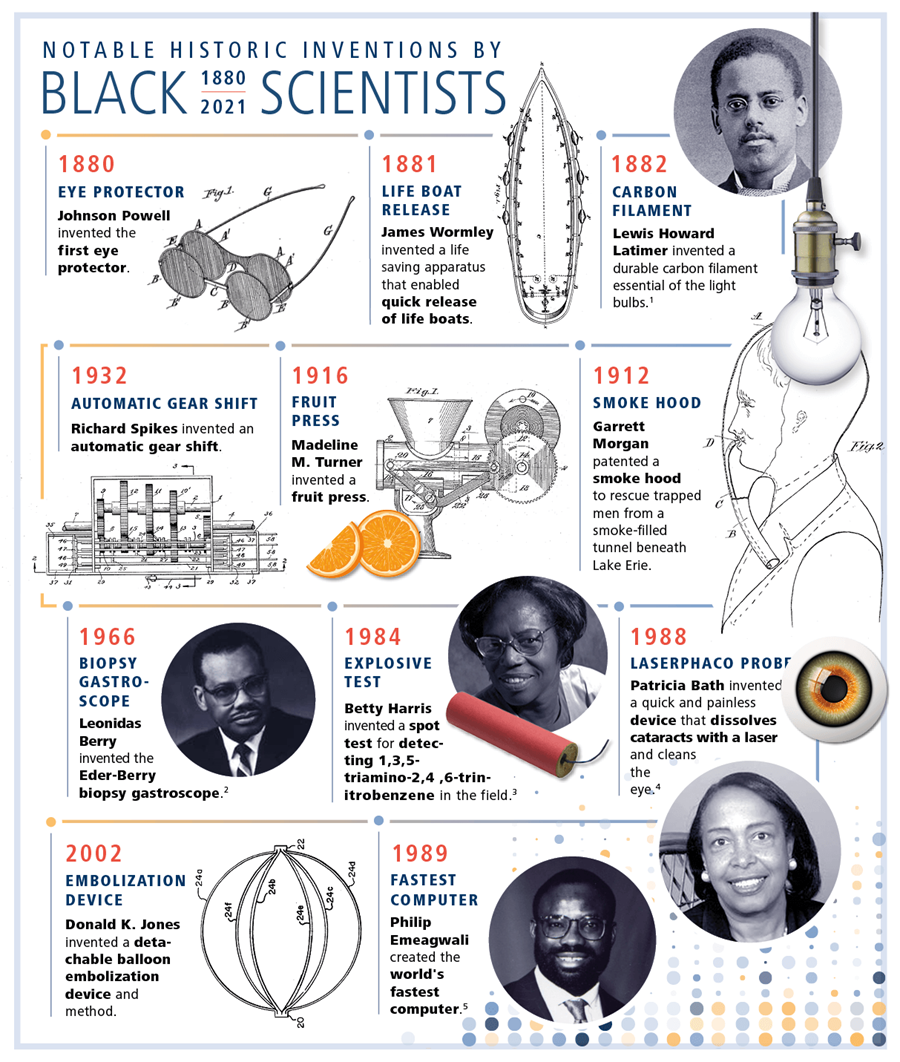
[1] Lewis Howard Latimer – Image credit: Unknown author Unknown author, Public domain, via Wikimedia Commons
[2] Leonidas Berry - Image credit: Adundi, CC BY-SA 4.0, https://creativecommons.org/licenses/by-sa/4.0, via Wikimedia Commons
[3] Betty Harris – Image credit: https://www.blackpast.org/african-american-history/harris-betty-wright-1940/ - Fair use image
[4] Patricia Bath - Image credit: National Library of Medicine, Public domain, via Wikimedia Commons
[5] Philip Emeagwali - Image credit: SakaMese, CC BY-SA 4.0, https://creativecommons.org/licenses/by-sa/4.0, via Wikimedia Commons

1880 – Johnson Powell
Have you ever used eye protectors to protect yourself against the glare of intense light? For those working in extreme environments such as fires and furnaces, Johnson Powell’s eye protectors will have been a sight for sore eyes.

1881 – James Wormley
James Wormley invented a life-saving apparatus for boats. His contraption included a string of floats that extended from a ship’s side via a sliding rod with projecting arms. The famous hotelier was also said to be at President Abraham Lincoln’s bedside when he died.
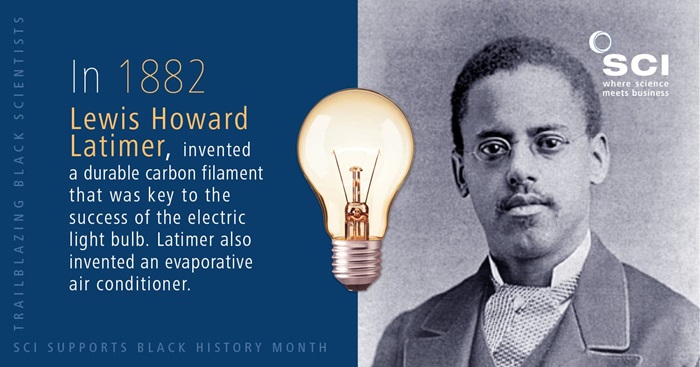
Image Credit: Unknown author, Public domain, via Wikimedia Commons
1882 – Lewis Howard Latimer
Lewis Howard Latimer is probably best known for inventing a durable carbon filament that was key to the success of the electric light bulb. Latimer also invented an evaporative air conditioner and even drafted the drawings to secure the patent for Alexander Graham Bell’s little known invention… the telephone.
>> Click here for more on Lewis Howard Latimer’s extraordinary contribution to science.
1912 – Garrett Morgan
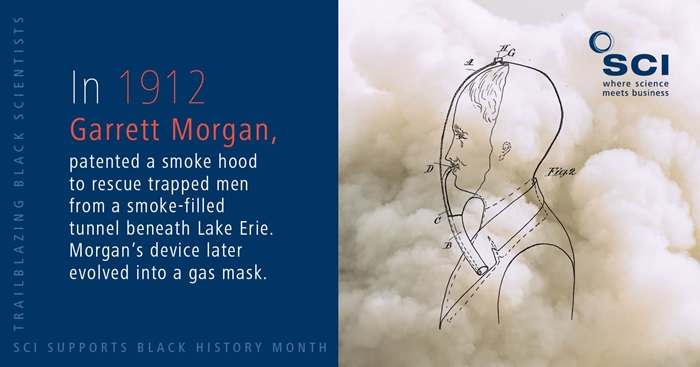
Imagine using your own invention to save people’s lives? That’s exactly what Garrett Morgan did when he donned his patented smoke hood to rescue trapped men from a smoke-filled tunnel beneath Lake Erie. Morgan’s device later evolved into a gas mask, and he also invented a three-position traffic signal, hair straightening cream, and a self-extinguishing cigarette for good measure.
1916 – Madeline M. Turner
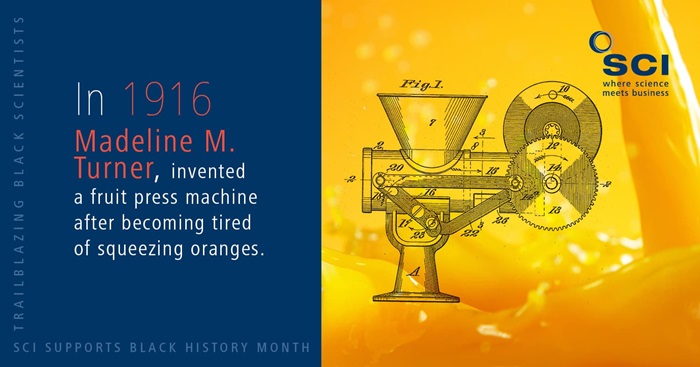
Madeline M. Turner’s ingenious invention was the fruit of her own frustration. Turner grew tired of squeezing oranges for her glass of juice, so she created the fruit press machine to solve the problem.
1932 – Richard Spikes
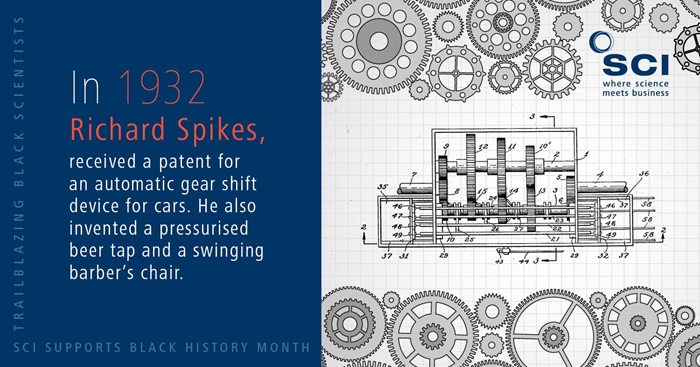
It’s safe to say Richard Spikes was a polymath. The American inventor created an automatic gear shift device for cars, a pressurised beer tap, and a horizontally swinging barber’s chair – all while working as a teacher and barber and being a capable pianist and violinist.
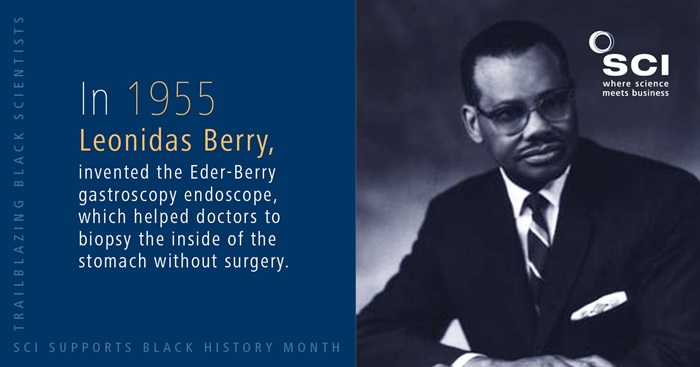
Image Credit: Adundi, CC BY-SA 4.0, via Wikimedia Commons
1966 – Leonidas Berry
This doctor and civil rights advocate invented the Eder-Berry gastroscopy endoscope in 1955, which helped doctors to biopsy the inside of the stomach without surgery. According to the US National Library of Medicine, ‘the Eder-Berry biopsy attachment made the gastroscope the first direct-vision suction instrument used for taking tissue samples during gastroscopic examination’.
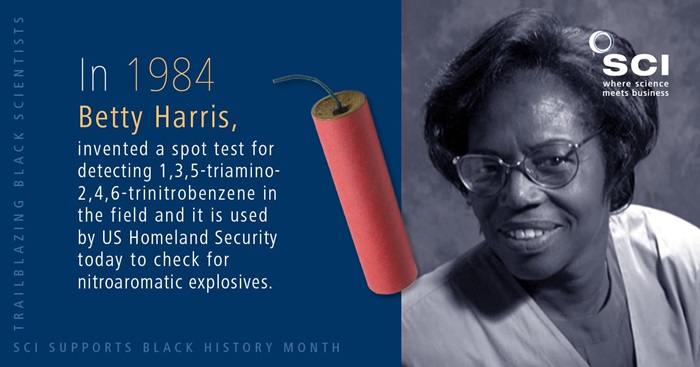
Image Credit: https://www.blackpast.org/african-american-history/harris-betty-wright-1940/ - fair use image
1984 – Betty Harris
Perhaps the most explosive discovery of all belongs to Betty Harris. Harris’ spot test for detecting 1,3,5-triamino-2,4,6-trinitrobenzene in the field is used by US Homeland Security today to check for nitroaromatic explosives. In her spare time, Harris has even found the time to work with the Girl Scouts to develop a badge based on Chemistry.
>> SCI is proud to support #BlackinChem. Take a look at some of our recent work.
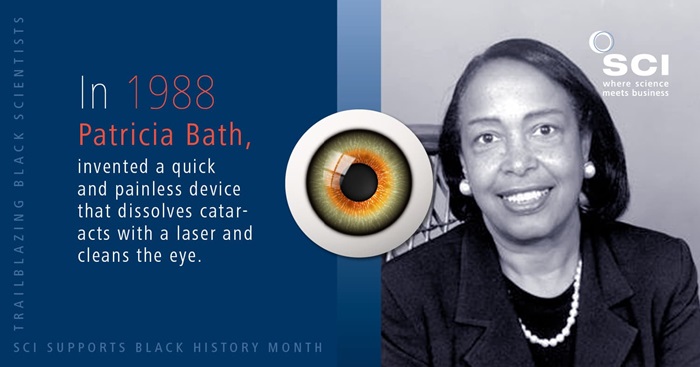
Image Credit: National Library of Medicine, Public domain, via Wikimedia Commons
1988 – Patricia Bath
Patricia Bath has helped return the gift of sight to thousands of people. The US ophthalmologist invented a quick and painless device that dissolves cataracts with a laser and cleans the eye, enabling the simple insertion of a new lens. Her laserphaco probe is still in use today.
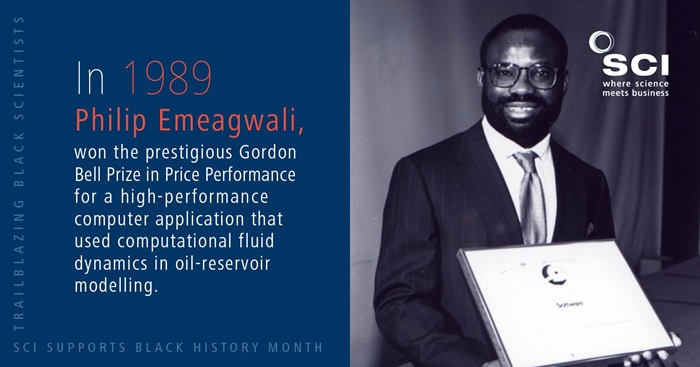
Image Credit: Philip Emeagwali - SakaMese, CC BY-SA 4.0, via Wikimedia Commons
1989 – Philip Emeagwali
Nigerian computer scientist Philip Emeagwali won the prestigious1989 Gordon Bell Prize in Price Performance for a high-performance computer application that used computational fluid dynamics in oil-reservoir modelling. In the same year, Emeagwali also claimed to perform the world’s fastest computation – 3.1 billion calculations per second – using just the power of the internet.
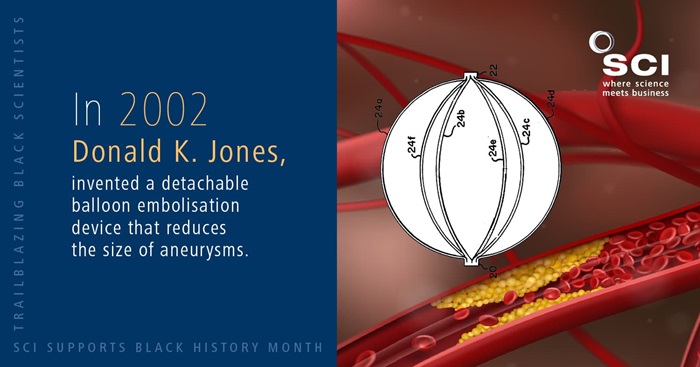
2002 – Donald K. Jones
Donald K Jones made a notable contribution to medicine with his invention of a detachable balloon embolisation device that reduces the size of aneurysms (bulges in blood vessels). The endovascular occlusion device is implanted into the body, whereupon its clever balloon system and adhesive materials reduce the size of aneurysms.
>> Which barriers still block the way for Black chemists? Read Claudio Lourenco’s story.
25 October 2021 |
|
|
Science & Innovation
We need to create more diverse paths into research and scientific innovation. Professor Dame Ottoline Leyser, Chief Executive of UK Research and Innovation, explains how industry clusters and a change of mindset could help.
What do you picture when someone mentions a chemist? Maybe you see someone like you working in a lab or office with your colleagues.
But what do people at the bus stop think? What would a secondary school student say? Do they see someone like them – or do they imagine an Einstein-like figure hidden away in a dark room with crazed hair and test tubes?
One of the most interesting messages from Professor Dame Ottoline Leyser’s Fuelling the Future: science, society and the research and innovation system talk on 29 September was the need to make sure science and technology are seen as viable careers for people throughout society.

Prof Dame Ottoline Leyser
You don’t need to be a genius to work in research and innovation. You don’t necessarily need to be a specialist, and you certainly don’t need to be hunched over a microscope with a jumble of figures and formulae on a board behind you. An array of different people, technical and non-technical, are needed to make the sector thrive.
The narrow pathway of talent
Part of Dame Ottoline’s job as Chief Executive of UK Research and Innovation (UKRI) is to improve access to these sectors and to make sure that great ideas aren’t lost due to daunting entry barriers.
‘It’s a huge challenge,’ she said. ‘A large part of the challenge is the narrow concept that we all have of what a researcher and innovator look like.’
Leyser spoke about the need to create diverse routes through the system rather than squeezing everyone through the same narrow path. ‘The assessment criteria we use for individuals have become narrower and narrower,’ she added. ‘Some of it, ironically, is to make the system fairer, but objectivity in creativity is a total pipe dream. You end up crushing creativity by narrowing the criteria.’
She noted that those with mixed careers – interwoven with varied experiences – are to be welcomed. ‘That’s nothing to do with compromising excellence,’ she said. ‘Real excellence comes in multiple forms.’
>> Would you like to attend more talks like this one? Check out our Events page.
Challenging times
However, Leyser also spoke of the need to level up the UK from a productivity perspective. One way to do this is through smart specialisation and industry clusters. She mentioned Lincoln as an area where this approach worked well. Lincoln is home to extensive agriculture and the multinational technology corporation Siemens. As such, it made sense to help make it a centre for agricultural robotics.

UKRI is investing heavily in research and innovation into Net Zero energy solutions.
As the largest public funder of research and innovation in the UK, UKRI has a major role to play in funding such industry clusters and intelligent innovation. It has funded more than 54,000 researchers and innovators, and UKRI grants have generated almost 900 spinouts since 2004.
These include Oxford Nanopore, a biotech company whose DNA sequencing technology is now valued at £2.5bn. It has also cast an eye on the future, including delivering more than £1bn in R&D relevant to Artificial Intelligence and in excess of £1bn towards Net Zero energy solutions.
Leyser noted that the UKRI’s goal is to embed research and innovation more broadly across society – for it to be ‘by the people and for the people, rather than the exclusive domain of the privileged few’.
It is a grand challenge, but such sentiments are certainly encouraging.
12 October 2021 |
|
|
Careers
Continuing our series on Black scientists, Dr George Okafo tells us about his journey from curious child, encouraged by family and mentors, to Global Director of Healthcare Data and Analytics with a leading pharmaceutical company.

What is your current position?
I am Global Director, Healthcare Data and Analytics Unit at Boehringer Ingelheim, and have been in this role for the past 10 months.
Right: Dr George Okafo
Please give us a brief outline of your role.
To build an expert team of data stewards, data scientists and statistical geneticists tasked with accessing and ingesting population-scale healthcare biobanks and then deriving target, biomarker and disease insights from this data to transform clinical development and personalise the development of new medicines.
What was it that led you to study chemistry/science and ultimately develop a career in this field? Was this your first choice?
My interest in science stems from my parents. My father was a medical doctor, and my mother was a senior midwife. As a child, I was always very curious and wanted to know why and how things worked. This curiosity has stayed with me all my life and throughout my career at GlaxoSmithKline and now at Boehringer Ingelheim. In my current role, I am still asking the same types of questions from Big Data and these answers could have a profound impact in the development of new medicines.
Was there any one person or group of people who you felt had a specific impact on your decision to pursue the career you are in?
Yes, my father and mother, who supported, encouraged and gave me the confidence to be curious, to keep trying and to never give up.

Dr Okafo held senior director-level roles in drug discovery and development while at at GSK.
Could you outline the route that you took to get to where you are now, and how you were supported?
My career journey started at Dulwich College (London) where I studied Chemistry, Biology, Maths and Physics at A Level. This took me to Imperial College of Science, Technology and Medicine (London), where I completed my Joint BSc in Chemistry and Biochemistry and my PhD in Cancer Chemistry.
I then spent a year at the University of Toronto in Canada as a Postdoctoral Fellow, before embarking on my career in the Pharmaceutical Industry, starting at GlaxoSmithKline (GSK). I spent 30 years at GSK, where I held many senior director-level roles in drug discovery and development. During my time, I made it my mission to learn as much about the R&D process and used this knowledge to understand how innovation can impact and transform drug research.
I have been very fortunate in my career to be surrounded by many brilliant and inspirational people who had the patience to share their knowledge with me and answer my many questions.
>> Curious to read more about some of the great Black scientists from the past? Here’s our blog on Lewis Howard Latimer.
Considering your own career route, what message do you have for Black people who would like to follow in your footsteps?
Surround yourself with brilliant people who can inspire you. Look for people who you respect and can coach and mentor you. Don’t be afraid to fail. Work hard and keep trying.
What do you think are the specific barriers that might be preventing young Black people from pursuing chemistry/science?
No, I do not see colour as a barrier nor a hindrance to pursuing a career in science. I think it is important to look for role models from the same background to help inspire you, to answer your questions and to encourage you.
What steps do you think can be taken by academia and businesses to increase the number of Black people studying and pursuing chemistry/science as a career?
Have more role models from different backgrounds. This sends a very powerful message to young people studying science reinforcing the message… I can do that!
Could you share one experience which has helped to define your career path?
Not so much an experience, but a mindset – staying curious, inquisitive, always willing to learn something new, having courage that failure is not the end, but an opportunity to learn.
11 October 2021 |
|
|
Careers
Marking Black History Month and following on from the #BlackInChem initiative, SCI is continuing its look back at some of the unsung Black scientists who pioneered, and made important contributions, to the advancement of science.
Today we profile Lewis Howard Latimer, much admired by his contemporaries; Alexander Graham Bell and Thomas Edison, but sadly a name, and story, that is not as well known.
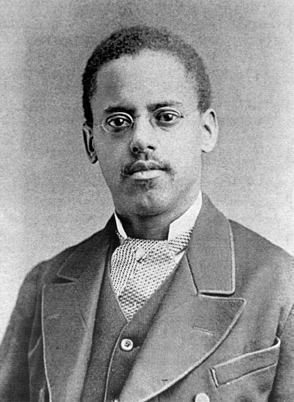
Lewis Howard Latimer | Image Credit: By Unknown author - http://www.lrc.rpi.edu/resources/news/pressReleases/img/Lewis.jpg, Public Domain, https://commons.wikimedia.org/w/index.php?curid=2032528
Lewis Howard Latimer, the youngest of four children, was born in Chelsea, Massachusetts, on 4 September 1848. His father, George Latimer, a slave who had escaped, became something of a cause celebre when his owner recaptured him. However, abolitionists took his case to the Supreme Court and his freedom was secured.
Lewis proved to be an excellent student, with a particular flair for drawing, as well as writing poetry and stories, but lack of finance and restricted access to education meant that by 15 years of age, Lewis had joined the US Navy. The history books indicate that he was honourably discharged in 1865; when the Civil War ended.
Soon after, Latimer found work as an office boy with the patent firm Crosby, Halstead and Gould. It is here that combining his talent for drawing, and developing the skills of a draughtsman he was eventually promoted to the position of head draftsman. The history books record that Latimer’s first patent, in 1874 with colleague Charles Brown, was an improved toilet system for railroad cars.
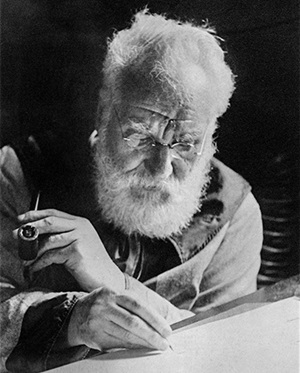
Lewis Latimer was instrumental in helping Alexander Graham Bell file his patent for the telephone ahead of his competitors.
Latimer had many inventions, but it could be argued that his drawings for Alexander Graham Bell’s telephone, helped seal his place in science history. The story goes that Bell was in a race against time, as rivals were also looking to gain patent rights for a similar device. Bell hired Latimer who used his expertise in drawing and submitting patent applications to help Bell file his patent just hours, it said, before his rival in 1876.
By 1880 Latimer had taken up the post of mechanical draughtsman for the inventor Hiram Maxim, who was also the founder of the US Electric Lighting Company. Now focused on incandescent lighting, Latimer along with Joseph Nichols, invented a light bulb which used a carbon filament, an improvement on Thomas Edison’s paper filament. The invention, patented in 1881, was sold to the US Electric Lighting Company in the same year.
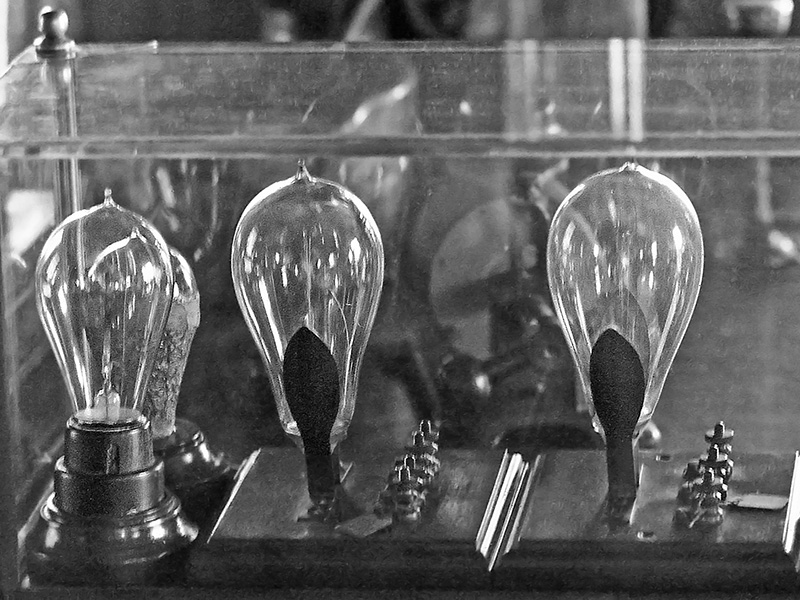
Latimer invented a process for making carbon filaments for light bulbs | Editorial credit: Claudio Zaccherini / Shutterstock.com
1A booklet by the Thomas Alva Edison Foundation noted; ‘Latimer invented and patented a process for making carbon filaments for light bulbs. He taught the process to company workers, and soon it was being used in factory production. Latimer also assisted in installing Maxim lighting systems in New York City, Philadelphia, Montreal and London. During the installation of lighting in Montreal, where a lot of people spoke only French, Latimer learned the language in order to competently instruct the workers. In London he set up the first factory for the Maxim-Weston Electric Light Company. That required him to teach the workmen all the processes for making Maxim lamps, including glass blowing. In just nine months Latimer had the factory in full production.’
In 1882 Latimer left Hiram Maxim and in 1884 joined the Edison Electric Light Company, where he was given the title draughtsman-engineer. In 1890 he joined the Edison Legal Department, and in 1893 testified in a case where the company said that its incandescent lamp patents had been infringed. In 1896 the Board of Patent Control of GE and Westinghouse was formed and Latimer became its Chief Draughtsman. He continued in that role until 1911 when he joined the consulting firm Edwin W Hammer.
On 24 January 1918, Latimer was named one of the 28 charter members – and the only African-American member – of the Edison Pioneers, ‘a distinguished group of people who worked to keep the ideals of Thomas Edison alive.’ The Edison Pioneers helped create the US’ electric power industry.
Latimer received patents for several inventions, including the safety elevator. He also had a passion for social justice. In a letter written in 1895 in support of the National Conference of Coloured Men, Latimer wrote: ‘I have faith to believe that the nation will respond to our plea for equality before the law, security under the law, and an opportunity, by and through maintenance of the law, to enjoy with our fellow citizens of all races and complexions the blessings guaranteed us under the constitution.’
Latimer died on 11 December 1928. Edison Pioneers historian and long time private secretary of Thomas Edison, William H. Meadowcroft wrote1 ‘Lewis Howard Latimer was of the coloured race, the only one in our organisation, and was one of those to respond to the initial call that led to the formation of the Edison Pioneers, January 24 1918. Broadmindedness, versatility in the accomplishment of things intellectual and cultural, a linguist, a devoted husband and father, all were characteristics of him, and his genial presence will be missed from our gatherings…We hardly mourn his inevitable going so much as we rejoice in pleasant memory at having being associated with him in a great work for all peoples under a great man.’
1For more information on Latimer’s life, work and legacy, see the Edison Electric Institute resource: Thomas Alva Edison Associate: Lewis Howard Latimer: A Black Inventor.
04 October 2021 |
|
|
Careers
SCI’s America International group has awarded the 2021 Perkin Medal to Dr Jane Frommer. The 114th Perkin Medal was presented to Jane at the Bellevue Hotel in Philadelphia, Pennsylvania, in recognition of her outstanding contribution to chemistry.
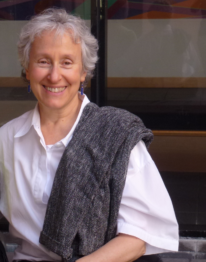
Dr Jane Frommer
Dr Frommer is renowned for her key contributions in electronically conducting polymers and scanning probe instrumentation. Her pioneering work with scanning probes paved the way for their use in chemistry, materials science and, eventually, in nanotechnology. According to SCI America, her nanoscopic analytic methods are vital to nanostructural research and are used across many industries.
Dr Frommer began her career in 1980 at Allied Corporate Laboratories (now Honeywell), where she created the solution state of electronically conducting organic polymers. In 1986, she joined IBM where, along with other instrumentalists, she demonstrated the ability to image and manipulate single molecules using scanning tunnelling microscopy. During her multi-year assignment at the University of Basel Physics Institute in the early 1990s, Dr Frommer’s team expanded the capability of scanning probes in measuring the functional properties of organic thin films with atomic force microscopy.
Since 2018, she has worked as a science advisor for Google. In this capacity, she has sought to increase the amount of open source data available in the physical and life sciences. She also helps Silicon Valley start-ups navigate the chemical and material challenges of nanotechnology and has mentored countless students and young scientists in high school, college, and in her laboratory in recent decades.
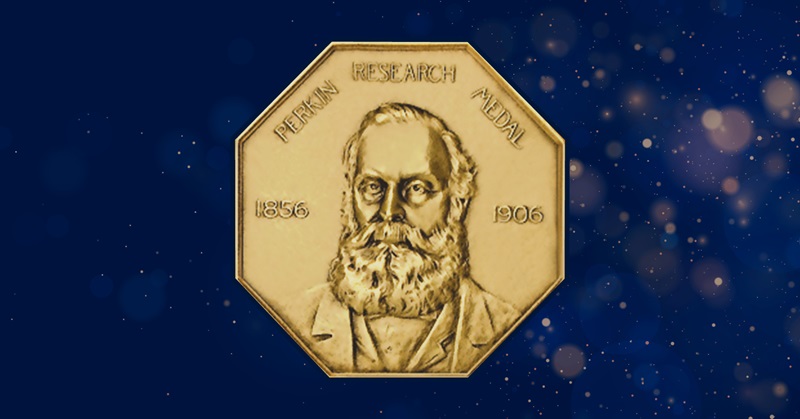
Previous recipients of the Perkin medal include Barbara Haviland Minor, of the Chemours Company, and Ann E Weber, of Kallyope Inc.
Dr Frommer has written more than 100 referred publications and is the co-inventor of more than 50 issued patents. With her extraordinary body of work spanning more than 40 years, she is a worthy recipient of the prestigious Perkin Medal.
The Perkin Medal is widely acknowledged as the highest honour in American industrial chemistry. It was established to commemorate the 50th anniversary of William Henry Perkin’s discovery of mauveine at the age of just 18. Perkin’s creation of mauveine, the world’s first synthetic aniline dye, revolutionised chemistry and opened up new frontiers in textiles, clothing, and other industries. Perkin was a founding member of SCI and this Medal was first presented to him in New York in 1906.
For more information on the Perkin Medal and the nomination process, visit: soci.org/awards/medals/perkin-medal
30 September 2021 |
|
|
Agrifood
Lilies provide gloriously beautiful and well scented flowering border plants. Choose flowering size bulbs in the garden centre or from a catalogue. Grow these through the winter potted in a general garden compost placed in an unheated greenhouse or cold frame. By March or early-April, substantial green shoots will have formed from the bulbs and they can be transplanted into the garden.
Lilies need a sunny border and very fertile soil to encourage vigorous root growth capable of supporting the flowering spike and ancillary bulbs as they are initiated. This produces magnificent flowers and an increasing colony of bulbs that will spread and become established over future seasons.

Lilium longiflorum, often called the Easter lily | Image credit: Professor Geoff Dixon.
Regular watering and feeding with nutrients are needed, especially potassium, which encourages root and shoot growth. Stake the flower spike as it grows, giving support for the flowers because they are heavy when fully open and easily damaged by winds.
Rewards come in mid-summer with magnificent colourful flowers and wonderful perfumes on warm evenings. Apart from severe winters, lilies are hardy garden plants unless they are from groups specified as tender and requiring protection. In the autumn, simply cut down the flowering spike and remove any fallen foliage.

Buds developed on lily scales after culturing | Image credit: Professor Geoff Dixon.
The Lilium genus has about 100 species originating worldwide mainly from north temperate areas of Europe, Asia and America. The colour range includes white, yellow, orange, pink, red and purple. Plant breeders in The Netherlands, Japan and North America have produced a huge range of multi-coloured hybrids.
Taxonomically, Lilium is divided into divisions, of which the Turk’s Caps, Martagons and American hybrids are popular. The most destructive pest is the scarlet lily beetle (Lilioceris lilii) which devours foliage, flowers and bulbs. The first signs of trouble are shot holes in the foliage. Picking off beetles and larvae is an effective means of dealing with low-level infestations.
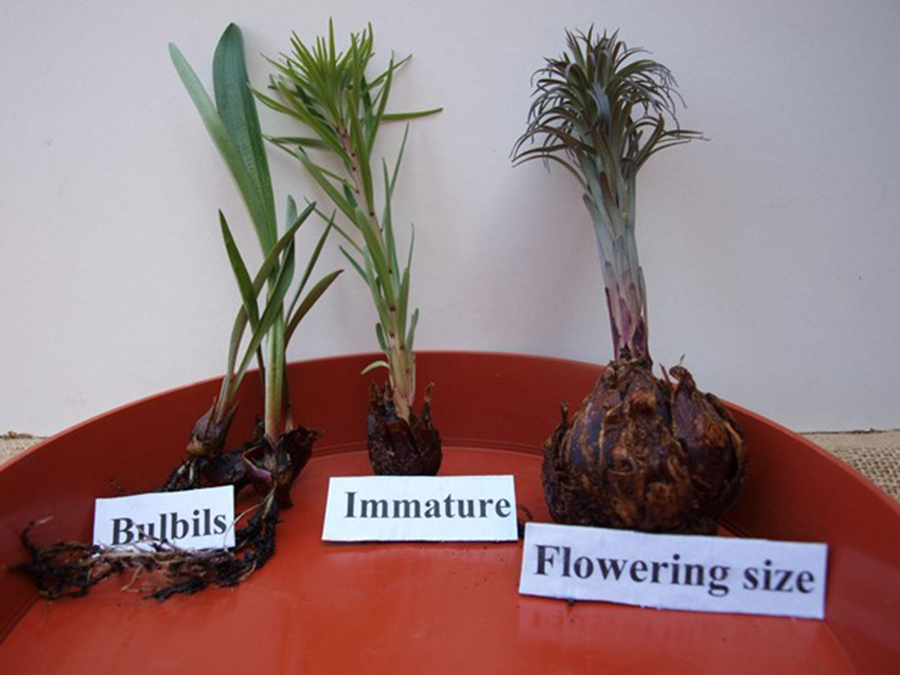
Comparison of lily bulbils growing from scale leaves, immature bulb and flowering size bulb | Image credit: Professor Geoff Dixon.
Asexual propagation is a simple and enjoyable occupation. Divide a good-sized bulb into its scales. Choose healthy scales from the outer rings and place these in a plastic box containing damp kitchen paper and place in an airing cupboard. After about 10-12 weeks, small bulbils will have formed on each scale.
Select the boldest mother scales and bulbils and plant in a tray of seedling compost and grow in the greenhouse. After two or three months the most vigorous young plants can be potted individually. Eventually these are planted in the garden and will develop into flowering size bulbs after two or three years.
Written by Professor Geoff Dixon, author of Garden practices and their science, published by Routledge 2019.
21 September 2021 |
|
|
Sustainability & Environment
The War on Plastic is a grand title. To most of us, it doesn’t seem like much of a war at all – more like a series of skirmishes. Nevertheless, if you look closely, you’ll see that a lot of companies are tackling the issue.
GSK Consumer Healthcare (GSKCH) is one such organisation. The healthcare brand that gave us Sensodyne and Advil has launched a carbon neutral toothbrush to reduce our reliance on fossil fuels (which create virgin plastic).
The composition of its Dr. Best tooth scrubber is interesting. The handle comprises a mixture of a cellulose derived from pine, spruce, and birch trees and tall oil, which comes from the wood pulping industry. The bristles are made from castor oil and the plastic-free packaging includes a cellulose window.
According to GSKCH, Dr. Best is Germany’s favourite toothbrush brand and there are plans to apply the technology to toothbrushes across its portfolio, including its Sensodyne brand. At the moment, GSK needs to apply carbon offsetting initiatives to make the toothbrush carbon neutral, but it says it is working on future solutions that do not require this approach.
Net zero shopping
GSK isn’t the only company that is actively reducing the use of plastics and minimising waste. Supermarket chain Morrisons has made aggressive moves in recent years to cut waste, and has just launched six ‘net zero waste’ stores in Edinburgh that will operate with zero waste by 2025.
Customers at these stores will be able to bring back hard-to-recycle plastics such as food wrappers, foils, yoghurt tubs, mixed material crisp tubes, coffee tubs, batteries, and plant pots. At the same time, all store waste will be collected by a range of specialist waste partners for recycling within the UK, and unsold food will be offered to customers at a cheaper price on the Too Good to Go app.
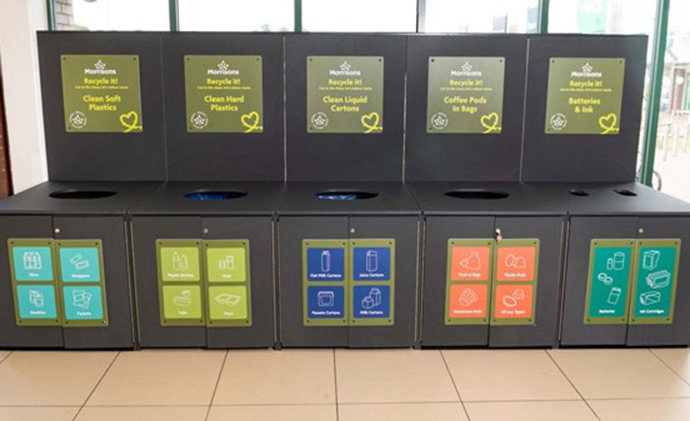
Morrisons’ proactive approach will help find a new life for hard-to-recycle packaging.
‘We’re not going to reach our ambitious targets through incremental improvements alone,’ said Jamie Winter, Sustainability Procurement Director at Morrisons. ‘Sometimes you need to take giant steps and we believe that waste is one of those areas. We believe that we can, at a stroke, enable these trial stores to move from recycling around 27% of their general waste to over 84% and with a clear line of sight to 100%.
‘We all need to see waste as a resource to be repurposed and reused. The technology, creativity and will exists – it’s a question of harnessing the right process for the right type of waste and executing it well.’
If this approach is successful, Morrisons plans to roll out the zero waste store format in all of its 498 stores across the UK next year.
>> Interested in reading more about sustainability and the environment? Check out our blog archive.
Stamping out single-use plastics
The government has also issued its latest battle cry in the war on plastics. Having defeated plastic straws, stirrers and cotton buds, it has turned its attention to other single-use plastics.
Single-use plastic plates, cutlery and polystyrene cups are among the items that could be banned in England following public consultation.

The humble cotton bud has now been retired from active service.
Somewhat surprisingly, it estimates that each person in England uses 18 single-use plastic plates and 37 single-use plastic items of cutlery each year; so, it has begun moves to cut out this waste stream.
Environment Secretary George Eustice said: “We have made progress to turn the tide on plastic, banning the supply of plastic straws, stirrers and cotton buds, while our carrier bag charge has cut sales by 95% in the main supermarkets. Now we are looking to go a step further as we build back greener.”
All in all, it’s encouraging to see that companies and the government are brushing up on their sustainable practices.
>> Curious to find out what the future looks like for lab-processed food and meat alternatives? Read what the experts say here.
16 September 2021 |
|
|