Agrifood
Main image: Pea crop | Image credit: Geoff Dixon
Peas are a very rewarding garden crop. Husbandry is very straightforward, producing nutritious yields and encouraging soil health by building nitrogen reserves for future crops.
Rotations usually sequence cabbages and other nitrogen-demanding crops after peas. This is a sustainable way to use the organic nitrogen reserves left by pea roots resulting from their mutually beneficial association with benign bacteria. These microbes capture atmospheric nitrogen, producing ammonia, nitrites and nitrates in a sequence of natural steps.
Peas originated in the Mediterranean. They were cultivated continuously by ancient civilisations and through medieval times, and are now the seventh most popular vegetable.
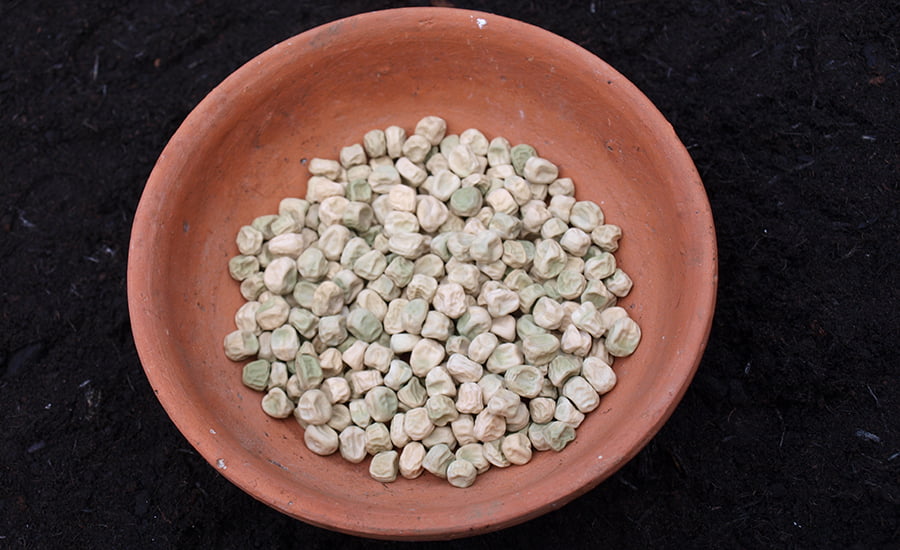
Illustration 1: Pea seeds | Image credit: Geoff Dixon
In bygone centuries, peas provided a protein source for the general population as cooked meals of pea soup and pease pudding helped keep famine at bay before the introduction of potatoes. In the 18th century, French gardeners working for the aristocracy produced fresh peas using raised and protected beds of fermenting animal manure. The composting processes produced heat and released carbon dioxide, stimulating rapid growth.
Generally, however, eating fresh peas only gained popularity in the 20th century as canned and then quick-frozen foods were invented, and large-scale technological development enabled mechanised and automated commercial precision cropping. In recent times, retail market demand has returned for unshelled podded peas – a manually picked crop known colloquially as ‘pulling peas’.
How to grow peas
Seeds can be sown directly (illustration 1) or transplants (illustration 2) can be raised under protection, giving an early boost for growth and maturity. Peas are cool season crops. They grow best at 13-18°C and mature about 60 days after sowing.

Illustration 2: Pea seedlings | Image credit: Geoff Dixon
Some cultivars such as Meteor can be grown over winter, preferably protected with cloches for very early cropping. The spring sown The Sutton cultivar group (CV) gives rapid but modest returns, and main crop CVs, such as Hurst Green Shaft, deliver the heaviest returns (illustration 2). This cultivar forms several long, well-filled pods at the fruiting nodes.
Sugar peas or mange tout – where the entire immature pod is eaten – is a popular fresh crop, while quick-growing pea shoots that mature in 20 days from sowing are excellent additions for salads or as garnishes for warm cuisine.
Human health benefits significantly by including peas in the diet. As well as being an excellent protein source, they produce a range of vitamins and nutrient elements. Their coumestrol content aids the control of blood sugar levels, helping combat diabetes, heart diseases and arthritis.
So, it’s certainly worth finding a spot for this versatile vegetable in your garden.
Written by Professor Geoff Dixon, author of Garden practices and their science.
26 July 2021 |
|


 |
|

Materials
We always hear about athletes eking out that competitive edge through subtle changes in diet or equipment. Well, when it comes to making our buildings more energy-efficient, dozens of different technologies could make a difference. Every one may not be earth juddering on its own, but each could help decarbonise our homes by degrees.
Phase-changing materials (PCMs) may have a role to play in reducing our reliance on power-hungry cooling and heating systems in the home. At Texas A&M University, researchers have developed PCMs to passively regulate temperatures inside buildings.
They believe their 3D-printed phase-change materials - compounds that can change from a solid to liquid when absorbing heat, or from liquid to solid when releasing heat - could be incorporated into our homes in paint or other interior effects to regulate interior temperatures.
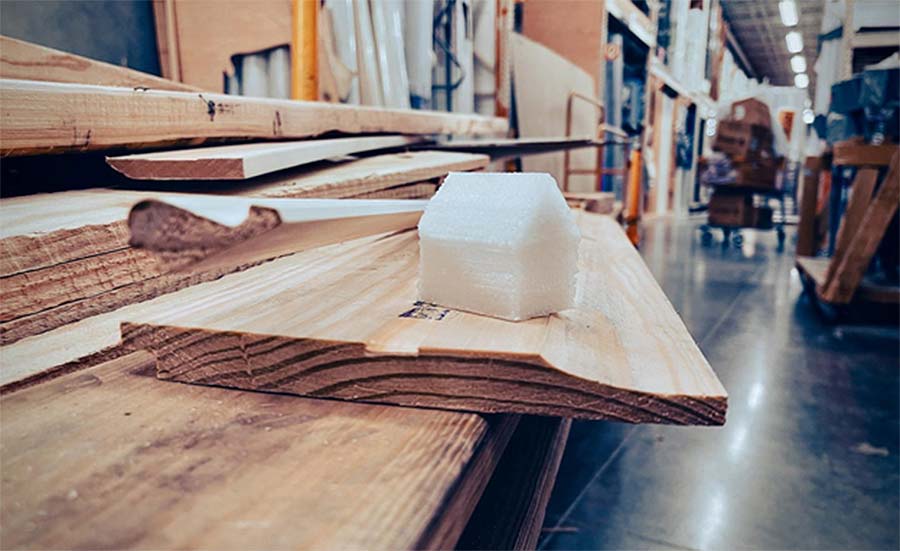
New phase-change material composites can regulate ambient temperatures inside buildings | Image credit: Texas A&M University College of Engineering
Their partial substitute to the heating, ventilation and air conditioning (HVAC) systems that predominate in many of our buildings is a light-sensitive liquid resin with a phase-changing paraffin wax powder.
According to the researchers, their 3D printable ink composite improves upon existing PCMs in that it doesn’t require a separate shell around each PCM particle. When the PCM is mixed with liquid resin, the resin acts as both the shell and building material, enabling thermal energy management without any leakage. They use an ultraviolet light to solidify their 3D printable paste and make it suitable for use in our buildings.
“The ability to integrate phase-change materials into building materials using a scalable method opens opportunities to produce more passive temperature regulation in both new builds and already existing structures,” said Dr. Emily Pentzer, associate professor in the Department of Materials Science and Engineering and the Department of Chemistry.
To date, the researchers have only tested their materials on a small scale in a house-shaped model. Nevertheless, after placing their 3D printed model inside an oven, the results were encouraging. The model’s temperature was 40% different to outside temperatures compared to models made using traditional materials.

From solar panels and insulation to heat pumps and phase change materials, much has been done to make our homes more energy-efficient
“We’re excited about the potential of our material to keep buildings comfortable while reducing energy consumption,” said Dr. Peiran Wei, research scientist in the Department of Materials Science and Engineering and the Soft Matter Facility. “We can combine multiple PCMs with different melting temperatures and precisely distribute them into various areas of a single printed object to function throughout all four seasons and across the globe.”
Perhaps we won’t see PCMs in widespread use in our buildings any time soon, but it’s always heartening to see the use of passive heating and cooling systems in our buildings. Anything that contributes to the decarbonisation mix is certainly worth investigating further.
13 July 2021 |
|
|
Agrifood
Think of Earth as an apple and the soil as the peel. Now, imagine that more than 70% of this apple’s surface is covered in water. That veneer of peel suddenly seems very small indeed.
Dig beneath the surface and you realise that the world’s soil resources aren’t as plentiful as you first thought. When you take into account all of the uninhabitable, non-arable land on our planet, including the snow-bound poles and deserts, you’re left with just 3% of total landmass to grow all the fruit and vegetables we eat.
After reminding her listeners of some stark facts at the Soil resources in the UK: overlooked and undervalued? webinar, Jane Rickson, Professor of Soil Erosion and Conservation at Cranfield University, reminded us that soil is a precious, finite resource. “We’re dealing with a very thin resource that has to deliver all of these goods and services.”
You just need to think of your breakfast, lunch, and dinner to realise just how important soil is. Of all the food we eat, 97% comes from terrestrial sources. However, in recent decades, the many benefits brought by soil have been taken lightly. Apart from providing food, animal fodder, and a surface for football, it plays a vital role in climate change mitigation.
‘Soil is excellent for climate change mitigation,’ said Professor Rickson, recipient of the prestigious Dr Sydney Andrew Medal for 2021. ‘We know that healthy soils can support vegetation and crops and plants in taking out atmospheric CO2.’

A cross section of soil layers. Unless you live on fish and seaweed, it’s likely that almost all of your food sources will come from terrestrial sources.
However, she and her colleagues at Cranfield University have unearthed some unsettling facts about the state of our soils. She mentioned that 12 million hectares of agricultural land worldwide is lost each year due to soil degradation. In the UK, soil erosion rates can be as high as 15 tonnes per hectare per year, with soil formation rates only compiling at a rate of 1 tonne per hectare per year; and, based on current rates of erosion, some soils could disappear completely by 2050.
So, what is being done to arrest this problem? The obvious mammoth in the room is climate change, with extreme weather events such as flash floods precipitating a huge amount of soil erosion. Obviously, climate change mitigation measures on a national scale would help, but adjustments to farming practices could also improve soil resilience on a more local level.
A lot of work is also being done to reduce the intensity of farming to improve soil health. The aim, according to Rickson, is to maintain a fertile seedbed while retaining maximum resistance to soil degradation. There are lots of different ways to do this.
One approach being taken is cover cropping, whereby a crop is grown for the protection and enrichment of the soil rather than for immediate sale. This enriches the soil and helps prevent soil erosion. Another approach is strip-tillage – a minimum tillage system that disturbs only the portion of the soil that contains the seed row, with the soil between rows left untilled. She also mentioned the benefits of soil improvement, with poultry manure and mushroom compost used to improve soil health by Benedict Unagwu among others.

Cover crops such as vetch and oats improve the structure and fertility of the soil.
It is difficult not to have sympathy for farmers at the moment. Climate change falls heavily upon their lands, and they must battle flooding and drought to keep their farms financially viable. Professor Rickson often speaks to the farming community about soil health, with the focus placed on realistic solutions. As one farmer told her: ‘It's hard to be green when you’re in the red.’
Perhaps soil doesn’t capture the imagination the same way as an oak forest or a field ablaze with wildflowers, but its mismanagement is costing us a fortune. She estimated that the combined annual economic cost of soil degradation in England, Scotland, and Wales is £1.5 billion.
According to Professor Rickson, the US is probably the home of soil conservation following the harsh ecological lessons learnt from the Dust Bowl disaster of the 1930s. However, she believes the UK has plenty of knowhow in the area.
‘The UK has an opportunity to be world-leading in this,’ she said. ‘I think we are as good as anyone. Our scientific community understands soil and is really pushing the boundaries in terms of soil science.’
06 July 2021 |
|
|
Agrifood
Farmers today are under pressure to produce more food with fewer resources and without damaging the environment around them. Faced with factors such as land pressures, soil fertility, pest management and agricultural policy, farming today is all about efficiency, time and energy saving technology, and the drive to make solutions as sustainable as possible.
This obviously poses the question: what can the agrochemical industry do to increase output on one hand and protect the environment and improve applicator safety on the other?
Formulation technology is becoming increasingly important in answering this question. By designing innovative formulations, agrochemical products can become more effective as well as safer. Without the right formulation, even the best active substance is worth nothing.
Most pesticidal active ingredients are not water soluble or water dispersible, yet the most common mode of delivery is via spray applications of aqueous dilutions. It is necessary to create a formulation of the active ingredient in a way that makes it easily dispersible in water and able to maintain stability over the application time period. Changing what goes into this formulation alongside the active ingredient is crucial in how effectively that material is delivered to where it needs to be.
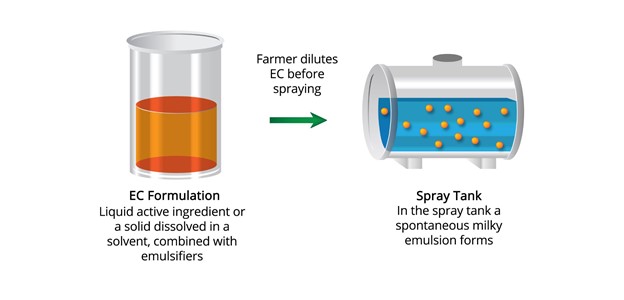
Demonstration of an EC formulation.
Two of the most common types of agricultural formulations that tackle this issue are emulsifiable concentrates (ECs) and suspension concentrates (SCs). EC formulations are suited to active ingredients that are oil soluble and have low melting points. As they are purely a solubilised active ingredient in an oil or solvent with the presence of emulsifiers, they are simple to manufacture and relatively easy to stabilise. The presence of an oil also enhances the biological activity of the application, making them more efficacious in the field.
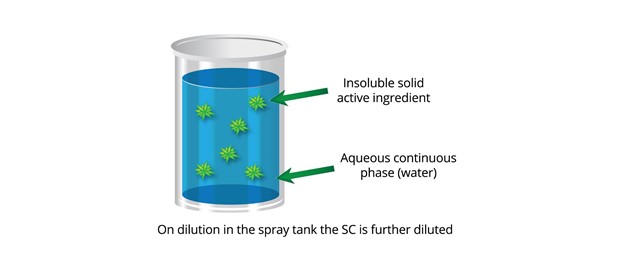
SC formulation, with an indication of what occurs upon dilution into the spray tank prior to application.
SC formulations, on the other hand, are suitable for insoluble active ingredients and those with higher melting points. Crucially, as water is the continuous phase, they are also typically safer and more convenient in use for the operator; there is an absence of dust, flammable liquids, and volatile organic compounds.
Built into each of these formulations alongside the active ingredient are formulation additives. Formulation additives, referred to as inert ingredients, are critical to provide the long-term stability to agrochemical products and their ability to mix effectively in the spray tank, making them suitable for [field spray] applications.
While the formulation type targeted is often dictated by the chemical characteristics of the active ingredient, the formulator has the ability to change every element of the spray quality characteristics and agrochemical delivery through selection of formulation additives. Changing both the formulation type and the additives within will habitually have a dramatic effect on the field efficacy of that application and subsequent yield and quality of the crop. Selecting the correct formulation additives is essential in creating a successful formulation, arguably making them as significant as the active ingredient itself.
How formulators learn to map the complex effects within formulations for improved crop protection is just one facet of today’s agriculture challenge.
Interested in learning more about how the formulation of agrochemicals plays its part in feeding the world? Visit: www.crodacropcare.com
01 June 2021 |
|
|
Sustainability & Environment
As silicon reaches its solar ceiling, perovskite has emerged as one of the main materials of choice in the next generation of solar panels. Indeed, Oxford PV’s much anticipated perovskite-silicon solar cell could take conversion efficiency well beyond what is currently achieved on the roofs of our homes.
The benefits of perovskite are well known at this stage. It could increase the energy we harvest from the sun and improve solar cell efficiency, and its printability could make fabrication cheaper. However, as with almost everything, there are drawbacks.
According to researchers at the SPECIFIC Innovation and Knowledge Centre at Swansea University, the solvents used to control the crystallisation of the perovskite during fabrication hinder the large-scale manufacture of printed carbon perovskite cells. This is due to the toxicity and potentially psychoactive effects of these materials.
The SPECIFIC team claims to have found a way around this after discovering a non-toxic biodegradable solvent called γ-Valerolactone. They say this replacement solvent could be used without affecting solar cell performance. Furthermore, they say it is non-toxic, sustainable, and suitable for large-scale manufacturing.
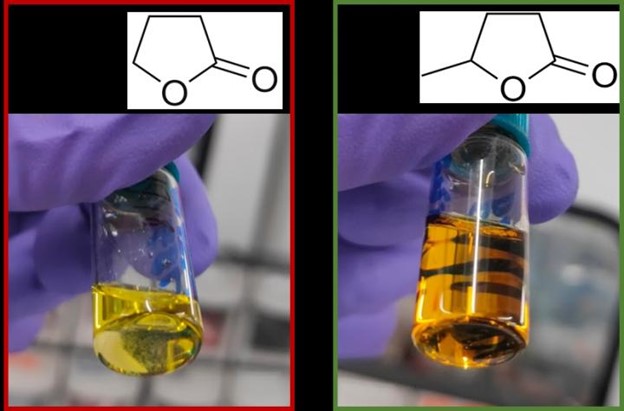
Left - solvent normally used to make solar cells, which is toxic.
Right - new green solvent developed by Swansea University researchers from the SPECIFIC project
| Image Credit: Swansea University
‘This solvent problem was a major barrier, not only restricting large-scale manufacture but holding back research in countries where the solvents are banned,’ said research group leader Professor Trystan Watson. ‘We hope our discovery will enable countries that have previously been unable to participate in this research to become part of the community and accelerate the development of cleaner, greener energy.’
As the conversion efficiency of solar panels improves, cost is also key. What if you could create the same solar panels in a more cost-efficient way? That was part of the thinking behind another recent innovation in Singapore, where Maxeon Solar Technologies has created frameless, lightweight rooftop solar panels. These solar panels can be adhered directly to a roof without racking or mounting systems and allegedly perform just as well as standard solar panels.
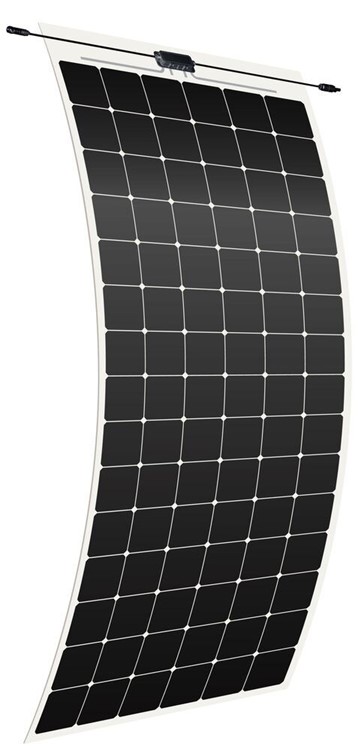
The new Maxeon Air technology platform from Maxeon Solar Technologies
‘For close to 50 years, the solar power industry has almost exclusively used glass superstrate panel construction,’ said Jeff Waters, CEO of Maxeon Solar Technologies. ‘As solar panels have increased in size, and the cost of solar cells has been dramatically reduced, the cost of transporting, installing and mounting large glass panels has become a relatively larger portion of total system cost. With Maxeon Air technology, we can now develop products that reduce these costs while opening up completely new market opportunities such as low-load commercial rooftops.’
The idea is to use these peel-and-stick designs on low-load roofs that cannot support the weight of conventional solar systems; and they will be rolled out in 2022. Time will tell whether the innovations in Swansea and Singapore have a bearing on companies’ solar systems, but they provide more evidence of the ingenuity that is making solar power cheaper and more efficient.
24 May 2021 |
|
|
Sustainability & Environment
We’re starting to see those silent cars everywhere. The electric vehicle evolution is gradually seeping onto our roads. Every month or two, we also seem to read about another wind power generation record in the UK, or some super solar cell. Pension funds and big corporations are coming under great pressure to divest from fossil fuels. The clean power revolution is well underway.
And yet the third biggest polluter of the planet - after power and transport - awaits the seismic shift that will shake it to its foundations. Indeed, cement production still accounts for roughly 8% of the world’s greenhouse gas emissions.
The problem is that creating cement is an energy-intense, polluting process with firing temperatures of 2,700 degrees Fahrenheit needed to create it, and plenty of CO2 released during processing.

Green cement and concrete are needed to reduce emissions in construction and other industries.
But there are signs that the processing could become cleaner. A recent report released by Market Research Future (MRFR) predicts that concrete (of which cement is a key ingredient) use could get appreciably greener over the next six years. It estimates that the global green concrete market size will grow at a 9.45% compound annual growth rate from 2020-27.
MRFR attributes this rise to several factors. First, there is a growing demand for green or recycled concrete (that incorporates waste components) within the construction industry. For builders, it enhances their environmental credentials and will increasingly become a business-savvy investment as governments seek to reduce carbon emissions.
Green building codes and the creation of energy-efficient infrastructure will also help propel this growth, and changing building regulations in massive markets including China, India, and the Middle East will result in many manufacturers looking to develop different material combinations. Increasingly, we’re seeing manufacturers turning to less energy-intensive manufacturing methods and investigating which waste materials could be used to create a greener cement or concrete that doesn’t compromise on performance.
Researchers at Chalmers University of Technology, in Sweden, have even been developing a rechargeable cement-based battery. If it ever comes to pass, this could be used to create buildings that store energy like giant batteries. Some manufacturers are also looking into the electrification of kilns, which isn’t feasible yet, and carbon capture and storage has long been mooted as a means to reduce industrial emissions.
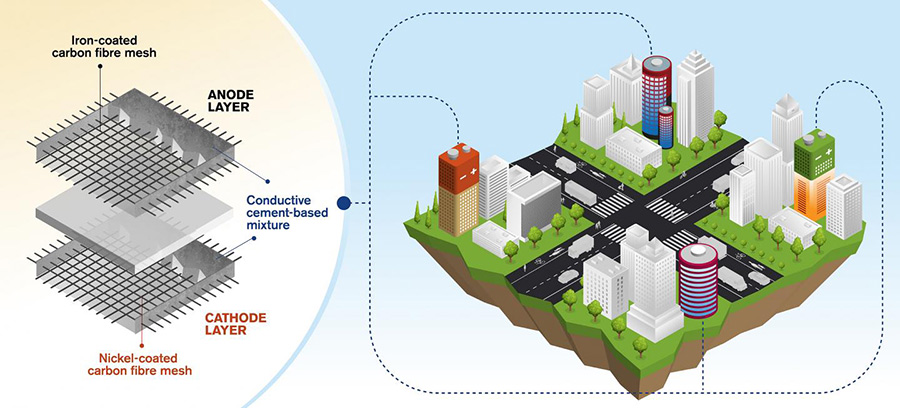
Imagine an entire twenty storey concrete building that can store energy like a giant battery. This could be possible if Chalmers University’s cement-based rechargeable batteries come to fruition. | Image Credit: Yen Strandqvist/Chalmers University of Technology
The good news is that we don’t just have people all over the world working on low-carbon materials and manufacturing methods; experts in the UK are tackling the issue right now. On 2 June, speakers at the SCI’s free webinar, Ultra-low carbon concrete, a sustainable future, will examine some of the exciting initiatives underway.
These include an award winning, industry accepted ultra-low carbon alternative to traditional cement, which could result in CO2 savings of up to 78%, and the potential of using offsite manufacturing to provide commercial projects with a sustainable structural frame solution.
As with transport and power, cement is getting greener increment by increment. But with drastic climate change consequences dangling above us like the Sword of Damocles, now is the time for concrete action.
Register for Ultra-low carbon concrete, a sustainable future today at: https://bit.ly/33WfjkN.
18 May 2021 |
|
|
Sustainability & Environment
Sometimes, when you try to solve one problem, you create another. A famous example is the introduction of the cane toad into Australia from Hawaii in 1935. The toads were introduced as a means of eliminating a beetle species that ravaged sugar cane crops; but now, almost a century later, Western Australia is inundated with these venomous, eco-system-meddling creatures.
In a similar spirit, disposable face masks could help tackle one urgent problem while creating another. According to researchers at Swansea University, nanoplastics and other potentially harmful pollutants have been found in many disposable face masks, including the ones some use to ward off Covid-19.
After submerging various types of common disposable face masks in water, the scientists observed the release of high levels of pollutants including lead, antimony, copper, and plastic fibres. Worryingly, they found significant levels of pollutants from all the masks tested.
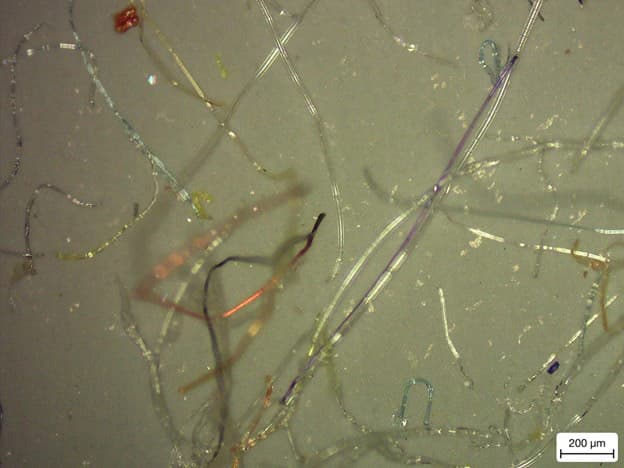
Microscope image of microfibres released from children's mask: the colourful fibres are from the cartoon patterns | Credit: Swansea University
Obviously, millions have been wearing single-use masks around the world to protect against the Covid-19 pandemic, but the release of potentially harmful substances into the natural environment and water supply could have far-reaching consequences for all of us.
‘The production of disposable plastic face masks (DPFs) in China alone has reached approximately 200 million a day in a global effort to tackle the spread of the new SARS-CoV-2 virus,’ says project lead Dr Sarper Sarp, whose team’s work has been published on Science Direct. ‘However, improper and unregulated disposal of these DPFs is a plastic pollution problem we are already facing and will only continue to intensify.

The presence of potentially toxic pollutants in some face masks could pose health and environmental risks.
‘There is a concerning amount of evidence that suggests that DPFs waste can potentially have a substantial environmental impact by releasing pollutants simply by exposing them to water. Many of the toxic pollutants found in our research have bio-accumulative properties when released into the environment and our findings show that DPFs could be one of the main sources of these environmental contaminants during and after the Covid-19 pandemic.’
The Swansea scientists say stricter regulations must be enforced during manufacturing and disposal of single-use masks, and more work must be done to understand the effect of particle leaching on public health and on the environment. Another area they believe warrants investigation is the amount of particles inhaled by those wearing these masks.
‘This is a significant concern,’ adds Sarp, ‘especially for health care professionals, key workers, and children who are required to wear masks for large proportions of the working or school day.’
07 May 2021 |
|
|
Sustainability & Environment
Every tin can dropped into our recycling bins is a small act of faith. We hope each one is recycled, yet the figures take some of that fervour from our faith. According to UK government statistics from 2015-2018, only about 45% of our household waste is recycled. Similarly, the UN has noted that only 20% of the 50 million tonnes of electronics waste produced globally each year is formally recycled. So, it’s fair to say we could do better.
Thankfully, thousands of people around the globe are working on these problems and two recent developments give us grounds for optimism. The first involves upcycling metal waste into multi-purpose aerogels, and the second involves fully recyclable printed electronics that include a wood-derived ink.
Upcycling metal waste
Researchers at the National University of Singapore (NUS) claim to have turned one person’s trash into treasure with a low-energy way to convert aluminium and magnesium waste into high value aerogels for the construction industry.
To do this, they ground the metal waste into a powder and mixed it with chemical cross-linkers. They heated this mixture in an oven before freeze-drying it and turning it into an aerogel. The team says this simple process makes their aerogels 50% cheaper than commercially available silica aerogels.
Aerogels have many useful properties. They are absorbent, extremely light (hence the frozen smoke nickname), and have impressive thermal and sound insulation capabilities. This makes them useful as thermal insulation materials in buildings, in piping systems, or for cleaning up oil spills. However, the NUS team has loftier goals than that.
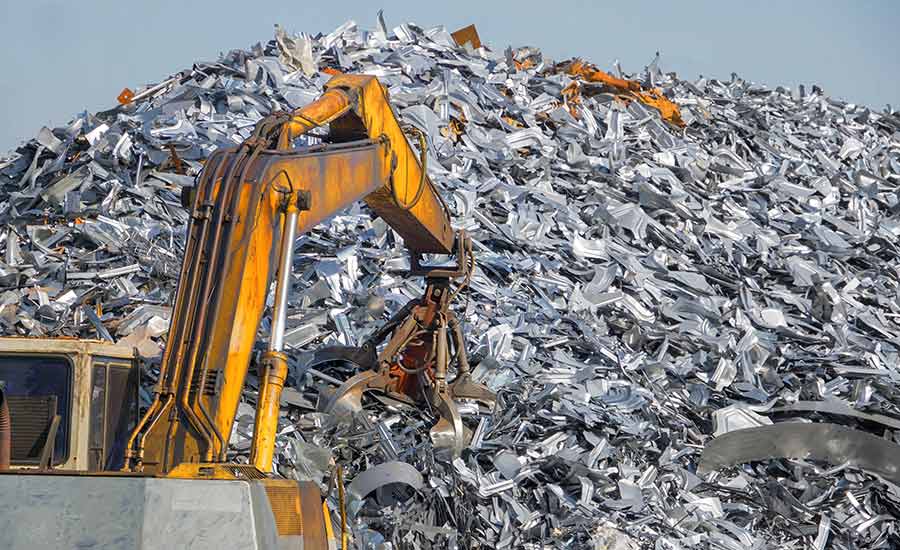
There is a great need for less energy intensive ways to recycle metals
“Our aluminium aerogel is 30 times lighter and insulates heat 21 times better than conventional concrete,” research team leader Associate Professor Duong Hai-Minh whose research has been published in the Journal of Material Cycles and Waste Management. “When optical fibres are added during the mixing stage, we can create translucent aluminium aerogels which, as building materials, can improve natural lighting, reduce energy consumption for lighting and illuminate dark or windowless areas. Translucent concrete can also be used to construct sidewalks and speed bumps that light up at night to improve safety for pedestrians and road traffic.”
The aerogels could even be used for cell cultivation. Professor Duong explains: “Microcarriers are micro-size beads for cells to anchor and grow. Our first trials were performed on stem cells, using a cell line commonly used for testing of drugs as well as cosmetics, and the results are very encouraging.”
Whatever about these speculative applications, this upcycling method will hopefully help us find new homes for all types of metal waste including metal chips and discarded electronics.
Recyclable printed electronics
A team at Duke University has also made interesting progress in reducing electronic waste. The researchers claim to have developed fully recyclable printed electronics that could be used and reused in a wide range of sensors.
The researchers’ transistor is made from three carbon-based inks that can be printed onto paper, and their use of a wood-derived insulating dielectric ink called nanocellulose helps make them recyclable. Carbon nanotubes and graphene inks are also used for the semiconductors and conductors, respectively.

A 3D rendering of the first fully recyclable, printed transistor. CREDIT: Duke University
“Nanocellulose is biodegradable and has been used in applications like packaging for years,” said Aaron Franklin, the Addy Professor of Electrical and Computer Engineering at Duke, whose research has been published in Nature Electronics. “And while people have long known about its potential applications as an insulator in electronics, nobody has figured out how to use it in a printable ink before. That’s one of the keys to making these fully recyclable devices functional.”
The team has developed a way to suspend these nanocellulose crystals (extracted from wood fibres) with a sprinkling of table salt to create an ink that performs well in its printed transistors. At the end of their working life, these devices can be submerged in baths with gently vibrating sound waves to recover the carbon nanotubes and graphene components. These materials can be reused and the nanocellulose can be recycled just like ordinary paper.
The team conceded that these devices won’t ruffle the trillion dollar silicon-based computer component market, but they do think these devices could be useful in simple environmental sensors to monitor building energy use or in biosensing patches to track medical conditions.
Read about the Duke University research here: https://www.nature.com/articles/s41928-021-00574-0
Take a look at the NUS study here: https://link.springer.com/article/10.1007/s10163-020-01169-1
29 April 2021 |
|
|
Sustainability & Environment
To some, the almond is a villain. This admittedly tasty nut takes an extraordinary amount of water to grow 1.1 gallons per nut and some in California say almond cultivation has contributed to drought.
And so it is no surprise to see the almond lined up in the rogue’s gallery of the thirstiest foods. In a study in the journal Nature Food, University of Michigan (U-M) and Tulane University researchers assessed how the food we eat affects water scarcity.
Meat consumption was found to be the biggest culprit in the US, with the hooves and feet of livestock accounting for 31% of the water scarcity footprint. Within the meat category, beef is the thirstiest, with almost six times more water consumption than chicken.
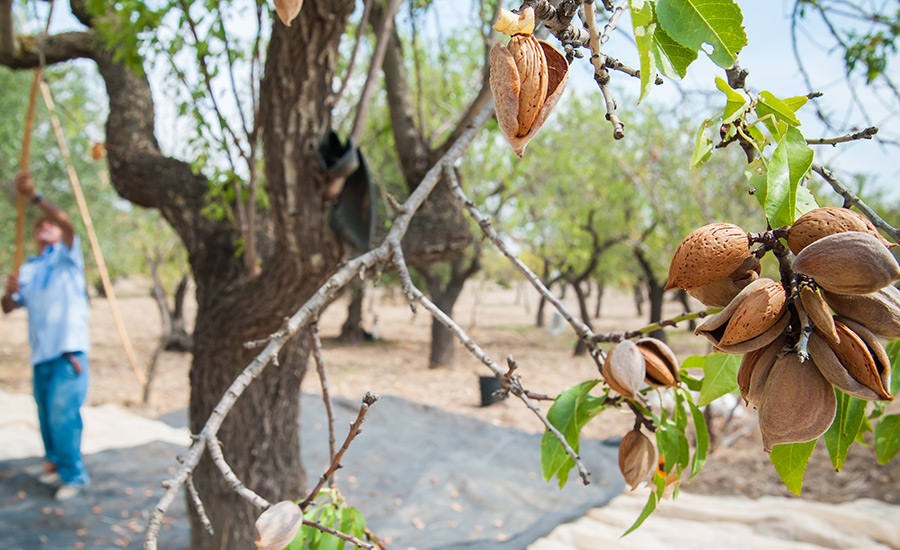
Almond crops in California have come under heavy criticism due to their heavy water consumption
However, the picture is a little more nuanced. Lead author Martin Heller, of U-M's School for Environment and Sustainability, explains: “Beef is the largest dietary contributor to the water scarcity footprint, as it is for the carbon footprint. But the dominance of animal-based food is diminished somewhat in the water scarcity footprint, in part because the production of feed grains for animals is distributed throughout less water-scarce regions, whereas the production of vegetables, fruits and nuts is concentrated in water-scarce regions of the United States, namely the West Coast states and the arid Southwest.”
Certain types of diets drain the water supply. People who eat large quantities of beef, nuts such as the infamous almond, walnut, and cashew, and a high proportion of water-intense fruits and vegetables including lemon, avocado, asparagus, broccoli, and cauliflower take a heavy toll on the water footprint.

The Brussels sprout is not just for Christmas… it is a less water intense option for your dinner table.
“The water-use impacts of food production should be a key consideration of sustainable diets,” adds study co-author Diego Rose of Tulane University. “There is a lot of variation in the way people eat, so having a picture with this sort of granularity – at the individual level – enables a more nuanced understanding of potential policies and educational campaigns to promote sustainable diets.”
So, what do you do the next time you feel a pang of water guilt? According to the researchers, you could swear off asparagus and that crushed avocado on your toast and replace them with less water intense foods such as fresh peas, Brussels sprouts, cabbage, and kale (but maybe not on your toast). Those beef steaks and hamburgers could make way for other protein sources, such as chicken, pork, and soybeans, and you could graze on peanuts and seeds instead of those honey roasted almonds you love so dearly. Just think of all those gallons of water you’ll save.
For more on this study, visit: https://www.nature.com/articles/s43016-021-00256-2
19 April 2021 |
|
|
Energy
Bit by bit, the green hydrogen revolution is coming to our shores. The news that a planning application has been filed for the UK’s largest electrolyser in Glasgow could be a boon for hydrogen evangelists, the local communities, and the political class.
The 20MW electrolyser will form part of the green hydrogen facility on the outskirts of Glasgow near Whitelee, the UK’s largest wind farm. The proposed project would produce up to 8 tonnes of green hydrogen each day – the equivalent of 550 return bus trips from Glasgow to Edinburgh.
If approved, the scheme would be delivered by ScottishPower, BOC, and ITM Power as part of the Green Hydrogen for Scotland Partnership. BOC would operate the facility using solar and wind power produced by Scottish Power and ITM Power would provide the all-important 20 MW electrolyser. Renewable energy would power the electrolyser, which would split the water into hydrogen and oxygen gas. The hydrogen produced by this process could then be used in various applications including transport.
Fundamentally, the people who will benefit most are the people of Glasgow, with the project aiming to provide carbon-free transport and clean air for people across the city area, while satisfying some industrial hydrogen demand. And we can all rest easy now that we know politicians will be pleased about it too, for the project coincides nicely with the United Nations 26th Climate Change Conference, which will be held in Glasgow later this year.

The new facility will be based beside a plentiful renewable energy source, Whiteless wind farm in Eaglesham Moor. | Editorial credit: Maritxu / Shutterstock.com
If all goes swimmingly, the facility will supply hydrogen for the commercial market by 2023. “Whitelee keeps breaking barriers, first the UK’s largest onshore wind farm, and soon to be home to the UK’s largest electrolyser,” says Barry Carruthers, ScottishPower’s Hydrogen Director. “The site has played a vital role in helping the UK to decarbonise and we look forward to delivering another vital form of zero carbon energy generation at the site to help Glasgow and Scotland achieve their net zero goals.”
Tumbling renewable prices
This exciting news follows on the back of some bold green hydrogen claims made in a recent Bloomberg New Energy Foundation (NEF) report: the 1H 2021 Hydrogen Levelised Cost Update. According to Martin Tengler, BloombergNEF’s Lead Hydrogen Analyst, the report authors believe the cost of renewable hydrogen could fall 85% by 2050, 17% lower than they had previously predicted. This, he says, is due to falling renewables prices.
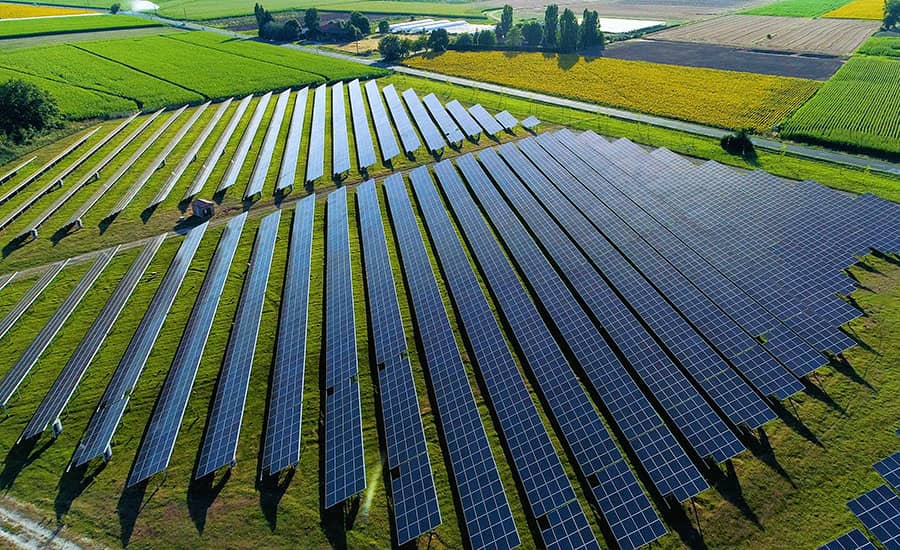
It is becoming cheaper all the time to produce solar and wind power, which is good news for those producing green hydrogen.
Tengler also says that renewable hydrogen should be cheaper than blue hydrogen (when natural gas is split into hydrogen and CO2 via processes such as steam methane reforming) in many countries by 2030. Furthermore, Bloomberg NEF predicts that green hydrogen will be cheaper to process than natural gas in many countries by 2050.
With the prices of solar and wind power constantly tumbling, it would be no surprise to see the authors of these reports revising their projections even further in the coming years. In the mean-time, we welcome the green shoots peeking through outside Glasgow.
15 April 2021 |
|
|
Sustainability & Environment
When you live in a cold country, you think of hot days as a blessing. Air conditioning units are for those in far-away places – humid countries where the baked earth smell rises to meet you when you step off the plane.
But cooling comes at a cost. According to the UN Environment Programme, it accounts for 7% of global greenhouse gas emissions. Some of us are visual learners; so, the sheer cost of cooling really hit me when I stared up at an apartment building in Hong Kong with hundreds of air conditioning units perched above the windows like birds.
And it isn’t just the Hong Kongers feeling the heat. The cooling industry as a whole is under pressure to cut its greenhouse gas emissions. The International Energy Agency expects emissions from cooling to double by 2030 due to heat waves, population growth, urbanisation, and the growing middle class. By 2050, it forecasts that space cooling will consume as much electricity as China and India do today.

Air conditioning units cling to a building
All of this was captured by the Cooling Suppliers: Who's Winning the Race to Net Zero report released by the Race to Zero campaign, the Kigali Cooling Efficiency Program (K-CEP), Carbon Trust and other partners in the UN Environment Programme-hosted Cool Coalition.
This report's authors found that only five of the 54 cooling companies they assessed have committed to net-zero targets. The document outlines three areas that must be addressed on the Cooling Climate Pathway: super-efficient appliances, ultra-low global warming refrigerants, and the widespread adoption of passive cooling measures such as clever home design and urban planning.
So, while builders adjust window sizes, introduce trees for shading, and choose materials (such as terracotta cooling systems) thoughtfully to temper the sun’s gaze, others are availing of different methods.
For example, the COP26 (the 2021 UN Climate Change Conference) Champions Team has just released its Net Zero Cooling Action Plan that includes a Cool Calculator tool to help companies and governments run simple calculations to see where they could decarbonise their cooling systems. Similarly, the UK's Environmental Investigation Agency (EIA) has launched a net-zero cooling product guide that showcases energy-efficient products run on natural refrigerants.

Green walls are one of many passive cooling approaches used to reduce our reliance on mechanical systems.
However, it’s clear that the softly-softly approach won’t suffice. The EIA has called on governments to do more to encourage organisations to adopt sustainable cooling, to make concrete policy commitments, and speed-up the phase-out of climate-warming refrigerants such as hydrofluorocarbons.
“The development and expansion of net-zero cooling is a critical part of our Race to Zero emissions,” said Nigel Topping, UK High Level Champion for COP26. “In addition to technological breakthroughs and ambitious legislation, we also need sustainable consumer purchasing to help deliver wholesale systems change.”
We all love the technological panacea – innovations that will cure all the climate ills we have inflicted on the world. But the solution will also involve stodgy government regulations and changing consumer habits, and a reliance on the continued fall in renewable power generation.
For those in traditionally cooler climes, it’s no longer someone else’s problem. It was a balmy 22°C in London this week and we’re not even in April yet. So, it’s certainly time to turn up the heat on the cooling industry.
01 April 2021 |
|
|
Sustainability & Environment
What do grape stalks, pineapple leaves, corn cobs, rice husks, sheep’s wool, and straw have in common? Apart from being natural materials, they have all been used to insulate homes. Increasingly, people are turning towards natural, sustainable materials as climate change and waste have become bigger problems.
Existing building insulation materials such as synthetic rock wool are excellent at keeping our homes warm in winter, but the conversation has moved beyond thermal performance. Energy use, re-usability, toxicity, and material disposal are all live considerations now, especially with regulations and emissions targets tightening. So, rock wool might perform better than straw bale insulation but straw is biodegradable, reusable, easy to disassemble, and doesn’t require large amounts of energy to process.
Sheep’s wool and hemp insulation have also become attractive to homeowners and housebuilders alike, but an even more encouraging prospect is the use of waste materials to create next generation insulation. In this spirit, researchers at Flinders University in Adelaide, Australia, have taken waste cooking oil, wool offcuts, and sulphur to process a novel housing insulation material.
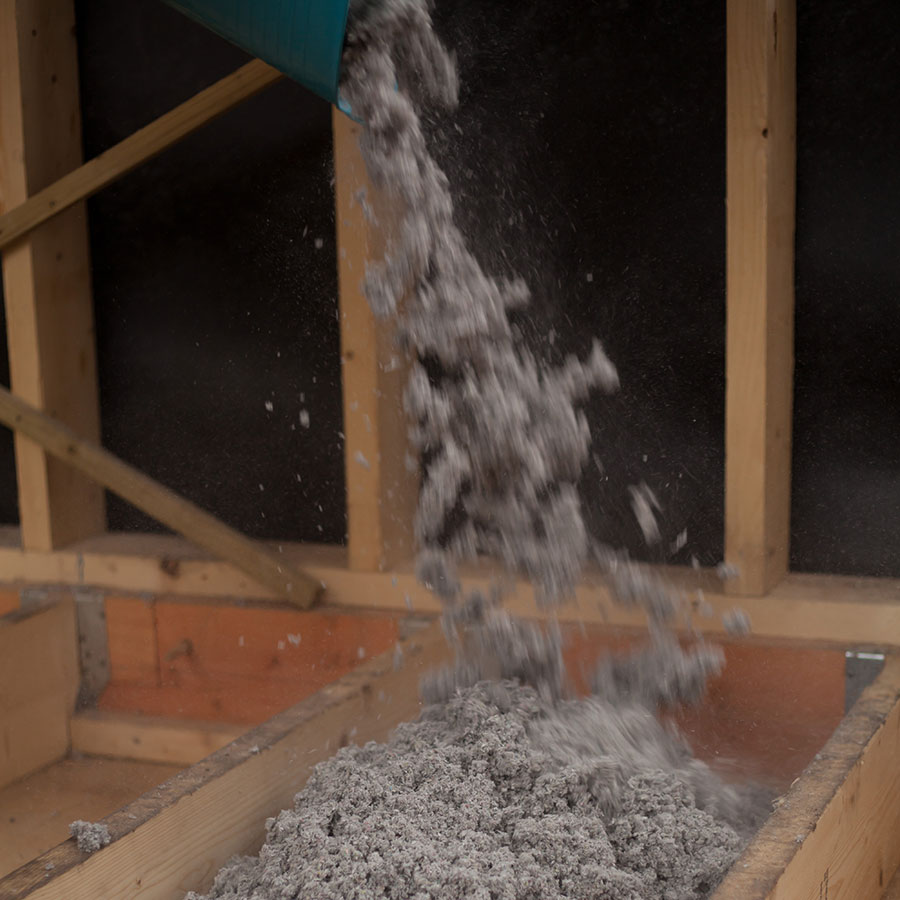
Recycled paper is one of many waste materials that has found its way into domestic insulation.
To make this composite, they followed several stages. In the first stage of the synthesis, the researchers used inverse vulcanisation to create a polysulphide polymer from canola oil triglyceride and sulphur. They then mixed this powdered polymer with wool and coated the fibres through electrostatic attraction. This mixture was compressed through mild heating to provoke S−S metathesis in the polymer and bind the wool. The wool bolsters the tensile strength of the material, makes it less flammable, and provides excellent insulation. The result is a sustainable building material that fulfils its function without damaging the environment.
For Associate Professor Justin Chalker, the lead author of this study, this work provides an ideal jumping-off point. “The promising mechanical and insulation properties of this composite bodes well for further exploration in energy saving insulation in our built environment,” he said.
Sustainable transformation
It is clear that ventures like the one in Adelaide will continue to sprout all over the world. After all, necessity dictates that we change the way we build our homes and treat materials.
A recent report from Emergen Research predicts that the global insulation materials market will be worth US $82.96 billion (£59.78 billion) by 2027. The same report was also at pains to mention that the increasing demand for reduced energy consumption in buildings will be a significant factor in influencing industry growth.
“Market revenue growth is high and expected to incline rapidly going ahead due to rising demand for insulation materials... to reduce energy consumption in buildings,” it said. One of the main reasons given for this increased green building demand was stricter environmental regulations.
And Emergen isn’t the only organisation feeling the ground moving. Online roofing merchant Roofing Megastore, which sells more than 30,000 roofing materials, has detected a shift towards environmentally friendly materials, with many homeowners sourcing these products themselves.
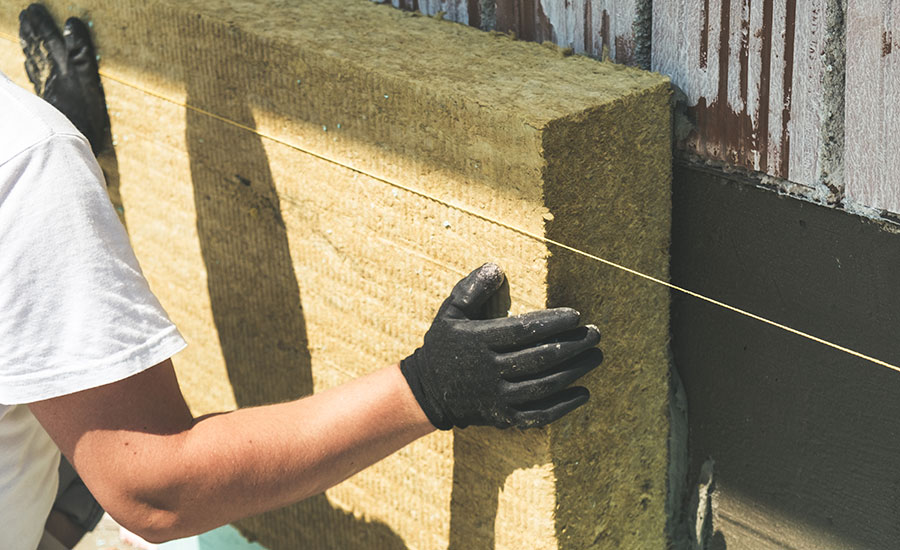
Rock wool insulation panels have come under greater scrutiny in recent times.
Having analysed two years of Google search data on sustainable building materials, the company found that synthetic roof tiles are generating the most interest from the public. Like the Flinders insulation, these roof tiles make use of waste materials, in this case recycled limestone and plastic. And you don’t need to look far down the list to find sustainable insulation materials, with sheep’s wool insulation in 9th place, wood fibre insulation in 10th, and hemp insulation in 12th.
Over time, the logic of the progression towards natural, less energy-intensive building materials will become harder to ignore. “Traditional materials such as synthetic glass mineral wool offer high levels of performance but require large amounts of energy to produce and must be handled with care while wearing PPE,” the company noted. “Natural materials such as hemp or sheep’s wool, however, require very little energy to create and can be installed easily without equipment.”
So, the next time you look down at your nutshells, spent cooking oil, or tattered woollen sweater, think of their potential. In a few years, these materials could be sandwiched between your walls, keeping you warm all winter.
Insulating composites made from sulphur, canola oil, and wool (2021): https://chemistry-europe.onlinelibrary.wiley.com/doi/10.1002/cssc.202100187?af=R
18 March 2021 |
|
|