Agrifood
How much soil cultivation do you need for your vegetables? Professor Geoff Dixon explains all.
Cultivating soil is as old as horticulture itself. Basically, three processes have evolved over time. Primary cultivation involves inversion which buries weeds, adds organic matter and breaks up the soil profile, encouraging aeration and avoiding waterlogging.
Secondary cultivation prepares a fine tilth as a bed for sowing small seeded crops such as carrots or beetroot. In the growing season, tertiary cultivation maintains weed control, preventing competition for resources (illustration no. 1) such as light, nutrients and water while discouraging pest and disease damage.

Lettuce and seed competition
The onset of rapid climate change encouraged by industrialisation has focused attention on preventing the release of carbon dioxide into the atmosphere. Ploughing disturbs the soil profile and accelerates the loss of carbon dioxide from soil.
It is also an energy intensive process. Consequently, many broad acre agricultural crops such as cereals, oilseed rape and sugar beet are now drilled directly without previous primary cultivation. An added advantage is that stubble from previous crops remains in situ over winter, offering food sources for birds. The disadvantages of direct drilling are: increased likelihood of soil waterlogging and reduced opportunities for building organic fertility by adding farmyard manure or well-made composts.
Overall, primary and secondary cultivation benefit vegetable growing. The areas of land involved are far smaller and the crops are grown very intensively. Vegetables require high fertility, weed-free soil, good drainage and minimal accumulation of soil-borne pests and diseases.

Frost action breaking down soil clods
Digging increases each of these benefits and provides healthy physical exercise and mental stimulation. Frost action on well-dug soil breaks down the clods (illustration no. 2). Ultimately, fine seed beds are produced by secondary cultivation (illustration no. 3), which encourage rapid germination and even growth of root and salad crops.
Tertiary cultivation to prevent weed competition is also of paramount importance for vegetable crops. Competition in their early growth stages weakens the quality of root and leafy vegetables, destroying much of their dietary value. Regular hoeing and hand removal of weeds are necessities in the vegetable garden.

Raking down soil producing a fine tilth
Ornamental and fruit gardens similarly benefit from tertiary cultivation. Weeds not only provide competition but are also unsightly, destroying the visual image and psychological satisfaction of these areas.
Lightly forking over these areas in spring and autumn encourages water percolation and root aeration. Once established, ornamental herbaceous perennials and soft and top fruit areas benefit greatly from the addition of organic top dressings. Over several seasons these will augment fertility and nutrient availability.
Written by Professor Geoff Dixon, author of Garden practices and their science, published by Routledge 2019.
20 January 2022 |
|


 |
|

Health & Wellbeing
A sprig of thyme to fight that cold… Turmeric tea after exercising… An infusion of chamomile to ease the mind… As we move with fresh resolution through January, Dr Vivien Rolfe, of Pukka Herbs, explains how a few readily available herbs could boost your health and wellbeing.
The New Year is a time when many of us become more health conscious. Our bodies have been through so much over the last few years with Covid, and some of us may need help to combat the January blues. So, can herbs and spices give us added support and help us get the new year off to a flying start?

The oils in chamomile have nerve calming effects.
Chamomile and lavender
We may wish to ease ourselves into the year and look for herbs to help us relax. The flowers from these herbs contain aromatic essential oils such as linalool from lavender (Lavandula) and chamazulene from German chamomile (Matricaria recutita) that soothe us when we inhale them (López et al 2017). Chamomile also contains flavonoids that are helpful when ingested (McKay & Blumberg 2006).
If you have a spot to grow chamomile in your garden, you can collect and dry the flowers for winter use. Lavender is also a staple in every garden and the flowers can be dried and stored. Fresh or dry, these herbs can be steeped in hot water to make an infusion or tea and enjoyed. As López suggests, the oils exert nerve calming effects. Maybe combine a tea with some breathing exercises to relax yourselves before bed or during stressful moments in the day.

Thyme is a handy herbal remedy. Generally, the term herb refers to the stem, leaf and flower parts, and spice refers to roots and seeds.
>> The plant burgers are coming. Read here about the massive growth of meat alternatives.
Andrographis, green tea and thyme
Many people may experience seasonal colds throughout the winter months and there are different herbal approaches to fighting infection. Andrographis paniculata is used in Indian and traditional Chinese medicine and contains bitter-tasting andrographolides, and in a systematic review of products, the herb was shown to relieve cough and sore throats symptoms in upper respiratory tract infection (Hu et al 2017).
Gargling with herbal teas is another way to relieve a sore throat, and the benefits of green tea (Camellia sinensis) have been explored (Ide et al 2016). I’m an advocate of garden thyme (Thymus vulgaris) which contains the essential oil thymol and is used traditionally to loosen mucus alongside its other cold-fighting properties.
You could experiment by combining thyme with honey to make a winter brew. I usually take a herbal preparation at the sign of the very first sneeze that hopefully then stops the infection progressing.

Shatavari (pictured) is said to improve strength, and ashwagandha can help recovery.
Shatavari and ashwagandha
We may start the new year with more of a spring in our step and wishing to get a little fitter. As we get older, we may lose muscle tissue which weakens our bones and reduces our exercise capability. Human studies have found that daily supplementation with shatavari (Asparagus racemosus) can improve strength in older women, and ashwagandha (Withania somnifera) can enhance muscle strength and recovery in younger males (O’Leary et al 2021; Wankhede et al 2015).
These herbs are known as adaptogens and traditionally they are used in tonics or to support fertility. The research to fully understand their adaptogenic activity or effects on muscle function is at an early stage. Other herbs such as turmeric may help muscle recovery after exercise. I brew a turmeric tea and put it in my water bottle when I go to the gym.
>> How is climate change affecting your garden? Find out here.
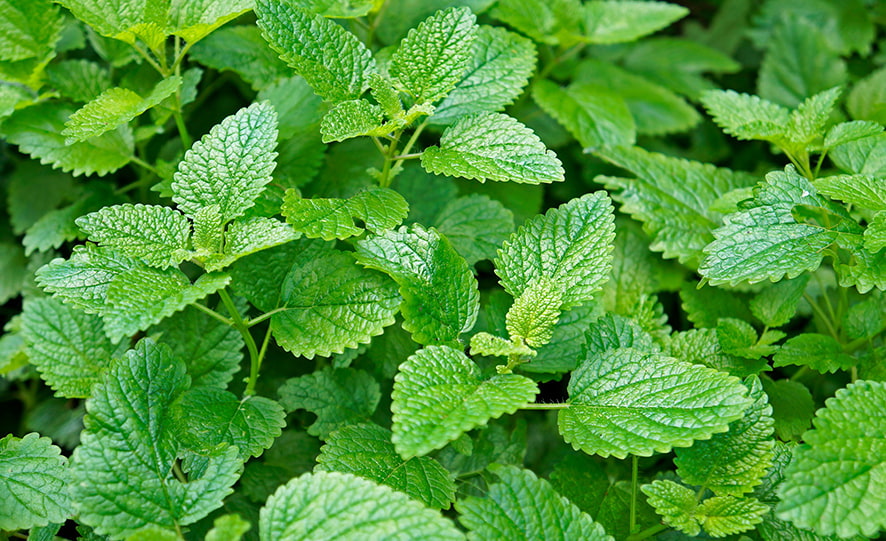
Lemon balm is easy to grow but might want to take over your garden.
Easy on the body. Easing the mind
Depending on your resolutions, you could use herbs and spices to add lovely flavours to food to try and reduce your sugar and salt intake. Liquorice is a natural sweetener, and black pepper and other herbs and spices can replace salt.
You could also bring joy to January by growing herbs from seed on a windowsill or in a garden or community space. Mint, lemon balm, lavender, thyme, and sage are all easy to grow, although mint and balm may take over!
All make lovely teas or can be dried and stored for use, and research is also showing that connecting with nature – even plants in our homes – is good for us.
You can read more about medicinal and culinary properties of herbs at https://www.jekkas.com/.
If you wish to learn more about the practice of herbal medicine and the supporting science, go to https://www.herbalreality.com/.
>> Dr Viv Rolfe is head of herbal research at Pukka Herbs Ltd. You can find out more about Pukka’s research at https://www.pukkaherbs.com/us/en/wellbeing-articles/introducing-pukkas-herbal-research.html, and you can follow her and Pukka on Twitter @vivienrolfe, @PukkaHerbs.
Edited by Eoin Redahan. You can find more of his work here.
17 January 2022 |
|
|
Sustainability & Environment
Johnson Matthey has launched a technology to help create a green hydrogen-based aviation fuel, while the European Commission has approved a €900 million scheme (£750 million approximately) to support renewable hydrogen investments.
SCI Corporate Partner Johnson Matthey has developed HyCOgen to convert CO2 and green hydrogen into a scalable and sustainable aviation fuel (SAF). The speciality chemicals company says it has combined this Reverse Water Gas Shift technology with FT CANS Fischer Tropsch technology through a catalysed process. With this approach, the green hydrogen and CO2 are converted into carbon monoxide, which is combined with additional hydrogen to form syngas.
Integration with the FT CANS technology is used to turn 95% of the CO2 into a high quality synthetic crude oil. This synthetic crude oil can then be upgraded into sustainable, drop-in fuel products for aviation transport – a sector responsible for 12% of transport-related CO2 emissions, according to the Air Transport Action Group.

Green hydrogen fuel, produced using renewable energy, could help decarbonise the aviation industry.
Jane Toogood, Sector Chief Executive at Johnson Matthey, said: “Given the challenges associated with new propulsion technologies and airport infrastructure, plus the long asset life of aircraft, there are significant hurdles in moving from hydrocarbon-based aviation fuel to alternatives such as battery electric or hydrogen.
“By combining HyCOgen with FT CANS, we can now deliver customers a cost-efficient, reliable and scalable technology to help increase SAF production, backed by our track record of successful technology development and commercialisation.”
>> Concerned about climate change? Find out what you can do in this free webinar: https://www.soci.org/events/hq-events/2022/why-we-ignore-climate-change-and-what-we-can-do-about-it
€900 million fund for non-EU countries
In other hydrogen-related news, the global hydrogen industry has received a boost with the European Commission approving a €900 million German scheme to support investments in renewable hydrogen production in non-EU countries.
The aim of the H2Global project is to meet the growing EU demand for renewable hydrogen production, which is expected to increase significantly as EU countries reduce their reliance on fossil fuels. Even though the initiative will benefit EU countries, UK-based organisations concerned with hydrogen power could benefit from this investment.
>> Young chemists are getting creative in the fight against climate change. Read more in our COP26 review blog.
Margrethe Vestager, the European Commissioner for Competition who is in charge of competition policy, said: “This €900 million German scheme will support projects leading to substantial reductions in greenhouse emissions, in line with the EU’s environmental and climate objectives set out in the Green Deal.
“It will contribute to addressing the increasing demand for renewable hydrogen in the Union, by supporting the development of this important energy source in areas of the world where it is currently not exploited with a view to importing it and selling it in the EU. The design of the scheme will enable only the most cost effective projects to be supported, reducing costs for taxpayers and minimising possible distortions of competition.”
11 January 2022 |
|
|
Agrifood
Greenhouse gas emissions statistics can be misleading. At a recent SCI webinar on the Future of Agriculture, the Agrisciences Committee put its finger on some glaring gaps in the figures.
If all of the cows in the world came together to form a country, that nation state would be the second highest emitter of greenhouse gas emissions in the world.
McKinsey Sustainability’s statistic was certainly startling. However, Agrisciences Group Chair Jeraime Griffith mentioned other equally striking figures in his wrapup of the social media discussion generated at COP26.
In his talk as part of the Agrisciences Committee’s COP26 – What does it mean for the future of agriculture? webinar on 7 December, Griffith also noted that:
- farming accounts for more than 70% of the freshwater used worldwide, according to the Organisation for Economic Co-operation and Development (OECD)
- and 31% of human-caused greenhouse gas emissions come from agrifood systems, according to the Food and Agriculture Organisation.
On the face of it, these figures are sobering; yet, like many agriculture-related figures, they don’t tell the full story.
Insane in the methane
Kathryn Knight felt that agriculture received negative press at COP26 in relation to greenhouse gas emissions. ‘It doesn't seem to take into account carbon sequestration (capturing and storing atmospheric carbon dioxide),’ said the Research & Technology Manager of Crop Care at Croda. ‘Why isn’t that being brought into the equation when we’re talking about carbon and agriculture?’
Martin Collison expanded on this point. He emphasised the need to separate carbon emissions by system – such as extensively grazed livestock animals and those fed on grain – and to account for systems that sequester carbon in the soil. The co-founder of agricultural consultancy Collison & Associates also pointed out the problem with bundling all our greenhouse gases as one.
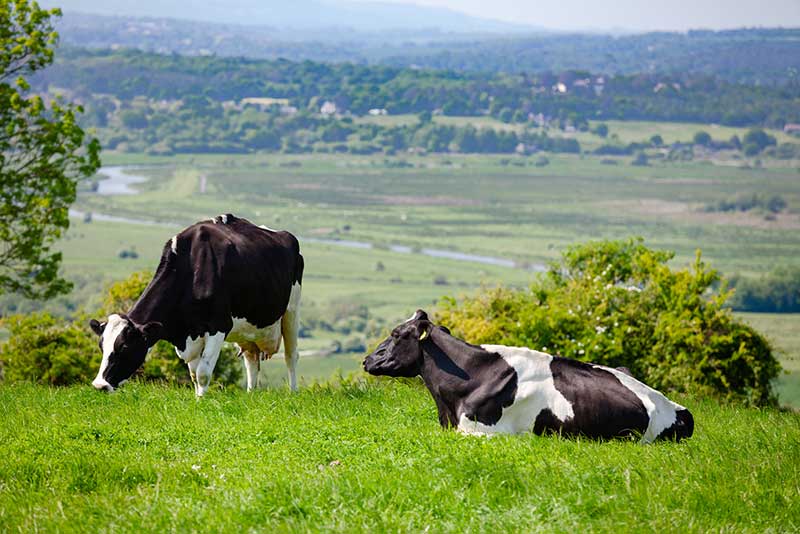
Greenhouse gas emissions are sometimes unhelpfully bundled together, instead of being separated by gas and agricultural system.
‘We count methane in the same way we emit carbon,’ he said. ‘When we emit carbon, it’s in the atmosphere for 1,000 years, but with methane it’s 12 years. The methane cycle is a lot, lot shorter.’
And the difficulties with the statistics don’t end there. For example, countries often announce impressive emission reductions without taking trade into account. This, of course, gives the figures a greener gloss.
‘To me, there's a need to be more up front with a lot of the data because agriculture and food are traded around the world,’ he added. ‘A lot of the emissions data ignore what we trade.
‘In the UK, we make big claims about how fast we’ve progressed with carbon emissions, but if you look at what we consume, the progress is much much slower. The things we produce less of, we import.’
>> SCI was at COP26 too! Read about the role of chemistry in creating a greener future.
Full of hot air?
Emissions trading also serves to blur the picture. For Jeraime Griffith it is an unsatisfactory solution. ‘In terms of carbon trading, we have cases where the higher emitters continue producing in the way they’ve always been producing,’ he said.
‘It doesn't bring in any restrictions on the amount of carbon they emit; it just shifts the problem somewhere else. I don't know how carbon trading benefits us getting to Net Zero. It just seems to be kicking the ball farther down the road.’

Is emissions trading part of the solution or part of the problem?
So, when you take into account 1. emissions trading, 2. the absence of food imports in data sets, 3. the bundling together of different greenhouse gases in emissions figures, and 4. the failure to take carbon sequestration into account, it’s clear that many of the statistics we receive are incomplete.
‘There’s lots of complexity behind the numbers and we tend to lump all of it together,’ Collison said. ‘There’s a need to go much much further.’
>> SCI’s Agrisciences Group is a unique multidisciplinary network covering the production, protection and utilisation of crops for food and non-food products. It has 250 members including academic and industry leaders, researchers, consultants, students, and retired members. If you’re interested in joining the group, go to: www.soci.org/interest-groups/agrisciences
22 December 2021 |
|
|
Science & Innovation
Are you thinking of filing a chemical industry patent in 2022? Anthony Ball, Senior Associate at patent attorney Abel + Imray, gave us the lowdown about what you need to know about the process, cost, and filing your patents in different countries.

I’ve developed a novel technology. How do I patent it, how long does it take, and how much could it cost?
The first step in patenting a novel technology is to file a patent application. The patent application must contain a description of the technology that you have developed in enough detail for others to work the invention. It also needs to contain some claims that define the protection you think you are entitled to. Before the application is filed, it is also important to sort out who the inventors are and who owns the invention.
The application is then examined, during which the Patent Office and you come to an agreement regarding the extent of protection that you are entitled to. Once the extent of protection is agreed, the patent will proceed to grant.
The application will be published around 18 months from filing. This allows competitors to see what you intend to protect. It usually takes longer for the patent to be granted (and so be enforceable) - usually from four to 10 years. For a UK patent which protects a chemical invention, the total cost might be around £10,000.
A separate patent is required for each country that you are likely to want to stop competitors using your technology. Obtaining patents in the most important markets might cost in excess of £50,000 for a chemical invention. Although this might sound like a lot of money, not all of this needs to be paid at the start of the process. Instead, it is spread out over a few years, with the biggest investment usually coming three years into the process.
You mentioned that you can obtain a patent for a compound, a formulation, or a process for synthesising compounds. Does the patent process and cost vary according to the type of product or the branch of chemistry?
The overall process – filing a patent application, the patent application being examined and then the patent being granted – is the same for all technologies. However, there are some issues faced in certain branches of chemistry (such as pharmaceuticals) which can be quite difficult to overcome, and are not faced as commonly in other branches of chemistry. Because of this, it can sometimes take longer for patents in these fields to be granted than in other fields of chemistry, and the costs can be higher.
In which scientific areas has there been a recent rise in patent applications and are any fields relatively under-represented by comparison?
Focusing on European Patent Applications, the chemical industry has been fairly strong recently. Pharmaceutical and biotechnology in particular saw relatively large increases in the number of European patent applications filed in 2020, although the number of patents in the organic fine chemical field slightly decreased.
I want to file my patent in several countries. What do I do, and how much do the costs vary, depending on the country? For example, how would the cost of a patent in the UK compare to one in the US?
If you wish to have a patent in several countries, the start of the process is the same as the one described earlier; a patent application is filed in one country. Then, the most cost effective way to extend the protection to other countries is usually to file a “PCT application” within a year of filing the original application. After a further 18 months, you can turn this PCT application into applications for most countries around the world, including Europe, the US, China and India.
Costs do vary between different countries. To use the example above, it might cost 50-100% more to obtain a patent in the US than in the UK alone. It is worth noting that a patent for the same technology from the European Patent Office might cost around the same as a patent in the US, but the patent from the European Patent Office can then be converted into a patent in each country in the EU, plus some others (including the UK, Norway and Switzerland). Unfortunately, it is difficult to be precise about costs, because they depend very much on the number and type of objections raised by the patent office examiners.
One other consideration is translations. For long applications (which can be quite common in some branches of chemistry), these can be expensive, adding thousands of pounds to the cost for obtaining a patent. One country in particular where a translation might be required, and is of growing importance in the chemical area, is China.

Patents from the European Patent Office are valid across the EU and in several other countries. | Editorial credit: nitpicker / Shutterstock.com
>> From patents to green chemistry and agrifood, we have some great events coming up. Find out more on our event page.
Is there anything chemists and chemistry industry professionals should be particularly mindful of when submitting patent applications in 2022?
Patent law is underpinned by a number of international agreements, which are hard to renegotiate. As a result, the law is actually very stable over time, and so the considerations in 2022 will broadly be the same as they have been in the past. Having said that, one important thing to bear in mind at the moment is the amount of data to include in the patent application.
There is a balance between filing as soon as possible (to prevent a competitor getting there first, and to minimise the chance of a disclosure of something that would make your technology unpatentable), and making sure that the application has enough data to show that the extent of protection that you are asking for is justified. In some cases, it is possible to present data to justify the scope of protection after the application has been filed, but recently many patent offices have made that more and more difficult.
As such, filing too early, and with only a small amount of data to support your claims, could result in a very narrow patent, which might potentially be easy to work around. It is very important to include enough evidence to show that at least the parts of your invention which have the most commercial interest (e.g. the most active compounds) show the technical effect which is mentioned in the patent application.
How much have the law and process around patents changed in recent years?
The law around patents and patent applications is always evolving, albeit slowly. The basics – that the technology must be new, not be obvious in view of publicly available knowledge, and have an industrial application – have remained the same for many years. Likewise, the basic process to obtain a patent, as described above, has not changed recently, but the minor details of that process are constantly being updated, for example to incorporate new technology (such as online filing of the application and supporting documents, and online publication of the application) and to improve cooperation between the patent systems of different countries.
An example of improved cooperation between countries is the Unified Patent Court (UPC), which is likely to begin hearing cases in 2022. Currently, patents have to be enforced in each EU country separately using the national court systems. The UPC will establish a common court system and allow a patent to be enforced in one court case, with the result being valid for the whole of the EU.
I have made a further development to my technology after filing my patent application. How can I protect my new development?
Once it has been filed, nothing can be added to a patent application. Because of this, if you want to protect a new development to the technology that is the subject of a patent application, then another patent application must be filed directed to the new development. The two applications will be treated separately, and so in order for a patent to be granted which protects the new development, the new development must satisfy all the criteria for patentability described above.
To read more from Abel + Imray on patents, visit: https://www.abelimray.com/
13 December 2021 |
|
|
Agrifood
Gardens in December should, provided the weather allows, be hives of activity and interest. Many trees and shrubs, especially Roseaceous types, offer food supplies especially for migrating birds.
Cotoneaster (see image below) provides copious fruit for migrating redwings and waxwings as well as resident blackbirds. This is a widely spread genus, coming from Asia, Europe and northern Africa.
Cultivated as a hedge, it forms thick, dense, semi-evergreen growth that soaks up air pollution. In late spring, its white flowers are nectar plants for brimstone and red admiral butterflies and larval food for moths. Children and pets, however, should be guided away from the attractive red berries.

Cotonester franchetti | Image credit: Professor Geoff Dixon.
Medlars (Mespilus germanica) offer the last fruit harvest of the season (see image below). These small trees produce hard, round, brownish fruit that require frosting to encourage softening (bletting).
Its soft fruit can be scooped out and eaten raw and the taste is not dissimilar to dates. Alternatively, medlar fruit can be baked or roasted and, when turned into jams and jellies, they are delicious, especially spread on warm scones.
Like most rosaceous fruit, medlars are nutritionally very rich in amino acids, tannins, carotene, vitamins C and B and several beneficial minerals. As rich sources of antioxidants medlars also help reduce the risks of atherosclerosis and diabetes.
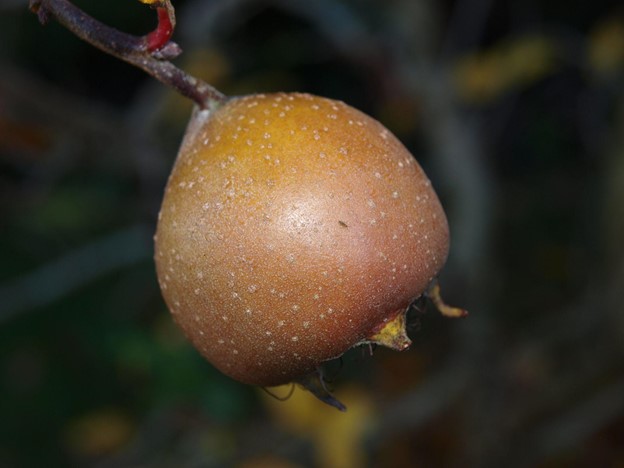
Medlar fruit (Mespilus germanica) can be turned into jams and jellies | Image credit: Professor Geoff Dixon.
Garden work continues through December. It is a time for removing dead leaves and stems from herbaceous perennials, lightly forking through the top soil and adding granular fertilisers with high potassium and phosphate content.
Top fruit trees gain from winter pruning, which opens out their structure, allowing air circulation when fully laden with leaves, flowers and fruit. Fertiliser will feed and encourage fresh root formation as spring progresses.
The vegetable garden is best served by digging and incorporating farm yard manure or well-rotted compost, which adds fertility and encourages worm populations. The process of digging is also a highly beneficial exercise for the gardener (see illustration no 3).
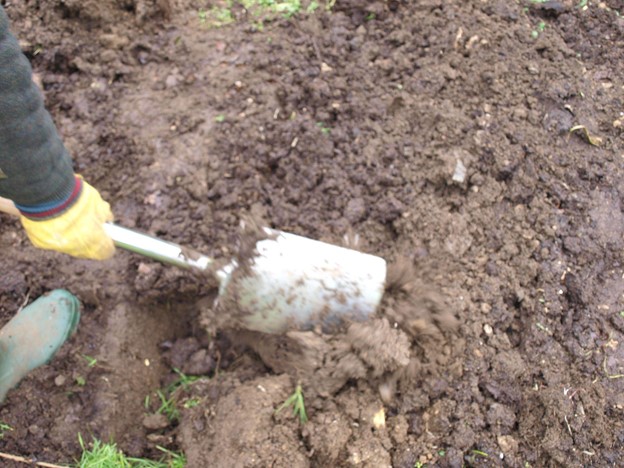
Turning the soil isn’t only good for your garden - it boosts your wellbeing | Image credit: Professor Geoff Dixon.
Developing a rhythm with this task supports healthy blood circulation and, psychologically, provides huge mental satisfaction in seeing a weedy plot transformed into rows of well-turned bare earth.
When the weather turns wet, windy and wintery it provides opportunities for cleaning, oiling and sharpening tools, inspecting stored fruit and the roots of dahlias kept in frost-proof conditions.
Finally, there is always the very relaxing and pleasant task of reading through seed and plant catalogues and planning what may be grown in the coming seasons.
Written by Professor Geoff Dixon, author of Garden practices and their science, published by Routledge 2019.
07 December 2021 |
|
|
Sustainability & Environment
At COP26, Nikita Patel co-hosted the Next-Gen debate, where an inspiring group of young people discussed how chemistry is tackling climate change. The PhD student at Queen Mary University of London shares her experience.
While the United Nations Climate Change Conference (COP26) may be over, there is still plenty to be done in the fight against climate change. We’ve seen what can be achieved when we work together and no doubt science will play a key role.
On Thursday 4 November, I had the privilege of co-hosting the Countdown to Planet Zero Next-Gen debate organised by SCI to showcase the work being carried out by our young and innovative scientists to tackle climate change. It was a real pleasure to share the stage and hear from some great scientists, exploring the themes Fuels of the Future, Turning Waste into Gold and Engineering Nature. The event gave the audience the opportunity to question and challenge the panel members on their climate change solutions.
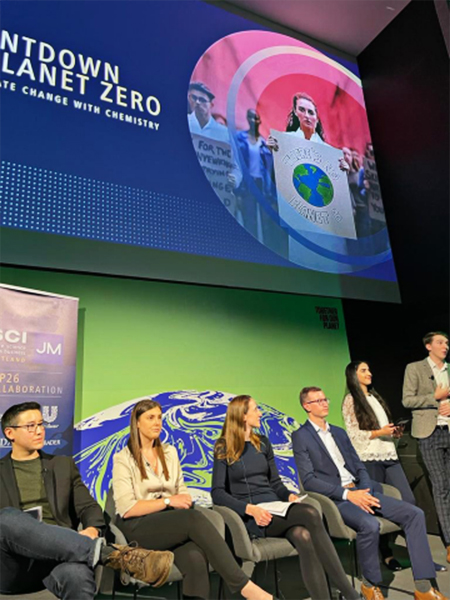
Panel L-R: Dominic Smith, Natasha Boulding, Clare Rodseth, Jake Coole, Nikita Patel, Oliver Ring (Brett Parkinson joined virtually).
While I was feeling nervous about my hosting duties, I was very excited at the same time as I knew how important it was to educate the audience, whether they were members of the public or aspiring scientists, on how science is crucial in battling the climate emergency.
An important part of my role as a host was to ensure the incoming questions and comments were understood by all, given the mixed audience attending. This highlighted how essential good science communication is to prevent misunderstandings and the spread of misinformation.
It was brilliant to see how engaged the audience were from the flurry of questions that came in during the session, so much so that we didn’t manage to get through all of them! There were a wide variety of questions aimed at particular panellists but also towards the panel as a whole. It was thought-provoking to hear how scientists from different backgrounds offered their own perspectives on the same topic.
4 November was also Energy Day at COP26 and the atmosphere was buzzing! I learnt a lot from attending the Green Zone, not only from our panellists but from all the exhibitors present too. I appreciate the small, individual actions we can each take that will make a difference but also the need to work together to achieve the common goal of fighting climate change. It was clear to see how science and business go hand in hand to provide solutions to society and how interdisciplinary collaboration is key.
The result of our poll question: ‘Do you think that science is pivotal in providing climate change solutions?’ spoke for itself, with a resounding yes from 100% of the audience participants! This was a very positive outcome and showed that it is not all doom and gloom when it comes to discussing the climate crisis.
On a personal level, I'm going to continue implementing some simple changes like using public transport more, eating more vegan food and flying less and aim to keep the discussion going with my peers as the climate emergency is far from over.
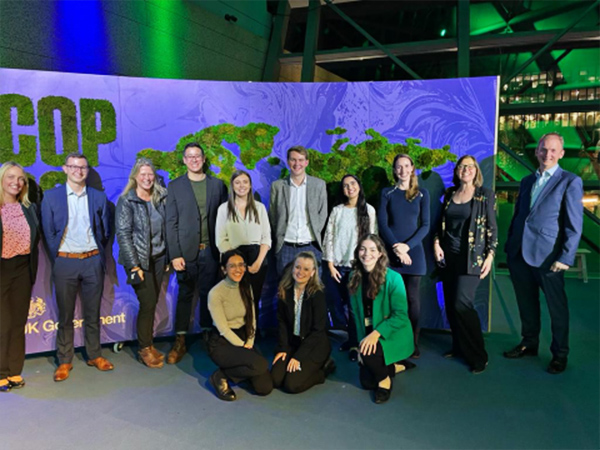
SCI team, panellists and hosts.
I hope the youth panel event has inspired the next generation of scientists and showcased some of the exciting work that is going on behind the scenes which people may not realise and ultimately, that there is hope in science.
>> To rewatch the event, the recording is available on the COP26 YouTube channel: Countdown to Planet Zero Combating climate change with chemistry | #COP26, and on our Climate Change Solutions hub.
>> Want to read more about the technologies discussed by our panel? Read our event review: https://www.soci.org/blog/2021/11/2021-11-05-cop26-review.
02 December 2021 |
|
|
Sustainability & Environment
‘This is a fragile win. We have kept 1.5 alive. That was our overarching objective when we set off on this journey two years ago, taking the role of the COP presidency-designate. But I would say the pulse of 1.5 is weak’ – Alok Sharma, President for COP26.
If scientists, politicians and activists were hoping that COP26, delayed by one year because of the pandemic, would yield concrete plans for progress on climate change, perhaps the overall conclusion might be ‘at least we haven’t gone backwards’.
The Glasgow Climate Pact, signed by 197 countries, required an extra day of negotiations. In his summing up, the UN Secretary General António Guterres said: ‘The approved texts are a compromise. They reflect the interests, the contradictions, and the state of political will in the world today.’
In his video statement Guterres said that the agreement ‘takes important steps but unfortunately the collective political will was not enough to overcome some deep contradictions. We must accelerate action to keep the 1.5 (degrees °C) goal alive…it’s time to go into emergency mode or our chance of reaching net-zero will indeed be zero.’
Guterres added that it was his conviction that it was time to phase out coal, end fossil fuel subsidies and build resilience in vulnerable communities. He also addressed the many young people and indigenous communities, saying: ‘I know you are disappointed. But the path to progress is not always a straight line…but I know we will get there. We are in the fight of our lives, and this fight must be won.’

COP26 President Alok Sharma believes that the measures agreed at COP26 are a ‘fragile win’ in the fight against catastrophic climate change. | Editorial credit: Paul Adepoju / Shutterstock.com
The Glasgow Climate Pact calls on signatories to report their progress towards more climate ambition in time for COP27, which will be hosted by Egypt. Welcoming the agreement, Alok Sharma, COP26 President, said: ‘This is a fragile win. We have kept 1.5 alive. That was our overarching objective when we set off on this journey two years ago, taking the role of the COP presidency-designate. But I would say the pulse of 1.5 is weak.’
European Commission President Ursula von der Leyen said: ‘We have made progress on three of the objectives we set at the start of COP26. First, to get commitments to cut emissions to keep within reach the global warming limit of 1.5 degrees. Second, to reach the target of $100 billion per year of climate finance to developing and vulnerable countries. And third, to get agreement on the Paris rulebook. This gives us confidence that we can provide a safe and prosperous space for humanity on this planet.’
The NGO Greenpeace said in a statement: ‘While the COP26 deal doesn’t put the 1.5C goal completely out of reach, the governments and companies that obstructed bold action on climate change are knowingly endangering whole communities and cultures for their own short-term profits or political convenience. History won’t judge them kindly for this.’
While the final Pact has not reflected the hopes of many, it can be said that COP26 wasn’t short of a desire to see change. Perhaps the surprise package of the two-week event was the declaration between China and US which states that the countries ‘…recognise the seriousness and urgency of the climate crisis. They are committed to tackling it through their respective accelerated actions in the critical decade of the 2020s, as well as through cooperation in multilateral processes, including the UNFCCC process to avoid catastrophic impacts.’ The declaration from the two countries was widely welcomed.
Methane emissions and ocean protection
Other notable developments from COP26 included: The formal launch of the Global Methane Pledge led by the US and the European Union. The Pledge, which seeks to reduce overall methane emissions by 30% below 2020 levels by 2030, saw 100 countries, representing 70% of the global economy and nearly half the global methane emissions, sign up.
In agriculture, the Agriculture Innovation Mission for Climate (AIM4Climate) was launched. Initiated by the US and United Arab Emirates, with endorsement from the COP26 Presidency, the goal of the initiative is to increase and accelerate global innovative research and development on agriculture and food systems in support of climate action.
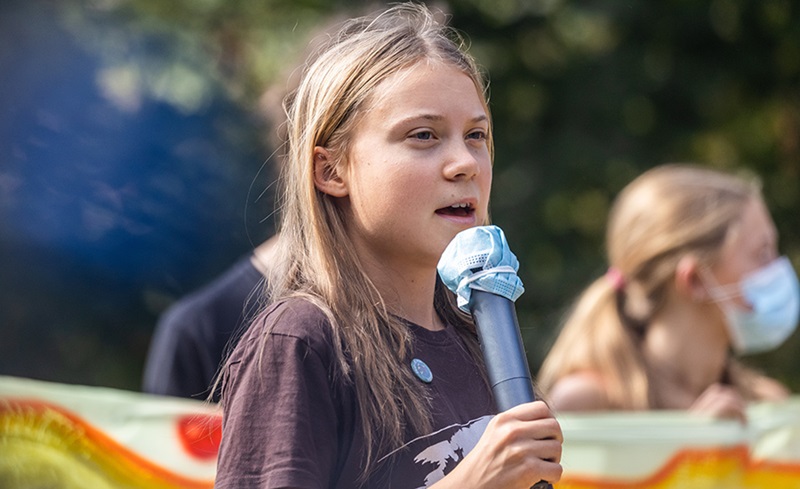
For some, including environmental activist Greta Thunberg, the resolutions agreed by governments at COP26 are insufficient. | Editorial credit: Mauro Ujetto / Shutterstock.com
The initiative has the backing of 32 countries. In addition, ocean protection received a boost with the UK Government using the COP26 Ocean Action Day to announce a wave of investment including at least £20 million in commitments made at the Ocean Risk and Resilience Action Roundtable to drive the health and resilience of the oceans and climate vulnerable communities.
The Science and Innovation day at COP26 saw the launch of four initiatives, backed by global coalitions of nations, businesses and scientists. In what was said to be a global first, the Adaptation and Research Alliance was launched. The network of more than 90 organisations will collaborate to increase the resilience of vulnerable communities most impacted by climate change.
In further developments the UK, along with several countries including Canada and India, will collaborate to develop new markets for low carbon steel and concrete. The work is being carried out under the Industrial Deep Decarbonisation Initiative.
The need for innovation
Commenting on this, George Freeman, the UK Minister for Science, Research and Innovation, said: ‘Real change to combat climate change cannot happen without new scientific ideas, innovation and research, and it is clear no country or company acting in isolation can deliver the change that is needed at the pace that is needed.’
While the final COP26 Glasgow Climate Pact has disappointed many, there is no doubt that there is a will to make positive change, keep global temperatures in check and see humanity reap benefits.
25 November 2021 |
|
|
Science & Innovation
How do you get large audiences to read about your work? Roger Highfield, Science Director of the Science Museum, and Steve Scott, Public Engagement Lead of UK Research and Innovation, shared their insights at a recent webinar organised by SCI.
‘When I talk to people about science writing – when I’m talking about the introduction – I ask them to practise on a long-suffering friend and read a couple of paragraphs of what they’ve written. If they reach for their phone, you’ve done something wrong.’
Some people’s observations should be taken with a liberal fistful of salt, but Roger Highfield is certainly worth listening to when it comes to connecting with the public. As Science Director of the Science Museum Group, he helped engage with more than five million visitors in 2019/20 alone and has written and edited thousands of articles as Science Editor of the Daily Telegraph and Editor of New Scientist.

Roger Highfield, Science Director of the Science Museum
So, how can you reach large audiences with scientific content? First of all, salience is important. How does what you’re talking about have a material effect on people’s lives? As Roger Highfield noted dryly: ‘People will be very interested in asteroids when one’s bearing down on the Earth.’
Citizen science and the long form Q&A
Similarly, the public has been voracious in its consumption of Covid-19-related content despite the complicated nature of the virus and vaccine development. During lockdown, Roger Highfield’s long form Q&A blogs about Covid-19 were hugely popular because, as he said, ‘there was a public appetite for a deeper dive into the science’.
Aside from writing in a way that decongests heavy, complicated subjects, it also helps to get your research in front of the right people, namely communications specialists. ‘One lesson for mass engagement is to work with media organisations,’ he added. ‘It’s more than a platform – you’re dealing with experts in public engagement.’
For larger organisations, citizen science is an excellent way to engage people by making them part of a project. The Great Backyard Bird Count is a fine example of citizen science at its simple, effective best, with thousands of bird-watchers helping provide a real-time snapshot of bird populations around the world.
Highfield has engaged with the public in all manner of citizen science initiatives, from recent online cognition tests in which 110,000 people took part, all the way back to an experiment asking people about the catchiest song in the world. ‘At the time, it was The Spice Girls’ Wannabe,’ he said. ‘People recognised it in 2.5 seconds.’
At its best, citizen science doesn’t just help you to engage people in your work; it can be used as a valuable way to gather information and provide unique perspectives. ‘Citizen science is not just a flash in the pan. The role is changing,’ said Steve Scott, Public Engagement Lead at UK Research and Innovation (UKRI). ‘It’s an effective way of gaining knowledge… bringing different forms of knowledge and expertise into research.’

Steve Scott, Public Engagement Lead of UK Research and Innovation
Scott used the University of West London-led Homes Under the Microscope project to illustrate his point. As part of this project, people in Bristol and Bradford will detect and monitor airborne microplastic sources in their homes and feed this information back to the project organisers to help assess the prevalence of these substances.
A cultural shift
If you’d like more people to read about your research or product, it’s also worth thinking about the way people consume media. According to Scott, the general public tends to consume science through televisions and museums (for example, a visit to the zoo), and people are most likely to follow up on scientific matters having seen them on the news.
Many people learn about science through social media and YouTube, but other vehicles are worth considering too if you want to raise awareness. The UKRI views gaming as a significantly untapped area of public engagement and is investing in this area. Another intriguing way to raise awareness of innovative research is through awards, with the recent, well publicised Earthshot Awards providing a case in point. ‘They’ve taken research grants,’ Scott said, ‘and made them into the Oscars.’
Encouragingly, as the means of communication are changing, so too is the readiness of researchers to share their work. Both Highfield and Scott have seen a large shift over the past 15 years or so, with more and more scientists communicating their research. ‘It’s recognised as being an important part of being a researcher now,’ Scott said. ‘You’re excited about [your research]… Why would you not talk to the public about it?
The big takeaway
So, what is the most important takeaway from the talks, apart from that all-important Spice Girls fact? Fundamentally, when you are communicating your research or peddling your company’s wares, it helps to narrow your focus.
Indeed, Scott reminded us that the public is not a homogeneous group. ‘If we want to engage with millions of people, we need to think of audiences as more than just the general public,’ he said.
He said that 75 per cent of the potential UK audience – roughly 49 million people – falls into one of two groups: they don’t think science is for them, or they’re inactive. So, it’s worth taking an in-depth look at your target demographic and the places it goes to for news before sharing your work.
Earlier, Roger Highfield emphasised the same thing. He said: ‘If there’s one thing I want you to take from this talk, it’s to think about the audience.’
>> Watch How to engage with millions of people in full on our YouTube channel at: https://youtu.be/HSOMQd958EQ
22 November 2021 |
|
|
Science & Innovation
Continuing our profiles of Black scientists, Dr Jeraime Griffith, Chair of SCI’s Agrisciences Group, shares how a simple classroom experiment set him on the journey that has led to him analysing complex data to safeguard UK food security.

I am a Data Scientist building tools that maintain, forecast and predict threats to the UK’s food security.
Right: Dr Jeraime Griffith
What was it that led you to study chemistry/science and ultimately develop a career in this field? Was this your first choice?
At about age 10, in primary school, I had a teacher who explained to us how the human digestive system and saliva break down starch into sugars. To demonstrate this, he got some bread from the school kitchen and asked us to chew it until we started noticing a slight sweet taste. I decided then to be a scientist. This wasn’t my first choice however. Prior to that moment, I wanted to be a pilot.
Was there any one person or group of people who you felt had a specific impact on your decision to pursue the career you are in?
My parents were super supportive. After announcing that I wanted to be a scientist, I got a science dictionary for my birthday. I also had great teachers, both at primary and secondary school. At 13, we were doing hands-on chemistry experiments and helping to tidy the lab at the end of the school year.
Could you outline the route that you took to get to where you are now, and how you were supported?
Following a BSc and a PhD, both in chemistry, I worked for ChemOvation, Argenta Discovery (now part of Charles River Laboratories) and briefly at Novartis. I then went off to New Zealand for a two-year postdoc at Massey University in early 2009 to work with my former PhD supervisor who had relocated there.
On returning to the UK, I worked at Imperial College London, first at the Centre for Synthetic Biology, then over in Chemistry with Professor Tom Welton. It was towards the end of my time with Professor Welton that I began learning the programming language Python, which led me to data science. I’m now a Data Scientist at Cognizant, working with the Food Standards Agency.
I was fully supported, both in industry and academia, but it was in academia that I was afforded the freedom to explore my interests – particularly to use 20% of my time to do whatever I wanted.

Jeraime helps safeguard UK food security and Chairs SCI’s Agrisciences groupConsidering your own career route, what message do you have for Black people who would like to follow in your footsteps?
Allow some flexibility in pursuing your career. When I was questioning myself and my goals, I came across ‘Obliquity’, a book by John Kay. Sometimes diversions are the best way to get to your goals.
Seek out mentors, and I would say regardless of race, who can help you get there. Don’t be afraid to email them and briefly talk about your interest in the work they’ve done, what you have done and are doing now. I’ve found people are genuinely interested in helping you. This is how I learned about the Agrisciences group at the Society for Chemical Industry, which I joined and now Chair.
As for getting into data science, I did a 13-week intensive bootcamp. These are not for everyone as they are expensive and have a high demand on your time. However, there are a lot of free courses available. With this availability, it can be hard to find the good ones. The knowledge of the crowd can help. I’ve found Twitter to be our modern day equivalent to Ask Jeeves.*
What do you think are the specific barriers that might be preventing young Black people from pursuing chemistry/science?
Lack of representation I think is the number one barrier. Impostor syndrome is bad at the best of times, but worse still if there’s no representation in the ivory tower.
What steps do you think can be taken by academia and businesses to increase the number of Black people studying and pursuing chemistry/science as a career?
Recruit people of colour with less experience to positions of responsibility. Trust us to perform and have the support in place when we falter.

The experience that most defined Jeraime’s career path… a great teacher
Science is at the centre of addressing many of the big global issues. Do you hope that this will lead to more young Black people wanting to get involved in science and develop solutions?
Yes. A low entry point is data science. Most of the tools we use are open source. Data for your area of interest are, for the most part, freely available and the data science community is helpful and engaging.
Could you share one experience which has helped to define your career path?
Where I am now began in that class in primary school when I first learned about the human digestive system. So, my defining experience would be having a great teacher.
*Note from the editor: Some youngsters may need to look up what Ask Jeeves is!
Edited by Muriel Cozier. You can read more of her work here.
18 November 2021 |
|
|
Agrifood
How has climate change changed the way our gardens grow and what can be done to alleviate its effects? Professor Geoff Dixon tells us more.
Climate has changed on Earth ever since it solidified and organic life first emerged. Indeed, the first photosynthesising microbes changed the atmosphere from carbon dioxide rich to oxygen rich over millions of years. What we now face is very rapid changes brought about by a single organism, mankind, through industrialisation.
The effects of change are very evident in gardens. Over a generation, leaf bud breaking and flowering by early spring bulbs, herbaceous plants, shrubs and trees has advanced by at least four weeks (see main image of Cyclamen hederifolium).
Latter spring displays have advanced by at least two weeks. This is caused by milder, wetter winter weather, encouraging growth. The danger lies in the increasing frequency of short sharp spells of severe frost and snow. These kill off precocious flowers and leaves which trees especially cannot replace.

Desiccated, cracked soil.
Increasingly, the summer climate is becoming hotter and drier. Since the Millennium there has been a succession of hot droughts. These seriously limit scope for growing vegetables, fruit and ornamentals unless irrigation is regularly available. Drought also damages soil structure especially where there is a high clay content by causing cracking and the loss of plant cover (see image of desiccated, cracked soil above).
Cracking disrupts and destroys the root systems of trees and shrubs in particular. The effects of root damage may not become evident until these plants die in the following years.
Climate change is apparently advantageous for microbes. Detailed surveys show that fungal life cycles are speeding up, increasing the opportunities for diseases to cause damage. Even normally quite resilient crops such as quince are being invaded during milder, damper autumns (See image of brown rot on quince fruit below). Throughout gardens, the range and aggressiveness of pests and disease is increasing.
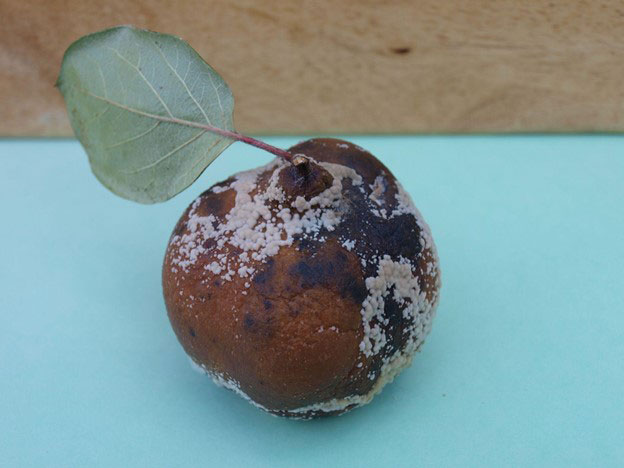
Brown rot (Monilia laxa) on quince fruit.
However, each individual garden or allotment, no matter its size, can contribute to reducing the rate of climate change. Simple actions include the removal of hard landscaping, and planting trees and shrubs reduces carbon emissions.
Using electric-powered tools and machinery in place of petrol or diesel has similar advantages. Tumbling down parts of a garden into native flora, and perhaps encouraging rarer plants such as wild orchids or fritillarias, mitigates climate change. Such areas may also form habitats for hedgehogs or slow worms, increase populations of bees, butterflies and moths and encourage bird life.
Written by Professor Geoff Dixon, author of Garden practices and their science, published by Routledge 2019.
All images from Professor Geoff Dixon.
15 November 2021 |
|
|
Careers
As we build up to the 3rd SCI-RSC symposium on antimicrobial drug discovery, we spoke to Dr Anita Shukla, Associate Professor of Engineering at Brown University, about designing drug delivery systems to treat infection, creating a positive atmosphere in her lab, the challenges facing professionals in her industry, and much more.

Anita Shukla, Associate Professor of Engineering at Brown University
Tell us a bit more about the work being done in your lab.
All of what my lab works on is very biomedically orientated. The major thing we focus on is treating bacterial and fungal infections. We have a lot of interest in designing drug delivery systems to treat all sorts of bacterial and fungal infections, from localised infections to more systemic infections. We design nanoparticles, polymeric nanoparticles, self-assembled structures, surface coatings and larger-scale materials such as hydrogels that can be used as bandages.
We work on the material design for delivering antimicrobial therapeutics – antibiotics, antifungals and other antimicrobial components – and we study a lot about the properties of these materials. What sets us apart is that we’re trying to make materials that are smart, that are in some way targeted or responsive to the presence of bacteria or fungi.
So, to give you an example, we are working on making hydrogel wound dressings. These wound dressings are smart and can respond to the presence of bacteria and fungus. They know when bacteria and fungi are present, based on the enzymes that are there in the localised local environment of the hydrogel. They actually degrade only in the presence of those enzymes and release encapsulated nanotherapeutics.
And that’s really important because of antimicrobial resistance. So, we are trying very hard to provide effective therapies but limit exposure to antimicrobial therapeutics only to times that they’re needed. That’s the kind of work we’ve been doing over the past five or six years.
You’ve done some really interesting work on pregnancy care too. Tell us more about that.
So, that work was inspired by a graduate student who was very interested in women’s health and prenatal health. What we noted was that a lot of pharmaceutical agents that you must use when you’re pregnant don’t have enough information associated with their potential toxic side effects on a growing fetus. A lot of that testing is very difficult to do, so we thought: ‘Can we come up with model systems that could be used for the testing of pharmaceutical agents, toxins, and toxicants?’
The placenta really is the interface between the fetus and the mother and a lot of the nutrient and waste exchange happens through this organ. We wanted to come up with a model system that represents a placenta that was cell free and didn’t involve using an animal. So, what we did was we first studied cells taken from a placenta and the lipid composition of these cells, and then we made lipid bilayers out of synthetic lipids that mimicked the composition of placental cells at different trimesters during the pregnancy. And then we looked at how different small molecules (some of them were actually antimicrobial therapeutics) interact with these synthetic lipid bilayer models.
We noted the differences between the different trimesters and compositions of the placental cells in terms of the lipid content and how these toxicants, small molecules and pharmaceutical agents interacted. It’s early stage work but that same technology could be adapted for the purpose of high throughput testing in a cell-free environment for a range of applications.
What you do in your lab has a real-world effect. How important is that?
We’re very real-world application driven. I think the science is great, and we do a lot of fundamental science in the lab too, but the purpose is to solve real-world problems. Right now, with the pandemic, the work we’re doing on antimicrobial drug delivery is very relevant. The data show that bacteria and fungal co-infections for patients that have Covid-19 are increasing greatly and that’s heavily problematic. The antimicrobial resistance issue is just going to be exacerbated because these patients can also receive antibiotics and antifungals at the same time.
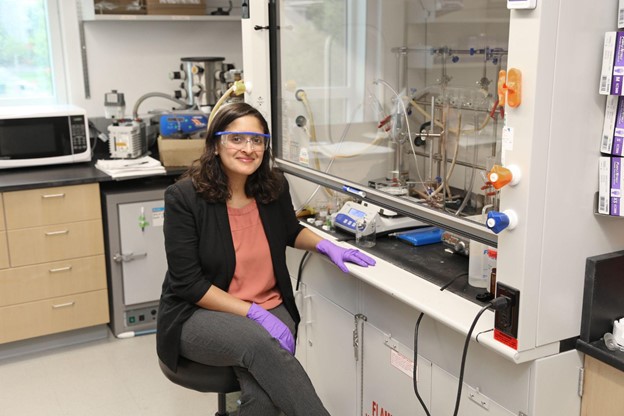
Finding solutions to real-life problems at the Shukla Lab. Image courtesy of Brown University School of Engineering
How did you get to this point in your career?
The one big factor in where I ended up is my family. My family has always supported me tremendously and I’ve had a very positive role model of an academic and researcher in my father. That definitely got me early exposure, which exemplifies and solidifies the fact that early exposure is really important, which can come from your family, friends, teachers, and other role models.
When I started my undergraduate studies at Carnegie Mellon University, I thought I wanted to go into medicine at first, but then when I got there. I really enjoyed designing solutions that physicians would use. As an undergrad, I didn’t really know what I wanted to do in terms of the exact field of research; so, every summer I did a different research experience. In the first summer, I worked at the University of Rhode Island in a Mechanical Engineering lab. For the second summer, I worked at MIT in a materials science lab. And for my third summer, I worked in Columbia University in applied physics and mathematics. I also did research at Carnegie Mellon University with a faculty member in chemical engineering and just tried to get mentors and different experiences under my belt so I could get better informed in what I wanted to do. I then went to MIT to study chemical engineering for my graduate degrees.
Did any specific people help you along the way?
I worked with a faculty member at MIT, Paula Hammond, who’s now the department Head in Chemical Engineering at MIT. She was really an amazing influence for me. I definitely had strong female role models as an undergrad, but my graduate supervisor at MIT happened to be a strong black female scientist and that was hugely influential to me – to see that you can be a minority in STEM, really successful, and do it all. At the same time, she was very open about challenges for women in chemical engineering and not afraid to talk about it at all. She did a great job in promoting us and making sure we had the right mentoring during the five years of my PhD. So, I’m very grateful to her.
I did my postdoc at Rice University in the bioengineering department, and I worked with another really strong female mentor there. My postdoctoral advisor, Jennifer West – who is now the Dean of Engineering at the University of Virginia – was really amazing. I learnt a whole new set of things from her. In all of this, I can pinpoint that I’ve had many mentors. I would highly advise that regardless of what you are interested in doing in life, find those people who are out there to support you.
How did you end up at Brown?
I ended up at Brown in the School of Engineering as a tenure track assistant professor in the summer of 2013. Since then, all the time has gone into setting up my lab and advancing our science. It’s pretty much flown by. I’ve been extremely lucky. I’ve had amazing students and postdocs in my lab. They really produce everything that comes out of it. I’m just the spokesperson.
I love working with them. We have a very inclusive environment. We talk about a lot of diversity, equity, and inclusion-related concerns. I think that’s really important. We try to self-educate and educate each other on these topics. We have a welcoming environment and genuinely care that everyone in the lab feels respected. Because you can only do good science and good work if you work in a place where you are happy and respected and can be yourself.
What does a given working day look like?
It varies. A given day is chaotic due to work and having two small kids. My husband is also a professor at Brown so we both have similar demands on our time but a lot of my time goes into research and proposal writing. We need to raise funds to run a lab so we definitely spend a lot of time on that. Paper writing to get out work out is also super important.
My favourite things are meeting with my grad students and postdocs about research. I love meeting with them and talking with them about their data and generating new ideas together. This semester I am also teaching a class about advances in biomedical engineering over the past couple of years. Preparing those classes and making sure I am devoting time to them is important to me.
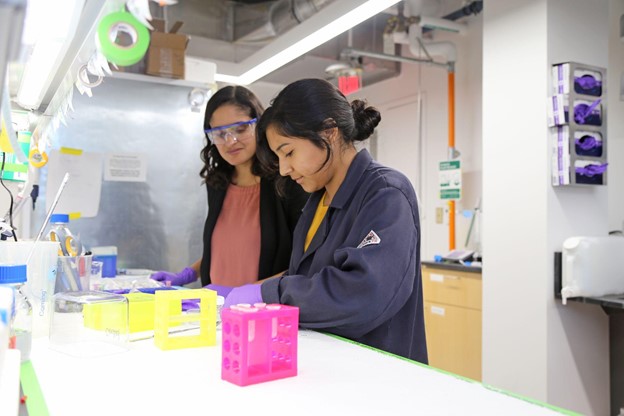
‘One thing I always tell students is don’t doubt yourself. Go ahead and try.’ Image courtesy of Brown University School of Engineering
What challenges have you had to overcome in your career?
I've been extremely lucky, but there has been the two-body situation. It’s essentially having a working spouse and trying to figure out how to make it work so that you both have the careers you want in the same location. That took me and my husband five years to figure out.
My husband was in Texas and I was in Rhode Island and I had two babies with me while doing this academic career on my own. That’s incredibly challenging, but it’s extremely common. In general, I think industry and academia need to work harder to make it easier for individuals to figure out this situation and smoothen the transition.
There are other little things that come up that are challenging. I do often feel that I have to prove myself to my older male colleagues at times when I shouldn't have to. If I get into an elevator with a male colleague who’s exactly the same age as me, a senior male colleague might ask that colleague about his research, and I might be asked about my kids. I often think it’s not intentional – and I try to give people the benefit of the doubt – but I think there’s a lot of education that still needs to be done.
>> Interested in the latest on antimicrobial drug discovery? Register to attend the 3rd SCI-RSC symposium on antimicrobial drug discovery on 15 and 16 November.
What’s the current state of play in your sector with respect to diversity, equality, and inclusion?
There's a lot to do but there’s a lot more awareness now. We’re far from where we need to be in terms of representation of all sorts of individuals in academia. Really, it’s ridiculously appalling if we look at numbers of black individuals, women in STEM academics, or the grant funding that goes to these individuals. But I have seen over the past two years or so that there’s just been more people talking about it. In biomedical engineering, a group of around 100 faculty or so academics around the US gets together periodically over Zoom to talk about these topics, and there’s more awareness and content in our scientific forums.
What’s the greatest challenge for people developing antimicrobial materials or in biomedical areas?
With therapeutics, it’s the FDA approval timeline. It’s years later by the time they’re used. A lot of the time people shy away from working in therapeutics because they know how hard it is going to be to commercialise something in that area.
On an academic level for me as an engineer, it’s critical to figure out what the important challenges and problems are. We’re very lucky at Brown that we have a great medical school so we can talk to clinicians, but cross-talk between disciplines is super important right now.
What advice would you give to young professionals in your area?
One thing I always tell students is don’t doubt yourself. Go ahead and try. You can’t win a game if you don’t play it. I constantly run into individuals who say: ‘I didn’t apply for that because I didn’t think I was qualified’. Basically, I just tell them to apply – you have nothing to lose.
What are you and your students working on that you’re most excited about at the moment?
I really love everything we are doing! I love the fact that we are designing materials that are smart, so they respond to the presence of microbes. I think that could be groundbreaking in terms of prolonging the lifetime of our existing antimicrobial drugs. We also have some really great work going on in treating biofilms, which are incredibly problematic in terms of infections. It’s very hard to answer. I’m proud of everything we do.
>> In recent months, we’ve spoken to inspiring women who work in science. Read more about the stories of materials scientist Rhys Archer and Jessica Jones, Applications Team Leader at Croda.
09 November 2021 |
|
|