Careers
In the first of our new Careers for Chemistry Postdocs series, Rachel Ellis, Senior Client Proposal Coordinator at drug development company Quotient Sciences, speaks about putting her chemistry skills to the test in a new setting and integrating scientific knowledge with people skills.

Rachel Ellis, Senior Client Proposal Coordinator at Quotient Sciences
Tell us about your career path to date
In my current role as a Senior Client Proposal Coordinator, my primary responsibility is to support the Business Development team by collating technical information from the different business units at Quotient Sciences to prepare proposals that meet the prospective clients’ needs, spanning multiple disciplines of drug development.
I work with subject matter experts in Active Pharmaceutical Ingredient (API) synthesis and scale-up, carbon-14 isotope labelling, formulation development, analytical services and drug product manufacturing to generate complex written proposals for clients looking to accelerate their drug development programmes.
I started my career in chemistry with a Master’s degree from The University of York, which encompassed a year-long industrial placement with a speciality chemicals company in the Netherlands. This was a fantastic opportunity to put my chemistry skills to the test for the first time in an industrial setting and informed my decision to explore a career in chemistry outside of academia.
Following completion of my degree, I started working life as a Research Chemist within a global contract research organisation (CRO). The position was a perfect fit for my interests at the time; it was organic synthesis-focused, within the pharmaceutical sector and involved face-to-face interaction with clients.
After 18 months in the role, I identified my strengths in communication and relationship building so took the decision to pursue a career outside of the laboratory, moving into scientific recruitment where I could apply my scientific knowledge and soft skills in equal measure. I spent four years in scientific recruitment where I developed an array of new skills including networking, negotiating, influencing, account management, people management and performance evaluation.
Following a busy four years, I decided to take some personal time to focus on priorities outside of my career and embarked on a twelve-month career break. This was a fantastic opportunity to reassess my skills, interests and objectives, which ultimately brought me into my current role in proposal development. The position perfectly integrates my scientific knowledge and people skills and offers opportunities for continuous development in a dynamic sector.
What is a typical day like in your job?
A typical day as a Proposal Coordinator involves the evaluation of proposal requests from clients, technical discussions with subject matter experts to define project requirements, the preparation of comprehensive proposals including technical writing, pricing assessments and resource planning and any additional client engagement activities to support the proposal award.
Typically, I would lead the preparation of several proposals at any one given time which may include one or more drug development services.

Rachel Ellis seeks to help deliver life-changing medicines in her current role.
Which aspects of your job do you enjoy the most?
I particularly enjoy engaging with new clients to discuss how we can support them to accelerate the delivery of life-changing medicines to the market with greater speed and efficiency. I also enjoy the diversity of tasks involved in my role (scientific discussions, technical writing, pricing activities and project planning) and the balance between working independently and collaboratively as a team.
What is the most challenging part of your job?
As my role involves supporting multiple proposals at any one given time, time management and prioritisation can be challenging to ensure both internal and external deadlines are met. Organisational skills and open communication are key to ensuring projects are delivered on time and client engagement is maintained.
>> Interested in joining SCI’s Young Chemists’ Panel? Find out more on the Young Chemists Panel's webpage.
How do you use the skills you obtained during your degree in your job?
The breadth of scientific knowledge gained from my degree has provided a robust foundation for my current role and enables my participation in technical discussions across multiple scientific disciplines. Report writing, time management and attention to detail are also key skills that I now apply on a day-to-day basis.
Which other skills are required in the work you do?
My current role requires collaboration between many individuals (both internally and externally) across a multitude of disciplines, including technical experts, project managers, business development teams and financial teams.
Strong interpersonal skills are key to ensuring all parties are engaged and aligned in decision making processes. Effective communication skills are also the foundation for a career within any client-facing environment.
Is there any advice you would give to others interested in pursuing a similar career path?
In general, I would strongly advise investing time to evaluate the variety of roles available within the science sector. Don’t be afraid to explore opportunities outside of the norm. Over the course of my career to date, my eyes have been opened to the breadth of roles available within science that are not necessarily laboratory-based, such as regulatory affairs, quality assurance, medical communications and commercial positions.
I would also advise regular self-evaluation to assess your strengths and areas of interest at any given time to assist in the building of a personalised career development plan. This will help to focus your attention on opportunities to develop the skills you need and seek out exposure to relevant activities either within your current organisation (i.e. attending client calls/visits or developing interpersonal skills through participation in cross-departmental activities) or through voluntary work and networking.
>> Interested in a career in science communication? Read Suze Kundu’s inspiring story.
24 March 2022 |
|


 |
|

Health & Wellbeing
We caught a tantalising glimpse of the next generation wearable technology at this year’s Bright SCIdea challenge final.
When we look at our FitBits or Apple Watches, we wonder what they could possibly monitor next. We know the fluctuations of our heartbeat, how a few glasses of wine affect our quality of sleep, and the calories burnt during that run in the park. But what’s next?
If the amazing wearable devices pitched by just three of our Bright SCIdea finalists are anything to go by, then we can look forward to not just next generation health monitoring but possible in-situ treatment too.
Measuring stress and managing diabetes
In recent times, medics have learnt far more about stress and its effect on our health. Indeed, stress was the focus of Happy BioPatch (from Oxford University and Manchester University) technology. The second place team has incorporated an IP-protected enzyme within a patch that measures your stress levels (by detecting the levels of cortisol in your sweat) throughout the day.
This information migrates from body to phone and notifies you if your stress levels are too high. One of many exciting aspects of this technology is that it could be used by physicians to check if patients need treatment for depression and prevent the serious consequences of stress. As one of the judges said, ‘I like it because it’s preventative.’
From mental health to physical health, two of the other finalists use wearable devices to address maladies in in-situ. BioTech Inov, from the University of Coimbra in Portugal, has developed plans for a subcutaneous biomedical device that tracks the blood sugar levels in diabetes patients. This technology would enable the wearer to track their blood sugar levels and let them know if trouble is lurking.

The latest smart watches track your body temperature, sleep quality, and can even detect electrodermal activity on your skin to gauge stress levels. | Editorial image credit: Kanut Photo / Shutterstock
Releasing heat and magnetic fields
Another intriguing development was the in-device treatment developed by the Hatton Cross team (comprising students from the University of Warwick, Imperial College London and Queen Mary University of London). The team is developing wearable technology that can detect wrist pain from sport, or the types of repetitive stress injuries arising from typing or writing too much.
One of the most fascinating aspects of the technology is the potential for in-device treatment. On the preventative side, the device could use vibration to alert users that their wrists are under strain. They also mentioned using heat from the device, or the release of a 0.05 Tesla magnetic field, to relax the muscles.
Another really insightful comment on the technology came from one of the judges. Dr Sarah Skerratt suggested that this type of technology - which is subtly attuned to the movements of the hand and wrist - could theoretically be used in the early diagnosis of Parkinson’s disease or Alzheimer’s disease. That is not to say there aren’t regulatory issues with developing wearable technologies for medical purposes, as the judges pointed out, but the potential of such devices is huge.

Wearable devices could be used to help diabetes sufferers, such as this Insulin Management System used by those with type 1 diabetes. | Editorial image credit: Maria Wan / Shutterstock
The staggering thing is that the technologies pitched by the Bright SCIdea finalists are just three of the myriad innovations being developed around the world at the moment.
Thirty years ago, few of us could have imagined that we would have a personal computer, music system, TV, watch, video, phone, camera, and games console all encapsulated within a single box that fits in our pockets. In 30 years’ time, we will scarcely be able to believe the health capabilities of the devices worn on our wrists and bodies.
Perhaps you will have heard of them first during the Bright SCIdea challenge?
22 March 2022 |
|
|
Careers
What makes the Canada Awards so special, and which attributes do the winners share? We asked Bob Masterson, chair of SCI Canada’s Nominations Committee.

Bob Masterson, Chair, SCI Canada Nominations Committee
Why are the Canada Awards special to you?
The chemistry industry in Canada is an important industry – Canada’s third largest manufacturing sector with shipments of more than $80 billion (£48m approx.) a year. Behind that economic impact, however, are people. And, among those people are leaders.
The SCI Canada awards identifies both the lifetime leaders, as well as emerging student leaders in the business of chemistry. This serves to celebrate the achievements and inspire others in their pursuit of innovative chemistries.
What is so unique about the Canada Medal and what attributes have the previous winners had? Similarly, is there anything that binds the winners of these other prestigious awards?
The Canada Medal is unique in part due to its prosperity. It has been awarded since 1939. Looking at past Medal winners in aggregate, one can associate these individuals with being builders. Many individuals do good work in safely and efficiently operating their facilities. The Medal winners, however, are the builders.
They have attracted and deployed significant capital to build out the chemistry industry to ensure future prosperity for all Canadians. This is no small task in an industry dominated by global multinationals and very few truly domestic companies in Canada.
>> Find out more about the group and their awards on our SCI Canada Group page.
Would you mind explaining how the nominations committee comes to a decision on the award winners?
The Committee is made up of individuals with strong connections to industry and academia. They use their own experiences and solicit input from colleagues and other organisations to develop a list of potential candidates.
Committee members wishing to propose a candidate must prepare a short testimonial of why they have identified the candidate. The committee considers those testimonials while also looking for balance and diversity across industry and academia, Canada’s many regions, different types of chemistry, as well as representation across Canada’s highly diverse population.

The Canada Awards celebrate the best in Canadian chemistry.
Is there anything you’re particularly looking forward to in the pre-awards seminar?
The seminar gives us an opportunity to step back and reflect on the role and opportunity of chemistry as Canada transitions to be more sustainable. I look forward to hearing experts and people’s views on the important question of how we get there and what chemistry can contribute.
Why will it be so important to stage the awards in person this year (if possible)?
This year looks to be a special year. It will have been four years since SCI Canada last held an in-person Awards program. We all need some real time with real people. It’s long overdue and, for many, will be the first in-person event of any kind in over two years. I am sure there will be a lot of emotions.
The SCI Canada Awards 2022 will be held on 5 May 2022, in Toronto. Register your attendance on our event page.
>> Edited by Eoin Redahan. You can read more of his work here.
17 March 2022 |
|
|
Science & Innovation
From learning what appeals to investors and increasing the public’s awareness of your products, there are huge benefits to be gained from winning competitions such as Bright SCIdea. So, how can you benefit from entering and what’s in store from this year’s shortlisted teams?
There was a fine article recently in Nature that crystallised the many benefits of entering science competitions, which extend far beyond the coveted prize money.
Winning the competition can take your product from obscurity into the eyes and minds of the public. Importantly, winning immediately gives your innovation credibility as your product (and your vision for it) will inevitably have been vetted by a team of expert judges.
You will also gain valuable publicity. Not only will the organisers promote these innovations, the new-found exposure will increase traffic to your own website and social channels.
Another really important facet of these competitions is that they help develop business sense in line with scientific innovation. In the aforementioned Nature piece, Ulrich Betz, Vice-president of Innovation at Merck, said: ‘Joining competitions can be a useful way for researcher-entrepreneurs to learn what appeals to investors and companies — training that many academic researchers lack… Participants have told me they’ve become more confident working in science and business after taking part.’
Indeed, this tallies with the experiences of last year’s BrightSCIdea winners, Metallogen. The team developed a novel nanoparticle spray that assists the natural process of phytoremediation to extract rare metals from mining. These metals can be sold on the market while decontaminating land next to mining sites at the same time.

Last year’s Bright SCIdea winners used a novel approach to boost metal recovery on old mining sites and decontaminate the land.
However, having an ingenious idea is one thing. Bringing it to market is another. And this is where the training for all the shortlisted teams helped. Metallogen’s John O’Sullivan and Rafael Hunt-Stokes said: ‘The competition has also taught us how to carry out market research and put together a cogent business plan, with the pitching training giving us the ability to convey our business idea in a compelling manner to investors and other stakeholders.’
>> Inspired by Metallogen’s success at Bright SCIdea? Read more about them in our news article.
This year’s Bright SCIdeas
So, from network building to training and advice on key areas such as intellectual property, these competitions can sharpen your innovations and bring them to that all-important next stage. That’s exactly what the shortlisted teams for this year’s BrightSCIdea plan to do.
This year’s entrants have certainly taken it upon themselves to tackle some of society’s grandest challenges. The Eolic Wall team, hailing all the way from the National University of Engineering in Peru and Universidade Estadual Paulista in Brazil, has created a wind energy system to help in our low-carbon energy transition. The Unmasked team (from the University of Durham) is also seeking to address the UK energy crisis while tackling waste by producing insulation materials from disposable face masks.
In health, the BioTech Inov (University of Coimbra, Portugal) team has entered a ‘highly efficient and versatile nanotechnological subcutaneous biomedical device with a high lifespan’, and the Hatton Cross team (from University of Warwick, QMUL, and Imperial College, London) has also submitted a wearable device that aims to enhance the wearer’s quality of life.
In an effort to address mental wellbeing, the Happy BioPatch team (from Oxford University and Manchester University) has created ‘a wearable gadget which continuously monitors cortisol levels aiming to prevent serious consequences as a result of stress’. Finally, the CardiaTec team (from the University of Cambridge) is specialising in tackling cardiovascular disease.
There’s so much to be gained from being part of competitions such as BrightSCIdea. We can’t wait to hear from the leaders of tomorrow.
Who knows? Maybe this will be the first you hear from a future Nobel prize winner?
>> Keep an eye out on Twitter for all of the wonderful innovations in this year’s BrightSCIdea competition at: @SCIupdate.
14 March 2022 |
|
|
Agrifood
How do flowers use fragrance to attract pollinators, and how do pollution and climate change hamper pollination? Professor Geoff Dixon tells us more.
‘Fragrance is the music of flowers’, said Eleanour Sophy Sinclair Rohde, an eminent mid 20th century horticulturist. But they are much more than that. Scents have fundamental biological purposes. Evolution has refined them as means for attracting pollinators and perpetuating the particular plant species emitting these scents.
There are complex biological networks connecting the scent producers and attracted pollinators within the prevailing environment. Plants flowering early in the year are generalist attractors. By late spring and early summer, scents attract more specialist pollinators as shown by studies of alpines growing in the USA Rocky Mountains. This is because there is a bigger diversity of pollinator activity as seasons advance. Scents are mixtures of volatile organic compounds with a prevalence of monoterpenes.
Environmental factors will affect scent emission. Natural drought, for example, changes flower development and reduces the volumes and intensity of scent production. The effectiveness of pollinating insects, such as bees, moths, hoverflies and butterflies is reduced by aerial pollution.

Pheasant’s eye daffodils (Narcissus recurvus).
Studies showed there were 70% fewer pollinators in fields affected by diesel fumes, resulting in lower seed production. Pollinating insects do not find the flowers because nitrogenous oxides and ozone change the composition of scent molecules.
Extensive studies of changes in flowering dates show that climate change can severely damage scent–pollinator ecologies. Over the past 30 years, blooming of spring flowers has advanced by at least four weeks. Earlier flowering disrupts the evolved natural synchrony between scent emitters and insect activity and their breeding cycles. In turn that breaks the reproductive cycles of early flowering wild herbs, shrubs and trees, eventually leading to their extinction.

The lilac bush, known for its evocative scent.
Heaven scent
Scents provide powerful mental and physical benefits for humankind. Pleasures are particularly valuable for those with disabilities especially those with impaired vision. Even modest gardens can provide scented pleasures.
Bulbs such as Pheasant’s eye daffodils (Narcissus recurvus) (illustration no 1), which flower in mid to late-spring, and lilacs (illustration no 2) are very rewarding scent sources.
Sweetly perfumed annuals such as mignonette, night-scented stocks, candytuft and sweet peas (illustration no 3) are easily grown from garden centre modules, providing pleasures until the first frosts.

Sweet peas are easily grown from garden centre modules.
Roses are, of course, the doyenne of garden scents. Currently, Harlow Carr’s scented garden, near Harrogate, highlights the cultivars Gertrude Jekyll, Lady Emma Hamilton and Saint Cecilia as particularly effective sources of perfume. For larger gardens, lime or linden trees (Tilia spp) form profuse greenish-white blossoms in mid-season, laden with scents that bees adore.
Written by Professor Geoff Dixon, author of Garden practices and their science, published by Routledge 2019.
10 March 2022 |
|
|
Careers
Suze Kundu’s career has taken her from nanochemistry to science communication and even to presenting TV shows on the Discovery Channel. So, how did she go from academic to Head of Public Engagement at Digital Science, and what advice does she have for those looking to follow in her footsteps?
You’ve had a really varied career path. How did you get to where you are today?
Varied indeed! I categorise my career into two strands – doing science, and communicating science. And I’ve done both alongside one another for over a decade now. The former UK Chief Science Officer, Professor Sir Mark Wolport, once said that science isn’t finished until it is communicated. This is something that my alma mater, UCL (University College London) not only believes, but also supports.
Given that research is largely publicly funded, researchers owe it to the public to communicate progress and outputs. By creating opportunities for dialogue, this communication becomes a two-way process, which also benefits researchers who can conduct better-informed research that will help more of society.
As such, I was trained in being both a researcher as well as a public engagement practitioner during my undergraduate degree and during my PhD. I’ve been really lucky to have been able to keep both strands of my career running either concurrently or in combined roles. When I was an academic, I would do research, teaching and public engagement as part of my varied day job, and I also kept up with my science writing and TV presenting in my spare time. I now work at Digital Science, which is a research technology company that creates mostly software solutions for different aspects of the research cycle to help it be the best it can be.
At Digital Science, I headed up Engagement for three years, before recently moving on to a role that combines my engagement skills with my chemistry knowledge and my unashamed fangirling over our flagship platform, Dimensions, to support our newest addition to the family: Dimensions Life Science and Chemistry.
All of our software solutions are created with the research community in mind, and are often developed and refined in collaboration with actual users, so we know that our tools can help people overcome research challenges.
What personal challenges have you faced and how have you overcome them?
Thanks to my parents, my school and my university, I grew up fairly sheltered from a range of ‘-isms’ that may have resulted in my being put off a career in science. Being a woman, a woman of colour, and a woman who perhaps doesn’t conform to outdated stereotypes of what ‘scientists’ are like are all things I learnt can be hurdles to overcome in my career.
In many ways, I was glad that I had no idea that academia, for example, was such a challenging environment for underrepresented people, as I am not sure I would have pursued a career in it if I had known. Women in academia are often assigned teaching that covers the basics, and are frequently given tasks that require so-called ‘softer’ skills such as outreach, engagement and the admissions process. In a world where women have to work twice as hard to get half the recognition, this can often lead to burnout.
I did two things to overcome these challenges once I had identified them; firstly, I had some great allies that came to my aid. They helped me objectively highlight the inconsistencies in workload and expectations, and they were always on hand to offer advice to help me overcome hurdles. Secondly, I chose to leave academia for industry. I now work in an organisation where all the diverse facets that make up an individual are respected and welcomed.
My advice would be that, if you think a science career isn’t for you, you may not have found ‘your people’ yet. I assure you, though, that scientific careers are so much broader than just academia and traditional industry roles. Keep looking and use your networks to find your type of organisation, as I can guarantee that they’re out there somewhere.

Suze Kundu
You’re very skilled at communicating complicated topics to non-specialist audiences. How do you do it?
I was lucky enough to attend UCL for my undergraduate and PhD. UCL has a long history of engagement with a range of communities. It is thanks to opportunities I had during my degrees there that I started to really hone my communication skills.
Strangely enough, I think my acting, drama, dance and musical theatre skills have also played a part in building my skills, as there is always an element of performance in everything that we do. You need to know your audience, and know what motivates them, to really engage with them.
I do believe that everyone can learn and develop communication skills though. I’m not saying everyone needs to present evidence in a parliamentary inquest. There are so many different ways to communicate research, whether it is through writing, drawing, even music and dance.
It could even be as simple as just engaging with your PR team to find support in sharing your research more broadly. It’s a really collaborative space though, so if you want to give it a go or learn more, find some people whose communications style you like and get in touch. If they’ve got the capacity I’m sure they will either be able to help, or at least point you in the right direction.
Which mentors have helped you along the way?
Firstly, my parents, who made me believe that I could pursue anything I wanted to and they’ve been nothing but supportive. My husband is also totally wonderful, even though he wishes I worked more sensible hours. Secondly, I have a set of amazing friends that remind me that I can do things, even when I doubt myself.
Finally, there are some amazing heroes-turned-allies out there that have supported me along the way. My top four would be my ever-supportive PhD supervisor Professor Ivan Parkin at UCL, my old chemistry teacher Mr Brian McVicar, my science communication hero Professor Mark Miodownik at UCL, and my academic role model Professor Mary Ryan at Imperial College London. Our CEO at Digital Science, Dr Daniel Hook, is also an inspiration and an example of having both a career in enterprise and leadership, AND a career in academia.
>> Read about Dr Anita Shukla’s groundbreaking work in treating infection and developing drug delivery systems in our interview with Dr Shukla.
What is the current state of play within your sector with respect to equality, diversity, and inclusion – and is enough being done to attract and retain diverse talent?
In academia, my experiences have not been great. We spend a lot of time, money and effort recruiting a more diverse range of people into science degrees but very little time retaining those people in the profession.
Though things are improving, changing an entire culture is slow going, and I think academia is still fundamentally built on a framework that rewards and promotes cultures and behaviours that do not allow for inclusion.
We have a long way to go to breaking down those barriers to inclusion. We’ve worked with a range of actors in the research industry through the Research on Research Institution (RoRI), but culture change takes time. It requires buy-in at all levels and globally across the profession, as well as a lot of resource to build a better framework of recognition and reward to encourage inclusion and retention within the academic profession.
In industry, I think we are in a much better place in terms of equality, diversity, inclusion and accessibility, though there are of course still challenges that need to be overcome. Organisations have more control over how they nurture their employee communities, and I think it can therefore be easier to see changes in culture sooner than in academia.
There is still a long way to go to make things as inclusive as they can be, and to achieve real representation of society in industry, but by working with underrepresented communities we are able to co-create initiatives that will hopefully change things for the better.
Is there any advice you would give to young professionals looking to pursue a career path similar to yours, especially young women?
Do it! Science is such a rewarding profession, and so varied too. You’re able to combine your passion for science with your interest in a whole host of things. Do, however, be aware that you may not immediately find an environment that can support and nurture you in a way that works for you. They are out there though, so keep networking, keep looking, and be your truest self. You’ll find your people soon enough, and from there on in, it’s a great adventure.
Don’t be afraid to try things. You may well surprise yourself and start a career journey down a path you didn’t expect to find yourself on. And remember, no experience is wasted. Your skillset is always building up, and you’ll find yourself applying experiences and knowledge in ways you never expected you would.
Find a mentor or a range of mentors for different aspects of your career, and consider being a mentor for others too. You have a remarkable amount of knowledge and experience to share with others too.
>> In recent months, we’ve spoken to inspiring women who work in science. Read more about the stories of materials scientist Rhys Archer, EPSRC Doctoral Prize Fellow and founder of Women of Science, and Jessica Jones, Applications Team Leader at Croda.
Edited by Eoin Redahan. You can find more of his work here.
08 March 2022 |
|
|
Sustainability & Environment
Why do we ignore climate change and what can we do about it? That’s what Toby Park, of The Behavioural Insights Team, explained in our latest SCItalk. Eoin Redahan reports.
Do any of these describe you?
A.I recycle whenever I can, but fly twice a year.
B.I switched to a renewable energy provider, but still drive to work twice a week.
C.I make sure all unnecessary lights are switched off in the house, but eat beef occasionally
D.I plan to live a greener lifestyle, but the real difference will be made at government level.
When it comes to climate change, most of us are full of good intentions. We want to do the right thing but when change becomes too difficult or inconvenient, people (like me) lapse into old habits. In his excellent talk, why we ignore climate change and what we can do about it, Toby Park explained these contradictions and outlined how ‘nudge’ behaviour can be used to tweak our habits.
Fundamentally, Park argued that most people mean well. After surveying a couple of thousand people in the lead-up to COP26, the Behavioural Insights Team found that 67% of respondents planned to take at least five new actions to tackle climate change and 99% said they would take at least one.
So, why then do we ignore climate change en masse? ‘We are like swimmers in a stream,’ Park said. ‘We have the opportunity to swim in one direction or another but we are in a stream that has a current.’

We’re good at recycling but not as resolute when it comes to taking fewer flights.
Life is hard enough. We tend to do what is easy and affordable, but there are other reasons why we’re not falling over each other to buy electric vehicles or driving to the south of Spain for our holidays instead of flying.
The first is psychological distance. For many people, the prospect of climate change is too distant to take seriously. Unless you have woken up to find your kitchen submerged by flooding, its effects may seem far away; yet, the changes we must make are in the present.
The problem is, it’s sometimes hard to act when you cannot feel the urgency. So, people find it hard to frontload the hardship, as they see it. Park likened it to being told that you must have the hangover before you go drinking – and how many of us would choose that?
Second, we are experts at fooling ourselves. As Park noted, we’re all natural storytellers when it comes to crafting positive images of ourselves. We are the masters of cognitive dissonance. On the one hand we feel virtuous when we recycle paper, plastic, and food scraps, yet we’ll hop on a plane for that wedding in Dublin.
‘We all have the tension of what’s in our own self interest and what’s altruistic or pro-social,’ Park said, adding a Robert Heinlein quote that encapsulates the human condition. ‘Man is not a rational animal,’ he said. Man is a rationalising animal.’
A third reason why we ignore climate change, according to Park, is that our actions rarely benefit us personally. If you buy an electric vehicle, the price of that new Tesla will sting and you’re not going to benefit from the carbon emissions saved. However, if there is collective action, everyone would benefit from cheaper electric vehicles to less filthy air.
So, what can we do about climate change?
Nudge behaviour
As was mentioned above, one of the foci of the Behavioural Insights Team is encouraging ‘nudge’ behaviour – what Park described as softly encouraging a certain type of behaviour without restricting choice. And it turns out, there are lots of ways to nudge us well-intentioned, self-centred creatures into healthier habit.
Examples of nudge behaviour are everywhere. In Switzerland, energy companies made green energy the default choice and people – out of either convenience or conscience – tended to stick with this option. Park mentioned how one canteen reduced food waste by up to 40% through the introduction of a small friction: removing the plastic trays (Thiagarajah and Getty 2013). In a similar sphere, he said Sainsbury’s Cafe increased orders of its plant-based meal options by calling items ‘field-grown’ rather than ‘meat-free’ or ‘plant-based’.
Park mentioned that we can motivate different behaviour by introducing a social element. He noted that solar panels were found to be socially contagious in California and parts of Europe, while the same has happened in the UK with the introduction of green number plates for electric vehicles.
Comparing people to their peers is another useful way of changing habits for the better. Benchmarking people’s behaviour against the norm – such as telling someone they use more energy than most customers – is one way of doing it. Publishing environmental performance league tables for organisations is another to encourage a climate-friendly approach.
If you don’t think these sorts of nudge behaviours don’t work, think of the humble plastic bag tax. When you take your own bags for your weekly shop, you might save just 30p on a £30 shop. But have you done it? And are you doing it still?
Unfortunately, there is no dancing around the fact that 60% of emissions reduction requires behaviour change, according to Park. So, nudge behaviour will help but we’ll be needing more power behind that elbow.

What’s in a name? Language can have a profound effect on our choices. Now, who’s for a field-grown breakfast?
‘Small nudges aren’t enough,’ he said. ‘We also need to apply this lens to systemic, transformative change. That means finding smart ways to tilt the functioning of markets.
He said that consistent, long-term decision making is not only important for individuals but for businesses too.
‘Incentives are massively important for corporations,’ he added. ‘That would generally be my first port of call. That’s where the bigger impacts can be found.’
At the end of the talk, a member of the audience asked Park, simply, if there was hope? To answer that, he offered the example of plant-based food.
Not so long ago, many plant-based meat alternatives were the preserve of the few. However, consumer interest in plant-based foods has ‘mushroomed’ in recent years and retailers have responded with a swath of new food products.
‘Change can be runaway and self accelerating, Park said, ‘and we shouldn’t forget that solutions can scale exponentially… New norms can, all of a sudden, spread very quickly.’
>> To listen to Toby’s talk, go to YouTube
02 March 2022 |
|
|
Health & Wellbeing
The clichés we use become so downtrodden that we often say them without thinking. How many times, for example, have you said you went with your gut on a certain decision?
As with many of these aphorisms, there appears to be genuine wisdom behind it. Scientists are learning all the time about the links between our guts and our brains, and recent findings from a California Institute of Technology-led (Caltech) study have added to our understanding of what’s going on behind our belly buttons.
This research contends that a particular molecule, produced by our gut bacteria, has contributed to anxious behaviour in mice. The Caltech researchers say that a small-molecule metabolite that lives in the mouse’s gut can travel up to the brain and alter the function of its cells. This adds further grist to the belief that there is a link between our microbiome, brain function, and mood.
The researchers behind the Nature paper say previous studies found that people with certain neurological conditions have different gut bacteria communities. Furthermore, studies in mice revealed that manipulating these communities can alter neurological states.
>> Curious about which herbs could boost your wellbeing and how they work in your body? Then read our recent blog on this topic.
Their study investigated the bacterial metabolite 4-ethylphenyl sulphate (4EPS) that is produced in the intestines of humans and mice and circulates throughout the body. In particular, they focused on the effect of 4EPS on mouse anxiety. For the sake of the study, mouse anxiety measured the creature’s behaviour in a new space - whether it hid in a new space as if from a predator or whether it was willing to sniff around and explore it.
The researchers compared two groups of lab mice: those colonised with pairs of bacteria that were genetically engineered to produce 4EPS, and a second group that was colonised with similar bacteria that couldn’t produce 4EPS. They then observed the rodents’ behaviour after being introduced to a new area.
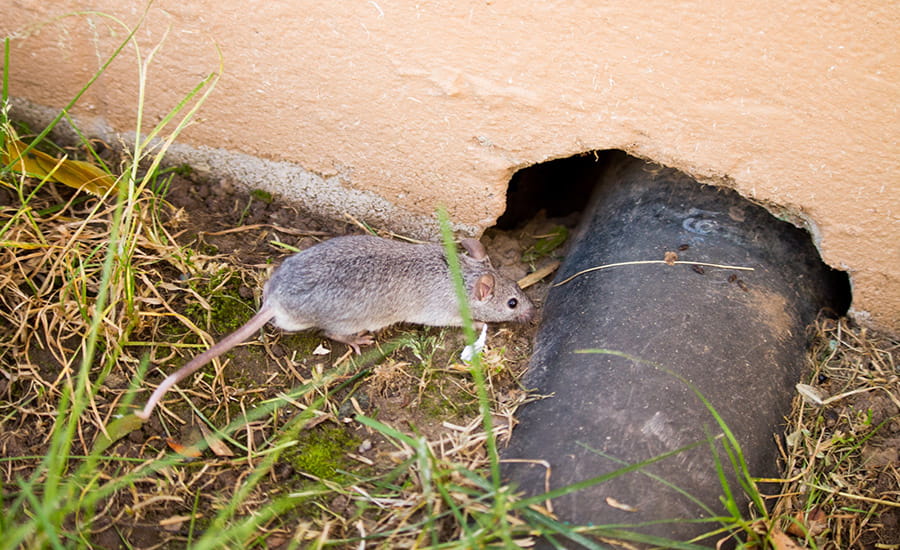
Some mice become anxious when introduced to new spaces, and this is reflected both in the gut and the brain.
The results were very interesting indeed. The researchers observed that the group of mice with 4EPS spent far less time exploring this new place and more time hiding compared to the second group of non-4EPS mice. They also found that brain regions associated with fear and anxiety were more activated within this first group.
>> Interested in drug discovery? Why not attend our upcoming event at the Francis Crick Institute, London, UK.
When the mice were treated with a drug that could overpower the negative effects of 4EPS, their behaviour became less anxious. A similar study in Nature Medicine also found that mice were less anxious when treated with an oral drug that soaked up and removed 4EPS from their bodies.

The Caltech-led research could inform our understanding of anxiety and mood conditions.
‘It’s an exciting proof-of-concept finding that a specific microbial metabolite alters the activity of brain cells and complex behaviours in mice, but how this is happening remains unknown,’ says researcher Sarkis Mazmanian, in whose laboratory much of the research took place.
‘The basic framework for brain function includes integration of sensory and molecular cues from the periphery and even the environment. What we show here is similar in principle but with the discovery that the neuroactive molecule is of microbial origin. I believe this work has implications for human anxiety or other mood conditions.’
So, our predecessors were right: there’s a lot more to those gut feelings than you think.
>> Read the Nature paper on the Nature magazine website.
24 February 2022 |
|
|
Sustainability & Environment
How well equipped is the UK’s battery supply chain to meet the growing demand for electric vehicles? We took a closer look to mark National Battery Day.
Main image editorial credit: Phaustov/Shutterstock
For many of us, it’s exciting to see the growth of the electric vehicle industry. Our personal transport will be cleaner. Our roads will be quieter. Indeed, from 2030 the UK government will ban the sale of pure internal combustion engine cars, and the widening role of ultra-low emission zones will hit many motorists in the pocket. Whether we like it or not, change is coming.
That does not mean we are prepared for it. As demand for electric and hybrid vehicles accelerates, and more stringent trade rules put pressure on having a local battery supply chain (stricter Rules of Origin for trade will come into force by 2027), the UK must get its complete supply chain up to speed.
Battery supply chain challenges
For this to happen, chemists, suppliers, manufacturers, innovators, government representatives, and others need to make strides in several areas. Over the past year, a group of more than 50 participants at SCI’s Energising the UK Battery Supply Chain workshops have identified next generation technology, the scale-up of innovative technologies, the skills and knowledge base, and standards for materials testing as areas for improvement.

Brine pools for lithium mining. There is a global clamour for raw materials including lithium.
The UK also needs a consistent stream of key battery materials. It needs technologies that reduce the dependence on some of the current materials for hybrid and electric vehicles. It must integrate efficient battery recycling and manufacturing approaches to reduce its dependence on long-distance imports and much coveted raw materials such as lithium, nickel and cobalt.
It is a big challenge. As David Bott, SCI’s Head of Innovation (who helped run SCI’s five Energising the UK Battery Supply Chain workshops) said, there isn’t enough of a UK electric battery supply chain at the moment.
>> Find out what the experts thought about improving the UK battery supply chain in our Energising the UK Battery Supply Chain Part 5 video.
David did note that the UK Government (through UK Research and Innovation) has been investing in the scale-up of cell assembly through the Energy Innovation Centre at WMG (from 2012/3) and the UK Battery Industrialisation Centre (through UKRI and the Automotive Propulsion Centre). It will also support the construction of Britishvolt’s electric battery ‘gigafactory’ in Blyth, Northumberland.
However, he added that: ‘All of them, however, are talking about the assembly of the cells and 60% of the value is in the materials. We need a battery materials supply chain in the UK – not all the way back to mining, of course, but as much as we can.’

Recent developments in the UK have been heartening, but many more will be needed to create a viable battery supply chain.
Smoother collaboration is also required. ‘We need recognition that the UK needs more support for the chemistry part of the supply chain,’ he said. ‘We need a lot more collaboration – engineers need to understand that chemistry companies would engage more if they understood the size of the opportunity. The main thing we need at the moment is awareness of the opportunities.’
Promising developments
Despite the difficulties, green shoots have appeared recently. In late January, the government announced that it has backed Britishvolt’s aforementioned plans to build large volumes of electric vehicle batteries (through the Automotive Transformation Fund). According to the government, the factory will produce enough batteries for more than 300,000 vehicles a year and create 3,000 direct, highly-skilled skilled jobs. Britishvolt have also announced a partnership with Glencore to recycle battery materials.
>> Sign up for our next Energising the UK’s Battery Supply Chain workshop.
Oxford-based chemical products manufacturer Nexeon has secured US$80 million (about £59 million) in funding to scale up the production of its silicon anode materials. Finally, Sheffield-based sodium-ion battery technology company Faradion has been acquired by Indian conglomerate Reliance Industries for £100 million. A further £25 million will be invested as growth capital to accelerate the commercial rollout of its sodium-ion battery technology.
Faradion says that its sodium-ion technology provides ‘significant advantages compared to lithium-ion technology, including greater sustainability, a patented zero-volt safe transport and storage capability’.
So, there is some good news to celebrate as you gather around with your families to celebrate National Battery Day. The battery supply chain, unfortunately, must wait for another day.
What is the future of electric cars? Find out more in this Autotrader article.
17 February 2022 |
|
|
Sustainability & Environment
Machine-made snow has made this Winter Olympics happen in Beijing, but at what cost?
If you take a look at the weather in Beijing right now, you’ll notice that it isn’t really that cold. You can enjoy daily highs of about 8°C in early February, which we’d be happy enough here in London.
These mild conditions have been a problem for the organisers of the Winter Olympics, which are currently taking place in Beijing and environs. Indeed, the distinct dearth of snow has meant that the Beijing Games have become the first to be run largely on artificial snow.
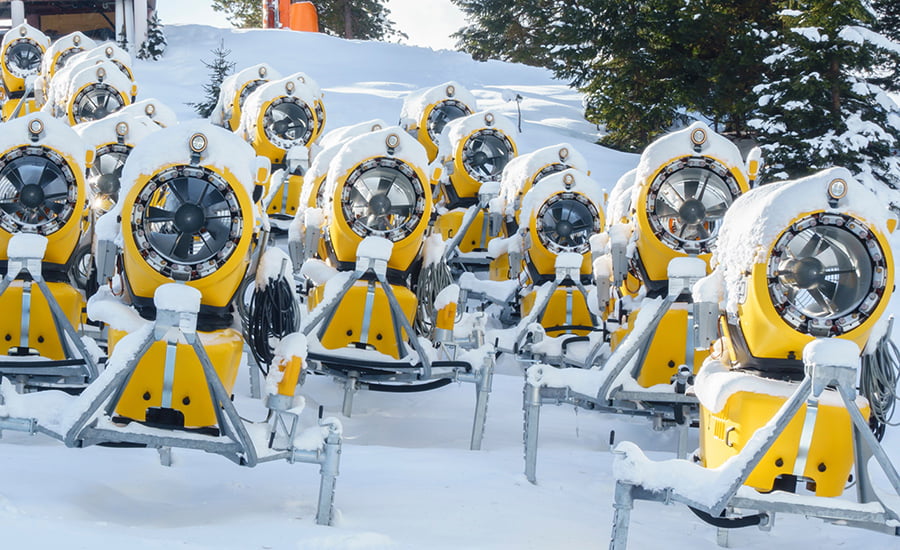
Snowmaking machines spray artificial snow on a ski slope during the FIS Ski Cross World Cup, a test event for the 2022 Winter Olympics
For some, the presence of 130 fan-driven snow generators and 300 snow-making guns spewing out machine-made snow represents a waste of resources, even if these machines are powered entirely by renewable energy.
In all, 49 million gallons of water will reportedly be used to make the Games possible. So, to say they are water-intensive is something of an understatement. However, the issues don’t end there. There is also an issue with the type of snow produced.
>> What can you do about climate change? Register for this free talk to find out more.

Some claim artificial snow creates more dangerous conditions for athletes.
According to the recent Slippery Slopes report written by the Sport Ecology Group (in conjunction with Loughborough University UK and Protect Our Winters UK), the composition of artificial snow can create dangerous conditions for the athletes. Basically, it creates a faster, harder surface that could result in more severe injuries.
The reason given for this is that artificial snow is almost 30% ice and 70% air, compared to natural snow, which is closer to 10% ice and 90% air. This ‘grittier ice-pack’ creates tougher conditions for athletes, many of whom travel at great speeds down steep slopes.
In the same report, former Winter Olympian Laura Donaldson explains why these machines create suboptimal snow. ‘The artificial snowflakes they generate have cylindrical structures (unlike the far more intricate structure of natural flakes),’ she said, ‘which mould together to form bulletproof ice conditions.’
Furthermore, this less permeable layer of ice may hinder the growth of vegetation, and the noise of the machines disrupts wildlife. In some resorts, chemicals are also added to create longer lasting snow.
At Beijing, the organisers claim not to have used chemicals in the snow-making process. However, others rely on machines and chemical-kind for a helping hand. According to the Sport Ecology Group report, a pesticide was used at the 2010 Games in Vancouver to allow the water to freeze at higher temperatures; and snow hardeners such as salt and fertiliser have been used to improve snow quality on cross-country skiing trails.
If hosting the Winter Olympics in an area without much snow seems crazy to you, it might not be quite as daft as you think. The bleak reality is that global warming is reducing the number of venues that can host this enormous event without artificial help.
According to an academic paper by Scott et. al. in 2014, only six of the last 19 Winter Olympics host cities will still have the climatic conditions to do so by the 2080s. Of course, that doesn’t take artificial snow into account.
So, when you see Qatar being awarded the 2050 Winter Games, don’t tell me you haven’t been warned.
08 February 2022 |
|
|
Science & Innovation
How do you create an investor-ready intellectual property (IP) approach to help you secure that all-important funding? We asked Charlotte Crowhurst, patent attorney at leading European IP firm, Potter Clarkson.
As businesses focus on growth in the post-pandemic world, innovation is vital. Being able to turn good ideas into a commercial success – at scale – can have a transformational impact on the wider economy. Scientists and engineers have been front and centre in providing solutions to the health crisis, but they will also play an essential role in the economic recovery.
Of course, even the most ground-breaking invention requires investment to become a viable market proposition. Yet, the road to securing funding is not always straightforward or clear, with various hurdles to overcome before winning the trust and backing of investors. Securing funding is fiercely competitive territory, as investors apply a forensic approach to identifying the risks and opportunities with each investment target.
Intellectual property alone will not likely secure funding, but a weak IP position could significantly impact on valuation – by as much as 70% – or even see an investor walk away altogether. What’s more, for return-hungry investors, new research shows that SMEs with intellectual property rights generate 68% higher revenues per employee than those who don’t.
For ambitious, high growth SMEs to put themselves in the strongest position to attract and secure funding, there are five key ingredients that make up an investor-ready IP approach:
- Clear ownership
This is the number one deal breaker. Make sure there are no grey areas on ownership of IP. Any grey areas surrounding who ‘owns’ IP will signal alarm bells for a potential investor.
- Effective innovation capture
Understanding what IP your business may have and what you might be able to protect is not always obvious. It is always worth seeking professional advice early on to determine which IP rights you might be able to secure.
Robust processes and procedures are also important. Create an IP register and keep it up to date monthly so that opportunities are not overlooked. Do not underestimate the importance of robust processes and procedures.

Understanding what IP you need to protect isn’t always obvious.
- Sound strategy
Put yourself in an investor’s shoes – they are focused on whether you can provide a return on their investment. They are looking for clarity in your approach – a strategically sound business plan, where it is easy to see how the IP rights will help to achieve the commercial objectives.
>> Need more information on filing a chemistry patent. Read our blog on chemistry patent filing.
- Market awareness
A growing business can be all-consuming, but a sound IP approach takes into consideration the wider marketplace in which your business is operating and any potential third-party rights.
- Good timing
Knowing when to act is critical to a sound IP approach. Knowing which steps to take and when to take them can have a critical impact on the strength of your IP position.
The end goal
Ultimately, the end goal with IP due diligence is to instil confidence and build trust with a potential investor. While investors are prepared to take on varying degrees of risk, SMEs will always need to show an IP approach that doesn’t signal alarm bells.
Put simply, those SMEs who are clear on these five areas will reduce the chances of IP being the reason an investor walks away.
>> To read more on ensuring your IP is investor-ready, visit the Potter Clarkson website here.
Edited by Eoin Redahan. You can find more of his work here.
01 February 2022 |
|
|
Agrifood
The plant-based meat alternative market is growing rapidly, and cell-cultured meats could be coming soon to your dinner plate once they receive regulatory approval. Gavin Dundas, Patent Attorney at Reddie & Grose, provides his expert perspective on the state of the meat alternative market.
Which is receiving more emphasis based on patent activity: lab-grown meat or plant-based meat alternatives?
Comparing cultivated meat to plant-based meat is a bit like comparing apples and oranges.
Plant-based meat is here - it’s in shops, and it’s in growing numbers of restaurants and fast-food outlets. Even McDonald’s – arguably the world’s most well-known hamburger outlet – released its first plant-based burger in the UK on 13 October 2021: the aptly-named McPlant. The McPlant has been accredited as vegan by the Vegetarian Society, and includes vegan sauce, vegan cheese and a plant-based burger co-developed with Beyond Meat.
Cell-cultured meat is a very different prospect, as cellular agriculture is more high-tech, so companies entering that sector require a higher degree of specialised technical expertise. Companies delving into cultivated meat also require a fair bit of funding, as cultivated meat has not been approved for sale in any country other than Singapore, so it is not yet possible to sell their products to consumers.
The reality at the moment is that plant-based meat alternatives have a huge head-start in the marketplace, while cultivated meat is not yet on sale in most countries. So, for most new companies looking to make money in the alternative protein market, plant-based products are likely to be the easier way to start.
On the other hand, this means that the plant-based meat market is more crowded already, while cultivated meat companies are investing in the hope of getting a bigger share of that market once it matures.
In which food types have you seen a particular surge in patent applications, for example plant-based meat alternatives or lab-grown meat?
Based on searches using patent classification codes commonly used for plant-based meats and lab-grown meat (known as ‘cell-cultured meat’ or ‘cultivated meat’), it appears that there are significantly more patent applications in the field of plant-based meats, but that patent filings relating to cultivated meat are growing more quickly.
Of all the patent publications relating to plant-based meats, 15.2% were published since the start of 2020. Of the patent publications relating to cultivated meats, 27.6% were published since the start of 2020.
This outcome is probably not surprising. Plant-based meats have been around much longer and are now widely established in the market, so many more companies have had time and opportunity to file patent applications for innovations in this area. Cultivated meats are at an earlier stage in their development, but with a large number of new companies having been formed in this area in the last few years, it is not surprising that this has resulted in a high growth rate of patent applications as cultivated meat gets closer to commercial reality.

Beyond Meat’s plant-based meat substitutes have reached the mainstream. | Jonathan Weiss/Shutterstock
How much movement has there been on the equipment and other innovations that will facilitate large-scale meal alternative manufacturing?
There is a huge difference between small-scale production of cultivated meat in a laboratory, and the large-scale manufacturing that would be needed to supply supermarkets and restaurants throughout whole countries and - eventually - the whole world.
Growing meat using cellular agriculture involves the use of animal cell lines to grow animal products in bioreactors, where the cells are immersed in a growth medium that feeds nutrients to the cells as they develop. Over the last decade there have been huge advances in these processes, but as demand for cultivated meat grows there will definitely be continued innovation to improve efficiency and scale-up manufacturing capacity.
Commercial growth medium is currently costly, so the development of more cost-effective growth media is likely to be an area of much research. Another ongoing challenge is the development of high-quality cell lines and scaffold materials that are suitable for high-quality, large-scale production.
Bioreactor design is also expected to be a big area of innovation - up until now, bench-top bioreactors have in most cases been sufficient to meet the demands of cultivated meat R&D, but as demand increases bigger and better bioreactors will be needed. A particular challenge will be to design bioreactors capable of growing thick tissue layers on a commercially viable scale.
While there is scope for innovation in all of these areas, some companies are already ready to manufacture their cultivated meat products on a large scale. Future Meat Technologies, for example, opened its first industrial cultivated meat production facility in June 2021 in Rehovot, Israel - that facility is reportedly capable of producing 500kg of cultivated meat products every day. In November 2021, Upside Foods opened its first large-scale cultivated meat production plant in Emeryville, California, with the capacity to produce 22,680kg of cultured meat annually.
At the moment, however, a lack of regulatory approval is holding back cultivated meat production. While there are a number of companies that apparently have products ready for market, many will be unwilling to plough huge amounts of money into large-scale manufacturing facilities until they have regulatory approval that lets them actually sell their products.
Thinking of filing a chemistry patent in 2022? Here’s what you need to know.
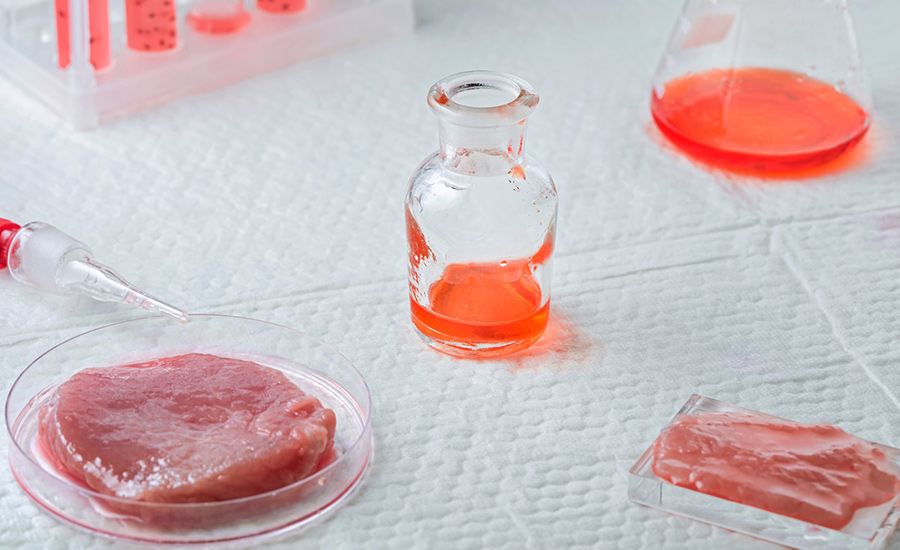
The UK has cutting-edge companies in the cultivated meat field.
Have any innovations or areas of innovation struck you as particularly exciting? If so, could you tell us more about them?
I am a meat-eater trying to cut down on my consumption of meat, due to a mixture of environmental and ethical motivations. So, as a consumer I’ve been very excited to see the arrival of plant-based meat into the mainstream.
I am particularly excited to try cultivated meat once it is approved for sale. Not long ago ‘lab-grown’ meat seemed like science-fiction, so to get to a point where you can go out and buy it will be incredible. So many people are unwilling to cut down on meat because they like the taste, and because their favourite meals are meat-based, so cultivated meat might hopefully give that same experience with fewer of the drawbacks of animal meat.
I am also excited to see the diversity of cultivated meat products. Cultivated meat chicken nuggets and beef burgers are the products that spring to mind when cell-cultured meat is mentioned, but there are companies out there developing cultivated bacon, pork belly, salmon and tuna, to name a few.
What are the chemistry challenges for those creating plant-based meat alternatives? Find out here.
Given what you know about the patent landscape, where do you think the meat alternative industry is heading, and at what sort of pace do you foresee significant change?
I think the meat alternative industry is only going to continue to grow, as concern over the environmental impact of our eating habits is growing, and the quality and availability of meat alternatives is getting better.
The plant-based meat industry is already doing well, and I expect it to continue on its upward trajectory. I expect companies in this field to continue to file patent applications for their innovations, and eventually we might see some of those patents being enforced to safeguard valuable market shares for the patent owners.
Cultivated meat is the sector that seems to be poised for the most significant change. At the moment, the lack of regulatory approval seems to be the thing holding it back, but if that hurdle is removed there are UK companies aiming to get cultivated meats into shops by 2023. The UK is lucky enough to be home to a number of cutting-edge companies in the field, and a recent report by Oxford Economics researchers forecast that cultivated meat could be worth £2.1 billion to the UK economy by 2030.
The idea of cultivated meat is unlikely to appeal to everyone, so I imagine that it will start out as something of a novelty, but I’d expect to see the availability and range of cultivated meat products grow significantly over the next decade.
Edited by Eoin Redahan. You can read more of his work here.
27 January 2022 |
|
|