
Science & Innovation
From learning what appeals to investors and increasing the public’s awareness of your products, there are huge benefits to be gained from winning competitions such as Bright SCIdea. So, how can you benefit from entering and what’s in store from this year’s shortlisted teams?
There was a fine article recently in Nature that crystallised the many benefits of entering science competitions, which extend far beyond the coveted prize money.
Winning the competition can take your product from obscurity into the eyes and minds of the public. Importantly, winning immediately gives your innovation credibility as your product (and your vision for it) will inevitably have been vetted by a team of expert judges.
You will also gain valuable publicity. Not only will the organisers promote these innovations, the new-found exposure will increase traffic to your own website and social channels.
Another really important facet of these competitions is that they help develop business sense in line with scientific innovation. In the aforementioned Nature piece, Ulrich Betz, Vice-president of Innovation at Merck, said: ‘Joining competitions can be a useful way for researcher-entrepreneurs to learn what appeals to investors and companies — training that many academic researchers lack… Participants have told me they’ve become more confident working in science and business after taking part.’
Indeed, this tallies with the experiences of last year’s BrightSCIdea winners, Metallogen. The team developed a novel nanoparticle spray that assists the natural process of phytoremediation to extract rare metals from mining. These metals can be sold on the market while decontaminating land next to mining sites at the same time.
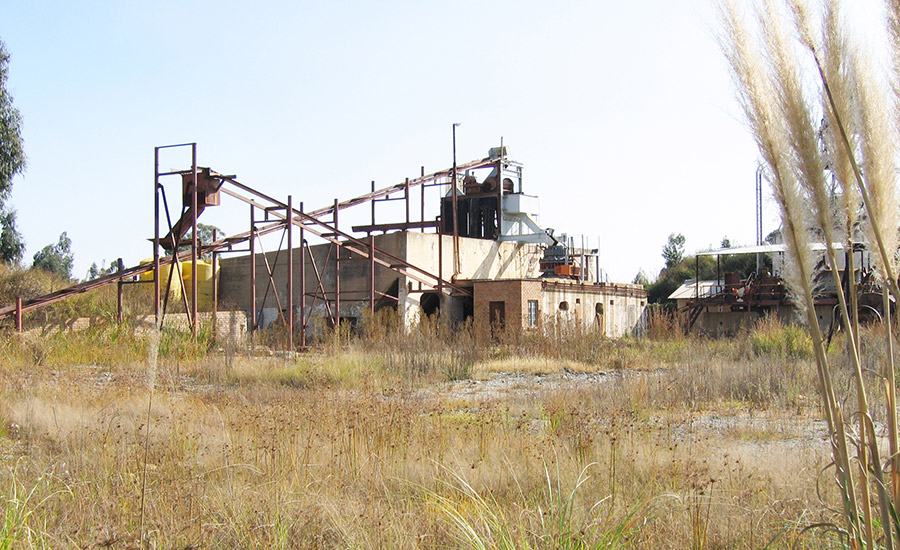
Last year’s Bright SCIdea winners used a novel approach to boost metal recovery on old mining sites and decontaminate the land.
However, having an ingenious idea is one thing. Bringing it to market is another. And this is where the training for all the shortlisted teams helped. Metallogen’s John O’Sullivan and Rafael Hunt-Stokes said: ‘The competition has also taught us how to carry out market research and put together a cogent business plan, with the pitching training giving us the ability to convey our business idea in a compelling manner to investors and other stakeholders.’
>> Inspired by Metallogen’s success at Bright SCIdea? Read more about them in our news article.
This year’s Bright SCIdeas
So, from network building to training and advice on key areas such as intellectual property, these competitions can sharpen your innovations and bring them to that all-important next stage. That’s exactly what the shortlisted teams for this year’s BrightSCIdea plan to do.
This year’s entrants have certainly taken it upon themselves to tackle some of society’s grandest challenges. The Eolic Wall team, hailing all the way from the National University of Engineering in Peru and Universidade Estadual Paulista in Brazil, has created a wind energy system to help in our low-carbon energy transition. The Unmasked team (from the University of Durham) is also seeking to address the UK energy crisis while tackling waste by producing insulation materials from disposable face masks.
In health, the BioTech Inov (University of Coimbra, Portugal) team has entered a ‘highly efficient and versatile nanotechnological subcutaneous biomedical device with a high lifespan’, and the Hatton Cross team (from University of Warwick, QMUL, and Imperial College, London) has also submitted a wearable device that aims to enhance the wearer’s quality of life.
In an effort to address mental wellbeing, the Happy BioPatch team (from Oxford University and Manchester University) has created ‘a wearable gadget which continuously monitors cortisol levels aiming to prevent serious consequences as a result of stress’. Finally, the CardiaTec team (from the University of Cambridge) is specialising in tackling cardiovascular disease.
There’s so much to be gained from being part of competitions such as BrightSCIdea. We can’t wait to hear from the leaders of tomorrow.
Who knows? Maybe this will be the first you hear from a future Nobel prize winner?
>> Keep an eye out on Twitter for all of the wonderful innovations in this year’s BrightSCIdea competition at: @SCIupdate.
14 March 2022 |
|


 |
|

Sustainability & Environment
Why do we ignore climate change and what can we do about it? That’s what Toby Park, of The Behavioural Insights Team, explained in our latest SCItalk. Eoin Redahan reports.
Do any of these describe you?
A.I recycle whenever I can, but fly twice a year.
B.I switched to a renewable energy provider, but still drive to work twice a week.
C.I make sure all unnecessary lights are switched off in the house, but eat beef occasionally
D.I plan to live a greener lifestyle, but the real difference will be made at government level.
When it comes to climate change, most of us are full of good intentions. We want to do the right thing but when change becomes too difficult or inconvenient, people (like me) lapse into old habits. In his excellent talk, why we ignore climate change and what we can do about it, Toby Park explained these contradictions and outlined how ‘nudge’ behaviour can be used to tweak our habits.
Fundamentally, Park argued that most people mean well. After surveying a couple of thousand people in the lead-up to COP26, the Behavioural Insights Team found that 67% of respondents planned to take at least five new actions to tackle climate change and 99% said they would take at least one.
So, why then do we ignore climate change en masse? ‘We are like swimmers in a stream,’ Park said. ‘We have the opportunity to swim in one direction or another but we are in a stream that has a current.’

We’re good at recycling but not as resolute when it comes to taking fewer flights.
Life is hard enough. We tend to do what is easy and affordable, but there are other reasons why we’re not falling over each other to buy electric vehicles or driving to the south of Spain for our holidays instead of flying.
The first is psychological distance. For many people, the prospect of climate change is too distant to take seriously. Unless you have woken up to find your kitchen submerged by flooding, its effects may seem far away; yet, the changes we must make are in the present.
The problem is, it’s sometimes hard to act when you cannot feel the urgency. So, people find it hard to frontload the hardship, as they see it. Park likened it to being told that you must have the hangover before you go drinking – and how many of us would choose that?
Second, we are experts at fooling ourselves. As Park noted, we’re all natural storytellers when it comes to crafting positive images of ourselves. We are the masters of cognitive dissonance. On the one hand we feel virtuous when we recycle paper, plastic, and food scraps, yet we’ll hop on a plane for that wedding in Dublin.
‘We all have the tension of what’s in our own self interest and what’s altruistic or pro-social,’ Park said, adding a Robert Heinlein quote that encapsulates the human condition. ‘Man is not a rational animal,’ he said. Man is a rationalising animal.’
A third reason why we ignore climate change, according to Park, is that our actions rarely benefit us personally. If you buy an electric vehicle, the price of that new Tesla will sting and you’re not going to benefit from the carbon emissions saved. However, if there is collective action, everyone would benefit from cheaper electric vehicles to less filthy air.
So, what can we do about climate change?
Nudge behaviour
As was mentioned above, one of the foci of the Behavioural Insights Team is encouraging ‘nudge’ behaviour – what Park described as softly encouraging a certain type of behaviour without restricting choice. And it turns out, there are lots of ways to nudge us well-intentioned, self-centred creatures into healthier habit.
Examples of nudge behaviour are everywhere. In Switzerland, energy companies made green energy the default choice and people – out of either convenience or conscience – tended to stick with this option. Park mentioned how one canteen reduced food waste by up to 40% through the introduction of a small friction: removing the plastic trays (Thiagarajah and Getty 2013). In a similar sphere, he said Sainsbury’s Cafe increased orders of its plant-based meal options by calling items ‘field-grown’ rather than ‘meat-free’ or ‘plant-based’.
Park mentioned that we can motivate different behaviour by introducing a social element. He noted that solar panels were found to be socially contagious in California and parts of Europe, while the same has happened in the UK with the introduction of green number plates for electric vehicles.
Comparing people to their peers is another useful way of changing habits for the better. Benchmarking people’s behaviour against the norm – such as telling someone they use more energy than most customers – is one way of doing it. Publishing environmental performance league tables for organisations is another to encourage a climate-friendly approach.
If you don’t think these sorts of nudge behaviours don’t work, think of the humble plastic bag tax. When you take your own bags for your weekly shop, you might save just 30p on a £30 shop. But have you done it? And are you doing it still?
Unfortunately, there is no dancing around the fact that 60% of emissions reduction requires behaviour change, according to Park. So, nudge behaviour will help but we’ll be needing more power behind that elbow.

What’s in a name? Language can have a profound effect on our choices. Now, who’s for a field-grown breakfast?
‘Small nudges aren’t enough,’ he said. ‘We also need to apply this lens to systemic, transformative change. That means finding smart ways to tilt the functioning of markets.
He said that consistent, long-term decision making is not only important for individuals but for businesses too.
‘Incentives are massively important for corporations,’ he added. ‘That would generally be my first port of call. That’s where the bigger impacts can be found.’
At the end of the talk, a member of the audience asked Park, simply, if there was hope? To answer that, he offered the example of plant-based food.
Not so long ago, many plant-based meat alternatives were the preserve of the few. However, consumer interest in plant-based foods has ‘mushroomed’ in recent years and retailers have responded with a swath of new food products.
‘Change can be runaway and self accelerating, Park said, ‘and we shouldn’t forget that solutions can scale exponentially… New norms can, all of a sudden, spread very quickly.’
>> To listen to Toby’s talk, go to YouTube
02 March 2022 |
|
|
Health & Wellbeing
The clichés we use become so downtrodden that we often say them without thinking. How many times, for example, have you said you went with your gut on a certain decision?
As with many of these aphorisms, there appears to be genuine wisdom behind it. Scientists are learning all the time about the links between our guts and our brains, and recent findings from a California Institute of Technology-led (Caltech) study have added to our understanding of what’s going on behind our belly buttons.
This research contends that a particular molecule, produced by our gut bacteria, has contributed to anxious behaviour in mice. The Caltech researchers say that a small-molecule metabolite that lives in the mouse’s gut can travel up to the brain and alter the function of its cells. This adds further grist to the belief that there is a link between our microbiome, brain function, and mood.
The researchers behind the Nature paper say previous studies found that people with certain neurological conditions have different gut bacteria communities. Furthermore, studies in mice revealed that manipulating these communities can alter neurological states.
>> Curious about which herbs could boost your wellbeing and how they work in your body? Then read our recent blog on this topic.
Their study investigated the bacterial metabolite 4-ethylphenyl sulphate (4EPS) that is produced in the intestines of humans and mice and circulates throughout the body. In particular, they focused on the effect of 4EPS on mouse anxiety. For the sake of the study, mouse anxiety measured the creature’s behaviour in a new space - whether it hid in a new space as if from a predator or whether it was willing to sniff around and explore it.
The researchers compared two groups of lab mice: those colonised with pairs of bacteria that were genetically engineered to produce 4EPS, and a second group that was colonised with similar bacteria that couldn’t produce 4EPS. They then observed the rodents’ behaviour after being introduced to a new area.

Some mice become anxious when introduced to new spaces, and this is reflected both in the gut and the brain.
The results were very interesting indeed. The researchers observed that the group of mice with 4EPS spent far less time exploring this new place and more time hiding compared to the second group of non-4EPS mice. They also found that brain regions associated with fear and anxiety were more activated within this first group.
>> Interested in drug discovery? Why not attend our upcoming event at the Francis Crick Institute, London, UK.
When the mice were treated with a drug that could overpower the negative effects of 4EPS, their behaviour became less anxious. A similar study in Nature Medicine also found that mice were less anxious when treated with an oral drug that soaked up and removed 4EPS from their bodies.

The Caltech-led research could inform our understanding of anxiety and mood conditions.
‘It’s an exciting proof-of-concept finding that a specific microbial metabolite alters the activity of brain cells and complex behaviours in mice, but how this is happening remains unknown,’ says researcher Sarkis Mazmanian, in whose laboratory much of the research took place.
‘The basic framework for brain function includes integration of sensory and molecular cues from the periphery and even the environment. What we show here is similar in principle but with the discovery that the neuroactive molecule is of microbial origin. I believe this work has implications for human anxiety or other mood conditions.’
So, our predecessors were right: there’s a lot more to those gut feelings than you think.
>> Read the Nature paper on the Nature magazine website.
24 February 2022 |
|
|
Sustainability & Environment
How well equipped is the UK’s battery supply chain to meet the growing demand for electric vehicles? We took a closer look to mark National Battery Day.
Main image editorial credit: Phaustov/Shutterstock
For many of us, it’s exciting to see the growth of the electric vehicle industry. Our personal transport will be cleaner. Our roads will be quieter. Indeed, from 2030 the UK government will ban the sale of pure internal combustion engine cars, and the widening role of ultra-low emission zones will hit many motorists in the pocket. Whether we like it or not, change is coming.
That does not mean we are prepared for it. As demand for electric and hybrid vehicles accelerates, and more stringent trade rules put pressure on having a local battery supply chain (stricter Rules of Origin for trade will come into force by 2027), the UK must get its complete supply chain up to speed.
Battery supply chain challenges
For this to happen, chemists, suppliers, manufacturers, innovators, government representatives, and others need to make strides in several areas. Over the past year, a group of more than 50 participants at SCI’s Energising the UK Battery Supply Chain workshops have identified next generation technology, the scale-up of innovative technologies, the skills and knowledge base, and standards for materials testing as areas for improvement.

Brine pools for lithium mining. There is a global clamour for raw materials including lithium.
The UK also needs a consistent stream of key battery materials. It needs technologies that reduce the dependence on some of the current materials for hybrid and electric vehicles. It must integrate efficient battery recycling and manufacturing approaches to reduce its dependence on long-distance imports and much coveted raw materials such as lithium, nickel and cobalt.
It is a big challenge. As David Bott, SCI’s Head of Innovation (who helped run SCI’s five Energising the UK Battery Supply Chain workshops) said, there isn’t enough of a UK electric battery supply chain at the moment.
>> Find out what the experts thought about improving the UK battery supply chain in our Energising the UK Battery Supply Chain Part 5 video.
David did note that the UK Government (through UK Research and Innovation) has been investing in the scale-up of cell assembly through the Energy Innovation Centre at WMG (from 2012/3) and the UK Battery Industrialisation Centre (through UKRI and the Automotive Propulsion Centre). It will also support the construction of Britishvolt’s electric battery ‘gigafactory’ in Blyth, Northumberland.
However, he added that: ‘All of them, however, are talking about the assembly of the cells and 60% of the value is in the materials. We need a battery materials supply chain in the UK – not all the way back to mining, of course, but as much as we can.’

Recent developments in the UK have been heartening, but many more will be needed to create a viable battery supply chain.
Smoother collaboration is also required. ‘We need recognition that the UK needs more support for the chemistry part of the supply chain,’ he said. ‘We need a lot more collaboration – engineers need to understand that chemistry companies would engage more if they understood the size of the opportunity. The main thing we need at the moment is awareness of the opportunities.’
Promising developments
Despite the difficulties, green shoots have appeared recently. In late January, the government announced that it has backed Britishvolt’s aforementioned plans to build large volumes of electric vehicle batteries (through the Automotive Transformation Fund). According to the government, the factory will produce enough batteries for more than 300,000 vehicles a year and create 3,000 direct, highly-skilled skilled jobs. Britishvolt have also announced a partnership with Glencore to recycle battery materials.
>> Sign up for our next Energising the UK’s Battery Supply Chain workshop.
Oxford-based chemical products manufacturer Nexeon has secured US$80 million (about £59 million) in funding to scale up the production of its silicon anode materials. Finally, Sheffield-based sodium-ion battery technology company Faradion has been acquired by Indian conglomerate Reliance Industries for £100 million. A further £25 million will be invested as growth capital to accelerate the commercial rollout of its sodium-ion battery technology.
Faradion says that its sodium-ion technology provides ‘significant advantages compared to lithium-ion technology, including greater sustainability, a patented zero-volt safe transport and storage capability’.
So, there is some good news to celebrate as you gather around with your families to celebrate National Battery Day. The battery supply chain, unfortunately, must wait for another day.
What is the future of electric cars? Find out more in this Autotrader article.
17 February 2022 |
|
|
Sustainability & Environment
Machine-made snow has made this Winter Olympics happen in Beijing, but at what cost?
If you take a look at the weather in Beijing right now, you’ll notice that it isn’t really that cold. You can enjoy daily highs of about 8°C in early February, which we’d be happy enough here in London.
These mild conditions have been a problem for the organisers of the Winter Olympics, which are currently taking place in Beijing and environs. Indeed, the distinct dearth of snow has meant that the Beijing Games have become the first to be run largely on artificial snow.
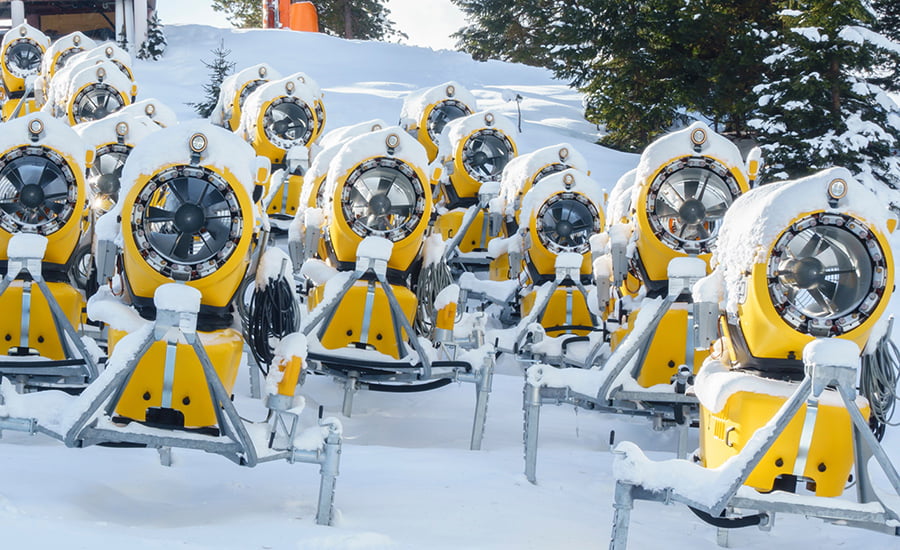
Snowmaking machines spray artificial snow on a ski slope during the FIS Ski Cross World Cup, a test event for the 2022 Winter Olympics
For some, the presence of 130 fan-driven snow generators and 300 snow-making guns spewing out machine-made snow represents a waste of resources, even if these machines are powered entirely by renewable energy.
In all, 49 million gallons of water will reportedly be used to make the Games possible. So, to say they are water-intensive is something of an understatement. However, the issues don’t end there. There is also an issue with the type of snow produced.
>> What can you do about climate change? Register for this free talk to find out more.

Some claim artificial snow creates more dangerous conditions for athletes.
According to the recent Slippery Slopes report written by the Sport Ecology Group (in conjunction with Loughborough University UK and Protect Our Winters UK), the composition of artificial snow can create dangerous conditions for the athletes. Basically, it creates a faster, harder surface that could result in more severe injuries.
The reason given for this is that artificial snow is almost 30% ice and 70% air, compared to natural snow, which is closer to 10% ice and 90% air. This ‘grittier ice-pack’ creates tougher conditions for athletes, many of whom travel at great speeds down steep slopes.
In the same report, former Winter Olympian Laura Donaldson explains why these machines create suboptimal snow. ‘The artificial snowflakes they generate have cylindrical structures (unlike the far more intricate structure of natural flakes),’ she said, ‘which mould together to form bulletproof ice conditions.’
Furthermore, this less permeable layer of ice may hinder the growth of vegetation, and the noise of the machines disrupts wildlife. In some resorts, chemicals are also added to create longer lasting snow.
At Beijing, the organisers claim not to have used chemicals in the snow-making process. However, others rely on machines and chemical-kind for a helping hand. According to the Sport Ecology Group report, a pesticide was used at the 2010 Games in Vancouver to allow the water to freeze at higher temperatures; and snow hardeners such as salt and fertiliser have been used to improve snow quality on cross-country skiing trails.
If hosting the Winter Olympics in an area without much snow seems crazy to you, it might not be quite as daft as you think. The bleak reality is that global warming is reducing the number of venues that can host this enormous event without artificial help.
According to an academic paper by Scott et. al. in 2014, only six of the last 19 Winter Olympics host cities will still have the climatic conditions to do so by the 2080s. Of course, that doesn’t take artificial snow into account.
So, when you see Qatar being awarded the 2050 Winter Games, don’t tell me you haven’t been warned.
08 February 2022 |
|
|
Sustainability & Environment
Johnson Matthey has launched a technology to help create a green hydrogen-based aviation fuel, while the European Commission has approved a €900 million scheme (£750 million approximately) to support renewable hydrogen investments.
SCI Corporate Partner Johnson Matthey has developed HyCOgen to convert CO2 and green hydrogen into a scalable and sustainable aviation fuel (SAF). The speciality chemicals company says it has combined this Reverse Water Gas Shift technology with FT CANS Fischer Tropsch technology through a catalysed process. With this approach, the green hydrogen and CO2 are converted into carbon monoxide, which is combined with additional hydrogen to form syngas.
Integration with the FT CANS technology is used to turn 95% of the CO2 into a high quality synthetic crude oil. This synthetic crude oil can then be upgraded into sustainable, drop-in fuel products for aviation transport – a sector responsible for 12% of transport-related CO2 emissions, according to the Air Transport Action Group.

Green hydrogen fuel, produced using renewable energy, could help decarbonise the aviation industry.
Jane Toogood, Sector Chief Executive at Johnson Matthey, said: “Given the challenges associated with new propulsion technologies and airport infrastructure, plus the long asset life of aircraft, there are significant hurdles in moving from hydrocarbon-based aviation fuel to alternatives such as battery electric or hydrogen.
“By combining HyCOgen with FT CANS, we can now deliver customers a cost-efficient, reliable and scalable technology to help increase SAF production, backed by our track record of successful technology development and commercialisation.”
>> Concerned about climate change? Find out what you can do in this free webinar: https://www.soci.org/events/hq-events/2022/why-we-ignore-climate-change-and-what-we-can-do-about-it
€900 million fund for non-EU countries
In other hydrogen-related news, the global hydrogen industry has received a boost with the European Commission approving a €900 million German scheme to support investments in renewable hydrogen production in non-EU countries.
The aim of the H2Global project is to meet the growing EU demand for renewable hydrogen production, which is expected to increase significantly as EU countries reduce their reliance on fossil fuels. Even though the initiative will benefit EU countries, UK-based organisations concerned with hydrogen power could benefit from this investment.
>> Young chemists are getting creative in the fight against climate change. Read more in our COP26 review blog.
Margrethe Vestager, the European Commissioner for Competition who is in charge of competition policy, said: “This €900 million German scheme will support projects leading to substantial reductions in greenhouse emissions, in line with the EU’s environmental and climate objectives set out in the Green Deal.
“It will contribute to addressing the increasing demand for renewable hydrogen in the Union, by supporting the development of this important energy source in areas of the world where it is currently not exploited with a view to importing it and selling it in the EU. The design of the scheme will enable only the most cost effective projects to be supported, reducing costs for taxpayers and minimising possible distortions of competition.”
11 January 2022 |
|
|
Agrifood
Greenhouse gas emissions statistics can be misleading. At a recent SCI webinar on the Future of Agriculture, the Agrisciences Committee put its finger on some glaring gaps in the figures.
If all of the cows in the world came together to form a country, that nation state would be the second highest emitter of greenhouse gas emissions in the world.
McKinsey Sustainability’s statistic was certainly startling. However, Agrisciences Group Chair Jeraime Griffith mentioned other equally striking figures in his wrapup of the social media discussion generated at COP26.
In his talk as part of the Agrisciences Committee’s COP26 – What does it mean for the future of agriculture? webinar on 7 December, Griffith also noted that:
- farming accounts for more than 70% of the freshwater used worldwide, according to the Organisation for Economic Co-operation and Development (OECD)
- and 31% of human-caused greenhouse gas emissions come from agrifood systems, according to the Food and Agriculture Organisation.
On the face of it, these figures are sobering; yet, like many agriculture-related figures, they don’t tell the full story.
Insane in the methane
Kathryn Knight felt that agriculture received negative press at COP26 in relation to greenhouse gas emissions. ‘It doesn't seem to take into account carbon sequestration (capturing and storing atmospheric carbon dioxide),’ said the Research & Technology Manager of Crop Care at Croda. ‘Why isn’t that being brought into the equation when we’re talking about carbon and agriculture?’
Martin Collison expanded on this point. He emphasised the need to separate carbon emissions by system – such as extensively grazed livestock animals and those fed on grain – and to account for systems that sequester carbon in the soil. The co-founder of agricultural consultancy Collison & Associates also pointed out the problem with bundling all our greenhouse gases as one.

Greenhouse gas emissions are sometimes unhelpfully bundled together, instead of being separated by gas and agricultural system.
‘We count methane in the same way we emit carbon,’ he said. ‘When we emit carbon, it’s in the atmosphere for 1,000 years, but with methane it’s 12 years. The methane cycle is a lot, lot shorter.’
And the difficulties with the statistics don’t end there. For example, countries often announce impressive emission reductions without taking trade into account. This, of course, gives the figures a greener gloss.
‘To me, there's a need to be more up front with a lot of the data because agriculture and food are traded around the world,’ he added. ‘A lot of the emissions data ignore what we trade.
‘In the UK, we make big claims about how fast we’ve progressed with carbon emissions, but if you look at what we consume, the progress is much much slower. The things we produce less of, we import.’
>> SCI was at COP26 too! Read about the role of chemistry in creating a greener future.
Full of hot air?
Emissions trading also serves to blur the picture. For Jeraime Griffith it is an unsatisfactory solution. ‘In terms of carbon trading, we have cases where the higher emitters continue producing in the way they’ve always been producing,’ he said.
‘It doesn't bring in any restrictions on the amount of carbon they emit; it just shifts the problem somewhere else. I don't know how carbon trading benefits us getting to Net Zero. It just seems to be kicking the ball farther down the road.’

Is emissions trading part of the solution or part of the problem?
So, when you take into account 1. emissions trading, 2. the absence of food imports in data sets, 3. the bundling together of different greenhouse gases in emissions figures, and 4. the failure to take carbon sequestration into account, it’s clear that many of the statistics we receive are incomplete.
‘There’s lots of complexity behind the numbers and we tend to lump all of it together,’ Collison said. ‘There’s a need to go much much further.’
>> SCI’s Agrisciences Group is a unique multidisciplinary network covering the production, protection and utilisation of crops for food and non-food products. It has 250 members including academic and industry leaders, researchers, consultants, students, and retired members. If you’re interested in joining the group, go to: www.soci.org/interest-groups/agrisciences
22 December 2021 |
|
|
Science & Innovation
How do you get large audiences to read about your work? Roger Highfield, Science Director of the Science Museum, and Steve Scott, Public Engagement Lead of UK Research and Innovation, shared their insights at a recent webinar organised by SCI.
‘When I talk to people about science writing – when I’m talking about the introduction – I ask them to practise on a long-suffering friend and read a couple of paragraphs of what they’ve written. If they reach for their phone, you’ve done something wrong.’
Some people’s observations should be taken with a liberal fistful of salt, but Roger Highfield is certainly worth listening to when it comes to connecting with the public. As Science Director of the Science Museum Group, he helped engage with more than five million visitors in 2019/20 alone and has written and edited thousands of articles as Science Editor of the Daily Telegraph and Editor of New Scientist.

Roger Highfield, Science Director of the Science Museum
So, how can you reach large audiences with scientific content? First of all, salience is important. How does what you’re talking about have a material effect on people’s lives? As Roger Highfield noted dryly: ‘People will be very interested in asteroids when one’s bearing down on the Earth.’
Citizen science and the long form Q&A
Similarly, the public has been voracious in its consumption of Covid-19-related content despite the complicated nature of the virus and vaccine development. During lockdown, Roger Highfield’s long form Q&A blogs about Covid-19 were hugely popular because, as he said, ‘there was a public appetite for a deeper dive into the science’.
Aside from writing in a way that decongests heavy, complicated subjects, it also helps to get your research in front of the right people, namely communications specialists. ‘One lesson for mass engagement is to work with media organisations,’ he added. ‘It’s more than a platform – you’re dealing with experts in public engagement.’
For larger organisations, citizen science is an excellent way to engage people by making them part of a project. The Great Backyard Bird Count is a fine example of citizen science at its simple, effective best, with thousands of bird-watchers helping provide a real-time snapshot of bird populations around the world.
Highfield has engaged with the public in all manner of citizen science initiatives, from recent online cognition tests in which 110,000 people took part, all the way back to an experiment asking people about the catchiest song in the world. ‘At the time, it was The Spice Girls’ Wannabe,’ he said. ‘People recognised it in 2.5 seconds.’
At its best, citizen science doesn’t just help you to engage people in your work; it can be used as a valuable way to gather information and provide unique perspectives. ‘Citizen science is not just a flash in the pan. The role is changing,’ said Steve Scott, Public Engagement Lead at UK Research and Innovation (UKRI). ‘It’s an effective way of gaining knowledge… bringing different forms of knowledge and expertise into research.’

Steve Scott, Public Engagement Lead of UK Research and Innovation
Scott used the University of West London-led Homes Under the Microscope project to illustrate his point. As part of this project, people in Bristol and Bradford will detect and monitor airborne microplastic sources in their homes and feed this information back to the project organisers to help assess the prevalence of these substances.
A cultural shift
If you’d like more people to read about your research or product, it’s also worth thinking about the way people consume media. According to Scott, the general public tends to consume science through televisions and museums (for example, a visit to the zoo), and people are most likely to follow up on scientific matters having seen them on the news.
Many people learn about science through social media and YouTube, but other vehicles are worth considering too if you want to raise awareness. The UKRI views gaming as a significantly untapped area of public engagement and is investing in this area. Another intriguing way to raise awareness of innovative research is through awards, with the recent, well publicised Earthshot Awards providing a case in point. ‘They’ve taken research grants,’ Scott said, ‘and made them into the Oscars.’
Encouragingly, as the means of communication are changing, so too is the readiness of researchers to share their work. Both Highfield and Scott have seen a large shift over the past 15 years or so, with more and more scientists communicating their research. ‘It’s recognised as being an important part of being a researcher now,’ Scott said. ‘You’re excited about [your research]… Why would you not talk to the public about it?
The big takeaway
So, what is the most important takeaway from the talks, apart from that all-important Spice Girls fact? Fundamentally, when you are communicating your research or peddling your company’s wares, it helps to narrow your focus.
Indeed, Scott reminded us that the public is not a homogeneous group. ‘If we want to engage with millions of people, we need to think of audiences as more than just the general public,’ he said.
He said that 75 per cent of the potential UK audience – roughly 49 million people – falls into one of two groups: they don’t think science is for them, or they’re inactive. So, it’s worth taking an in-depth look at your target demographic and the places it goes to for news before sharing your work.
Earlier, Roger Highfield emphasised the same thing. He said: ‘If there’s one thing I want you to take from this talk, it’s to think about the audience.’
>> Watch How to engage with millions of people in full on our YouTube channel at: https://youtu.be/HSOMQd958EQ
22 November 2021 |
|
|
Sustainability & Environment
A group of inspiring young scientists took centre stage at COP26 on 4 November to show how the next generation of chemists is finding tangible climate change solutions.
In a day dominated by what countries pledged to stop doing at COP26, such as pursuing coal power and financing fossil fuel projects overseas, it was refreshing to learn about low-carbon technologies and the young people driving their development. At the Next Gen forum, we heard from an array of young chemists, all associated with SCI, who are at the sharp edge of this change.
We heard from Brett Parkinson, Senior Engineer of Low Carbon Fuels and Energy Technologist at C-Zero, who is working on commercialising a way to decarbonise natural gas. The California-based company’s technology converts the natural gas into hydrogen and solid carbon to provide a clean energy source while sequestering the carbon; and the aim is to have this process up and running next year.
Natasha Boulding is building towards Net Zero a different way – with a greener concrete. The CEO and Co-founder of Sphera has developed a lightweight carbon negative additive using waste plastics that aren’t currently being recycled. She says the company’s blocks are the same strength and price as existing concrete blocks, but with 30% more thermal insulation. There is also the added benefit of reusing waste materials that would otherwise have gone to landfill or been incinerated.
Another solution discussed by Dominic Smith, Process Development Engineer at GSK, reduces energy consumption through green chemistry. He is trying to find greener ways to make medicines using enzymes. These enzymes, which can be found in plants and soil, replace chemical synthesis steps to cut energy consumption during processing and reduce hazardous waste.

Panel (left to right): Dominic Smith, Natasha Boulding, Clare Rodseth, Jake Coole, Nikita Patel, and Oliver Ring (Brett Parkinson spoke via video link).
It was apparent from the discussion that many solutions will be needed for us to reach our climate change targets. On the one hand, Jake Coole, Senior Chemist in Johnson Matthey’s Fuel Cells team, is working on membrane electrode assembly for hydrogen fuel cells to help us transition to hydrogen-powered buses and trucks.
At the same time, Clare Rodseth, an Environmental Sustainability Scientist at Unilever, has been using lifecycle assessments to reduce the environmental impact of some of the 400 Unilever brands people use all over the world every day. For example, this work has helped the company move away from petrochemical ingredients in its home care products. ‘Even small changes,’ she said, ‘have the potential to bring about large-scale change.’
Incremental change
However, for each of the technologies discussed, barriers remain. For Coole and co., having a readily available supply of hydrogen and charging infrastructure will be key. And for Dominic Smith and his colleagues, the use of enzymes in green chemistry is still in its infancy; and getting enzymes that are fast enough, stable enough, and produce the right yield is difficult. Nevertheless, he noted that manufacturers are now using enzymes to produce the drug amoxicillin, reducing the carbon footprint by about 25%
And some things will take time to change. Natasha Boulding noted that concrete is the second most used material in the world after drinking water, and we simply can’t create many green technologies, such as wind turbines, without concrete foundations.
She said the construction industry is quite traditional but also pointed to perceptible change, with the green concrete market growing and companies becoming increasingly aware of their carbon footprints.
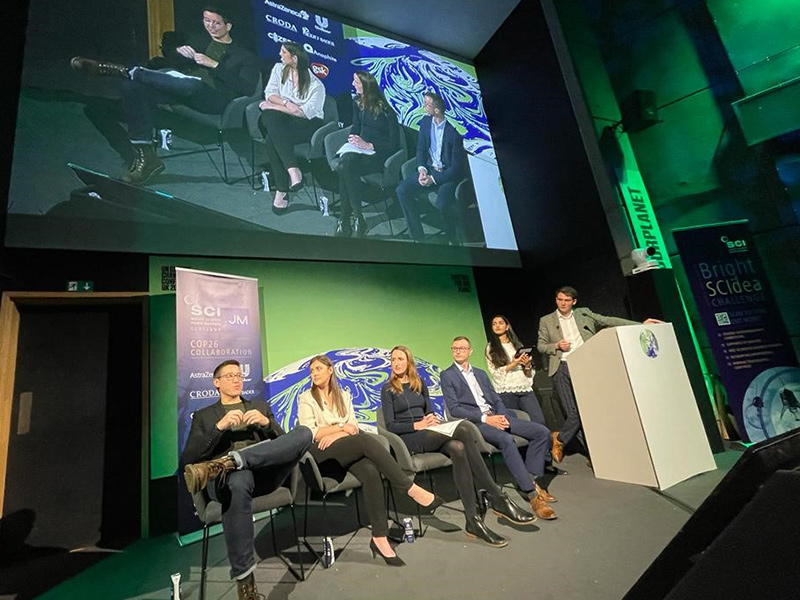
Collaboration was seen as crucial in producing climate change solutions.
The reality is that global action on climate change is recent. As Brett Parkinson said: ‘the main reason we’re talking about it now is that there’s a driver to do it. Until the last decade, the world hadn’t cared about CO2 emissions. They just talked about caring about it.’
How pivotal is science in all of this?
So, what could be done to make climate action more effective? For Parkinson, effective policy is key. He argued that if the market isn’t led by policies that encourage low-carbon innovations, then it won’t work as needed. ‘It all starts with effective decarbonisation policy,’ he said. ‘Legacy industries are very resistant to change. If you don’t have strong and consistent policies… then they’re not going to adapt.’
Another key to our low-carbon evolution is collaboration, and the SCI provides a confluence point for those in industry and academia to work together to produce innovative, low-carbon products. As Clare Rodseth said: ‘Collaboration is really important – linking up people who can actually come together and address these problems.’
As the discussion came to a close, you had the impression that the debate could have gone on for much longer. ‘Hopefully, we’ve demonstrated that there is action, and it’s being driven by young people like our panellists today,’ summarised Oliver Ring, the event’s co-Chair, before asking for the result of the audience poll.
The question: How many of those watching believed that science is pivotal in providing climate change solutions?
The answer: Just the 100%.
>> Thank you to Johnson Matthey for sponsoring the event, to the speakers for sharing their time and expertise, and to co-chairs Nikita Patel and Oliver Ring for doing such an excellent job.
05 November 2021 |
|
|
Sustainability & Environment
This Thursday at COP26, an inspiring panel of young scientists will discuss innovations that will help us mitigate climate change. So, what can we expect?
Millions of young people are frustrated by climate change inaction. Indeed, according to a University of Bath study, 60% of the next generation feel overwhelmed by climate anxiety. Often, the proposed solutions seem vague and intangible – well-intentioned ideas that drift away when the political winds shift.
And yet, when you see the ingenuity of young scientists, business people, and activists, it’s hard not to be excited. Undoubtedly, politics and our legal system will play a huge role in the drive to reach Net Zero, but arguably science will play the biggest role in transforming the way we live. Just think of the falling cost of generating solar power, improvements in battery chemistry for electric vehicles, the development of sustainable construction materials, and the rapid rollout of Covid-19 vaccines.
Tangible solutions
This Thursday at COP26, SCI will host the Next Gen youth forum event where the panellists discuss the climate change solutions they are working on right now and how they are being applied by industry. In the Countdown to Planet Zero roundtable, these scientists – drawn from within SCI’s innovation community – will explain their work to a global audience and the impact it will have on climate change.
They will discuss innovation in three key areas: topics of fuels of the future, turning waste into gold, and engineering nature.

The next generation has mobilised and is creating solutions to help avoid climate change disaster.
The panel will be chaired by two very capable young scientists. Oliver Ring is Senior Scientist at AstraZeneca’s large-scale synthesis team and Chair of SCI’s Young Chemists’ Panel, and passionate climate advocate Nikita Patel is a PhD student at Queen Mary University of London’s Centre of Translational Medicine and Therapeutics and STEM Ambassador for schools.
The other panel members include Clare Rodseth, of Unilever’s Environmental Sustainability Science team, who brings lifecycle analysis to product innovation to make products more sustainable.
Jake Coole, Senior Chemist in Johnson Matthey’s Fuel Cells team, is involved in the scale-up of new processes and next generation manufacturing, and Dominic Smith, Process Development Engineer at GSK, who is interested in engineering biology to create sustainable manufacturing processes.
Also present will be Dr Brett Parkinson, Senior Engineer of Low Carbon Fuels and Energy Technologist at C-Zero – a California-based startup that works on the decarbonisation of natural gas. In 2019, Brett was awarded an SCI scholarship for his research.
The lineup also includes Dr Natasha Boulding, CEO and Co-founder of Sphera Limited, a speciality materials company that has created carbon negative concrete blocks made from aggregate including waste plastic. According to Natasha, whose company also won SCI’s Bright SCIdea challenge in 2019: “In terms of combating climate change, interdisciplinary collaboration is the key. No one discipline has the answer to solve our biggest challenges – but together diverse minds can.’
>> Would you like to take part in BrightSCIdea and be in with the chance of winning £5,000? Be part of it.
Watch the event online
SCI is proud to be associated with these enterprising young scientists and the imaginative solutions they are developing to mitigate the effects of climate change.
‘As a global innovation hub, SCI wants to show how the next generation of scientists is actively developing solutions,’ said Sharon Todd, SCI CEO.

Sharon Todd, SCI CEO
‘Our COP26 youth forum debate will profile the work of young scientists and entrepreneurs addressing climate change in their work. This next generation of innovators has the power to change our world’s tomorrow.’
If you’d like to see the climate change solutions of tomorrow, register to watch the virtual event here.
02 November 2021 |
|
|
Science & Innovation
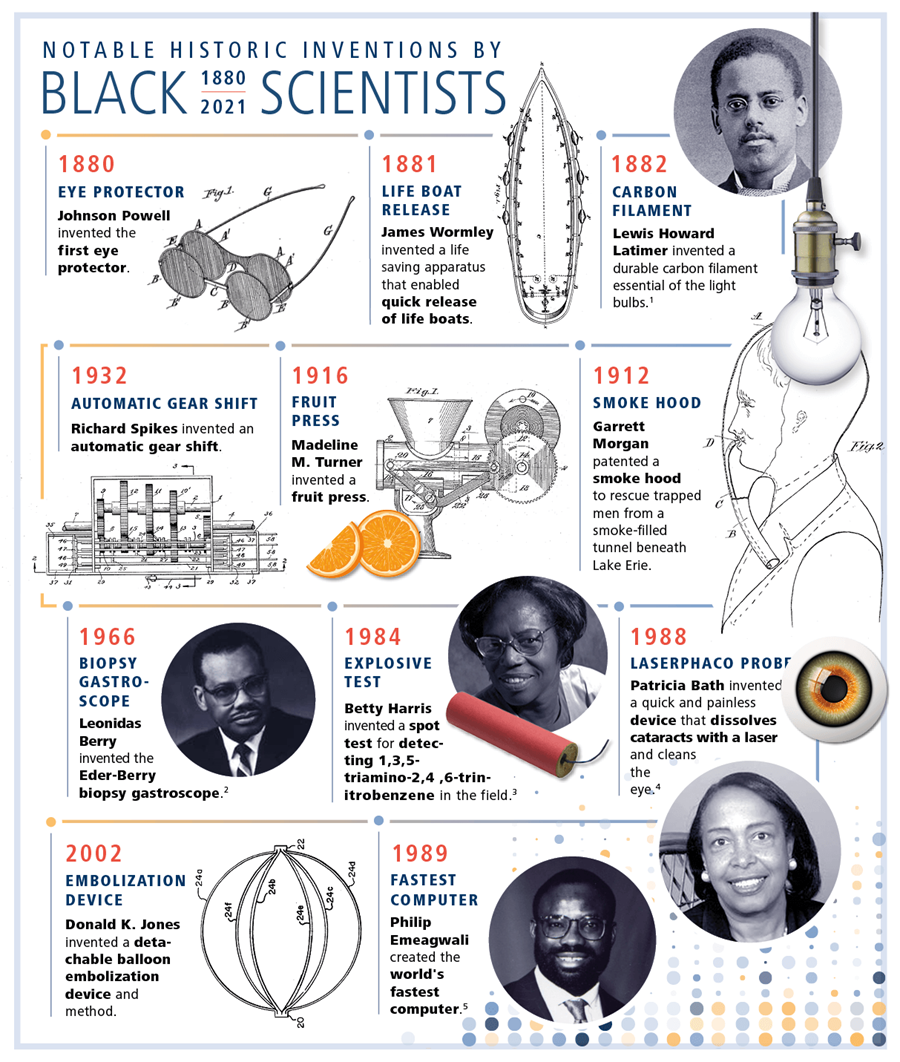
To celebrate Black History Month, we take a look back at some of the great Black scientists and innovators. From laser eye surgery to the gas mask, here are some of the seminal contributions made by these ingenious inventors.
[1] Lewis Howard Latimer – Image credit: Unknown author Unknown author, Public domain, via Wikimedia Commons
[2] Leonidas Berry - Image credit: Adundi, CC BY-SA 4.0, https://creativecommons.org/licenses/by-sa/4.0, via Wikimedia Commons
[3] Betty Harris – Image credit: https://www.blackpast.org/african-american-history/harris-betty-wright-1940/ - Fair use image
[4] Patricia Bath - Image credit: National Library of Medicine, Public domain, via Wikimedia Commons
[5] Philip Emeagwali - Image credit: SakaMese, CC BY-SA 4.0, https://creativecommons.org/licenses/by-sa/4.0, via Wikimedia Commons

1880 – Johnson Powell
Have you ever used eye protectors to protect yourself against the glare of intense light? For those working in extreme environments such as fires and furnaces, Johnson Powell’s eye protectors will have been a sight for sore eyes.

1881 – James Wormley
James Wormley invented a life-saving apparatus for boats. His contraption included a string of floats that extended from a ship’s side via a sliding rod with projecting arms. The famous hotelier was also said to be at President Abraham Lincoln’s bedside when he died.
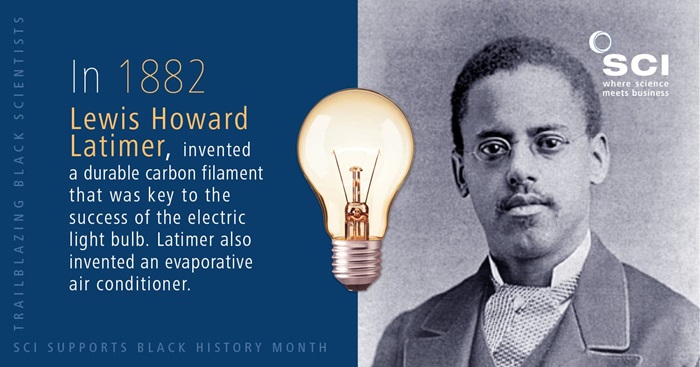
Image Credit: Unknown author, Public domain, via Wikimedia Commons
1882 – Lewis Howard Latimer
Lewis Howard Latimer is probably best known for inventing a durable carbon filament that was key to the success of the electric light bulb. Latimer also invented an evaporative air conditioner and even drafted the drawings to secure the patent for Alexander Graham Bell’s little known invention… the telephone.
>> Click here for more on Lewis Howard Latimer’s extraordinary contribution to science.

1912 – Garrett Morgan
Imagine using your own invention to save people’s lives? That’s exactly what Garrett Morgan did when he donned his patented smoke hood to rescue trapped men from a smoke-filled tunnel beneath Lake Erie. Morgan’s device later evolved into a gas mask, and he also invented a three-position traffic signal, hair straightening cream, and a self-extinguishing cigarette for good measure.

1916 – Madeline M. Turner
Madeline M. Turner’s ingenious invention was the fruit of her own frustration. Turner grew tired of squeezing oranges for her glass of juice, so she created the fruit press machine to solve the problem.

1932 – Richard Spikes
It’s safe to say Richard Spikes was a polymath. The American inventor created an automatic gear shift device for cars, a pressurised beer tap, and a horizontally swinging barber’s chair – all while working as a teacher and barber and being a capable pianist and violinist.
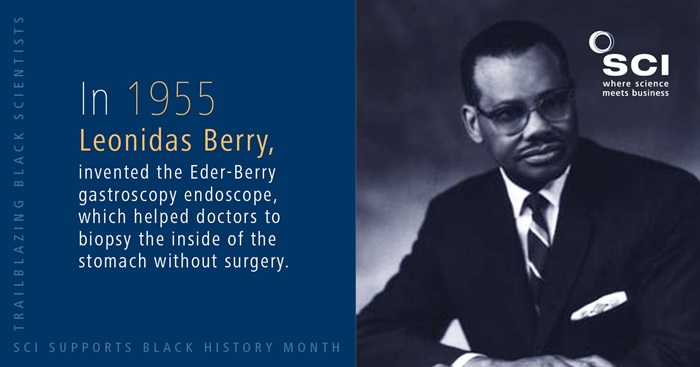
Image Credit: Adundi, CC BY-SA 4.0, via Wikimedia Commons
1966 – Leonidas Berry
This doctor and civil rights advocate invented the Eder-Berry gastroscopy endoscope in 1955, which helped doctors to biopsy the inside of the stomach without surgery. According to the US National Library of Medicine, ‘the Eder-Berry biopsy attachment made the gastroscope the first direct-vision suction instrument used for taking tissue samples during gastroscopic examination’.
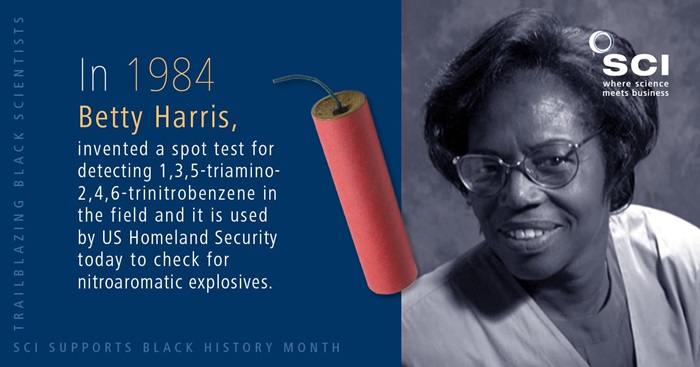
Image Credit: https://www.blackpast.org/african-american-history/harris-betty-wright-1940/ - fair use image
1984 – Betty Harris
Perhaps the most explosive discovery of all belongs to Betty Harris. Harris’ spot test for detecting 1,3,5-triamino-2,4,6-trinitrobenzene in the field is used by US Homeland Security today to check for nitroaromatic explosives. In her spare time, Harris has even found the time to work with the Girl Scouts to develop a badge based on Chemistry.
>> SCI is proud to support #BlackinChem. Take a look at some of our recent work.

Image Credit: National Library of Medicine, Public domain, via Wikimedia Commons
1988 – Patricia Bath
Patricia Bath has helped return the gift of sight to thousands of people. The US ophthalmologist invented a quick and painless device that dissolves cataracts with a laser and cleans the eye, enabling the simple insertion of a new lens. Her laserphaco probe is still in use today.
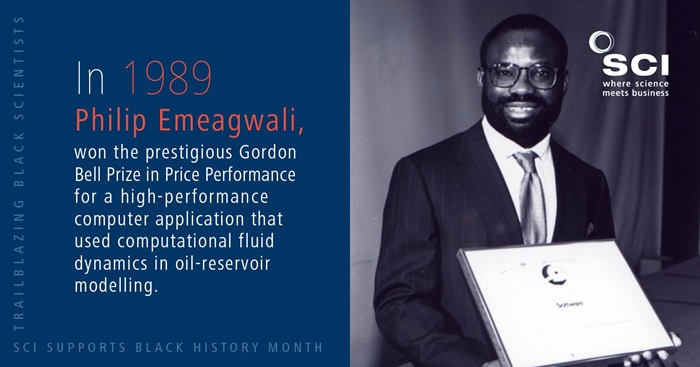
Image Credit: Philip Emeagwali - SakaMese, CC BY-SA 4.0, via Wikimedia Commons
1989 – Philip Emeagwali
Nigerian computer scientist Philip Emeagwali won the prestigious1989 Gordon Bell Prize in Price Performance for a high-performance computer application that used computational fluid dynamics in oil-reservoir modelling. In the same year, Emeagwali also claimed to perform the world’s fastest computation – 3.1 billion calculations per second – using just the power of the internet.

2002 – Donald K. Jones
Donald K Jones made a notable contribution to medicine with his invention of a detachable balloon embolisation device that reduces the size of aneurysms (bulges in blood vessels). The endovascular occlusion device is implanted into the body, whereupon its clever balloon system and adhesive materials reduce the size of aneurysms.
>> Which barriers still block the way for Black chemists? Read Claudio Lourenco’s story.
25 October 2021 |
|
|
Science & Innovation
We need to create more diverse paths into research and scientific innovation. Professor Dame Ottoline Leyser, Chief Executive of UK Research and Innovation, explains how industry clusters and a change of mindset could help.
What do you picture when someone mentions a chemist? Maybe you see someone like you working in a lab or office with your colleagues.
But what do people at the bus stop think? What would a secondary school student say? Do they see someone like them – or do they imagine an Einstein-like figure hidden away in a dark room with crazed hair and test tubes?
One of the most interesting messages from Professor Dame Ottoline Leyser’s Fuelling the Future: science, society and the research and innovation system talk on 29 September was the need to make sure science and technology are seen as viable careers for people throughout society.

Prof Dame Ottoline Leyser
You don’t need to be a genius to work in research and innovation. You don’t necessarily need to be a specialist, and you certainly don’t need to be hunched over a microscope with a jumble of figures and formulae on a board behind you. An array of different people, technical and non-technical, are needed to make the sector thrive.
The narrow pathway of talent
Part of Dame Ottoline’s job as Chief Executive of UK Research and Innovation (UKRI) is to improve access to these sectors and to make sure that great ideas aren’t lost due to daunting entry barriers.
‘It’s a huge challenge,’ she said. ‘A large part of the challenge is the narrow concept that we all have of what a researcher and innovator look like.’
Leyser spoke about the need to create diverse routes through the system rather than squeezing everyone through the same narrow path. ‘The assessment criteria we use for individuals have become narrower and narrower,’ she added. ‘Some of it, ironically, is to make the system fairer, but objectivity in creativity is a total pipe dream. You end up crushing creativity by narrowing the criteria.’
She noted that those with mixed careers – interwoven with varied experiences – are to be welcomed. ‘That’s nothing to do with compromising excellence,’ she said. ‘Real excellence comes in multiple forms.’
>> Would you like to attend more talks like this one? Check out our Events page.
Challenging times
However, Leyser also spoke of the need to level up the UK from a productivity perspective. One way to do this is through smart specialisation and industry clusters. She mentioned Lincoln as an area where this approach worked well. Lincoln is home to extensive agriculture and the multinational technology corporation Siemens. As such, it made sense to help make it a centre for agricultural robotics.

UKRI is investing heavily in research and innovation into Net Zero energy solutions.
As the largest public funder of research and innovation in the UK, UKRI has a major role to play in funding such industry clusters and intelligent innovation. It has funded more than 54,000 researchers and innovators, and UKRI grants have generated almost 900 spinouts since 2004.
These include Oxford Nanopore, a biotech company whose DNA sequencing technology is now valued at £2.5bn. It has also cast an eye on the future, including delivering more than £1bn in R&D relevant to Artificial Intelligence and in excess of £1bn towards Net Zero energy solutions.
Leyser noted that the UKRI’s goal is to embed research and innovation more broadly across society – for it to be ‘by the people and for the people, rather than the exclusive domain of the privileged few’.
It is a grand challenge, but such sentiments are certainly encouraging.
12 October 2021 |
|
|