
Agrifood
Composts are artificial mixtures in which seeds germinate, cuttings root and whole plants grow. Their key feature is reliability of composition. The first such composts were formulated by the John Innes Centre in the 1900s. Researchers needed preparations which allowed reliable growth of plants for experiments. The main ingredients were loamy soil, sand and lime plus nutrients. John Innes composts subsequently became the mainstay of horticulturists and gardeners.

Colourful flowering in artificial composts.
Variability in the loam and its weight were major disadvantages. Scientists at the University of California solved these problems by preparing mixtures of peat, sand and nutrients. Air fill porosity characteristics of ‘UC mixes’, as they became known, allow healthy seed germination, root production, growth and flowering. Lighter weight is of major significance, allowing the easy movement of plants. Arguably, simplified transport also resulted in the advent of garden centres and freer international plant trading. As a result, the garden centre industry has become a regular social feature.

A peat extraction site.
Peat, while of major importance, is now seen as the ‘achilles heel’ of these composts. Peat bogs are very significant reservoirs for carbon dioxide and major participants in the drive for reducing the impact of climate change. The compost industry strips peat from the bogs and then mixes it into specialised formulations for seed germination or plant growth. The bogs can be reclaimed and will restart the processes of CO2 absorption, but there is still a significant environmental penalty. Social and political pressures are driving peat reduction and its elimination from garden and commercially used composts. Peat substitutes must have the key properties of adequate air fill porosity, light weight and minimal or net zero carbon demand.
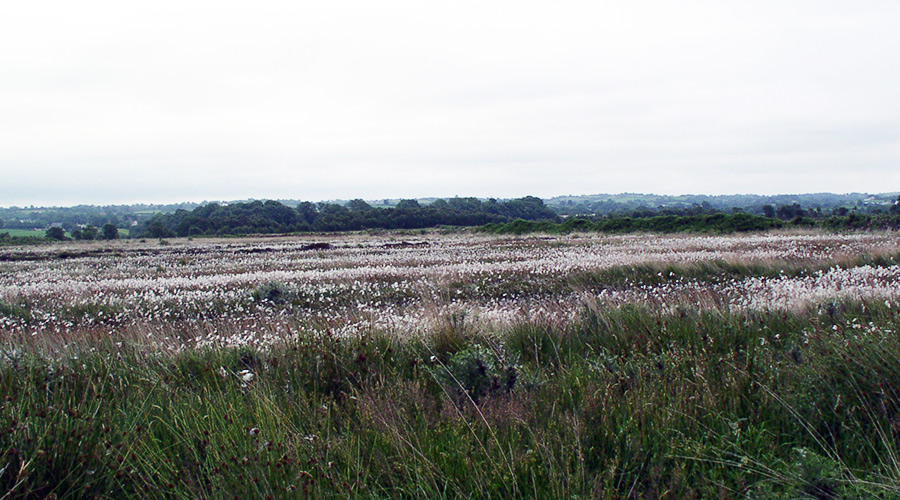
A renovated peat extraction site.
One suggestion is using coir – waste arising from coconut harvesting. Like peat, this is a natural, biodegradable product. When shredded it forms a useful peat substitute, an alternative is well composted bark and fine wood chippings, which are mixed with sand. Both are valuable composts for growing ornamental plants and germinating their seedlings. Some manufacturers are also adding loamy soil into these formulae. Problems continue, however, with finding peat-free formulae for use in commercial transplant propagation. Germinating vegetable seedlings for large scale crops requires absolute regularity and reliability. Uniform, vigorous seedlings result in mature high-quality crops suitable for once over harvesting and scheduling which meets supermarkets’ specifications.
Written by Professor Geoff Dixon, author of Garden practices and their science, published by Routledge 2019.
28 November 2022 |
|


 |
|

Careers
In the second part of our chat with Bright SCIdea finalist Team Eolic Wall, we found out how they prepared for their presentation and judges’ questions, and what’s next for their innovative wind turbine technology.
The road from Eureka moment to finished product is paved with peril. Team Eolic Wall’s idea for small, modular wind turbines that use magnetic levitation to harness more power than existing turbines could bring wind power generation into our very homes. But bringing a groundbreaking product to market is not just about mastering the science. It must make business sense too.
As with the other Bright SCIdea hopefuls, Team Eolic Wall received free training from SCI in the form of online tutorials from experienced professionals including modules on structuring a business, financial modelling, branding, and marketing.

After completing the training, Eolic Wall rose to meet the challenge. The team qualified for the Bright SCIdea final and, with it, the pivotal presentation in front of a live audience and panel of expert judges.
Many of us take it as a given that we speak to people at work in our native tongue. The nuances of communication – the cultural subtleties and oddities of the English language – aren’t a concern. But Team Eolic Wall had to present in their second language.
Pitch perfect?
‘This was not our first international presentation, but it was the first one in a foreign language,’ said Alfredo Calle, Eolic Wall founder, ‘so that's always a little bit intimidating until one gets used to it.’
The key to them nailing the pitch was in the spade-work. Calle and his colleagues rehearsed the speech until they knew it by heart. ‘It’s all about training and preparation,’ he said. ‘The more you rehearse, the more confident you feel when the presentation moment comes.’
Of course, the presentation is predictable but the judges’ questions are less so. Having undergone the rigours of competition, Calle recommends that this year’s entrants prepare by trying to predict the types of questions they will be asked. A cold rehearsal could help with the potentially stunning situation of someone throwing questions at you from strange angles.
That team Eolic Wall presented its technology online made theirs even trickier still, especially given a technical hitch at the beginning. But they had polished the presentation to a smoothness that offset such difficulties and came away as joint winners of the Audience Award.
The only lingering regret for them was that Covid prevented them from coming to London. ‘We wish we could have made it to the final,’ he said. ‘Facing the judges and audience live would have been a tremendously valuable and enriching experience.’
A wind energy democracy
Since the Bright SCIdea final, the Eolic Wall is being built brick by brick. The team has received three grants in recent months including one from ProCiencia, the largest innovation agency of the Peruvian government.

Eolic Wall's wall-mounted wind turbine is designed to power homes and offices in situ.
However, perhaps the most exciting development is the technology itself. ‘We have accomplished a peripherally supported wind turbine that works with magnetic levitation,’ Calle said. ‘That's a huge milestone that makes us believe we are building something big.’
Calle hopes for more investment to develop the technology further. At heart, he believes the Eolic Wall will give regular people the chance to generate affordable wind energy from home.
‘We are working out a solution to democratise wind energy for the sake of this blue rock we call home.’
>> Find out how Team Eolic Wall’s innovative technology in part 1 of this blog.
01 November 2022 |
|
|
Careers
Imagine owning a small wind turbine that generates all of your home’s energy needs. As the clock counts down on entries for for the 2023 Bright SCIdea Challenge, we caught up with Team Eolic Wall, the Audience Winner for the 2022 competition.
Eolic Wall was always a nice fit for Bright SCIdea. The team spotted a problem in our renewable energy mix and came up with a scientific business idea to solve it. They saw that wind energy is generated for the public, but it isn’t generated by the public. This stands in bright contrast to solar power generation.
‘Today, 40% of all installed capacity in solar energy is based on solar panels installed on the rooftops of home and corporate buildings,’ said Alfredo Calle, founder of Eolic Wall. ‘The remaining 60% correspond to solar farms.’

Eolic Wall's wall-mounted wind turbine is designed to power homes and offices in situ.
The wind industry is different. ‘Only 1% of the installed capacity comes from households and businesses,’ he added. ‘That is, 99% of all installed capacity in the world comes from wind farms. That sort of concentration is a problem that hampers the energy transition.’
Calle believes this disparity hampers the move from fossil fuel dependency to clean, renewable energy. For many, micro-generation is key. We need to put power – renewable power – in the hands of the people. His idea is to make wind energy available in the home, just as solar exists on roofs everywhere.
The scale of this task is daunting. It turns out there’s a reason why we don’t all have wind turbines bolted onto our homes. The problem, Calle argues, is that a windmill must be large to be efficient.
He believes the Eolic Wall could change that – that this wall-mounted wind turbine is efficient enough to power our homes and offices.
‘We have created a technology that not only doubles wind speed to harvest more power from the same wind resources, but also has a wind turbine that works with magnetic levitation to almost eliminate any friction.’
From applicant to finalist
So, how did a team based out of the National University of Engineering in Peru and Universidade Estadual Paulista in Brazil end up competing for the £5,000 first prize in the Bright SCIdea final?
Chance. Fortune. Happenstance. Calle and his colleagues came upon Bright SCIdea through a social media post that immediately captured their attention.

‘We thought that the Eolic Wall was ideal for Bright SCIdea because of the huge positive impact that this technology could have,’ he said, ‘and also because it perfectly fit into Bright SCIdea’s thesis of supporting ideas in the intersection of business, innovation and science.’
Applying was simple, although the business plan submission was intimidating at first. However, like all BrightSCIdea applicants they received coaching, and their brainchild found form.
‘The key driver to overcome that challenge was not to miss any training sessions and tutorials,’ Calle said. ‘The good news is that after going through the whole process you feel that everything was worthwhile. No pain, no gain.’
Check out fellow 2022 finalist Klara Hatinova from Team Happy BioPatch in conversation with the Periodic Fable podcast.
20 October 2022 |
|
|
Sustainability & Environment
From government grants to analysing your own carbon footprint, energy-efficient measures could reduce the environmental impact of your SME and save you money. Retail Merchant Services explained some of the changes you could make.
Which measures could Small and Medium-sized Enterprises (SMEs), especially energy-intensive businesses, take right now to reduce their carbon footprints?
- Look at the sustainability of the products you are creating. Can you use renewable materials? Or, if you get materials from another supplier, can you check their eco-credentials, and swap if they’re not doing what they can to go greener? Can you streamline the process so that you reduce waste wherever possible?
- Create a recycling policy. If you can’t reduce the amount of waste that you’re generating, you should aim to make sure that it can be disposed of sustainably. You could look at your shipping supply chain. If your business sends out physical items, make sure to check the packaging you’re using – can it be recycled? Are you using too much?
- Can you switch to a renewable energy supplier, or generate your own renewable energy? While it’s not right for everyone, it can also be worth considering if there are any employees in your business who can work from home on some days. This removes the carbon footprint of their journey to work.
The Smart Export Guarantee Scheme pays some SMEs for producing their own renewable heat and power. Not only will this allow you to generate your own electricity, which can be useful in the current climate of fluctuating costs, but you can earn money from this too.
The Clean Heat Grant is a government-backed grant that rewards companies who use green heating technologies like heat pumps, and the Green Gas Support Scheme is intended to increase the amount of green gas in the National Grid.
The amount that SMEs can benefit from these schemes may depend on the amount of money that they have available to buy renewable technology, or the space to put items like heat pumps. If this is likely to be a barrier, then they may find smaller local schemes more useful.
Do you have any tips for companies calculating their carbon footprints? What are the potential benefits of this?
Take your time – understanding your carbon footprint isn’t an overnight process. You may find it beneficial to use an online carbon footprint calculator, or contact a sustainability expert to help.
You’ll need to consider three types of emissions:
- Direct emissions – the emissions that your company is directly responsible for, such as fuel for company cars.
- Energy indirect emissions – emissions from utilities that you don’t directly control, such as electricity and gas
- Other indirect emissions – everything else that is connected to your business activities, such as employee travel, shipping, and the whole supply chain.
Understanding your carbon footprint is important to help you know where you can improve and cut down on your emissions. Not only does this help the planet, but it’s also a tangible demonstration that you care about the environment, which can be attractive to sustainably-minded customers.
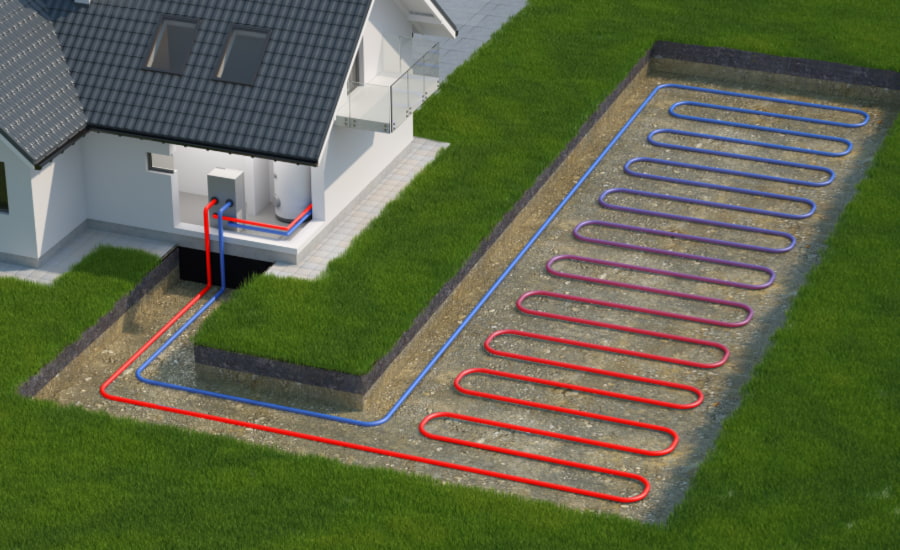
The initial outlay for heat pumps and other technologies are steep, but this investment may pay off in the longer term.
What are the benefits of aggressively pursuing net zero and what are the drawbacks?
Of course, the primary benefit of pursuing net zero is that it helps the planet. Business waste has a huge impact on the environment and, as a result, any changes that can be made in this sector will have a big impact too. However, going net zero can also potentially make your business more profitable too.
Your profits may go up for several reasons. First, it’s more appealing to customers. As part of going net zero, you’re likely to adjust your products to be more eco-friendly. And with reports showing that 63% of millennials are willing to pay more for sustainable products, this could make your business more appealing.
Second, it could save you money. You may find that examining your processes and policies to make them greener will allow you to benefit from specific tax cuts, or simply improve the efficiency of your company. In time, this could save you from wasting money as well as energy.
Third, it could boost your competitiveness. Small companies often find they just can’t match big businesses for price, so it’s important to find a selling point that allows you to remain competitive. As mentioned before, customers are increasingly looking for more ethical products, so being able to say that you’re net zero could help you beat the competition.
Finally, it could prepare you for new policies. Governments around the world are under pressure to go greener, and so they’ll likely transfer this pressure to businesses. Going green now means you’ll be ahead of the curve and able to make these changes at your own pace, rather than having to rush and pay to make them all at once.
While these are all amazing benefits, one of the biggest challenges that SMEs face is the cost of going net zero. It’s not cheap in the current economic climate, especially if you’ve got big changes to make. According to research, 40% of SMEs said that high cost and lack of budget were the biggest net zero blockers.
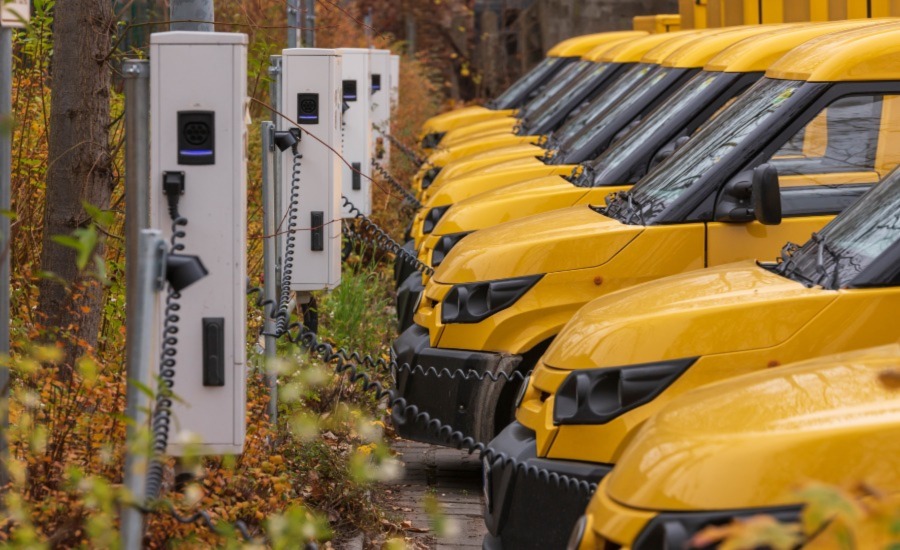
Electric vehicles require less maintenance – and you don’t have to pay road tax.
What are the benefits of moving your vehicles to electric right now, and what are the drawbacks?
There’s no denying that electric vehicles are significantly better for the environment than conventional cars. For companies looking for a relatively straightforward way to go greener, electric cars can be a great choice.
As well as swerving rising fuel prices, EV owners don’t currently pay vehicle tax in the UK. Additionally, they have fewer moving parts, and so require less maintenance. All of these factors mean that while EVs can be an expensive initial investment, they generally cost less to run in the long term.
With the UK government banning new petrol and diesel vehicles from 2030, investing in electric vehicles now means that SMEs can get ahead of the rush that is likely to come as we get close to the deadline. There is already a year’s wait time for some vehicles, so ordering your fleet now could mean that you avoid an even longer queue further down the line.
Of course, many SMEs feel unable to commit to electric vehicles right now due to the cost of living – they’re an expensive purchase. If this is the case, you could consider changing one vehicle at a time, and looking to see if you’re eligible for any local grants that can support you with the cost of this.
How much have inflated energy costs undermined the push for net zero?
Unfortunately, rising energy costs have meant that small businesses are feeling the pinch, and might struggle to make new eco-friendly changes, as they are often costly. For many, their focus is simply remaining profitable.
However, what is also clear is that for those that can afford it, examining your business for changes that will allow you to move towards net zero can also be a way of saving money in the long run.
If you’re able to produce your own renewable energy (for example, getting solar panels on the offices), you may be able to mitigate some of the effects of rising energy costs, as you won’t be reliant on the National Grid.
Finally, apart from energy efficiency schemes, how could the government help reduce the carbon footprint of SMEs?
As well as energy schemes, the government can help by providing information and resources on sustainable practices. By sharing best practices widely with businesses, and offering them a place to go to get support, the government can help them develop more environmentally friendly operations.
Additionally, they can help by creating incentives for businesses to go green. By offering tax breaks or other financial incentives, the government can encourage businesses to adopt sustainable practices.
Written by Retail Merchant Services. The SME Environmental Impact Guide can be read in full.
Edited by Eoin Redahan.
13 October 2022 |
|
|
Agrifood
As we speak, apples and pears are ripening on the trees. But how do you grow apple and pear trees from scratch and keep them alive? Our resident gardening expert, Professor Geoff Dixon, investigates.
Autumn is the ‘season of mists and mellow fruitfulness’, as John Keats said in his Ode to Autumn. It is a time for harvesting temperate tree fruits, especially apples and pears in gardens and orchards.
This fruit is distinctive and delicious. The ‘Sunset’ apple cultivar, derived from the Cox’s Orange Pippin, produces red and gold striped fruit and sweet tasting flesh, while the French pear cultivar doyenne du comice has the most superb taste if caught at peak ripeness.
 <
<
The sunset apple.
Both apples and pears ripen after harvesting, emitting ethylene and passing through a climacteric, or critical biological stage. When respiration reaches a peak, the fruits’ flavour is most satisfying.
Both apples and pears are best planted in late autumn or during winter when the trees are dormant, either as container-grown or preferably bare root trees. Place each tree in a hole that is large enough for the entire root system, ensuring that the graft union sits well above the soil level.
Each tree consists of two parts: the rootstock, selected originally from wild species, and the scion, which is the fruiting cultivar. Apple cultivars mostly dwarf Malling no. 9, and pear scions are grafted onto quince rootstocks. A stake should be driven into the hole before putting the tree in place.
Pour ample water into the hole, keeping the roots wet. Do so again once soil is replaced and firmed round the tree. As the tree establishes and produces leaves and flowers, water well and regularly, especially during dry periods.
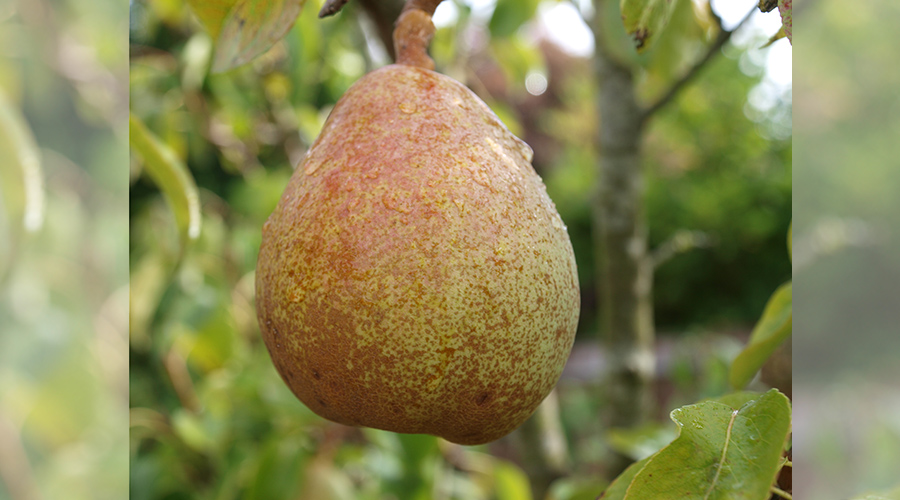
French pear cultivar doyenne du comice
Feed with fertilisers that contain large amounts of potash and phosphate but minimal nitrogen. This encourages vigorous root growth. Sprinkling compost or farmyard manure around the tree helps retain soil moisture.
Climate change is having significant deleterious impacts on all members of the Rosaceae family, including apples and pears. Australian studies indicate that temperatures are reaching higher than the evolutionary maximum for these species.
This stresses the plants. It adversely affects their health and performance and reduces their ability to store carbon and produce fruit crops.

The pear scab Venturia pirina
Levels of pest and disease infections are increasing. In particular, sap-sucking woolly aphids (Eriosoma lanigerum) have increased from minor to major apple pests in the last decade. Pear scab Venturia pirina has become a major cause of defoliation.
Chemical control options for both are limited, but regular drenching sprays with seaweed extracts may reduce their impact. Seaweed extracts additionally provide some foliar absorbed nutrients and increase the visual quality of fruit.
Professor Geoff Dixon is author of Garden practices and their science, published by Routledge 2019.
05 October 2022 |
|
|
Careers
In his winning essay in SCI Scotland’s Postgraduate Researcher competition, Alexander Triccas, postgraduate chemistry researcher at the University of Edinburgh, explains how the tiny shells produced by marine algae protect our natural environment.
Each year, SCI’s Scotland Regional Group runs the Scotland Postgraduate Researcher Competition to celebrate the work of research students working in scientific research in Scottish universities.
This year, four students produced outstanding essays. In the fourth of this year’s winning essays, Alexander Triccas explained how coccoliths provide a valuable carbon store and could play a key role in keeping our bones healthy.
Why tiny shells produced by marine algae are important for both global carbon stores and repairing bones
Although humans can engineer complex and eye-catching structures that help us navigate through our daily lives, they are nowhere close to the design and functionality of natural materials.
These mineral structures are specifically grown to provide support, protection, or food for many organisms. Humans would not exist without them. Indeed, our bones and teeth are made of calcium phosphate. But when grown in a lab, calcium phosphate forms as simple rectangular crystals, which is vastly different to how our bones and teeth look.
This is because our bodies use organic molecules to precisely control how minerals grow, producing materials that can fulfil very specific tasks. Biominerals can even be produced inside single cells. Coral reefs are held together by calcium carbonate minerals made by marine invertebrates. Elsewhere in the ocean, carbonate shells produced by small algae cells are buried on the ocean floor, over time forming the chalk rocks that make up coastal landmarks such as the White Cliffs of Dover.

Advances in microscopy are shedding new light on the composition of coccoliths.
This process is incredibly important to the environment. It takes carbon dissolved in seawater, turns it into solid material, then stores it at the bottom of the ocean. It is concerning then that we don’t know how ocean acidification and rising CO2 levels will affect coccoliths, the name given to these carbonate shells.
>> SCI’s Scotland Group connects scientists working in industry and academia throughout Scotland. Join today!
We’re still unsure how coccoliths are produced, particularly how organic molecules are used to give them their unique shape. Proteins and sugars decide where and when the first carbonate mineral forms; then the growth of the coccolith is controlled by sugar molecules.
But how exactly do these organic molecules control the mineral that is produced? We struggle to answer this question because we don’t know how the composition of the coccolith changes as the structure grows.
Composition of the coccolith
Our research focuses on imaging coccoliths in an attempt to observe these changes. We used a technique called X-ray ptychography to map coccolith composition over the course of its formation. This revealed that coccoliths are not entirely made of calcium carbonate, instead having a hybrid structure containing mineral and organic molecules. But this isn’t all.
We revealed that the composition of the coccolith changes during its growth. We think this could represent a transition from a disordered liquid-like state to an ordered crystalline state. While this is common in other biomineral-produced organisms like corals, no evidence of this transition has been reported in coccolith formation before.
>> Read Rebecca Stevens’ winning essay on PROTAC synthesis.
This is incredibly important because it tells us how the cell is controlling the first calcium carbonate mineral that forms. The transition enables the cell to control exactly how it wants the mineral to form, meaning coccoliths can be made faster.
It might also lessen the impact that more acidic seawater has on mineral formation. This could mean coccoliths will not be affected by ocean acidification as much as expected, which is good for the planet’s long-term carbon stores.
However, this is only a prediction. Improvements to the microscopes used to analyse coccoliths will help us know if the transition occurs. Electron and X-ray microscopes are extremely useful in industry – from drug research and medical imaging, to data storage and materials analysis – but their use in these fields is still relatively novel.

Coccolith analysis could give us a better idea of how bones are produced.
Most advancements in instrumental procedures are done in academic research. Our work, therefore, helps us understand the benefits and limits microscopes may have, making them more suitable for industrial use.
Bone research also relies heavily on these microscopes. Our findings could be important in understanding how bones are produced, benefiting not only pharmaceutical and medical industries, but also improving human healthcare by providing better treatments to patients.
13 September 2022 |
|
|
Sustainability & Environment
Have we underestimated the eco-anxiety middle-aged and older people feel? According to a recent survey, younger folks aren’t the only ones frowning at the horizon. Eoin Redahan writes.
When you think of a middle-aged person suffering from exo-anxiety, what do you imagine? Is it a grey-haired woman gazing from a mountain peak with a single, heroic tear staining her cheek? Is it an auld fella rending his garments and shaking his fist at the sun?
I mean, possibly, but the reality is probably less dramatic. It could be the Pakistani householder who wonders if her family home will be swept away in the next flood. It might be the 39-year-old Australian who wonders if his country will be habitable when his young child grows up.
It might be the Maldivian who wonders if his homeland will go the way of Atlantis within 20 years. It was me when someone decided it would be a good idea to have a barbecue in the fields beside my house in the middle of the heatwave – when the grass was as dry as straw and wildfires scorched in south London.

Athanasius Kircher's map of Atlantis, placing it in the middle of the Atlantic Ocean, from Mundus Subterraneus, 1669. Will people pore over maps of the Maldives in the same way?
The presumption by many is that it’s only the young who feel anxious about climate change, for it is they who will inherit the mess. However, according to recent ONS statistics, the middle-aged and the old are almost as worry-weary as young people.
Having analysed a recent ONS Opinions and Lifestyle Survey, straw specialist firm Drinking Straw filtered some of the stats. They reveal that 62% of UK people over the age of 16 worry that rising temperatures will directly affect them by 2030. Of these, 70% of 16-29 year olds were worried about the heat, but 59% of 50-69 year olds were also worried, as were 57% of those aged 70 and over.
In other areas, the differences were even less stark. When it came to anxiety over extreme weather events, 48% of all adults were worried – only slightly less than the 49% of 16 to 29 year olds who did so.
>> How can I make my garden more sustainable? Professor Geoff Dixon shows us how.
Similarly, regarding water supply shortages, 40% of all adults are concerned about them overall, compared to 43% of those aged 16 to 29. Admittedly, young people are more worried than older adults about rising sea levels (45% vs. 31%), but the differences are noticeably narrow in most metrics.
Surprisingly, it turns out the percentage of those who don’t care at all about the merciless heat, parched land, rising sea levels, and freak weather events is fairly consistent across all segments, with the 12% of 16-29 year olds not giving a fig similar to the 14% of indifferent adults.

ONS figures reveal that most people have made climate-friendly changes to their day-to-day lives, whether they grew up in the age of renewables or the age of coal.
Action stations?
Broadly speaking, UK adults are becoming more eco-conscious, if data from the ONS’ Climate change insights, families and households, UK: August 2022 survey are to be believed. The survey has found that 77% of adults have made some, or a lot of changes, to their lifestyles to tackle climate change.
When the remaining 23% were asked why they made no change to their lifestyles, the most common reason given was: the belief that large polluters should make changes before individuals, followed closely by those who felt that individual change wouldn’t make much of a difference.

It’s clear to most of us that the government must help drive change, including on our roads. Despite the UK’s lagging electric vehicle infrastructure, the study revealed that the number of licensed zero emission vehicles, ultra-low emission vehicles, and plug-in vehicles increased by 71% or more last year.
If people knew there were sufficient charging points dotted around their areas – and if they were further incentivised to give up their gas-guzzling vehicles – those numbers would surely increase.
As bleak as the situation is, it is heartening to see our attitudes changing. Now, if you’ll excuse me, I’ve just read a climate-related story that brought a tear to my eye. If anyone wants me, I’ll be weeping in a dark room (passive-cooled, mercifully).
05 September 2022 |
|
|
Careers
In the latest of our Careers for Chemistry Postdocs series, Dr Chris Unsworth, Head of Stakeholder Engagement and Hydrogen at Ofgem, talks about rising to the net zero challenge, creating a productive, inclusive working environment, and transferable PhD skills.
Tell us about your career path to date.
Currently, I’m the Head of Stakeholder Engagement and Hydrogen at Ofgem. Prior to that, I was Private Secretary to the Co-Directors of the Energy Systems Management and Security (ESMS) Directorate at the energy regulator Ofgem. I’ve also worked as Senior Manager in the GB Wholesale Markets team and as a Research & Insight Manager within Ofgem’s Consumer and Behavioural Insights team.

Pictured above: Dr Chris Unsworth
What is a typical day like for you at Ofgem?
I’d say there isn’t a typical day in my job, especially given recent events. Our work needed to shift dramatically to make sure gas and electricity kept flowing at the start of the pandemic and during the sharp increase in wholesale prices for gas.
I wore many hats in my role as Private Secretary. I often acted in a Chief of Staff role for the directorate, getting a sense of the mood within our part of the organisation and advising on how to overcome internal issues as they arise. I also often acted as advisor to the Co-Directors of ESMS as they explored which tools can be used to deliver net zero.
Which aspects of your job do you enjoy the most?
I enjoy being able to work on the net zero challenge in a really meaningful way. I also enjoy being surrounded by colleagues who feel the purpose and weight of responsibility in making progress towards a net zero future. It keeps you accountable, but it’s also really inspiring.
What is the most challenging part of your job?
The reasons I gave above for really enjoying my job can also be described as the most challenging! Delivering a net zero future represents the largest transformation that has ever needed to happen at an industrial level.
Also, because folks are so passionate about their work, it’s really important to make spaces where staff can be transparent and open on their views of the way forward. It’s more important, however, for me to act in a diplomatic manner to make sure we get aligned on a clear and singular route to solving problems.
>> Get involved in the SCI Young Chemists’ Panel.
How do you use the skills you obtained during your degree in your job?
I don’t use the skills I practised in the lab directly in my role. However, there are lots of transferable skills that I picked up from my MChem and PhD in Chemistry. Being able to interrogate evidence and critically assess it is really important in knowing which trends are valid and, therefore, which policy options are the best to investigate further.
Being able to bring data and information from lots of disparate sources and use them to create a clear view of what’s going on is another skill that I practise often. I also do a lot of thinking around systems and flows and the various interactions that go on underneath the surface. Visualising systems and interactions is definitely a helpful skill that I first practised in my degrees.
>> How do you go from a Chemistry degree to a business development specialism? Mark Dodsworth told us his story.
Which other skills are required in the work you do?
My current role is very people oriented and so I need to practise a high level of emotional intelligence. I came out as a gay man while doing my degrees at the University of York and I had specific role models there who helped me explore who I was.
I think my experiences during my degrees really helped grow my capacity for empathy and understanding in others. I’ve been afforded the opportunity to work on a huge number of Diversity & Inclusion initiatives as a result of being open and out at work. I’m also very lucky to work in a space where I feel comfortable to do so.
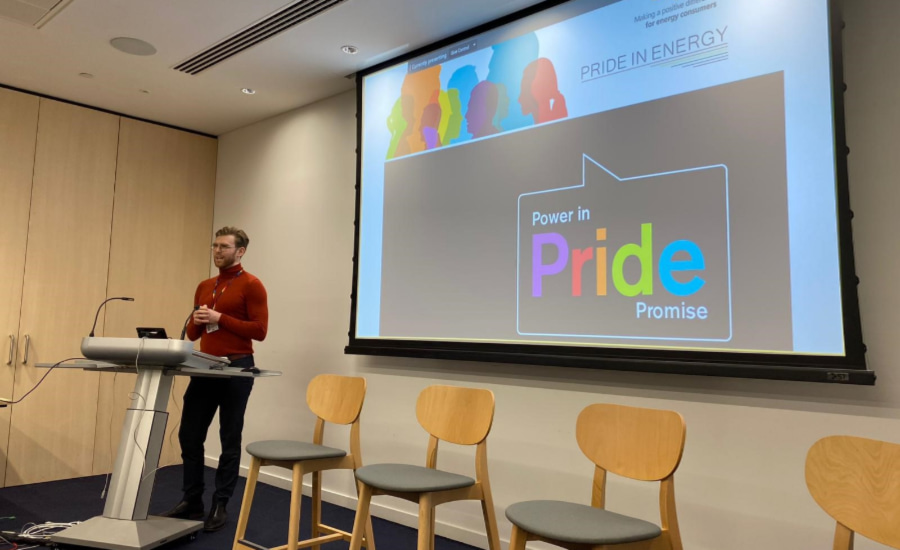
Pictured above: Dr Chris Unsworth
Is there any advice you would give to others interested in pursuing a similar career path?
If you feel a sense of purpose in something you’re doing, then go in that direction. You will always enjoy your work if you understand why you are doing that work.
This may involve you taking a few left turns as you move between different things, but there’s no need to worry about that so much if there’s a clear and consistent theme and purpose that ties it all together.
31 August 2022 |
|
|
Agrifood
Which species can you plant to increase the nutrients in your soil and boost biodiversity, and which pathogen tackles some of those pesky weeds? Our resident gardening expert, Professor Geoff Dixon, tells us more.
The term ‘sustainability’ for gardening means replacing what you take out of the soil and supporting localised biodiversity. Harvested crops, for example, take out nutrients and water from the soil. Replacements should be supplied that aid biodiversity and have minimal impact, or zero impact, on climate change.
Seaweed (Ascophyllum) has been recognised as a valuable fertiliser source in British coastal areas for centuries. Now, proprietary seaweed extracts are gaining popularity either when applied directly as liquid feeds or sprays, or when added into composts.
Classed as biostimulants, seaweed extracts contain several micro-nutrients and a range of valuable plant stimulatory growth regulators. They encourage pest and disease tolerance, increase frost tolerance, stimulate germination, increase robust growth, and add polish to fruit such as apples and pears.
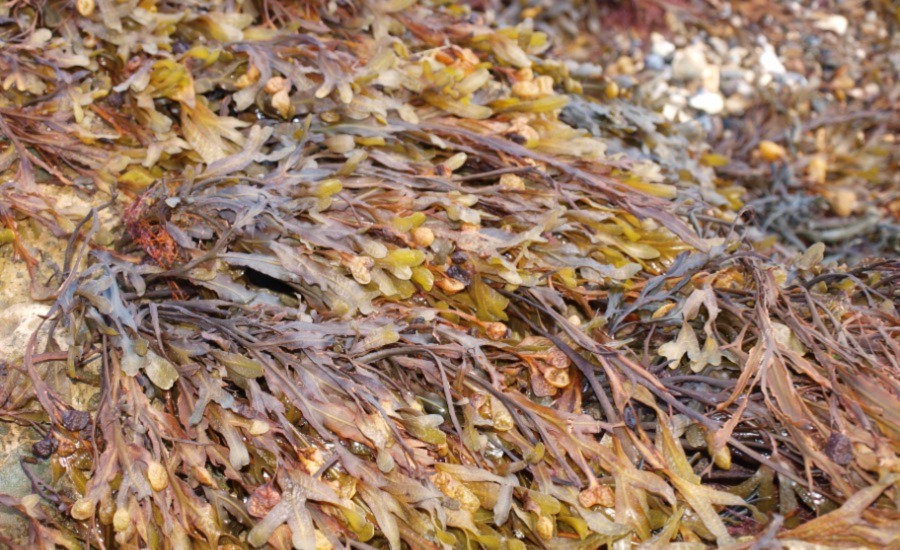
Seaweed bolsters some of the nutrients lost through gardening. Image from Geoff Dixon.
Benefits of borage
Some plants are very effective supporters of biodiversity. Borage (Borago officinalis), known also as starflower or bugloss, is a robust annual plant of Mediterranean origin with pollinator-attractive blue flowers.
It is very drought resistant and suitable for dry gardens. Although an annual, it is self-seeding and could spread widely. It is very attractive to bees as it produces copious light – and delicately flavoured honey.
Its flowers and foliage are edible with a cucumber-like flavour, making it suitable in salads and as garnishes, while in Germany it is served as grűne soße (green sauce). When used as a companion plant for crops such as legumes or brassicas, it will also help to suppress weeds.

Borage is good for bee and belly. Image from Geoff Dixon.
Weeding out the problem
Weeds are a continuous problem for gardeners and their prevalence varies with the seasons. Groundsel (Senecio vulgaris), also known as ‘old man in the spring’, persists whatever the weather.
It is ephemeral but can seed and regrow several times per year. As a result, once established, it is difficult to control without very diligent hand weeding and hoeing out young seedlings before the flowers form.
There is, however, a form of biological control that can aid the gardener. Groundsel is susceptible to the fungal rust pathogen (Puccinia lagenophorae). This pathogen arrived in Great Britain from Australia in the early 1960s. Since then, it has become well established and outbreaks on groundsel start to become obvious in mid- to late-summer, especially in warm dry periods.

A fungal pathogen can kill groundsel, a weed that comes through several times a year. Image from Geoff Dixon.
Severe infections weaken, and eventually kill, groundsel plants. Gardeners should take advantage of the infection and remove the diseased weeds before any seeds are produced.
>> How else has climate change changed the way our gardens grow, and what can be done to alleviate its effects? Geoff Dixon investigates.
Professor Geoff Dixon is author of Garden practices and their science, published by Routledge 2019.
Written by Professor Geoff Dixon. You can find more of his work here.
15 August 2022 |
|
|
Science & Innovation
A range of greenhouse gas removal technologies may be necessary if we’re to reach Net Zero by 2050. In the second of our two-part geoengineering feature, Eoin Redahan looks to the sea, the sun, and mineral weathering, and at the ethical concerns such technologies raise. Missed Part One? Find it here.

‘Water, water, everywhere, nor any drop to drink.’
These famous words from Samuel Taylor Coleridge’s Rime of the Ancient Mariner aren’t the only famous part of his epic poem. The term albatross around one’s neck comes from it too.
After shooting a friendly albatross at sea, the poem’s narrator was forced by the ship’s crew to wear the dead creature around his neck – and grievous luck was to follow. Well, our blue planet has an albatross around its neck in the form of climate change.
Perhaps the solution to it lies all around us – water, water, everywhere…
An ocean of potential
In theory, we can use our oceans to pull CO2 from the air on an enormous scale. All it may take is clever intervention – potentially ruinous, albatross-shooting intervention.
Nevertheless, the World Economic Forum lays out the tantalising potential. ‘Ocean-based CO2 removal can help us achieve “net negative emissions” as the seas hold 50 times more carbon than the atmosphere,’ it says.
‘The ocean [is] a sink for nearly one third of anthropogenic carbon emissions and more than 90% of the resulting heat… If we are going to manage atmospheric CO2 levels to our advantage, we will need to leverage the ocean’s existing ability to govern the global carbon cycle.’
Frontier has targeted the development of scalable sources of alkalinity. The reasoning behind it is that with CO2 being an acidic molecule, rising CO2 concentrations could be neutralised through alkalinity. It has mentioned using mine tailings to remove up to 0.5 gigatonnes of CO2 from the air each year; but the major caveat here is that it needs to be done safely.
Planetary Technologies has ventured into this space armed, essentially, with a bicarbonate of baking soda that could draw in CO2 and sequester it for millenia.
The company explains its process: ‘We start by carefully extracting key parts of the mine tailings including recovering battery metals (like nickel and cobalt) and silica (sand) and then take the remaining purified metal salt solution into a special electrolyser. There, using clean, renewable electricity, the salt and water are split to make hydrogen (a clean, emissions-free fuel), and a pure alkaline hydroxide.
‘It’s from this point that we transport the bulk alkaline materials to our ocean outfalls site where the alkalinity is introduced to the surface ocean that then draws in CO2, sequestering it as already abundant bicarbonate and carbonate ions in seawater.’
So, by decreasing the acidity of the ocean, it would have a greater capacity to absorb CO2 from the air. The key, however, is to reduce this to a viable price point.
>> Want to read about iron fertilisation in our oceans? Rhiannon Garth Jones took a closer look here.
Mineral weathering, methane capture, and more
Mineral weathering is another contender in the CO2 removal mix. One technology that recently received $2.4m in funding is Seattle-based Lithos’ enhanced weathering process – a mineral weathering process that could capture CO2 at a gigatonne scale. According to Frontier, Lithos spreads basalt on croplands to increase dissolved organic carbon, before eventually being stored as ocean bicarbonate. The idea is to maximise CO2 removal while bolstering crop growth.
Closer to home, SAC Consulting in Edinburgh will receive £2.9m to capture the methane produced by cattle and cut emissions from the livestock farming sector; Synthetic Biology in San Francisco has received an R&D grant to synthesise a polymer within algae that is capable of sequestering atmospheric CO2 at a large scale; and Charm Industrial is converting plants into a carbon-rich liquid that is pumped underground.
To do the latter, Charm grows cellulosic biomass that captures CO2 from the atmosphere. It is then harvested, ground, and heated, before being turned into a bio-oil that is pumped underground.
Even the concrete beneath our feet could be used as a carbon sink. CarbonCure is injecting CO2 into its concrete mixes, which it says is not only comparable in cost to traditional concrete, but stronger.
And then, we have solar engineering – arguably the first technology that comes into many of our minds when we think of carbon removal. All sorts of geoengineering technologies exist in this sphere including cirrus cloud thinning, stratospheric aerosol scattering, and marine cloud brightening.
Ethical issues?
Interestingly, Harvard’s Solar Geoengineering Research Programme referred to geoengineering as ‘a set of emerging technologies that could manipulate the environment and partially offset some of the impacts of climate change’.
Therein lies the problem for many. What are the consequences of ‘manipulating the environment’, especially if these technologies fall into unscrupulous hands?
In her excellent blog for SCI on geoengineering, Rhiannon Garth-Jones referred to the Haida Corporation Salmon trial. In this trial, 120 tonnes of iron compound were deposited in the migration routes of pink and sockeye salmon in the Pacific Ocean, which resulted in a several-month-long phytoplankton bloom.
It was seen by many as a success. The phytoplankton fed fish and increased biodiversity and the iron sequestered carbon; but Environment Canada believed the corporation violated national environmental laws by depositing iron without a permit.
History teaches us that profit vs. planet tussles don’t always go the way we would like, and the consequences of these technologies going into the wrong hands could be catastrophic.
On 29 June, The World Economic Forum called for a code of conduct for ocean-based CO2 removal; and the American Geophysical Union, a group of climate and planetary scientists, is leading the way in developing an ethical framework for climate intervention engagement.
We’re all feeling the effects of climate change. As I write this piece on 19 July, it is 39°C here in Greenford, London. 39°C in London! The earth is cracking, planes are circling (because the runways are melting), and grass fires are blazing in Croydon.
On days like today, it feels like we need all the innovation we can get.
29 July 2022 |
|
|
Science & Innovation
Many believe that greenhouse gas removal technologies will be necessary if we’re to reach net zero by 2050. In the first of our two-part geoengineering feature, we look at some of the difference-makers.
This week, a friend of mine played a tennis match just north of London. The game was due to take place at 18:00 but was deferred for an hour because it was 39°C. This came a day after Rishi Sunak, who may become the UK’s next Prime Minister, warned about going ‘too hard and too fast’ on net zero measures.
It’s looking increasingly likely that the implementation of environmental policies isn’t happening quickly enough; so, if we want to avoid catastrophic climate change, we will need to develop technologies that pull carbon dioxide from the atmosphere.

Mercury rising: the UK recorded record high temperatures this week.
Certainly, that’s the UK government’s perspective. ‘Greenhouse Gas Removal technology will be essential to meeting the UK’s climate change target of net zero carbon emissions by 2050,’ it said. ‘These technologies will be necessary to offset emissions from hard to decarbonise areas, such as parts of the agriculture and aviation sectors.’
Thankfully, work is underway to make this happen. And it is more than just the pang of the environmental conscience that has stirred the private sector into action. There is much money to be made from geoengineering. Indeed, a CNBC story has estimated that it could be a trillion dollar market by 2050.
The public investment has been relatively modest by some. The UK government recently pledged £54m in funding towards 15 different carbon removal technologies. But some in the private sector have dollar signs in their eyes.
A collaborative called Frontier – funded by Stripe, Alphabet, Shopify, Meta, McKinsey, and tens of thousands of businesses using Stripe Climate – has made an advance market commitment to spend an initial $925m on permanent carbon removal technologies between 2022 and 2030.
‘Models project that by 2050 we will need to permanently remove billions of tons of CO2 from the atmosphere every year,’ it states. ‘To date, fewer than 10,000 tons have been removed in total.’ The capital it has committed is designed to help companies developing carbon removal solutions to scale up.
The UK government has mentioned the need for a portfolio of carbon removal technologies to reach net zero. A cursory look reveals that there are many from which to choose, including direct air capture, the manipulation of the sea, advanced weathering, and solar engineering.
These methods are audacious, exciting, and controversial.
Direct air capture
The key, as ever, is to come up with low-carbon technologies that are both effective and economically viable. In that respect, direct air capture has emerged as a front runner. This technology often uses giant fans with filters, or chemical processes, to take CO2 from the air.
The difficulty is the amount of energy needed to power these processes and the source of this energy. The cost of removing each tonne of CO2 is also an impediment to growth – something that will need to fall for it to be implemented on a large scale.
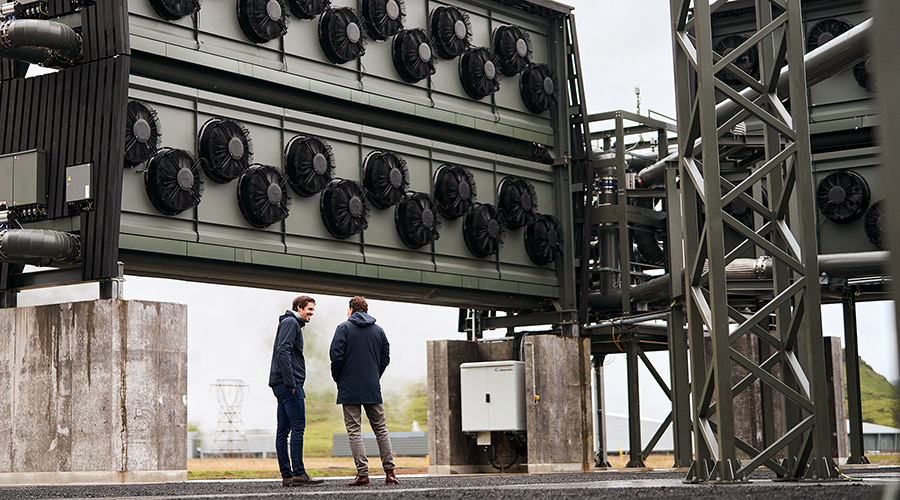
Climeworks co-founders Jan Wurzbacher and Christoph Gebald at the Orca plant in Iceland. Image courtesy of Climeworks.
Nevertheless, significant strides have been made in recent times. Swiss company Climeworks raised US$650m in equity for its largest direct air capture plant, and last week it inked a 10-year deal with Microsoft to permanently remove 10,000 tonnes of CO2 emissions from the atmosphere on its behalf.
The company’s machines capture CO2 from ambient air by drawing air into the collector with a fan. The CO2 is captured on the surface through a selected filter material that sits inside the collectors. Once the filter is filled with CO2, the collector is closed, and the temperature is increased to 80–100°C, whereupon the CO2 is released.
And what becomes of the CO2 after that? The CO2 at its Orca facility (50km outside Reykjavík, Iceland) will be mixed with water and pumped deep underground. The carbon dioxide will then react with the basalt rock through natural mineralisation and turn into stone.
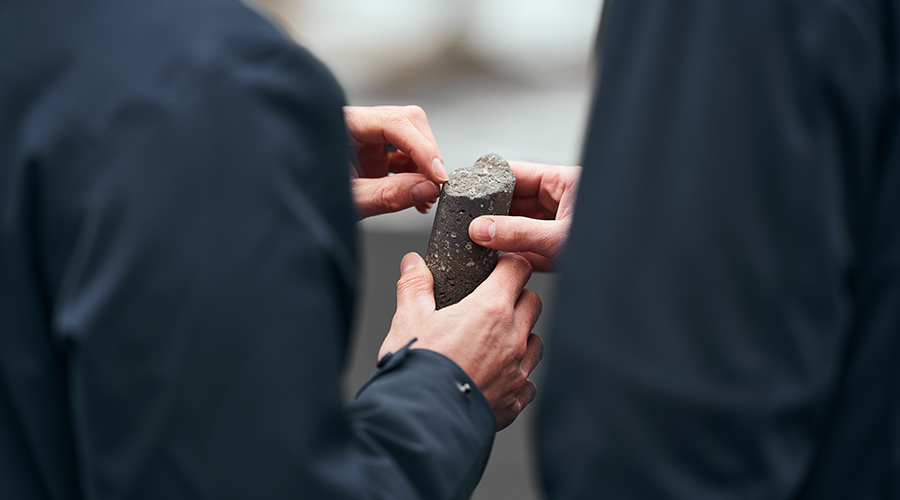
Climeworks CO2 turned into stone via Carbfix technology. Image courtesy of Climeworks.
And Climeworks isn’t the only one operating in this space. As part of the UK Government’s aforementioned £54m funding, London-based Mission Zero Technologies will receive £2.9 million to build a low-energy, heat-free way to pull CO2 from the air.
Sydney-based AspiraDAC has been backed by the Stripe Climate Fund to remove 500 tonnes of CO2 using its modular, solar-powered system. According to Frontier: ‘Its MOF (metal-organic framework) sorbent has low-temperature heat requirements and cheap material inputs, increasing the likelihood that AspiraDAC can help accelerate the production of lower-cost metal-organic frameworks which, historically, have been expensive and difficult to synthesise.’
The Stripe Climate Fund has also backed 8 Rivers Capital, LLC, and Origen Carbon Solutions, Inc to remove CO2 from the air using its direct air capture (DAC) technology. Frontier said: ‘The DAC technology accelerates the natural process of carbon mineralisation by contacting highly reactive slaked lime with ambient air to capture CO2. The resulting carbonate minerals are calcined to create a concentrated CO2 stream for geologic storage.’
Of course, direct air capture is just one of many CO2 removal solutions. In part two, next week, we’ll look at other promising technologies.
22 July 2022 |
|
|
Sustainability & Environment
In his winning essay in SCI Scotland’s Postgraduate Researcher competition, Angus McLuskie, Postgraduate Researcher at the University of St Andrews, explains his work in replacing non-renewable and toxic feedstocks with novel sustainable catalytic processes to produce useful chemicals.
Each year, SCI’s Scotland Regional Group runs the Scotland Postgraduate Researcher Competition to celebrate the work of research students working in scientific research in Scottish universities.
This year, four students produced outstanding essays in which they describe their research projects and the need for them. In the first of this year’s winning essays, Angus McLuskie outlines his work in improving the production of urea derivatives and polyureas.
Would you risk your life for plastics and agrochemicals? You might not have to…
Urea derivatives hold a substantial global market, which is dominated by their use as fertilisers in the agrochemical sector, in addition to smaller-scale technical applications as glues, resin precursors, dyes and pharmaceutical drugs. Furthermore, polyureas are important protective coatings, with a global market exceeding £800 million a year.
Currently, urea derivatives and polyureas are produced on an industrial scale using highly toxic chemicals such as phosgene, (di)isocyanates and carbon monoxide. These reagents are detrimental to human health, as evidenced by the release of methyl isocyanate gas from the Bhopal Union Carbide factory in 1984, which led to thousands of deaths and a global outcry.
Phosgene was itself used as a battlefield chemical weapon in World War I, and is sourced from fossil-fuel-derived carbon monoxide. The result is a process with significant health and environmental impacts.
As part of a global drive to tackle climate change and move towards a circular economy, the objective of our research is to replace non-renewable and toxic feedstocks with novel sustainable catalytic processes to produce useful chemicals and materials.
>> More information about the Scottish Postgraduate Researcher competition.
In pursuit of greener methods, we have recently discovered synthetic methodologies, using a catalyst of manganese, to couple dehydrogenatively (1) methanol and (di)amines and (2) formamides and amines to make symmetrical (poly)ureas and unsymmetrical urea derivatives respectively (ACS Catal., DOI:10.1021/acscatal.2c00850).

Angus with his poster on Mn-Catalysed Dehydrogenative Synthesis of Urea Derivatives and Polyureas.
The only process byproduct, molecular hydrogen, is valuable in itself, and the non-toxic reagents of methanol or formamide can be sourced from renewable feedstocks. For example, Carbon Recycling International, an Iceland-based company, has developed methods to generate methanol industrially through the direct hydrogenation of CO2 (ATZextra Worldw., DOI:10.1007/S40111-015-0517-0). Formamides can be made from formic acid, which may be produced from biomass or CO2.
Synthesis approach
The synthesis of urea derivatives using this approach has been reported previously using iron and ruthenium catalysts, but these present individual limitations. Iron catalysts result in poor yields and substrate scope, while ruthenium catalysts are expensive and raise sustainability concerns due to ruthenium’s low abundance in Earth’s crust (Chem. Sci. J., doi.org/10.1039/C8SC00775F and Org. Lett., doi.org/10.1021/acs.orglett.5b03328).
The synthesis of polyureas via this approach has only been achieved before using a ruthenium catalyst. With a manganese-based pincer catalyst, we succeeded in making a broad variety of symmetrical and unsymmetrical urea derivatives as well as polyureas at high yields and under a low catalytic loading of 0.5-1 mol%. As the third most abundant transition metal in Earth’s crust, manganese is much cheaper than ruthenium, which improves the economic viability of the process for industrial applications.
Breaking new ground?
This is the first example of the synthesis of polyureas from diamines and methanol using a catalyst of an Earth-abundant metal. We have demonstrated for the first time the synthesis of a potentially 100% renewable polyurea from methanol and a renewable diamine Priamine, which is commercialised by Croda. This could be of interest to emerging businesses for making bio/renewable plastics.

Angus hopes his research will help us develop urea-functionalised agrochemicals and pharmaceutical drugs in a more efficient, greener way.
This initial proof of concept is exciting, but there are challenges to overcome for commercialisation. Evidently, the cost is important, and since the catalyst is much more expensive than reactants, such as amines and methanol, the cost is directly linked to the catalyst’s activity; a homogeneous catalyst that is non-recyclable and offers a turnover number of 100-200 makes the process expensive.
We are now focusing our efforts on enhancing the efficiency of the catalyst to increase cost-effectiveness, which will also allow us to make commercially important urea-functionalised pharmaceutical drugs and agrochemicals with greater efficiency and reduced impact on the environment, human health, and economy.
19 July 2022 |
|
|