Sustainability & Environment
What is the verdict on the 100% sustainable fuel Formula 1 plans to use in its cars, and is the new E10 fuel this season doing any good? We asked David Bott, SCI’s Head of Innovation.
Beware of Greeks bearing gifts. This phrase comes from Virgil’s Aeneid, and it refers to the Greeks’ gift of a giant wooden horse to their enemies during the Trojan War. But this was no gift at all.
This warrior-filled, hollow wooden horse that the Trojans wheeled inside the gates of Troy was a ploy from the Greeks to get inside the city’s impenetrable city walls and ambush their enemy. It turned out things weren’t quite what they seemed.
Just as Trojans became wary of giant wooden horses, we should be wary of Net-Zero pledges. These promises seem impressive but, if you look inside, they might not be quite as beneficial to the environment as advertised – at worst, they could be hollow.
Whenever an organisation talks of carbon credits, makes a vague reference to biomass or a grand pledge with little detail, it is worth closer investigation.
Formula 1 recently made a sustainability pledge of its own. Following its decision to use E10 fuel in the cars this season (a mixture of 90% fossil fuel and 10% ethanol), it has announced plans to use a 100% sustainable drop-in fuel in its vehicles as part of its plans to reach Net-Zero by 2030.
On first reading, the terms Net-Zero and Formula 1 don’t sit easily together. Isn’t this the sport where 20 cars can burn more than 100kg of fuel each per race? The same travelling circus in which cars, teams, and drivers are flown and ferried all over the world for more than eight months of racing?
By its own calculation, in a November 2019 report, Formula 1 is responsible for 256,551 tonnes of carbon dioxide emissions each year. To put that figure into perspective, you would need to drive for 6,000km in a diesel car to generate a single tonne of carbon emissions – multiply that by 256,000, and Net-Zero feels some distance away.
What about the E10 and proposed drop-in fuels?
Both Formula 1’s new fuel and pledges merit closer inspection. Regarding the move to the E10 fuel in Formula 1 cars, David Bott, SCI’s Head of Innovation, wasn’t exactly gushing.
‘E10 is an evolutionary backwater – adding just 10% ethanol does nothing for emissions,’ he said. ‘A quick enthalpy calculation shows the energy in the fuel has decreased, so you need more.’
The proposed move to a ‘100% sustainable drop-in fuel’ used in standard internal combustion engines is seen by many as a positive move. Formula 1 says the fuel will be made using components from either carbon capture, municipal waste, or non-food biomass.
Each of these ‘components’ on its own is worth exploration. For example, what types of municipal waste do they mean, which types of non-food biomass are they talking about, and what about the manufacturing process?

Biomass fuel is controversial due to concerns over carbon sequestration and land use.
The passage of time will reveal more but, again, David has questioned the green credentials of the proposed fuel. He said: ‘What Formula 1 is proposing to do is analogous to sustainable aviation fuel – to make octane from a non-fossil source of carbon.’
‘[To do this], you can use biomass or “synthetic”, which basically means distillate plastic waste. It is effectively using fossil carbon that was used for something else; so, it doesn't make the situation any worse, but neither does it really contribute to lowering emissions. It’s just short-cycle carbon.’
Freight with difficulty
The mention of aviation is pertinent when it comes to Formula 1. The emissions generated by the 10 teams’ vehicles across 21 Grands Prix, including races and testing, account for just 0.7% of Formula 1’s total emissions. But by far the biggest contributor to its CO2 emissions are logistics – the movement of equipment from venue to venue by land, sea, and air.

The equipment used in Formula One must be transported from continent to continent by sea, land, or air.
After that comes business travel at 27.7%, which includes the air and ground transportation of all individuals, as well as the hotel footprint from all Formula 1 teams’ employees and major event staff. So, it’s clear that the main environmental problem isn’t the fuel used during the races; it is all of the other transport emissions.
To be fair to Formula 1, the sport has made an effort to make operations greener, including powering its offices using 100% renewable energy and taking measures to make freight more efficient.
However, any claims that it is motoring to Net-Zero by 2030 need to be chased with a liberal swig of scepticism. A Net-Zero 2030 goal provides a nice headline, but how you get there is the story.
05 July 2022 |
|


 |
|

Sustainability & Environment
The wild weather fluctuations wrought by climate change are stressing out our plants. Our resident gardening expert, Professor Geoff Dixon, explains how.
Pests and diseases are familiar causes of plant damage and loss. Less familiar, but becoming more frequent, are stresses resulting from environmental causes.
These are termed abiotic stresses because no living organism is involved. This means there are no visible signs of pests or pathogens. Diagnosis and treatment are, therefore, less straightforward. These causes are a result of interactions between the plant genotype and the prevailing or changing environment.
Damage may only become apparent after harvesting and at the point of consumer use. A typical example of this is internal browning or breakdown of Brussels sprouts. Larger sprouts are more susceptible to stress, with dense leaf packing in the bud, particularly in early and midseason cultivars.

The internal browning of Brussels sprouts is a consequence of plant stress.
A suggested cause is water condensing within the bud, which restricts calcium transport and leads to marginal leaf necrosis (death). This resembles the exudation, or perspiration, of water from leaf edges when growing plants absorb excessive water, flooding the vascular systems following very heavy rainfall and hot weather.
Moisture damage
Oedema is another moisture-induced disorder. Symptoms include unattractive wart-like swellings coalescing on leaves and stems, particularly on Brussels sprouts, cabbages, and cauliflowers. These may rupture, becoming corky with a yellowish or brownish appearance.

Moisture-induced damage to cabbage leaves.
These symptoms result from high soil moisture content and high relative humidity associated with hot days and cool nights. Both internal browning and oedema can be minimised by improving soil structure, encouraging rapid drainage by deep cultivation or growing plants on raised beds.
Improving soil structure is becoming an important way to control salt accumulation. Soil structure can be badly damaged by flooding that brings in polluted water. In subsequent vegetable and fruit crops, plant water uptake, nutrient use efficiency, and photosynthesis are all impaired. The effects are seen in poor germination, burnt leaf margin, stunting, and wilting. This damage will be particularly severe with highly organic soils.
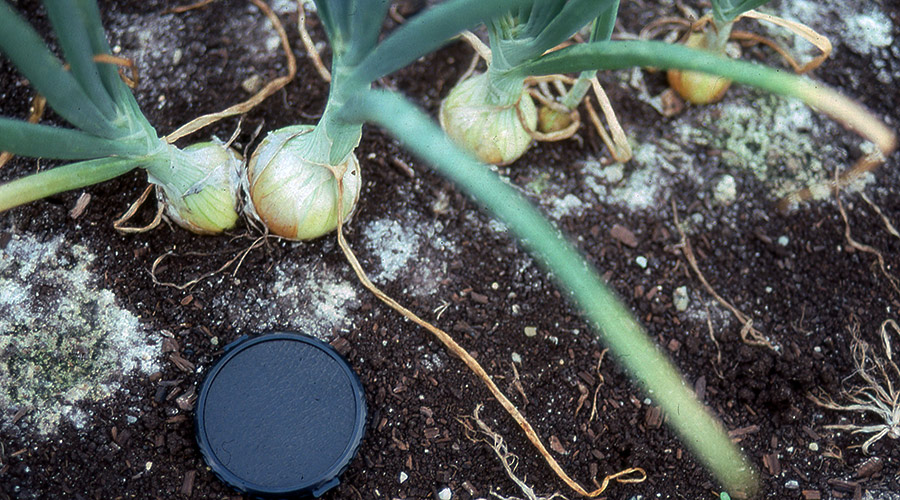
Salt accumulation in onion crops. Improving soil structure is one way of addressing this problem.
Abiotic disorders are becoming more common in commercial crops and this is likely to be reflected in gardens and allotments. That is an effect of climatic change, with generally hotter and wetter conditions interspersed by droughts and freezing events.
As a result, plant growth is erratic and exhibits abiotic disorders. Plant breeders, especially in Asia, are actively seeking genetic solutions that will create crops capable of withstanding erratic environments. In parallel,the agro-chemical industry is producing environmentally sustainable compounds and biostimulants to help combat these problems.
>> How else has climate change changed the way our gardens grow, and what can be done to alleviate its effects? Geoff Dixon explored this issue further.
Professor Geoff Dixon is author of Garden practices and their science, published by Routledge 2019.
24 June 2022 |
|
|
Sustainability & Environment
Fossil fuels don’t just keep our motors running. They don’t just heat our homes. They form the basis of many of our everyday products.
Problem is, fossil carbon is cheap and reliable. Nevertheless, bit by bit, many companies are weaning themselves off petrochemical feedstocks.
For Unilever, that means dishwasher liquids with cleaning agents made from fermented sugar. For Croda, it means using corn to create a bio-ethylene oxide that can replace some surfactants in its personal care products.
So, what other moves have organisations made lately to create greener feedstocks?
1. Castor seed building blocks

Arkema is using castor seed in a huge range of products.
Arkema has received certification for its castor seed-based materials in products that include cosmetics, fragrances, lubricants, and pharmaceuticals.
The Paris-based speciality materials company says it will use castor seed for 100% of its monomer, polymer, and oleochemical production in its plant in Singapore.
Part of the problem with developing green feedstocks is making them financially viable and resilient. Growing these feedstocks sustainably is also important. For example, palm oil contains many products that make it a useful feedstock for those in the chemicals industry, but the way it is farmed, and its effect on the soil, are routinely criticised.
To that end, Arkema says that 13,300 hectares used to grow its crops (primarily in Western India) are sustainably farmed under the Sustainable Castor Caring for Environmental and Social Standards code.
2. Nutrient recovery
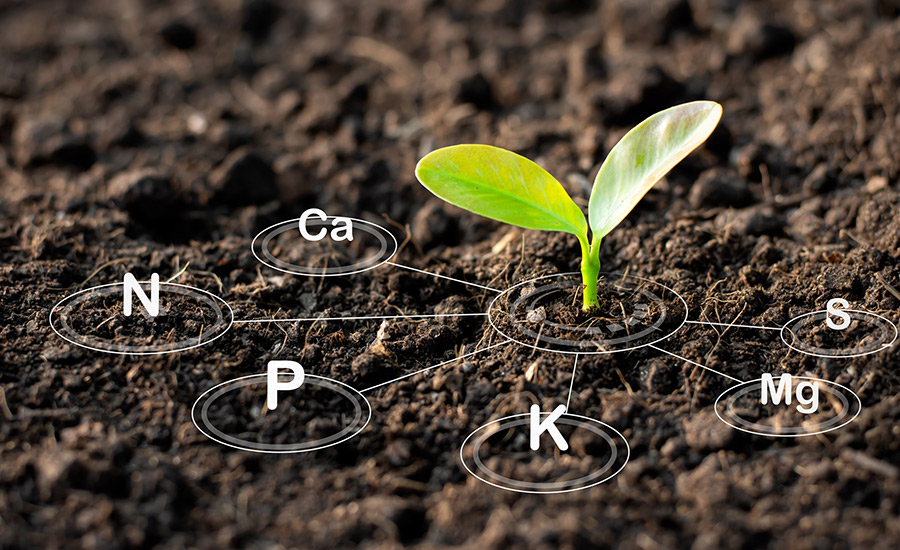
Unused nutrients from agriculture could be turned into biofertiliser.
The US Environmental Protection Agency (US EPA) is taking part in a project with Northwest Florida Water Management District and May Nursery that will demonstrate nutrient recovery technology.
According to the US EPA, the aforementioned parties will demonstrate how unused nutrients from agriculture can be captured and turned into a biofertiliser that will help farmers along the way to more circular agricultural processes.
>> How do we make a large-scale move to greener feedstocks? Several of SCI’s Corporate Partners weighed in on the issue.
3. An alternative to plastic wrapping

Thyme oil’s antimicrobial properties could help extend the shelf life of fresh food.
Researchers at Rutgers and Harvard have created a plant-based spray coating for fresh food packaging, which they believe could reduce our reliance on petroleum-based packaging.
The researchers liken their technology to the webs that shoot from Spider-Man’s wrist. Their stringy material is spun from a hair-dryer-like heating device that is shrink-wrapped over foods as diverse as avocado and sirloin steak.
Their biopolymer contains natural antimicrobial agents – thyme oil, citric acid and nisin – to fight spoilage. The wrapping can also be easily rinsed off and degrades in the soil within three days.
4. Degraded by the light

North Dakota researchers have developed a plastic that degrades in a wavelength of light not contained in the spectrum of sunlight on earth.
Biodegradation is a prickly issue. Many are sceptical about the way biodegradable plastic bags interact with the natural environment, and others argue that we should focus on upcycling products rather than downcycling them.
That’s partly what makes a new bio-based vanillin plastic so interesting. A team of US researchers from the Center for Photochemical Sciences, Bowling Green State University, and North Dakota State University has created lignin-based polymers that degrade when exposed to light of a specific wavelength – a wavelength not contained in the spectrum of sunlight that reaches the earth.
The result of this, they claim, is that up to 60% of the monomers could be polymerised again with no loss of quality. So, in theory light-triggered degradation could make it much easier to re-use these materials.
>> Natural materials, such as hemp, are becoming ever more important. So, what makes it so special?
22 June 2022 |
|
|
Careers
Dr Yalinu Poya Gow’s eventful career has taken her from Papua New Guinea and China to Glasgow, with an impressive array of awards collected along the way. She spoke to us about her successes, overcoming challenges, and feeding the world’s growing population through ammonia synthesis.

Dr Yalinu Poya Gow
Tell us about your career path to date.
I was born and raised in Lae, Morobe Province, in Papua New Guinea. I did all my schooling there, then moved to Port Moresby, the capital, to do my university studies. I attended the University of Papua New Guinea and graduated in 2011 with a Bachelor’s Degree in Science, majoring in Chemistry. After graduation, I worked at the Porgera Gold Mine in the pressure oxidation circuit as a Process Technician.
In 2014, I moved to China and did a Master’s in Inorganic Chemistry, majoring in Heterogeneous Catalysis, and received the Outstanding International Student award. In Autumn 2016, I was accepted into the University of Glasgow and began my PhD in Chemistry, majoring in Heterogeneous Catalysis.
I completed my PhD studies December 2019 and graduated in June 2020. My PhD research was on making catalysts suitable for small-scale ammonia production, such as on a farm. Ammonia is a simple compound that is primarily used to make synthetic fertilisers to grow food to feed 40% of the world population; as a result, there is great interest in sustainable ammonia production on a small-scale.
I have received a total of 18 awards and honours in relation to my PhD work, including: the 2020 Commonwealth Chemistry award winner in Green Chemistry; the 2019 Green Talent Award from the German Ministry of Education and Research; and the Plutonium Element Award by International Union of Pure Applied Chemistry (IUPAC) as one of the top 118 chemists in the world under the age of 40; and first place in a Society of Chemical Industry PhD Student Competition.
My research has been highlighted and featured by the American Chemical Society, Scottish Funding Council, Society of Chemical Industry and QS Top Universities. In addition, I have been honoured by the University of Glasgow for my ammonia synthesis research and named 2020 University of Glasgow Future World Changer.
Which aspects of your work motivate you most?
The aspect of my job and research that motivates me the most is contributing to a greater cause. I play a role in contributing towards improving the livelihoods of billions across the world. I am also an educator, teaching students across the world, so in a sense I am developing the world’s human resource: equipping scientists and engineers into bettering themselves and the world. This is my motivation.

Ammonia synthesis research is key in helping us feed the world’s rapidly growing population.
What personal challenges have you faced and how have you overcome them?
The personal challenge that I face is being undervalued. I, as a scientist, am usually overlooked. You see, everyone talks about sustainability, climate change, and what we should do to overcome these challenges, but when it comes to getting the job done, young scientists like me who have a lot to offer are being overlooked by institutions and organisations despite meeting criteria.
The thing with me is that I came the hard way, I worked extremely hard to get where I am and do not sway from paths nor give up easily. I continue to grow in my passion in science and research despite the limited opportunities. I believe all good things come to those who work hard and are patient.
>> We have spoken to many amazing women chemists. Read more about Dr Anita Shukla and the drug delivery systems she is developing.
What is the greatest future challenge for those in your industry and at home, and how could these be addressed through your work?
The greatest challenge is the lack of opportunities. Catalysis is somewhat a niche field when it comes to research fellowships, industrial jobs, or anything in between. Catalysis can help solve some of our problems, but it is often overlooked. Ammonia synthesis is a testament to how catalysis feeds 40% of the world population. When you take into account the UN 2030 Sustainable Development Goals and the world’s growing population, ammonia synthesis should be highly worthy of consideration.
It is the same in where I come from. Papua New Guinea and the Pacific Islands have brilliant and naturally gifted people. The only challenge is the lack of opportunities and services.
Which mentors have helped you along the way and how did they make a difference?
Mentors that have helped me along the way were my parents, who always believed in my potential, instilled in me hard work and discipline, and always reminded me that I have a purpose. I also have had the support of my science teachers at school, undergraduate lecturers and postgraduate supervisors. They are all heroes and heroines of science and have shaped my life greatly!
What is the current state of play within your sector with respect to equality, diversity, and inclusion – and is enough being done to attract and retain diverse talent?
I am a Pacific Islander woman in Chemistry. I am a minority in the world and more so in my field. Opportunities should be given to us as we do not just represent ourselves, we represent an entire people of the Pacific.
That is the whole reason why I wanted to do a PhD in Chemistry with an underlying theme of sustainability, so I can give something back and help my people because they are the ones who face the drastic effects of climate firsthand.
Many people speak of inclusivity on paper, but it needs to come into fruition. Inclusivity is not just a box to tick. There is so much diverse talent out there – brilliant, and qualified people from minority ethnicities.
Is there any advice you would give to young professionals and young people from Papua New Guinea?
Never give up – that is all. Where you come from, your past or present, status in life, background, gender, age, what you look like, these should not hold you back from achieving your goals. Yes, life is hard, but you have a purpose.
Some have it easy, most of us have it hard, but we are tough and resilient people. Eventually, you will reach your goals one day, look back and see that all the hardship faced along the way was totally worth it.
>> Interested in a career in science communication? Then read Suze Kundu’s story.
05 May 2022 |
|
|
Sustainability & Environment
Re-using waste materials and converting them into chemicals will help us create a closed-loop system. Ahead of the SCI Engineering Biology symposium on 23 May, Martin Hayes, Biotechnology Lead at Johnson Matthey, spoke about some exciting approaches and the challenges involved in making the low-carbon transition.
The journey to Net Zero is well underway, with a number of countries already committed to Net Zero by 2050. To achieve this ambitious goal, companies and governments must take a new approach to waste, shifting from linear processing to a circular model.
This involves recycling and reusing products to create a closed-loop system that uses fewer resources and reduces waste, pollution and carbon emissions. As we journey towards Net Zero, these ‘circularity’ principles are increasingly embedded in the research and design of products.
Re-using waste from chemical processes
As a leader in sustainable technologies, Johnson Matthey (JM) is striving to help the chemical industry transition. Martin Hayes, Biotechnology Lead, explains: ‘More and more companies are starting to move away from linear chemical processes to circular ones, which is definitely a step in the right direction.
‘They’re looking at how the waste from chemical processes may be the source for biological processes. Biological entities such as enzymes or organisms can even recover precious metals from waste streams, maximising value while reducing waste.’
>> How are young chemists tackling climate change? Read more in our COP26 review.
In other cases, gas fermentation can upgrade waste products, particularly carbon dioxide and hydrogen, and convert them into chemicals. Hayes explains: ‘In this instance JM joins biology and chemistry to get the desired end product without affecting the customer experience, but making the process much cleaner.’

Fermented food waste could be converted into chemical building blocks.
Food waste is another contributor to greenhouse gas emissions. A circular approach may consider fermenting food waste to convert it into useful chemical building blocks. ‘What is valuable about this is that these chemicals are not produced from virgin fossil material,’ he adds.
Collaboration and feedstock issues
To realise the potential in these technologies and new businesses, it’s important to take a collaborative approach and for multi-disciplinary teams to work together. Hayes continues: ‘We know that getting the biology to the end product requires engineers, chemists, microbiologists, and biochemists – different scientists working together with commercial expertise to make a product that is sustainable, has a low environmental footprint, and is still profitable.
‘We work collaboratively in partnership because we recognise we need to develop these solutions in ways that reflect the needs of each client and the broader society.’
But the scale of the issue shouldn’t be underestimated. On the one hand, those biological entities will require engineering to become efficient catalysts, working selectively with less-than-ideal feedstocks under demanding reaction conditions. On the other hand, scaling up and optimising processes such as fermentation can be resource intensive and involve large volumes.#

Johnson Matthey will be Platinum sponsors for the upcoming Engineering Biology symposium | Editorial image credit: Casimiro PT / Shutterstock
This type of catalyst customisation and process intensification calls for a multi-disciplinary team: bioinformaticians, molecular biologists, chemists and chemical engineers working together.
While the UK leads in renewable technologies, it is also important to think in terms of connected systems rather than isolated applications of technology. That broader perspective in a circular system will get us towards Net Zero and is embodied by the SCI’s symposium on Engineering Biology with which JM is proud to be associated as a (fittingly) Platinum sponsor. This is a topic which is entirely consistent with, and supportive of, JM’s vision of a cleaner, healthier world.
>> Sign up here for SCI's Engineering Biology – applications for chemistry-using business on 23 May.
>> How do we move to non-fossil fuel feedstocks? Here’s our report on the Parliamentary & Scientific Committee Discussion Meeting on 28 March.
03 May 2022 |
|
|
Sustainability & Environment
By rethinking the way our products are designed and changing the way we use plastics, we can tackle the blight of marine litter and the general accumulation of plastic waste. But, as Professor Richard Thompson said in our latest SCItalk, systemic issues and historical excesses have made this no easy task.
Contrary to popular perception, plastic is not the villain. When it comes to marine littering, we are the ogres, with our single-use bottles bobbing in the oceans and the detritus of our everyday lives littering the coastline.
We are the reason why 700 species are known to encounter plastic debris in the environment. It is because of us that plastics have beaten us to the bottom of the deepest oceans and glint in the sun near the summit of Mt. Everest.
According to Richard Thompson, of the Marine Institute School of Biological and Marine Sciences at the University of Plymouth: ‘Plastic debris is everywhere. Its quantity in the ocean is likely to triple between 2015 and 2025.’
As Professor Thompson pointed out all of these facts to his audience in our latest SCItalk on 23 March, he outlined potential solutions. However, there is no ignoring the depth of the issues at hand when it comes to the litter in our seas.
The problems
1 - The weight of history
Society has gradually woken up to the menace of discarded plastics and, laterally, to the threat of microplastics and nanoplastics. The problem is that we left the barn door open decades ago. So, all of those plastic microbeads from shower gels, fibres from clothing, and tyre wear particles polluted our seas for many years before it came to public and scientific attention.
Professor Thompson said that 300 papers were published globally on microplastics in the last academic year alone, but research in the area was relatively thin on the ground before Thompson and his colleagues released their pioneering study on microplastics in Science in 2004.
2 - Bad habits
‘The business model for the use of plastics hasn’t really changed since the 1950s,’ Professor Thompson said. According to him, we have had 60 years of behavioural training to just throw products away, and our waterways reflect this attitude.
According to Professor Thompson, 50% of shoreline litter items recorded during the 2010s originated from single-use applications. Without a sea change in our attitude towards single-use items, this problem will persist.
>> Why are we ignoring climate change and what can we do about it? Read more on our blog post.
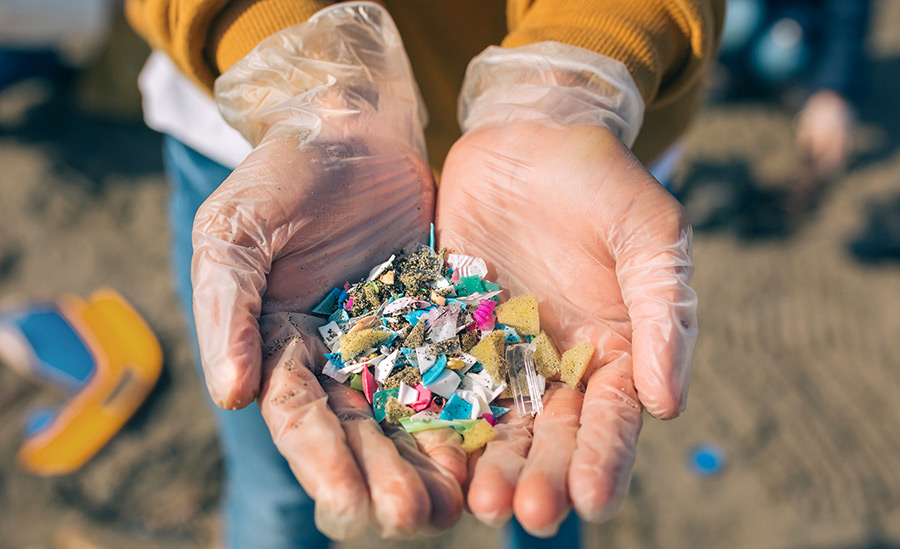
Microplastics have been subject to great scrutiny, but much of the research is quite recent.
3 - We need to talk about nanoplastics
The problems with larger plastics and even microplastics are now well documented. The worrying thing, according to Thompson, is that there are knowledge gaps when it comes to nanoplastics in the natural environment. What are the effects of nanoplastic ingestion? What are the effects of human health? Time will tell, but Thompson was keen to ask if we really need that information before we take action.
He was more sanguine about the effects of microplastics. ‘The concentration of microplastics is probably not yet causing widespread ecological harm,’ he said, ‘but if we don’t take measures, we’ll pass into widespread ecological harm within the next 50-100 years.’
The solutions
It seems counterintuitive to think of petrochemical plastics as a sustainable solution; and yet, despite the environmental problems posed by their durability, they do have a role to play in a greener approach.
‘If used responsibly, plastics can reduce our footprint on the planet,’ Thompson noted. Indeed, the lightweight plastic parts in our cars and in aviation can actually help reduce carbon emissions. But despite their merits, how do we keep plastic litter from our seas?
1 - Design for end of life… and a new one
To illustrate a flaw in the way we design plastic products, Professor Thompson gave the example of an orange coloured drinks bottle. While the bright colour may help sell juice drinks, there is an issue with recycling these coloured plastics because their value as a recyclate is lower. Clear plastics, on the other hand, are much more viable to recycle.
He argues that many products aren’t being designed with the whole lifecycle in mind. ‘We’re still failing to get to grips with linking design to end of life,’ he said, before highlighting the importance of communicating how products should be disposed of right from the design stage.
Basically, our products should be designed with end of life in mind. ‘If we haven’t even designed a plastic bottle properly,’ he lamented, ‘what hope do we have with something that’s more complicated?’

Those brightly coloured plastic bottles look nice and fancy, but they can be challenging to recycle in a circular economy.
2 - Ever recycle? Ever fail? Recycle again. Recycle better
Professor Thompson argued that better practices are needed to help divert materials away from our seas (and it should be noted that there are other types of discarded materials to be found there). If we recycle greater quantities of end of life plastic products and bring them into a circular economy, he said, ‘we’d decouple ourselves from oil and gas as the carbon source for new production because the carbon source we use would be the plastic waste’.
He said more could also be done with labelling so that customers know whether, for example, a product is compostable and which waste stream it needs to be placed in to achieve that. He also noted that addressing our single-use culture would be a good place to start if we want to change the business model of linear use.
3 - Broaden the discussion and pull those policy levers
The good news is that there is an appetite for change. ‘Ten years or so ago there was no consensus that there was a problem,’ Thompson noted. ‘I would argue that this has changed.’ However, he also feels that it is essential to gather reliable, independent evidence to inform interventions, rather than espousing solutions that could make things worse.
‘We need to gather that evidence from different disciplines,’ he said. ‘We need to have at the table product designers and couple them with the waste managers. We need to have economists at the table. We also need to bring in social scientists to look at behaviour. We’ve got to think about this in the round.’
He also felt that policy measures – such as mandating recycled content – could be a good option, along with better design and disposal.
The tools we need to tackle plastic pollution are already at our disposal. We just need to act more responsibly – which, unfortunately, has been part of the problem all along.
As Professor Thompson said: ‘It’s not the plastics per se that are the problem – it’s the way we’ve chosen to use them.’
>> For more interesting SCI talks like Professor Thompson’s, check out our YouTube channel.
>> Find out more about the work of Professor Thompson and his colleagues here: https://www.plymouth.ac.uk/research/marine-litter.
21 April 2022 |
|
|
Agrifood
There was a happening in York recently – a Hemp Happening – organised by SCI’s Agrisciences Group and Biovale. It took place at York’s STEM Centre and explored the issues around growing and using industrial hemp. Despite these issues, there is a growing demand for hemp fibre and shiv as we look to use sustainable natural fibres and move to a low-carbon economy.
In 10 years’ time, you’ll walk out of your hemp-insulated home, wearing your hemp fibre t-shirt, polishing off the last of your hemp and beet burger, before heading to work in your hemp seed oil-powered car.
Is this scenario fantastical? Yes, obviously, but as delegates attending Hemp Happening explained on 6 April, all of these products exist right now. The sheer breadth of them underlines what a useful and versatile material hemp is. If enabled through policy, hemp could play a big part in our low-carbon future. Here are five ways it could make a significant difference.
1. Carbon sequestration
Hemp has much-vaunted carbon-sequestering potential which, given our climate change travails, could prove extremely useful. Some experts say it is even better at capturing atmospheric carbon than trees. According to SAC Consulting, industrial hemp absorbs nine to 13 tonnes of CO2 per hectare. To put hemp’s absorption capacity into context, hemp market specialists Unyte Hemp said it absorbs 25 times more CO2 than a forest of the same size.
Of course, that’s all very well, but how do you make sure this carbon remains sequestered?
2. A future heavyweight champion?
One fitting home for hemp (and the carbon it has captured) is in construction, especially given the carbon-intensive nature of the industry. So, with the pressure intensifying to replace and retrofit the UK’s inefficient building stock, hemp is well placed to reduce emissions and improve building performance.
Hemp is not just used in insulation materials due to its excellent thermal performance characteristics. It is also used in rendering buildings and for non-load bearing blocks in construction. Indeed, hempcrete blocks, which are made from hemp shiv, lime, and sand or pozzolans, have a net carbon negative footprint.

Hemp is used in everything from food supplements to medicines, cosmetics, and construction products.
3. Farmer’s friend
Hemp also helps the earth. As flash flooding strips our soils, the plant’s root density and deep structure protects against soil erosion and mitigates compaction. Hemp also provides nutrients to help maintain soil health, making it useful in crop rotation.
As insect populations dwindle, the role of pesticides and herbicides are coming into sharper relief. In that respect, hemp has a natural advantage over other crops as it doesn’t require pesticides and fertilisers.
4.The Swiss Army knife of materials
We have long heard of the health benefits of hemp-derived products such as cannabidiol oil (or CBD oil), but pretty much the whole plant can be used. Its seeds are rich in omega-3, omega-6, and fatty acids, and help fend heart problems.
As mentioned above, the fibrous part of the plant sequesters carbon and produces low-carbon materials for construction, while its roots are used to treat joint pain and for deep tissue healing.
And then we have hemp for bioethanol production and even hemp seed veggie burgers. The list goes on; so, there are many ways for farmers to make money from it.
>> What can be done to make our soils healthier? Take a look at our blog on solving soil degradation.

Hemp has excellent insulation properties.
5. Non-thirsty textiles
I bet you know at least one person with a bamboo t-shirt or socks. Hemp has similar textile potential to its super material cousin. As the fashion industry interrogates its wayward past, the pressure will increase to lighten the footprint of clothing materials. Estimates vary, but hemp is said to need less than half the water required to cultivate and process than cotton textiles and its toughness is handy in long-lasting carpeting.
Mr Elephant, could you step through please?
Hemp has been heralded as a wonder material for decades but there is that elephant in the room. The restricted uses of hemp-related materials curb the extent to which it can be grown in the UK. At the event, delegates noted that outdated legislation, lack of government support, and education are among the factors holding back the growth of hemp on an industrial scale.
And yet, there is growing demand for natural materials that tackle climate change, especially those that sequester carbon. With pension funds increasingly divesting from fossil fuels, and the ever growing importance of corporate sustainability in business, sustainable materials such as hemp are now more attractive.
Arguably the most exciting contribution of the day was the mention of zero-cannabinoid industrial hemp. Even though the THC content levels present in hemp are low (compared to the high levels found in marijuana) and it’s unattractive as a THC source, hemp is still very strictly regulated in the UK compared to North America and the rest of the EU.
One participant mentioned that hemp genes could be edited to remove the cannabinoid – and, if that were to be achieved, it could change everything. Then we would really see hemp happening in the UK.
>> Interested in more events like this one? Visit our Events pages.
19 April 2022 |
|
|
Agrifood
Crop rotation, seaweed extracts, lime, and a range of organic materials can all improve soil health and crop yields. Professor Geoff Dixon shows you several ways to improve your soil.
Rapidly rising costs of living are affecting all aspects of life. Increasing costs of fertilisers are affecting food production, both commercially and in gardens and allotments.
Wholesale prices of fertilisers have jumped four-fold from £250 to £1,000 per tonne within six months. All forms of garden fertilisers are now much more expensive. Crops, especially vegetables, only thrive if provided with adequate nutrition (see nitrogen-deficient lettuce below). Consequently, fertiliser use must become more efficient.

Nitrogen deficiency in lettuce.
Healthy, fertile soils achieved through good management are key to this process. That ensures roots can take up the nutrients needed in quantities that result in balanced, healthy growth.
Soil pH is a major regulator of nutrient availability for roots. Between pH 6.5 to 7.5, the macro nutrients, nitrogen, phosphorus, and potassium are fully available for root uptake. Below and above these values, nutrient absorption becomes less efficient.
>> How much soil cultivation do you need for your vegetables? Find out more in Prof Dixon's blog on cultivation.
As a result, soluble nutrients are wasted and washed by rainfall below the root zones. Acidic soils can be improved by liming in the autumn. Sources of lime derived from crushed limestone require up to six months to cause changes in soil pH values. Lime should be used in ornamental gardens with caution as it can result in micronutrient deficiencies.

Iron deficiency in wisteria.
Soil health and fertility are greatly increased by adding organic materials such as farmyard manure and well-made composts. Increasing soil carbon content helps mitigate climate change while raising fertiliser use efficiencies.
Beneficial soil biological life such as earthworms, insects, benign bacteria and fungi are greatly encouraged when you increase soil humus content. Using crop rotations, which include legumes, raises natural levels of soil nitrogen. This is a result of legumes’ symbiotic relationships with nitrogen-fixing bacteria.
Leafy vegetables such as brassicas require large amounts of nitrogen and, hence, should follow legumes in a rotation. Avoiding soil compaction encourages adequate aeration, benefiting root respiration and providing oxygen for other organisms.
Organic materials are of great value in ornamental gardens when applied as top dressings in late autumn or early spring. This provides two benefits: a slow release of nutrients into the root zones as decomposition occurs, and prevention of weed growth.
Inorganic fertiliser use can be further minimised by using proprietary seaweed extracts. These contain macro- and micro-nutrients plus several natural biostimulant compounds that aid healthy ornamental plant growth and flowering (illustration no 3 rose Frűhlingsgold).

Rose frűhlingsgold
Written by Professor Geoff Dixon, author of Garden practices and their science.
28 March 2022 |
|
|
Agrifood
How do flowers use fragrance to attract pollinators, and how do pollution and climate change hamper pollination? Professor Geoff Dixon tells us more.
‘Fragrance is the music of flowers’, said Eleanour Sophy Sinclair Rohde, an eminent mid 20th century horticulturist. But they are much more than that. Scents have fundamental biological purposes. Evolution has refined them as means for attracting pollinators and perpetuating the particular plant species emitting these scents.
There are complex biological networks connecting the scent producers and attracted pollinators within the prevailing environment. Plants flowering early in the year are generalist attractors. By late spring and early summer, scents attract more specialist pollinators as shown by studies of alpines growing in the USA Rocky Mountains. This is because there is a bigger diversity of pollinator activity as seasons advance. Scents are mixtures of volatile organic compounds with a prevalence of monoterpenes.
Environmental factors will affect scent emission. Natural drought, for example, changes flower development and reduces the volumes and intensity of scent production. The effectiveness of pollinating insects, such as bees, moths, hoverflies and butterflies is reduced by aerial pollution.

Pheasant’s eye daffodils (Narcissus recurvus).
Studies showed there were 70% fewer pollinators in fields affected by diesel fumes, resulting in lower seed production. Pollinating insects do not find the flowers because nitrogenous oxides and ozone change the composition of scent molecules.
Extensive studies of changes in flowering dates show that climate change can severely damage scent–pollinator ecologies. Over the past 30 years, blooming of spring flowers has advanced by at least four weeks. Earlier flowering disrupts the evolved natural synchrony between scent emitters and insect activity and their breeding cycles. In turn that breaks the reproductive cycles of early flowering wild herbs, shrubs and trees, eventually leading to their extinction.

The lilac bush, known for its evocative scent.
Heaven scent
Scents provide powerful mental and physical benefits for humankind. Pleasures are particularly valuable for those with disabilities especially those with impaired vision. Even modest gardens can provide scented pleasures.
Bulbs such as Pheasant’s eye daffodils (Narcissus recurvus) (illustration no 1), which flower in mid to late-spring, and lilacs (illustration no 2) are very rewarding scent sources.
Sweetly perfumed annuals such as mignonette, night-scented stocks, candytuft and sweet peas (illustration no 3) are easily grown from garden centre modules, providing pleasures until the first frosts.

Sweet peas are easily grown from garden centre modules.
Roses are, of course, the doyenne of garden scents. Currently, Harlow Carr’s scented garden, near Harrogate, highlights the cultivars Gertrude Jekyll, Lady Emma Hamilton and Saint Cecilia as particularly effective sources of perfume. For larger gardens, lime or linden trees (Tilia spp) form profuse greenish-white blossoms in mid-season, laden with scents that bees adore.
Written by Professor Geoff Dixon, author of Garden practices and their science, published by Routledge 2019.
10 March 2022 |
|
|
Sustainability & Environment
Why do we ignore climate change and what can we do about it? That’s what Toby Park, of The Behavioural Insights Team, explained in our latest SCItalk. Eoin Redahan reports.
Do any of these describe you?
A.I recycle whenever I can, but fly twice a year.
B.I switched to a renewable energy provider, but still drive to work twice a week.
C.I make sure all unnecessary lights are switched off in the house, but eat beef occasionally
D.I plan to live a greener lifestyle, but the real difference will be made at government level.
When it comes to climate change, most of us are full of good intentions. We want to do the right thing but when change becomes too difficult or inconvenient, people (like me) lapse into old habits. In his excellent talk, why we ignore climate change and what we can do about it, Toby Park explained these contradictions and outlined how ‘nudge’ behaviour can be used to tweak our habits.
Fundamentally, Park argued that most people mean well. After surveying a couple of thousand people in the lead-up to COP26, the Behavioural Insights Team found that 67% of respondents planned to take at least five new actions to tackle climate change and 99% said they would take at least one.
So, why then do we ignore climate change en masse? ‘We are like swimmers in a stream,’ Park said. ‘We have the opportunity to swim in one direction or another but we are in a stream that has a current.’

We’re good at recycling but not as resolute when it comes to taking fewer flights.
Life is hard enough. We tend to do what is easy and affordable, but there are other reasons why we’re not falling over each other to buy electric vehicles or driving to the south of Spain for our holidays instead of flying.
The first is psychological distance. For many people, the prospect of climate change is too distant to take seriously. Unless you have woken up to find your kitchen submerged by flooding, its effects may seem far away; yet, the changes we must make are in the present.
The problem is, it’s sometimes hard to act when you cannot feel the urgency. So, people find it hard to frontload the hardship, as they see it. Park likened it to being told that you must have the hangover before you go drinking – and how many of us would choose that?
Second, we are experts at fooling ourselves. As Park noted, we’re all natural storytellers when it comes to crafting positive images of ourselves. We are the masters of cognitive dissonance. On the one hand we feel virtuous when we recycle paper, plastic, and food scraps, yet we’ll hop on a plane for that wedding in Dublin.
‘We all have the tension of what’s in our own self interest and what’s altruistic or pro-social,’ Park said, adding a Robert Heinlein quote that encapsulates the human condition. ‘Man is not a rational animal,’ he said. Man is a rationalising animal.’
A third reason why we ignore climate change, according to Park, is that our actions rarely benefit us personally. If you buy an electric vehicle, the price of that new Tesla will sting and you’re not going to benefit from the carbon emissions saved. However, if there is collective action, everyone would benefit from cheaper electric vehicles to less filthy air.
So, what can we do about climate change?
Nudge behaviour
As was mentioned above, one of the foci of the Behavioural Insights Team is encouraging ‘nudge’ behaviour – what Park described as softly encouraging a certain type of behaviour without restricting choice. And it turns out, there are lots of ways to nudge us well-intentioned, self-centred creatures into healthier habit.
Examples of nudge behaviour are everywhere. In Switzerland, energy companies made green energy the default choice and people – out of either convenience or conscience – tended to stick with this option. Park mentioned how one canteen reduced food waste by up to 40% through the introduction of a small friction: removing the plastic trays (Thiagarajah and Getty 2013). In a similar sphere, he said Sainsbury’s Cafe increased orders of its plant-based meal options by calling items ‘field-grown’ rather than ‘meat-free’ or ‘plant-based’.
Park mentioned that we can motivate different behaviour by introducing a social element. He noted that solar panels were found to be socially contagious in California and parts of Europe, while the same has happened in the UK with the introduction of green number plates for electric vehicles.
Comparing people to their peers is another useful way of changing habits for the better. Benchmarking people’s behaviour against the norm – such as telling someone they use more energy than most customers – is one way of doing it. Publishing environmental performance league tables for organisations is another to encourage a climate-friendly approach.
If you don’t think these sorts of nudge behaviours don’t work, think of the humble plastic bag tax. When you take your own bags for your weekly shop, you might save just 30p on a £30 shop. But have you done it? And are you doing it still?
Unfortunately, there is no dancing around the fact that 60% of emissions reduction requires behaviour change, according to Park. So, nudge behaviour will help but we’ll be needing more power behind that elbow.

What’s in a name? Language can have a profound effect on our choices. Now, who’s for a field-grown breakfast?
‘Small nudges aren’t enough,’ he said. ‘We also need to apply this lens to systemic, transformative change. That means finding smart ways to tilt the functioning of markets.
He said that consistent, long-term decision making is not only important for individuals but for businesses too.
‘Incentives are massively important for corporations,’ he added. ‘That would generally be my first port of call. That’s where the bigger impacts can be found.’
At the end of the talk, a member of the audience asked Park, simply, if there was hope? To answer that, he offered the example of plant-based food.
Not so long ago, many plant-based meat alternatives were the preserve of the few. However, consumer interest in plant-based foods has ‘mushroomed’ in recent years and retailers have responded with a swath of new food products.
‘Change can be runaway and self accelerating, Park said, ‘and we shouldn’t forget that solutions can scale exponentially… New norms can, all of a sudden, spread very quickly.’
>> To listen to Toby’s talk, go to YouTube
02 March 2022 |
|
|
Sustainability & Environment
How well equipped is the UK’s battery supply chain to meet the growing demand for electric vehicles? We took a closer look to mark National Battery Day.
Main image editorial credit: Phaustov/Shutterstock
For many of us, it’s exciting to see the growth of the electric vehicle industry. Our personal transport will be cleaner. Our roads will be quieter. Indeed, from 2030 the UK government will ban the sale of pure internal combustion engine cars, and the widening role of ultra-low emission zones will hit many motorists in the pocket. Whether we like it or not, change is coming.
That does not mean we are prepared for it. As demand for electric and hybrid vehicles accelerates, and more stringent trade rules put pressure on having a local battery supply chain (stricter Rules of Origin for trade will come into force by 2027), the UK must get its complete supply chain up to speed.
Battery supply chain challenges
For this to happen, chemists, suppliers, manufacturers, innovators, government representatives, and others need to make strides in several areas. Over the past year, a group of more than 50 participants at SCI’s Energising the UK Battery Supply Chain workshops have identified next generation technology, the scale-up of innovative technologies, the skills and knowledge base, and standards for materials testing as areas for improvement.
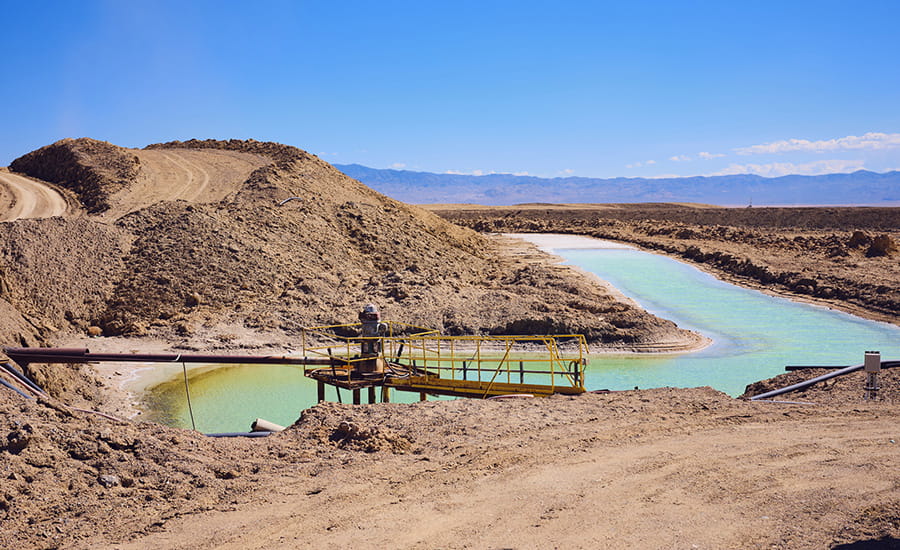
Brine pools for lithium mining. There is a global clamour for raw materials including lithium.
The UK also needs a consistent stream of key battery materials. It needs technologies that reduce the dependence on some of the current materials for hybrid and electric vehicles. It must integrate efficient battery recycling and manufacturing approaches to reduce its dependence on long-distance imports and much coveted raw materials such as lithium, nickel and cobalt.
It is a big challenge. As David Bott, SCI’s Head of Innovation (who helped run SCI’s five Energising the UK Battery Supply Chain workshops) said, there isn’t enough of a UK electric battery supply chain at the moment.
>> Find out what the experts thought about improving the UK battery supply chain in our Energising the UK Battery Supply Chain Part 5 video.
David did note that the UK Government (through UK Research and Innovation) has been investing in the scale-up of cell assembly through the Energy Innovation Centre at WMG (from 2012/3) and the UK Battery Industrialisation Centre (through UKRI and the Automotive Propulsion Centre). It will also support the construction of Britishvolt’s electric battery ‘gigafactory’ in Blyth, Northumberland.
However, he added that: ‘All of them, however, are talking about the assembly of the cells and 60% of the value is in the materials. We need a battery materials supply chain in the UK – not all the way back to mining, of course, but as much as we can.’

Recent developments in the UK have been heartening, but many more will be needed to create a viable battery supply chain.
Smoother collaboration is also required. ‘We need recognition that the UK needs more support for the chemistry part of the supply chain,’ he said. ‘We need a lot more collaboration – engineers need to understand that chemistry companies would engage more if they understood the size of the opportunity. The main thing we need at the moment is awareness of the opportunities.’
Promising developments
Despite the difficulties, green shoots have appeared recently. In late January, the government announced that it has backed Britishvolt’s aforementioned plans to build large volumes of electric vehicle batteries (through the Automotive Transformation Fund). According to the government, the factory will produce enough batteries for more than 300,000 vehicles a year and create 3,000 direct, highly-skilled skilled jobs. Britishvolt have also announced a partnership with Glencore to recycle battery materials.
>> Sign up for our next Energising the UK’s Battery Supply Chain workshop.
Oxford-based chemical products manufacturer Nexeon has secured US$80 million (about £59 million) in funding to scale up the production of its silicon anode materials. Finally, Sheffield-based sodium-ion battery technology company Faradion has been acquired by Indian conglomerate Reliance Industries for £100 million. A further £25 million will be invested as growth capital to accelerate the commercial rollout of its sodium-ion battery technology.
Faradion says that its sodium-ion technology provides ‘significant advantages compared to lithium-ion technology, including greater sustainability, a patented zero-volt safe transport and storage capability’.
So, there is some good news to celebrate as you gather around with your families to celebrate National Battery Day. The battery supply chain, unfortunately, must wait for another day.
What is the future of electric cars? Find out more in this Autotrader article.
17 February 2022 |
|
|
Sustainability & Environment
Machine-made snow has made this Winter Olympics happen in Beijing, but at what cost?
If you take a look at the weather in Beijing right now, you’ll notice that it isn’t really that cold. You can enjoy daily highs of about 8°C in early February, which we’d be happy enough here in London.
These mild conditions have been a problem for the organisers of the Winter Olympics, which are currently taking place in Beijing and environs. Indeed, the distinct dearth of snow has meant that the Beijing Games have become the first to be run largely on artificial snow.
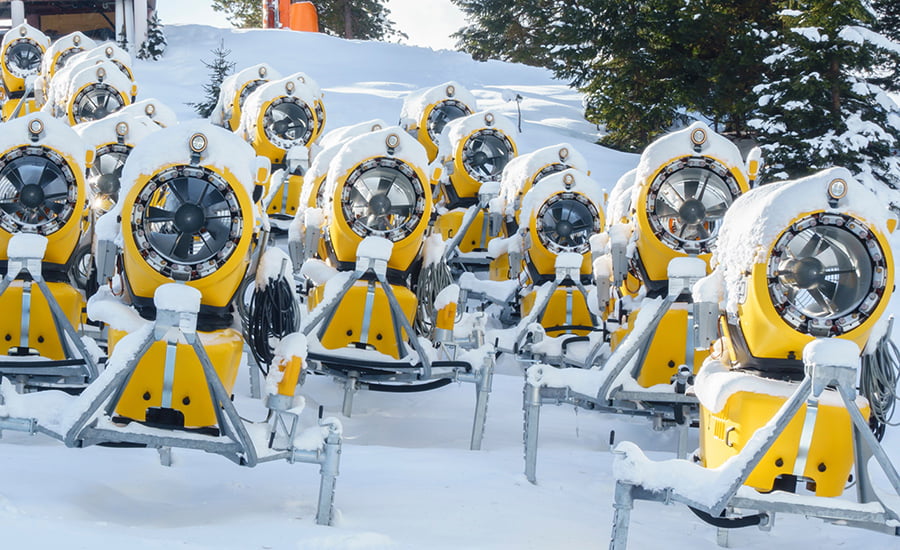
Snowmaking machines spray artificial snow on a ski slope during the FIS Ski Cross World Cup, a test event for the 2022 Winter Olympics
For some, the presence of 130 fan-driven snow generators and 300 snow-making guns spewing out machine-made snow represents a waste of resources, even if these machines are powered entirely by renewable energy.
In all, 49 million gallons of water will reportedly be used to make the Games possible. So, to say they are water-intensive is something of an understatement. However, the issues don’t end there. There is also an issue with the type of snow produced.
>> What can you do about climate change? Register for this free talk to find out more.

Some claim artificial snow creates more dangerous conditions for athletes.
According to the recent Slippery Slopes report written by the Sport Ecology Group (in conjunction with Loughborough University UK and Protect Our Winters UK), the composition of artificial snow can create dangerous conditions for the athletes. Basically, it creates a faster, harder surface that could result in more severe injuries.
The reason given for this is that artificial snow is almost 30% ice and 70% air, compared to natural snow, which is closer to 10% ice and 90% air. This ‘grittier ice-pack’ creates tougher conditions for athletes, many of whom travel at great speeds down steep slopes.
In the same report, former Winter Olympian Laura Donaldson explains why these machines create suboptimal snow. ‘The artificial snowflakes they generate have cylindrical structures (unlike the far more intricate structure of natural flakes),’ she said, ‘which mould together to form bulletproof ice conditions.’
Furthermore, this less permeable layer of ice may hinder the growth of vegetation, and the noise of the machines disrupts wildlife. In some resorts, chemicals are also added to create longer lasting snow.
At Beijing, the organisers claim not to have used chemicals in the snow-making process. However, others rely on machines and chemical-kind for a helping hand. According to the Sport Ecology Group report, a pesticide was used at the 2010 Games in Vancouver to allow the water to freeze at higher temperatures; and snow hardeners such as salt and fertiliser have been used to improve snow quality on cross-country skiing trails.
If hosting the Winter Olympics in an area without much snow seems crazy to you, it might not be quite as daft as you think. The bleak reality is that global warming is reducing the number of venues that can host this enormous event without artificial help.
According to an academic paper by Scott et. al. in 2014, only six of the last 19 Winter Olympics host cities will still have the climatic conditions to do so by the 2080s. Of course, that doesn’t take artificial snow into account.
So, when you see Qatar being awarded the 2050 Winter Games, don’t tell me you haven’t been warned.
08 February 2022 |
|
|